“Buy” Games: The Unspoken Bargain That Shapes College Basketball

PHILADELPHIA, PA – In the carefully orchestrated ecosystem of college basketball, the early season schedule presents a curious paradox. While powerhouse programs from the Big 10, Big 12, Atlantic Coast and Southeastern Conferences rack up victories in their gleaming arenas, small schools from conferences like the MEAC, MAAC, and NEC often start their seasons with win-loss records of 0-7 or 1-8. These are not accidents of fate, but the result of a calculated, financial arrangement known as the “buy game”—a practice that is both a lifeline for the struggling and a cornerstone for the elite, revealing the stark economic realities of modern college athletics.

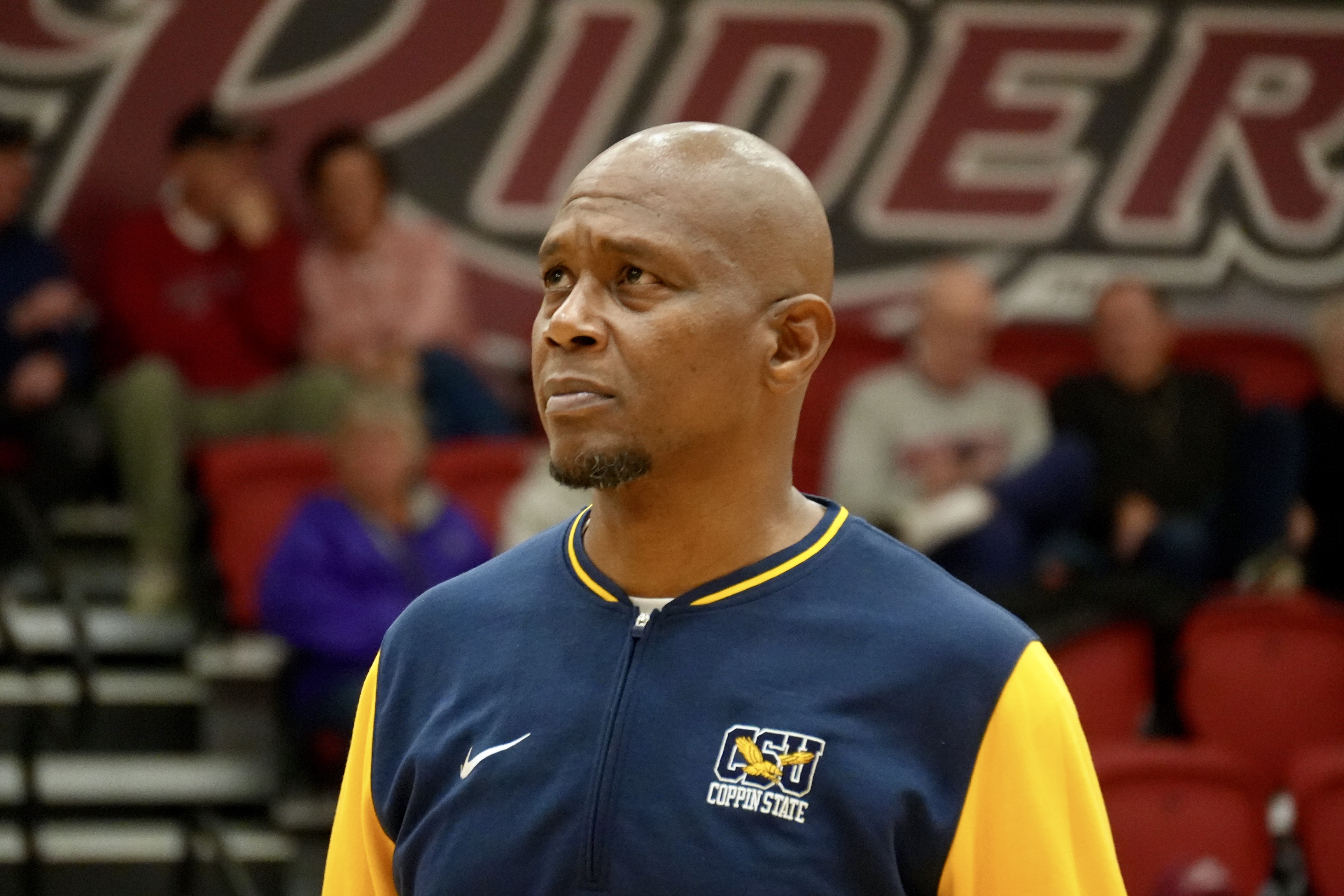
Larry Stewart, Coppin State Head Coach

In this unspoken bargain, high-major programs pay low-major counterparts anywhere from $70,000 to $120,000 to visit their home courts. The terms are clear: the visiting team gets a check; the host gets an almost guaranteed victory. For elite programs, these games are a strategic necessity, allowing them to pile up six, seven, or even eight Division I wins before entering the crucible of league play, padding their records and building momentum. For the low-majors, the calculus is different. As one financial officer at a mid-major program put it, “We run thin. There is not a lot of fat” . The revenue from these games—which can total as much as $600,000 for a school’s athletic department over a season—is not a luxury; it is a essential subsidy that keeps entire sports programs afloat

This financial lifeline, however, comes with a profound competitive toll, warping seasons, stymying coaching careers, and creating a distorted landscape where teams often have no true sense of their own identity.

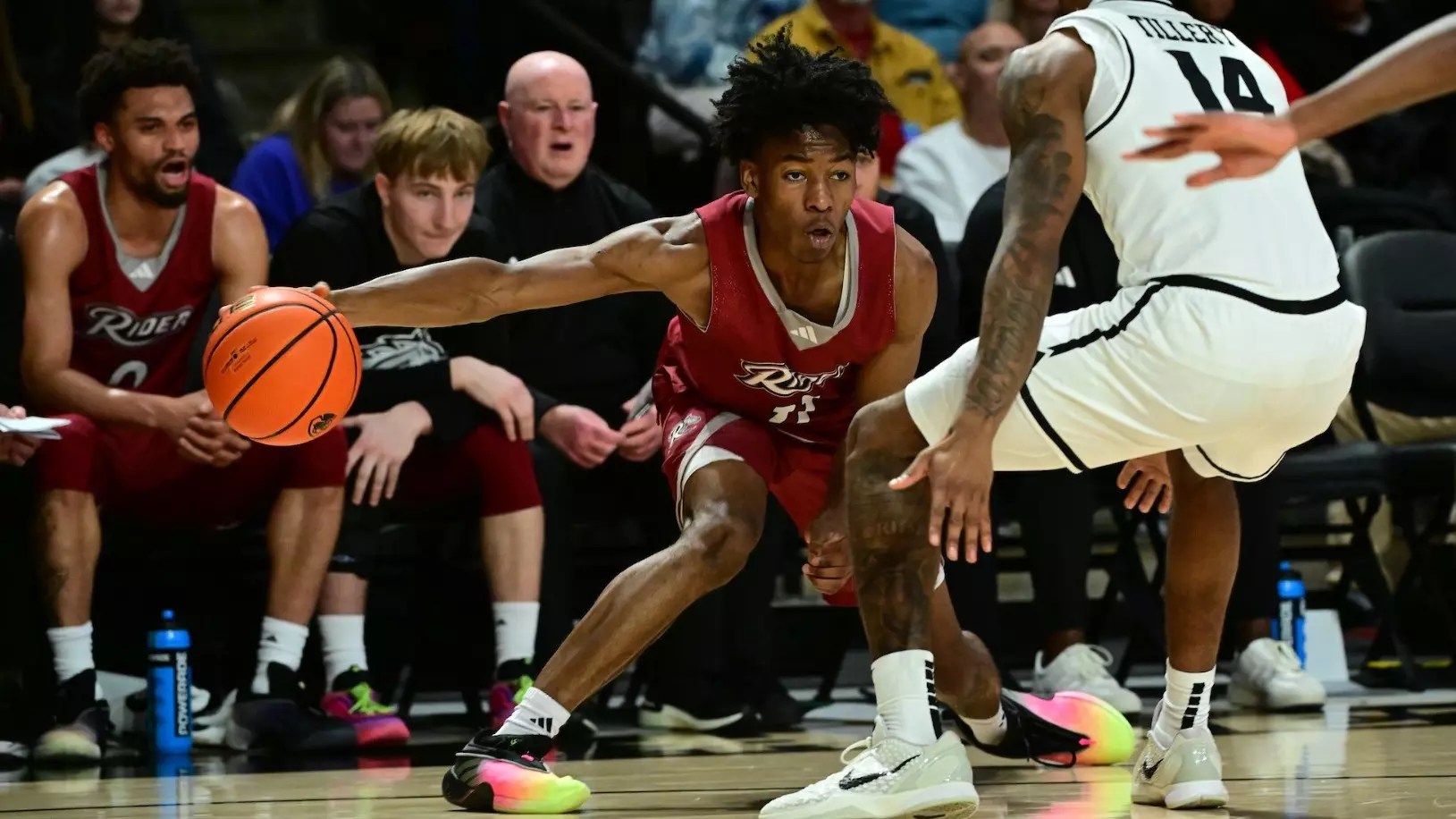
Flash Burton, Rider sophomore guard

The High-Major Calculus: Buying Wins and Building Brands

From the perspective of the nation’s basketball blue bloods, buy games are a rational and efficient investment. They represent a controlled environment to integrate new players, experiment with lineups, and build team chemistry without the immediate threat of a season-damaging loss. In an era where a missed NCAA tournament can mean a significant financial and reputational setback, these guaranteed wins help ensure that a team’s resume is robust enough to catch the eye of the selection committee come March. 

Here’s a breakdown of how many teams from each of those conferences (ACC, Big Ten, Big 12, SEC) made the 2025 men’s NCAA basketball tournament. 

ConferenceNumber of teams in 2025 NCAA Tournament
ACC4
Big Ten8 
Big 127 
SEC14 

The financial outlay, while substantial, is a manageable line item for Power 4 conference schools, which boast operating revenues averaging $97 million in the ACC, for example. For them, the cost of a buy game is easily offset by the revenue from a single home game, which includes ticket sales, concessions, and sponsorships. Furthermore, in the new world of revenue sharing and Name, Image, and Likeness (NIL), where schools are directing $20.5 million annually directly to athletes, the pressure to maintain a winning program—and the financial windfall that comes with deep tournament runs—has never been greater. A successful season built on a foundation of early wins helps drive the brand engagement that underpins these massive financial operations.

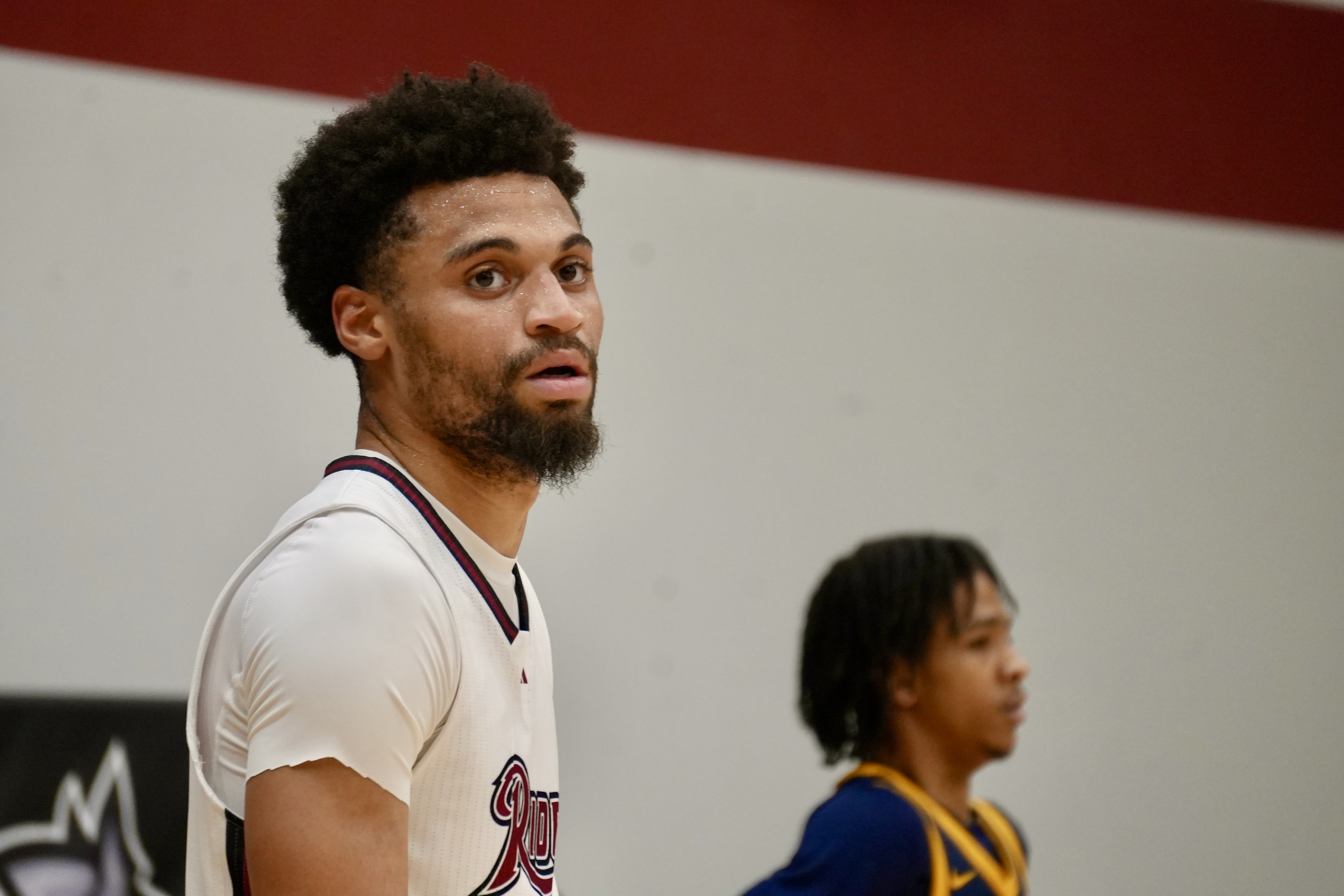
Khali Horton, Coppin State junior forward

The Low-Major Struggle: Survival and Sacrifice

For low- and mid-major programs, the decision to be a “buy team” is a Faustian bargain, balancing financial survival against competitive integrity. The revenue from these games is often the difference between solvency and severe cutbacks. As detailed in a 2020 report, the University of Montana projected a $5 million shortfall in its athletic budget, making the $75,000 to $95,000 earned from a single buy game against a Power 4 school a critical part of its financial planning. This money is used not for luxuries, but for fundamental needs—subsidizing coaching salaries, funding travel for conference play, and paying for equipment

However, this financial lifeline comes at a steep cost.

  • The Psychological Toll: Teams are conditioned to accept losing as a prelude to their “real” season—conference play. This can be demoralizing for players and coaches who, despite their talent and preparation, are thrust into mismatches night after night.
  • The Physical Toll: The travel is often grueling. Montana’s team, for instance, sometimes endures trips through two or three airports to reach a game, or marathon 13-hour bus rides to save costs, all while facing the prospect of a lopsided defeat.
  • A System of Dependence: This model creates a dependency, making it difficult for these programs to escape their subordinate status. The financial incentive to schedule these games can outweigh the competitive incentive to build a balanced schedule that could lead to more wins and long-term growth.
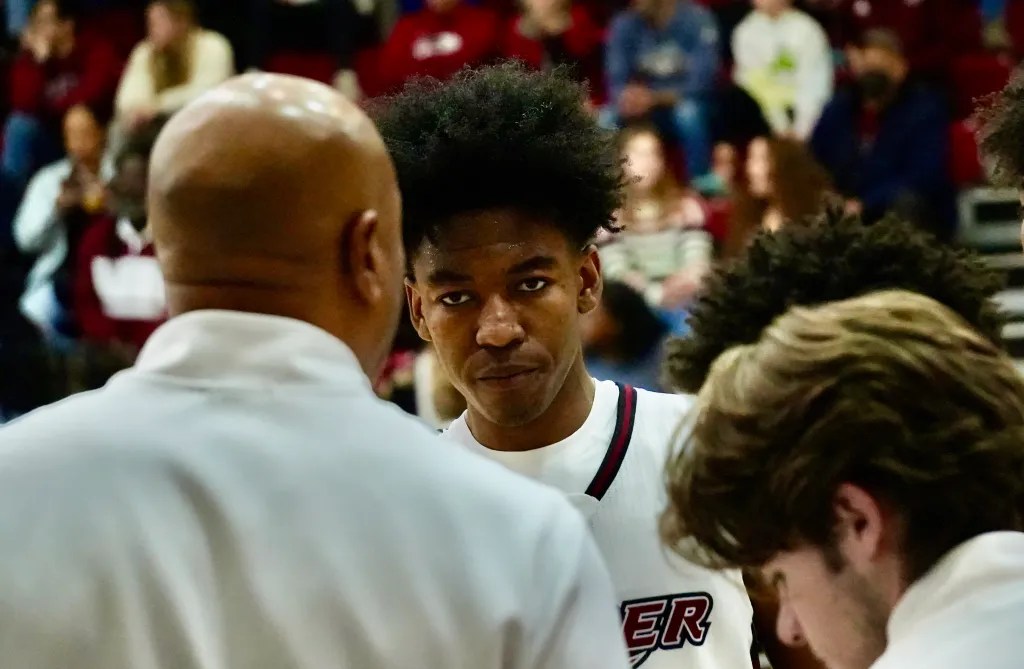
Kevin Baggett, Rider Head Coach

The Sacrifice: A Schedule Built on Blowouts

The brutal reality of this bargain is etched in the season records of teams like Coppin State and Rider University. Consider Coppin State’s schedule heading into its recent game against Rider:

  • vs Maryland: L 83-61
  • @ La Salle: L 87-59
  • @ James Madison: L 84-70
  • @ South Florida: L 100-50
  • vs Central Michigan: L 82-59
  • vs South Alabama: L 72-62
  • vs Central Penn: W 103-62 (a non-Division I opponent)
  • @ VCU: L 101-58

Rider’s path was similarly grim before the two teams met:

  • @ Virginia: L 87-53
  • @ Rutgers: L 81-53
  • vs Eastern: W 86-54 (a non-Division I opponent)
  • @ Texas: L 99-65
  • @ Houston: L 91-45

These are not just losses; they are systematic dismantlings. The differences in athleticism, strength, and size are so vast that the games become less a contest and more an economic exercise. For the players on the losing end, it is a grueling and demoralizing rite of passage, a season that begins with accepting defeat as a precursor to their “real” season in conference play.

The Coaching Conundrum: A Career Stuck in Quicksand

This system creates a particularly vexing problem for ambitious low-major coaches. Their career advancement depends on winning percentages and postseason success. Yet, they are forced to begin every season with a gauntlet of near-certain losses, cratering their overall record before they ever play a peer opponent.

How can a coach prove their program-building mettle when their team is structurally scheduled to start 0-7? The buy game phenomenon acts as a ceiling, trapping talented coaches in a cycle where achieving a strong winning percentage is a mathematical improbability. Their resumes are hamstrung from the outset, making the leap to a higher-profile job significantly more difficult, regardless of their actual coaching acumen.

An Ecosystem at a Crossroads

The buy game system is a microcosm of the broader inequities in college athletics, a landscape where the financial disparity is staggering. A single Power 5 conference, the SEC, generated $1.89 billion in revenue in 2018, a figure that eclipsed the $1.38 billion generated by the entire Football Championship Subdivision, a group of over 100 schools that includes many low-major basketball programs. This chasm is now being codified in new ways, as the advent of revenue sharing and large-scale NIL deals creates what some have called a “pay for play” tier, potentially relegating mid- and low-majors to a permanently lower competitive status.

The pros and cons from each perspective can be summarized as follows:

PerspectiveProsCons
High-Major Program– Nearly guaranteed victories for record-building – Low-risk environment for team development- Protects lucrative postseason prospects– Financial cost of guarantee payments – Risk of player injury in a mismatch- Can be criticized for lack of competitive scheduling
Low-Major Program– Essential revenue for athletic department survival ($600k+/season) – Funds travel, salaries, and operational costs – Opportunity for players to compete in a high-profile environment– Demoralizing starts to the season (0-7, 1-8 records) – Grueling travel and physical toll on players – Perpetuates a cycle of financial and competitive dependency

Yet, even as this system entrenches inequality, it is also being challenged by the same market forces that sustain it. Low-major programs are being forced to find creative revenue streams, from hosting concerts in their facilities to pursuing novel licensing deals for branded merchandise. Some analysts argue that the coming restructuring of college sports might, ironically, offer these schools a way out—freeing them from an unwinnable financial arms race and allowing them to refocus on their educational mission.

Zion Cruz, Rider senior guard

The Distortion: Who Are We, Really?

Perhaps the most subtle yet damaging effect of the buy game system is the competitive distortion it creates. When Coppin State and Rider finally faced each other, they did so with a combined 2-12 record. Their lone wins came against non-Division I schools.

They had no true idea how good or bad their teams were. How do you gauge your defensive schemes after being overwhelmed by Virginia’s size or Houston’s speed? How do you assess your offense after facing defenses with a level of length and athleticism you will never see in your own conference? The games against high-majors are so different in kind, not just degree, that they offer little actionable data for the games that ultimately matter—the conference matchups that determine a chance at the NCAA tournament.

An Uneasy, Enduring Symbiosis

Despite its clear downsides, this ecosystem is remarkably stable. The high-majors have no incentive to change a system that provides them with wins, revenue, and a soft launch to their season. The low-majors, trapped by financial necessity, cannot afford to walk away from the checks.

The buy game is the purest expression of college basketball’s economic hierarchy. It is a transaction that funds dreams at one school by monetizing the competitive hopes of another. For every check that clears, a season is warped, a coach’s record is tarnished, and a team is left to wonder about its own identity until it finally steps onto a court against an opponent its own size. The games will go on, the standings will tell two different stories, and the unspoken bargain will continue to define the sport, for better and for worse.

Ranking Philly College “Bigs”

This week Division 1 College Basketball programs across the country begin formal practices.  More than any other area in the country, Philadelphia has produced some of the best “Bigs” since Dr. Naismith hung up that first peach basket while teaching at the YMCA in Springfield, Massachusetts.  Wilt Chamberlain, Ray “Chink” Scott, Mike Brooks, Gene Banks, Eddie Griffin, Rasheed Wallace and many others have represented Philly on college hardwoods and beyond.  However, casual fans, college basketball coaches and independent scouts frequently rave about “Philly guards.”  Often overlooked and under appreciated, Philly guards usually find a way to infiltrate the nation’s conscience.  Tyrone Garland’s “Southwest Philly Floater” captivated the nation’s attention during March Madness earlier this year.  South Philly’s Dion Waiters shocked the so-called experts when he was the 4th player taken in the NBA draft after NEVER starting a game in college.

Here, I want to shine some light on the “Philly Bigs” currently plying their trade at the collegiate level.  My earlier ranking of Philly College Guards sparked a lot of heated debate.  I fully anticipate a similar level of disagreement over these rankings.  Please note that guys in JUCOs and current redshirts are NOT included because they will NOT be playing NCAA basketball this season.  So guys like Savon Goodman, UNLV and Jamir Hanner, Buffalo are not listed even though their talent level clearly warrants inclusion.

Image

1.  Ronald Roberts, Senior, Saint Joseph’s, 11.3 ppg, 8.3 rpg, 0.9 bpg last season.

At 6’ 8” 220 lbs., Roberts is the most explosive player in the city and, perhaps, on the eastern seaboard.  A determined rebounder with a relentless motor, he competes every single play of every game.  One of the most prolific dunkers in recent memory, Roberts has gradually added subtlety and nuance to his game each off-season.  While he relies primarily on sheer athleticism, he has developed a nice short range jump shot and added it to his offensive repertoire.  If he can become a consistent mid-range jump shooter, he will be almost impossible to guard at the collegiate level.

Image

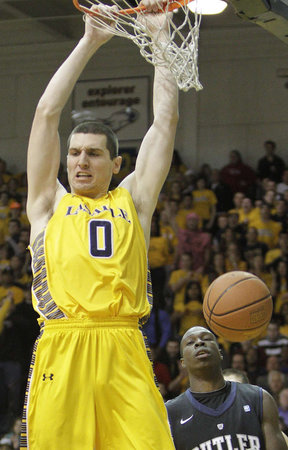
2.  Jerrell Wright, Junior, LaSalle, 10.8 ppg, 6.7 rpg, 1.0 bpg last season.

Jerrell is a very strong low-post presence.  Standing 6’ 8” and coming in at a solid 240 lbs, he provides great balance to a LaSalle team that relies heavily on excellent guard play.  Jerell is very good at establishing himself on the block.  He is solid rebounder and shot-blocker as well.  He has a variety of moves that enable him to be an effective scorer.  If he can add an ability integrate countermoves finishing with his right hand, he will be a real problem for A10 defenses over the next 2 seasons.

Image

Tie 3.  JayVaughn Pinkston, Junior, Villanova, 13.3 ppg, 5.0 rpg, 0.5 bpg last season.

At 6’ 7” and 240 lbs., Pinkston is powerful athlete with solid ball-handling skills that allow him operate on the interior or the perimeter.  He is good jump shooter who can hit an occasional 3-pointer.  His forte, however, is using his strength and agility near the basket.

Image

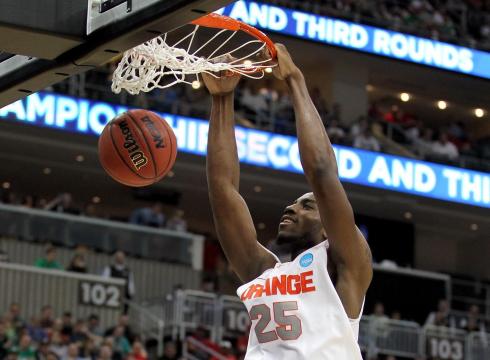
Tie 3.  Rakeem Christmas, Junior, Syracuse, 5.1 ppg, 4.6 rpg, 1.8 bpg last season.

By far, the most difficult player to assess.  Undoubtedly, the most physically gifted player on the list.  He only played 20 mins per game.  His production has been well-below what was expected coming out of High School as a McDonald’s All-American.  Blessed with great size and very good athleticism, I look for Christmas to establish himself as a dominant force in the ACC over the next two years.

Image

4.  Halil Kanasevic, Senior, Saint Joseph’s, 8.5 ppg, 7.2 rpg, 1.7 bpg last season.

A high skilled basketball player at 6‘ 7” and 258 lbs, Kanasevic brings a variety of assets to the Saint Joseph’s attack.  A very capable ball-handler, Kanasevic brings the ball up the floor when needed.  He is the best passer among all the “Bigs” on the list, as evidenced by his 3.5 assists per game.  A capable scorer, Halil has outstanding footwork in the low post.  His jump shot is respectable and he shoots 27% from the three point line.  An very effective position defender, Halil averaged 1.7 blocked shot per game last season.  If he can control his emotions and maintain focus this season he should be one of the better Bigs in the A10.

Image

5.  Gene Teague, Senior, Seton Hall, 11.2 ppg, 7.2, 0.5 bpg last season.

An imposing physical presence at 6’ 9” and 270 lbs, Teague is traditional low-post, back to the basket “Big.”  Blessed with soft hands, Teague is able to establish himself in the low post and finish with a variety of moves.  A good athlete, Teague is able to run very well for a player of his size.  A very good outlet passer, he is depended upon to ignite the Seton Hall fast break.  If he can maintain his physical conditioning, he will be one of the premier “Bigs” in the Big East Conference this season.

Image

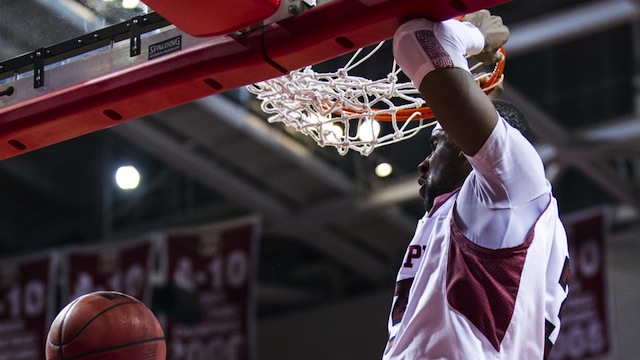
6.  Anthony Lee, Junior, Temple, 9.8 ppg, 6.8 rpg, 0.8 bpg last season.

Possessing a very long wingspan and a deft touch around the basket, Lee scores on a variety of hook shots and short jumpers. At 6’ 9” he’s a little on the thin side, but he will continue to add muscle while maintaining his athleticism.  With the departure of one the most prolific scorers, Khalif Wyatt, in Temple’s illustrious history, Lee will be asked to provide more scoring this year for the Owls.  I look for Lee to more than hold his own against Louisville, UConn and Memphis when they make their way to North Broad Street this season.

Image

7.  Steven Zack, Junior, LaSalle, 6.4 ppg, 6.4 rpg, 1.3 bpg last season.

A true center, Zack has a tremendous upside.  Still filling out his 6’11’’ 240 lb. frame, Zack provides a great front court compliment to Jerell Wright for the Explorers.  A little raw offensively, Zack does his scoring very close to the basket.  He runs the floor and battles for position every single play.  If he can avoid foul trouble on a more consistent basis, I look for his production to increase substantially.  It would not be a surprise to see his name mentioned as an NBA prospect, if he continues to develop over the next 2 seasons under the tutelage of Dr. G and the rest of the Explorer coaching staff.

Image

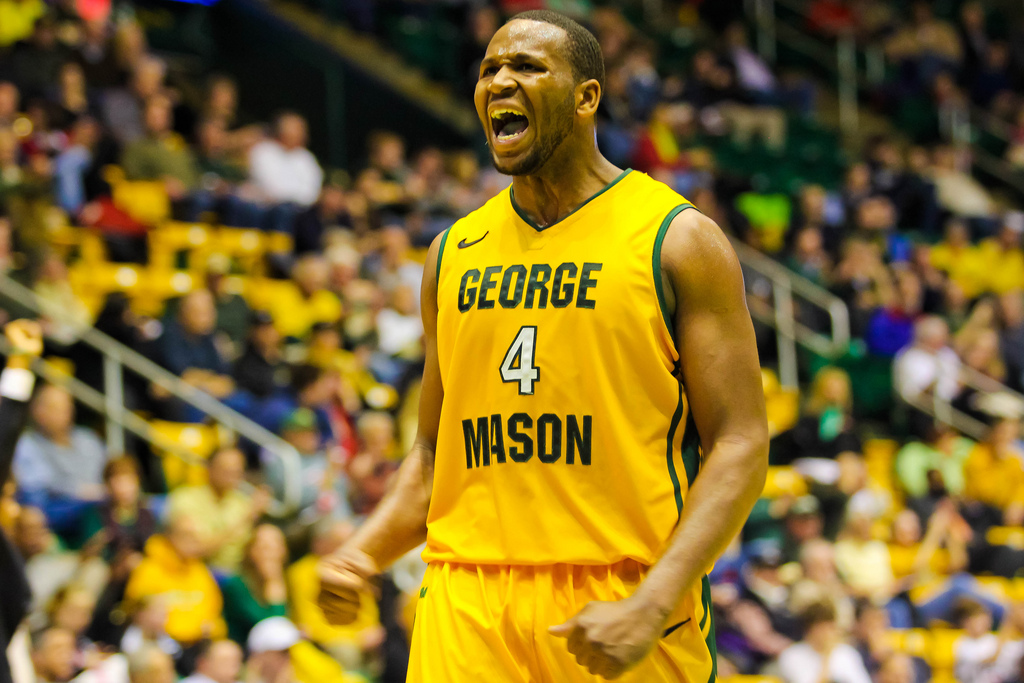
8.  Eric Copes, Junior, George Mason, 5.9 ppg, 6.0 rpg, 1.1 bpg last season.

Another traditional back to the basket big man, Copes provides a strong presence in the paint for George Mason.  He started all 34 games last season and led the team in rebounding and blocks.  While his offensive game is still unrefined, he very capable of finishing close to the basket.  Copes has exceptional timing and consistently forces defenders to alter their shots at the rim.  A very young (20 years old) college junior, Copes could evolve into a high level player in the A10 over the next 2 seasons.

Image

Tie 9.  Daniel Ochefu, Sophomore, Villanova, 3.5 ppg, 4.1 rpg, 0.7 bpg last season.

While backing up Mouphtaou Yarou last season, Ochefu was limited to 17.5 minute per game.  Look for his production to increase substantially with Yarou’s departure.  At 6’11” and 240 lbs, he possesses all of the physical tools to be a dominant big man in the Big East.  Still learning the game, he will play an important role for the Wildcats this season.

Amile Jefferson

Tie 9. Amile Jefferson, Sophomore, Duke 4.0 ppg, 2.9 rpg last season

Where will Amile play? How much will Amile play?  No one can argue against the fact that he is one of the MOST talented Philly kids in college basketball.  But a player has to actually play.  At Duke, Jefferson played less than 13 minutes per game.  Will he play on the wing? Will he play in the post?  “I think Amile can play any number of positions. He’s a guy that can play both frontcourt positions, he can play on the wing, he’s a basketball player,” associate head coach Steve Wojciechowki said.  I’m including Amile here because he has made an effort to gain weight over the summer.    Duke has landed the highly recruited Jabari Parker and he expected to play heavy minutes in the front court.  Amile supporters recall his days as a McDonald All-American.  College basketball fans are anxiously waiting for the potential to manifest itself in the ACC.

Image

10.  Daniel Stewart, Senior, Rider, 10.6 ppg, 7.2 rpg, 0.7 bpg last season.

Coming in at 6’6” and 215 lbs, Stewart is an undersized Big who relies on quickness and exceptional athleticism to compete against much larger opponents.  An outstanding leaper, he is known for finishing with power and force at the rim.  Stewart does an exceptional job rebounding and defending the basket for Kevin Baggett’s Rider Broncs.  If Junior Fortunat can continue to develop as a low post presence, look for Stewart to expand his game and flourish as an offensive force during his senior season.

11.  Marcus Kennedy, Sophomore, SMU, redshirt last season.

12.  Dartaye Ruffin, Senior, Drexel, 6.9 ppg, 6.8 rpg, 0.7 rpg last season.

13.  Fran Dougherty, Senior, Penn, 12.8 ppg, 7.5 rpg, 1.1 bpg last season.

14.  Will Barrett, Senior, Princeton, 9.3 ppg, 4.7 rpg, 0.7 bpg last season.

15.  Shaquille Duncan, Junior, Morgan State, 7.3 ppg, 4.1 rpg, 2.2 bpg last season.

16.  Malcolm Gilbert, Junior, Fairfield, redshirt last season.

17.  John Davis, Freshman, Towson, high school last season.

18.  Jeremiah Worthem, Freshman, Robert Morris, high school last season.

19.  Carl Baptiste, Senior, Delaware, 4.0 ppg, 4.2 rpg, 0.4 bpg last season.

20.  Junior Fortunat, Junior, Rider, 4.1 ppg, 3.5 rpg, 0.6 bpg last season.

21.  Xavier Harris, Junior, Fairleigh Dickinson, 4.1 ppg, 3.3 rpg, o.4 bpg last season.

Others to watch:

Julian Moore, Penn State

Quadir Welton, Saint Peter’s

Jai Williams, Saint Joseph’s

Darian Nelson-Henry, Penn

Darryl Reynolds, Villanova

Zac Tillman, Monmouth

Yohanny Dalembert, James Madison

Dominique Reid, Niagra

Xavier Lundy, Rider

Steve Smith, Fairfield

Contact Delgreco K. Wilson at delgrecowilson@aol.com