By Delgreco Wilson, M.A.
Introduction: When the Blueprint Becomes a Prison
There is a moment in every young person’s life when popular culture ceases to be mere background noise and becomes a mirror—a reflection of who they are, who they aspire to be, and what they believe the world expects of them. For young Black children in America, that mirror has, for decades, been double-sided: one face reflecting the resilience and creativity of a people who turned adversity into art, the other reflecting a carnival of dysfunction, materialism, and self-destructive nihilism.
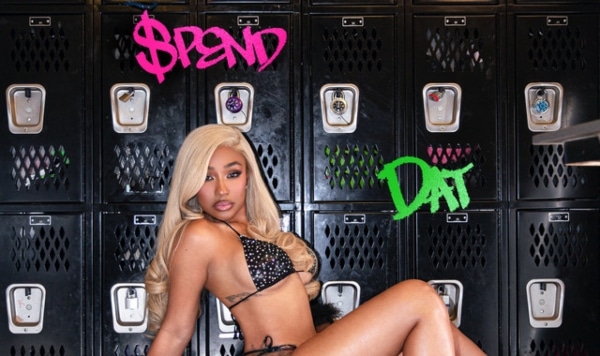
Yung Miami’s “Spend Dat” currently making its rounds through streaming platforms—a track built on the repetitive, hypnotic refrain to “spend that shit”—falls decisively into the latter category. It is not merely a crude celebration of excess; it is a pedagogical disaster. Through its relentless glorification of fraud, theft, hyper-violence, and transactional relationships, this music does not mirror the Black experience. It distorts it. It does not empower. It entraps.
To argue that such music is “just entertainment” is to willfully ignore the developmental science of how children absorb values. To defend it as “street poetry” is to confuse documentation with endorsement. This essay will argue, with the force of both logic and moral urgency, that this genre of music—defined by its celebration of “scammer” culture—systematically poisons the socialization process for young Black children, replacing the tools of upward mobility with the shackles of performative criminality.
The Pedagogy of the Hook: Teaching Crime as a Career Path
Socialization, in its simplest terms, is the process by which children learn the rules of engagement with the world. It is how they discern right from wrong, aspiration from delusion, and patience from impulsivity. Traditional agents of socialization—families, schools, religious institutions—spend years instilling the virtues of hard work, integrity, and delayed gratification. Yet a single three-minute song can undo months of that labor when its chorus functions as a mnemonic device for larceny.
The lyrics in question do not merely reference crime in passing; they recruit for it. The artist calls out explicitly to “scammers” and “boostin’ bitches,” asking, “Where y’all at?” before instructing them to “stuff that shit in y’all bag.” This is not abstract storytelling. This is a roll call, a summons to identity. For a ten-year-old boy or girl with an underdeveloped prefrontal cortex, these lyrics function as a vocational guidebook. They suggest that the path to respect is not through education, apprenticeships, or entrepreneurship, but through the five-finger discount and the wire transfer fraud.
Consider the psychological mechanism at play: children learn through modeling. When a figure of cultural relevance—an artist with millions of followers and a lifestyle of visible luxury—declares that “spending that money fast” is the highest virtue, the child internalizes a hierarchy of values. In that hierarchy, the teacher is a fool, the office worker is a sucker, and the scammer is a king. This is not a critique of systemic inequality; it is an endorsement of predation as a legitimate response to inequality. By framing fraud as “hustle” and theft as “flipping,” the song systematically dismantles the moral architecture that keeps communities safe and functional.
III. The Tyranny of the Tag: Materialism as Existential Proof
One of the most insidious aspects of this track is its reduction of human worth to the logos on a handbag. The repeated invocation of the “Goyard bag”—a luxury item whose cost often exceeds the monthly rent of the very listeners the artist claims to represent—is not incidental. It is theological. The bag becomes a totem, a visible proof of existence in a world that otherwise renders the young Black subject invisible.
The lyric “Spend that shit” is not a suggestion; it is an existential command. It tells the listener that money has no purpose other than combustion. There is no mention of investment, of homeownership, of generational wealth, or of education. There is only the frantic, anxiety-ridden imperative to display liquidity before it evaporates. This is the economics of the crack era repackaged for the digital age: fast money, faster spending, and no safety net.
For a young Black child, this creates a profoundly damaging cognitive framework. Self-worth becomes entirely extrinsic, dependent upon the ability to flash cash and wear designer labels. But the tragedy is deeper than mere vanity. By equating value with expenditure, the song implicitly devalues the very qualities that lead to sustainable success: discipline, frugality, patience, and intellectual curiosity. The child learns that to be “bossed up” is to appear wealthy, not to be wealthy. This is a formula for lifelong financial illiteracy, a cycle of poverty that is performatively denied even as it is reinforced. When the money runs out—and in the illicit economy, it always does—the child is left with nothing but an empty Goyard bag and a shattered sense of self.
IV. The Cartography of Violence: Mapping “Opps” and Erasing Futures
Perhaps the most unforgivable element of this track is its casual glorification of street violence. The lyrics do not merely nod to conflict; they demand it as a credential for manhood and womanhood alike. “Show me where you spin the block on your opps,” the artist commands, invoking the grim ritual of drive-by shootings. “Hangin’ out the drop, screamin’, ‘Fuck the cops.'”
For a young Black child, these are not just aggressive words. They are a cartography of self-destruction. They map a world where the police are not protectors but enemies, where rivals are not fellow human beings but targets, and where the ultimate sign of respect is the willingness to engage in lethal violence. This is a worldview that has been statistically proven to shorten life expectancy, increase incarceration rates, and devastate communities.
The song offers no alternative framework for conflict resolution. There is no room for dialogue, for de-escalation, or for the painful but necessary work of restorative justice. Instead, the listener is instructed that “face card” and “hood status” are validated through the barrel of a gun. This is not empowerment; it is a death warrant set to a catchy beat. It socializes young boys into a hyper-masculine code that equates emotional vulnerability with weakness, and it socializes young girls—via the line “I like a gangster-ass nigga”—into romanticizing that very danger. The result is a toxic feedback loop, where violence begets trauma, and trauma begets more violence, all while the music industry counts its streaming royalties
V. The Paradox of the “Boss Bitch”: False Feminism and Transactional Love
Young Black girls are not spared from this corrosive influence; indeed, they are subjected to a uniquely pernicious form of manipulation. On the surface, the lyrics appear to celebrate female independence: “Where all my bitches gettin’ money like they niggas?” and “Got they own, don’t do it for the plot.” This is the vernacular of empowerment, repurposed for a generation.
Yet a closer reading reveals a deeply transactional and parasitic model of relationships. The song frames female agency as the ability to “make a nigga cop and block,” reducing romantic partnerships to economic extraction. The “boss bitch” is not a woman who builds a business or earns a degree; she is a woman who manipulates men into spending on her while simultaneously preparing for a federal raid: “Put it up in case the feds come and get ’em.”
This is not feminism. This is survivalist cynicism, dressed in designer clothes. It denies young Black girls the right to aspire to partnership, mutual respect, or shared ambition. It teaches them that love is a commodity, that men are “trickers” to be exploited, and that emotional detachment is a sign of strength. The long-term social consequences are devastating: a generation of young women conditioned to view intimacy as a transaction, and a generation of young men conditioned to view women as either accessories or obstacles. This is the architecture of familial collapse, rendered in three verses and a hook.
VI. The Defense of “Reality” and Its Logical Fallacy
Inevitably, defenders of this genre will invoke the shield of authenticity. They will argue that the music simply reflects the harsh realities of the “hood,” that it gives voice to the voiceless, and that to criticize it is to engage in respectability politics or cultural gatekeeping. This argument is seductive, but it is also intellectually bankrupt.
A reflection that does not offer a way out is not a reflection; it is a cage. The great tradition of socially conscious hip-hop—from Public Enemy to Lauryn Hill to Kendrick Lamar—has always balanced critique with hope, documenting the struggle while simultaneously illuminating the path toward liberation. This song does neither. It does not analyze the systemic conditions—redlining, underfunded schools, mass incarceration—that create economic desperation. Instead, it romanticizes the symptoms of that desperation. It tells children that the only choice is to “get money or lay the fuck down,” erasing the millions of Black professionals, educators, entrepreneurs, and artists who have achieved success through legitimate means.
By presenting a false binary—scam or die—the song strips young listeners of their imaginative agency. It forecloses futures. It tells the child that the world is a closed system, and that the only way to win is to cheat. This is not realism; it is resignation disguised as rebellion. And it is profoundly dangerous.
VII. The Responsibility of the Listener and the Industry
We must be clear: this is not an argument for censorship. The First Amendment protects even the most noxious speech, and rightly so. But the protection of speech does not require its celebration, nor does it absolve us of the moral duty to critique it. Parents, educators, and community leaders must engage in direct, honest conversations with young people about the gap between musical fantasy and sustainable reality.
Moreover, the music industry itself bears a profound ethical burden. Streaming platforms, record labels, and artists profit enormously from the commodification of Black pain and dysfunction. They have a fiduciary and moral responsibility to consider the externalities of their product. When a song that glorifies fraud and violence becomes a top-ten hit, it is not a neutral market outcome; it is a market failure, one that externalizes the costs onto the very communities it claims to represent.
We need a cultural recalibration—one that demands more from our artists and more from ourselves. We need music that celebrates Black excellence without reducing it to a bank balance. We need lyrics that acknowledge struggle without romanticizing self-destruction. We need hooks that inspire building, not burning.
VIII. Conclusion: The Urgency of Now
The stakes could not be higher. The young Black children listening to this song are not abstract demographic data; they are our sons, our daughters, our students, and our future. They are navigating a world that already stacks the odds against them—a world of school-to-prison pipelines, housing discrimination, and healthcare disparities. They do not need a soundtrack that reinforces those barriers. They need a soundtrack that helps them transcend them.
“Spend That Shit” is not empowerment. It is an anesthetic, numbing its listeners to the slow violence of their own diminished expectations. It tells them that the world is a casino, and that the only winning move is to cheat, steal, and spend before the house catches up. But the house always catches up. The only way to truly win is to build a future that does not require a scam to survive.
Let us be clear: we are not condemning the artist; we are condemning the narrative. We are not silencing a voice; we are challenging a message. The socialization of our children is too important to be left to the algorithms of streaming services or the whims of viral hooks. It is time for a new refrain—one that says not “spend that shit,” but build something real. The choice is ours. And the clock is ticking.

