Girard College Taps St. Joseph’s University Hall of Famer, Mark Bass, a Proven Program Builder, as New Boys Basketball Head Coach

PHILADELPHIA, PA — Girard College announced on October 9, 2025 that it has hired Mark Bass, a Mercer County basketball legend with deep ties to the Philadelphia region and a storied history as both a player and coach, as the new head coach of its boys’ basketball team. Long-time St. Joseph’s University coach Phil Martelli introduced Bass to his Girard College team in an emotional and intimate gathering. The appointment signals an ambitious new direction for the program, entrusting it to a figure renowned for his tactical acumen and a proven record of rapid turnaround.

Phil Martelli and Mark Bass

Bass brings over 24 years of coaching experience to the role, most recently serving as an Assistant Coach for Prep and Development Basketball at the South Kent School, a Connecticut-based incubator for elite talent. His hiring is seen as a coup for Girard College, securing a leader with a demonstrated ability to elevate teams to championship contention.

“We are thrilled to welcome a leader of Mark Bass’s caliber and character to Girard College,” said Tumar Alexander, Girard College Vice-President of Operations. “His philosophy extends far beyond the basketball court, emphasizing the development of student-athletes as scholars and citizens. His record of success, both immediate and sustained, makes him the ideal person to build a proud and successful future for our boys’ basketball program.”

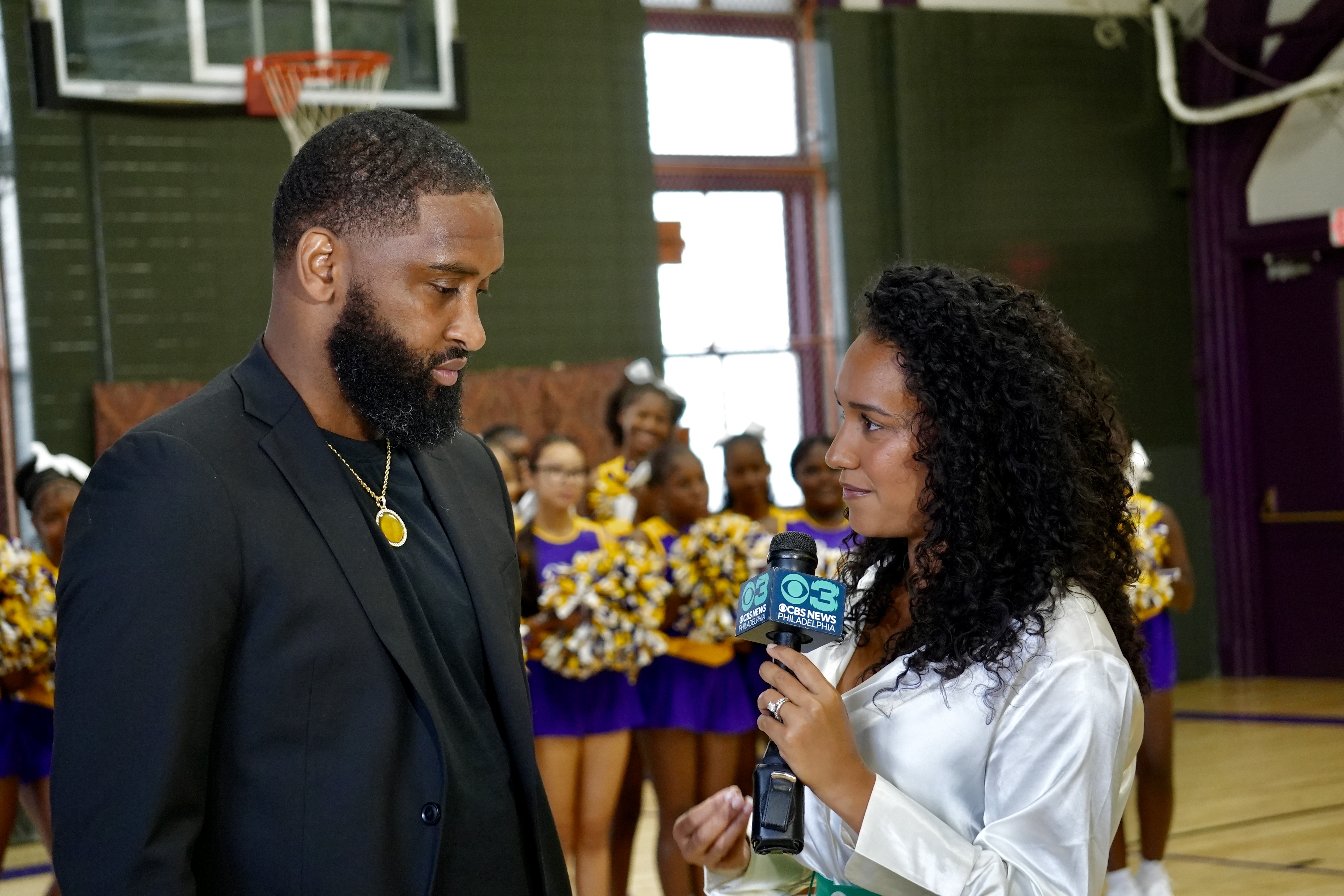
Tumar Alexander and Mark Bass

Bass is not merely a coach; he is a part of the area’s basketball fabric. A member of both the Mercer County Sports Hall of Fame and the St. Joseph’s University Basketball Hall of Fame, he remains the all-time leading scorer for Trenton Catholic Academy (formerly McCorristin), where he led the team to back-to-back state championship games.

His legacy continued at St. Joseph’s University, where he starred as one of the deadliest shooters in the program’s history and a key part of its 1996 NIT finals team. After a professional stint in China, Bass returned to his alma mater, embarking on a 20-year tenure as an assistant coach—the longest in St. Joseph’s history—where he was instrumental in developing NBA players such as Jameer Nelson, Delonte West, and DeAndre Bembry. He also helped lead the Hawks to another NIT final as a coach in 2005.


It is his most recent high school head coaching performance, however, that provides the clearest blueprint for what Girard College can expect. In 2021, Bass was hired to resurrect the Trenton Catholic Preparatory Academy program, a decision hailed at the time as an “absolute no-brainer.”

The results were instantaneous and profound. In his first season at the helm, Bass engineered a dramatic resurgence, leading the Iron Mikes to a Mercer County Championship and, for the first time in 12 years, a South Jersey, Non-Public B title. His team finished the season ranked No. 4 in the state by NJ.com.

“In the program’s first year under coach Mark Bass, Trenton Catholic Preparatory Academy plays with a toughness on the defensive end that figures to make these Iron Mikes a lethal threat,” wrote Greg Johnson of The Trentonian in a mid-season assessment.

Mark Bass and Guy Moore, Girard College Director of Athletics

John Castaldo, Bass’s own high school coach at McCorristin, praised the hire at the time, noting, “He returns to his alma mater with a wealth of basketball knowledge… His skills in developing and nurturing relationships are outstanding. He has always been an individual of high character and moral integrity.”

Bass’s expertise is further honed by his role as a Head Coach for the prestigious WeR1 Basketball Club on the Under Armour Association circuit, where he has continued to develop top-tier amateur talent.

“I am incredibly honored and excited to join the Girard College community,” said Bass. “This is a special institution with tremendous potential. I look forward to building a program that the entire Girard family can be proud of—one that competes for championships while upholding the highest standards of excellence, discipline, and sportsmanship. The work begins now.”

Bass holds a Bachelors degree in Marketing from St. Joseph’s University and Master’s degree from Rider University. He officially assumes his duties on October 20, 2025.


About Girard College


Girard College is a landmark independent boarding school in Philadelphia, providing a full-scholarship, holistic education for academically capable students from families with limited financial resources, serving grades 1 through 12.

###

Wanamaker takes the Reins at Roman Catholic: The Crown Jewel of Philadelphia Scholastic Basketball

By Delgreco K. Wilson

A Century of Dominance in the City of Brotherly Love

PHILADELPHIA, PA – Philadelphia’s basketball heritage reads like a who’s who of hardwood legends—from Wilt Chamberlain’s earth-shaking dunks at Overbrook to Rasheed Wallace’s dominant reign at Simon Gratz. Yet when the final buzzer sounds on this century-long game of Philadelphia basketball supremacy, one program stands above all others: Roman Catholic High School and its record 34 Philadelphia Catholic League (PCL) championships. No other institution has so consistently combined competitive excellence with transformative life lessons for young men, creating a basketball dynasty that has flourished across generations.

The numbers alone tell a compelling story. Since the Catholic League’s formation, Roman Catholic has captured nearly twice as many titles as its nearest competitor (Neumann-Goretti with 22). This isn’t merely a statistic—it’s a testament to an enduring culture of excellence that has survived economic downturns, demographic shifts, and the ever-changing landscape of scholastic sports. From Billy Markward’s nine championships between 1922-1934 to Chris McNesby’s most recent titles in 2023-2024, Roman Catholic has set the gold standard for Philadelphia basketball.

The Coaches Who Built a Legacy

What separates Roman Catholic from other storied programs isn’t just the quantity of championships, but the quality of leadership that has sustained success across distinct basketball eras. The program’s foundation was laid by Billy Markward, whose teams dominated the 1920s and 1930s with an unprecedented nine PCL titles. His squads set a standard of excellence that would become the program’s hallmark—a blend of disciplined play and relentless competitiveness.

The torch was later carried by Speedy Morris, who ushered in a new golden age during the 1970s with six championships between 1969-1980. Morris’s teams embodied Philadelphia basketball—tough, fundamentally sound, and mentally resilient. His success proved Roman Catholic could adapt to the modern era while maintaining its core values.

Roman Catholic Coaches – Dennis Seddon, Brad Wanamaker and Chris McNesby

Then came Dennis Seddon, whose tenure from the late 1980s through 2000 represents perhaps the most dominant stretch in PCL history. Nine championships in twelve years (1989-2000) established Roman Catholic as the league’s preeminent power. Seddon’s influence extended beyond wins; he mentored future coaches like Chris McNesby, creating a coaching tree that would extend the program’s success into the 21st century.

McNesby himself—a Roman Catholic alum who played under Seddon—added four PCL titles and three PIAA state championships across two coaching stints (2008-2016 and 2021-2024). His 270-73 career record reflects both consistent excellence and the ability to develop players for life beyond basketball—a hallmark of the Roman Catholic philosophy. As McNesby noted, “It’s after they’re finished playing, seeing them get jobs and seeing them be successful fathers and husbands, and then see them passing it forward”.

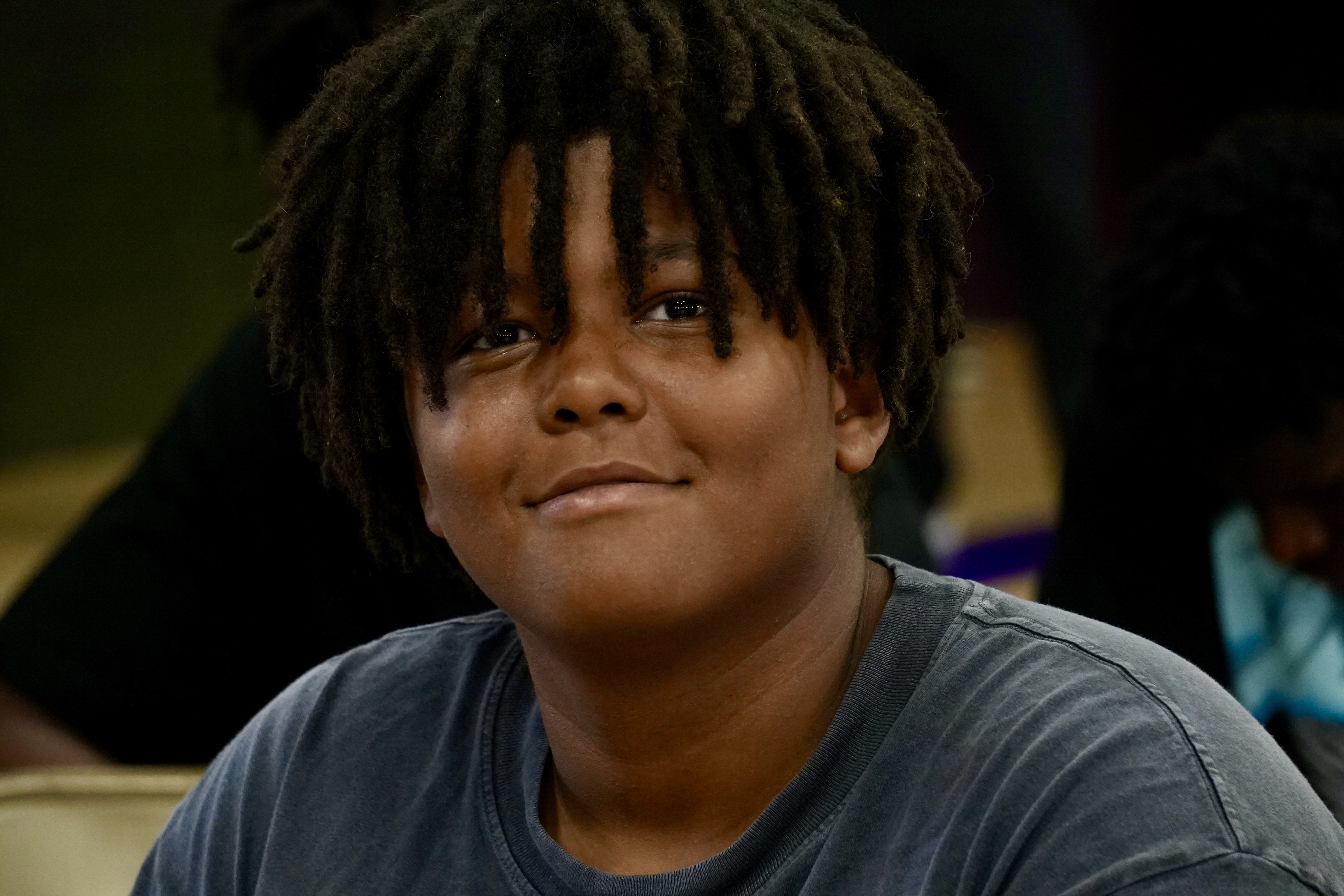
Roman Catholic Freshman Shayne Jackson

More Than Championships: The Roman Catholic Difference

Roman Catholic’s supremacy isn’t measured solely in banners. The school has long served as a transformative institution for Philadelphia’s youth, particularly those from working-class backgrounds. Founded in 1890 as the nation’s first free Catholic high school for boys, Roman Catholic maintained its commitment to accessibility even after transitioning to tuition-based education in the 1960s. This mission—to provide “a comprehensive academic curriculum within a disciplined Catholic environment”—has shaped generations of student-athletes.

The school’s impact extends far beyond the court. As McNesby reflected on his own experience: “You really meet kids from all different areas, backgrounds, demographics, financial status. It helps you grow up pretty quickly, and you really learn how to get along with others”. This environment fosters the type of personal growth that produces not just great players, but great men—a fact borne out by the program’s alumni network of successful professionals across industries.

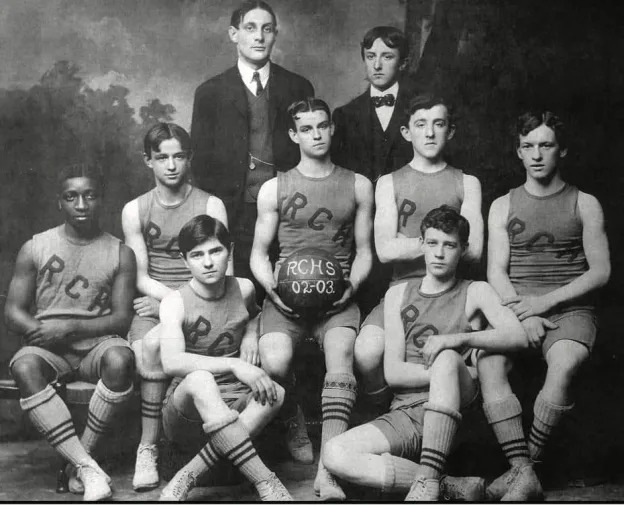
Roman Catholic’s 1902 Basketball Team featuring John Lee (far left)

Roman Catholic has also been a pioneer in racial progress. In 1902—just 12 years after its founding—the school fought for the inclusion of John Lee, the first Black player in the Catholic League. This legacy makes Brad Wanamaker’s recent appointment as head coach particularly significant. As the program’s first Black head coach and a distinguished alum (Class of 2007), Wanamaker represents both continuity and progress. His hiring—praised by alumni like Mike Ringgold as proof that “Roman is the best high school job in the city”—signals the program’s commitment to opportunity and meritocracy.

The Wanamaker Era: Tradition Meets the Future

Brad Wanamaker’s ascent to head coach represents a full-circle moment for Roman Catholic basketball. A 2007 graduate who led the Cahillites to a PCL championship that year, Wanamaker brings unique credentials: honorable mention All-American at Pittsburgh, 11-year professional career (including four NBA seasons), and firsthand experience of Roman Catholic’s transformative culture. As he noted upon his hiring: “Roman changed a lot in my life coming in, so I feel like I’m forever indebted to them, and what better way to give back than leading the team?”

Wanamaker’s coaching philosophy blends old-school toughness with modern player development. “Better men is the biggest key,” he emphasizes. “Going through adversity, perseverance and being from Philly, just that toughness”. This approach resonates with Philadelphia basketball purists while addressing contemporary challenges facing young athletes. His professional experience—including stints with the Boston Celtics and Golden State Warriors—provides invaluable perspective for players aspiring to collegiate and professional careers.

Notably, Wanamaker represents a new generation of Roman Catholic leadership while maintaining ties to the program’s storied past. He played under Dennis Seddon and served as an assistant to Chris McNesby, absorbing lessons from both mentors. As McNesby observed: “We were riding together to a game and Brad said ‘I’m ready’. After that I felt it was time for me to step aside…The program is in great hands”. This seamless transition exemplifies Roman Catholic’s unique ability to renew itself while honoring tradition.

Conclusion: The Standard Bearer

Philadelphia’s basketball landscape features numerous legendary programs—Overbrook’s Wilt Chamberlain, West Catholic’s Ernie Beck, Simon Gratz’s Rasheed Wallace, Neumann-Goretti’s Carl Arrigale dynasty. Each has compelling claims to greatness during specific eras. But when evaluating sustained excellence across generations, Roman Catholic stands alone.

The numbers—34 Catholic League championships, multiple coaching dynasties, countless college and professional players—only begin to tell the story . Roman Catholic’s true greatness lies in its ability to win at the highest level while fulfilling its mission to develop “men of personal integrity”. From Thomas E. Cahill’s original vision in 1890 to Brad Wanamaker’s groundbreaking appointment in 2025, the school has remained true to its values while adapting to basketball’s evolution.

As Philadelphia basketball enters its second century, Roman Catholic remains the gold standard—a program where championships and character development go hand-in-hand. The Cahillites’ purple and gold banners represent more than victories; they symbolize a tradition of excellence that continues to shape Philadelphia’s basketball identity. In a city that treasures its hoops history, Roman Catholic stands as the most accomplished and influential program of them all.

The Perils of Transition: From Philly High School Stardom to High Major College Basketball

PHILADELPHIA, PA: The journey from high school basketball to high major college hoops is a steep climb fraught with challenges that fans, particularly those entrenched in the local Philadelphia and Camden basketball communities, often fail to understand. The expectations placed on young players—mere teenagers stepping onto the brightest of stages—are not only unreasonable but often cruelly uninformed.

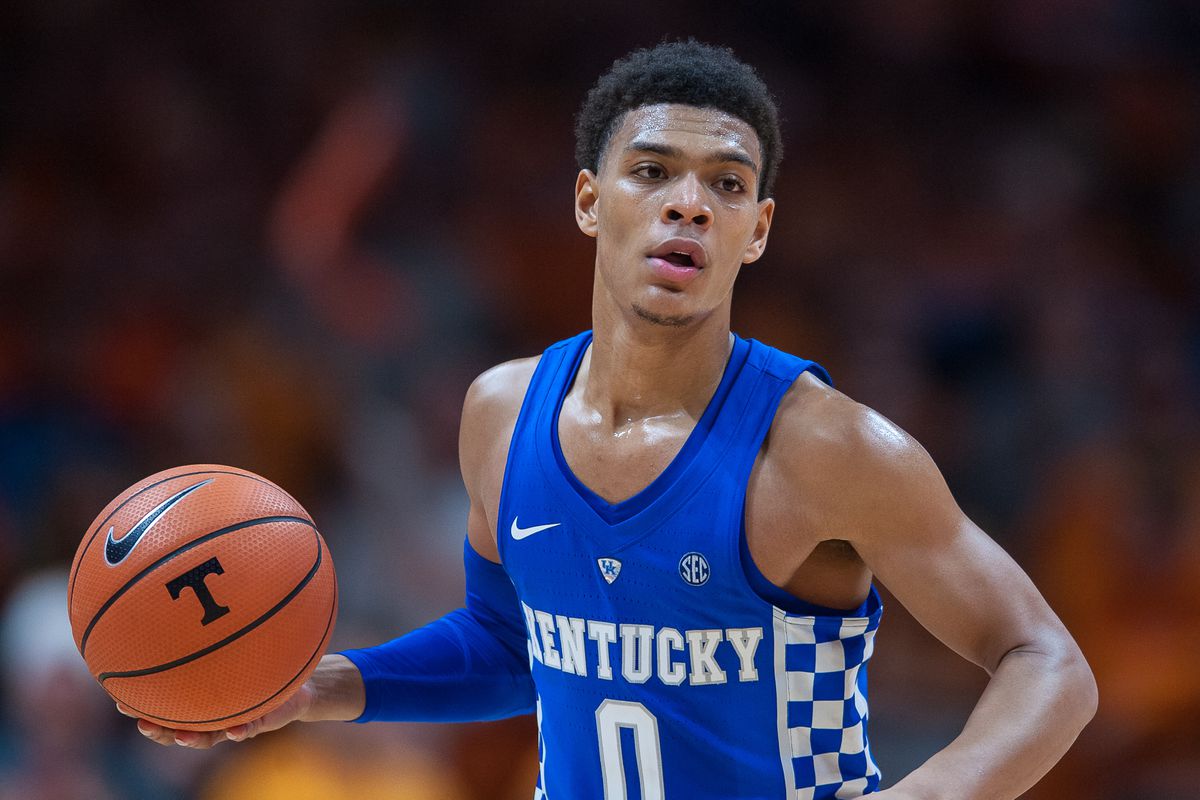
Quade Green

Plainly stated, niggas have no fuckin idea what they are talkin’ bout…

Freshmen entering high major programs are thrust into hypercompetitive environments where success is measured against near-impossible standards. They compete with older, stronger, and more experienced upperclassmen who have little incentive to step aside for an 18-year-old prodigy. The results, while often admirable in context, are ruthlessly critiqued.

Quade Green’s freshman season at Kentucky in 2017-2018 is a case study in this phenomenon. A five-star recruit and McDonald’s All-American, Green arrived in Lexington with immense fanfare. Kentucky, coached by the legendary John Calipari, was a perennial powerhouse, and Green joined a roster featuring seven future NBA players. As a freshman, Green averaged 9.3 points, 2.7 assists, and shot a respectable 37.6% from beyond the arc—all while competing in the cutthroat SEC conference. By any reasonable measure, this was highly successful freshman campaign in the mighty SEC conference. Kentucky went 26-11 that year and finished the year ranked 18th in the nation in the final Associated Press poll. Yet, in his hometown of Philadelphia, his performance was derided by armchair critics who declared his choice to attend Kentucky a mistake.

These critiques, fueled by local pride and a lack of understanding about the difficulty of transitioning to college basketball, are misguided. A player like Green, who carved out a significant role on one of the nation’s top teams as a freshman, was achieving success against the odds. But those odds are rarely considered by fans who see only carefully curated highlight reels and box scores.

Plainly stated, niggas have no fuckin idea what they are talkin’ bout…

The story is repeating itself with Jalil Bethea, a heralded Philadelphia recruit now at Miami. Through four games, Bethea has shown flashes of brilliance, averaging 7.8 points in just 12.3 minutes per game. Yet the grumblings have already started. Some question why a player of his talent isn’t starting or dominating. What they fail to grasp is the reality of high major basketball: Bethea is competing with veterans like Nijel Pack (14.7 points, 6.7 assists), a fifth-year senior, and Jalen Blackmon (14.0 points, 1.7 steals), another seasoned guard. These are players with years of college experience who know the system and the physical and mental demands of the game.

Jalil Bethea

In this context, the transition from high school to college basketball is more than a step up—it is a leap. Freshmen, even the most talented, are adjusting to faster-paced games, more complex schemes, and physically mature opponents. High school dominance against inferior competition like “Collingdale Catholic” or “Roast Pork Charter,” simply does not translate directly to the high major college level.

Additionally, high major basketball rosters are stocked with talent. Freshmen are not handed minutes; they earn them. Coaches at programs like Kentucky, Miami, and Duke are tasked not with developing individual players in isolation but with building cohesive units that can contend for national championships. This often means limiting the roles of freshmen while leaning on upperclassmen who can deliver consistent results.

The problem lies partly in how young players are marketed. Highlight tapes, social media buzz, and grassroots hype build unrealistic expectations. A player dropping 40 points in a high school game might dazzle fans, but the competition level is rarely considered. This leads to a false narrative that high school stars can seamlessly dominate at the collegiate level. When they don’t, fans often blame the player, the coach, or even the program, without acknowledging the broader context.

The consequences of these unreasonable expectations can be damaging. The pressure to live up to hype can erode a player’s confidence. The constant scrutiny can impact mental health, and the pervasive narrative that a player “chose the wrong school” can sow doubt and create tension within a team.

Muthafuckas need to shut the fuck up and let it play out…

High major basketball is not a fairytale; it’s a crucible. Upperclassmen who have spent years developing their skills and bodies do not defer to 18-year-olds, no matter how talented. Coaches prioritize winning over everything else, which often means favoring experience over potential.

For players like Green and Bethea, the freshman year is rarely about stardom—it’s about survival and growth. By the time these players become sophomores or juniors, they often evolve into key contributors, but that progression is ignored by fans who judge them prematurely.

If we are to fairly evaluate young players, we must adjust our expectations. Freshmen should not be seen as saviors but as students of the game, learning and adapting to an environment more challenging than most fans can imagine. Instead of demanding instant results, we should celebrate their resilience, their flashes of potential, and their determination to succeed in the face of daunting odds.

Quade Green’s journey shows that even a “successful” freshman season is not immune to misplaced criticism. Jalil Bethea’s story is still unfolding, but one hopes that he, like Green, has the fortitude to rise above the noise. Fans and critics alike must recognize the difficulty of the transition and the strength it takes to endure. Only then can we truly appreciate the young athletes who dare to take on the challenge of high major college basketball.