PHILADELPHIA, PA – There are stories we tell ourselves to make sense of the world—narratives so ancient they are etched into the human psyche. The myth of the hero struck down, abandoned, and left for dead, only to rise again with greater power, is among the most enduring. It is the story of Osiris, dismembered and reassembled. It is the story of Christ, crucified and resurrected. It is the story of every underdog who has been told, with bureaucratic finality, that their dream is over.
It is also the story of Yazid Powell.
The basketball career of Yazid Powell was crucified and metaphorically left for dead, only to rise again. The arc of Powell’s journey is one of the most powerful narratives in the recent history of scholastic and collegiate sports in Philadelphia. He was subjected to a relentless and concerted effort to humiliate and ruin his athletic career, only to see those schemes followed by a monumental comeback that culminated in winning the MVP of the Championship game in the inaugural JAB Classic. That he did so on the hallowed floor of the Palestra, nine years after certain adults tried to bury him, is not merely a sports story. It is a moral reckoning.
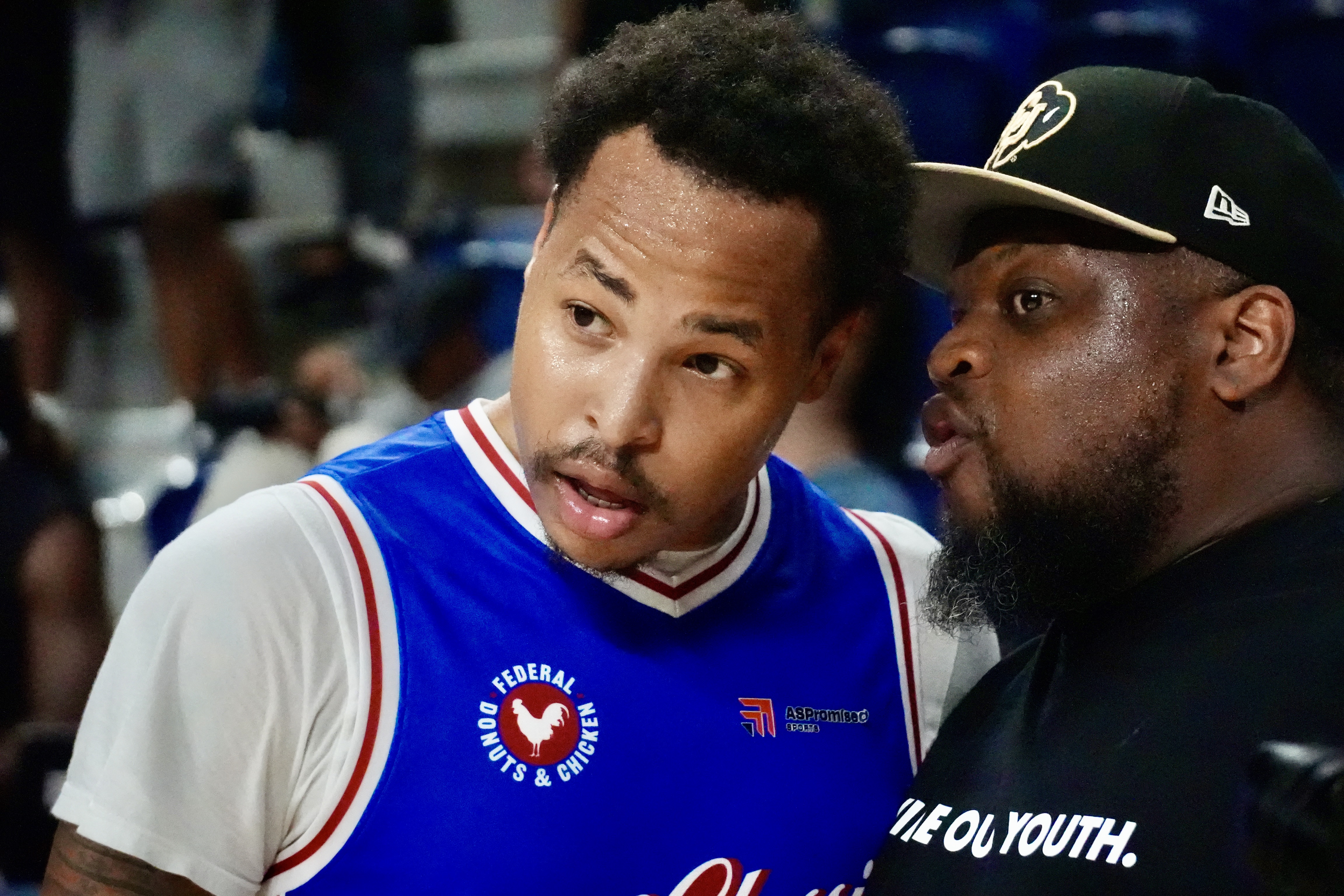
The Crucifixion in Early October 2017
The scene inside that hearing room was one of raw, unvarnished anguish. Tears were cascading down her cheeks. The pain was evident on her face. Veins were throbbing in her neck. She was screaming at the top of her lungs, “Y’all trying to wipe Black Boys off the face of the earth!”
You could sense the vulnerability. You could tell she felt powerless. You could tell she felt betrayed. Romaine Sims had just sat through an eligibility hearing for her son Yazid Powell, a senior shooting guard at Overbrook High School.
She was not wrong. The athletic director and boys basketball coaches at West Philadelphia High School were absolutely intent on ending her son’s basketball career.
Before the hearing, Ms. Sims passionately explained that she was using basketball to keep her son engaged with the educational system. “He’s all right when he’s on a team and playing,” she said. “When he’s not involved with basketball, he’s easily influenced to do stupid things.” Those words were not hyperbole. Powell’s father had been murdered years ago. His older brother was incarcerated in the state penitentiary system. For a Black teenager in Philadelphia, the margins between a future and oblivion are razor-thin.
Basketball was not a luxury; it was a lifeline.
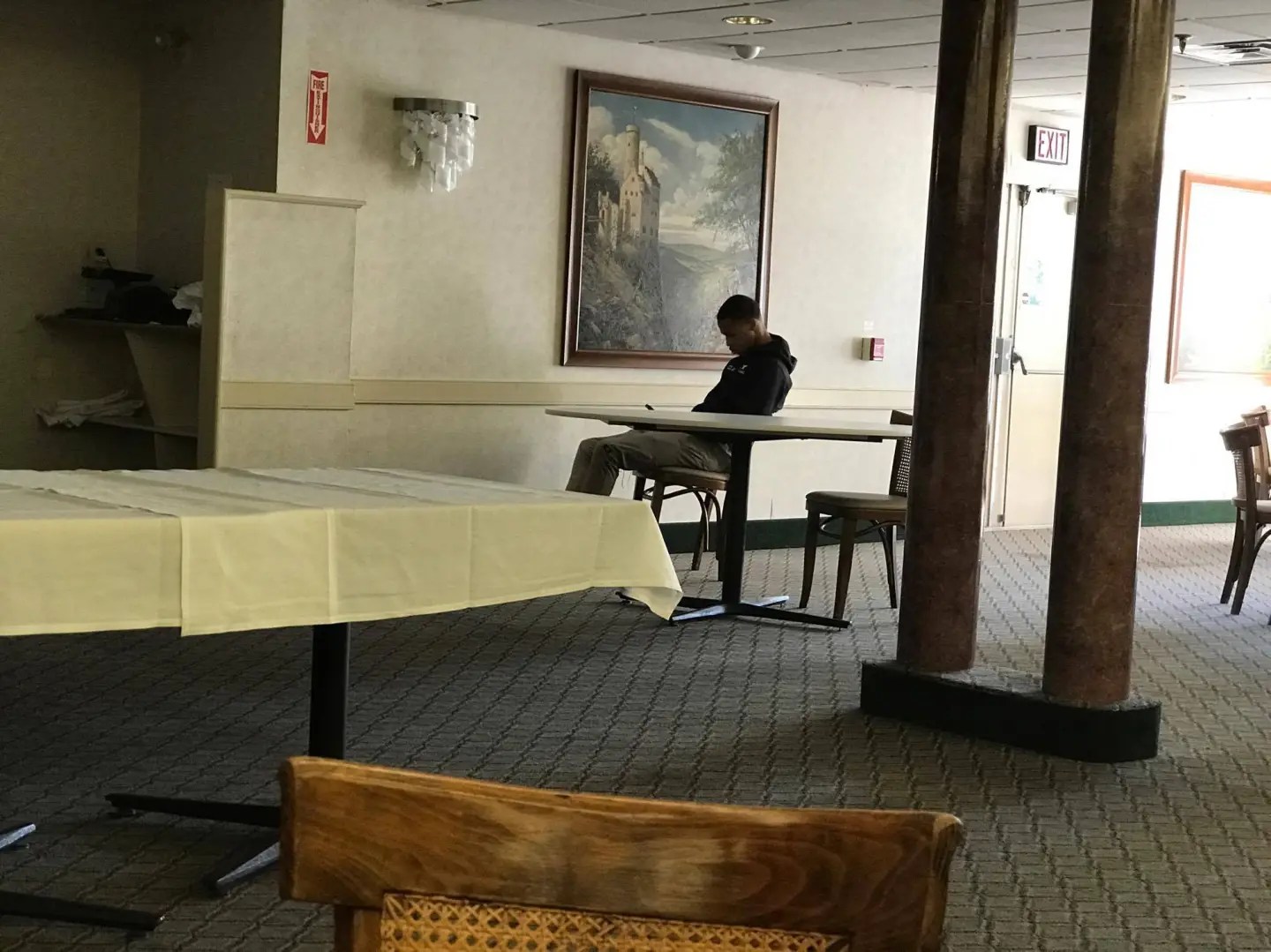
At stake was Powell’s senior season. Would he be eligible to play for Overbrook?
Earlier that spring, Powell had transferred from Boy’s Latin to West Philadelphia High School at the end of February. During the eligibility hearing, Ms. Sims stated that West Philadelphia’s coach, Jermaine Snell, “begged me to send Yazid to West Philadelphia High School. He even sent a car to my house to drive me to a meeting with him.” Snell quibbled with the word “begged” but acknowledged the car.
What is critical to understand is that Yazid Powell never suited up for West Philadelphia. He never played one game for the Speedboys. Yet West Philadelphia’s athletic director, Barry Strube, and Snell actively contested his eligibility at Overbrook. The logic was never made clear, because there was none. What was clear was that these men did not wish to see Powell play for Overbrook. They went on the record pushing for denial of his eligibility.
Mr. Strube claimed he launched an investigation after “Rob Moore (Constitution Head Coach) called me and indicated that Antwann Postell had recruited Powell to Overbrook to play basketball.” When reached by telephone, Moore told Black Cager Sports Media that he has “never called Strube.”
The proceedings had the distinct whiff of a kangaroo court. Mr. Strube produced a copy of Postell’s criminal record, pictures of Powell playing for Postell in the Chosen League, and noted that Powell played in an alumni game at Overbrook after transferring in May. These were presented as evidence of malfeasance. In reality, they were evidence of a community that plays basketball, a community that knows its coaches. The attempt to criminalize Postell’s past and weaponize it against a teenager was a grotesque display of power.
The committee of fifteen was made up of ten white males, two Black males, and three Black females. They voted 13 to 2 to deny Yazid Powell eligibility. West Philadelphia High School, Mr. Strube, and Mr. Snell won that round. Powell was ruled ineligible. They killed his scholastic basketball career. For Powell and his mother, all seemed lost.
These were not adversaries in a fair contest. They were functionaries wielding administrative power against a child. They were determined to strip him of his senior year, of his visibility to college recruiters, of the very structure his mother knew he needed to survive. It was a crucifixion of opportunity, carried out with the cold detachment of process.

A Lifeline Extended
But the oldest stories do not end at the tomb.
Black Cager Sports Media, mortified by the efforts of Mr. Strube and Mr. Snell, reached out to one of the deans of Philadelphia’s basketball community. Sam Rines, the director of Rocktop Academy, indicated that he would allow Powell to play with him at a significantly reduced cost. Rines’s program has helped hundreds of young men earn college basketball scholarships. His response was immediate and humane: “I’m in the business of helping young men better themselves so they can become contributing members of society. Basketball is just a tool I use to accomplish this goal. I hope he’s able to play high school basketball. I know how important that is for kids. But I want him and his mom to know I will do everything I can to help him realize his dream of playing college basketball.”
Like a heaven-sent angel, Rines allowed Powell to keep his dream alive after the attempt to snuff it out. It was not charity; it was an investment in the exact opposite of what the system had attempted. It was an investment in resurrection.
Powell would have to take the hard route. He played one year at the Community College of Beaver County under head coach Bryen Spriggs. Spriggs, too, saw the talent and the drive that West Philadelphia’s administrators tried to erase. Powell then starred at Harcum Junior College, accumulating 661 points, 273 rebounds, 212 assists, and 131 steals in 43 starts. He finally realized his dream of playing NCAA Division I basketball at Buffalo, where he led the team in steals per game, free throws made, and free-throw percentage while rating second in scoring. He played his final collegiate season at UTEP, reunited with Bryen Spriggs, then an assistant coach for the Miners. At UTEP, Powell started all 34 games in which he played, averaging 11.2 points, 5.0 rebounds, and 3.1 assists. He was named to the All-Conference USA tournament team.
This past year, playing professionally, Powell averaged 18.6 points per game in Hungary’s top division and 26.9 points per game in Cyprus.
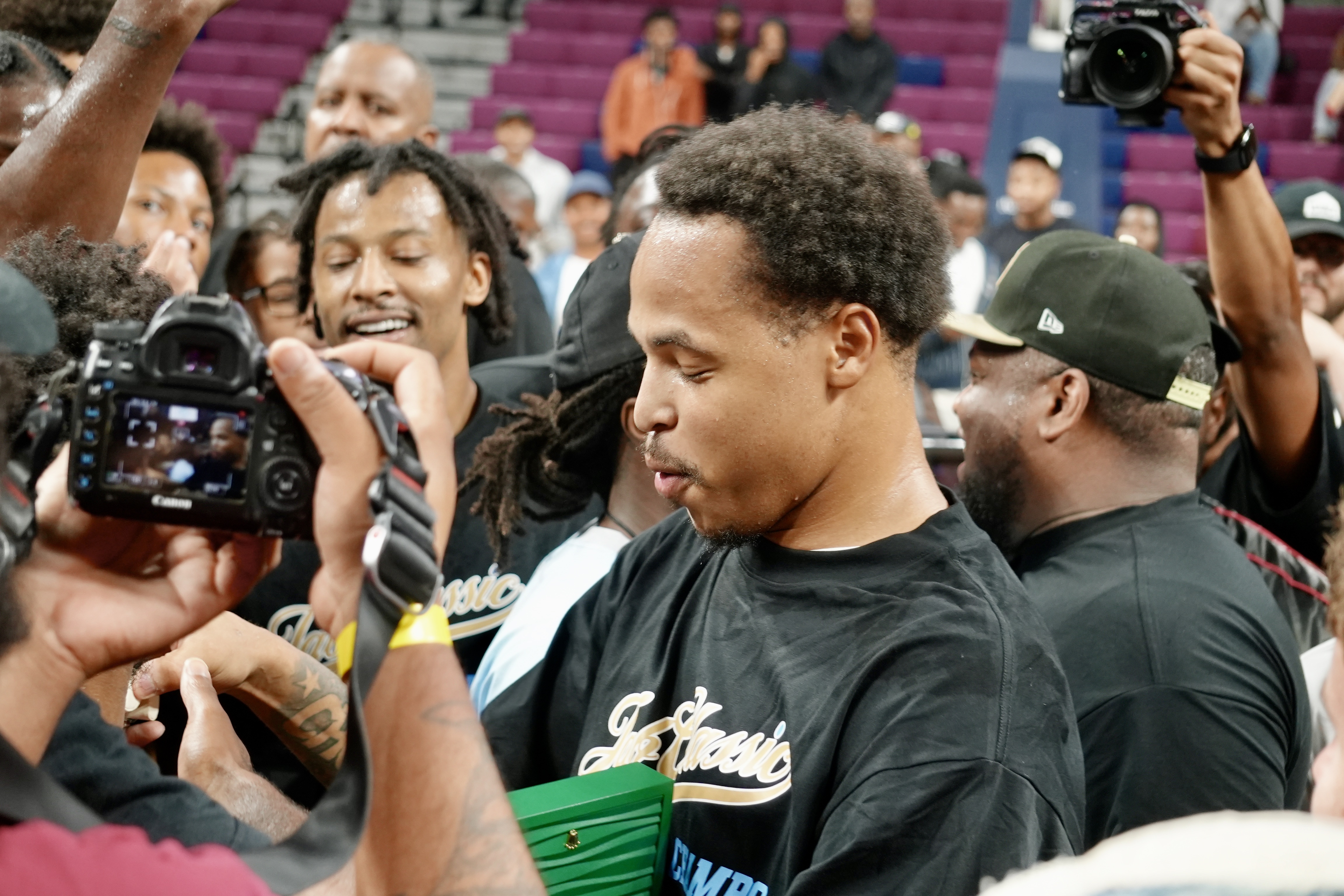
The Resurrection
Nine years after his basketball career was left for dead, Yazid Powell stood on the floor of the fabled Palestra. He led his team to victory in the championship game of the inaugural JAB Classic. His team won one million dollars. Powell was given a Rolex watch as the MVP of the game.
Think about that image. The boy they tried to erase now wore a Swiss luxury timepiece on his wrist, a symbol of precision, of value, of arrival. The boy whose eligibility was denied by a committee of mostly white men in a closed room now stood as the most valuable player on a stage that honored his excellence about a 6 minute drive from where Stube and Snell work everyday.
The resurrection is complete. Not because Powell now has money or trophies, but because the attempt to destroy him failed spectacularly. The administrative machinery of a public institution, wielded by adults who should have been mentors, was exposed as petty and vindictive. Powell’s success is a rebuke to every coach, every athletic director, every official who believes they can decide a child’s fate based on their own small grudges.

The myth of death and resurrection endures because it speaks to a fundamental truth: power can wound, but it cannot ultimately defeat the spirit. Yazid Powell was crucified by the pettiness of West Philadelphia High School. But like all great heroes, he rose. And on that night at the Palestra, with a million dollars on the line and a Rolex on his wrist, he made sure the world knew that the grave was empty.

