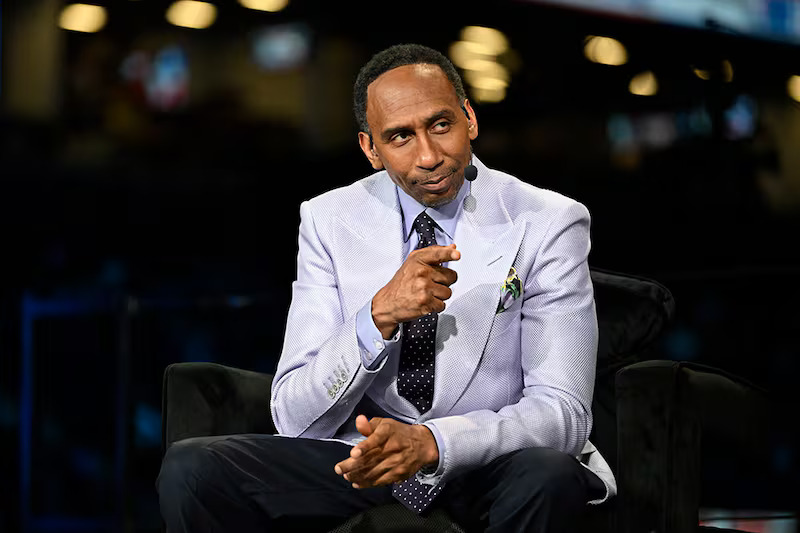
“Coonish” Behavior: Stephen A. Smith, Jason Whitlock, and the Price of Modern Manumission

By Delgreco K. Wilson, Contributing Opinion Writer

For centuries in America, a grim and paradoxical transaction has shadowed the Black quest for advancement: the exchange of communal fidelity for individual freedom. It is a bargain as old as the nation itself, rooted not in the brutality of the whip, but in the insidious mechanics of psychological and economic leverage. Today, we witness a modern, media-saturated iteration of this dynamic. In the sprawling arena of sports commentary, figures like Stephen A. Smith and Jason Whitlock have built lucrative empires. Their success, however, is shadowed by a persistent and bitter accusation from within the Black community: that they are “coons,” a devastating label of racial betrayal. Their critics are identifying a pattern that feels like a 21st-century performance of meritorious manumission—a striving for personal elevation and favor by servicing narratives that comfort a powerful, predominantly white conservative audience, often at the expense of Black solidarity.

The Historical Bargain: Labor for a Glimmer of Freedom

The foundation of this American transaction is centuries deep. The economic architecture of the early republic was built on Black labor without Black liberty. From the cotton fields that fueled the national economy to the domestic servitude that sustained its households, Black work was the indispensable engine. Yet, the profit from that labor was perpetually alienated. The promise, always dangling, was that exceptional service, superhuman diligence, or unwavering loyalty might be rewarded with a sliver of relief—a less cruel master, a chance to buy one’s family, a mythical pathway to acceptance. This established a corrosive template: advancement could be contingent on reinforcing the system’s logic and calming its conscience. The doctrine of “racial uplift” that followed Emancipation demanded impeccable, respectable conduct to assuage white America’s fears and guilt, proving worthiness for basic citizenship. Diligence became a currency, not just for wages, but for attempting to purchase dignity from a system that withheld it by design.

The Modern Marketplace: From Plantations to Podcasts

The post-Civil Rights era did not erase this template; it digitized and broadcast it. The terrain shifted from physical plantations to cultural and ideological ones. As structural and institutional racism persisted, a new marketplace emerged for Black voices willing to translate Black struggle for white audiences, particularly those eager to believe the work of racial justice is complete. This is where the spectacle of figures like Smith and Whitlock becomes a case study. Their playbook is not one of outright bigotry, but of strategic division and absolution, performed for mass consumption. They operate within a media ecosystem that generously rewards controversy that confirms existing biases, creating a powerful incentive to mine intra-community conflict for content that resonates with a broader, whiter audience.
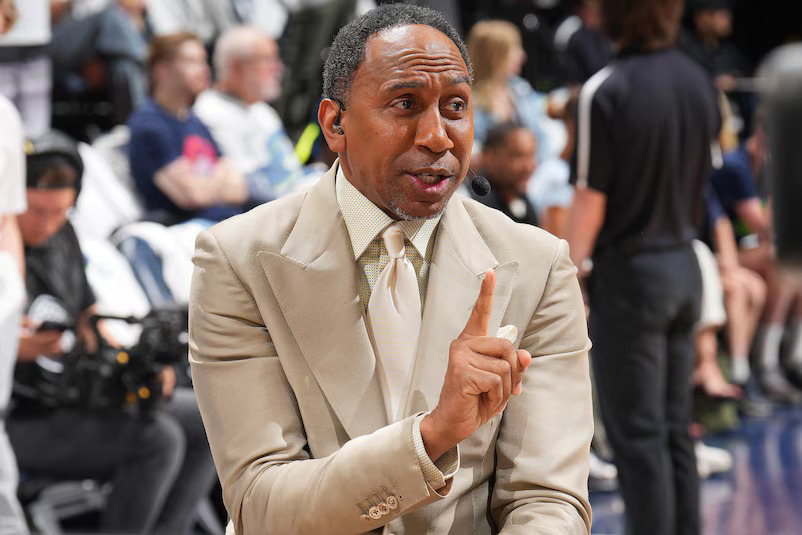
The Playbook of Modern Manumission

Their performance manifests in several consistent, damaging patterns:

The Dilution of Collective Grievance. When vandals scrawled a racial slur on LeBron James’s home, Jason Whitlock dismissed it as a “disrespectful inconvenience,” arguing racism is “primarily an issue for the poor” and that wealthy Black people should not “embrace victimhood.” This is a classic maneuver. By creating a class hierarchy of pain, he fractures communal empathy and offers a narrative of exception. It tells white audiences that systemic racism is either overstated or a crutch for the unsuccessful, while offering successful Black individuals a ticket out of collective identity—if they renounce it.

The Policing of Black Expression. Stephen A. Smith faced backlash for instructing Black Congresswoman Jasmine Crockett on how she “should talk to the President,” a moment critics saw as enforcing respectability politics. This echoes the historical demand that Black anger be polished into palatable, non-threatening discourse. The transaction here is clear: temper your tone, conform to my comfort, and your voice will be amplified on my platform. It is a modern-day echo of being rewarded for “knowing one’s place” in the conversation.

The Strategic Alliance. Perhaps most revealing is the alignment with architects of racial backlash. Smith’s frequent appearances on Sean Hannity’s show are not incidental. Hannity, who trafficked in the racist “birther” conspiracy against President Barack Obama, represents a media ecosystem invested in denying the very structural racism that defines so much of Black American life. To be a welcomed guest in that house is to perform a powerful act of reassurance. It signals that the analysis will not be too sharp, the history not too inconvenient, the demands not too disruptive. This alliance is the clearest evidence of the transaction: access and platform in exchange for a veneer of ideological diversity that demands little substantive change.

A Spectacle Within the Spectacle: The Smith-Whitlock Feud

The bitter, very public feud between Smith and Whitlock themselves underscores the performative nature of this space. They trade nuclear insults, with Smith calling Whitlock “the devil in the flesh” and “worse than a white supremacist,” while Whitlock labels Smith a “fraud” and a “pathological liar” installed by corporate powers. This is more than personal animus; it is a brutal competition within a narrow lane. They are jousting for the crown of the most compelling Black voice in the conservative-coded spectacle, each accusing the other of the very inauthenticity and opportunism their critics see in them both. It is a meta-commentary on the transaction itself, exposing the ruthless jockeying for position and favor that underlies it. Their conflict dramatizes the ultimate isolation of this path: a solitary pursuit of status that necessitates tearing down the nearest competitor, leaving solidarity in ruins.

The Justification for Disavowal: Preserving Collective Struggle

And so, the community’s fierce condemnation—the label of “coon,” the disavowal—is not a denial of their right to individual opinion. It is a historical and political judgment. It is the recognition that their chosen path to “merit” mirrors the old, soul-crushing bargain. They are seen as seeking manumission from the burdens of racial solidarity by performing a service: managing Black anger, explaining away Black pain, and validating the view that the primary remaining barriers are personal, not systemic.

The justified fury they provoke is born of a deep understanding that true liberation has never been won through these solitary transactions. The March on Washington, the Civil Rights Act, the political power of the Black electorate—these were won through collective struggle, un-bought and un-bossed. To see Black media elites today build personal wealth and brand power by seemingly undermining that collective project feels like a profound betrayal. It is the spectacle of the historically shackled selling a blueprint for lighter chains, and calling it freedom.

Conclusion: The Unfinished Story and the Refusal

In the end, the saga of Smith and Whitlock is a painful reflection of an unfinished American story. It reveals that the marketplace for racial commentary still rewards those who make the complex simple, the systemic personal, and the uncomfortable soothing. Their success is a testament not to their individual genius, but to the enduring demand for a certain kind of Black voice—one that, for a price, helps assuage a nation’s guilt without demanding the fundamental change that true absolution requires. The Black community’s disowning of this model is not an act of censorship, but an act of preservation. It is a refusal to let the transaction of the past define the value of their future. It is a declaration that some forms of meritorious manumission are, in fact, a more sophisticated bondage.

###

Delgreco Wilson 

Wilson formerly taught Comparative Politics and International Relations at Lincoln University. He is a leading political analyst, educator, and advocate whose work centers on empowering Black Americans through a deeper understanding of political strategy and its historical roots in the fight against systemic racism and white supremacy. A prominent voice in the Greater Philadelphia Region, Wilson brings a wealth of academic rigor and real-world insight to his analysis of Black political thought and action.

Wilson’s expertise extends beyond the classroom. His incisive columns and articles have been featured in prominent publications such as the Philadelphia Inquirer,  Philadelphia Tribune, Baltimore Afro-American  and Delaware County Daily Times. A sought-after commentator, he regularly contributes to radio programs and podcasts across the Mid-Atlantic region, offering sharp analysis and actionable strategies for advancing racial justice and equity.
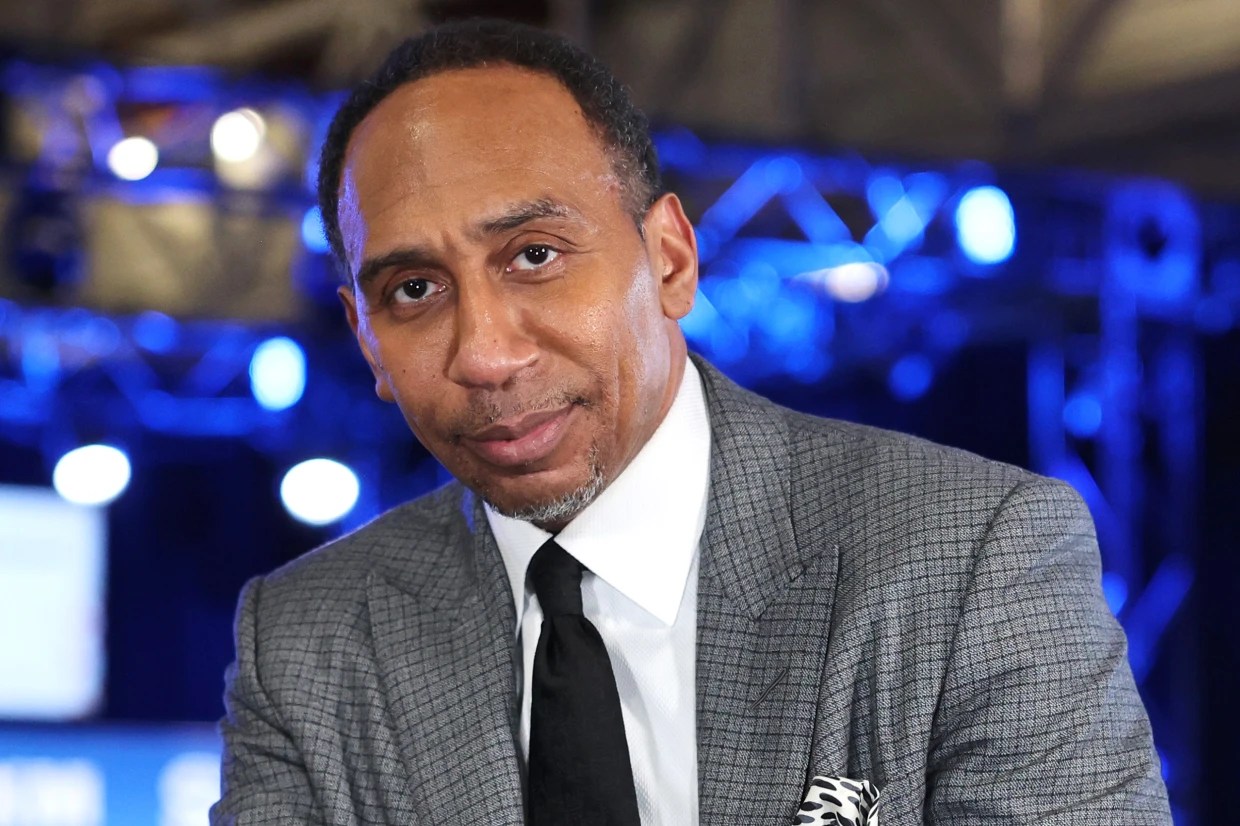
The Dangerous Conflation of Profit and Principle: Stephen A. Smith and the Crisis of Black Political Commentary

by Delgreco K. Wilson, M.A.

CAMDEN, NJ – When the logic of the market replaces the ethics of democracy in political discourse, we all lose.

In the annals of American sports commentary, few declarations have been as revealing as Stephen A. Smith’s famous professional mantra: “I wake up every day asking, ‘how can I make my bosses more money?’ and then ‘how can I get some of it?'” This philosophy has propelled him to the pinnacle of sports entertainment, culminating in a recent ESPN contract worth over $100 million for five years. But when this same transactional worldview—where value is measured exclusively in revenue and influence is calibrated for profit—extends into the realm of political analysis, it threatens to degrade our democratic discourse and undermines the particular responsibilities of Black public figures in an era of political crisis.

Smith’s foray into political commentary and his openness to a 2028 presidential run have made him a lightning rod in Black intellectual circles, where his commentary is increasingly viewed as vacuous at best and dangerously aligned with MAGA interests at worst. The controversy surrounding him represents more than just another celebrity dabbling in politics; it exemplifies the dangerous convergence of entertainment and governance in modern America and resurrects painful historical questions about the pressure on Black figures to seek validation from white-dominated institutions.

The Profit Motive in Political Commentary: When Everything Becomes a Business

Stephen A. Smith’s business philosophy, however successful in sports entertainment, becomes profoundly problematic when applied to political analysis. The fundamental incompatibility lies in their core values: democratic discourse requires truth-seeking, principled argument, and concern for the common good, while market logic prioritizes profit, audience growth, and personal brand expansion. Smith has explicitly acknowledged his lack of political expertise, telling The Washington Post, “I’m certainly not an aficionado by any stretch of the imagination… Most Americans are not aficionados. They don’t know all the intimacies and intricacies of every single issue”. Yet rather than humbly acknowledging these limitations, he presents them as a credential of authenticity.

This approach has tangible consequences. Political analysis driven by entertainment values gravitates toward sensationalism over substance, conflict over consensus, and viral moments over nuanced truth. Smith’s commentary follows this pattern—loud, confident, and often lacking in policy depth. As journalist Carron J. Phillips noted in The Contrarian, “Politics, like elections, have real-world consequences. Thick skin is mandatory in the political landscape. And, given recent examples, Smith hasn’t proved he can take a punch in this arena”. The same performance that works for sports debate becomes irresponsible when discussing issues like tariffs, foreign policy, or civil rights.

Smith’s political rise reflects what happens when celebrity status masquerades as expertise. His appearance in presidential polls and his serious consideration of a 2028 run—despite having never held office or demonstrated deep policy knowledge—speaks to our degraded political landscape. As Bill Whalen, a former media consultant for Arnold Schwarzenegger, observed, “The question is, what does Stephen A Smith believe in at the end of the day?… Where is Stephen A Smith on abortion? Where is he on DEI? Where is he on quotas and affirmative action? Where is he on crime? Where is he on spending? The list goes on. You just don’t know”.

Historical Context: The Burden of Seeking White Validation

To understand the strong reaction to Smith’s political commentary within Black communities, one must appreciate the historical burden of what it has meant for Black Americans to navigate white-dominated institutions and seek acceptance within them. This dynamic is not rooted in any inherent trait of Black people but in powerful structures created by centuries of oppression:

  • The Legacy of Slavery and Jim Crow: For centuries, Black people were systematically dehumanized, with the slave master’s approval often meaning the difference between better treatment and brutal punishment. Under Jim Crow, access to resources, justice, and safety frequently depended on being deemed “respectable” by the white power structure.
  • Respectability Politics: This strategy emerged whereby marginalized groups attempted to police their own members to align with dominant culture’s values, hoping this would grant them social mobility and rights. The unspoken promise was that if Black people acted “properly,” they would be seen as more human and deserving by white society.
  • Gatekeepers of Opportunity: Throughout American history, the primary gatekeepers of economic, political, and cultural power—CEOs, university admissions officers, publishers, Hollywood executives—have been overwhelmingly white. Gaining validation from these gatekeepers often appeared the most direct path to economic mobility, educational access, and cultural representation.

Against this historical backdrop, Stephen A. Smith’s approach reads to many critics as a modern manifestation of these dynamics—a Black public figure gaining platform and reward through amplifying viewpoints that align with white conservative interests rather than community needs.

Stephen A. Smith’s Political Evolution and Black Opposition

Smith’s political positioning has evolved into what he describes as a “fiscal conservative and a social liberal” who is “utterly disgusted” with the Democratic Party. While he claims the mantle of an independent thinker, his commentary consistently aligns with MAGA talking points that have drawn criticism from Black intellectuals and community members.

Table: Stephen A. Smith’s Political Positioning and Community Response

Smith’s commentary on Black voting patterns has been particularly contentious. He has lamented what he calls Black voters’ “unconditional loyalty” to Democrats, arguing that this “disenfranchises” the community by reducing its political leverage. While this argument contains a strategic logic, many critics note that it ignores the historical reasons for Black alignment with Democrats—including the party’s support for civil rights legislation and the Republican Party’s embrace of voter suppression tactics and politicians with white nationalist ties.

The backlash against Smith reflects a broader rejection of what many see as his transactional approach to racial justice. His commentary often frames political choices in terms of market-style negotiation rather than principles of justice or historical solidarity. This approach strikes many Black critics as not just politically naive but historically ignorant of how racial hierarchy actually functions in America.

The perception of Smith as aligned with MAGA interests intensified when Donald Trump himself endorsed a potential Smith presidential run, saying he’d “love to see him run” and praising his “great entertainment skills”. For many Black observers, Trump’s endorsement confirmed Smith’s alignment with political forces that have shown consistent hostility to Black civil rights and democratic participation.

Conclusion: Beyond Transactional Politics

Stephen A. Smith’s extension of his profit-first philosophy into political commentary represents a dangerous narrowing of democratic possibility. It reduces citizenship to a transaction and political discourse to entertainment. The strong negative response from Black intellectual circles reflects not just disagreement with his specific positions but a profound understanding of what happens when community interests are subordinated to personal brand-building and revenue generation.

The challenge for Black communities—and for American democracy broadly—is to resist the siren song of transactional politics that measures value primarily in ratings and revenue. What makes Stephen A. Smith’s political commentary so concerning is not that he holds conservative views, but that his entire approach to politics appears to mirror his approach to business: everything is a negotiation, every principle has a price, and the highest value is expanding one’s own platform and profit.

As we navigate the complex political landscape of 2025 and look toward future elections, the need for authentic representation grounded in community accountability has never been more urgent. The alternative—a political discourse dominated by entertainment values and personal profit motives—threatens to complete the corrosion of our democratic institutions. Black communities’ rejection of Stephen A. Smith’s political brand represents not closed-mindedness but a hard-won understanding that some things—justice, representation, human dignity—should never be put on the auction block.