The Luxury of Louis and the Hunt for Hidden Gems at Marshalls and TJ Maxx: High Major and Mid Major Recruiting Realities

CAMDEN, NJ: Watching the Bryant Bulldogs edge out the home court Delaware Blue Hens, 85-84, in a fiercely competitive basketball game last night, I couldn’t help but reflect on the ever-widening chasm in college athletics, particularly in the era of NIL (Name, Image, and Likeness) deals, transfer portals, and immediate eligibility. As I admired the work of coaches like Phil Martelli Jr. and Martin Ingelsby, their relentless hustle, and their ability to construct cohesive rosters from unlikely sources, my mind drifted to Colorado’s Football Coach Deion Sanders and his now-infamous declaration when he met his inherited football team: “I’m bringing my luggage with me, and it’s Louis.”

Coach Prime

That statement, dripping with urban swagger and intent, encapsulated the reality of the high-major recruiting ecosystem in today’s college sports. Coach Prime wasn’t merely warning his players that change was coming—he was announcing that he, with his cultural cachet, financial resources, and unmatched name recognition, could shop at the most exclusive recruiting boutiques. For Sanders, recruiting isn’t about finding diamonds in the rough; it’s about walking into Louis Vuitton or Gucci and selecting the finest clothing and accessories crafted from the most exclusive materials with zero regard for the price. Plainly stated, Coach Prime was “talking’ dat shit”…

Coach Prime’s Cultural and Financial Advantage

Deion Sanders embodies a unique blend of celebrity, charisma, and cultural influence. As a Hall of Fame athlete who transcends football, Sanders commands attention in a way few coaches can. His name alone draws recruits, and his bold personality ensures that Colorado is always in the conversation. Add to that the deep NIL coffers available at high-major programs like Colorado—backed by boosters, local businesses, and national sponsorships—and you have a recruiting juggernaut.

At Colorado, Sanders can promise recruits not just the opportunity to play but to profit. The NIL deals available to his players mean that they don’t just join a team—they join a brand. This access to financial opportunity is a game-changer in recruiting, especially for families who see NIL as a way to escape economic hardship. Combined with Sanders’ ability to curate a team narrative that feels larger than life, it’s little wonder he attracts top talent.

When Coach Prime references “Louis,” he’s not just talking about talent—he’s talking about perception. High-major recruits are not only better athletes but often come with the polish of elite training programs, social media followings, and marketable personas. At Colorado, these players become the centerpiece of a well-funded, highly visible machine. Sanders doesn’t just coach players—he amplifies their brands.

Martin Ingelsby

The Mid-Major Reality: The Hunt for Prospects at Marshalls and TJ Maxx

Contrast this with the world of mid-major coaches like Martelli and Ingelsby, whose programs don’t have the luxury of shopping for recruits at Louis Vuitton. Instead, they scour the aisles of Marshalls, TJ Maxx, and even scratch-and-dent outlets, searching for overlooked talent and undervalued gems.

The players on mid-major rosters are often transfers, walk-ons, or athletes who have endured significant challenges—whether injuries, academic struggles, or simply being overlooked by high-majors. These coaches spend countless hours scouring the “racks” identifying potential in players who, for various reasons, slipped through the cracks. They’re not offering $300,000 NIL deals; they’re selling opportunity, development, and the chance to shine on a smaller stage.

This makes mid-major recruiting a different kind of art. Coaches at programs like Delaware and Bryant must be relentless scouts, combing through tape, traveling to obscure high school gyms, and building relationships with junior college programs. They have to spot talent that others miss and then cultivate it, often transforming “scratch-and-dent” players into stars.

The Transfer Portal: A Shared Marketplace

The transfer portal has complicated this dynamic further. For high-majors, it’s another Louis Vuitton boutique—a place to restock quickly and efficiently. For mid-majors, it’s a double-edged sword. While they can snag players who didn’t thrive in high-major environments, they also risk losing their own developed talent to the bigger programs.

This constant churn forces mid-major coaches to be even more resourceful. They must balance the need to recruit high-potential transfers with the understanding that a breakout season might mean losing their best player to a higher bidder. This reality is perhaps the most glaring difference between the two levels: high-majors can afford to poach, while mid-majors must perpetually rebuild.

Phil Martelli, Jr.

The Luxury of Louis vs. the Grind of Marshalls

In this era of NIL and transfer portal frenzy, programs like Colorado operate in an entirely different ecosystem than Delaware or Bryant. For Coach Prime, the combination of recognition, cultural influence, and financial resources means he can approach recruiting like a luxury shopping spree. For mid-major coaches, it’s a relentless grind, searching for hidden gems and hoping to polish them before they’re poached.

And yet, there’s beauty in the hunt. Watching Martelli and Ingelsby’s teams battle last night, I saw a different kind of success—one born of resourcefulness, resilience, and the ability to make the most of what’s available. Their players, whether transfers or “scratch-and-dent” pickups, play with a chip on their shoulder and a drive to prove their worth.

Coach Prime’s Louis Vuitton luggage may draw the headlines, but there’s something to be said for the mid-major hustle. In the world of college sports, not every success story starts in luxury boutiques. Some begin in the clearance aisles, and those stories, too, are worth celebrating.

Scouting Report: Kashon Page, Whitman Park Tigers

Scouting Report: Kashon Page
Team: Whitman Park Tigers (Camden, NJ)
Age: 9
Positions: Defensive End, Tight End, Running Back

Kashon Page, Whitman Park

Kashon Page is a dynamic, versatile athlete who excels on both sides of the ball. His ability to impact the game from multiple positions sets him apart as a standout performer on the youth football circuit.

Defensive Analysis

At defensive end, Kashon consistently wreaks havoc in the backfield. His explosive first step, coupled with excellent lateral agility, allows him to beat offensive linemen off the edge with ease. He has a natural instinct for tracking down ball carriers and frequently records tackles for loss. Kashon’s high motor and relentless pursuit make him a nightmare for opposing quarterbacks, as evidenced by his impressive sack totals.

Kashon Page with BIG hit!

Offensive Analysis

On offense, Kashon’s versatility shines through. As a tight end, he demonstrates strong hands and an ability to create mismatches against smaller defenders. He excels in both blocking and route running, making him a reliable target for his quarterback. When lined up at running back, Kashon’s sprinter-level speed becomes a major asset. He has a rare blend of power and elusiveness, capable of breaking long runs and turning broken plays into game-changing moments.

Strengths

  • Athleticism: Combines speed, strength, and agility to dominate in multiple roles.
  • Football IQ: Shows an advanced understanding of the game for his age.
  • Versatility: Can play and excel in multiple positions on both sides of the ball.
  • Work Ethic: Demonstrates a relentless drive to improve, both during games and in practice.

Areas for Growth

  • Technical Development: As he matures, refining his technique, particularly in hand usage on defense and route running on offense, will elevate his game.
  • Physical Development: Continued growth and strength training will help him reach his full potential.

Outlook

As a proud Camden native, Kashon Page has his sights set on suiting up for Camden High in the future, a goal that seems well within reach given his current trajectory. With his natural talent, relentless work ethic, and love for the game, Kashon is poised to become one of the most highly recruited middle school prospects in the region. His playmaking ability and leadership on the field already make him a cornerstone of the Whitman Park Tigers, and his best football is still ahead of him.

Projection: High-impact middle school player and future star at Camden High. Keep an eye on Kashon as he continues to develop his game and establish himself as a premier talent in New Jersey youth football.

Powerhouse Emerging at Penn Charter Under Coach Brandon Williams

PHILADELPHIA, PA – In just his second season as head coach, Brandon Williams has transformed the basketball program at Penn Charter into a national destination for high major college coaches. The once overlooked campus in East Falls is now at the center of the basketball map, luring recruiters and scouts to witness a remarkable assembly of talent. Williams’s efforts have vaulted the Quakers into the ranks of the elite in Philadelphia high school basketball, making it impossible to ignore their rise.

Earlier tonight, Penn Charter’s senior point guard Jake West made headlines with his commitment to Northwestern University, securing a spot in the Big Ten under coach Chris Collins. West’s decision marks a significant moment for the program, but it’s just one in a series of high-profile commitments. His backcourt partner, Kai Shinholster, is also Big Ten-bound, set to play for the University of Minnesota. Meanwhile, the team’s versatile big man, Matt Gilhool, will head south to join the LSU Tigers in the powerhouse SEC, turning down a slew of high major offers.

These achievements on the recruiting front are not isolated incidents but rather part of a growing trend that began with Williams’s arrival. The new coach has reinvigorated a program that was long overshadowed by traditional Philadelphia juggernauts like Roman Catholic, Imhotep Charter, Neumann-Goretti, and Westtown. Now, the roads leading from private airports to the scenic Penn Charter campus are being traveled by top scouts from every corner of the nation, all in pursuit of the school’s newfound talent.

At the heart of Penn Charter’s surge is Williams’s ability to attract and develop top-tier players, a skill that has already paid dividends. The team’s future is exceptionally bright, with freshman guard Carter Smith being widely considered one of the top 25 prospects in the country. The buzz surrounding Smith alone is enough to keep college coaches flocking to the East Falls campus for years to come. His talent, combined with the recent commitments of West, Shinholster, and Gilhool, has cemented the Quakers’ status as a must-see program for high major recruiters.

Williams has instilled a new culture at Penn Charter—one marked by intense preparation, disciplined play, and a sense of ambition that extends beyond the boundaries of the school gym. The players have embraced this culture, with top prospects now seeking out Penn Charter rather than being sought after. The shift is indicative of a broader transformation: the Quakers are no longer content with being competitive; they aim to dominate. The talent level and coaching acumen now in place suggest that the team’s ambitions are more than realistic.

It’s time to include Penn Charter in conversations about the premier programs in the Greater Philadelphia area. For too long, the narrative has been dominated by names like Roman Catholic, Imhotep Charter, Neumann-Goretti, Camden, and Academy of the New Church. With Williams at the helm, the Quakers have earned their place in that elite group. In fact, the arrival of high-profile recruits and the presence of top college coaches at open gyms and games indicates that Penn Charter is no longer just striving to compete against these programs—it may be poised to surpass them.

The school’s transformation is a testament to Williams’s vision and the remarkable pace at which he has executed it. In less than two years, he has established Penn Charter not only as a contender for league and state titles but as a burgeoning national powerhouse. For a program that has long been in the shadow of local rivals, the view from the top is exhilarating, and it’s a view that Penn Charter’s players and fans can get used to.

Brandon Williams’s appointment as head coach has not only changed the trajectory of Penn Charter basketball but may have also rewritten the landscape of high school basketball in Philadelphia. As the season unfolds, and as more top-tier talents commit to the Quakers, the roads to East Falls will become even more well-worn. In Williams’s hands, Penn Charter has become a place where high school players can achieve their loftiest dreams, and college coaches can find the game-changing recruits they covet. The future is bright, and for the Quakers, the journey to the top has only just begun.

The Transfer Portal’s Impact on High School Basketball Scholarships: Why Play in the Black Cager Pre-Live Summer Classic?

By Delgreco K. Wilson

PHILADELPHIA, PA – May 14, 2024 – The world of college basketball scholarships has undergone a seismic shift in recent years, and the epicenter of this transformation lies in the transfer portal. Once a mere footnote in the recruiting process, the transfer portal has now become a game-changer, reshaping the landscape for both high school prospects and college coaches.

The Transfer Portal: A New Frontier

Imagine a bustling marketplace where athletes can freely explore their options, unshackled by the traditional constraints of commitment. That’s the transfer portal—a digital agora where players can test the waters, seek greener pastures, and redefine their collegiate destinies. No longer bound by the rigid boundaries of their initial commitment, student-athletes can now move with unprecedented fluidity.

The Recruiting Dance: A New Choreography

For college coaches, the transfer portal has rewritten the recruiting playbook. Gone are the days when coaches could meticulously court high school phenoms, nurturing them from raw talent to polished stars. Instead, they find themselves wading through a sea of experienced players who have already tasted the college game. These transfer prospects arrive battle-tested, their skills honed in the crucible of actual competition.

The Second (and Third) Act

In this new era, players transferring for the second or even third time are no longer outliers—they’re the norm. The transfer portal grants immediate eligibility, allowing these seasoned athletes to step onto the court without missing a beat. Their maturity, physicality, and court awareness make them coveted assets for college programs hungry for instant impact.

The High School Dilemma

But what of the high school prospects—the fresh-faced dreamers who once held the keys to college basketball scholarships? Their path has grown rockier. With more than 2,000 transfer prospects flooding the market, coaches now have a buffet of options. Why invest in an untested high schooler when a battle-tested transfer is readily available?

The Numbers Don’t Lie

Let’s crunch the numbers. In the Big Ten alone, 79 scholarship players entered the transfer portal during the recent window. These weren’t just fringe players; some were major contributors. The transfer frenzy has left high school recruits jostling for attention, their star potential overshadowed by the allure of experience.

The Way Forward

As we navigate this brave new world, we must strike a balance. Yes, the transfer portal offers exciting opportunities for athletes seeking fresh starts. But let’s not forget the magic of discovering raw talent—the high school kid with fire in their eyes, dreaming of cutting down nets. College coaches, take heed: The next superstar might still be shooting hoops in a high school gym.

In the end, the transfer portal isn’t the villain—it’s the catalyst for change. As we recalibrate our expectations, let’s remember that every journey begins somewhere. Perhaps, just perhaps, the next college basketball legend is dribbling a ball on a high school court, waiting for their chance to shine.

High School Live Periods

In the world of college basketball recruiting, there remain High School Live Periods when coaches focus their attention on high school prospects. These critical junctures allow coaches to assess both academic qualifications and playing ability. Among these periods, two specific windows stand out: June 21-23 and June 28-30. During these six days, Division 1 college coaches engage in off-campus activities to evaluate prospective student-athletes. Importantly, no in-person, off-campus recruiting contacts occur during these evaluation periods.

Black Cager Pre-Live Summer Classic

The Philadelphia/Camden region boasts one of the nation’s premier live events for high school prospects: “Philly Live.” Hundreds of Division I college coaches converge on Philadelphia annually to scout local talent. For high school coaches, participation in Philly Live has become essential—a strategic move to position their players for basketball scholarships. But there’s more: the Black Cager Pre-Live Summer Classic, taking place on June 15th and 16th, offers an additional opportunity. This event allows coaches to “warm up” their teams with two highly competitive games, closely mirroring the actual live period. Coaches can analyze game footage from these matchups to prepare for the high school live period.

While Division I coaches cannot attend the Black Cager Summer Classic, hundreds of small college coaches do. NAIA, Division II, and Division III coaches actively recruit players at Black Cager events. For high school coaches aiming to help their players secure college scholarships, participating in Black Cager tournaments is a strategic move that pays huge dividends. It’s an opportunity to showcase talent, build connections, and open doors for aspiring student-athletes. So, as the calendar turns to those crucial June days, the basketball world watches, and high school coaches seize their limited opportunities to shape the future of the game for the young men in their respective programs.

The Re-Emergence of Black Consciousness Within the Sports Community

Kwalifi - Black Boys Prison Poster-page-0

The term ‘Black Consciousness’ stems from the great Black sociologist W.E.B. Dubois’ development of the concept of the ‘double consciousness.’ Seeking to make sense of the Black American experience a century ago, DuBois coined the term in an Atlantic Monthly article titled “Strivings of the Negro People.” It was later republished and slightly edited under the title “Of Our Spiritual Strivings” in his famous book, The Souls of Black Folk. Du Bois describes double consciousness as follows:

It is a peculiar sensation, this double-consciousness, this sense of always looking at one’s self through the eyes of others, of measuring one’s soul by the tape of a world that looks on in amused contempt and pity. One ever feels his two-ness,—an American, a Negro; two souls, two thoughts, two unreconciled strivings; two warring ideals in one dark body, whose dogged strength alone keeps it from being torn asunder.

The history of the American Negro is the history of this strife — this longing to attain self-conscious manhood, to merge his double self into a better and truer self. In this merging he wishes neither of the older selves to be lost. He does not wish to Africanize America, for America has too much to teach the world and Africa. He wouldn’t bleach his Negro blood in a flood of white Americanism, for he knows that Negro blood has a message for the world. He simply wishes to make it possible for a man to be both a Negro and an American without being cursed and spit upon by his fellows, without having the doors of opportunity closed roughly in his face.”

Black consciousness among athletes reached it’s zenith in the 1960s.  Perhaps, the most glaring example of Black social consciousness during that era took place on June 4, 1967 at 105-15 Euclid Avenue in Cleveland, Ohio. On this glorious day, Jim Brown (Cleveland Browns), Bill Russell (Boston Celtics), Kareem Abdul-Jabbar (UCLA), John Wooten (Cleveland Browns), Jim Shorter (Washington Redskins), Willie Davis (Green Bay Packers), Curtis McClinton (Kansas City Chiefs), Sid Williams (Cleveland Browns) and Bobby Mitchell (Washington Redskins) met with Muhammad Ali and then held a news conference in support of his refusal to be drafted into the U.S. Army in 1967.

african-american-athletes-at-news-conference-af400c2cb31b07a9

Prominent Black Athletes Supporting Muhammad Ali, June 4, 1967

Twenty years later, John Chaney and John Thompson boldly and brazenly exhibited their Black consciousness by condemning the NCAA’s naked attempt to “close the doors of opportunity to poor Black student-athletes.

“The NCAA is a racist organization of the highest order,” said John Chaney on January 12, 1989. “On this day, it instituted a new punishment on black kids who have already been punished because they are poor. Any time the NCAA, which is 90 percent white, considers the youngsters in Division I basketball and football, it discriminates, because 89 percent of the kids are black. I wonder what message they are sending. It’s another hardship for black kids made by white folk.”

CHANEY ALLEN ROBINSON

Hall of Fame Coach, John Chaney

A couple of days after John Chaney excoriated the NCAA, John Thompson, then coach at Georgetown, walked off the court before a Big East Game against Boston College. Thompson said that he would not coach in an N.C.A.A. sanctioned game ”until I am satisfied that something has been done to provide these student-athletes with appropriate opportunity and hope for access to college.”

There can be no doubt that Chaney and Thompson were conscious. They obviously felt their two-ness. They are both American  and Black. In their public pronouncements one can almost literally see their “two souls, two thoughts, two unreconciled strivings; two warring ideals in one dark body, whose dogged strength alone keeps it from being torn asunder.”

These days we are bombarded with stories of urban Black student-athletes and student-athletes from Africa being declared ineligible by the NCAA. They window is closing… Just as Chaney and Thompson noted nearly 30 years ago, the NCAA has “instituted a new punishment on black kids who have already been punished because they are poor.”

Fortunately, there has emerged a level of consciousness among some prominent Black members of the basketball community. Accompanying this increased consciousness, has been some innovative and exciting efforts to lift up young Black students and student-athletes. Athletes are helping younger Blacks understand what they have to accomplish and they are working to provide the necessary tools.

The greatest example of contemporary Black consciousness among athletes has to be LeBron James giving kids from Akron — ones with challenging backgrounds like his — the chance to go to college for free. Jame has partnered with the University of Akron to provide a guaranteed four-year scholarship to the school for students in James’ I Promise program who qualify. The scholarship will cover tuition and the university’s general service fee — currently $9,500 per year.

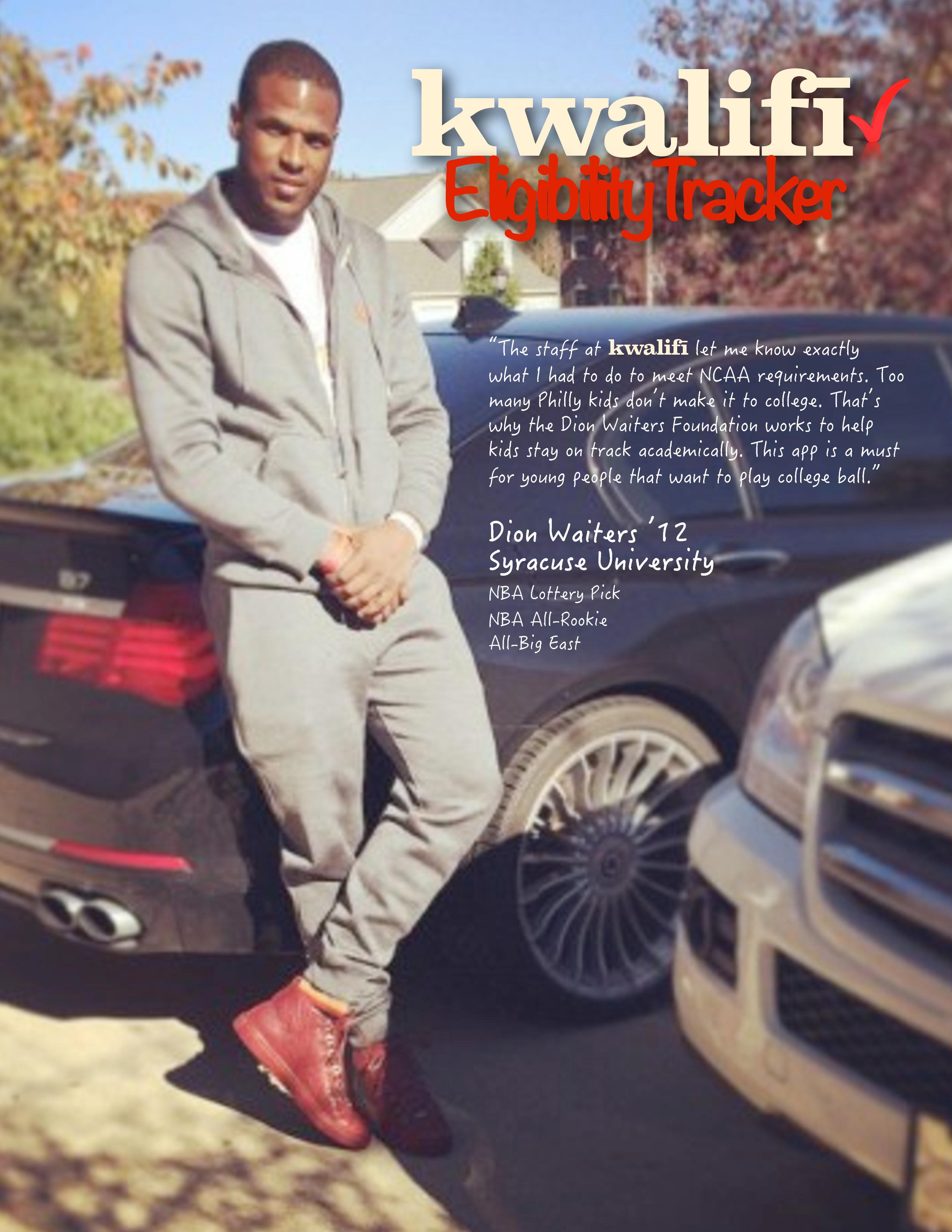
The developers of the kwalifī smartphone app are trying to empower and increase the level of consciousness among high school student-athletes and their families. They want to put famileis in position to take advantage of scholarship opportunities. The kwalifī smartphone app makes it easy to track individual progress toward meeting NCAA and NAIA eligibility requirements.

kwalifi - Dion Waiters Poster-page-0

The kwalifi app has been embraced by some of the most prominent and influential members of the Black basketball community. In cities like Newark, NJ, Philadelphia, PA, Baltimore, MD, Washington, DC and Houston, TX socially conscious Black men are working to increase awareness of NCAA rule changes. Conscious Blacks in the basketball community are working to increase the level of awareness among those coming after them.

Seton Hall great Marcus Toney-El (NJ Playaz), Vincent Robinson (Robinson School) and Roland Whitley (NC State) are leading the charge in Northern New Jersey. Kamal Yard (Philly Pride), Rodney Veney (Philly Pride), Amauro Austin (Philly Pride), Eric Worley (Philly Triple Threat), Charles Monroe (All-City Classic) Paul Gripper (Team Phenom), Steve Pina (ASM Sports) Lonnie Lowry (Team Philly), Terrell Myers (WeRone Hoops) and Aaron Burt (Team Final) are educating Philadelphia area student-athletes and parents about the new rules. In Baltimore, Nick Myles (St. Frances) and Rod Harrison (Mount Zion Prep) are trying hep Black kids access college scholarship opportunities.

kwalifi - Klutch Sports Group pics-page-0

Rich Paul, Klutch Sports Group – LeBron James’ Agent

Curtis Symonds has embraced the kwalifi movement after a spectacular career as a Senior Executive with ESPN and BET. He is working to increase awareness of the rule changes in Northern Virginia, Washington, DC and Prince George’s County, MD. Former McDonald’s All-American Jawann McClellan is working with Houston families.

There is widespread consensus that the recent rule changes will have disparate negative impact on poor Black and African student-athletes. The is also widespread commitment to helping families take control of their eligibility process. The kwalifi app is a tool that empowers individual student-athletes.

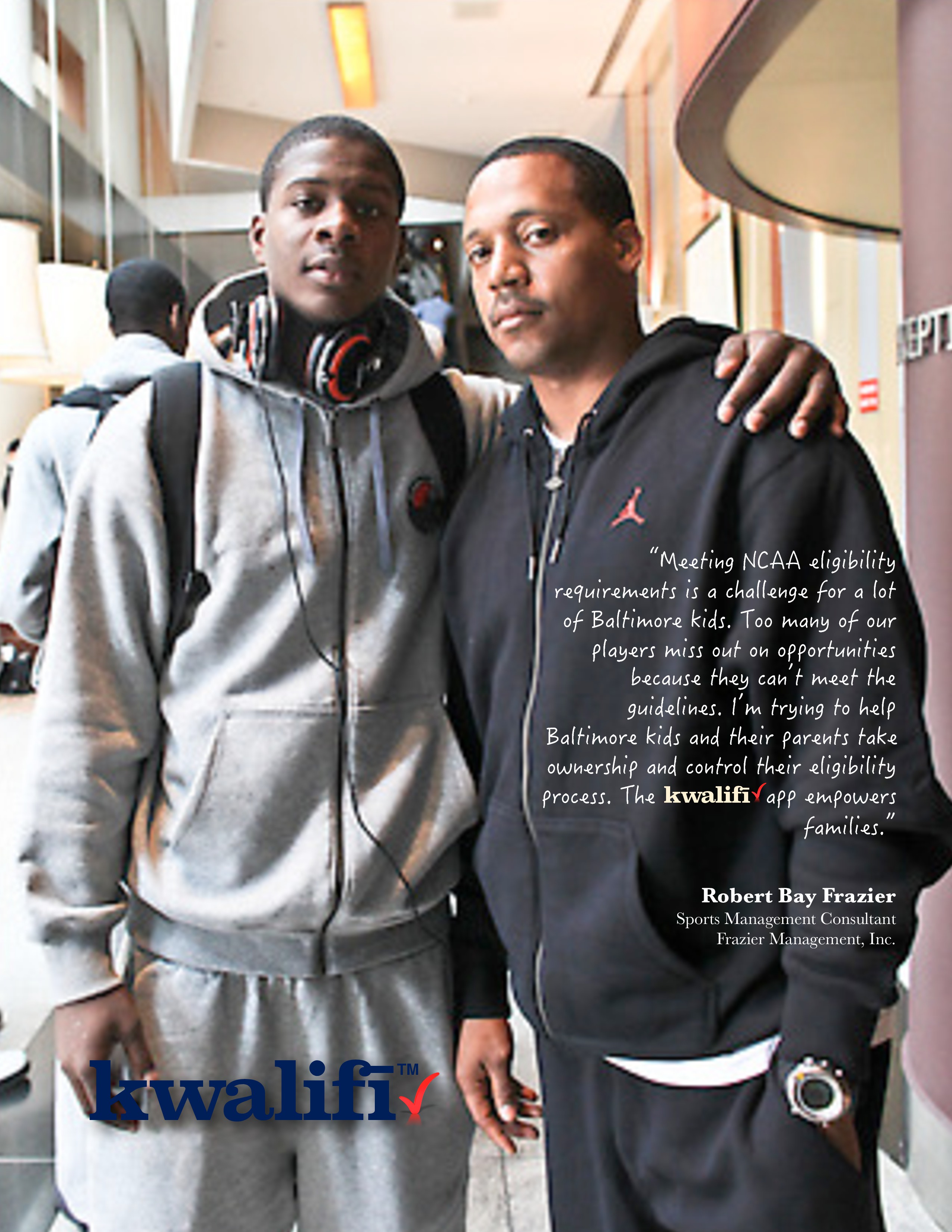
kwalifi - Frazier Management pics-page-1

Josh Selby and Bay Frazier, Frazier Sports Management – Carmelo Anthony’s Business Manager

Social consciousness is re-emerging amongst Black athletes. The kwalifī app is THE tool for conscious student-athletes and their families.

Kwalifi logo

www,kwalifi.com

Dead Men Ballin’: Class of 2016

”I think it’s sort of ironic when they began to integrate the South athletes were the ones used to pave the way, and they were used under the pious assertion that ‘we’re helping these poor kids… Now, apparently someone has said, ‘Enough,’ so they don’t need the kids anymore. They’re using the same rationale they used to get them in to begin to keep them out. I guess it’s a situation where we’re like shoes and clothes. We’re not in style anymore.”
John Thompson, Former Georgetown Coach, 1989

“Let the white man say it: There’s no question in my mind that [the NCAA] is racially motivated, subconsciously or consciously, only because this is the only sport, and these the only people that have such stringent rules put on them. No other sport and no other group of individuals have ever been under the microscope like these people.”
Sonny Vaccaro, Nike, 2002

“The NCAA is a racist organization of the highest order… On this day, it instituted a new punishment on black kids who have already been punished because they are poor. Any time the NCAA, which is 90 percent white, considers the youngsters in Division I basketball and football, it discriminates, because 89 percent of the kids are black. I wonder what message they are sending. It’s another hardship for black kids made by white folk.”
John Chaney, Former Temple Coach, 1989

“That dream could be taken away after six semesters in high school… So for someone that’s a late bloomer, someone that the light bulb doesn’t go on until later, now it’s too late. And just the disproportionate number of minorities that’s going to affect, the number of people in general that’s going to affect, is not good.”
John Thompson, III, Georgetown Coach 2015

“This is not about reducing standards. This is about, this isn’t fair. Why are you telling a kid after his junior year of high school that you are less desirable to get a college scholarship? Or, if the light comes on late, why can’t I go to prep school?”
Paul Hewitt, Former George Mason Coach 2015

Shit ‘bout to get very real… It’s gonna be a bloodbath…

On the first day of school in September, thousands of talented and ambitious Black scholastic student-athletes across America will become ineligible for athletic scholarships to attend NCAA Division 1 colleges and universities.

On that first day of school, the moment the bell rings for homeroom on the initial day of their senior year, they will officially be done… toast…

Dead Men Ballin!!

We’ve been here before… The relationship between Blacks and the NCAA has been adversarial and contentious for more than a century. History never repeats itself exactly, so it would foolish to view the period of Black inclusion from the late 1960s to the present strictly through the prism of the past. Nevertheless, no real understanding of the shit the NCAA is currently pulling is possible without an appreciation of the long-standing struggle that followed the dismantling of rigidly racist/white-supremacist structures that prevailed from 1906 to around 1970.

In a manner very similar to South Africa, the United States developed from it’s inception a unique racist white-supremacist socio-economic structure and political apparatus. As a matter of fact, the NCAA was established on March 31, 1906, exactly ten years after American Apartheid was formally sanctioned with the landmark Plessy v. Ferguson ruling by the US Supreme Court. In the Plessy case State laws requiring racial segregation in public facilities were ruled constitutional under the doctrine of “separate but equal”. Jim Crow Apartheid reigned supreme within much of the United States and in NCAA for the better part of seven decades.
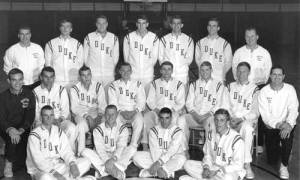
duke-team-1966-67

All-White Duke Men’s Basketball Team, 1967

Following the Civil Rights era, the 1970s witnessed the rapid influx of Black male student-athletes in colleges and universities across the country. By the early 1980s, Black males were a majority in football and basketball. After a decade of unfettered Black participation in America’s great collegiate sports programs like Alabama football and North Carolina basketball, the NCAA decided to pump the brakes.

They ran, and continue to run, a play that has proven very successful time after time. The basic scheme was outlined by the legendary Republican political campaign consultant, Lee Atwater, in a 1981 interview. Atwater, architect of President Reagan’s electoral landslides, explained how Republicans win the vote of racists without sounding racist themselves:

You start out in 1954 by saying, “Nigger, nigger, nigger.” By 1968 you can’t say “nigger”—that hurts you, backfires. So you say stuff like, uh, forced busing, states’ rights, and all that stuff, and you’re getting so abstract. Now, you’re talking about cutting taxes, and all these things you’re talking about are totally economic things and a byproduct of them is, blacks get hurt worse than whites.… “We want to cut this,” is much more abstract than even the busing thing, uh, and a hell of a lot more abstract than “Nigger, nigger.”

Within the context of a historically racist/white supremacist American culture, this was a brilliant and highly effective strategy. Evil? Yes… But highly effective… It’s still being run by politicians emphasizing things like Voter ID laws and crime… The Atwater strategy is an American as apple pie.
Boogie_Man_Promotional_Poster

Poster for Boogie Man, a documentary focused on Lee Atwater’s Role in GOP politics

So much so, the NCAA took it an ran their version of the play.

By the 1980’s the NCAA couldn’t say “Nigger, nigger, nigger”… So they started talking about academic standards, initial eligibility rules, SAT requirements, core course requirements and all that stuff. All the things they talked about were totally “academic” and a byproduct of them was, Blacks get hurt worse than whites… “We want to establish eligibility standards,” is a hell of a lot more abstract than “Nigger, nigger.”

George Raveling, John Chaney, John Thompson and Nolan Richardson immediately caught on to the Atwater strategy. They used their platforms as highly respected college basketball coaches to call out the racist consequences of the initiatives. Chaney breathed fire… he referred to the NCAA as “that RACIST organization” in response to the rule changes. John Thompson actually walked off the court before a game with Boston College in 1989 in protest of what he considered racist NCAA rule changes.
CHANEY ALLEN ROBINSON

Hall of Fame Temple Coach, John Chaney

Jim O’Brien the opposing coach that night said, ”He’s making a statement that a lot of other coaches feel very strongly about.. ‘He is one person who is in a position to make a little noise about this. We’re talking about one of the most highly visible coaches in the country: the Olympic coach, coaching a team that’s in the top five, one of the best programs in the country. So when he does a lot of people sit up and take notice.”

Thompson and Chaney had the unwavering support of their bosses. ”John Thompson is hired as an educator, first and foremost,” said Frank Rienzo, Georgetown’s athletic director. ”One of his responsibilities is to coach, in this particular instance, the education that he is giving to the students who are entrusted to him has to do with things that are much more important than basketball, it has to do with social justice. ‘This Is a Bad Rule.’”
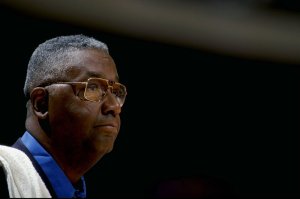
John Thompson

Hall of Fame Georgetown Coach, John Thompson

Fast forward a quarter century… A new organization of minority coaches last week sharply criticized NCAA eligibility standards set to take effect next year for incoming freshmen, saying they will deny too many athletes the opportunity to to go to college.
The National Association for Coaching Equity and Development, a group led by Texas Tech coach Tubby Smith, Georgetown coach John Thompson III, Texas coach Shaka Smart and former Georgia Tech coach Paul Hewitt, issued a statement to The Associated Press said the standards disproportionately target minority and less affluent students in “an unintended consequence beyond acceptability.” They are less straightforward and raw than their predecessors, but their aim is exactly the same: Calling attention to the racist consequences of NCAA eligibility rule changes.
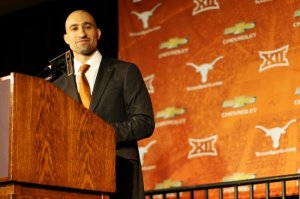
Shaka_Smart

Texas Men’s Basketball coach, Shaka Smart

Let me take a few minutes and explain why these coaches are voicing such serious concerns. Why are so many in the Class of 2016, Dead Men Ballin….

Let me show you how the latest manifestation of the Atwater strategy is playing out within the NCAA…

If You Enroll AFTER August 1, 2016, to be eligible to practice, compete and receive athletics scholarships in your first full-time year at a Division I school, you must graduate high school and meet ALL the following requirements:

1. Complete 16 NCAA core courses:
• Four years of English;
• Three years of math (Algebra 1 or higher);
• Two years of natural/physical science (including one year of lab science if your high school offers it);
• Two years of social science;
• One additional year of English, math or natural/physical science; and
• Four additional years of English, math, natural/physical science, social science, foreign language, comparative religion or philosophy.

These requirements have been in place for several years. High school coaches, AAU program directors and guidance counselors have a solid understanding of these requirements.

2. Complete 10 core courses, including seven in English, math or natural/physical science, before the start of your seventh semester. Once you begin your seventh semester, you may not repeat or replace any of those 10 courses for GPA improvement.

Here comes the bullshit… This is where things get very tricky… The “new rules” say “Once you begin your seventh semester” (senior year) you “may not repeat or replace” core grades from freshman through junior years.

Simply stated… First day of senior year you could be done!! Dead Man Ballin’….

The NCAA reviews tens of thousands of transcripts annually through it’s Eligibility Center.

The NCAA knows full well that many Black boys struggle in 9th grade. In cities like Philadelphia and New York the graduation rate for Black males has been as low as 28% in recent years. Most struggle with the transition to high school. They fuck up in 9th grade when they are 14 or 15 years old. However, many realize that their athletic abilities can lift them out of dire situations by the time they are 17 or 18. Many have matured late and began to take education seriously as a junior or senior in high school. Many of the finest football and basketball student-athletes in the country have had to replace or repeat courses they failed or received Ds in as seniors or in Prep School. The NCAA is eliminating this opportunity.

Nigger, nigger, nigger…

3. Earn at least a 2.3 GPA in your core courses.

Last year, the average graduation rate for black players on the 68 men’s teams in the Division 1 tournament was a record 65 percent. To understand what a leap that is, that percentage represents a sharp rise up from 51 percent in 2008 and 35 percent in 2003. Black males are doing better than ever. Indeed, they are doing better than US college students overall. The 2012 graduation rate for all first-time, full-time undergraduate students who began their pursuit of a bachelor’s degree at a 4-year degree-granting institution in fall 2006 was 59 percent. All of these Black male student-athletes that are graduating entered NCAA institutions with a 2.0 minimum requirement in place. Why raise the minimum to 2.3?

Nigger, nigger, nigger…

4. Earn an SAT combined score or ACT sum score that matches your core-course GPA on the Division I sliding scale for students enrolling on or after August 1, 2016.

If student-athlete has a 2.3 GPA he will have to score 900 on the combined Math/Verbal portions of the SAT to meet NCAA eligibility requirements. What are the chances that threshold can be met? As you can see, 39 of 58 (67.2%) Philadelphia public schools have average M/V SAT Scores below 800. Ten Schools (17.2%) have scores between 800 and 899. So… 85% of Philadelphia’s public high schools have average M/V SAT scores below 900. But… an athlete with a 2.3 GPA (C average) is gonna break 900?
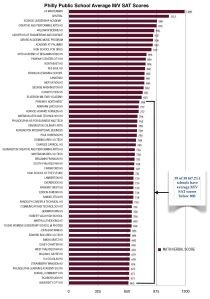
Philly Public School SAT Scores

The Charter Schools are not doing much better… As you can see, Philadelphia’s charter schools are struggling to produce adequate SAT scores. Only 1 charter school has an average score that meet NCAA minimum of 900 for a student with a 2.3 GPA. Some charter schools with nationally recognized athletic programs have scores well-below the NCAA minimum score.
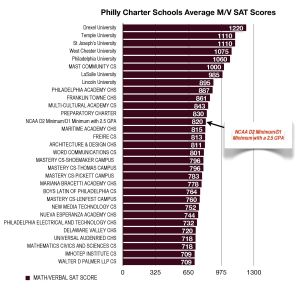
Philly Charter Schools SAT scores

Nigger, nigger, nigger…

Programs like Drexel, Villanova and LaSalle have graduated every 4 year player that has come through the program. Why tinker with success?

The Atwater strategy is in full effect… He told us the play they like to run… Will the class of 2016 make the necessary adjustments?

Or, are they Dead Men Ballin?

No Excuses!! Black Athletes Have To Use Better Judgement

Jaimeis Winton, the Heisman Trophy Award winning quarterback of the National Champion Florida State Seminoles was recently (09/17/14) suspended. Not for his alleged involvement in a sexual assault last year. Not for his subsequent nationally televised theft of crab legs from a local market. This time, he is being disciplined for repeatedly yelling “Fuck Her Right In The Pussy” while standing on a table in the student union.

Jameis WinstonJameis Winston, Florida State University

Interim Florida St. president Garnett Stokes and athletics director Stan Wilcox said in a statement. “Student-athletes are expected to act in a way that reflects dignity and respect for others… As a result of his comments yesterday, which were offensive and vulgar, [he] will undergo internal discipline and will be withheld from competition for the first half of the Clemson game.” Internal discipline….Ya think? The consequence should be more than half a game… This latest Winston episode highlights a far-reaching and, seemingly, expanding problem among Black male athletes.

Remember, this isn’t just an average everyday run of the mill college athlete. Winston is a tremendously gifted quarterback with all of the requisite football skills. He has great size, a very strong arm, and an incredible will to win. Based on his athletic ability and football skills, he should be in line for an NFL contract on par with the 4 year $22.025 million deal Cam Newton received and the 4 year $22.1 million package awarded to Andrew Luck. Except, there a major problem. For some reason, Winston seems incapable of exercising sound judgement for a sustained period of time. Quite frankly, he appears to be socially stupid.

He is not alone. This era has, unfortunately, witnessed an onslaught of tremendously gifted young Black men acting like they have absolutely no “home training.”  They bring loaded guns into locker rooms.  They beat 4 year old boys with “switches” and hit ’em on the scrotum.  They punch their women upside the head.  They assault fans in the stands.  They force themselves upon females.  They do all sorts of real stupid shit!  I know Big Momma and Pop Pop taught them better.

Clearly, the time has come for an honest and frank discussion about this serious and pervasive problem among contemporary Black male athletes. Far too many exhibit a persistent refusal to comply with rules or expectations in the home, school or community. I’m talking about multimillion dollar professionals, JUCO bench warmers and everything in between.

adrian-petersonAdrian Peterson, Minnesota Vikings

Dominating current headlines are stories centering on cruel or violent behaviors toward children and women by NFL stars Adrian Peterson, Ray Rice and Greg Hardy. The list NBA stars that have failed to fully consider the consequences of their actions and take inappropriate risks is also very long. A few of the more prominent names are Michael Beasley, Chris Washburn, Roy Tarpley, Richard Dumas, Gilbert Arenas, Delonte West, Javaris Crittendon and Ron Artest. Additionally, over the past few years, scores of young Black collegiate athletes have also been involved in array of gun charges. sexual assaults, burglaries, thefts and physical assaults that have led to disciplinary sanctions.

While there can be no denying America’s long standing uneasiness with Black masculinity, it is obvious that these young men have no idea how fortunate they are to play collegiate and/or professional sports. They take their positions as scholarship and/or professional athletes for granted.  Of course the media sensationalizes the incidents.  That’s a given.  My concern is that many Black athletes appear to have very little or no awareness of the sacrifices made by their predecessors that paved the way for them to be on the main stage.  Adopting their lingo, it seems they just don’t “give a fuck.”  This essay is intended to help some Mommas, Daddies, Uncles, Aunties, Grandmothers, Grandfathers and “Oldheads” understand just how far we have come.   If a few young Black male athletes take heed, that’s a real bonus.

No real understanding of the problematic nature of contemporary behavior is possible without an analysis of Black America’s tremendous struggle for mere participation in American collegiate athletics.  Put simply, we’ve come too far to act a fool now.  As it was with virtually everything else, in most states, Blacks were forbidden by law from participating in college sports.

The establishment of educational institutions serving African-Americans in the South following the the Civil War (1861-1865) was a tremendous accomplishment. Unfortunately, the nascent African-American college experiment coincided with the emergence of intercollegiate athletics and the rise of Jim Crow. Jim Crow law were Apartheid-like racial segregation laws enacted between 1876 and 1965 in the United States, primarily at the state and local level.

Four years after the end of the Civil War, Rutgers University and Princeton, played the first game of intercollegiate football on Nov. 6, 1869. Over the next three decades, a few northeastern colleges like Princeton, Columbia, Yale, Tufts, Harvard and Rutgers would challenge one another in “football” games.

By the early part of the 20th Century, major college sports were emerging. College football, in particular, was transitioning from an extracurricular activity to a highly commercialized and profitable sport. By this time there were around 250 or so college football teams. During this era, the unregulated sport was exceedingly violent. During the 1904 season, 18 players died from injuries on the field. “Every day one hears of broken heads, fractured skulls, broken necks, wrenched legs, disclosed shoulders, broken noses, and many other accidents,” the New York Times wrote after the 1893 season. Nonetheless, college football experienced exponential growth in popularity.

Black BoyBlack Boy in Jim Crow South

From the outset, Black Americans were systematically excluded from participation in collegiate sports. Simultaneous to the rise of college athletics was the disfranchisement of the African-American in the South. The last thirty years of the 19th century witnessed the ascendancy of American Apartheid in the former Confederacy. Brutally enforced racial Apartheid was the emerging norm. Laws were rapidly passed that forbade the intermarriage of the races in every Southern state in United States. African-Americans and Whites were formally and legally separated in virtually every aspect of public life. State legislative bodies banned African-Americans from White hotels, restaurants, theaters, and barbershops. As of 1885, most Southern states required that African-American and European American children be educated in separate schools. In 1896, with the sanctioning of the US Supreme Court, African-Americans were formally relegated to an second class citizenship.

By 1900, Jim Crow segregation was firmly entrenched throughout the American South. Apartheid-like separation of the races was rigidly enforced in public parks, buildings, recreational spaces, hospitals, prisons and even cemeteries. Of course, college athletics was not exempt from this dynamic. Like the rest of Southern society, Southern universities were segregated along stringent racial lines. This segregation was enforced through all available legal means and the extralegal practice of lynching. During the period spanning 1884 to 1900, there were more that 2,500 lynchings. The last decade of the 19th century saw an average of 187 lynchings per year in the United States. Needless to say, there would be no integrated college football games in the American South during the Jim Crow era.

lynchingsLynching of Four Black Men in Jim Crow America

The advent of “separate but equal” accommodations following Plessy v. Ferguson combined with sustained a terrorist campaign orchestrated by domestic terrorist groups like the Ku Klux Klan to produce a social climate of fear and intimidation across much of the American South.

In other parts of the country, there would be isolated attempts at limited integration in some college football programs. Among the early African-American collegiate players were George Jewett (Michigan), George Flippin (Nebraska), Matthew Bullock (Dartmouth), Fritz Pollard (Brown), Paul Robeson (Rutgers), Duke Slater (Iowa), Joe Lillard (Oregon), Bobby Marshall (Minnesota), Wilmeth Sidat-Singh (Syracuse), Brice Taylor (Southern California), Jerome “Brud” Holland (Cornell), Marion Motley (Nevada) and Levi Jackson (Yale). While they were allowed to compete on the gridiron, these early players were subjected to extensive physical abuse at the hands of teammates and opponents. Their on field performances were not recognized as there were no African-American first-team All-Americans during the period between 1918 and 1937.

Duke SlaterDuke Slater, Iowa University

One has to wonder what these pioneers would think of the antics of the elite Black athletes dominating today’s headlines. Unquestionably, Black players of the modern era owe a tremendous debt to the steadfast and brave student-athletes that endured brutally racist conditions while breaking down barriers. I guess the question becomes: Are things like honesty, compliance with rules, sensitivity to the feelings and rights of others and control over impulses too much to ask?  Should the Black community expect Black athletes to comport themselves in dignified manner?  Is it fair to expect the athletes to model positive behaviors for younger impressionable kids? After all, the opportunities they are blessed to have did not come easily.

Whites vehemently fought Black participation at every turn.  As the years passed by, the popularity of college football grew exponentially. Eventually, the pressure to field the best possible teams, win games and attract a large fan base would strain the ability of Jim Crow adherents to maintain their racist Apartheid-like tradition of excluding African-Americans from inter-collegiate athletics in the American South. Winning football games became increasingly important. Moreover, money began to talk.  University Presidents, Athletic Directors and coaches recognized that game attendance correlated positively with the quality of play.

Nonetheless, it would be a long hard struggle for African-American inclusion. Plainly stated, Southern Universities did not accept African-Americans as students. Building upon the foundation laid by Plessy v. Ferguson, for the first two-thirds of the twentieth century, Southern states operated dual – separate and unequal – systems of higher education.

segregationWhite Males Opposing Integrated Schools

With zero (0) Blacks in the universities, there were zero (0) Blacks on their athletic teams. Nonetheless, it is important to note that African-Americans were present within several athletic departments. Most southern football programs had beloved, non-threatening black figures who served as the male counterpart to the “Mammy.” These Black men served as janitors, equipment managers, waterboys, masseurs, trainers, etc. for southern college football programs.

In accordance with America’s patently racist traditions dating back to the colonial era, Southern White colleges refused to suit up African-American players. Moreover, throughout the 1920s and 1930s they demanded that integrated teams bench African-Americans during games held outside of the former Confederacy. During this period, it was commonplace for northern coaches and university administrators to acquiesce to the demands of rigid southern segregationists. As time passed, the hardline segregationist position would be compromised in some parts of the south. The rapidity and depth of compromise varied considerably across regions of the Jim Crow south.

Over time, the financial incentives were too strong to resist and southern segregationist bowl committees relaxed their apartheid-like ban on African-American participation in Bowl games. There was just too much money to be made with Black players participating.  There was recognition of the fact that revenues could be increased through integrated intersectional bowl games. Between 1947 and 1956, they would allow Northern teams with Black players to play in the segregated South.

This adaptation was driven solely financial gain. If these changes had been fueled by racial enlightenment there would have been a gradual inclusion of Blacks in regional south versus south regular season games. There was none. The games and the teams remained rigidly segregated during this period. However, northern universities during the post-war era began integrating in large numbers.

The Texas Western College basketball team is widely credited with fueling the movement to desegregate college athletics in the south. In 1966, Texas Western faced perennial national championship contender and number-one ranked Kentucky for the NCAA title. For the first time, there were five White starters playing against five Black starters for the championship. Texas Western’s victory clearly demonstrated that southern schools would have to integrate to compete with non-segregated teams. It is worth noting that while Texas Western began integrating southern college basketball in 1956, they refused to integrate the dormitories and the Black players were required to live off campus.

Texas WesternTexas Western University, 1966 NCAA Men’s Basketball Champions immediately after defeating Kentucky

The most significant football game during the long slow march toward desegregation of college athletics in the south occurred when the University of Southern California visited the still segregated University of Alabama in 1970. Led by an all-black backfield of quarterback Jimmy Jones, running back Clarence Davis, and fullback Sam “Bam” Cunningham, USC trounced Alabama 42-21. Alabama assistant coach Jerry Claiborne succinctly noted, “Sam Cunningham did more to integrate Alabama in 60 minutes that night than Martin Luther King had accomplished in 20 years.”

Sam CunninghamSam Cunningham, USC, running over, through and around Alabama defenders

It is worth noting that during this period of “Athletic Apartheid” spanning 1906 through the 1970s there was very little research regarding student-athlete academic performance. During the 70 pus years, when the student-athletes were predominantly white, there were no significant NCAA sponsored academic reforms. At the institutional and Conference level, there was some minor analysis of the 1.6 minimum grade point average rule. However, the NCAA during this period of extensive racial exclusion did not use research in any systematic way to formulate policy or establish eligibility requirements.

Since the early 1980’s, when Blacks males became a majority of scholarship athletes in the revenue producing sports – football and basketball – there has been a series of increasingly stringent Academic reforms.  This timing of these reforms has led some to question the actual motives of the NCAA.  Hall of Fame Basketball Coach John Chaney fought the reform measures throughout his illustrious career.  In January of 1989, Coach Chaney declared, “The NCAA is a racist organization of the highest order… On this day, it instituted a new punishment on black kids who have already been punished because they are poor. Any time the NCAA, which is 90 percent white, considers the youngsters in Division I basketball and football, it discriminates, because 89 percent of the kids are black… I wonder what message they are sending. It’s another hardship for black kids made by white folk.”
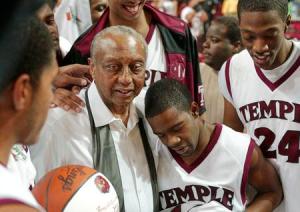
NCAA Men's Basketball - Temple vs Army - November 15, 2005

John Chaney and Mark Tyndale, Temple University

The self-inflicted wounds of contemporary Black athletes make no sense when viewed in historical context.  Too many were forced to play on the “chitlin’ circuit”…. Too many were denied opportunities their abilities warranted… Too many never got a fair shot… Too many watched inferior white players win awards and receive accolades… No excuses!! Black male athletes have to use better judgement…


← Back

Thank you for your response. ✨