Aaron McKie, Temple ’94 and Tyrone Pitts, Penn ’88
Most people probably see two American success stories… Aaron McKie (left) earned over $50 million dollars over the course of a solid 13-year NBA career. Drafted in the 1st round of the 1994 NBA Draft by the Portland Trailblazers, McKie was a key player for Portland, Detroit and Philadelphia. He finished his playing career with the Los Angeles Lakers.
Philly hoop heads will see a Simon Gratz High School graduate. They will recall his prolific three-year career at Temple (1991-92 thru 1993-94). A Big 5 legend, McKie started for all 92 games of his career, averaging 17.9 points per game while leading the Owls to 60 wins, three NCAA Tournaments and a trip to the 1993 Elite Eight.
Hall of Fame Coach, John Chaney and Aaron McKie
McKie was an honorable mention All-American (1993). He was named first-team All-Atlantic 10 (1993, 1994) and a member A-10 All-Championship team (1993). He balled out in the local rivalry games and was named first team all-Big 5 every year of his college career (1992, 1993, 1994). In addition, McKie was named Atlantic 10 Conference and Philadelphia Big 5 Player of the Year for his performance in the 1992-93 season, when he averaged a team-best 20.6 points per game.
Tyrone Pitts (top right), born and raised in Camden, New Jersey, is the largest minority general contractor in Southern New Jersey. This year, his firm KL Pitts Construction will generate in excess of $20 million in revenue. Like McKie, Pitts made his mark playing in Philadelphia’s Big 5.
Tyrone Pitts with a picture depicting the balance between books and basketball
A high flying Palestra favorite and an All-Ivy League player, Pitts finished his career at the University of Pennsylvania with 1301 points. After trying out for the Philadelphia 76ers, Pitts embarked upon a highly successful 7 year professional career in several overseas leagues. Once his playing days were over, he returned to the Ivy league an assistant coach with Cornell University.
Longing to return to the Camden/Philadelphia region, Pitts joined Speedy Morris’ staff at LaSalle University. However, his training in Wharton business school allowed him to see business opportunities where others could not. For a while, he tried to maintain his responsibilities as a basketball coach and manage his investments in Camden real estate.
It soon became obvious that he would have to devote his full attention to managing over 100 full-time construction workers on multiple commercial, public and residential projects. Over the past year or so, his firm has totally renovated 175 low-income housing units in Camden and built a 110 unit senior housing complex in Lindenwold, New Jersey.
What you don’t see in the picture…
You don’t see the scared and insecure boys that came home from school to find padlocks on their front doors and their family’s precious few belonging strewn across the sidewalk. “I was in seventh grade when we got evicted from our house,” Pitts said. ”You can imagine the feeling I had. You come out of your house and see your things lying on the sidewalk. That feeling that hit me that day was something that I’d never like to come back to me again. From then on, I was kind of determined to succeed.”
Belongings on sidewalk following eviction
Addressing a group of children and community organizers at a Philadelphia Youth Basketball Foundation event, McKie conveyed the same feeling. “I came home one day and we were evicted. All I can remember is that there was a big padlock on our door and we no longer lived there. I’ll never forget that feeling.”
Pitts and McKie came of age in the 1980‘s. Cities like Philadelphia and Camden were in the throes of the crack epidemic. North Philadelphia and Camden had long been poor, highly segregated neighborhoods in which a majority of individual adults were either unemployed, had dropped out or never been a part of the labor force. Most of their peers were dropping out of school and many were entry level “lookouts” or “hand to hand” participants in the booming illegal street drug game.
But not these guys…
Pitts and McKie embraced sport as a way to help them develop and become productive citizens by learning life lessons. Despite growing up in the midst of despair and chaos, they were able to develop positive social sphere through sports. Basketball participation offered countless opportunities for socialization activities such as team work, fair play, respect for others and personal discipline.
Forced to deal with evictions and all that goes with that process, Pitts and McKie used basketball to develop coping mechanisms for anxiety, stress, and other factors that make up a low income urban Black male adolescent’s life.
A street in Camden, New Jersey
They leveraged basketball for access to education…
For McKie and his Temple running mate, Eddie Jones, it was a close call. Both were declared ineligible as freshmen by the NCAA. As reported by the Philadelphia Inquirer in July 1990, “Sources close to the program said that Eddie Jones, a highly touted 6-foot-6 swingman from Pompano Beach, Fla., and Aaron McKie, a 6-4 shooting guard from Philadelphia Public League champion Simon Gratz, had scored less than the required 700 of a possible 1,600 on the Scholastic Aptitude Test or 15 of a possible 36 on the American College Test.”
Time out…
Think about this for a minute… In 2013, the average SAT score at Simon Gratz High School was 682. Keep in mind that in 1994, four years after McKie and Jones sat for the test, the nation’s SAT scores were “recentered.” In other words means that every child in America got something like 100 free points added to his score. So… the current Gratz HS average of 682 is equivalent to 582 when McKie actually sat for the exam. That’s an indicator of how poorly the academic program at Gratz prepares students for college entrance exams.
Gratz kids ain’t supposed to make it… Shit… only 26% of Black males graduate in four years from Philadelphia’s woefully under-performing public schools.
The NCAA has spent thirty years closing the window of opportunity for guys like McKie and Jones. They were fortunate to have John Chaney in a position to give them an opportunity to play collegiate basketball. For that, McKie is eternally grateful…
“This is the university that gave me an opportunity at life when no one else wanted to,” McKie said. “I was a Prop 48 coming in … I’m forever grateful to Temple … I was able to get my degree in 4 years.”
Pitts made the transition from the hardscrabble streets of Camden to one of the most competitive and highly regarded business schools in the nation. He has been able to apply his business education and improve the lives of Camden residents. His firm has been responsible for the construction and/or renovation of thousands of units of low-income and market rate housing. He employs hundreds of Camden residents in high paying construction jobs.
Recognizing the importance of education, Pitts also co-founded the Arline Institute which provided small-group tutoring to over 6,000 low-income students attending under-performing public schools.
According to Pitts, “Attending Wharton allowed me to develop the skills necessary to apply the theories needed to overcome challenges in places like Camden. It helped me be in a position to make a positive impact.”
Basketball was the gateway for these success stories. When they had nowhere to live, they had their teams. They had their youth coaches. They had the structure that basketball provided. It helped them avoid the fate that befell so many of their contemporaries.
The term ‘Black Consciousness’ stems from the great Black sociologist W.E.B. Dubois’ development of the concept of the ‘double consciousness.’ Seeking to make sense of the Black American experience a century ago, DuBois coined the term in an Atlantic Monthly article titled “Strivings of the Negro People.” It was later republished and slightly edited under the title “Of Our Spiritual Strivings” in his famous book, The Souls of Black Folk. Du Bois describes double consciousness as follows:
It is a peculiar sensation, this double-consciousness, this sense of always looking at one’s self through the eyes of others, of measuring one’s soul by the tape of a world that looks on in amused contempt and pity. One ever feels his two-ness,—an American, a Negro; two souls, two thoughts, two unreconciled strivings; two warring ideals in one dark body, whose dogged strength alone keeps it from being torn asunder.
The history of the American Negro is the history of this strife — this longing to attain self-conscious manhood, to merge his double self into a better and truer self. In this merging he wishes neither of the older selves to be lost. He does not wish to Africanize America, for America has too much to teach the world and Africa. He wouldn’t bleach his Negro blood in a flood of white Americanism, for he knows that Negro blood has a message for the world. He simply wishes to make it possible for a man to be both a Negro and an American without being cursed and spit upon by his fellows, without having the doors of opportunity closed roughly in his face.”
Black consciousness among athletes reached it’s zenith in the 1960s. Perhaps, the most glaring example of Black social consciousness during that era took place on June 4, 1967 at 105-15 Euclid Avenue in Cleveland, Ohio. On this glorious day, Jim Brown (Cleveland Browns), Bill Russell (Boston Celtics), Kareem Abdul-Jabbar (UCLA), John Wooten (Cleveland Browns), Jim Shorter (Washington Redskins), Willie Davis (Green Bay Packers), Curtis McClinton (Kansas City Chiefs), Sid Williams (Cleveland Browns) and Bobby Mitchell (Washington Redskins) met with Muhammad Ali and then held a news conference in support of his refusal to be drafted into the U.S. Army in 1967.
Prominent Black Athletes Supporting Muhammad Ali, June 4, 1967
Twenty years later, John Chaney and John Thompson boldly and brazenly exhibited their Black consciousness by condemning the NCAA’s naked attempt to “close the doors of opportunity to poor Black student-athletes.
“The NCAA is a racist organization of the highest order,” said John Chaney on January 12, 1989. “On this day, it instituted a new punishment on black kids who have already been punished because they are poor. Any time the NCAA, which is 90 percent white, considers the youngsters in Division I basketball and football, it discriminates, because 89 percent of the kids are black. I wonder what message they are sending. It’s another hardship for black kids made by white folk.”
Hall of Fame Coach, John Chaney
A couple of days after John Chaney excoriated the NCAA, John Thompson, then coach at Georgetown, walked off the court before a Big East Game against Boston College. Thompson said that he would not coach in an N.C.A.A. sanctioned game ”until I am satisfied that something has been done to provide these student-athletes with appropriate opportunity and hope for access to college.”
There can be no doubt that Chaney and Thompson were conscious. They obviously felt their two-ness. They are both American and Black. In their public pronouncements one can almost literally see their “two souls, two thoughts, two unreconciled strivings; two warring ideals in one dark body, whose dogged strength alone keeps it from being torn asunder.”
These days we are bombarded with stories of urban Black student-athletes and student-athletes from Africa being declared ineligible by the NCAA. They window is closing… Just as Chaney and Thompson noted nearly 30 years ago, the NCAA has “instituted a new punishment on black kids who have already been punished because they are poor.”
Fortunately, there has emerged a level of consciousness among some prominent Black members of the basketball community. Accompanying this increased consciousness, has been some innovative and exciting efforts to lift up young Black students and student-athletes. Athletes are helping younger Blacks understand what they have to accomplish and they are working to provide the necessary tools.
The greatest example of contemporary Black consciousness among athletes has to be LeBron James giving kids from Akron — ones with challenging backgrounds like his — the chance to go to college for free. Jame has partnered with the University of Akron to provide a guaranteed four-year scholarship to the school for students in James’ I Promise program who qualify. The scholarship will cover tuition and the university’s general service fee — currently $9,500 per year.
The developers of the kwalifī smartphone app are trying to empower and increase the level of consciousness among high school student-athletes and their families. They want to put famileis in position to take advantage of scholarship opportunities. The kwalifī smartphone app makes it easy to track individual progress toward meeting NCAA and NAIA eligibility requirements.
The kwalifi app has been embraced by some of the most prominent and influential members of the Black basketball community. In cities like Newark, NJ, Philadelphia, PA, Baltimore, MD, Washington, DC and Houston, TX socially conscious Black men are working to increase awareness of NCAA rule changes. Conscious Blacks in the basketball community are working to increase the level of awareness among those coming after them.
Seton Hall great Marcus Toney-El (NJ Playaz), Vincent Robinson (Robinson School) and Roland Whitley (NC State) are leading the charge in Northern New Jersey. Kamal Yard (Philly Pride), Rodney Veney (Philly Pride), Amauro Austin (Philly Pride), Eric Worley (Philly Triple Threat), Charles Monroe (All-City Classic) Paul Gripper (Team Phenom), Steve Pina (ASM Sports) Lonnie Lowry (Team Philly), Terrell Myers (WeRone Hoops) and Aaron Burt (Team Final) are educating Philadelphia area student-athletes and parents about the new rules. In Baltimore, Nick Myles (St. Frances) and Rod Harrison (Mount Zion Prep) are trying hep Black kids access college scholarship opportunities.
Rich Paul, Klutch Sports Group – LeBron James’ Agent
Curtis Symonds has embraced the kwalifi movement after a spectacular career as a Senior Executive with ESPN and BET. He is working to increase awareness of the rule changes in Northern Virginia, Washington, DC and Prince George’s County, MD. Former McDonald’s All-American Jawann McClellan is working with Houston families.
There is widespread consensus that the recent rule changes will have disparate negative impact on poor Black and African student-athletes. The is also widespread commitment to helping families take control of their eligibility process. The kwalifi app is a tool that empowers individual student-athletes.
Josh Selby and Bay Frazier, Frazier Sports Management – Carmelo Anthony’s Business Manager
Social consciousness is re-emerging amongst Black athletes. The kwalifī app is THE tool for conscious student-athletes and their families.
Why did he commit there? Why didn’t he choose us? Why didn’t he come to our school?
Our academics are better! We win more! We produce more pros! Shit makes no sense…
Many resort to knee-jerk accusations that the kid was “bought off” to explain the decision… They had to cheat… Why else would he choose them over us?
Every year around this time, passionate alums and casual observers rack their brains trying to make sense of decisions made by 18 and 19 year old elite Black male student-athletes. Indeed, an entire multi-million dollar industry has emerged dedicated solely to tracking the college selection processes of elite predominantly Black male student-athletes. Scout and Rivals are two of the biggest media enterprises dedicated to in-depth coverage this annual race to sign the very best scholastic ballers. Rivals was purchased for $100 million by Yahoo in 2007. Scout generates over $100 million in annual revenues.
Malik Ellison committing to St. Johns
Despite intensive media coverage, very little thought is given to the actual decision-making process itself. Core questions at the center of the ‘mainstream’ dialogue are fairly easy to delineate: Where will Black male athletes sell their athletic labor in return for an athletic scholarship? Which predominantly White NCAA Division I institution will profit generously in return?
The Black Cager is dedicated to going a little deeper than that. I want to foster understanding. So… How can we begin to make sense of these “decisions” made by thousands of young Black men entering collegiate athletics every year?
I want to provide a basic framework for understanding the all too often overlooked decision-making process. While the analytical focus is on urban Black male basketball players, the framework can be applied across racial and ethnic backgrounds as well as geographic settings. Many white ballers from the cornfields of the mid-west face the same circumstances.
My basic hypothesis is that predominantly white college sports fans, alums, writers and even coaches assess the decision-making process from a purely “rational” point of view. In doing so, they consistently fail to understand and appreciate the limits or “bounds” the student-athlete operates under. As a result, the observers are usually confused and unable to comprehend why decisions are made. This confusion leads many to make unfounded and unwarranted accusations about the character and integrity of the process, the student-athletes and their families.
What are the limits and constraints? What are the “bounds” imposed upon student-athletes making college decisions? Elite Black male student-athletes facing college decisions have to work under three unavoidable constraints.
They only have access to limited, often unreliable, information regarding possible alternatives and their consequences,
The human mind has only limited capacity to evaluate and process the information that is available. And,
only a limited amount of time is available to make a decision.
Therefore even student-athletes intent on making rational choices are bound to make satisficing (rather than maximizing or optimizing) decisions in complex recruiting situations. This vital fact is overlooked by disappointed and frustrated supporters of programs that lose recruiting battles. Moreover, it is not addressed by ‘mainstream’ sportswriters and analysts trying to explain outcomes to their targeted audiences.
All they know is, to them, shit don’t make no sense… As a result, message boards are flooded with nasty, vile and even racist attacks on young men that chose a program other than theirs.
Tamyra ‘Mookie’ Laws committing to Holy Family University
Fans fail to understand that these limits (bounds) on rationality make it nearly impossible for student-athletes and their families to consider every contingency, necessitating reliance on advisers, ‘handlers’ or even agents operating behind the scenes.
Black male student-athletes, like everyone else, are to some extent rational beings in that they will try to logically understand things and make sensible choices. This is rightfully assumed by most observers. Collegiate sports fans, alums and college coaches assume that student-athletes have preferences among the colleges offering scholarships that allow them to state which option they prefer.
From a purely rational perspective, these preferences are assumed to be complete (the student-athlete can always say which of two college programs they consider preferable or that neither is preferred to the other) and transitive (if college A is preferred over college B and college B is preferred over college C, then A is preferred over C).
However, observers make the mistake of assuming student-athletes take account of ALL available information like academic reputations, graduation rates and probabilities of events like winning conference championships, appearing in the NCAA tournament and being drafted by an NBA team. It is further assumed that a student-athlete weighs the potential costs and benefits in determining preferences, and acts consistently in choosing the self-determined best choice of action.
That’s how most causal observers think the process works. But…. That’s not how it actually goes down…
For elite Black male student-athletes the college recruitment process is extremely daunting and complex, and they do not have the capacity to understand everything. As noted earlier, they only have access to limited, often unreliable, information regarding possible alternatives and their consequences. Yes… college coaches are able to make an unlimited amount of phone calls and text messages to recruits. Of course, they do everything they can to get their message across to the young men.
For many student-athletes this quickly results in hundreds of calls and/or text messages per day. As a result, coaches begin to sound like Charlie Brown’s teacher, “whaaan, whann, whann, whann, whann…”
Coaches understand this, even if fans don’t, so they rely on the development of intermediaries like AAU/grassroots coaches, HS coaches, family members, friends, girlfriends, etc. to deliver messages to student-athletes. Unfortunately, in many instances, the “interests” of the intermediaries supersede the interests of the student-athletes. “If he comes with us, we’ll take care of you or your AAU/HS program” is the message the intermediaries hear. In this way, information reaching the student-athlete becomes limited and unreliable regarding possible alternatives and their consequences.
At this point, the possibility of a truly ‘rational’ outcome has been compromised. The student-athlete is receiving skewed information.
Rakeem Christmas Graduated from Syracuse University in 3 years
Further complicating the process is the fact that the human mind has only limited capacity to evaluate and process the information that is available. This is especially so for urban Black male student-athletes. The athletes and their family members very often do not possess the intellectual tools required to adequately understand the process as it unfolds.
It’s really bad… Really, really bad…
On August 24, 2015, the Philadelphia Inquirer reported that “nearly half of all adults in [Philadelphia] – more than half a million men and women – lack the basic skills necessary to qualify for postsecondary training or hold jobs that permit them to support a family. Many function below eighth-grade levels.”
How are parents and grandparents that can’t read supposed to sort through the labyrinth of NCAA regulations and appropriately weigh the options available to them? They can’t….
The student-athletes themselves may be in an even worse position. A recent study by the Schott Foundation for Public Education found that the four-year HS graduation rate for Black males in many of America’s urban areas was profoundly abysmal. Detroit, MI (23%) has the lowest Black male graduation rate in the country (in Detroit only 13% of White males graduate from high school within a four year period), followed by Philadelphia, PA (26%), Clark County, NV (27%), Pinellas County, FL (28%), Cleveland, OH (28%), New York, NY (28%), Chatham County, GA (28%), Richmond County, GA (29%), Duvall County, FL (29%), and Norfolk, VA (31%). For the 26% that remain engaged in school, in 2014, 42 percent of students met the reading standards bar set by the state on the Pennsylvania System of School Assessment, down from 42.3 percent. In math, 45.2 percent met standards, down from 46.9 percent.
Plainly stated, many student-athletes and their families lack the educational foundation necessary to adequately process, evaluate and process information available on the various collegiate programs offering athletic scholarships.
DeAndre Bembry dunking on VCU
Then on top of that, there is limited time to make a decision. The NCAA manages the daily operations of a National Letter of Intent (NLI) program that includes 650 Division I and Division II participating institutions. Through the establishment of signing periods, the NLI program imposes deadlines on student-athletes and their families. And, there’s always the possibility that another player may take the desired scholarship.
Most elite Black male scholastic student-athlete are confronted with limitations imposed by poor educational backgrounds, a lack of understanding NCAA regulations and other factors. Given this set of circumstances, there is no way student-athletes can have a complete understanding of the recruiting process before having to make a decision.
Within this context, truly ‘rational’ decisions become impossible… What emerges are decisions that are ‘good enough’…
Information, more or less, tends to change people’s decision. Every student-athlete is limited by the decisional limitations outlined above. The better the athletic prowess, the more complex the issues become, thereby increasing the cognitive load. And where there is cognitive overload, student-athletes rely upon coping mechanisms to arrive at a decision.
They settle for a school that is ‘good enough’ as opposed to finding the ‘best school’. Black male student-athletes end up choosing a school that meets most of their goals instead of going for the optimal solution.
This is where college fans and alums become confused. They wonder: Why did he choose a school that hasn’t been to the tournament in 10 years? Why did he choose a program that doesn’t have as many NBA players as ours?
In choosing college destinations, in can be argued that there are no optimal decisions, but choices that are in some sense locally optimal at best. The implications of these decisions are based on bounded rationality, which is senseless to observers applying rational logic, but completely sensible for the student-athlete making the decision.
Elite Black male student-athletes do exactly what makes the most sense to them, in the context of the moment, with their current understanding. If you are a white college educated-male with college educated parents that were in a position to pay for your education you likely have no frame of reference for understanding this process.
Philly is a hoops mecca… For some, Philly is THE hoops mecca… The case for the top spot is strong. A brief perusal of the record books reveals the impact Philly ballers have had on the game. Wilt Chamberlain and Tom Gola led the charge for Philly in the 50’s. Earl “The Pearl” Monroe scorched college basketball in the 60’s. Gene Banks, Lewis Lloyd and Mike Brooks carried the city in the 70’s. Rico Washington, Pooh Richardson and Lionel Simmons held it down in in the 80’s. Rasheed Wallace, Marvin O’Connor and Eddie Griffin represented in the 90’s. After the turn of the century, Maureece Rice, Wayne Ellington, Maalik Wayns and Kyle Lowry emerged.
Wilt Chamberlain
In the contemporary era, grassroots/AAU hoops has superseded high school basketball in importance. Hoop heads interested in understanding the development of elite scholastic players have to pay attention to “Summer Ball.” In the not too distant past, the Sonny Hill League was a the focal point of summer hoops in the city… No more… No more…
Earl “The Pearl” Monroe
If you want to know what’s going on with elite scholastic hoops, you have to follow AAU/grassroots hoops. Perhaps, the biggest story of this summer has been the rapid ascent of two Philly Pride (Under Armour Association) players, Charles Brown, Jr. and DeAndre Hunter.
At the conclusion of his high school career at George Washington HS, Brown had zero (0) Division 1 scholarship offers. In fact, he had verbally committed to Division 2 West Chester University. After the first two Under Armour sessions, he had over 15 D1 scholarship offers from schools such as VCU, Rhode Island Quinnipiac, George Mason, Drexel and James Madison. He was drawing interest from high major programs like Oklahoma State, Arizona State, Wisconsin, Maryland and Alabama.
Gene Banks
Brown committed to St. Joseph’s University. He cites his relationship with Assistant Coach Geoff Arnold as the primary factor determining his choice. According to Brown, “Coach Arnold told me when he first saw me that I was a division 1 basketball player and that meant a lot to me at the time.” His father Charles, Sr. played on the great Overbrook teams of the late 70’s with Tony Costner, Ricky Tucker and Steve Black. So, the family has always been familiar with the St. Joseph’s program and the campus.
But… How does a kid go from zero (0) offers to over fifteen (15) in just a 4-6 week span? AAU/grassroots basketball… that’s how…
The Black Cager talked to Charles’ Philly Pride teammate and his Coach Sean Colson to gain some insight into this particular program….
Marvin O’Connor
Black Cager: DeAndre… So far this summer you guys have had a really good run. About a month ago you knocked off highly regarded WE R 1 and about two weeks ago you defeated Team Final. I want get your thoughts about the AAU season thus far and see how you feel about those two wins in particular.
DeAndre Hunter: I feel like we’ve been playing really good. Beating those two teams, that are supposedly better than us, shows that we are just as good or even better than most of the teams in the country.
Black Cager: I agree… I agree with that and I would also add that when you take a look at what the local Under Armour teams have been able to accomplish it’s very impressive. Trevon Duval, Quade Green, Sedee Keita and Nysier Brooks who recently committed to Cincinnati (Big East) play for WE R 1. Then you also have you and Charles Brown who recently committed to St. Joseph’s (A10) playing for Philly Pride. One could argue that the Under Armour circuit, at least in our region, is equal to or ahead of the Nike and Adidas circuits. How do you feel about playing on the Under Armour circuit?
DeAndre Hunter: I feel like the Under Armour circuit is just as competitive as any other circuit. I understand the Nike people feel like their circuit is better because they have most talented or most ranked players. But, I really feel like the Under Armour circuit is just as competitive as any other brand.
Black Cager: About your college recruiting… How are your grades? I know you attend a highly competitive academic high school, Friends Central. How are making out academically? Are you on track?
DeAndre Hunter: Yeah… I’m good. On my last report card, I had one C. The rest of my grades were Bs and up so I’m in good shape.
Black Cager: That’s really good… Have you formulated any idea where you would like to play college basketball? Do you want to stay in Philly? Do you want to go far away? Does the geographic region matter at all? Are your trying avoid the cold? Do you want go where it’s warm year-round? Do you have a strategy or are you just taking things as they come?
DeAndre Hunter: I’m just taking it as it comes. It doesn’t matter if I stay local or go somewhere far away. I just want find a program where I’m comfortable and I can play right away.
Black Cager: Where do you see yourself playing at the college level, 2, 3 or even the 4?
DeAndre Hunter: Probably the 3 position… I gotta get bigger and strong though.
Black Cager: Now… I’m gonna really put you on the spot.. Who do you think are the best non-college or pro basketball players in the Greater Philadelphia region? I’ve had an on-going discussion with some of my friends in the local basketball community and the same names always come up are Tony Carr (Team Final/Roman Catholic HS), Quade Green (WE R 1/Neumann Goretti HS), Lamar Stevens (Team Final/Roman Catholic HS) and you. Although, recently a lot of people have started to include Charles Brown in that upper echelon of local talent. Who would say are the best 2 or 3 players in the area right now?
DeAndre Hunter: The three best players… Myself, Charlie Brown, Tony Carr…
Black Cager: That’s it?
DeAndre Hunter: Best players? In my class, yes… Me, Charlie and Tone Carr..
DeAndre Hunter & Charles Brown
Black Cager: I like that… I really appreciate the honest response… One last question, as you sort through this college selection process, are you dealing with this yourself? Are you bouncing things off Kamal, your HS coach, your Mom? If a college coach was reading this interview and he wanted to get your attention, what would be best way for him to go about it?
DeAndre Hunter: He should call me, my brother, Kamal or my AAU coach (Sean Colson).
Black Cager: DeAndre… I really appreciate this and I look forward to following you guys in Atlanta as you pursue the UUA National Championship.
Sean Colson is a Philly baller. He played at the University of Rhode Island and Charlotte University. He also played in the NBA with the Atlanta Hawks and the Houston Rockets. A basketball lifer, Colson also played in the USBL, CBA and overseas in Italy, France, Turkey, Poland, Ukraine, Latvia, Lebanon, Kuwait and Venezuela. In short… he has been there, done that…
For the past three years he has shared his considerable basketball knowledge and expertise with Philly kids as a coach with the Philly Pride AAU/grassroots program and Martin L. King HS in Philadelphia’s Public League. He also conducts the highly regarded “Sean Colson Workouts.”
The Black Cager spoke with Colson about Brown, Hunter and Philly Pride…
Sean Colson
Black Cager: What’s up Sean? I just talked to DeAndre… I talked to Charles Brown a few days ago… I’m gonna put you on the spot… I know about a month ago, you guys knocked off WE R 1 and couple of weeks ago you beat Team Final. In the Philly grassroots basketball, those are some big games and they were some big wins. What does that say about Philly Pride as an AAU/grassroots program right now?
Sean Colson: Well… for the last three years, not just this year I’ve been with this team… I coached them as 15u, 16u and now 17u and we’ve gotten better every year. So, we are just trying to build our program and make competitive on the national level. We are not really comparing ourselves to nobody else, we’re just trying to beat everybody we play… Everybody… WE R 1 and Team Final are really good programs… But we not trying be the best program in this area, we want to be the best in the country. We are trying to put our guys in position to get a lot of scholarships. We want to help them get to the right schools. We want people to know that when you play for Philly Pride you get better. In other programs, some guys get scholarships, but they don’t necessarily get better. We want to be known as a program where when you come here… Your game gets better and you get better as a young person.
Black Cager: I can appreciate that… Speaking of getting better, I would say that over the past 2 months people knew about DeAndre but lately he’s been getting a lot of national recognition. And, then you have Charles Brown… About 3 months ago people viewed him as a Division 2 player. Then there was a period where he was one of the hottest kids in the country. His recruitment went from 0 offers to over 15 scholarships in a matter of weeks. What does that say about his development and why was he able to demonstrate so much more skill playing for you guys than he did playing for his high school team?
Sean Colson: Sometimes I feel like people try to make that comparison… But, I feel like the George Washington coaches did right by Charles. I just feel like Charles has gotten better… I don’t feel like it’s fair to say the George Washington guys didn’t know how to use him or use his talents. I just think they got eliminated early. In fact, in February we (Martin L. King HS) took them out of the playoffs. Right after the season, Charles and his Dad came to work with me. That was in February. He’s been in here every day, just working. His father was very direct, he said look I think my son can get better and I think you are the guy to do it. I know you work with DeAndre, I know you work with a lot of people… But, can you just please take my son and do what you can with him. Charles has the right mindset… I mean he just came in here and worked… His skills have really developed because he’s been working. Looking back, some of the blame has to be placed on Charles. Maybe he wasn’t working as hard while he was in high school. Now, he’s really working hard. Yes, I demand it, but he’s really working hard. Getting to play everyday against DeAndre and some of the college guys has helped him. A lot of times it’s just me him, his Dad and DeAndre just working, working, working… I mean I was a pretty good player… I played in the NBA and I was a good player and I feel like my skills and just the knowledge of the game has rubbed off on Charlie. All of that has really helped his game take flight right now.
Black Cager: He’s gonna take a year and try to get his body together at St. Thomas More Prep School (Connecticut). What do you foresee for Charles playing in the Big 5 for St. Joseph’s?
Sean Colson: I think he’s gonna have an excellent career. Charlie… is.. honestly, he kinda like a steal to be honest with you. Because, he’s really developing. He has the frame of a pro 2 guard. Everyone doesn’t have the skills, but he definitely has the frame. He’s 6’6”, athletic, long arms, really can shoot the ball and plays defense. Even that part of his game, I don;t think he did a great job at Washington on defense. They played zone a lot the time. When he played man-to-man I don’t think he really cared. But, when he came here, I’m on him every single day about defense in the workouts, practices and games. Charlie has really taken pride in being a stopper. He wants to be a stopper. I don;t think he thought like that in high school. That’s an area where I will take some credit because we’ve really worked on that part of his game. But, I don;t want to discredit George Washington and their coaches because I don’t think it the case that they didn’t do enough. It’s just that me Charlie click… Just like me and DeAndre, we click… A lot of guys, they will listen to me where they might not listen to other people or take their advice. They know the things I’ve accomplished as a player and coach. They respect the players I’ve trained like Amile Jefferson and Khalif Wyatt. They see that if you train with me you get better. That’s an important part of it, we have good chemistry.
Black Cager: I think trust is an important part of the equation and that’s what you are conveying. Speaking of DeAndre, I’ve gotten to see him play quite few times this summer. It’s really hard for me to look at his game and say that another kid in this area is better. But he doesn’t get that recognition. A big part of it is that is probably because he plays in the Friends League. Where do you see him in comparison to the other top players in South Jersey, Philly, Delaware? And. what do you see for him at the next level?
Sean Colson: People play different positions and thing like that… But, I’ll say this… People say someone is the best… It’s a few really good players out there… There’s Tony Carr, Quade Green and some other good players here in our area like Lamar Stevens. But, I wouldn’t take nobody over DeAndre… me, personally… All those guys have come to my workouts, except Lamar. I know everyone… I love everybody… I want every one of them to do well. But, me personally I wouldn’t take anyone in this city over DeAndre Hunter. That’s just how I feel. And, I feel like he’s only getting better. I’ve had him with me for the last 3 1/2 years and he’s getting better every day. He picks everything up and wants to get better. That has actually rubbed off on Charles as well. He sees that every day. You know Charlie asked himself: What’s the reason DeAndre has gotten that much better over these past 3-4 years? He comes here and he says if that’s the guy that has helped DeAndre get that much better, I wanna get like that and even better. That has helped Charlie as well. The trust factor…
Black Cager: I followed your career… Me and you we communicate on social media a lil’ bit… I pay attention… I saw you finishing up you own academic course load. I know you are doing an outstanding job at the high school level. I know you are of the few guys that excel on both the HS level and on the AAU/grassroot circuit. What’s the future look like for Sean Colson? Would like like to get on an NBA coaching staff? Would you like to coach in college? What are you trying to do with this thing going forward?
Sean Colson: For me… I wanna build Martin L. King up. We’re good right now. In my three years, we’ve won Public League Championships, we’ve been to the State Championship game. These are things that have never been done at King, especially on a AAAA level at this school. So, we’re just trying to get guys to get to college. We want guys to get D1 or D2 scholarships. For me, that’s the joy that I have. I love to see everybody getting better. Through the Sean Colson workouts, I get to work with kids that go to all the different schools. Even though they are in different HS programs they still come to me to get better. I’ll take whatever is in store for me. I would like to be a college coach. Maybe I’ll be an NBA assistant or scout. I really like working kids out. I was just at the John Lucas camp working guys out and training some really good players there. Next week I’ll be at the Under Armour All-American camp. I love working people out, developing talent and getting guys better. That’s kinda what I am known for. But… I feel like I’m a strong X and O guy as well. I really like coaching. For me, I’ll take whatever falls in my lap. I’m just working. If it’s an NBA assistant job that would be great. If it’s joining a college staff that would be great. If it’s taking Sean Colson workouts to the next level where it’s national like John Lucas, that would be great. Luckily, I feel like I’m doing well and I have a few options. I’m not just a one trick pony. Whatever I think is best for Sean Colson and my family that’s what I’m gonna pursue. But right now, I feel like I’m getting a lot of blessings and I’m just happy everything is working out.
Black Cager: I just want say that Philadelphia’s basketball community is much better off having you as involved as you have been over the last three years. I have a lot of respect for what you have been able to accomplish. It’s tough at a school like King. The other schools have a lot of things they can use to attract the kids like outstanding academic reputations, locations like Roman Catholic is in Center City and Haverford is up on the Main Line. You are grinding it out right here… around the way in a public school facility. For that I give you a lot of credit. As well as all the work you Kamal Yard, Rodney Veney and Amauro Austin put in with this grassroots thing. Big respect man… we’re looking forward to seeing how Philly Pride does in the nationals. You ready to go on record? Y’all gonna take this thing from WE R 1 or what?
Sean Colson: Well… It’s not just about WE R 1… I know they are in 1st place and we are in 2nd place but they are a lot of good teams in the Under Armour Association. We’re trying to go down there and do well. But first, we have couple other things going on… Like I said we have the Under Armour camp. DeAndre’s in it… Charlie might be in it… Then we have Elevate Hoops at Philly U which is gonna be a big event. Then we go to Atlanta and then to Las Vegas… We’re just taking one step at a time… We gonna try to represent Philly like we always do and try to win it for sure.
Black Cager: Appreciate the time and we look forward to following Philly Pride.
”I think it’s sort of ironic when they began to integrate the South athletes were the ones used to pave the way, and they were used under the pious assertion that ‘we’re helping these poor kids… Now, apparently someone has said, ‘Enough,’ so they don’t need the kids anymore. They’re using the same rationale they used to get them in to begin to keep them out. I guess it’s a situation where we’re like shoes and clothes. We’re not in style anymore.” John Thompson, Former Georgetown Coach, 1989
“Let the white man say it: There’s no question in my mind that [the NCAA] is racially motivated, subconsciously or consciously, only because this is the only sport, and these the only people that have such stringent rules put on them. No other sport and no other group of individuals have ever been under the microscope like these people.” Sonny Vaccaro, Nike, 2002
“The NCAA is a racist organization of the highest order… On this day, it instituted a new punishment on black kids who have already been punished because they are poor. Any time the NCAA, which is 90 percent white, considers the youngsters in Division I basketball and football, it discriminates, because 89 percent of the kids are black. I wonder what message they are sending. It’s another hardship for black kids made by white folk.” John Chaney, Former Temple Coach, 1989
“That dream could be taken away after six semesters in high school… So for someone that’s a late bloomer, someone that the light bulb doesn’t go on until later, now it’s too late. And just the disproportionate number of minorities that’s going to affect, the number of people in general that’s going to affect, is not good.” John Thompson, III, Georgetown Coach 2015
“This is not about reducing standards. This is about, this isn’t fair. Why are you telling a kid after his junior year of high school that you are less desirable to get a college scholarship? Or, if the light comes on late, why can’t I go to prep school?” Paul Hewitt, Former George Mason Coach 2015
Shit ‘bout to get very real… It’s gonna be a bloodbath…
On the first day of school in September, thousands of talented and ambitious Black scholastic student-athletes across America will become ineligible for athletic scholarships to attend NCAA Division 1 colleges and universities.
On that first day of school, the moment the bell rings for homeroom on the initial day of their senior year, they will officially be done… toast…
Dead Men Ballin!!
We’ve been here before… The relationship between Blacks and the NCAA has been adversarial and contentious for more than a century. History never repeats itself exactly, so it would foolish to view the period of Black inclusion from the late 1960s to the present strictly through the prism of the past. Nevertheless, no real understanding of the shit the NCAA is currently pulling is possible without an appreciation of the long-standing struggle that followed the dismantling of rigidly racist/white-supremacist structures that prevailed from 1906 to around 1970.
In a manner very similar to South Africa, the United States developed from it’s inception a unique racist white-supremacist socio-economic structure and political apparatus. As a matter of fact, the NCAA was established on March 31, 1906, exactly ten years after American Apartheid was formally sanctioned with the landmark Plessy v. Ferguson ruling by the US Supreme Court. In the Plessy case State laws requiring racial segregation in public facilities were ruled constitutional under the doctrine of “separate but equal”. Jim Crow Apartheid reigned supreme within much of the United States and in NCAA for the better part of seven decades.
All-White Duke Men’s Basketball Team, 1967
Following the Civil Rights era, the 1970s witnessed the rapid influx of Black male student-athletes in colleges and universities across the country. By the early 1980s, Black males were a majority in football and basketball. After a decade of unfettered Black participation in America’s great collegiate sports programs like Alabama football and North Carolina basketball, the NCAA decided to pump the brakes.
They ran, and continue to run, a play that has proven very successful time after time. The basic scheme was outlined by the legendary Republican political campaign consultant, Lee Atwater, in a 1981 interview. Atwater, architect of President Reagan’s electoral landslides, explained how Republicans win the vote of racists without sounding racist themselves:
You start out in 1954 by saying, “Nigger, nigger, nigger.” By 1968 you can’t say “nigger”—that hurts you, backfires. So you say stuff like, uh, forced busing, states’ rights, and all that stuff, and you’re getting so abstract. Now, you’re talking about cutting taxes, and all these things you’re talking about are totally economic things and a byproduct of them is, blacks get hurt worse than whites.… “We want to cut this,” is much more abstract than even the busing thing, uh, and a hell of a lot more abstract than “Nigger, nigger.”
Within the context of a historically racist/white supremacist American culture, this was a brilliant and highly effective strategy. Evil? Yes… But highly effective… It’s still being run by politicians emphasizing things like Voter ID laws and crime… The Atwater strategy is an American as apple pie.
Poster for Boogie Man, a documentary focused on Lee Atwater’s Role in GOP politics
So much so, the NCAA took it an ran their version of the play.
By the 1980’s the NCAA couldn’t say “Nigger, nigger, nigger”… So they started talking about academic standards, initial eligibility rules, SAT requirements, core course requirements and all that stuff. All the things they talked about were totally “academic” and a byproduct of them was, Blacks get hurt worse than whites… “We want to establish eligibility standards,” is a hell of a lot more abstract than “Nigger, nigger.”
George Raveling, John Chaney, John Thompson and Nolan Richardson immediately caught on to the Atwater strategy. They used their platforms as highly respected college basketball coaches to call out the racist consequences of the initiatives. Chaney breathed fire… he referred to the NCAA as “that RACIST organization” in response to the rule changes. John Thompson actually walked off the court before a game with Boston College in 1989 in protest of what he considered racist NCAA rule changes.
Hall of Fame Temple Coach, John Chaney
Jim O’Brien the opposing coach that night said, ”He’s making a statement that a lot of other coaches feel very strongly about.. ‘He is one person who is in a position to make a little noise about this. We’re talking about one of the most highly visible coaches in the country: the Olympic coach, coaching a team that’s in the top five, one of the best programs in the country. So when he does a lot of people sit up and take notice.”
Thompson and Chaney had the unwavering support of their bosses. ”John Thompson is hired as an educator, first and foremost,” said Frank Rienzo, Georgetown’s athletic director. ”One of his responsibilities is to coach, in this particular instance, the education that he is giving to the students who are entrusted to him has to do with things that are much more important than basketball, it has to do with social justice. ‘This Is a Bad Rule.’”
Hall of Fame Georgetown Coach, John Thompson
Fast forward a quarter century… A new organization of minority coaches last week sharply criticized NCAA eligibility standards set to take effect next year for incoming freshmen, saying they will deny too many athletes the opportunity to to go to college.
The National Association for Coaching Equity and Development, a group led by Texas Tech coach Tubby Smith, Georgetown coach John Thompson III, Texas coach Shaka Smart and former Georgia Tech coach Paul Hewitt, issued a statement to The Associated Press said the standards disproportionately target minority and less affluent students in “an unintended consequence beyond acceptability.” They are less straightforward and raw than their predecessors, but their aim is exactly the same: Calling attention to the racist consequences of NCAA eligibility rule changes.
Texas Men’s Basketball coach, Shaka Smart
Let me take a few minutes and explain why these coaches are voicing such serious concerns. Why are so many in the Class of 2016, Dead Men Ballin….
Let me show you how the latest manifestation of the Atwater strategy is playing out within the NCAA…
If You Enroll AFTER August 1, 2016, to be eligible to practice, compete and receive athletics scholarships in your first full-time year at a Division I school, you must graduate high school and meet ALL the following requirements:
1. Complete 16 NCAA core courses:
• Four years of English;
• Three years of math (Algebra 1 or higher);
• Two years of natural/physical science (including one year of lab science if your high school offers it);
• Two years of social science;
• One additional year of English, math or natural/physical science; and
• Four additional years of English, math, natural/physical science, social science, foreign language, comparative religion or philosophy.
These requirements have been in place for several years. High school coaches, AAU program directors and guidance counselors have a solid understanding of these requirements.
2. Complete 10 core courses, including seven in English, math or natural/physical science, before the start of your seventh semester. Once you begin your seventh semester, you may not repeat or replace any of those 10 courses for GPA improvement.
Here comes the bullshit… This is where things get very tricky… The “new rules” say “Once you begin your seventh semester” (senior year) you “may not repeat or replace” core grades from freshman through junior years.
Simply stated… First day of senior year you could be done!! Dead Man Ballin’….
The NCAA reviews tens of thousands of transcripts annually through it’s Eligibility Center.
The NCAA knows full well that many Black boys struggle in 9th grade. In cities like Philadelphia and New York the graduation rate for Black males has been as low as 28% in recent years. Most struggle with the transition to high school. They fuck up in 9th grade when they are 14 or 15 years old. However, many realize that their athletic abilities can lift them out of dire situations by the time they are 17 or 18. Many have matured late and began to take education seriously as a junior or senior in high school. Many of the finest football and basketball student-athletes in the country have had to replace or repeat courses they failed or received Ds in as seniors or in Prep School. The NCAA is eliminating this opportunity.
Nigger, nigger, nigger…
3. Earn at least a 2.3 GPA in your core courses.
Last year, the average graduation rate for black players on the 68 men’s teams in the Division 1 tournament was a record 65 percent. To understand what a leap that is, that percentage represents a sharp rise up from 51 percent in 2008 and 35 percent in 2003. Black males are doing better than ever. Indeed, they are doing better than US college students overall. The 2012 graduation rate for all first-time, full-time undergraduate students who began their pursuit of a bachelor’s degree at a 4-year degree-granting institution in fall 2006 was 59 percent. All of these Black male student-athletes that are graduating entered NCAA institutions with a 2.0 minimum requirement in place. Why raise the minimum to 2.3?
Nigger, nigger, nigger…
4. Earn an SAT combined score or ACT sum score that matches your core-course GPA on the Division I sliding scale for students enrolling on or after August 1, 2016.
If student-athlete has a 2.3 GPA he will have to score 900 on the combined Math/Verbal portions of the SAT to meet NCAA eligibility requirements. What are the chances that threshold can be met? As you can see, 39 of 58 (67.2%) Philadelphia public schools have average M/V SAT Scores below 800. Ten Schools (17.2%) have scores between 800 and 899. So… 85% of Philadelphia’s public high schools have average M/V SAT scores below 900. But… an athlete with a 2.3 GPA (C average) is gonna break 900?
The Charter Schools are not doing much better… As you can see, Philadelphia’s charter schools are struggling to produce adequate SAT scores. Only 1 charter school has an average score that meet NCAA minimum of 900 for a student with a 2.3 GPA. Some charter schools with nationally recognized athletic programs have scores well-below the NCAA minimum score.
Nigger, nigger, nigger…
Programs like Drexel, Villanova and LaSalle have graduated every 4 year player that has come through the program. Why tinker with success?
The Atwater strategy is in full effect… He told us the play they like to run… Will the class of 2016 make the necessary adjustments?
“Teams play game after game after game, sometimes winning or losing four times in one day. Very rarely do teams ever hold a practice. Some programs fly in top players from out of state for a single weekend to join their team. Certain players play for one team in the morning and another one in the afternoon. If mom and dad aren’t happy with their son’s playing time, they switch club teams and stick him on a different one the following week. The process of growing as a team basketball player — learning how to become part of a whole, how to fit into something bigger than oneself — becomes completely lost within the AAU fabric.” Steve Kerr
Head Coach, 2015 Western Conference Champion Golden St. Warriors
“AAU basketball.. Horrible, terrible AAU basketball. It’s stupid. It doesn’t teach our kids how to play the game at all so you wind up having players that are big and they bring it up and they do all this fancy crap and they don’t know how to post. They don’t know the fundamentals of the game. It’s stupid.” Kobe Bryant
5 Time NBA Champion
17 time NBA All-Star
“If you’re playing defense in AAU, you don’t need to be playing… I’ve honestly never seen anyone play defense in AAU.” Michael Beasley
NCAA All-American 2007-08
2nd pick in 2008 NBA Draft
“AAU is the worst thing that ever happened to basketball…” Charles Barkley
1992-93 NBA MVP
11 time NBA All-Star
“It’s a bad system for developing players… They aren’t learning to handle the ball, they aren’t learning to make plays against pressure. The emphasis with our high-school players is to get exposure and play as many games as you can and show everybody how great you are. If I can win the 11-and-12 year old league and tell all my friends about it, that is a whole lot more important than if my kids actually get any better or learn anything about the game.” Stan Van Gundy
Head Coach, Detroit Pistons
The consensus is clear… The experts, the people whose opinions are valued most by fans and observers of collegiate and professional basketball, have emphatically declared that AAU basketball ain’t worth shit… Is that a fair assessment? One rarely has an opportunity to hear the other side. What do AAU guys think about the role they play?
The Black Cager sat down with Philadelphia’s most renowned AAU/Grassroots basketball figure for an in depth discussion. Kamal Yard is the director of Philly Pride a grassroots basketball program sponsored by Under Armour. He is also a marketing consultant with Under Armour charged with developing strategies to increase brand awareness in the Greater Philadelphia region.
Kamal Yard, Philly Pride Basketball
Black Cager: How long have you been involved in AAU/Grassroots basketball and how did you first get involved?
Kamal Yard: It’s funny man… For me, it started with my early years at the John Chaney/Sonny Hill basketball camp in the mid 1980’s. The camps were held at Cheyney University and on the Ambler campus of Temple University. During the camps, they had something called “lecture time.” During and lecture time, Mr. Hill and Coach Chaney would always talk about the importance of giving back. That was their main thing “giving back.” And, then you look at the camaraderie of the Chaney/Hill camp and the Sonny Hill League it was all about service. So that kinda like planted a seed in me that never left. Since then, I always wanted to establish a program that provided young kids in Philadelphia with structured, supervised and well organized opportunities to play basketball.
The legendary Sonny Hill
Black Cager: Most people are unfamiliar with the nuances and subtleties of AAU/Grassroots basketball in the Philadelphia area. Team Final, WE R 1, Team Philly and Philly Pride are the elite boys programs. Your partner program Philly Triple Threat, led by Eric Worley does a phenomenal job on the girls side. Team Final and WE R 1 are known as programs that feature elite Division 1 players, however, Philly Pride has developed a niche whereby you serve student-athletes that tend to come from less than ideal family, educational and social situations. How has that come about?
Kamal Yard: Honestly… I get motivated when people tell me a kid can’t make or won’t make it. When people say a kid is a “problem” or a “head case” I actually become more attracted to the kid. I’m from 25th and Diamond and I wanna help the kids that the other programs don’t want to deal with. Now, we’ve had some kids that were can’t miss in terms of their family and educational backgrounds. Garrett Williamson (St. Joseph’s), Ryan Brooks (Temple) and Darryl Reynolds (Villanova) all came from Lower Merion High School. These were kids that would have graduated from college without basketball, their families situations were straight. But for the most part, we tend to have kids from the “hood.” That’s just a commitment on my part. I’m the guy that will give kids a 2nd, 3rd, 4th, 5th and 6th chance. Every situation is different, every case varies.
Black Cager: That’s a very interesting point. I can think of situations where the cases vary within single families. Let’s examine the White family. Older brother Desean, spent a season and a half at Providence, he transferred in the middle of the 2005-06 season to La Salle. After sitting out a year, he was dismissed from the team and never played a game for the Explorers. White then moved on to Delaware but was again dismissed from the team after being ruled academically ineligible. White ended up playing his final two years at Northwood, an NAIA school in Florida, where he was coached by former Villanova legend Rollie Massimino. There, he was a two-time NAIA First Team All-American. His younger brother, Devon had a much different experience.
Kamal Yard: Devon is a success story. Devon is a straight up success story. Absolutely! Look man, I don’t think of these kids as failures because sometimes they go and they try the school thing and it doesn’t work out. Most of the times it works out for the kids, but sometimes it doesn’t. What do you do? Do you throw him to the wolves because it doesn’t work out or do you try to pick him up? In my mind Desean and Devon are successes. Devon graduated from LaSalle and he even went on to pursue a Master’s degree at Niagara. He’s playing professionally overseas and taking care of himself and his family. That’s what this thing is all about.
Devon White, LaSalle University
Black Cager: When did you make the transition to a sponsored program and travel team? How did that come about?
Kamal Yard: First, when my cousin Cuttino Mobley was drafted into the NBA in 1998, he was with Nike so we were sponsored through a Nike “community deal.” How it worked was like this, we got the same amount of product that all the other Nike sponsored teams received. This arrangement was part of Cuttino’s contract with Nike. He simply diverted some of the compensation to our program through a “community deal” arrangement. We received sneakers, bags, T-shirts and uniforms. We had that arrangement for the duration of his career. That arrangement was good, it was really good for us. Then we switched over to Under Armour after he retired in 2010. I also became a consultant for Under Armour. In 2011, our program became officially sponsored by Under Armour… I just took that and ran with it. We currently have 370 kids in our program from 3rd grade through 11th grade, girls and boys.
Black Cager: Before I became acquainted with you, my perception of Under Armour was that it was a football, work out gear focused company. I didn’t really view them as a force to be reckoned with in the basketball marketplace. I did not associate Under Armour with basketball.
Kamal Yard: Nobody did… So, the first thing I did when I started working with them was to make sure all the top kids in the rec centers became familiar with the brand. I put up banners in rec centers, sponsored leagues and gave away shoes to all the little kids. I made sure all the top kids had it on in North Philly, Southwest Philly, South Philly, West Philly. Then I went out and signed up some of the best high schools. I signed Imhotep to a contract with Under Armour. Then I went after Roman Catholic and Chester High and signed them to their contract. At that time MCS was emerging and Vaux had Rysheed Jordan so I signed them. That was an important step. You have to remember at that time Rysheed, Aquille Carr and the Harrison twins were among the most highly visible high school players in the country. By having the top guys in Philly, Baltimore and Houston they really helped drive brand awareness in the inner cities. Under Armour really didn’t have a lot of pros at the time. We had Kemba Walker and Derrick Williams, other than that we didn’t have anyone in the league. The young guys kinda fueled the shit for Under Armour. They kinda served the same role as professional endorsers. Aquille was hot as fish grease down there in Baltimore. They called him the “crime stopper.” He had like 50,000 twitter followers. Rysheed had 30,000 twitter followers and the Harrison twins had a huge following. It really helped that we had Rysheed in Philly and he was a pretty popular player. And, then you have the success of the high schools we sponsored. Rysheed and Vaux won a state championship. It just helped catapult it and now it’s all over Philly.
Rysheed Jordan, Vaux High School
Black Cager: That’s really interesting… What would you say to someone that looks at that strategy and feels that you are just branding them and trying to turn them into future Under Armour consumers?
Kamal Yard: The reality of the situation is that in places like Baltimore, Philadelphia and Houston the publicly funded opportunities are gradually disappearing. The taxpayers are walking away… When we were kids you could play in the league at the rec center, you could play in free summer leagues, you could play junior high basketball, you could play junior varsity basketball. All of these publicly funded opportunities are disappearing. I feel a duty to leverage my relationship with corporations like Under Armour to provide opportunities for kids to play, participate and be within structured and supervised organizations. As far as the players, I’m with my guys for life. For me it’s about the high I get when I pick up a poor inner-city kid and take him off to college in front of his young siblings and little kids in the neighborhood. For me seeing the looks on those kids faces builds my confidence and my self-esteem. Right then, right there, I feel like I have a million dollars in my pocket. Think about the Whites. Everything didn’t pan out for Desean, but Devon watched his mistakes. Devon did everything he was supposed to in school, never had any issues with anybody. That’s how that shit go. We’re not trying to brand kids. I guess that comes with the territory. But, I’m doing this to save lives. I’m trying to go to graduations. My man Scootie Randall ‘bout to get married.
Scootie Randall, Temple University
Black Cager: Run off some of the names of players that came through your program that went on to play in college.
Kamal Yard: Scootie Randall (Temple), Ramone Moore (Temple) Rahlir Jefferson (Temple), Garrett Williamson (St. Joseph’s), Tyrone Garland (LaSalle), Jesse Morgan (Temple)… I don’t normally include guys like Darryl Reynolds (Villanova), Miles Overton (Drexel) and Ryan Brooks (Temple) because they would have made it college without our program and without basketball. They just came from really stable educationally focused families, but they were an important part of our teams. They would have been good no matter what. I always like to cite guys like Jeremiah “Lump” Worthem (Indian Hills Junior College), Quadir Welton (St. Peter’s) and Malike Starkes (Cecil Community College). Those are the guys I go after, because I feel like I can fix all of ‘em. You can’t tell me I can’t. We also had guys like Vinnie Simpson (Hampton), he was tough. I think I got over 100 guys that received Division 1 scholarships. I would bet that I have the most in this area by far. For a while I was getting 8, 9 or 10 a year. On Scootie’s team we had Larry Lougherty (Penn), Russell Johnson (Robert Morris), big Dev White (LaSalle) and Charles White that went to Hartford University. Charles is from the projects, he got his degree and he just got a big job with the Philadelphia Housing Authority.
Black Cager: How do you respond to the criticism that AAU programs don’t work on skill development and focus almost exclusively on playing games?
Kamal Yard: Honestly, the top tier programs… They got those kids in the gym. I know we do. We do mandatory stuff every Tuesday, Thursday and Friday. But 5 days a week you can catch Sean Colson in the gym doing skill development for our program. We have 5 different coaches like that. Colson is coaching my 17u team and a Philly Public League product from FLC. He played at Charlotte University and in the NBA. With Colson, it’s really all about the “giveback” we talked about earlier. He’s an AAU coach and he’s also a high school coach. He understands the commitment, he understands the need to give back to the kids and sharing what he has learned. His whole thing is really making kids better. That’s all he talks about. If he could be in a gym 7 days a week making guys better that’s what he would be doing. I’m happy that he’s with us. I’m happy we got him. If you look at everything we do it’s really all about service to our kids, service to our community and service to our staff. I had to convince him to take the Martin L. King job. The principal at King came from Vaux and he told me he needed a coach. I told him I know just the guy and told Colson to take the job. We went back and forth for about 6 weeks because he still had offers to play overseas. Ultimately, I was able to convince him that this was a perfect opportunity to give back. For us, we take care of all of our people. You can’t be asking people to do all this volunteer shit and then not have a plan for them. I want all my coaches to be ambitious. They have to want to move on and be a college coach or high school coach. We want to see them progress. We take care of our guys.
Sean Colson, Philly Pride and Martin L. King, Jr. head coach
Black Cager: I think the recruitment of one of your current players, Charles Brown, gives a clear indication of how AAU/grassroots basketball is more important that high school basketball.
Kamal Yard: It is… it’s not the AAU guys fault… It’s just changing times… The college coaches, especially the coaches from the bigger conference tell me they don’t wanna see a kid like Charles Brown playing in a high school game against guys that aren’t even Division 3 prospects. A lot of this ties in with the way scholastic hoops has become saturated. The explosive growth in the number of charter schools means there a lot more teams, but there hasn’t been an increase in the number of players. These teams have to field teams. It’s watered down the basketball… What, if you are a D1 coach… are you gonna come see Charles Brown play against Palumbo or Esperanza? You are not coming to see that stuff.. If you wanna get a good gauge on his ability you wanna see him against Division 1 prospects. If you come to an Under Armour session, there are 40 17u teams and about 40 16u teams. With one plane ride you can see at least 100 Division 1 prospects.
Charles Brown, St. Joseph’s University commit
Black Cager: In Philadelphia, there’s a concentration of talent at say 6,7 or 8 high schools. These programs are so stacked up that some really talented players don’t an opportunity to play. Guys like Brown, DJ Newbill (Penn State) and Jarrod Denard (Claflin) leave one high school because they don’t get any playing time and emerge as All-State players at another school.
Kamal Yard: Take a program like Imhotep. Brother Andre Noble is doing an excellent job. Brother Andre is just like us.. He is all about giving back and lifting up the kids. Once you’ve been around him you gain an appreciation for all the things he does to take care of his kids. Now… Brother Andre looks at and feels that he has one of the best programs here. He has the best structure. So.. he’s going in… he’s getting the best talent. His program is just like DeMatha. DeMatha has kids that don’t play. They have kids that don’t qualify. Here in Philly, Roman Catholic has kids that don’t play a lot and transfer. People just aren’t used to seeing public schools doing it. Calculate the number of kids that have left different Catholic League schools over the past 5 years.
Brother Andre Noble, Imhotep Head Coach
Black Cager: Let’s talk about Philly college hoops… Which programs make the most sense for Philly kids? If I sent you my son and he was a D1 player which school would you suggest?
Kamal Yard: Imma keep it real with you… I’m a pro-Philly guy. If I was King for a day, if I could make rules I would make a rule where all of the top guys have to stay in Philly. I think that would reverberate throughout the Philly basketball community. Everyone would be better off. More assistant coaches would get head jobs. There would be higher salaries for the coaches and better attendance at the games. The talent level is so high here that if Philly kids were able to really infiltrate the City 6 programs shit would be bananas!
Black Cager: Do you think we are moving toward that? Kids are starting to stay home after watching many of those that left transfer back to City 6 schools. It seems the younger guys are learning from the experiences of the guys that came before them.
Kamal Yard: I think throughout the history of college basketball in Philadelphia, the better prospects, the better players always left. Wilt Chamberlain (Kansas), Andre McCarter (UCLA), Gene Banks (Duke), Dallas Comegys (DePaul), Pooh Richardson (UCLA) and Rasheed Wallace (North Carolina) all left. You have some that stayed like Michael Brooks (LaSalle), Cliff Anderson (St. Joseph’s) and Lionel Simmons (LaSalle). But for the most part, the better guys have always left. I think one of the main reasons kids leave is because it’s so rough around this city… The parents really influence that… They wanna get their kids away from the violence and mayhem they have seen all their lives. A lot of times the coaches get real petty and blame it on the kid, but in reality it’s the parents. If I’m raising a kid here for 18 years and I’m going to funerals all the time, first thing I’m thinking is my son is getting the heck outta here. If you go see the campus at the University of Virginia or you go out UCLA that’s the first thing you are thinking. I’m getting my kid as far away as possible from Philly. Take a kid like Savon Goodman (Arizona St.) at the end of the day he could have stayed here. But he had a pretty rough upbringing and when it came down to it his people were like you getting outta here. Same thing with Rakeem Christmas who grew up in Southwest Philly, his Aunt Amira was like you are going away. I do think it goes in cycles. At different times a lot of kids go away and at other times a lot of kids stay home. For me, I remember going to Big 5 games and I remember the intensity and the level of competitiveness Randy Woods (LaSalle), Aaron McKie (Temple), Bernard Blunt (St. Joseph’s) and all those guys played with. I think a lot of that was because those guys really knew each other. I think you are going to see more of that. All it takes is for some of these local kids to blow up and make to the NBA. I’m good with all the coaches.. I think all of ‘em do a good job. One thing about all the coaches, they are real Philly guys. I’ll never forget about ten years ago we were in a war down in West Virginia. Phil Martelli was so caught up in watching the game that he started yelling at the refs on our behalf. He got really loud and might have said some strong words. The refs threw him out the game… He actually got kicked out the game. The refs told him to get out and he said F you! He wasn’t faking it… I honestly can say, the area coaches are Philly guys to the core.
Wilt Chamberlain, Kansas University
Black Cager: If you were an AD or if an AD asked you and he needed a coach which current Philadelphia assistants would you recommend?
Kamal Yard: Right now, Geoff Arnold and Ashley Howard are everyone’s favorites. I think Geoff in terms of the type of person he is has everybody pulling him. Geoff is special. You know there are some guys that Geoff helped get into coaching that are now head coaches and Geoff has no bitterness towards anybody. So, selfishly speaking I would like to see Geoff get his shot. But I think Ash might be next up because he’s at Nova and he’s done an unbelievable job everywhere he’s been. When you talk about Geoff and Ash, I believe you are talking about 2 of the best assistant coaches in the country. I really do. They can really recruit. Look at the class St. Joseph’s just got. St. Joe’s doesn’t get those guys if Geoff’s not there. Look at the players Villanova’s gotten since Ash has been there. It ain’t no secret that when Ash was at Drexel they were able to win 28-29 games. Damian Lee was his parting gift to Drexel. He goes to Xavier and they get Semaj Christon. He goes to Nova and the DC pipeline really starts to open up. So at the end of the day, I think either one of those guys will be phenomenal coaches and they will recruit the hell out of Philly.
Geoff Arnold, St. Joseph’s Assistant Coach and his nephew New York Knick’s guard, Langston Galloway
Black Cager: A program like Rider, led by Kevin Baggett gets a lot of Philly kids. What would it take for a program like Delaware to really make inroads in Philly? Outside of Temple, they have the best facilities in the area.
Kamal Yard: I think that visibility is really important. I know Monté is from here, but I can’t tell you the last time I’ve seen him. When was the last time he was in a barbershop in Southwest? When is the last time he was in a barbershop in West Philly? You know what I mean… I know as coach, a lot of times you can’t go to games like that but I think visibility is really important. If they could have some games where they play at Temple, at LaSalle or at St. Joseph’s every other year that would increase their visibility. But all it really takes is for them to get one that has a solid career and graduates. They can go from there. Delaware is a sleeping giant.
Monté Ross, University of Delaware Head Coach
Black Cager: Penn has had 2 Black coaches, Princeton has had 2 Black coaches, Bruiser’s been at Drexel for 15 years. Coach Chaney was at Temple for 25 years. Rider has a Black coach. Delaware has had 2 Black coaches. Maryland has had a Black coach. Georgetown and St. John’s have had two Black coaches. Rutgers and Seton Hall have had Black coaches. The Philadelphia Catholic universities, LaSalle, St. Joseph’s and Villanova have never had Black coaches. Why are some schools more successful in attracting and hiring Black coaches and does it matter to guys like you that are advising elite prospects?
Kamal Yard: I think each situation is different. However, if it is overly and abundantly clear that a school doesn’t have Blacks in senior positions then that should be a problem. Because when I’m trying to tell a kid to go to a particular school or advise him on his decision one of the things I tell him is that you have to open your eyes up and open your ears up. Who’s gonna be role models for the kid? Hypothetically, say they go to the University of Virginia and Craig Littlepage is the AD. That’s telling you that job is an attainable goal for you. You are seeing more African-American ADs. Temple has one. There’s a little progress being made and I think it comes from us complaining. But it’s still not enough. Blacks make up 70-80 percent of the players. It’s not just a problem at the college level. Look at the high school level. Catholic schools in Philly may have had, maybe 4-5 Black coaches in the history of the Philadelphia Catholic League. Two of them were from West Catholic. That is an issue. Where is our network? Shit is important.
Craig Littlepage, University of Virginia Athletic Director
Black Cager: Thirty years ago, John Thompson, John Chaney and Nolan Richardson spoke out against what they perceived as attempts to limit or reduce the Black presence through increasingly restrictive academic requirements based on standardized test scores. Who is gonna speak out today? Where are our Chaneys, Thompsons and Richardsons?
Kamal Yard: We don’t have any… We are in an era where there is an overall lack of support for those fighting these measures. At one time, we had some power. When Thompson, Chaney and Richardson were in there battling they were very secure in their jobs. Now guys have to worry about job security. There is no security now. I think we need to start real small and build the opposition to some of the things the NCAA is implementing. I want to bring guys together… I think dialogue like this is real important.
Black Cager: Thanks for taking the time to give us your thoughts on these important issues. The Black Cager is very pleased to provide you with a platform to counter the very negative narrative usually associated with AAU/grassroots basketball. We wish you the very best in July. Philly Pride is the 3rd seed in the Under Armour Association and will be expected to vie for the national championship this summer. Let’s hope Phil doesn’t get kicked out of the gym rooting for you guys.
Philadelphia is known for producing tough, highly skilled basketball players. Every year, college coaches trek to the City of Brotherly Love from all parts of the country in search of Philly ballplayers. In recent years, Jaquan Newton made his way south to Miami, Rakeem Christmas just finished a brilliant career at Syracuse and Savon Goodman is toiling away out west at Arizona State. These players, as well as others like Jabril Trawick (Georgetown) and Maurice Watson (Creighton), embody what coaches have come to expect from Philly ballers.
Entering the collegiate ranks in the Fall of 2016, Charles Brown (Philly Pride/George Washington HS) and Ryan Daly (Jersey Shore Warriors/Archbishop Carroll HS) possess a skill that sets them apart on the Philly landscape. These guys can flat out shoot the ball. They are both very confident shooters, especially when the game is on the line. Brown recently hit a game winning 3 in the first leg of the Under Armour Circuit in New Orleans. (congratulated by his teammates, far right).
Brown can put the ball on the floor and create his own mid-range shot from anywhere on the floor and he doesn’t need much space to get his shot off. Over the past year, he has become adept at getting defenders off balance using pump fakes and he is very difficult to guard because he possesses a quick and consistent release on his shot.
At 6’6″ 180 lbs Brown (below) possesses very good size and terrific length. A young player, that never re-classified, he isn’t very physically strong. He displays good overall athleticism. Brown has decided to spend the 2015-16 school year at St. Thomas More Prep School in Connecticut. His aim is increase his strength and quickness while playing in the super competitive New England Preparatory School Athletic Council.
Brown has offers from Drexel, Hofstra and Robert Morris. He has also been receiving interest from high major programs like Alabama and Maryland. When asked about his recruitment, Brown expressed a desire to stay close to home. His parents have consistently attended his high school and AAU games. The Brown’s are a close knit family. He made it clear that he really likes St. Joseph’s. “Coach [Geoff] Arnold has been very honest with me from the beginning, he has provided me with information that has helped me understand my options. He has developed a relationship with my family. My parents and I are very comfortable with St. Joseph’s.”
For the past two seasons, Ryan Daly has been used as a shooting specialist that wasn’t asked to do much else in the high powered Archbishop Carroll program. Paul Romanczuk has produced six Division 1 level players while Ryan has been in the program. Austin Tilghman (Monmouth), Derrick Jones (UNLV commit), Ernest Aflakpui (Temple commit), David Beatty (multiple offers), Josh Sharkey (multiple offers) and Daly will all play Division 1 basketball.
Surrounded by this vast array of talent, Daly gets the vast majority of his shots spotting up, coming off of screens, and spreading the floor in transition. He has a tremendous outside shot, making 60 3-point shots this past season. Employing textbook form with great touch, he loves to shoot the three ball. He has shown that he is able to knock it down with a hand in his face, but is simply lights out when he’s unguarded. One of the area’s best catch and shoot players. In high school competition, he has been running off of screens and floating to the open spot on the perimeter for two years.
While running for the Jersey Shore Warriors on the AAU circuit, Ryan instinctively gets open as the play develops. He is very good at coming off screens, and is becoming more effective against quicker guards who can close him out quickly and get a hand in his face. Daly is an excellent midrange shooter and will knock down jump shots from all over the place with consistency. He is also an outstanding rebounder from the backcourt, making effective use of his strength and determination.
Standing 6’4″ and weighing in at a solid 195, Daly is an outstanding student. He has offers from 2 Ivy League schools (Penn and Brown) as well as Hartford (America East). He has also received interest from several other schools with strong academic reputations (Lafayette, Davidson and Quinnipiac). Daly says academics and geographic location are very important to him. He wants to attend a “good college” that lies somewhere between Connecticut and Virginia/North Carolina. His mother, Tracie is the daughter of the late Jim Boyle, a legendary player and successful coach at St. Joseph’s. His father, Brian, is a former Philadelphia Catholic League Player of the Year and also a former St. Joseph’s Hawk. While he doesn’t necessarily want to be in the Philadelphia vicinity, Daly does want his family to be able to attend as many of his collegiate games as possible.
For college coaches in need of elite shooters… Brown and Daly will be ready and willing to suit up in the Fall of 2016.
Traci Carter, like so many great and very good South Philadelphia ballers that came before him, studied under the master. He was a skinny somewhat shy 7th grader when I first encountered him in 2010. There he was in the excruciatingly hot gym at the Marian Anderson Recreation center running and running while Claude Gross was fussing, cussing and, most importantly, TEACHING every moment of the practice. Gross is a Philadelphia schoolboy legend. He was the MVP in 1952 while leading Ben Franklin High School to the Public league Championship. An unflinchingly honest and acerbic man, Gross doesn’t tolerate foolishness or bad basketball. Both are likely ignite a stream of profanity that would make Richard Pryor blush.
Claude Gross ‘instructing’ South Philly’s Mustafaa Jones immediately after he hit a game winning shot to defeat St. Joseph’s
Lionel Simmons, Geoffrey Arnold, Donnie Carr, Nate Blackwell, Maurice Lucas, Dion Waiters, Biggie Minnis and Mo Howard are just a few of the players that have benefited from the uniquely delivered instruction and unconditional love offered by Gross over the past six decades. Traci is the latest fruit from the Claude Gross tree.
This particular day, I was there with another of Claude’s proteges, Rashid Bey. Rashid was winding down an illustrious playing career that included being twice named Big 5 MVP, leading St. Joseph’s to the Sweet 16 and playing in Europe for more than a decade. Always restless, Bey was in the gym everyday with Claude’s South Philly ‘Developmental’ and ‘Future’ teams in the legendary Sonny Hill League. These are kids in grades 6-8.
Watching the practice, I asked Rashid “who can play… which one has a chance?”
He immediately called Traci over and introduced us. At the time Traci might have been 5’7″ and weighed maybe 125 lbs.
“This is Del… He’s my guy… you need to stay in touch with him. I think you can play college basketball and he can help you with the academic part.”
Chewing on the collar of his shirt, Traci mostly stared at the floor. We exchanged numbers and, because Claude and Rashid asked me to, I have stayed in touch with him since then. Our conversations very rarely center on basketball. Indeed, I have seen him play exactly two times in six (6) years. Once at the Reebok Invitational Tournament and again last week at Life Center Academy.
Nonetheless, I was never worried about his basketball development. He has always been in good hands, Traci is a child of South Philly. Former LaSalle great Donnie Carr has assumed primary responsibility for Traci’s athletic, social and emotional development. With Donnie, Rashid and Claude in his corner, Traci can’t go wrong. The basketball foundation was simply too strong.
My role over the years has been to badger him and monitor his academic development. A few times a month, I would check in or he would call me. Occasionally we would sit a classroom and together calculate his core GPA. I always wanted to make sure he understood exactly what he needed to accomplish. Traci would text me a picture of his grades whenever he received his report card. I steadfastly attempted to keep him on track academically. It would be challenging because he experienced quite a few bumps in the road outside the classroom. The way he has dealt with the circumstances makes him much more likely to succeed at the next level.
As a freshman at Prep Charter, in South Philly, Carter was expected to be an instant contributor and lead the school back to prominence in the Public League. Before he could play a game, he suffered a knee injury which required surgery… Out for the season…
As a sophomore, Traci expressed a strong desire to be in more rigorous academic setting and play in a stronger basketball program. So, he ended up transferring to Roman Catholic High School. Playing his first year of scholastic basketball, he was named 3rd team All-Catholic while helping Roman Catholic reach the Catholic League semi-finals where they lost to St. Joseph’s Prep.
All was well… Until Carter violated the disciplinary code at Roman and was forced to find a new school…
Genuinely remorseful about his indiscretions, Carter and Donnie Carr reached out to Pervis Ellison, the Head Coach at Life Center Academy. Pastor Dave Boudwin and Ellison agreed to take Carter and he moved to Burlington, NJ. Teaming with Trayvon Reed (Auburn) and Malik Hines (UMass), Traci had a good junior year. His backcourt running mate was Pervis’ son Malik Ellison, another highly rated college prospect. Heading into the summer, Traci was widely considered one to the top 100 players in the country.
Traci & Malik, Life Center Academy backcourt mates
And then it happened again… Another knee injury… Another surgery… Traci missed the entire summer AAU circuit… He recruiting came to a virtual standstill…
He was despondent. I went to visit him and his leg was immobilized and his spirits were down.
“Traci, you have to remain focused. You have to maintain your discipline with regards to your academic pursuits. Don’t let this injury affect your grades.”
“I got you Del.”
Slowly, but surely he regained his strength. But then his partner went down. Malik Ellison broke his leg. Traci would have to start his senior season without his main man running alongside him. Predictably, Life Center struggled immensely. Eventually, Ellison would return and once again the basketball community began to buzz.
Every day, there were different coaches in the gym… Pat Chambers (Penn State), Steve Lavin (St. John’s), Jim Christian (Boston College), Rick Pitino (Louisville), Kevin Ollie (UConn), Chris Mack (Xavier), John Giannini (LaSalle) and Fran Dunphy (Temple) are just few that made it to Burlington for glimpse of the ‘Traci Carter’ Show.
Rebecca Boudwin, an adviser to Life Center students raves about Carter. “He’s been such a wonderful addition to our learning and spiritual community. We love all of our basketball players, but Traci is special. We see how hard he works on and off the court. We’ve seen how he handled adversity. Through it all he has remained focused on his academics. We are extremely proud of Traci.”
With his grades in order and a qualifying score under belt, Carter is set to begin visiting different colleges. He says he wants to take all 5 of his official visits.
Traci and Shep Garner at Penn State with Coach Chambers
Carter says, “The coaches have been so respectful to me during the recruiting process. I have grown to really like several of them. I feel like I need to go see and feel the campuses in order to make an informed decision.”
As far as official visits, he says will probably go to 5 from among The University of California, Marquette, UConn, NC State, Memphis and Xavier. Unofficially, Carter will take trips to see Penn State, Temple, LaSalle and a few others.
“I just want to find a place where I can continue to learn as a student and a basketball player. I want an opportunity to compete for playing time as a freshman and I want to graduate from college.”
Donnie Carr and the rest of South Philly have done an exemplary job guiding the young man this far, no reason to think they won’t continue making good choices.
Be on the look out for Traci Carter, he’s one tough PHILLY guard!
Come on
Ha hey yo stop playin man
This is real serious
Ha… It’s the Roc… yeah yo
Jay-Z, “Guns & Roses”
Black collegiate student-athletes should strive to be like Syracuse Superstar Rakeem Christmas. He has blazed a trail that should be followed. He represents all that “could be and should be” in collegiate athletics.
Syracuse Graduate, Rakeem Christmas
For the most part, collegiate Football and Basketball fans either don’t know or don’t care about the dismal academic outcomes for black male student-athletes. They acknowledge and loudly applaud their performances in jam-packed stadiums and arenas while ignoring the cold hard fact that half of them will never earn a degree. Within ivory towers across the country, there’s a largely unspoken acceptance among administrators and faculty of black athletes as unconscious accomplices in a naked race for exponentially expanding athletic revenues.
To a considerable extent, black male student-athletes are not viewed as worthy members of learning communities within academic institutions. They are modern-day gladiators, merely entertainers for the rest of the campus community and well-heeled alums.
Stats don’t lie… People do…
Black men among the top 25 BCS schools represent 3 percent of their student bodies but 60 percent of the football players. The performances of 3 percent in football and basketball contests generate hundreds of millions, perhaps even, billions of dollars for NCAA and their respective schools on an annual basis. These revenue streams have evolved into veritable “Nile rivers” of cash.
Cardale Jones, Quarterback of Ohio State’s National Champion Football Team
Let’s take just a cursory glance at the top lines for NCAA football and basketball. On the gridiron, in 2014, the ACC, Big 12, Big Ten, Pac-12 and SEC each drew a baseline amount of approximately $50 million in the first year of a 12-year contract. The other five FBS-level leagues will split $75 million. The “BIG” football schools are in the midst of an unprecedented windfall that’s more than five times greater than their combined payday in 2013.
According to Bill Hancock, the College Football Playoff’s executive director, “It’s good for everybody… There’s more money for everybody.” One cannot dispute his assertions, the BCS schools and a few other major conferences have put forth proposals to provide athletes with stipends, to allow athletes to borrow money to obtain injury insurance and to prohibit schools from pulling scholarships from athletes due to injury or poor performance.
They can certainly afford to make these concessions to the players.
USA TODAY Sports has reported that BCS football playoff television revenue will average at least $470 million annually over the life of the contract. Ticket and merchandising sales and sponsorship deals could add $40-50 million annually, on average.
The NCAA makes even more marketing and selling the performances of it’s basketball players.
It is very likely that within the next 48 months, the NCAA will surpass a billion dollars in annual revenue. The exponential revenue growth is a direct result of lucrative television rights for its men’s basketball tournament.
The NCAA cashes in every year during “March Madness.” It wasn’t always this way.
As recently as 1973, when the first wave of Black student-athletes were recruited to all-white Jim Crow athletic departments across the Southern part of the country, TV rights for the NCAA tournament generated only about $1 million. Plainly stated, segregated collegiate sports weren’t generating the enormous revenues we see today.
Alabama’s 1967 Football Team
Let’s recognize that it wasn’t until June 9, 1969 that the University of Kentucky signed it’s first Black basketball player. In 1971, Alabama signed it’s first Black football player. Over the next decade, Black student-athletes became de rigueur in the American south. The influx of Black student-athletes into major college sports was accompanied by an explosion in revenues. The performances of Black student-athletes have become extremely marketable and valuable. Last year, Men’s basketball tournament multimedia rights accounted for more than $680 million of the NCAA’s nearly $913 million in total revenue.
So… How have Black student-athletes fared? What are they getting out of the deal? Have young Black student-athletes been entering “Faustian Bargains” since the early 1970’s? Have they abandoned their commitment to academic achievement in order to play on the largest stage? Are they modern day equivalents to Roman gladiators?
Shaun Harper, Collin Williams and Horatio Blackman of the Center for the Study of Race and Equity at Penn Graduate School of Education, reported the following in their study of graduation rates:
~ Across four cohorts, 50.2% of black male student-athletes graduated within six years, compared to 66.9% of student/athletes overall, 72.8% of undergraduate students overall, and 55.5% of black undergraduate men overall.
~ 96.1% of these NCAA Division I colleges and universities graduated black male student-athletes at rates lower than student-athletes overall.
~ 97.4% of these institutions graduated black male student-athletes at rates lower than undergraduate students overall.
By any reasonable measure, Black male student-athletes are struggling. Plainly stated, half of them do not graduate within six years. At nearly every D1 school they graduate at rates lower than student-athletes overall. Moreover, they graduate at rates lower than undergraduate students overall.
The picture is more than bleak! It’s downright scary… Young Black men are entering the chamber and fewer than half are emerging out of the other end with a degree within six years… There’s gotta be a better way…
Who will provide the example? Where is our Beacon on the Hill?
It’s the RAK!!
Rakeem Christmas, Syracuse
The numbers are beyond impressive. Syracuse’s Rakeem Christmas is averaging 18.4 ppg and 9.0 rpg in an astounding senior campaign. One of the favorites for ACC Player of the Year and a sure fire ALL-American, Christmas dropped 35 and 9 on Wake Forest. In his very next game he put up 21 and 10 against Clemson. Miami was victimized for 23 and 8, while he gave North Carolina 22 and 12.
Rakeem is, without question, the most productive BIG in college basketball this season.
However, the greatest numbers he has put up over the past year were 120 and 3.
120 and 3…
Defying the odds and refuting stereotypes, Rakeem Christmas graduated from Syracuse University – earning 120 credits of coursework – in just 3 years.
The Syracuse graduation requirements are very clear. Students must earn a minimum of 120 credits of coursework for the B.A. or B.S. degree. For all students enrolling in the College of Arts and Sciences, 30 of the 120 credits must be taken in upper-division courses. Every major leading to the bachelor’s degree in the College of Arts and Sciences must include at least 18 credits of upper-division work (courses numbered 300 and above) in the field of study.
In an era where half of Black male student-athletes fail to graduate within 6 years, Rakeem graduated in 3.
It’s the RAK!!
After three seasons as a Syracuse starter, Christmas graduated as a junior with a B.S. in communications and rhetorical studies from SU’s College of Visual and Performing Arts. According to Head Coach Jim Boeheim, Christmas is the first to accomplish this feat. Boeheim said, “It’s got to be about as rare as can be… It’s an unbelievable accomplishment.”
What was the key to his academic success? Is there a secret that can be passed on to other Black student-athletes in high profile D1 programs?
So… Rak, exactly how did you get this done? “I’m just here in the summer time a lot and I was taking a lot of classes… For my major, I was just knocking out a lot of stuff that I needed. So I was getting down to it and I realized I had taken a lot of my major courses.”
Everyone familiar with the demands of collegiate sports is familiar with the obstacles. There are probably a minimum of 15-20 hours practice each week. If you want to get better, you have to exceed the mandatory time in the weight room. In the hyper-competitive ACC there are countless hours spent in meetings and studying film. After all, it is widely considered the premier conference in all of college basketball.
Then after all of that, you have to travel up and down the East Coast to play the games. This demanding schedule takes you away from the classroom. You invariably miss lectures and seminars.
How have you managed this demanding schedule? “The travel is the tough… We’re away from campus a lot, but I made sure I kept in contact with professors, emailing them and sending in assignments.”
Raised primarily by his Aunt, Amira Hamid, Rakeem has internalized her lessons on the importance of developing and refining his ability to prioritize and compartmentalize aspect of his life.
Rakeem and Amira Hamid
“Practice isn’t that bad for me. It’s about two hours out of my day. I practice and I go home and work before going to sleep.”
He admits that road games can be a challenge.
“When we’re traveling, I don’t really want to focus on class work. I’m thinking about the game… But I know I’ve got to get the work done.”
Hamid has instilled a strong West Indian value system in Rakeem.
“I’m pretty self-motivated… My first year, people had to tell me what to do. But I have come to realize that I have to get it done… I learned to pay attention to the little things that you need to do to get it all done.”
Oh…… Rak’s gotten it done….
His freshman year Syracuse went 34-3 and reached the Elite Eight. As a sophomore he helped the Orange to a 30-10 record and a Final Four Appearance. During his junior year, the Orange were 28-6 and made it to the Third Round of the NCAA Tournament.
The team has been incredibly successful. Average attendance in the Carrier Dome was 26,253 in 2014.
Most importantly, Rakeem came out of the chamber early. His degree was firmly in hand after 3 seasons. He is an example for all Black collegiate student-athletes that come after him. He’s committed to helping younger kids understand the importance of focusing and setting priorities.
A McDonald’s All-American in high school, he struggled early trying to find a niche on supremely talented Syracuse squads. Unlike the 604 Men’s Basketball student-athletes that transferred in 2014, Rakeem buckled down, hit the books and worked on his craft. He has reaped the benefits of studying as he makes his way through a Master’s program. Syracuse is reaping the benefits of his perseverance as he slays ACC opponents night in and night out.
A classic win-win proposition… That’s exactly how it should be for every young Black student-athlete participating in collegiate athletics.
“I love Syracuse University! I couldn’t imagine going to another school… I bleed Orange!”
Pussy got a better record than Floyd Mayweather. Undefeated every win by KO.
Charlamagne Tha God
Pussy is undefeated…
Some things you learn from your parents… Some things you learn in school… Some things you learn on the streets… Your friends, especially during that awkward transitional period known as puberty, will try to teach you a thing or two…
But, some of the most important lessons in life can only be learned through experience. It’s taken me half a century to come to this realization. Please allow me to give you a few of examples of shit I have come to understand, on my own, over the years.
I was born exactly 50 years ago, January 12, 1965. I came into a world and a nation characterized by strife and conflict. Unbeknownst to me, from the moment I drew my very first breath, my life was directly impacted by European colonialism and the resulting international conflicts.
White Americans and their European 1st cousins rule the world…
Life taught me this important lesson very early on. While I was learning to sit up, hold a bottle, crawl and eventually walk… The United States was heavily involved in a protracted conflict with the communist government of North Vietnam.
As a boy focused almost exclusively on how Ultra Man would overcome the evil monsters and awed by the strength Bam-Bam displayed in the fictional city of Bedrock, I had no way of knowing North Vietnam had run the French Colonialists out of their homeland in 1954. Looking back as I begin my second half-century, it kinda makes sense that the Vietnamese wanted to govern themselves.
Ultra Man
Who doesn’t? What people in this world want to be ruled by foreign powers?
George Washington, James Madison, Thomas Jefferson, John Adams and the rest of the American Founding Fathers wanted the exact same thing and, for that, they are revered and celebrated.
One can almost imagine Alexander Hamilton or Ben Franklin loudly saying “FUCK King George!” The founding Fathers were rightly pissed about the lack of American representation in English Parliament. They really resented direct taxes levied by the English Parliament on the American colonies without their consent. Over time, they came to the conclusion that King George and the rest of England could “fuck off.” They created self-governing provinces, they circumvented the British ruling apparatus in each colony by 1774. Finally, in July 1776, they said “we out!”
We all know the narrative… It’s been drilled into us from Day 1… King George and England were the bad guys. Washington and the other Founding Fathers seeking self-governance and independence were the good guys.
As I came into the world, active US combat units were being introduced into Vietnamese Arena. By the time I was four, in 1969, more than 500,000 U.S. military personnel were stationed in Vietnam.
Children running during Vietnam War
The North Vietnamese, like Jefferson, Adams and Franklin 180 years earlier, sought independence and self-determination.
“Fuck the French… We out!”
My toddler brain was only capable of caring about Ultra Man and 1 soldier, Private James Earl Wilson, my father. He was drafted and sent to fight for “his country” I was told.
When he came home, his foot was gone.
That’s how I learned Europeans rule the world… During my formative years, all I knew was that war took my father’s foot. War was bad… Actually, war was really fucked up.
To me, Muhammad Ali made perfect sense when he said, “I Ain’t Got No Quarrel With The VietCong… No VietCong Ever Called Me Nigger.” My Pop ain’t have no skin in that game. Yet, he came home without his foot. He made a helluva sacrifice for “his country” and the dying remnants of the French Colonial empire.
This process helped me become an “experiential learner.” That is, it helped me improve my ability to learn a lot of shit on my own. Experiential learning is a process through which people develop knowledge, skills, and values from direct experiences outside a traditional academic setting. Basically, it’s the shit you pick up and understand on your own.
For example, my teachers in high school and college never explained why George Washington was a revered “freedom fighter” and Nelson Mandela was a “despised terrorist”….
Some shit, I came to learn, you just have to pick up through experience and observation…
Over the past 5 decades, I have learned a lot of things outside the classroom.
White Flight is real…
Every February for as long I can remember, Black school children across the country are reminded that Crispus Attucks was the 1st American casualty in the the Revolutionary War, Frederick Douglass fought against slavery, Jackie Robinson was the 1st Black player in Major League baseball, Rosa Parks refused to give her seat on bus to a white man, Dr. King gave a great speech during the March on Washington and the Brown vs. Board of Education Supreme Court in 1954 ruling ended segregation in American public schools.
Nettie Hunt and her daughter Nikki on Supreme Court steps in 1954
However, my experiences taught me a very different lesson… Every day, I got on buses with 200-300 other Black Darby Township students and we rode right past two predominantly white high schools to get to our predominantly Black high school…
While my history textbooks told me that school segregation was formally declared unconstitutional in 1954, my daily experiences from 1977-1982 taught me something very different… Segregation was very much alive… the Court ordered only that the states end segregation with “all deliberate speed.” This vagueness about how to enforce the ruling gave segregationists in Delaware County the opportunity to organize resistance. Their stall tactics worked for a full three decades.
Finally, after 30 years “all deliberate speed” arrived in the Southeast Delco School District… After, attending schools that were more than 90% Black from K-11, I spent my senior year as a distinct minority in the “desegregated” and newly formed Academy Park High School.
When it opened in 1982, the newly formed Academy Park HS was about 70% White and 30% Black… Today the school is about 70% Black and 30% White…
White flight is very real…
Again, my teachers and textbooks said one thing, my experiences taught me something very different…
This brings me to, perhaps, one of the most important lessons I have gleaned from 50 years of learning shit on my own. Like the examples cited above, the books don’t cover this one. Nonetheless… It’s extremely important.
Young fellas… Pussy is undefeated…. Please take notes!
In this corner some very famous, powerful and wealthy men like Mike Tyson, Bill Clinton, Tiger Woods and most recently Bill Cosby….
And… In the other corner… pussy…
The resulting losses have been breathtaking, monumental and widely covered by the media… pussy has registered some incredible ass whoopings.
As you transition from High School to college, know that this lesson is not discussed in classrooms, you will not be assigned research papers on the topic, books on the subject won’t appear on syllabi… Yet… Eventually, you will come to know it’s the truth…
Of all the lessons Ol’ Heads try to impart on young fellas, this may be the hardest to teach. I have concluded, for many, this lesson can only be absorbed through experiential learning. Unfortunately, most of us have to experience the body shots, upper cuts, left hooks and right crosses first hand.
One very recent high profile case serves as a classic example…
Over the past decade, David H. Petraeus, a retired four-star general served as commander of American forces in both Iraq (2007) and Afghanistan (2010). After that, President Obama appointed him to lead the Central Intelligence Agency (CIA) in 2011.
Plainly stated, Petraeus was da fucking MAN! He was running shit!!
He was at the forefront of presidential campaign speculation….
It all came crashing down when pussy whooped his ass…
General Petraeus during a briefing at the Pentagon
On January 9, 2014, the New York Times reported that the F.B.I. and Justice Department prosecutors have recommended bringing felony charges against Petraeus.
Essentially, they are saying he was “pussy whooped” and it caused him to lose sight of his role and responsibilities…
According to the feds, he provided classified information to a lover while he was director of the C.I.A. The Justice Department investigation stems from an affair Mr. Petraeus had with Paula Broadwell, an Army Reserve officer who was writing his biography, and focuses on whether he gave her access to his C.I.A. email account and other highly classified information.
Of course General Patraeus is presumed innocent of all charges until they are proven in a court of law… I have no idea if he committed any crimes… That is for Attorney General Eric Holder to determine.
What we know for sure is that pussy kicked his Ass… 5, 6, 7, 8, 9, 10… He’s out!!
Petraeus admitted as much in a statement as he resigned from the CIA, he stated “after being married for over 37 years, I showed extremely poor judgment… Such behavior is unacceptable, both as a husband and as the leader of an organization such as ours,” Petraeus said, referring to the C.I.A. “This afternoon, the president graciously accepted my resignation.”
Man down!!
Petraeus was at the pinnacle of power and prestige within the American Government. His future was wide open… Several laudatory chapters in American history books already secured, he was headed for a legitimate run for President… No more… This story plays out over and over again..
Who can forget that day in December 2009 when the immensely proud and intensely private Tiger Woods stood before the world and admitted, “I have not been true to my values and the behavior my family deserves… I have let my family down and I regret those transgressions with all of my heart.”
Tiger Woods Apologizing on National Television for “transgressions” during marriage
Virtually unbeatable on the fairways and greens, Tiger suffered a humiliating defeat at the hands of…. Pussy.
Down for an 8 count, dazed, trying to make it to the end of one of the late rounds… President Clinton resorted to the following verbal gymnastics while trying to extricate himself from a relentless assault featuring devastating body shots:
“It depends on what the meaning of the word ‘is’ is…. Now, if someone had asked me on that day, are you having any kind of sexual relations with Ms. Lewinsky, that is, asked me a question in the present tense, I would have said no. And it would have been completely true.”
That Georgetown education provide Bill with some ammunition, but in the end it wasn’t enough. He took the L like millions of other men that came before him.
Bill Clinton denies having “sexual relations” with White House intern, Monica Lewinsky
Young fellas… Pussy is about 973,864,899,034 – 0… More importantly, most of the victories have been secured by way of knockout…
I started thinking about all of this because one of my favorite young bucks, Brandon Austin, is on the ropes… He’s staggering, almost out on his feet… Like Holyfield in the third round of the Bert Cooper fight… He’s holding onto his opponent trying to prevent further immediate damage… On the surface, it looks like pussy’s gonna get another body…
Looks, however, can be deceiving…
When one examines the facts, it becomes apparent that he’s ahead on the scorecards and has gathered himself. Brandon stands a good chance of getting out of this thing alive, he can’t win… But a draw remains in the realm of possible outcomes.
The public’s perception of this particular contest, unfortunately, has been shaped by a series of less than favorable stories in national media outlets. News purveyors such as the Huffington Post, regularly describe Brandon Austin as “a sophomore accused of sexually assaulting women at two other colleges he attended in the past year.”
On July 28, 2014, the Huffington Post reported that “Austin and two other basketball players were accused of gang raping a female undergrad at the University of Oregon in March. The case did not lead to the district attorney’s pressing charges, but the university did suspend the three indefinitely from the team as players and for up to 10 years from the school as students.”
Brandon Austin
While condemning the behavior of the players, the story had to acknowledge that “the case did not lead to the district attorney’s pressing charges.”
Yet, a month earlier the same media outlet led with the following headline “Oregon Finds 3 Basketball Players Guilty Of Sexual Assault, Will Remove Them From Campus.”
Huh? Which is it?
Is it possible to simultaneously have no charges filed and be found “guilty”?
Yes… Yes… Yes… Austin has been “accused of sexually assaulting women” at two colleges. But, why not place emphasis on the investigation following the accusations and the resulting outcomes?
A Sexual assault is any involuntary sexual act in which a person is coerced or physically forced to engage against their will, or any non-consensual sexual touching of a person. By all indications, he had sex with women at two colleges.
Like billions of other men, he likes Pussy…
But, he has NOT sexually assaulted anyone… At least, that’s what the prosecutors and grand jury determined in each instance.
In Providence, the evidence regarding Brandon’s involvement was submitted to a Grand Jury.
The findings are as follows:
“After presentation of the evidence to the Grand Jury with respect to Brandon Austin, it was determined there was legally insufficient evidence to ask the Grand Jury to consider charges against Austin.”
There it is… Plain as day… No charges! Yet, the media insists on finding, crafting, subtly creating a way to label him “guilty.” Where are the arch-defenders of the process? I’ve seen so many of them on my television… I’ve read their op-eds… I’ve listened to them on talk radio…
In the aftermath of the grand jury decision NOT to indict NYPD police officer Daniel Pantaleo for murder following the strangulation death of Eric Garner, the DA, politicians and much of the mainstream media hailed the fairness of the process.
Staten Island DA Daniel Donovan stated, “No one likes to serve on juries, but they upheld their civic duty and they sat for nine weeks, and they’re the only people that heard all the evidence, and they’re the only people that deliberated…. I think we should respect their decision.”
When revealing the grand jury decision NOT to indict Officer Darren Wilson, St. Louis County Prosecutor Robert McCulloch declared, “The duty of the grand jury is to separate fact from fiction. After a full, impartial and critical examination of all the evidence and the law and decide if that evidence support filing of criminal charges…”
So… we are told, grand jury decides if there was the commission of a crime. In Providence, the grand jury reviewed the evidence and determined there was no crime.
Bandon’s cases, like others tossed by grand juries across America, is settled. Nothing to see here… Move on…
In Oregon, the Lane County District Attorney concluded that there was “Insufficient evidence to prove charge(s) beyond a reasonable doubt… the conflicting statements and actions by the victim make this case unprovable as a criminal case.”
Again, Brandon was cleared by the legal system. No charges were even filed in either case. He beat all criminal charges…
Despite sensationalistic headlines declaring him “Guilty,” Brandon has NEVER been convicted of any criminal acts.
On the scorecard, Brandon is ahead 2 round to none. But, all the Ol’ Heads know how this story ends… We all know that Pussy is undefeated…
Legally speaking, the grand jury cleared him in one instance… District Attorney cleared him in another…
As Americans have been repeatedly told after other prominent grand jury and prosecutor decisions NOT to prosecute… “I think we have to respect their decision.”
He has been cleared of all criminal charges, but like General Petraeus, Tiger and President Clinton his reputation has taken a beating.
He’s in his corner right now… He’s listening to his corner men… The cut man is on standby…
I just wish I could find a way to let him, and other young bucks, take advantage of the things I have learned over the course of the 50 years I have spent on this earth… Some things, I wish they didn’t have to learn from experience. At the top of that list is the fact that…




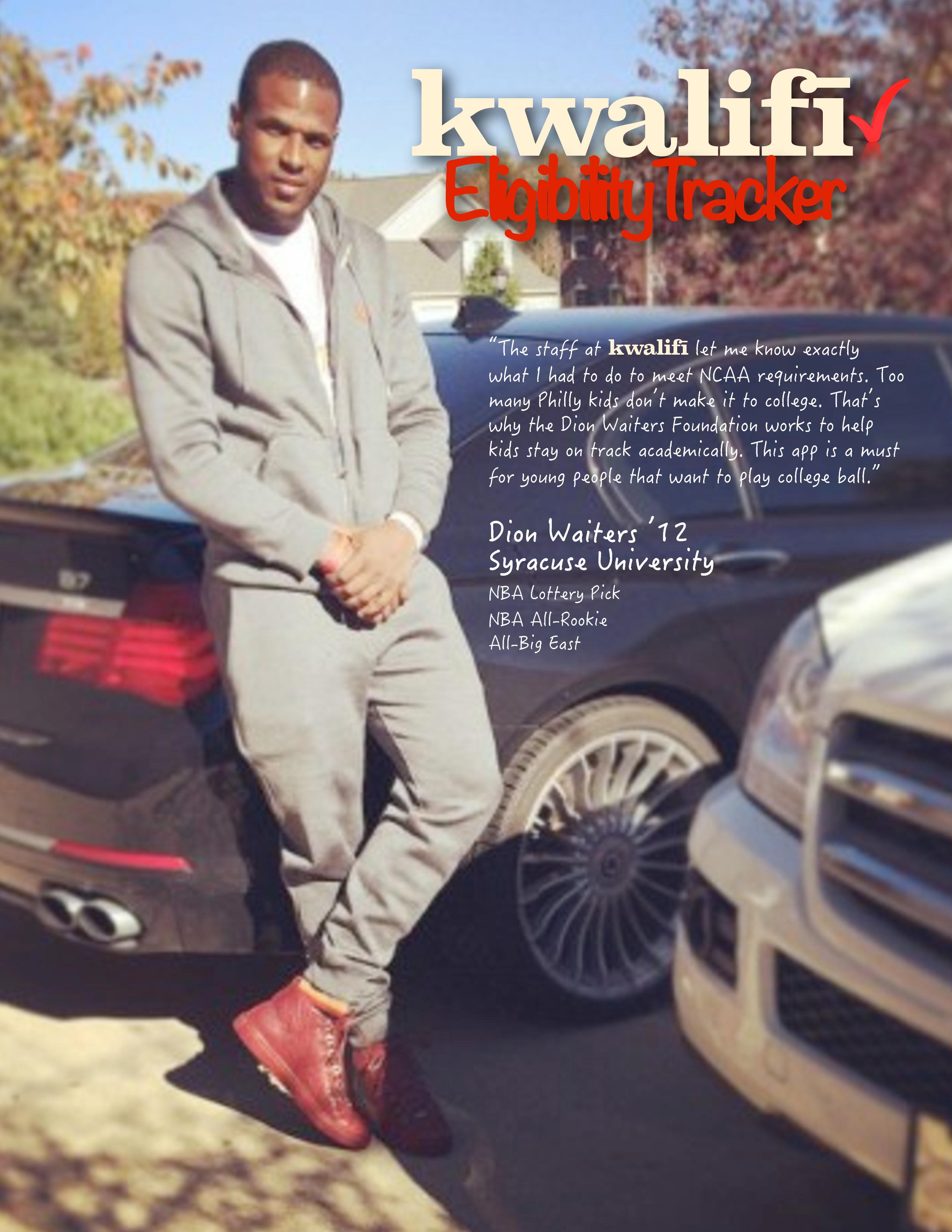

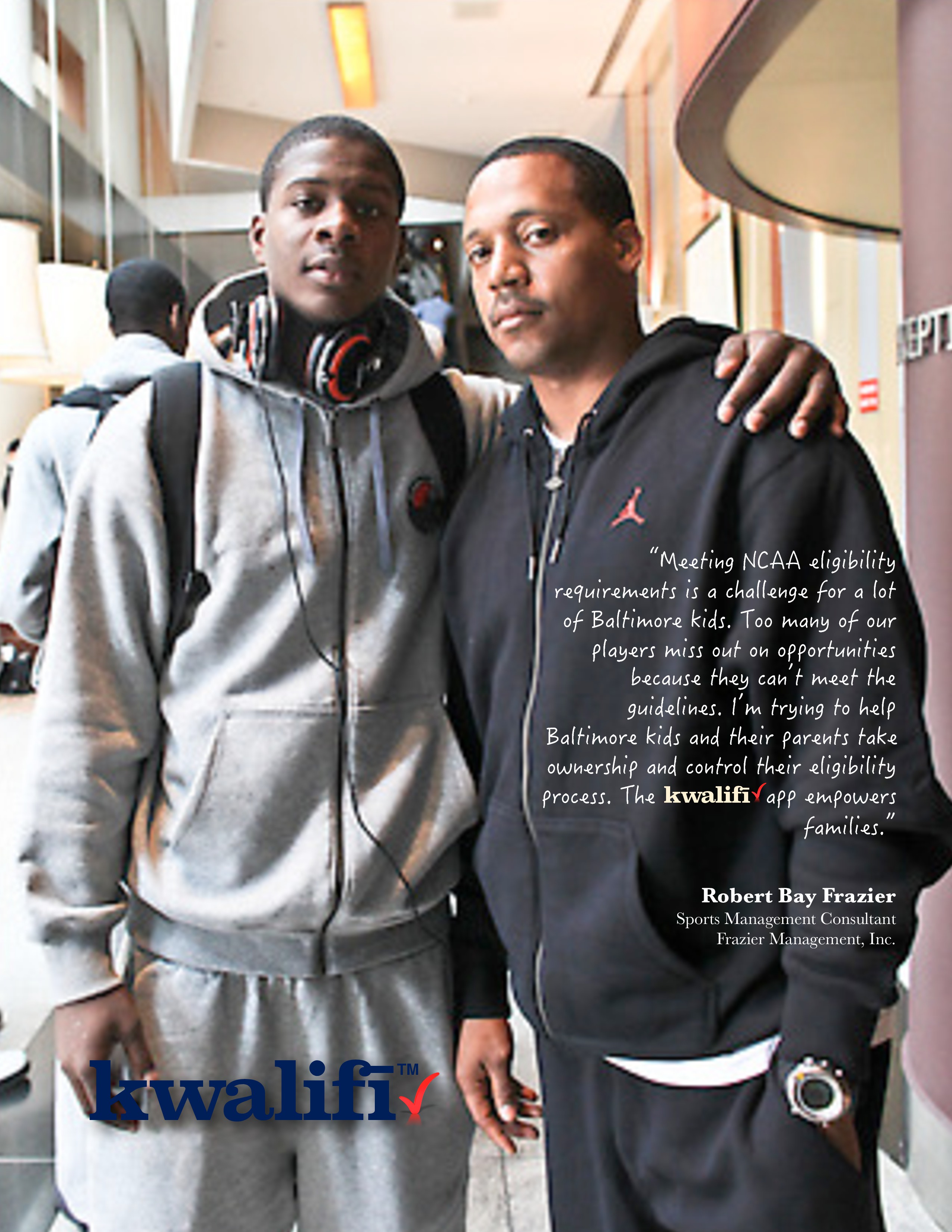


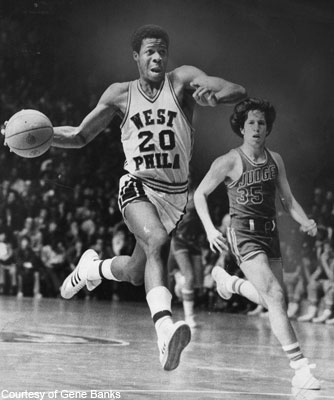




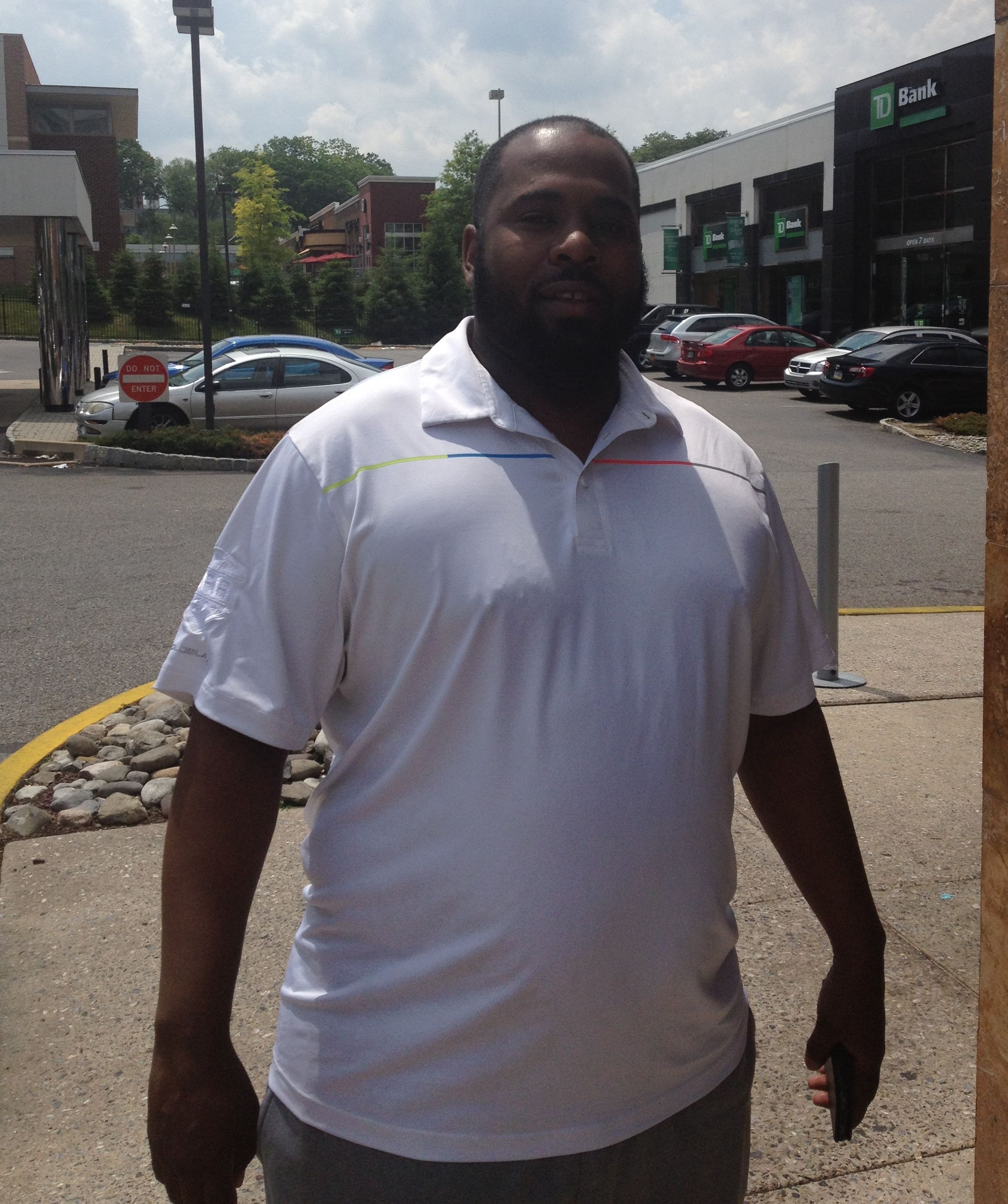


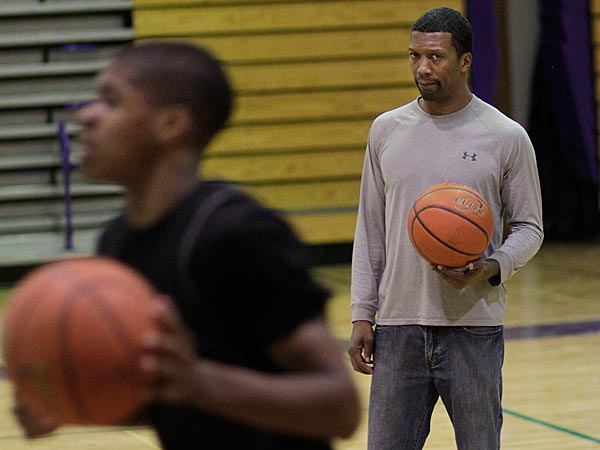









 The Black Cager