Philly Pride & Triple Threat is Focused on Education

PPTT(L to R) Kamal Yard, Philly Pride & Triple Threat, Bill Gibson, Chief Enrollment Manager for Secondary Schools, Nick Regina, Deputy Secretary for Enrollment Management and Eric Worley, Philly Pride & Triple Threat

Philly Pride & Triple Threat (PPTT) is committed to serving youth in and around the Philadelphia area in three distinct arenas; Education, Athletics, and Life.

Educationally, members of the foundation receive the necessary academic incentives and support to assure success in the classroom. Athletically, members of the foundation compete on a well organized basketball team and are involved in other basketball related activities. The two main goals athletically are; development of fundamental skills and exposure to college coaches. From a Life standpoint, participants are coached and mentored by high character and quality individuals with the primary goal of instilling appropriate life lessons in the individual students.

Eric Worley and Kamal Yard are diligently working together to inspire promising inner city youth to be leaders, champions and student-athletes as well empowering them to be successful in high school, college and life.

Specifically, these gentlemen use basketball as a “hook” to engage young men and women in the program.  The larger, more important objective is to help Philadelphia area youth access high quality educational opportunities, internalize positive value systems and refine life skills that will prepare them for the day the ball stops bouncing.

Their track record is extremely strong.

Rysheed JordanRysheed Jordan, St. John’s University, Philly Pride & Triple Threat Alum

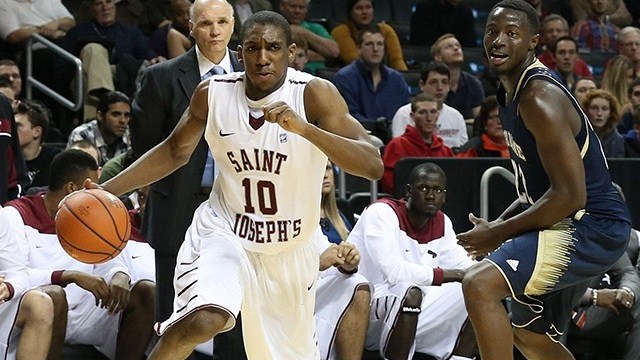
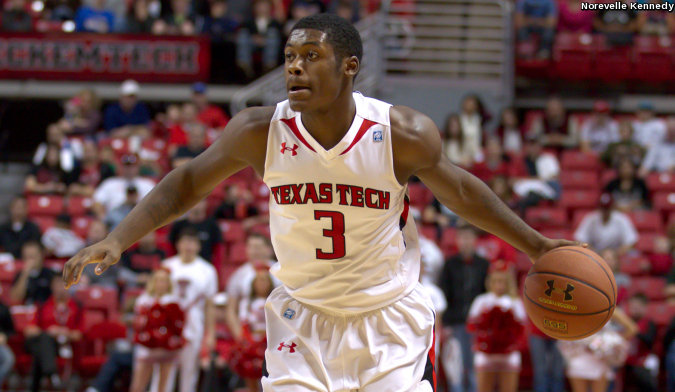
Well over 30 collegiate athletes have come through the program. St. John’s Rysheed Jordan and DePaul’s Brittany Hrynko are both projected to go in the 1st round of the NBA and WNBA draft respectively.  The PPTT program has developed some of Philadelphia’s most talented players in recent years.  Many have prospered in some of the most academically challenging independent and Catholic high schools in the area.  Recent Temple University commit Levan Alston (Haverford School), St. Joseph’s University commit Chris Clover (St. Joseph’s Prep), Tony Carr (Roman Catholic), Sean Lloyd (Mt. Zion Prep, MD), Josh Sharkey (Archbishop Carroll), and Lamar Stephens (Haverford School) have come through their ranks.  In each case, the young men were well-prepared for the rigorous academic programs they encountered.

Philly Pride & Triple Threat is, clearly, one the leading youth sports development programs in the Greater Philadelphia region.  They take the responsibility of preparing students very seriously.  Over the past couple of years, Philadelphia’s public schools have faced unprecedented budget problems and experienced massive teacher and counselor layoffs. An already under-served group of urban students have found themselves virtually abandoned.  As a result, the roles of Worley and Yard have evolved and expanded.

They have become de facto school counselors for a significant portion of the 500 or so students in their program. More and more, they have been asked to help guide more students from poor and middle-class families to the area’s top middle and high schools. By default, Philly Pride & Triple Threat has been providing students with the kind of personalized counseling that students from more affluent families tend to get from private counselors or their school-based guidance counselors in the suburbs. They have worked tirelessly to establish relationships with Independent and Catholic Schools in Philadelphia out of necessity.

Brittany HyrkroBrittany Hrynko, Depaul University, Philly Pride & Triple Threat Alum

As noted earlier, Philadelphia is the midst of an unprecedented series of budget cuts. The cuts were to the bone!! In 2013, the Philadelphia school system laid off 3,783 employees, including 676 teachers and 283 counselors. Along with teachers and counselors, those losing their jobs included 127 assistant principals and 1,202 aides who monitor the cafeteria and playgrounds. Most recently, The SDP raided the The existing Philadelphia Federation of Teachers Health and Welfare Fund, which has about $40 million built up in it. The future for Philadelphia’s public schools is very bleak.

Nonetheless, every day Yard and Worley work with students and parents hungry for good school placements.  They recognized that they needed to become much more knowledgeable about the application and financial aid process at tuition-based schools. Toward that end, they recently met with Nick Regina, Deputy Secretary for Enrollment Management and Bill Gibson, Chief Enrollment Manager for Secondary Schools for the Archdiocese of Philadelphia.

Yard says, “Mr. Regina and Mr. Gibson made us feel that our students would be welcomed in Catholic schools. I learned some important things that I can’t wait to share with our families.”  He gained a better understanding of the processes in place within Catholic High Schools.  According to Yard, “The Catholic high schools are very real options for our kids, we’ll make every effort to link our parents with admissions staff in several Archdiocese schools.”

Worley, a former teacher and principal in Philadelphia’s public and charter schools was also excited. According to Worley, “Catholic high schools are accessible and affordable for many our kids. I know first hand, how frustrating it can be for parents seeking a better school placement for their child. I look forward to helping our students access and navigate the application process.”

PPTTLogo

Yard and Worley also have a PPTT High School Assist Project, which will help sixth through eighth grade student-athletes succeed in middle school and leverage that success to gain admission to excellent college preparatory high schools. The HS Assist Project will offer academic instruction/tutoring, homework help, life skills development and test preparation for sixth through eighth graders.

The PPTT College Assist Project, will continue to provide high school student-athletes with the individual support necessary to be successful in high school and to prepare for college. College Assist Project support includes SAT and other test preparation, high school counseling, application/financial aid workshops, college visits and NCAA eligibility and recruiting guidance.

If you want see the fruits of Yard’s and Worley’s labor just peruse the rosters of Inter-Ac and Catholic High School teams or check your TV listings and find some Big East games, women or men.

← Back

Thank you for your response. ✨

Sex, Black Male Athletes & The Responsibilities of Ol’ Heads

Tom Payne-page-0

Young fella… Let me holla at you for a minute…

I see what’s going on… She’s cute… not what you are used to… not “thick” like the girls from ’round the way… but cute nonetheless… Moreover, she’s always around… after practice… after dinner… outside study hall… in the lobby of the dorm. She always speaks first. She’s thirsty.  She’s trying real hard to get your attentions.  Seems like her wardrobe consists solely of yoga pants. You’ve noticed and she knows you’ve noticed. It’s just a matter of time ’til  y’all hook up.  Growing up you were never really interested in dating white girls, but DAMN it’s so many of them hanging around the team… You’re curious.. You’re thinking about it… Be careful young fella.

It’s a tough balancing act. You came to college to play ball first and foremost. Everything else is secondary. Academics? Yeah… the coaches talk about studying hard, but you (and everyone else for that matter) know their main concern is your development as a ball player. You are there to win games.  Being a scholarship athlete is a job.. A full-time job… You are evaluated based on your performance on the court and on the field. Besides, if you take the classes they’ve lined up for you and work with your academic advisers you’ll be fine. You will graduate in four years.

But what about the blonde in the yoga pants? Let’s call her Becky.  There’s no adviser to guide you through that situation. Young fella you are on your own.  You have to rely on your own judgement.  After a while, you decide to “hang out” with her. She has a BMW 3 series… nice… She has a credit card with what seems like no limit… Pizza? She’s got it… Wings? She’s got it… Movies? She’s got it… $50?… Yeah, she’s got that to…

Never, throughout all of your years in the “hood,” have you encountered a girl like Becky.  You have no frame of reference for this type of “relationship.” It really doesn’t make sense to you… She’s not your lady… She’s not your girlfriend… but… you like it. You really like it.  You’ve been conditioned to like it.  When they recruited you, they put about 4-5 girls just like her in front of you for the entire weekend. These girls looked like Becky and they were ready, willing and able… You smashed. It was all good. You committed… “Coach, I’m coming to BIG State!”

So now you’ve been on campus for a few weeks, it’s Friday and there’s no practice tomorrow. A rare day off. You can’t believe coach actually has nothing planned in the morning.  So you, two teammates and your boy from home decide to head over to a keg party at a nearby apartment complex. Soon as you enter the door, there she is… Becky… Y’all lock eyes… It’s a wrap, she’s by your side for the rest of the evening.  You playfully flirt.  You test the limits… How far will she let me go?  You grab her ass, she’s ok with that… You kiss her, she’s ok with that.

After a 7-8 drinks things start to get a little “loose.” Y’all decide to slip off to the bathroom. You close the door behind her and she gets on her knees. The effort is there, but the constant knocking at the door is really distracting. After 10 minutes or so y’all decide to go back to your room. This poses problems for your boys.  You’re the “man,” everyone knows you, not them.  They are just dudes at a party.  Your friends don’t like their chances of “hooking up” if you aren’t there with them.  Everybody decides to leave.  You, your crew and Becky head back to your dorm.

black-and-white-mike-jordan-sonMichael Jordan’s Son, Marcus and friends

Upon arriving back at the dorm, it’s on. You and Becky immediately disrobe and engage in consensual sex. Very good consensual sex. So good, your boys have been listening at the door the whole time. As a result, they are drunk and horny.  These guys are in a frenzied state of mind.  When you leave to clean yourself in the bathroom,  your teammate decides to enter the room.  We have just entered the danger zone. Young fella… Make no mistake… Lives are about to change forever.

Becky sees him taking off his pants and gets worried. She didn’t sign up for this.  She let’s him know she doesn’t want to have sex with him. He totally disregards her protestations.  He’s gonna take it.  He grabs her, places his forearm across her chest and pins her down on the bed. In a matter of seconds, Becky knows she has no options.  It’s total mismatch. He’s 6’4” and 245 lbs. She’s 5’3” and about 120.  Your boy… your buddy… your homie… forcefully spreads her legs and penetrates her vagina.  He’s not wearing a condom.   After a few minutes he lifts her up, flips her over and forces himself into her anus. Becky is crying.  Her spirit has literally left her frail body.  She has given up on physically resisting. She’s just hoping that this ordeal will soon come to an end. It doesn’t.

After wiping yourself down, you re-enter the room.  The other two guys are on your heels.  You see what is happening.  Your boy is ravaging Becky.  You know it’s not right. You know it’s foul. But you don’t take a stand.  You are now complicit. Unfortunately, you are “down” – legally and in a fraternal sense – with your boys… You’re weak and you allow Becky to be raped.  It unfolds right in your face.  Your boy from home forces his penis in her mouth while your teammate continues to assault her from the rear.  Your other teammate whips out his cell phone and starts recording the incident. Becky has become an inanimate object, she exists solely as a means of pleasuring the young men.  No one give any thought to her feelings, her pain, her humiliation.  Eventually, her crying becomes overbearing and y’all decide to cease. You throw her a towel, a rag and a hoodie. You and your homies retreat to the living area leaving her lying is a pool of sweat, tears and semen.

After a about 10 minutes, you ask her if she’s “alright.”  Becky’s eyes are open, but she is unresponsive.  It’s as if she comatose. She has just been subjected to a brutal felony gang rape.   But in a haze of ego and displaced loyalty to your friends, you convince yourself somehow, someway that she wanted it.   You have absolutely no idea how much trouble you are in.  Back in the living area, your boy has already forwarded the video and pics to several other friends.  Your dumb ass then shares it with other players on the team.

Jack Johnson-page-0(1)Becky is devastated.  She is bleeding.  All sorts of thoughts are running through her head. “Do I have a disease? Herpes? Aid? Am I pregnant?”  Blaming herself, she wonders what she could have done differently.  Yes, she wanted consensual sex with YOU.  The key words here are “with YOU”.  She didn’t want to be tossed around and shared by a group of strange men.  Unbeknownst to you and your friends, Becky has just endured life altering physical and psychological trauma.  Even though you don’t yet realize it, your athletic careers are already in jeopardy and your reputations will never recover.

Different versions of this episode are playing out on college campuses all across the country. Young Black college and professional athletes are literally “wildin’ out” on campuses and in hotels across the country. Of course, white athletes are wildin out too.  But, I’m not concerned with Ben Rothlisberger, Christian Peter and other white athletes right now.  Young fella, I am worried about you.  With alarming frequency, the media provides us with detailed accounts such as the one above.

Even casual fans can recognize that Black college and professional athletes such as yourself are increasingly involved in “alleged” sexual assaults. When not substantiated, these allegations, nonetheless, linger. They permanently stain the reputation and decrease the earning potential of guys like you. You do not want to be forever linked to the words “sexual assault” and “RAPE.”  If substantiated, athletes face immediate repercussions meted out by the criminal justice system and living their remaining years as a registered “sex offender.” Either way, the social and financial costs of sexual assaults are extremely high and should be avoided at all costs.

But how do you learn to deal with these situations? Who will demonstrate and model more appropriate ways to engage in sexual relationships with females, especially female “groupies”? I know you don’t really have a relationship with your father.  Who can help save you from yourself?

My contention here is that your Ol’ Heads have to do a better job preparing you for the complex and often confusing social circumstances awaiting elite basketball and football players on college campuses.  It ain’t enough to just deliver you to a Nike, under Arnour of Adidas school.  Ol’ Heads have to do more.  They are the ones in a position to make a difference.  Ol’ Heads have earned your respect and that of young Black males. They are youth coaches, high school coaches, AAU coaches, mentors, teachers or any older gentleman that demonstrates a willingness to impart knowledge.  Ol’ Heads know exactly how these scenarios can play out.

Young fella, if you truly don’t understand how you ended up arrested and charged with rape, your Ol’ Heads failed you.

Lawrence Taylor-page-0

I’m gonna always try my best to give it you raw and uncut.  Young fella, I have to speak TRUTH. Take it however you want, but here it is.

Some things have been issues from the moment Black men set foot on Jamestown, Virginia in 1619.  Since then, their place in the fledgling society has been an issue of vital concern to dominant white males. Very early on it was decided that Black males would be subjugated and relegated to far less than second class status.  By 1640, at least one African had been declared a slave and formally ordered by the court “to serve his said master or his assigns for the time of his natural life here or elsewhere.” Your Ol’ Heads understand that Black male sexuality and the Black penis have been viewed as major threats to the established social order by successive generations of white Americans over the past 370 years. Your Ol’ heads know that Black male interactions with women, especially white women, throughout American history have been aggressively policed and excessively punished. Ol’ Heads tend to understand this instinctively even if they are not familiar with the ugly, horrific details of manner in which American society has interacted with Black male genitalia.

The problem, as I see it young fella, is that collegiate sports has become such an integral and important part of American culture that many Ol’ Heads think that these historically observable dynamics no longer apply to elite athletes such as yourself.  And, to certain extent, they are not wrong. They are just shortsighted.  As long as you are performing in sanctioned contests that generate approximately $900,000,000 annually for the NCAA, they will let a LOT of shit “slide.”  Up to and including sexual assaults…

However, when you are no longer eligible to play or become ineffective at toting the rock or dunking a ball… When you can no longer contribute to victories and earn $$$$ for BIG state, the reality of America’s long standing fear of Black sexuality will rear its’ ugly head.  You will quickly come to understand the extent to which America continues to be fearful of the Black penis.

Eddie Johnson-page-0Young fella… Let me give you a quick history lesson on this subject.  They have always reserved the “legal” right to cut your dick off for that same shit y’all did to Becky.  In 1769, Colonial Virginia established a law which “authorized the castration of any slave who attempted to have sex with a white woman,” but it had no similar provision when white men attempted or in fact ravished black women.  Young fella… pay attention…  In 1775, Colonial Georgia formally enacted the prohibition against teaching a slave to read or write. The penalty for violating this prohibition was set at fifteen pounds sterling. That fine was was 50% larger that that for willfully castrating a slave or cutting off a limb.  That means the penalty for cutting off your balls was only half as much as the fine for teaching you to read.  I know what you are thinking: “I would have escaped, I would have run off…” You had better make to freedom if you tried.  In Colonial South Carolina, a third attempt at escaping to freedom warranted castration.  This mysterious fascination with and simultaneous fear of Black penises was not limited to the South.  In Colonial Pennsylvania, all Black males, free and enslaved, found guilty of attempts to rape a white woman were castrated.  The macabre behavior continued, in extra-legal forms well after independence from England.

In his recent film, Quinten Tarantino captured the essence of the issue at hand when Django was hung naked upside down in a barn while he awaits castration. The white man longing to execute the job, Billy Crash, one of the overseers, delighted in the thought of cutting off Django balls.  But, young fella, I don’t have to rely on cinematic fiction to illustrate how this is part of America’s DNA.

Throughout American history, when Black males were lynched the murderers would routinely cut off their penises. Sometimes, Black dicks were kept as souvenirs in pickle jars. In other instances, they were shoved into the mouths of the victim as he dangled from a tree. Eighty years ago, on October 26, 1934 Claude Neal was lynched in Marianna, Florida for having an affair with Ms. Cannidy, a young white neighbor.

A member of the lynch mob described the gruesome episode in great detail:

“After taking the nigger to the woods about four miles from Greenwood, they cut off his penis. He was made to eat it. Then they cut off his testicles and made him eat them and say he liked it. Then they sliced his sides and stomach with knives and every now and then somebody would cut off a finger or toe. Red hot irons were used on the nigger to burn him from top to bottom.” From time to time during the torture a rope would be tied around Neal’s neck and he was pulled up over a limb and held there until he almost choked to death when he would be let down and the torture begin all over again. After several hours of this unspeakable torture, “they decided just to kill him.”

The mob of angry whites tied Neal to a rope at the rear of an automobile and dragged over the highway to the Cannidy home. Somewhere between 3000 and 7000 fervent whites from eleven southern states were excitedly waiting his arrival. When Neal’s corpse arrived, it was immediately mutilated by the onlookers. It was then taken back to Marianna, where it was hung to a tree in the courthouse square.  Young fella, pictures (see below) were taken of the mutilated body and hundreds of photographs were sold for fifty cents each. Neal’s fingers were sold as souvenirs.

Claude-Neal-1934-Marianna-FLClaude Neal, Marianna, Florida 1934

In some important ways, times have changed significantly.  Think about it young fella.  For the better part of four centuries, brutal lynchings and castrations accompanied even the slightest thought of engaging in sexual relations with white women.  Yet, today young Black men are engaging in sexual relations with white women on college campuses in Florida, Texas, South Carolina, Kentucky, others states throughout the former Confederacy and all across the country. Even when white women cry “rape” the cases are frequently made to go away.

By now Young fella… I know your asking: How does this make sense? What is going on? What changed?

Incredibly, at this historical juncture, it is apparent that many white police and University officials place more value on the alleged Black perpetrator’s athletic services than they do on the “honor” of the putative white female victims.  The investigative reports are there for all to see.

Most recently, mainstream media outlets like ESPN, the New York Times and the Washington Post reported that white males in positions of authority are  hindering investigations of Black males suspected of sexually assaulting white women.  University presidents, athletic directors and coaches are routinely siding with prominent young Black athletes and questioning the accounts of alleged victims.

Young fella, you wanna know what’s really going on?

In the immortal words of Raekwon, Inspectah Deck, Method Man and the rest of the legendary Wu-Tang Clan, “Cash Rules Everything Around Me” C.R.E.A.M./Get the money; dollar, dollar bill, y’all.  The fear of Black male sexuality still exists, but it has been overridden by naked greed.  Elite collegiate athletes generate huge sums of money for their respective institutions.

Young fella , as soon as you are no longer a substantial source of revenue, the fear will become readily apparent.

Your Ol’ Heads understand this innate fear. Unfortunately, truth be told, just like the white males cashing in at the colleges, a lot of Ol’ Heads have been blinded by greed.  Hoping to cash in if you make it, many Ol’ Heads are not willing to impose behavioral expectations on guys like you.  They are afraid of being cast out of your inner circle.  They are worried that you will make it to the NFL or NBA and they won’t be around to share in your success and reap financial rewards.

In short, the game is fucked up!!

Fearful of losing access, Ol’ Heads fail to provide guidance for dealing with these situations.  You have never been subjected to logical consequences for your negative behaviors.  As a result, you have no idea how the larger society views these types of sexual escapades. Because you can ball, people have been letting you get away with all types of transgressions since you were 10 or 11 years old.  Young fella you have been socialized to believe you are above the rest of society.  You are part of a generation of gladiators incapable of consistently exhibiting socially appropriate behaviors in all settings.
Mike Tyson-page-0Far too many of today’s Ol’ Heads view their role as making problems go away. In the past, Ol’ Heads prepared youngbucks to deal with a complicated, confusing and discriminatory society. These days, Ol’ Heads just say, “Don’t worry ‘bout it, I’ll fix it.”

That is extremely unfortunate.  Your generation is paying a high price for this.  More than anyone else, Ol’ Heads are in a position to spell out the truth.  Ol’ Heads know their youngbucks. They know if y’all are capable of assaulting or raping women. They have spent countless hours in cars, gyms and classrooms with youngbucks. In many instances, they have diffused sensitive situations involving inappropriate behaviors with girls and young women.  The responsibilities of Ol’ Heads are much deeper than the responsibility of college coaches, given the unique relationships and access that Ol’ Heads enjoy.
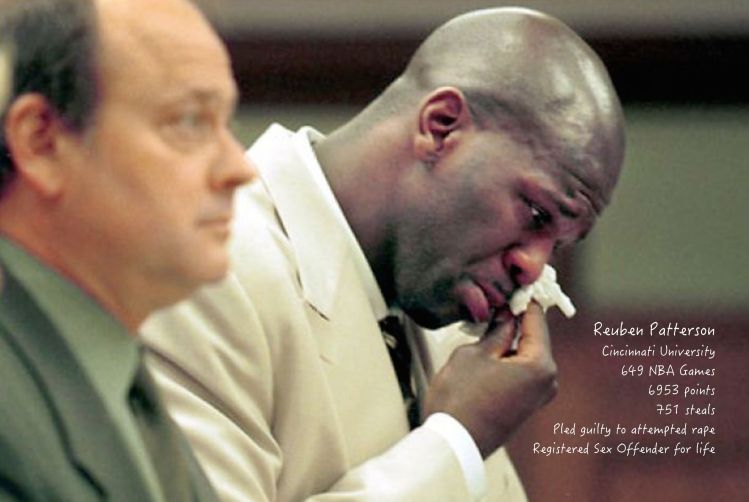
Reuben Patterson-page-0Ol’ Heads also understand the dynamics of race as they have historically applied to Black athletes.  From 1905 through the early 1970’s, major NCAA college basketball and football programs fielded teams that were predominantly white.  In the south, “Affirmative Action” was firmly entrenched in the recruitment process.  Participation in major college athletics was exclusively (100%) the preserve of white males for these seven decades. Highly skilled and supremely gifted Black athletes were barred from participation and lesser white athletes were awarded scholarships.

After explicitly denying Black males an opportunity participate for seven decades, the pendulum has swung entirely in the other direction.  One watching two top SEC teams on television today could easily envision the same game taking place between Grambling and Southern in the mid 1960’s. Outside an occasional center or quarterback, dominant college teams are predominantly African-American.

The money has really changed things young fella… The rise of the Black athlete and the accompanying exponential growth in revenues has led us a point where many white fans, boosters, coaches, administrators and even law enforcement officials value winning college athletic contests (and the generating millions of dollars) more than they fear Black penises.

But… youngfella… please… please… Don’t be fooled, it’s all about the money.

Let’s look at the investigation of a rape allegation against the reigning Heisman winner and quarterback of the national champion Florida State football team.  This incident and the ensuing actions on the part of authority figures provides a clear picture of just how far the pendulum has swung.

Darren Sharper-page-0On Jan. 10, 2013, a female student alleged that Jameis Winston has raped her about a month earlier and reported him to the Tallahassee police.  According to a statement released by the university, senior athletic department officials met with Mr. Winston’s lawyer, Mr. Jansen, within days of his identification as a suspect and quickly concluded that “there were no grounds for further action.” The accuser’s former lawyer, Patricia A. Carroll, said the department did not contact her at the time to get her client’s side of the story.

What the fuck is up with that?  Fifty years ago a mob would have tried to drag Winston out of his home and hang him up on a tree a few feet from the courthouse steps.

Young fella… If we remember what Wu-Tang tells us, that “cash rules everything around me” then things start to make sense.  On the field, Winston is a dynamic force and a dominant leader. Florida State has yet to lose a football game in the in year and a half he has been the starting quarterback. Wins translate into dollars. County officials estimate that home games generate anywhere from $1.5 million to $10 million into the local economy, depending on the quality of the opponent.  Last year Florida State reported a football profit of $20 million, which covered much of the expenses for other sports teams while also helping the athletic department contribute $2.6 million back to academic programming on top of athletic scholarships.

The New york Times has reported that the police investigator who handled the case, Scott Angulo, “has done private security work for the Seminole Boosters, a nonprofit organization, with nearly $150 million in assets, that is the primary financier of Florida State athletics, according to records and a lawyer for the boosters.”

As long as he has eligibility left, FSU and the authorities in Tallahassee will continue to let a LOT of shit slide.  Winston as of October 14, 2014 is 19-0 as the starting QB.  He also has a Heisman trophy and a National Championship in hand.  You… young fella… you ain’t Jameis Winston.

Act like you got some sense!!

← Back

Thank you for your response. ✨

NJ Playaz, Team Final and WE R1: AAU Done Right

Steve Kerr-page-0

Is Steve Kerr correct?  Has the process of becoming a better team basketball player “become completely lost” within the now dominant world of AAU basketball?  Kerr’s sentiments have been echoed by many within the basketball hierarchy.  Detroit Piston’s Head Coach, Stan Van Gundy says, “[AAU] is a bad system for developing players… They aren’t learning to handle the ball, they aren’t learning to make plays against pressure. The emphasis with our high-school players is to get exposure and play as many games as you can and show everybody how great you are.”

The deeply held pessimism is enough to make one wonder if there are any redeeming aspects of AAU/grassroots basketball.  Nonetheless, any knowledgeable basketball person will tell you AAU/grassroots circuits (NIKE, Under Armour and Adidas) have superseded high school in importance for aspiring collegiate and professional players.  Hence, parents face a quandary, do they forgo the most significant platform in terms of exposure and high level competition because of the concerns expressed by coaches like Kerr and Van Gundy?  Or, do they try to identify AAU programs doing the things the “right” way?  I’m going to assume that virtually every parent will choose the latter course of action.

This begs the question:  What does AAU/grassroots basketball look like when it’s done right? Of course, first and foremost the program must be competitive.  Of course, a good AAU program has to win tournaments.  Kerr complains that winning is devalued.  He significantly overstates his case.  Winning matters and it matter a lot.  No one wants to play for a program that get’s smoked game after game. Nobody wants to be on the wrong end of 20, 30 even 40 point blow outs in front of ACC, Big East, Big 10, SEC and A10 coaches. Good AAU programs win games. Some of the very best AAU programs are in the mid-Atlantic region. NJ Playaz, Team Final and WE R1 are doing AAU/Grassroots basketball the right way. They win and their players consistently go on to play at next level.

These are grassroots organizations with well-established support structures and developmental programs that have improved the quality play among their participants. It should be noted that high quality programs enhance the athletic, educational, and social development of the student-athletes. It can’t be all about winning AAU games and tournaments. But, make no mistake these programs win a lot of AAU games and tournaments.

Playaz Peach Jam2014 NIKE Peach Jam Champions, NJ Playaz

In 2014, Team Final, led by Rob Brown, was the regular season champion of the NIKE EYBL circuit. Their 14-2 record was the finest in what is widely considered the most competitive grassroots league. Jimmy Salmon’s NJ Playaz (pictured above), led by All-American Isaiah Briscoe (Roselle Catholic HS) won the prestigious Peach Jam title. The Peach Jam Tournament provides a culmination for teams playing on the NIKE sponsored the travel team circuit and allows 40 teams to compete for an ultimate goal each summer. It is the premier tournament of the summer. The Final Four of the Peach Jam wan nationally televised by ESPNU (see below).

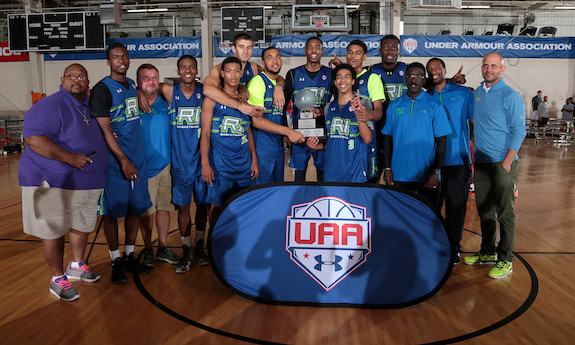
Peach Jam ESPNUAnother nationally recognized AAU program has emerged out of Middletown, Delaware. Under the direction of Terrell Myers, WE R1 took home both the regular season and UAA Tournament championships in 2014.  Led by Derrick Jones and Malik Ellison We R1 defeated highly regarded Sports U to capture the Under Armour Association title (pictured below).  WE R1, like NJ Playaz and Team Finals, is generally considered one of the most competitive grassroots programs in the nation. All three are consensus top 25 teams, with NJ Playaz and WE R1 coming in 1, 2 in most national rankings.

2014 Under Armour Association Finals2014 Under Armour Association Champions, WE R1

So, they win big games and bring home hardware from the biggest tournaments.  What else makes these programs special?  Some obvious questions immediately come to mind: Do their players get recruited? Do they get scholarships? The track record of Jimmy Salmon and the NJ Playaz in this area is beyond reproach. Tim Thomas (Villanova), Wayne Ellington (North Carolina), Gerald Henderson (Duke), Eddie Griffin (Seton Hall), Marcus Toney-El (Seton Hall), Vince Carter (North Carolina), Kenneth Faried (Morehead St.), Dahntay Jones (Duke), Sean Singletary (Virginia), Earl Clark (Louisville), Jeremiah King (Drexel) and Kyle Anderson (UCLA). Of course J.R. Smith and Kobe Bryant would have been included had they elected to play collegiately instead of jumping straight to the NBA. Another Playaz alum is NY Giants ALL-PRO wide receiver Victor Cruz.

Kyle AndersonKyle Anderson, NJ Playaz

Team Final alumni roster includes NBA lottery picks Tyreke Evans (Memphis), Mike Gilchrist (Kentucky) and Dion Waiters (Syracuse). This year alone, seven Team Final players have committed to NCAA Division 1 programs. This list includes Malachi Richardson (Syracuse), Donte DiVincenzo (Villanova), TreVaughn Wilkerson (Hartford), Trey Lowe (Temple), LaMarr “Fresh” Kimble (St. Joseph’s), Ahmad Gilbert (Geaorge Mason) and Levan Alston, Jr. (Temple). Khaif Wyatt (Temple) and JaQuan Newton (Miami) are also recent high profile Team Final Alums.

dion waiters

Dion Waiters, Team Final

We R1 alums include Dexter Strickland (North Carolina), Ben Bentil (Providence), Markus Kennedy (SMU), Jaylen Bond (Temple), Jared Mann (Stanford), Charles Cooke (Dayton), Khalid Lewis-El (LaSalle), Isaiah Washington (Penn St), Austin Tilghman (Monmouth). This year’s UAA Championship team featured Tim Delany (Villanova-commit) and Derrick Jones (ESPN #22, 2015). Also in the program is Sedee Keita (ESPN #34, 2016).

Ben BentilBen Bentil, WE R1

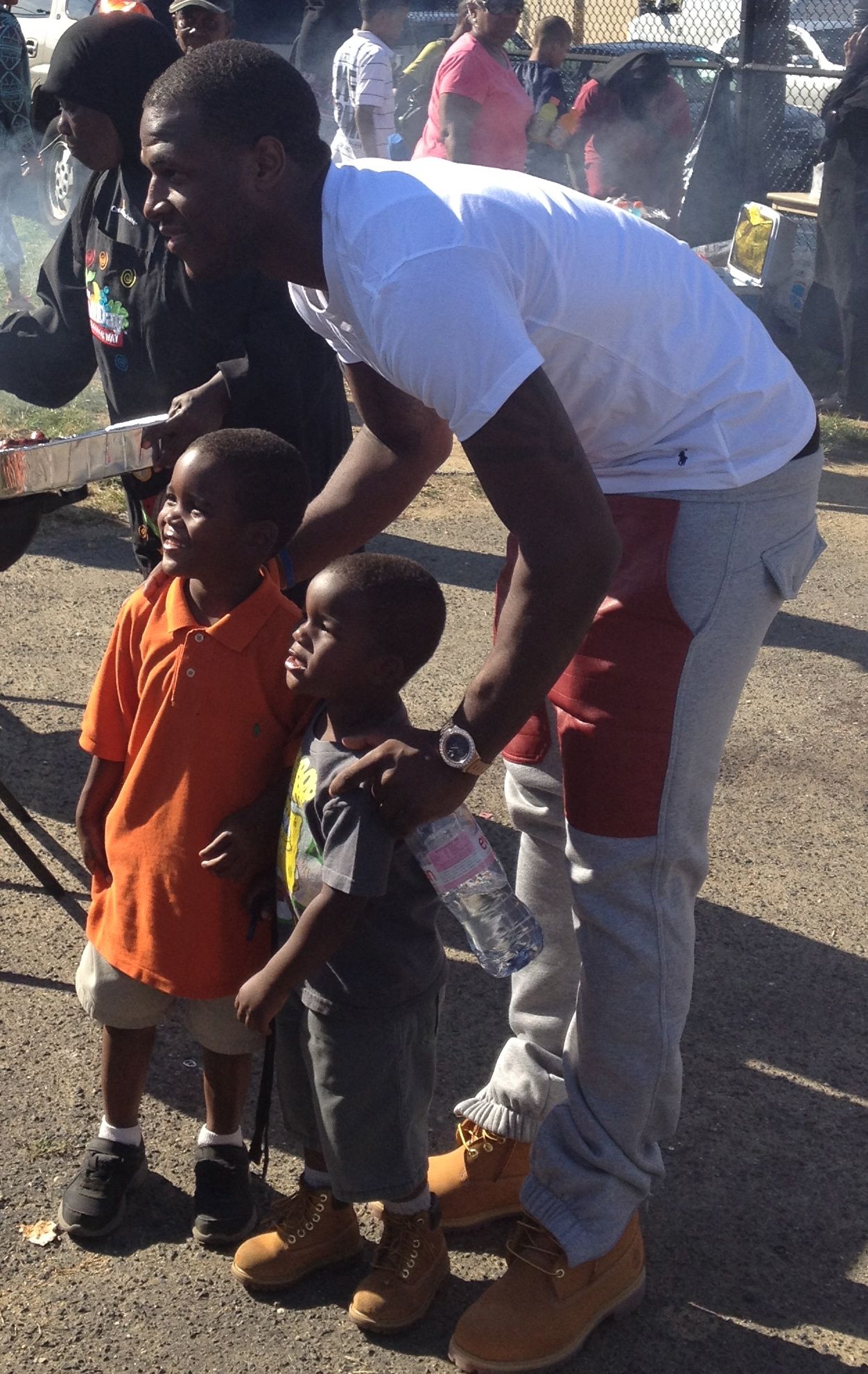
By any reasonable measure, these programs produce kids that get recruited at the highest levels.  But, what else should you look for in a “good” AAU program?  Well, a good AAU/grassroots program build social cohesion and and increase social capital among young people and adults in their respective communities. The younger kids in the program and the larger community should benefit from the success of the older kids.  By the time the players participate on the 16u and 17u teams, they are generally very well known and look up to by younger players in the program and the surrounding community. Pay attention to the twitter and instagram accounts of the players in the program.  Read what they write.  Look at the images they project.  Is this how you want your child to portray himself publicly?  Watch how the student-athletes interact with younger kids and other members of the increasing AAU fan base. For programs like NJ Playaz, Team Final and WE R1, basketball is used as a practical tool to engage young people in their communities through volunteering, resulting in higher levels of leadership, community engagement and altruism among young people.

Dion book bag 2Dion Waiters, Team Final, interacting with youth during Book Bag Giveaway

Another indicator of a good program is the intensity of the relationships between the players and level of respect players (and former players) have for the coaches.  The relationships between AAU teammates are just as strong, perhaps even stronger, than those among high school teammates. Young people regularly spend 7,8 or 9 hours in vans traveling out of state to play in tournaments. They eat and sleep together on the road. In each of the highlighted programs, positive peer relationships are encouraged through coaching. If you spend anytime watching the teams practice and play it becomes apparent that social inclusion is very important to the coaches.  Talk to the kids that aren’t the stars on the team.  How do they feel about the program?  Of course, the guys getting all the attention and limelight are likely to be happy.  Are the non-starters benefiting as well?  Do they speak highly of the coaches and their teammates?

Social inclusion also relates to offering equal opportunities to educational programs regardless of ethnicity or basketball ability. There is a great deal of attention paid to ensuring Division 2, Division 3 and NAIA level players are academically eligible.  Rob Brown, Jimmy Salmon and Terrell Myers are consistently monitoring report cards, arranging SAT tutors and tracking GPAs.  Each treats the low D1, D2 and NAIA recruits the same way they treat the ESPN top 50 kids.  When evaluating programs, find out how the last man on the bench is treated.  That is a true indicator of the quality of the program.

Sedee

Sedee Keita, WE R1, ESPN #34 (2016)

Lastly, find out if their players exhibit a pattern a negative acting out behaviors.  Do they get suspended from high school or college?  Are there allegations or accusations of sexual misconduct or assault? Have their alums been arrested while in college?  Given the recent explosion in the number of criminal incidents involving high profile athletes, it is important to know the people you trust with your children.  There can be little doubt that NJ Playaz, Team Final and WE R1  have a positive impact on character-building in their participating players. The thugh element is virtually non-existent in these programs.  These young men go off to college and the overwhelming majority are highly successful on the court and they graduate.

This can be largely attributed to the respective roles Jimmy Salmon, Rob Brown and Terrell Myers  play within their respective organizations.  Plainly stated, they have high expectations and as a result have a positive influence on the degree of ‘character-building’ within their programs.  Research suggests that participation in organized athletics such as AAU basketball can be used as a means to reduce delinquent behavior. But it’s important to understand that playing basketball alone does not directly impact on negative behavior. Accordingly, good AAU programs combine basketball activities with academic, leadership and job-skills development and training to address risk factors in children and youth.

If you want to see AAU done right visit any one of these programs.

← Back

Thank you for your response. ✨

Ask AAU and HS Coaches the Hard Questions!!

Young fella:
It’s hard… I know… believe me, I know. You are just trying to find your way. I’ve been there. I’ve done that. I flunked one year in school at 13. I was arrested at 16. I was a teenage father at 17. I lived in subsidized housing. I was raised by a single mother. In my early 20s, I smoked blunt after blunt after blunt… I played high school ball. I played college ball. My homies moved weight. I have been profiled by police several times. I have been strip searched for no reason. My car has been searched on the side of the road. My close friends have done bids in the penitentiary. By 23, the University of Michigan, the University of Delaware, The Ohio State University and the University of California were offering to pay me to attend their graduate programs.  As I approach 50, I have gained some perspective that may be of use to you as you begin your journey.  But, you gotta pay attention and listen closely…

Philly Pride Triple Threat LogoMore than anything else… More than exposure… More than playing time… More than trips to Vegas… More than fly gear… you need to surround your self with people that are knowledgeable about the ever changing NCAA eligibility process.  Make sure you participate in AAU and high school programs that genuinely care about college preparation.  Good programs have early-alert systems that flag student-athletes with spotty attendance, low test PSAT, SAT and ACT scores, too few core courses and low GPA’s.  Great programs will reward you for meeting academic goals and implement  consequences when you come up short.  Young fella, that’s the ONLY way to avoid being one of the thousands of young Black men who will inevitably fail to meet NCAA eligibility requirements in 2016.  Time is short, you have to grow up quickly.

As you embark on your journey, you will find yourself struggling with the conflicting ways the larger society views Black males. The relationship between America and Black males is really complex and can really be confusing for young men such as yourself. On one hand, for the better part of 400 years, Black males have been viewed as a menacing threat to all that is good about American society. Deeply ingrained white supremacist and racist traditions led to the exclusion of Black males from many major collegiate athletic programs up to the late 1960s and early 1970s.  To this day, young Black men can be literally shot in the face or choked to death in the middle of American streets while armed with only Black skin, loose cigarettes, iced tea and a bag of skittles. On the other hand, Black male athletes and hip hop performance artists are revered and rewarded with multimillion dollar contracts and enormous endorsement deals. Under Armour and Nike just emerged from an unprecedented battle over who gets to pay Kevin Durant $300 million over the next decade.  Of course, you want access to the latter, but everyday you have to navigate the reality of former. It ain’t gonna be an easy journey young fella…

Odds-of-Making-the-NBAIn the immortal words of Run-DMC, “It’s Tricky”…. But, for now, you just wanna play ball… You just wanna go to college, preferably D1. You know the odds are more than stacked against you. You have heard it all before. You fully understand that only 0.03% of high school players make it to the NBA. You realize that there are about 546,000 high school players and every year only about 48 college players are drafted into the league. But, shit… you could be one of the 48. I get that… I really do… As you see it, all you need is one coach in the right program, in the right conference to give you a chance. If they let you on that stage, you know you’re gonna shine. In your mind, you are better than many of the guys playing college ball right now! Given a fair chance, you will have the NBA contract and the massive endorsement deal. Maybe… Maybe you will young fella, but then, again, maybe you won’t. Be ready either way!

Mark MaconMark Macon, Temple/NBA

It’s possible… I’ve seen a lot of Philly high school and college players make to the NBA. Maurice Martin (St. Joseph’s), Lionel Simmons (LaSalle), Doug Overton (LaSalle), Randy Woods (LaSalle), Bo Kimble (Dobbins), Tim Perry (Temple), Mark Macon (Temple), Aaron McKie (Temple), Eddie Jones (Temple), Jameer Nelson (St. Joseph’s), Delonte West (St. Joseph’s), Kerry Kittles (Villanova), Rasheed Wallace (Gratz), Marcus & Markeiff Morris (Prep Charter) and Dion Waiters (Syracuse) were all 1st round picks.

I must also tell you, I’ve also seen guys who were good enough suffer injuries and illnesses that curtailed their NBA dreams. Rap Curry (St. Joseph’s), Bernard Blunt (St. Joseph’s), Bernard Jones (St. Joseph’s), Donnie Carr (LaSalle), Jason Frazier (Villanova) and Granger Hall (Temple) were fantastic collegiate players denied an opportunity in the NBA because of health issues. You have to simultaneously prepare to play at the highest level and get ready for the day the ball stops bouncing. It could stop bouncing at any time. First and foremost, we have to get you through high school and off to college.

donnie carrDonnie Carr, LaSalle University

Young fella… The first thing you have to do is become aware of and avoid the traps that have been set for you. Your future, your freedom and in some cases your life are at-risk every time venture outside your home. Every year, somewhere between 8,000 and 9,000 African Americans are murdered annually in the United States. The overwhelming majority of these victims are young males. You should know that 93% of these murders are in fact perpetrated by other blacks.  Black people account for about half of all homicide victims in the US almost exclusively at the hands of other African-Americans. Every year Black men kill more Black men than the total number of U.S. service men and women that been killed in Iraq and Afghanistan combined over the course of decade-long wars fought in those nations.

I know… I know… You know your way around the “hood.” You know the gun-toters. You know the killers. They respect your game. You don’t have nothing to do with the neighborhood “beefs.” You ain’t really worried about dying in the streets at the hands of other Black men. But, you should be. Be careful. Be respectful. I can’t expect you to avoid all interaction with real “thugs.” Some of them are your uncles, cousins, neighbors, friends. In many cases, they love you and you love them. Nonetheless, you have to exercise extreme caution when interacting with them. Don’t take no rides. Don’t hold no packs. Don’t stash no burners in your crib. Be smart. You have other more important things to worry about.

6446-000031Young fella… there is a drug arrest every 19 seconds in the U.S. In 2009 alone, there were more than 1.6 million drug arrests and 82 percent of those were for possession alone. Despite the unquestioned fact that white boys use drugs just as much, if not more, than your homies, they are focusing their policing efforts on our community. As Blacks, we are only 13 percent of the U.S. population and we proportionately account for 13 percent of the nation’s drug users. Yet, Blacks represent 34 percent of those arrested for drug offenses and 45 percent of those held in state prisons for drug offenses. We are the enemy in the “War on Drugs.”

According to the U.S. Bureau of Justice, in 2008, there were over 846,000 black men in prison, making up 40.2 percent of all inmates in the system. The brilliant Michelle Alexander notes that “More African American men are in prison or jail, on probation or parole than were enslaved in 1850, before the Civil War began.” We are drastically overrepresented in the courtrooms, jails and prisons. We are about six times more likely to spend time in prison or jail than whites. According to recent research, we receive up to 60% longer federal prison sentences than whites who commit similar offenses, and 20% longer prison sentences than whites who commit the same offenses.  It’s so easy to get tripped up.

Keep these statistics in mind while you listen to multimillionaire hip hop artists promoting violence, misogyny, drug abuse and crass materialism. Jay Z, Young Jeezy, 50 Cent, Lil’ Wayne and all the rest have bloody hands. They are purposely filling your head destructive messages, while accepting payments for lyrics that extol alcohol and drug use. A recent study by Dartmouth Medical School, analyzed 793 songs from Billboard charts starting in 2005 and found that 160 songs (about 21%) referred explicitly to alcohol.  The study found that the majority of songs that referenced alcohol were rap, followed by R&B/hip-hop and country.  Approximately 42 percent of the lyrics referred to alcohol in a positive way and mentioned specific alcohol brands.  The brands in most cases are associated with advertising that depicts a luxury lifestyle of drug use, partying, sex, and wealth.

Another study by the University of Pittsburgh School of Medicine found that music listened to by teenagers aged 15 to 18 affects long-term attitudes and behaviors.  That study looked at 279 top Billboard songs and found that 33 percent included explicit substance abuse references.  Be strong young fella, they are after you.  The majority of these songs linked substance abuse with positive sexual, financial and emotional rewards.  There are very consistent messages within corporate-sponsored hip-hop that promote the murder of young black men, sexual irresponsibility, excessive consumerism, drug/alcohol abuse and other forms of illegal behavior.  The plan is to convert you into a blunt smoking, drug addled, liquor drinking corporate consumer for life.

Wiz KhalifaIn 2002, Busta Rhymes and P. Diddy released “Pass the Courvoisier.”  That song led to a 19 percent increase in sales for Allied Domecq, maker of Courvoisier. Young Jeezy has an endorsement deal with Belvedere Vodka. A number of hip hop artists are creating their own alcohol labels.  Pitbull, whose real name is Armando Christian Perez, is part owner of the Voli Vodka brand.  Other rap artists who are part owners of liquor brands include Jay-Z, Snoop Dogg and Ludacris.

LudaThe myth is bullshit, Young fella… They tell you, “Jay Z sold drugs, he came up… 50 Cent sold drugs, he came up.” That’s the narrative being repeatedly fed to you and your homies through the media and the hip hop lyrics. Meanwhile, one of every three black American males born today can expect to go to prison in his lifetime compared to one out of every seventeen white males. Most will go to prison for the same “hustlin” behaviors celebrated in hip hop. I need you be discerning. I need you to see what they are doing. For every Kanye, there are 100,000 Nates, Bruces and Jamals on probation, parole or in prison.

The aim, the goal must ALWAYS be to hone and leverage your athletic ability and gain access to higher education. Then use education to improve your life and the lives of your family members. Once this goal is achieved, you have won. A professional basketball contract is the gravy.  The college degree and the knowledge gained along the way constitute the nourishing meal.

Playaz logoToward that end, you have to exercise solid judgement in selecting AAU and High School programs. Don’t sell yourself for a mere pittance. When the AAU guys come around offering a couple dollars, a new cell phone bill and 5 new pairs of KD’s, ask then the tough questions: How many of the guys in your program did NOT meet NCAA eligibility requirements? How many of your guys in the past 5 years had to go JUCO? Exactly, what does your program do to make sure guys are eligible? Does your program have homework assistance and/or SAT/Prep? Do you provide practice SAT exams to see where I stand?

We R 1 logoReally good AAU programs won’t have a problem answering these questions. Really good program administrators understand what you are up against. They do everything they can to get you in college. Some of the best programs I have encountered are NJ Playaz, Philly Pride/Triple Threat, WE R 1, Baltimore’s Finest and Mississippi Basketball Association. These programs focus on academics as well basketball preparation.

Mississippi Basketball AssociationMany of these same questions must be directed to high school coaches. This is especially true for kids attending urban public schools. In urban districts across the country, budget cuts have eliminated guidance counselor and assistant principal positions. You must ask the coach: What is the “eligibility plan” for me? Exactly what courses will I take that will lead to you being eligible? Can I see the list of NCAA approved courses for your school? What is the average SAT score at your school? What scores did your players get over the past few years? Does your school offer summer school courses? What is the grading scale at your school? How many of your players have gone onto play Division 1, Division 2 and NAIA?

As young Black “baller” you may find yourself struggling to attain self-conscious manhood while avoiding traps permeating the landscapes you traverse everyday. As you inch closer to becoming an elite basketball player, the “love-hate” relationship America has with Black males will become more and more apparent. Your challenge is to both keep it “real” and represent your family and your “hood” while simultaneously accessing institutions of high education and playing at the highest collegiate level. Shit ain’t easy. But, it can done, but, you must start right now by asking the right questions.

Sincerely,

Delgreco K. Wilson


Black Athletes, Race and the Rise of NCAA Eligibility Requirements

Imagine this scenario, a scientist develops a gas that kills mosquitoes but can cause some people to go blind.  Let’s say, the gas only blinds white people with blonde hair and blue eyes.  A few people with white people with brown or black hair might get sick but they don’t go blind.  Some with brown or green eyes may get a headache, but they don’t lose their vision.  Blacks, Asians and Latinos are unaffected by the gas.  At the request of the Mayors, the scientist decides to release the gas in New York, Boston and Philadelphia.  All of the mosquitoes are killed but over 200,000 white people with blonde hair and blue eyes lose their ability to see.

Did the scientist discriminate against people with white blonde hair and blue eyes?  Furthermore, suppose the scientist says, “I’m not targeting any specific group, I’m just killing mosquitoes.”  Investigators would ask, “Did you know the gas would cause people with blonde hair and blue eyes to go blind?”  The scientist answers, “yes, but I didn’t target them specifically… I just released the gas to kill mosquitoes.”  How would you view the scientist? Is he a racist? Would it matter that he says he didn’t “target” people with blonde hair and blue eyes?  Whatever his intentions, white people with blonde hair and blue eyes were disproportionately harmed by the intervention.

duke-team-1966-67Duke Men’s Basketball Team, 1966-67

From 1905 through the early 1970’s, major NCAA college basketball and football programs fielded teams that were predominantly white.  In the south, major college athletics was exclusively the preserve of white males for these seven decades.  During this entire 70 year period, there were no substantial “academic reforms” initiated by the NCAA.   In 1959, the NCAA determined that 12 credits per semester defined normal progress.  In 1965, a 1.6 minimum GPA was established for continuing eligibility.  In 1973, the 1.6 rule was replaced with a simpler requirement of a 2.0 high school GPA for initial eligibility, and restoring institutional authority over determining normal progress.
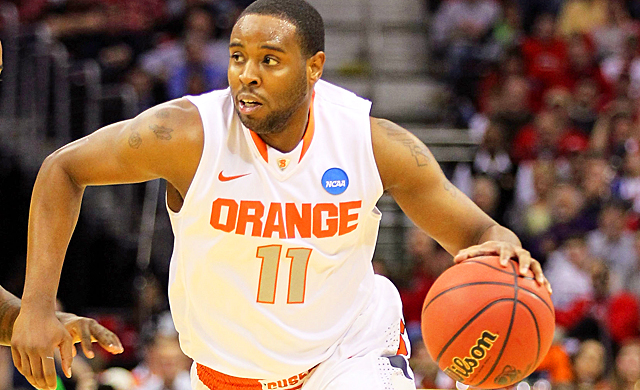
Please note, when the players were overwhelmingly white, academic standards were either non-existent or incredibly low.

1966AlabamaCrimsonTideAlabama Crimson Tide Football Team, 1966

Throughout the 1970’s major college revenue sports underwent a “tanning”  process as Blacks became a majority of the football and basketball athletes.  By the the early 1980’s, Blacks represented the lion’s share of scholarship athletes in revenue sports.  NCAA Eligibility requirements soon emerged as a means of excluding many Black student-athletes from competing at the NCAA Division 1 level.  Like the scientist in the earlier hypothetical, the NCAA says it did not “intend” to disproportionately impact Blacks.  It just happened.

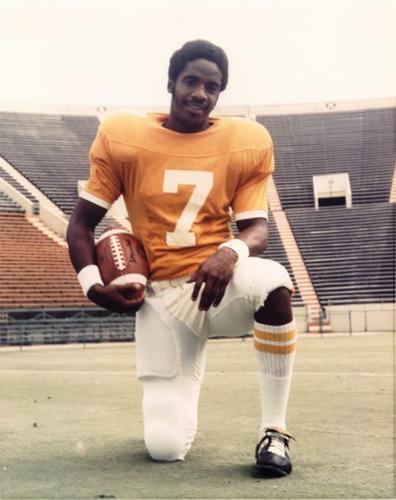
Condride HallowayCondredge Holloway, Tennessee Volunteers, 1st Black QB (1972) in the SEC

With abandonment of rigid Apartheid-like segregation in the South, the 1970s witnessed a rapid influx of Black student-athletes in major college football and basketball. College coaches across the country were, finally, able to recruit the best student-athletes. This resulted in a dramatic increase in the number of Black student-athletes in major college programs. In about 10 years, Blacks went from being formally excluded to a majority of the players.  The rapid increase in Black student-athlete representation was accompanied by calls for academic reform.  Some felt the reforms were intended to halt and even reverse the gains made by Black athletes.

Charlie ScottCharlie Scott, the first Black scholarship athlete at UNC

Over the years,  a few outspoken critics forcefully asserted that academic reforms were racially motivated. In January of 1989, Temple Coach John Chaney declared, “The NCAA is a racist organization of the highest order… On this day, it instituted a new punishment on black kids who have already been punished because they are poor. Any time the NCAA, which is 90 percent white, considers the youngsters in Division I basketball and football, it discriminates, because 89 percent of the kids are black… I wonder what message they are sending. It’s another hardship for black kids made by white folk.”  Coach Chaney wasn’t alone in voicing displeasure.

Also in January of 1989, Georgetown Coach John Thompson walked off the in protest before the start of a game against Boston College. At the time Thompson said, “I’ve done this because, out of frustration, you’re limited in your options of what you can do in response to something I felt was very wrong…. This is my way of bringing attention to a rule a lot of people were not aware of – one which will affect a great many individuals. I did it to bring attention to the issue in hopes of getting [NCAA members] to take another look at what they’ve done, and if they feel it unjust, change the rule.”

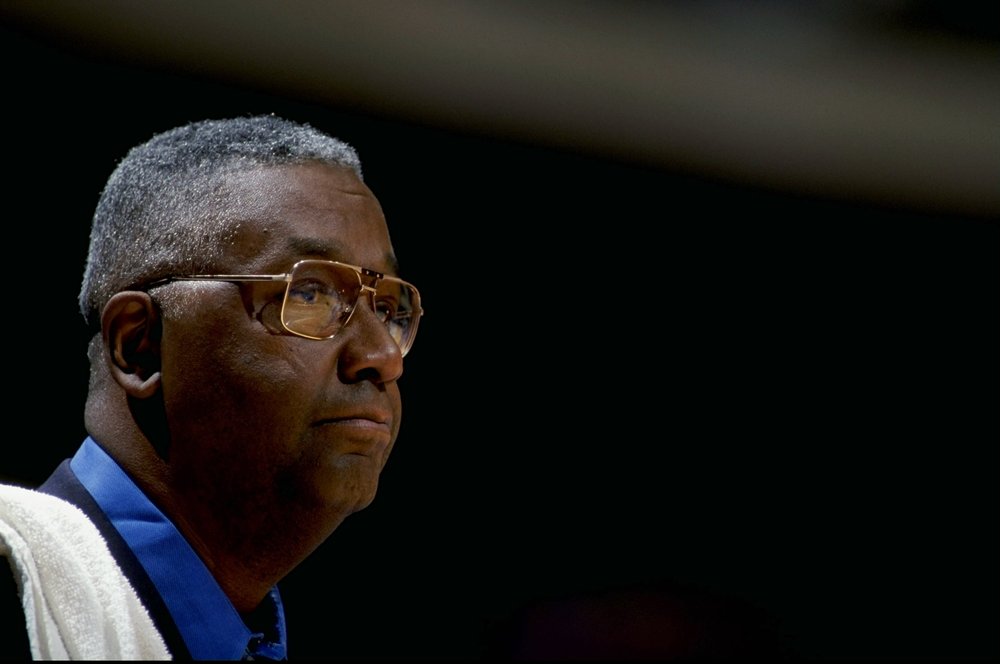
John ThompsonJohn Thompson, Jr., Former Georgetown Head Coach

The NCAA position regarding academic reforms has been consistent throughout the years. The NCAA officials said the legislation gave no consideration to racial implications, although it has been estimated that approximately 90 percent of the 600 students a year who will be affected are black.  Paradoxically, the NCAA is saying we know the reforms disproportionately impact Blacks but we gave no consideration to race.

Beginning in the early 1980s, the NCAA implemented significant changes in the freshman eligibility rules. The NCAA developed and implemented Proposition 48 at its’ 1983 convention. The racially disparate impact of the reform is beyond dispute. The rule change had a harsh impact on Blacks, especially those from low-income households.  Formulated in 1983 and fully implemented in 1986, Prop 48 rule stipulated, entering freshmen would be eligible for scholarships only if they had achieved a grade point average of at least 2.0 in 11 core college preparatory courses and, when it came to the two standard college entrance examinations, attained a minimum score of 700 on the Scholastic Aptitude Test (SAT) or 15 on the American College Testing Program’s exam.

Given the historical context of Apartheid-like segregation and the systematic exclusion of Blacks, many viewed the NCAA academic reforms as attempt to assuage the fears of racist University administrators and their supporters. These critics were especially concerned about the lack of African-American participation on the committee that developed the original Proposition 48 document. A reform measure that disproportionately impacted Blacks was developed, designed and implemented by an all-white committee.  It’s easy to understand why some feel that academic reforms are intended limited and even reduce the presence of Black student-athletes while simultaneously preserving the spirit and perception of racial inclusion.

Critics allege that Prop 48 and the subsequent reforms represent an attempt to devise a regulatory structure that would allow for some minority participation but facilitate continuation of the long standing tradition of predominantly white participation.

The racially disparate impact of the reforms are obvious. In one study, Richard Lapchick of the Center for the Study of Sport in Society, found that if Prop 48 had been in place in 1981, 69% of all males entering college on athletic scholarships would have been ineligible. More than two-thirds of the freshman male Black student-athletes would have been denied an opportunity to go to college on an athletic scholarship. Moreover, 54% of those student-athletes eventually graduated. That graduation rate was comparable to the graduation rate for all students which stood at 57%.

C48F2298Richard Lapchick, Center or the Study of Sport in Society

The loophole in the 1983 rule allowed “partial qualifiers,” students with a 2.0 high school GPA who didn’t make the requisite standardized test score, to attend college on athletic scholarships for one year. Although partial qualifiers lost one year of athletic eligibility and were not permitted to compete in their first year, they had a chance to gain eligibility by posting a 2.0 GPA during that year.

In 1990, the NCAA adopted Proposition 42, under which student-athletes failing to score at least 700 on the SAT or an equivalent score on the ACT and a 2.0 GPA were ineligible for any type of financial aid. Partial qualifiers were eligible for need-based, non-athletic financial aid.  Prop 42 was written and sponsored by the Southeastern Conference (SEC).  The SEC was the last major conference to allow Black participation.  The SEC voted to phase it in unilaterally even if the NCAA did not adopt the measure.

In 1995, the NCAA’s eligibility requirements became more stringent. The NCAA increased the number of required course from 11 to 13 and voted to implement a sliding scale in addition to retaining the SAT and ACT as a key component of the eligibility standards. Beginning August 1996, students with a 2.0 in 13 core course had to score at least 900 on the SAT. For each ten-point drop in SAT scores, student-athletes had to have a corresponding .025 increase in grade point average. Thus a student with a 2.5 GPA could score 700 and still be eligible.

In 2003, the NCAA enacted tougher standards for initial eligibility beginning with students first enrolling in the fall of 2008. The number of required core course went from 13 to 14.

In 2012, the NCAA approved another series of increasingly tougher reforms. Beginning is 2016, student-athletes would have to complete 16 core courses. Of those 16 core courses, 10 would have to be completed before the beginning of the senior year and grades from those core courses are “locked in” for computing a GPA once the senior year begins. In other words, there are no more emergency summer sessions in the senior year to rectify failing grades.

Mark EmmertNCAA President Mark Emmert

Additionally, a student-athlete must have a minimum GPA of 2.3 in those 16 core courses (up from 2.0) with an accompanying sliding scale SAT/ACT score. As originally conceived, a student-athlete with a 2.3 GPA would have to score 1080 on the SAT or an equivalent score on the ACT. Currently, a student-athlete with a 2.3 GPA has to score 900 on the SAT. Beginning in 2016, a student-athlete with a minimum GPA of 2.0 is considered an “academic redshirt.” He or she may practice with but not compete for his/her team for the first semester. Under present rules, a student-athlete with a 2.0 GPA could score a 1010 and be eligible for a scholarship and participation. Additionally, beginning this year, junior college transfers will be required to have a 2.5 GPA (up from 2.0) in their transferable credits.

At a subsequent meeting, the NCAA Division I Board of Directors maintained its support for higher grades and a core course progression. However, the NCAA adopted legislation that would keep for the foreseeable future the test score/grade-point average sliding scale at the current level for student-athlete access to financial aid, practice and competition in the first year.

The Board acknowledged that requiring prospects to meet a more stringent sliding scale starting in 2016 would negatively impacted low-income minority youth.  They publicly noted that there would have been a significant decrease in the number of eligible student-athletes from America’s inner cities.  The 1080 SAT requirement with a 2.3 GPA could have effectively eliminated tens of thousands of Black student-athletes.  For example 39 of Philadelphia’s 58 (67.2%) public High Schools have average SAT scores below 800.  The likelihood of student-athletes from these types of schools scoring 1080 or higher is virtually nil.

In effect too much of the football and basketball athletic talent pool would be off limits.  Those consequences led the Board to its decision to retain the current sliding scale standard.

For nearly seventy years, from 1905 -1970, the NCAA consisted of conferences that explicitly practiced racial exclusion.  “Whites only” was the guiding feature of the Atlantic Coast Conference, Southeastern Conference and the old Southwestern Conference. During this era there was almost no attention paid to academics by the NCAA.  By the early 1980’s Blacks became a majority of football and basketball student-athletes.  Since then, the NCAA has implemented five successive “academic reforms.”  Each reform package has been more restrictive than prior measures.  The scientists remain busy as ever in the lab.  Be on the lookout for blonde haired, blue eyed people walking into walls.

← Back

Thank you for your response. ✨

Psssssst… Let me Holla at ya for a minute: An Open Letter to HS Ballers

Young fella, I’ve been watching…. I’ve seen you fly all over the country playing in Adidas, Under Armour and Nike events. I’ve seen you attending “workouts.” I’ve seen the Chosen League highlights on youtube. The videos of you dribbling two balls through the cones, I’ve seen that. You running on the track with the parachute attached to your hip, I’ve seen that too. The killer crossover set to Meek Mills and the dunk backed up by Rick Ross, I’ve seen that too. Like I said, I’ve been watching. I watch because I LOVE you!

Because I LOVE you, I have to tell you the truth. You ain’t supposed to make it!

Let me say it again, I don’t want there to be any confusion. You ain’t supposed to make it.

Scoop

Scoop Jardine, Syracuse University

You see, these are confusing times.  A lot of Philly ballers have made it.  Please understand that I have had this same conversation with the overwhelming majority of area Division I players over the past 15 years or so.  I know exactly how they managed to meet NCAA eligibility requirements.  Scoop Jardine and Rick Jackson are graduates of Syracuse University.  I sat them down as 11th graders and we had this conversation.  Samme Givens and Chaz Crawford graduated from Drexel, but first we had to develop a plan to meet eligibility criteria.  Before Marcus and Markeiff Morris were able to accept scholarships from Kansas, they had to get through the Clearinghouse.  This is the same conversation I had with Dion Waiters, below (Syracuse), Rysheed Jordan (St. John’s), John Davis (Towson), “Biggie” Minnis (Rhode Island), Ja’Quan Newton (Miami), Anthony Durham (Rider), Carrington Ward (North Texas) and many others.

waiters

Dion Waiters, Syracuse University/Cleveland Cavs

Society at large and the American sports media are sending you mixed messages. On the one hand, corporate America (Nike, Under Armour and Adidas) makes it possible for you to fly to Atlanta, Vegas, Los Angeles, Indiana, Ohio, Miami and many other cities to play basketball in front of hundreds of college coaches. You play game after game all summer against some of the best players in the land.

At these events, you have been able to fully display your considerable athletic skills. The jumper is wet! The handle is tight! The vision is outstanding! All the skill development and strength training has finally come together.  You know it, your AAU coaches know it, your “handler” knows it and the college coaches know it, you are a BALLER!

On the other hand there’s what you don’t know and what they won’t tell you is: You ain’t supposed to make it!

I know that you are focused and working relentlessly toward earning an NCAA Division 1 scholarship. Now, what you need to know is that the odds are stacked heavily against you even graduating from high school.  In 2010, a major study found that Philadelphia, along with New York was the worst performing district in the nation with regard to Black male graduation rates. The five worst performing districts with large Black male student enrollment (exceeding 40,000) were New York City, N.Y. (28%); Philadelphia, Pa. (28%); Detroit, Mich. (27%); Broward County, Fla. (39%); Dade County, Fla. (27%).

2013 NBA Players Association Top 100 CampJaQuan Newton, Miami University

Think about that for a minute. Out of every 100 NYC, Philly and Detroit kids you that played with and against in those “Invitational”, “Elite” and “Exposure” camps only 28 will graduate high school in 4 years. That means 72 out of every 100 won’t earn a high school diploma on schedule.

I have to be honest with you young fella, I see Philadelphia’s 28% graduation rate declining significantly over the next few years. Let’s keep it real. Philadelphia is the midst of an unprecedented series of budget cuts. In 2013, the Philadelphia school system laid off 3,783 employees, including 676 teachers and 283 counselors. Along with teachers and counselors, those losing their jobs included 127 assistant principals and 1,202 aides who monitor the cafeteria and playgrounds.

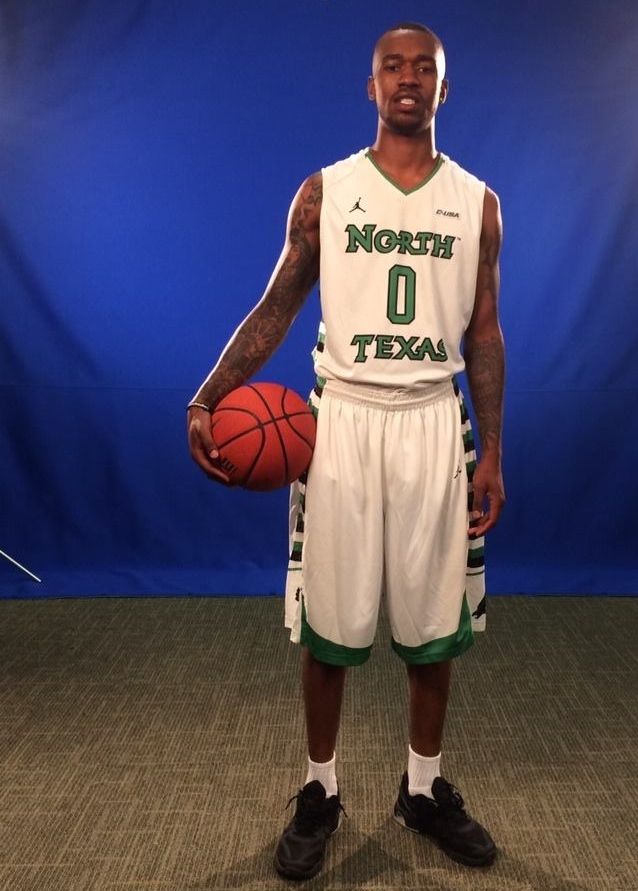
CarringtonCarrington Ward, North Texas

In 2014, it was announced that high school students who live within two miles of school will not receive transportation support (an increase from 1.5 miles), impacting approximately 7,500 students at district, charter, and non-public schools. There will also be reduced services in alternative education programs, which will result in fewer higher-quality options for approximately 300 students. There will be less frequent cleaning of schools, fewer cleaning supplies, and delayed repairs at schools. The district will not fill 34 school police officer vacancies, reducing the number of officers available to support school climate and safety.

In the past year, the state of Pennsylvania (which controls Philadelphia’s public schools) and the city of Philadelphia have closed 23 schools, laid off teachers, guidance counselors, principals and school aides. They have decided to eliminate transportation support and 300 alternative education slots for your peers trying to earn credits toward graduation. They have openly declared they will provide you with dirtier and less safer educational settings this year.

Young fella, you ain’t supposed to make it!

It is important that you understand, they do have plans for your future. I don’t want you to think that they are not preparing to “serve” you. While your schools will be dirty and unsafe because of budgetary concerns, there’s a gleaming new state of the art $400 million prison under construction just outside of the city.

graterfordSCI Graterford

While only 28% of Black males graduate from Philadelphia’s high school on time, Pennsylvania Correctional (Prison) system is operating at approximately 105% percent capacity. This new prison will sit proximate to SCI Graterford. A few years ago, Mayor Michael Nutter noted, “Of the 2010 homicides, 86.9 percent were African-American males. African-American males were 65.5 percent of the admissions into the Philadelphia Prison System in 2010. About one-third of all PA DOC prisoners committed their crimes in Philadelphia County. Graterford is the nearest prison to Philadelphia. A lot of Philly offenders serve time there.

Young fella, they know you ain’t supposed to make it….

Nonetheless, you can do it. You can go to college. You can earn a scholarship. But there are some things you need to know. Who’s gonna give you this information? They are cutting assistant principals and guidance counselors to hire more prison guards. So, I’m gonna try to give you some useful information on this website.

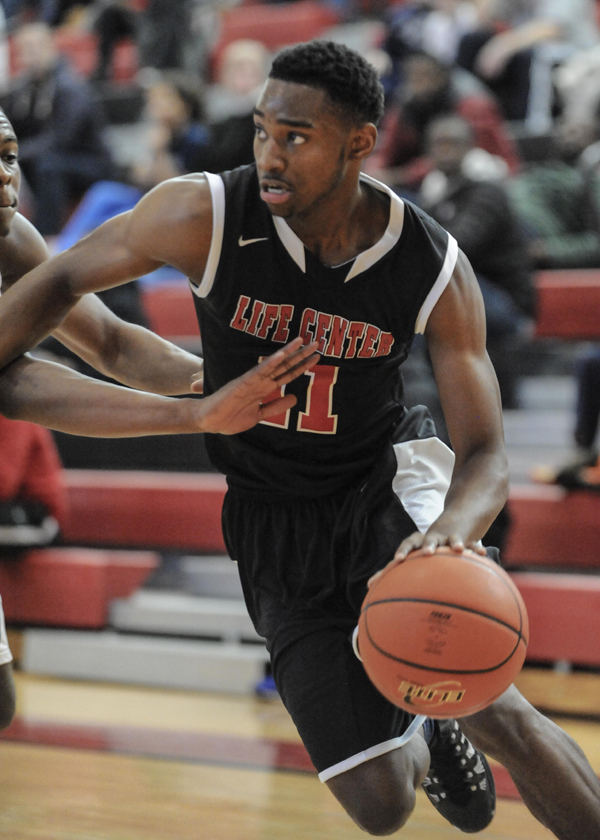
TraciTraci Carter, Life Center Academy, 2015

Class of 2015 (Seniors)
You are the last class that has a wide range of options available to meet NCAA eligibility guidelines. Even without full-time guidance counselors in many schools, there are some moves you can make to increase your chances of being NCAA eligible. For example, if you have a few Ds on your transcript from 9th, 10th or 11th grade you should retake those classes. Take them online or in the evening, but retake them! If your school won’t allow you to retake the classes because you already “passed” and earned the credit, pay to take the classes at another school.  It is important to make sure the other school’s courses are listed and accepted by the NCAA Eligibility Center. By increasing your GPA, you place much less pressure on your SAT/ACT score.

If you are a high major recruit, NCAA DI coaches began calling July 1st after your Junior year. Coaches can make unlimited phone calls/texts during the contact period. This means a coach can call/text you if he wants you. The rules still allow a coach to speak with a recruit anytime you make the phone call.

Young fella, if you are not talking to DI coaches on the phone by this point in your senior year it is time to consider DII, DIII or NAIA schools.

If DI schools wanted you, you would know.  They would have reached out to your AAU coach, your HS coach, your “guy” or your parents by now.  They are not under any restrictions.  Off-Campus contact is allowed.  Coaches are allowed to begin visiting off of their campus. Have they come to your school? Have they come to your home?

Coaches can bring you in on Official Visits starting the first day of classes. On Official Visits coaches pay to bring you in on a visit, host you on campus and pay for meals and game tickets.  Remember, you only get 5 official visits.  Be prudent in how you use them.  You should have already been making Unofficial Visits to D1 campuses if you plan to play at that level.

Class of 2016 (Juniors)
Everything is different for you. You have have meet far more stringent requirements. College bound student athletes first entering an NCAA Division I college or university on or after August 1, 2016 will need to meet new academic rules in order to receive athletics aid (scholarship), practice or compete during their first year.

You will still have to complete 16 Core Courses. However, ten (10) of the 16 core courses must be complete before the seventh semester (senior year) of high school. That is a new rule. You need to look at your transcript right now. Make sure you will have 10 cores before your senior year. Also, you must make sure seven (7) of the 10 core courses are in English, Math, or Science. These are requirements and if they are not met you will not qualify under new NCAA rules.

Also, the new minimum Core-Course GPA is 2.300. It is no longer 2.000. This is a significant increase. Many, if not most, student-athletes I have encountered over the past 15 years would not have met a 2.300 GPA requirement.

Moreover, and most importantly after this (your Junior) year, your grades are “locked in.” Unlike current seniors, you will not be able to retake classes in which you received Ds during your senior year. Every year, thousands of high school seniors retake classes to improve their core course GPAs. The NCAA is eliminating this option beginning with your class.

If you are an NCAA DI level recruit, You will begin receiving recruiting materials starting September 1st. Coaches will begin sending you letters or emailing you. The rules do not prevent you from emailing coaches, something you should have been doing since your sophomore year at least.

Basketball coaches can have off-campus contact at the start of classes your Junior year. Official Visits are allowed at the start of the school year. For women, they can begin making visits the Thursday after the NCAA Women’s Final Four.

Class of 2017 and 2018 (Freshmen and Sophomores)
If you plan on playing at the NCAA DI level, watch your grades! Do NOT earn Ds. They are unacceptable. Those Ds will make you NCAA ineligible.  Men’s Basketball coaches can begin calling, sending letters to and emailing recruits June 15th after your sophomore year.

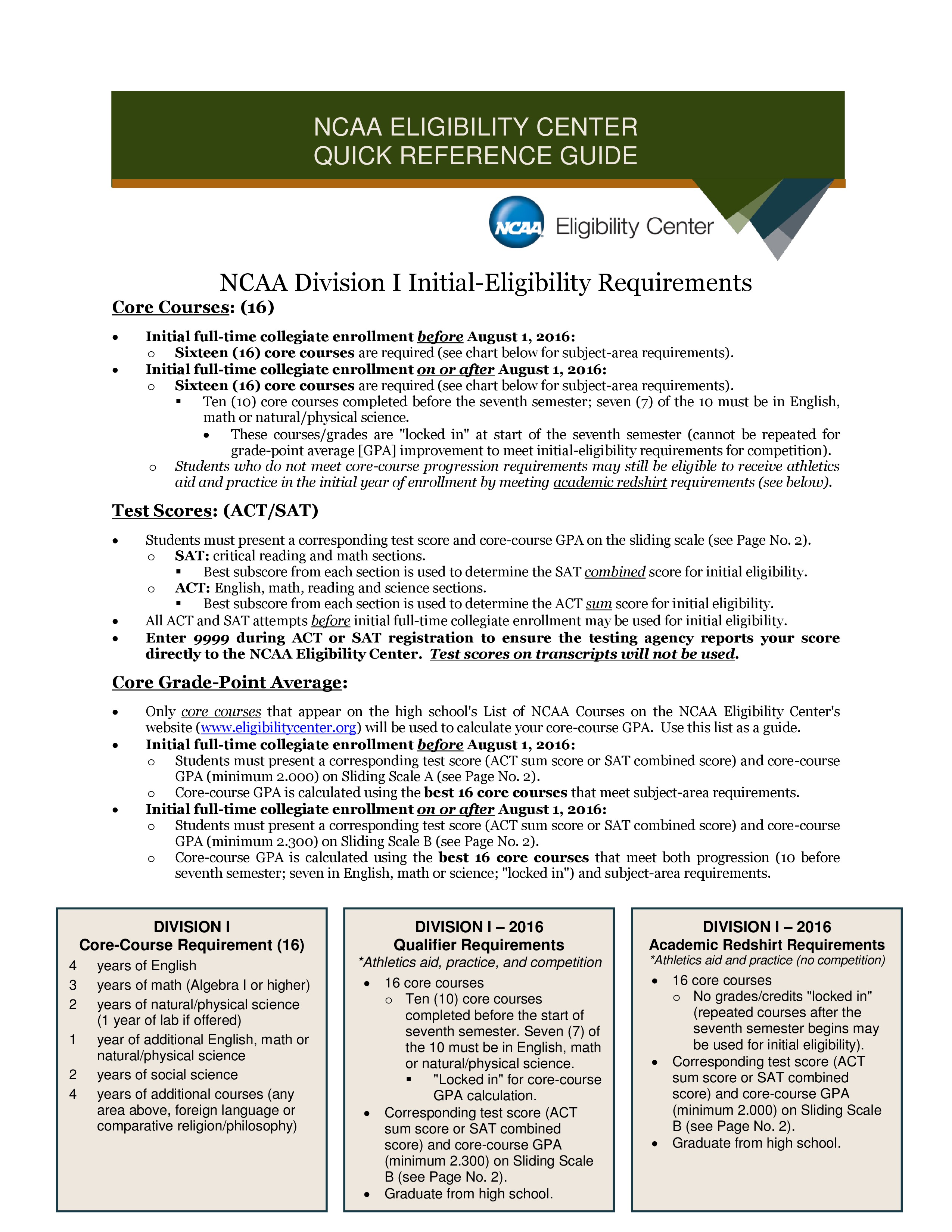
Quick_Reference_Sheet-page-0 Above please find the new 2016 NCAA guidelines. Below please find the new 2016 NCAA Sliding Scale.  Young fella, it won’t be easy.  It will take a LOT of planning and dedication to hitting the books.  But, you can make it.

Quick_Reference_Sheet-page-1You certainly cannot say “ain’t nobody give you a heads up”!

← Back

Thank you for your response. ✨


Baller or Thug? Can’t Be Both!

Image

It was the best of times, it was the worst of times, it was the age of wisdom, it was the age of foolishness…

Charles Dickens, A Tale of Two Cities (1859)

Very recently, we lost the greatest living Philadelphia ball player with the passing of Tom Gola (pictured below).  Wilt Chamberlain and Tom Gola are the ultimate representatives of Philadelphia ball players.  Earl Monroe, Gene Banks, Ernie Beck, John Chaney, Claude Gross, Tee Parham, Lewis Lloyd, Joe Bryant, Mike Bantom, Howie Evans, Anthony “Hubba Bubba” King, Rashid Bey, Lynn Greer are all outstanding Philly ball players.  Philly ball players have always used basketball as a means to access educational opportunities.  There are hundreds, if not thousands, of Philly ball players raising families and contributing to society well after the ball stopped bouncing.

However, in recent years I’ve noticed a troubling pattern of behaviors.  Being a Philly Ball player these days means having a double consciousness.  The identity is now divided into several parts, making it difficult or impossible to have one unified identity.  This is a significant and unfortunate change.  All of the players listed above are known for playing hard, tough winning basketball.

Tom Gola

Within the context of contemporary scholastic and collegiate basketball, the Philly ball player is developing a dual identity.  Unlike their singularly focused predecessors, many of today’s Philly ball players have two distinct and relatively enduring states that alternately control their behavior.  Like their predecessors, they play hard, tough winning basketball.  But, there’s this other “Philly Hard” identity permeating the recent crop of Philly ballers.  Double consciousness forces young Philly ball players to view themselves not only as student-athletes competing at the highest levels, but to also view themselves as they might be perceived by the folks in the “hood.” They cannot be perceived as “square”, “corny” or docile. Philly Hard players have to “keep it gully.”

What types of behaviors do “Philly Hard” players exhibit?  They range  from persistent refusal to comply with school, dorm, or team rules and expectations to selling a half-kilo of crack cocaine to an undercover DEA agent.  It’s important to understand that this not a new phenomena.  There have always been Philly Hard players.  In 1987, a North Philly kid from the Raymond Rosen projects led Millersville to a 27-4 record and a No.1 national ranking.  After that season, he robbed a home in Concord Township, Delaware County, threatened the 20-year-old resident with a toy pistol and beat her.  Around the same time he was charged with, and later pleaded no contest to, the attempted rape of a 20-year-old woman at gunpoint. He was charged with al least eight other burglaries over a two-week period in one month.

In 2002, a former Simon Gratz High School star who won a Public League basketball championship alongside NBA stars Rasheed Wallace and Aaron McKie, was sentenced to three to six years in prison for three holdups at a Rosemont ATM. This Philly ball player had averaged 20 ppg and 10 rpg in the Atlantic 10 conference before playing professionally in Europe.  In 2009, a freshman at a Big 5 school threw two baggies containing marijuana onto the ground during a police sting and had $1,030 cash on him.  He was arrested Monday night in Chester on charges of felony drug dealing and related offenses, including resisting arrest.

While the most of the negative behaviors of contemporary Philly Hard players are not felonious, they are far more frequent.  There is relentless drumbeat of Philly kids being disciplined, suspended and expelled from schools.  One player was suspended for knowing that a stolen student identification card was being used to order more than $100 worth of food.  Another was suspended for the 2013-14 season after being charged with first degree burglary and grand larceny.  Still another was suspended prior to the start of the season, and subsequently suspended for the remainder of the season due to a violation of the school’s Code of Conduct. Eventually, he chose to transfer to another program.  Yet another was suspended after trying to shoplift at Wal-Mart.

Earl Monroe

I ventured down to the Wells Fargo Arena on Monday evening and watched three young Philly ball players perform for the Phoenix Suns against the hometown Sixers.  It was an especially proud moment because, a few years ago, I watched all three work extremely hard to meet NCAA freshman eligibility requirements.  Diligence and determination paid off.  Their parents, James Christmas and Angel Morris, were focused on providing the structure and support necessary for these guys to make it to college.  One of the players was arrested as a freshman for bringing an Airsoft gun on campus that can shoot plastic BBs.  Fortunately, among this particular group of Philly ball players, that was an isolated incident.  Given the opportunity, they have made the most of it and now play in the NBA.

While riding home from the game, I received a text indicating that two more Philly players have been indefinitely suspended by their university.  In one night, I experienced the highest of highs, as I watched three Philly ball players live their NBA dreams, and the lowest of lows as I learned of two other young men placing their scholarships at risk.  This makes no sense.  Philadelphia’s amateur (Youth, AAU, Summer League, Church, HS and College) basketball community, has to do more.

Clearly, many of our young players have internalized a Philly Hard self-image that shapes their inappropriate responses to adverse and stressful situations faced while transitioning to college.  For now, there’s still a considerable market for good Philly ball players.  The coaches from respectable programs still pursue young Philly ball players.  However, there has to be a tipping point.  Those exhibiting the Philly Hard tendencies are going to inevitably make it much harder for the next generation of kids.

Too many young Philly ball players are struggling to reconcile their identity as a Philly ball player and a Philly Hard man.  Conflicted between behaving in a manner that reflects a Philly Hard perspective and exhibiting behaviors that are marketable and acceptable to college and professional coaches.

By exhibiting compliant and respectful behaviors he will be deemed a sellout and his Philly Hard stature is questioned.  By having repeated confrontations with authority figures and receiving multiple suspensions for misbehaviors he successfully establishes himself as Philly Hard and in some very important ways limits his ability maximize the true value of his athletic gifts.  This is the contemporary Philly ball player’s struggle to unite the different components of their identity.

As a basketball community, we have to find a way to diminish the impact of the Philly Hard image. Some how, some way.

PA, NJ and DE D1 BBall Budgets 2012-2013

Image

School

Basketball Budget

Pittsburg (ACC)

7,344,213

Seton Hall (Big East)

6,401,383

Villanova (Big East)

6,398,678

Penn State (Big 10)

5,056,643

Rutgers (AAC)

4,366,444

Temple (AAC)

4,080,845

Duquesne (A10)

3,891,806

Saint Joseph’s (A10)

3,089,503

Drexel (CAA)

2,633,240

Fairleigh Dickinson (NEC)

2,320,904

LaSalle (A10)

2,046,119

Bucknell (Patriot)

1,860,056

Delaware (CAA)

1,731,722

Delaware St (MEAC)

1,640,546

Monmouth (MAAC)

1,523,983

Lafayette (Patriot)

1,523,418

Rider (MAAC)

1,518,322

NJIT (Indep)

1,417,199

Wagner (NEC)

1,396,966

Lehigh (Patriot)

1,382,178

St. Francis (PA) (NEC)

1,368,916

Robert Morris (NEC)

1,356,722

St. Peter’s (MAAC)

1,170,516

Pennsylvania (Ivy)

1,082,006

Princeton (Ivy)

994,108

How much do local colleges and universities spend on Men’s basketball?  What is the difference between “big-time” programs and mid-majors?  Utilizing the chart and table listed above one can compare the financial commitments of PA, NJ and DE colleges to their respective Men’s Basketball programs.  There are a few surprises.

A few things immediately jump out when comparing the basketball budgets of PA, NJ and DE Division 1 programs.  Seton Hall has not been getting an adequate bang for their buck. But perhaps most surprisingly, Lehigh with one of the smallest budgets has the highest academic record, the 5th highest number of average wins and a lottery pick in last years draft. Drexel’s basketball budget is larger than two of the Big 5 programs (LaSalle and Penn).  Fairleigh Dickinson’s budget is very high given their very low average wins and poor academic performance.  Delaware State, a historically Black (MEAC) school is in the middle of the pack budget wise.    

← Back

Thank you for your response. ✨


Ranking Philly College Guards

With the college hoops season right around the corner, there are many local story lines worth following.  The Philadelphia region is, arguably, the finest place in America to watch amateur basketball.  Every year, Philadelphia produces a plethora of high school players that go on to make an impact at the collegiate level.  Also, there are always a few that come from other areas to make some serious noise at one of the area Division 1 programs.

More than any other position, the focus is always on “Philly Guards.”  They are known for toughness, tenacity and playing with a chip on their shoulder.  What follows is a ranking of college guards, either from Philly or playing at one of the Philadelphia area college programs.  I am sure there will be MAJOR disagreement over the place of some players.  Please feel free to let me know where you think I went wrong.

Image

1.  Tyreek Duren, Senior, LaSalle, 14.2 ppg, 3.3 apg, 2.9 rpg last season.

At 6 ft, 180 lbs., Duren is the consumate floor general.  He plays within himself at all times.  Duren is never flustered and runs John Gianni’s offense with precision.  An exceptional ball-handler, he consistently finds his teammates good looks.  When needed, Duren delivers big shots.

Image

2.  DJ Newbill, Junior, Penn State, 16.3 ppg, 4.0 apg, 5.0 rpg last season

The prototypical Philly guard, Newbill does everything well.  Standing 6’4” and weighing a solid 205 lbs., he strong and athletic.  Forced to play point guard after a season ending injury to Tim Frazier, Newbill excelled.  One of the top returning scorers in the Big Ten, having finished fourth (16.3) in 2012-13, DJ enters his junior season with nearly 800 career points, 11 20-point games and 41 career double-digit scoring outings and a chance to join the list of Penn State’s 1,000-point scorers.

Image

3.  Devon Saddler, Senior, Delaware, 19.9 ppg, 2.8 apg, 4.5 rpg last season

An explosive scorer, Saddler has been the focal point of the Delaware offense for the past three season.  A sturdy 210 lbs, he is simply too strong for most opposing guards.  Saddler has solid ball handling skills.  While he is a decent shooter, he can be streaky at times.  His strongest asset is his ability to get off a shot, seemingly, at will.  He is fearless and competes every second of every game.  Saddler will surely past the 2,000 point plateau early in his senior season.

Image

4.  Langston Galloway, Senior, Saint Joseph’s, 13.8 ppg, 2.3 apg, 3.6 rpg last season

An excellent all-around player, Galloway doesn’t have a real weakness in his game.  While he is known primarily as a long-range shooter, he has very solid ball-handling and passing skills.  For the past three years, he has been assigned the task of defending the best wing player on the opposing team.  A fierce competitor, Galloway gives a full effort every time he sets foot on the court.  A sneaky athlete, Galloway possesses an under-appreciated level of athleticism.  He is capable of finishing with authority around the rim with relative ease.

Image

5.  Franz Massenat, Senior, Drexel, 14.7 ppg, 4.2 apg, 2.4 rpg last season

A big point guard at 6’4” 180 lbs, Massenat is an excellent floor general.  Thrust into a leadership role immediately upon his arrival three years ago, he has evolved into one of the premier guards in the CAA.  A solid shooter, Franz excels at penetrating opposing defenses and finding his teammates on the wing or finishing at the rim.

Image

6.  Tyrone Garland, Senior, LaSalle, 13.1 ppg, 2.1 apg, 2.0 rpg last season

Thrust into the national limelight when his “Southwest Philly Floater” sent La Salle to the Sweet 16 with a thrilling 76-74 win over Mississippi, Garland is a well known commodity among Philly hoops aficionados.  An aggressive offensive player, he has excellent lift on his jump shot enabling him to get it off against taller defenders and in traffic.  Garland brings a high level of toughness to the LaSalle backcourt.  Look for his offensive production to increase significantly with the graduation of Ramon Galloway.

Image

7. Deshon “Biggie” Minnis, Sophomore, Rhode Island, Redshirt last season

A big, strong, pass-first point guard at 6’3” 205 lbs., Minnis is set to have a impact on the Atlantic 10 Conference after sitting out last year following a transfer from Texas Tech.  He spent last season being tutored by Bobby Hurley, arguably, the greatest college point guard over the last 25 years.  Blessed with exceptional court vision and a tight handle, Minnis will look to push the ball for Danny Hurley’s Rams this season.

Image

8.  Jordan Reed, Sophomore, Binghamton, 16.6 ppg, 9.5 rpg, 1.4 apg last season

Exploding on the college basketball scene as freshman, Reed nearly averaged a double-double.  A next-level athlete, Reed finishes around the rim with authority.  Known for dunking over much taller opponents, Reed is already one of the top players in the America East Conference.  As he develops his outside shooting and refines his ball-handling skills, Reed has chance to become one of the players in the country.

Image

9.  Pendarvis Williams, Senior, Norfolk State, 14.3 ppg, 4.5 rpg, 1.7 apg

The MEAC Player of the Year, Williams has exceptional size for a guard at 6’6.”  Capable of playing on and off the ball, he is a good shooter and solid ball-handler.  A very good athlete, He has been mentioned as potential NBA draft pick.

Image

10.  Ryan Arcidiacono, Sophomore, Villanova, 11.9 ppg, 2.1 rpg, 3.5 apg

Thrust into a leadership role following the early departure of Maalik Wayns to the NBA, Arcidiacono led Villanova in minutes played (34.0 mpg) and assists (3.5 apg).  He was a unanimous choice to the BIG EAST All-Rookie team and was named Rookie of the Week four times.  An exceptional ball-handler, he benefitted immensely from playing heavy minutes as a freshman.

11.  Damion Lee, Junior, Drexel, 17.1 ppg, 5.1 rpg, 1.8 apg

12.  Chris Fouch, Graduate Student, Drexel, Redshirt last season

13.  Rysheed Jordan, Freshman, Saint John’s, High School last season

14.  Brandon Austin, Freshman, Providence, High School last season

15.  Rondae Jefferson, Freshman, Arizona, High School last season

16.  Steve Vasturia, Freshman, Notre Dame, High School last season

17.  Sam Mills, Senior, LaSalle,  8.0 ppg, 2.6 rpg, 2.2 apg

18.  DJ Irving, Senior, Boston University, 14.2 ppg, 3.3 rpg, 3.6 apg

19.  Maurice Watson, Boston University, 11.2 ppg, 3.3 rpg, 5.4 apg

20.  Miles Cartwright, Penn, 13.5 ppg, 3.4 rpg, 3.8 apg

Others to watch:

Jabril Trawick, Georgetown

DaQuan Walker, UCF

Will Cummings, Temple

Josh Brown, Temple

Quenton Decosey, Temple

Ky Howard, NJIT

Chris Wilson, Saint Joseph’s

Kyle Molock, Saint Joseph’s

Lamin Fulton, Wisconsin-Green Bay

Hakim Baxter, UMES

Devin Coleman, Clemson

Jarrod Denard, Claflin (Division II)

Mike Terry, UDC (Division II)

delgrecowilson@outlook.com