CAMDEN, NJ – The transfer portal is a marketplace of hope and hazard. For every player who moves up and flourishes, there is another who disappears into the depth chart, his career momentum stalled by poor fit, overcrowded rosters, or promises unmet.
Kevair Kennedy understood the risks. He entered the portal anyway. And when he chose Wake Forest over a host of other high-major suitors, he did so not as a gambler chasing a payday, but as a strategist making a calculated portfolio reallocation.

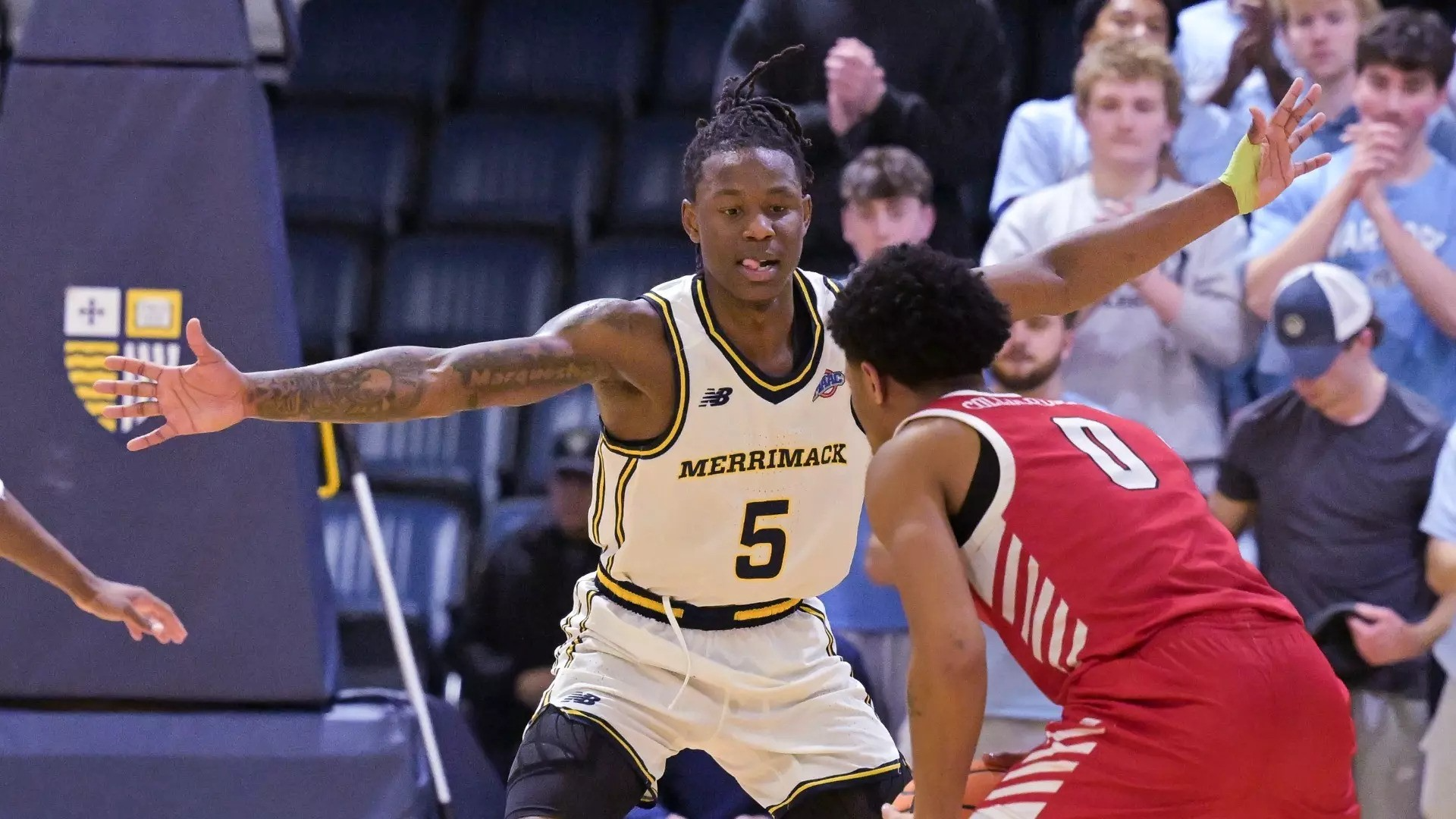
Kennedy’s freshman season at Merrimack was historic. He became the first player in MAAC history to win both Player of the Year and Rookie of the Year in the same season. He dropped a career-high 32 points against Siena. He nearly recorded a triple-double against Boston University with 16 points, 11 rebounds, and 8 assists. He torched Vermont for 20. He went toe-to-toe with #9 Florida, scoring 14 points on 4-of-8 shooting. He was named MAAC Player of the Week twice and Rookie of the Week seven times.
The numbers were undeniable. The tape was undeniable. And the portal came calling.
But Kennedy was not simply chasing the highest bidder. He was solving a portfolio problem—balancing immediate returns against the speculative assets that would determine his professional future.

The Portfolio Problem: What Kennedy Was Weighing
When Kennedy entered the portal, he faced a classic high-major transfer dilemma:
Immediate Returns (High Major Offers): Substantial NIL guarantees, the prestige of the ACC, Big East, Big 10 or SEC, and the promise of a national stage. On paper, the offers were overwhelming.
Speculative Growth Assets (Merrimack): A system where he was already the unquestioned star. A coaching staff that had built the offense around him. Guaranteed minutes, guaranteed touches, guaranteed leadership. But a platform—the MAAC—with limited national visibility and fewer NBA scouts in attendance.
Kennedy had already proven he could dominate the MAAC. He had nothing left to prove at that level. The question was whether he could translate that production to a higher stage—and whether the risk of losing his featured role was worth the reward of ACC exposure.

Why Wake Forest? The Steve Forbes Factor
Among the suitors, Wake Forest emerged as the optimal destination. And the reason is simple: Steve Forbes.
Forbes has built a program at Wake Forest defined by guard development, offensive freedom, and a track record of maximizing transfers. Under his watch, Alondes Williams went from a role player at Oklahoma to ACC Player of the Year. Jake LaRavia transformed from a mid-major standout into an NBA draft pick. Tyree Appleby became one of the most prolific scorers in the conference.
Forbes does not just recruit transfers. He features them. He builds his offense around them. He gives them the green light and the trust to play through mistakes.
For Kennedy, that was the critical variable. He did not need to be told he would compete for minutes. He needed to be told he would be the man.
The Information Asymmetry Problem
One of the most underappreciated dynamics of the transfer portal is the information asymmetry between players and programs. Programs have complete information about their own rosters, their own systems, and their own depth charts. Players do not.
When Kennedy entered the portal, every high-major program could promise him anything. But promises are not playing time. Depth charts shift. Coaches get fired. Recruiting classes arrive. The player who is promised 30 minutes in April may find himself playing 15 in November.
Wake Forest offered something different: a track record. Forbes has proven he will feature transfers. He has proven he will build his offense around a lead guard. He has proven he can prepare players for the professional level.
That track record was worth more than any NIL guarantee.
What Kennedy Leaves Behind (And What He Gains)
Let’s be clear: Kennedy is leaving a situation where he was a king. At Merrimack, he was the MAAC Player of the Year, the Rookie of the Year, a first-team all-conference performer, and the face of the program. He played 35 minutes per night. He had the ball in his hands in every critical moment.
At Wake Forest, nothing is guaranteed. The ACC is a different animal. The guards are longer, faster, more athletic. The scouting is more sophisticated. The margin for error is thinner.
But Kennedy is not a player who needs to prove he can dominate the MAAC. He has already done that. He needs to prove he can be an ACC lead guard—and that requires a platform, a coach, and a system that will give him the opportunity.
Wake Forest offers all three.
The Final Verdict: A Calculated Risk
Kennedy’s decision to leave Merrimack was not an indictment of the program that developed him. It was a recognition that his portfolio had appreciated to the point where the MAAC no longer offered sufficient growth potential.
At Wake Forest, he will face better competition, play in front of more NBA scouts, and prepare for the professional game under a coach who has proven he can develop guards for the next level. The risk is real—he could struggle, lose minutes, or fail to adjust to the ACC’s speed and physicality.
But the reward is worth the risk. A dominant season in the ACC would make him a legitimate NBA draft prospect. A dominant season in the MAAC would have been more of the same.
Kennedy made the strategic choice. He prioritized platform, development, and professional pathway over the comfort of guaranteed minutes and a guaranteed role.
Now comes the hard part: proving he belongs.
 The Black Cager