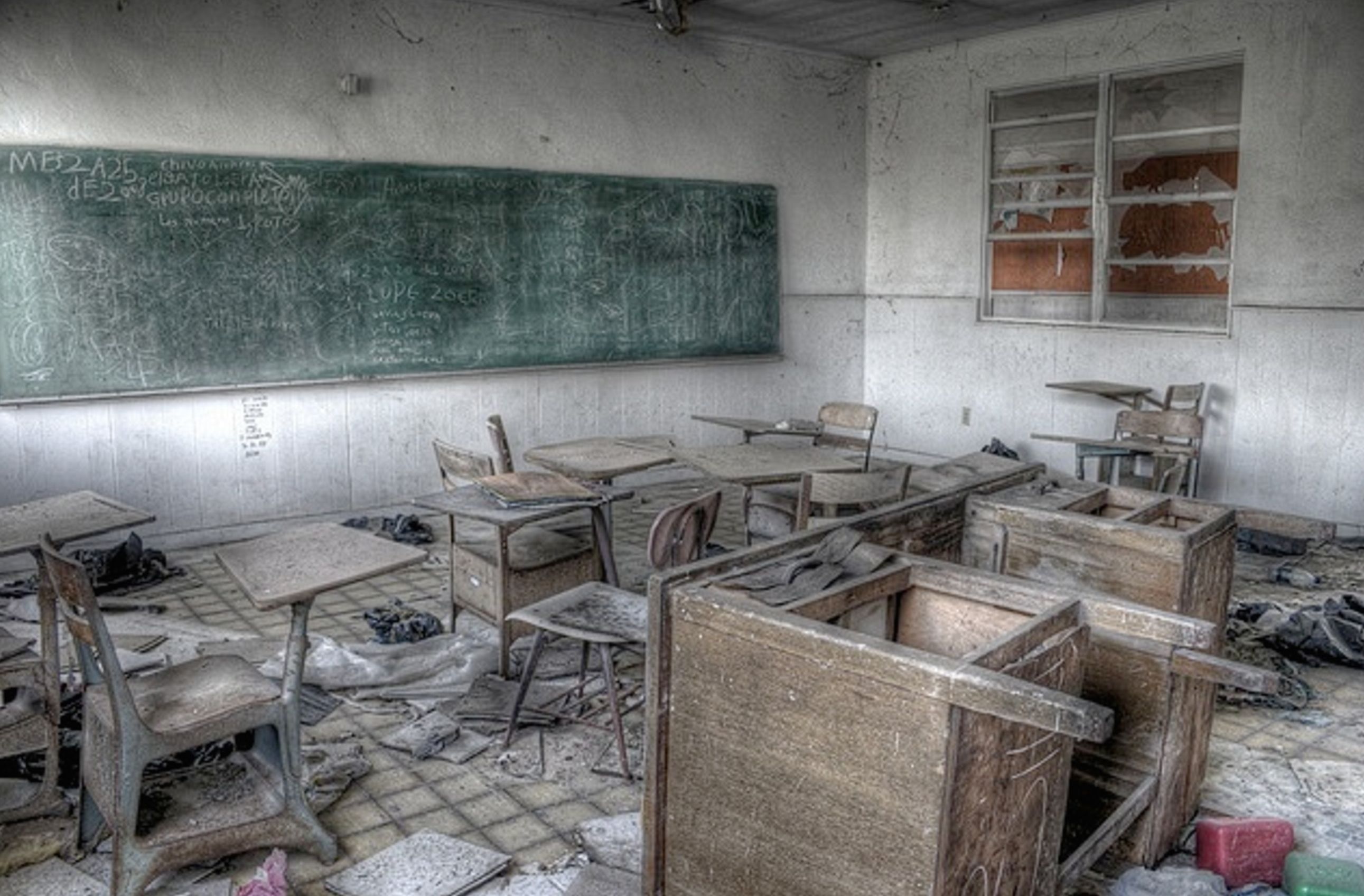
School Choice: A Personal Story

There’s a false dichotomy permeating the Black community in Philadelphia. All across the city parents are succumbing to the notion that they have to either leave their children in rapidly deteriorating and highly dysfunctional neighborhood public schools or they are “selling out.”  Black and Latino parents, in particular, do not want to be viewed as abandoning support for a “societal good” represented by public education. As a result, many fall victim to the fallacy of this false dichotomy when in fact there are other possibilities. Supporters of public education, especially teachers and teacher’s unions go to great lengths to make the case that “school choice” is clearly outrageous, and so allegiance to traditional public schools must be embraced.  Nonetheless, one can opt to place their own child in a Catholic, private or magnet school setting AND still work to improve the situation for those those languishing in traditional public schools.

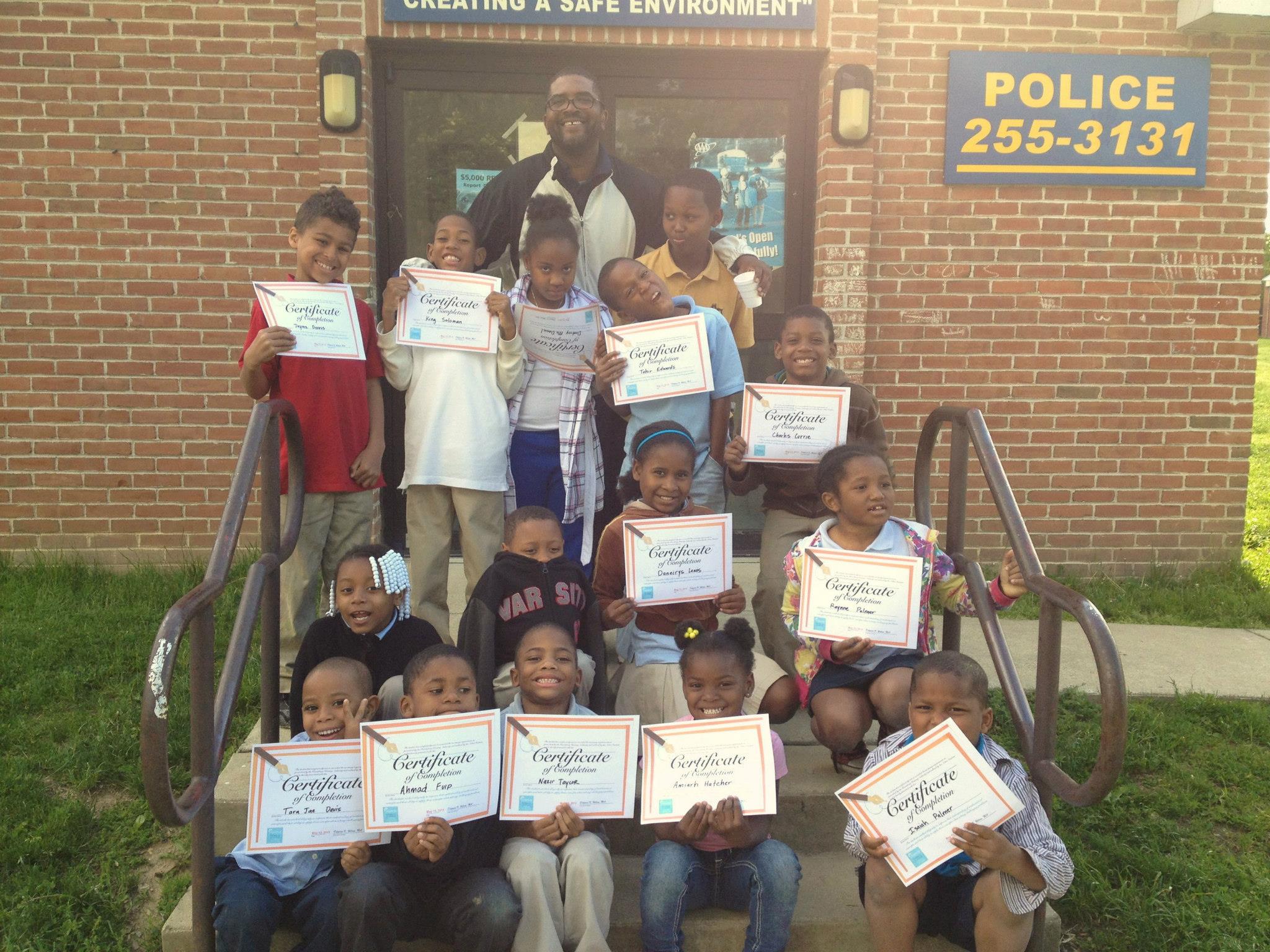
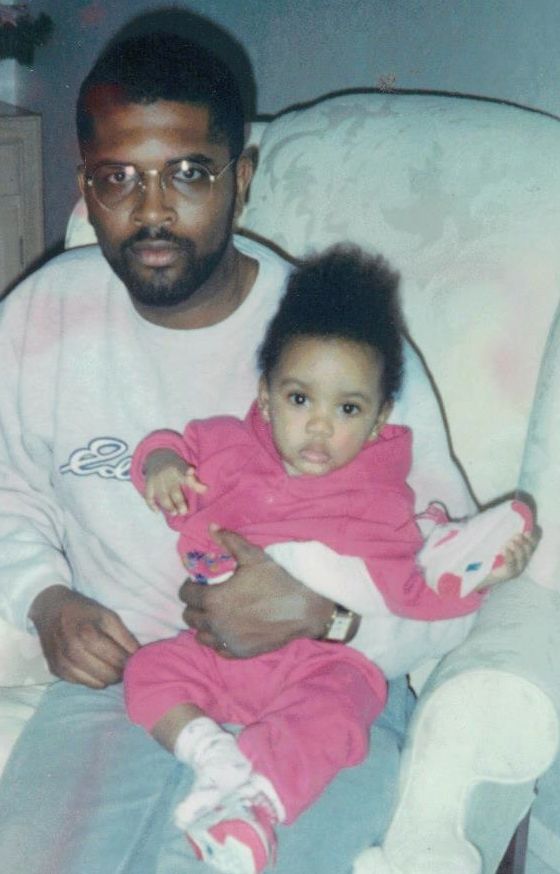
I was confronted with the false dichotomy fifteen years ago. My daughter, from the age of 3 to 5, attended Head Start/Day Care at a neighborhood public school. I really liked the school for that purpose. It was clean, safe, the staff was pleasant and they really engaged the kids. They did a very good job at the pre-school level. However, when the time came to choose a kindergarten placement, I chose an integrated high performing elementary school in Center City.

Ciera1

When I requested the form to enroll her in another school, the secretary at the neighborhood school loudly said, “It’s parents like you that are the problem.” She then went on to elaborate, “You are involved with you child, you come here everyday to pick her up, she’s a good girl… We need parents like you to keep your kids in our school.” Needless to say, I felt she was way out of bounds.

“Excuse me,” I interjected, “But my responsibility is to ensure the educational and social development of one child. While I want the best for all the children,  I can only make decisions for my daughter. I choose to place her in a diverse, highly competitive educational setting. This school is 99% Black and the test scores are abysmal. I want better for my daughter.” At that point, the Principal, a white male, overheard our discussion and asked me to come into his office. He immediately gave me the required paperwork and told me to bring it back to him directly. He told me he understood, respected and supported my choice.

Ciera2

In the scenario prescribed by the secretary, either you keep your child in ghettoized under-performing neighborhood public schools or you are a sellout abandoning all poor Black kids. Her argument, albeit highly flawed, was very simple powerful.  I know you don’t want to be a sellout and leave Black kids to fend for themselves. So, therefore you should leave your kids in the neighborhood public school.  Too many fall victim to this type of logic.

My daughter has never attended a neighborhood public school. I enrolled her in very diverse and highly competitive magnet programs throughout her K-12 career. I also worked extensively with thousands of students in neighborhood public schools. You can do both. You should do both.

Harrisburg pic

Under NO circumstance should a parent enroll their children in Philadelphia’s neighborhood public high schools. This is especially true for parents of Black male students.  The simple fact is that you are fighting against staggering odds.

In 2010, a major study found that Philadelphia, along with New York was the worst performing district in the nation with regard to Black male graduation rates. The five worst performing districts with large Black male student enrollment (exceeding 40,000) were New York City, N.Y. (28%); Philadelphia, Pa. (28%); Detroit, Mich. (27%); Broward County, Fla. (39%); Dade County, Fla. (27%).

Three years later, in 2013 the Philadelphia school system laid off 3,783 employees, including 676 teachers and 283 counselors. Along with teachers and counselors, those losing their jobs included 127 assistant principals and 1,202 aides who monitor the cafeteria and playgrounds. Among the targeted teachers are those that teach reading, math, English, special education and music.

There were widely publicized episodes of school violence, including one where a faculty member suffered a fractured skull in a confrontation with a student at John Bartram High School. There were also two incidents where young elementary school students died in schools where no nurses where on duty.

This past week the School District of Philadelphia announced it was discontinuing TransPasses for 7,500 high school students who live less than two miles from school, eliminating 300 slots in alternative programs for students at risk of dropping out, making 27 more elementary schools share police officers, reducing school cleaning and repairs, cutting extra professional development time at the District’s Promise Academies, and eliminating some administrative positions.

Clearly, the State of Pennsylvania and the City of Philadelphia are making it harder for Blacks to graduate. It seems, the 28% graduation rate for Black males has been deemed too high by those funding Pennsylvania schools and the local politicians. Please take some time to consider your options.  You have choices.  There are schools that want to provide your child with a rigorous, high-quality education.  There are schools that welcome students of color.

Currently, the nonprofit foundation that manages Catholic high schools in the Archdiocese of Philadelphia is offering $1,000 grants to encourage students to transfer to the schools.  Christopher Mominey, chief operating officer of the Faith in the Future Foundation and the archdiocese’s secretary for Catholic education, said the new “transfer advantage” grants were part of the effort to boost enrollment at the 17 high schools.

I have met extensively with the leaders of the Faith in the Future Foundation and the presidents of Catholic High Schools across Philadelphia.  Mominey understands the dilemma faced by parents of school-age children in Philadelphia.  Where are parents to turn as the public school system crumbles around them?  The foundation wants to attract students who were not enrolled at Catholic high schools but were interested in learning more about them.

The $1,000 grants are available for all transferring 10th-, 11th-, and 12th-grade students who qualify for admission and enroll at one of the schools in the fall. The grants will help defray the cost of Catholic high schools, where annual tuition and fees range from $6,500 to $7,000.

Mominey said other dioceses had found that “sometimes, that $1,000 makes the difference for families.”

Students may also be eligible for scholarships based on financial need.   The only way to find out if you qualify is to apply.  Mominey said there was no limit on the number of grants available, “We’ve made a commitment to accept as many students as are qualified.”

Explore your options.  Exercise school choice.

Ciera3

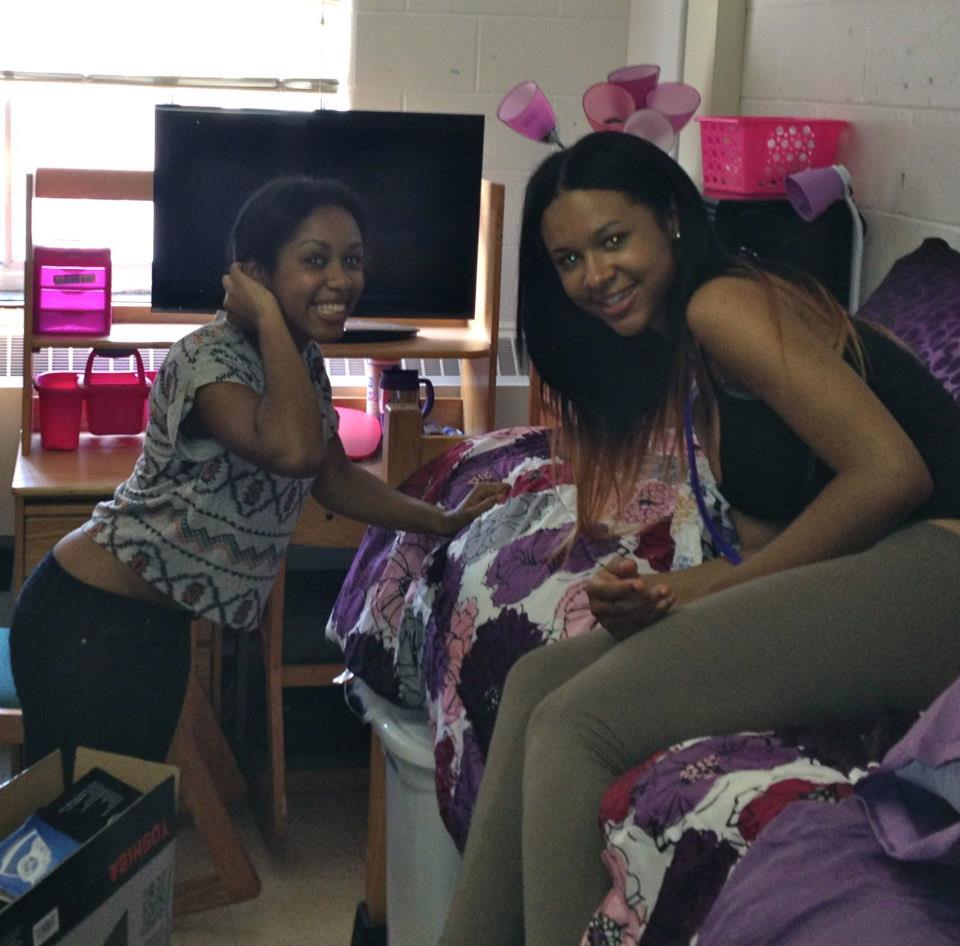
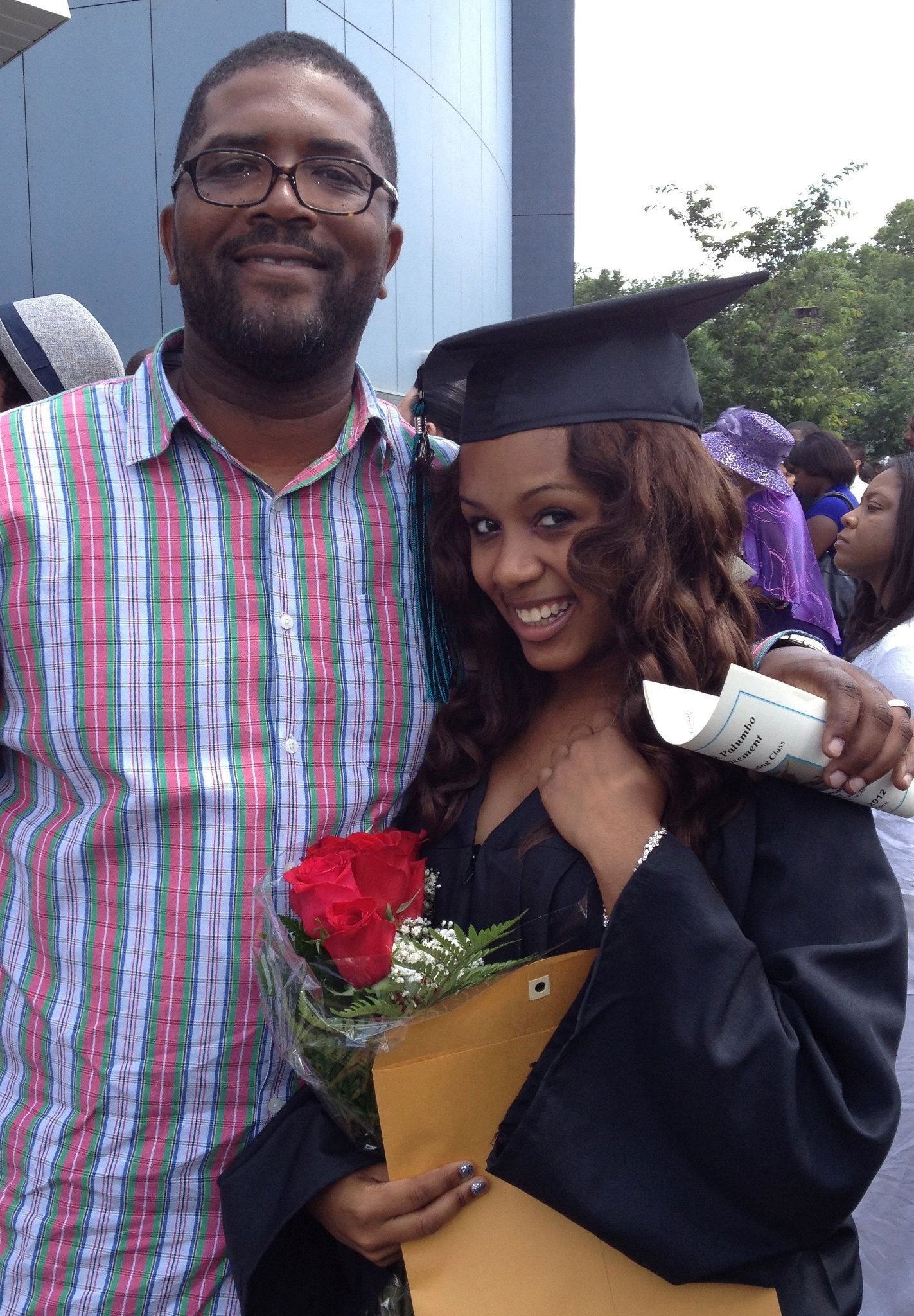
My daughter’s first day in her dormitory freshman year of college.

Can We Have a “Grown Up” Conversation About Scholastic Sports?

The money is gone. As a local, “community” those of us living in, working in or near and thinking about Philadelphia have made good schools a luxury. Like a Bentley or a Mercedes, everyone simply cannot access one. We have given up and we are now watching the urban public school systems of our youth die a tortuous, slow and excruciatingly painful death. As with all deaths, assets are left behind. In recent weeks, we “the public” have sold University City High School to Drexel and William Penn to Temple.

Image

Let’s think about this for a moment: Twenty-two (22) District high schools lost 50 or more of their students from the Class of 2012 cohort, 2,200 dropouts in all. This represents a significant shrinkage of one graduating class. Unfortunately, it’s even worse across the Delaware River. According to the recent data only 42% of Camden High students and and 46% of Woodrow Wilson students graduate from high school. Low-income, urban, predominantly Black and Latino public and charter school students are struggling mightily in the classroom. But, we know this. The educational plight of low-income Blacks and Latinos is well known. Everybody knows things are really bad.

Here, I want to initiate an honest, open dialogue about the state of scholastic/AAU/grassroots basketball which takes full consideration the current conditions of urban public education.

Shit is bad and getting much worse.

Last June prior to the 2013-14 school year the School District of Philadelphia adopted a budget that had no funding for things like paper and new books. The District laid off 3,783 employees, including 676 teachers and 283 counselors, effective July 1, 2013. The School District of Philadelphia has a group of 16 itinerant counselors roving around 115 schools. Each counselor is serving seven or eight schools. That’s 16 counselors for 48,000 students. A ratio of 1 to 3,000. In May 2014, Camden Public Schools laid off 206 teachers. Many of those in core subject categories are also some of the district’s younger teachers with the least seniority. Forty elementary school teachers were laid off along with 18 guidance counselors.

Fast forward to this past Monday, the School Reform Commission approved a $2.5 billion “placeholder” budget hoping for $93 million that it doesn’t yet have.

“Hopefully, within the next week or so, we’ll have revenue,” said SRC Chairman Bill Green. “We’re really punting on difficult decisions by passing this placeholder budget.”

That’s an important and honest assessment of the position taken by the SRC. In short, the budget for the 2014-15 school year is based on hopes, aspirations, desires….. no cash though. Like Popeye’s sidekick J. Wellington Wimpy, Chairman Green says, “I’ll gladly pay you Tuesday for a hamburger today”.

So, what happens if Pennsylvania does not provide the $93 million? Chairman Green and Superintendent William Hite said they may not open schools in September. To do so, according to Hite would be providing educational services under unsafe conditions.

“The harm for children now is, in my opinion, irreversible, irresponsible, and it’s not something we can continue to do year after year,” Hite said. “I have no intention of putting children in those options.”

Image

As bad as the current situation is, it is gonna get worse, much worse.

We are clearly in the midst of a period of “public education austerity,” which had been gaining traction for several years. Deep and sustained teacher and guidance counselor layoffs accompanied by widespread school closings are clear symptom of this particular disease. These massive human resource reductions and school shutterings have been instituted with alarming consistency in low-income urban areas across the nation. Last year alone, Philadelphia closed 29 schools. Chicago closed 49, New York 26 and Washington, DC 15.

In this fiscal context, it is fair to assume that school-based interscholastic athletic competition amongst middle school, junior high and junior varsity level student-athletes is a thing of the past. It more likely that urban school districts will cease administering traditional schools than reinstate funding for sports. Chicago, New Orleans, New York City, Camden and Philadelphia are among the large urban districts that are shifting from a centralized bureaucracy that directly manages traditional neighborhood based schools toward a “Portfolio” model in which District Administrators enter into contracts with a few public schools, privately managed schools, and charter schools. Other urban areas transitioning to this “Portfolio Management” approach are Baltimore, Cleveland, Los Angeles, Oakland, and Washington.

A key feature of this strategy appears to be economic strangulation of the remnants of traditional neighborhood schools. Given the fiscal constraints facing administrators of traditional urban schools, continued abysmal academic performance is inevitable. This will lead to more and more school closings. National education management organizations (EMOs) and large corporate charter operators will continue to gain a larger share of the urban public education market. There has been no indication that funding for centrally managed interscholastic sports will be forthcoming.

Image

Let’s be very clear. We have entered into a new era in public education and as a result a new era in scholastic sports. The new era stands in stark contrast to the school-based programs of the past.

Robust public school investment has been a key to the development of low-income urban student-athletes for much of the past half century. Scholastic sports were considered a basic part of the public school experience. As the baby boomers can attest, citizens paid taxes to fund middle, junior high and junior varsity level athletic competition. As a society, we deemed these contests worthy initiatives that the private sector wouldn’t adequately or efficiently supply. The resulting scholastic infrastructure, dedicated teacher/coaches, and community-based organizations like CYO, PAL and the Sonny Hill League fed a robust demand for Philadelphia basketball players through the 80s and into the 90s.

As direct result of the economic strangulation strategies underway in low-income urban public school systems across the country, many urban school districts have been forced to abandon athletics.

Image
The vacuum has been filled by Amateur Athletic Union (AAU)/grassroots hoops organizations. The Directors of these organizations are not teachers, counselors, and school administrators. AAU/grassroots basketball is a big business and has been for more than two decades. In terms of increasing the likelihood of landing a college scholarship, AAU/grassroots basketball has become far more important than scholastic basketball.

If you are a student-athlete and you want to earn a college basketball scholarship, you almost have to play AAU/grassroots basketball. College coaches evaluate talent through AAU. Players scroll through scouting magazines and websites anxiously hoping to see their names appear in national rankings after performing in the the premier events.

The business of generating prospects for NCAA and the NBA has continued unabated. The very best players in the area join one of the elite programs like Team Final, WE R1, Team Philly, Philly Triple Threat, Team Phenom and Philly Pride. All of these programs have produced players that have done well in college basketball.

Nonetheless, we have lost a great deal with the drastic reduction of scholastic sports in middle and junior high schools in low-income urban communities. Interscholastic sports has been proven effective over time. Over 95% of Fortune 500 executives participated in high school athletics. Only 47% of Fortune 500 executives were National Honor Society members. (Fortune Magazine).

Female high school athletes are 92% less likely to get involved with drugs, 80% less likely to get pregnant and are 3 times more likely to graduate than non-athletes. (Women’s Sports Foundation)

There is considerable evidence supporting sports participation for young people. Studies have shown that sports has the power to positively impact issues like racial relations, low self-image, and the high-school truancy/drop-out crisis.

Why would we as a community create structures that can yield the beneficial aspects of interscholastic competition in an era when school budgets are being cut through the bone? We really have no choice. In Philadelphia over the past decade or so, the graduation rate has fluctuated between 50 and 60 percent, in Camden between 40 and 50 percent.

Half or more of the students that enter as freshman do not graduate within four years. Philadelphia and Camden are severely under-performing. In Pennsylvania state average is 80 percent and the national average is 68 percent. Nearly twice as many Black students out of high school as White students. Nearly 8 out of every 10 students within the Philadelphia School District are minorities, 62 percent of whom are Black.  How do we fill the void?

I have learned of one promising proposal. This proposal calls for the establishment of community-based two-tier winter (December to February) league drawing teams from various parts of the Greater Philadelphia region. The Junior Division would feature players currently in the 6th and 7th grades. The Senior Division would feature players currently in the 8th and 9th grades. Teams would be based on neighborhood affiliation.  Weekly attendance, grade checks and study halls would be required for participation.

Beyond that… How would you structure the league? What features would be most beneficial in our efforts to develop well-rounded successful High School graduates?  How could such an endeavor be funded?

Middle and junior high school years are periods of significant transition in the lives of low-income urban adolescents.  The influence of peers, family and sports centered experiences have tremendous impact on adolescent behavior during this transitional period.  It is during this period that patterns of motivation, self-concept and social relations emerge.  Far too many young Black and Latino males are motivated by illicit street-based activities.  Too few view themselves at students.

It’s time for a real “grown up” conversation.  How do we do this without the schools?

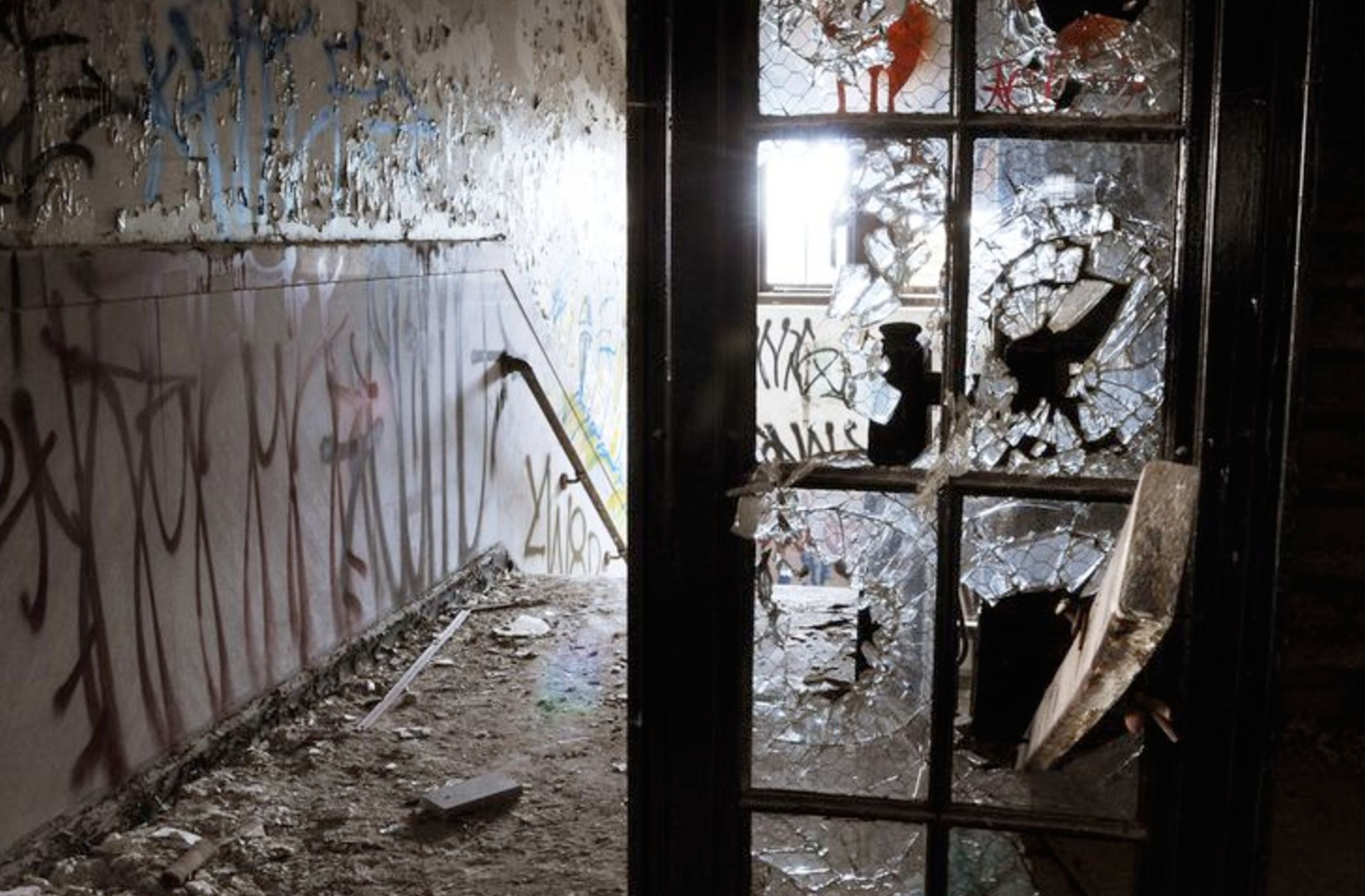
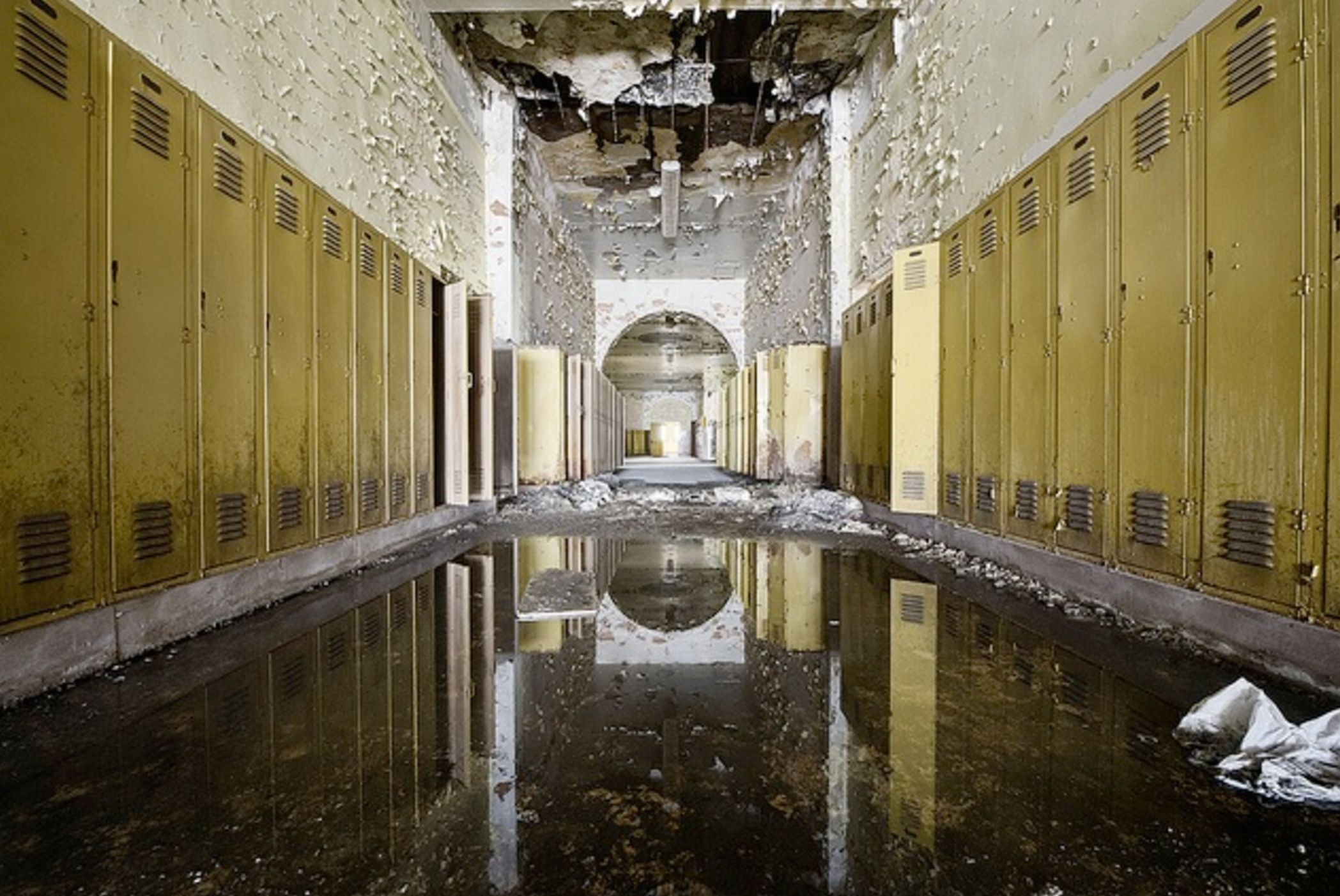
All photographs of closed Philadelphia schools are by Katrina Ohstrom.  Her work can be viewed here: http://www.huffingtonpost.com/2013/06/24/katrina-ohstrom-photography-philadelphia-schools_n_3492511.html


North Philly’s Devonte “D Jay” Newbill: Nittany Lion for Life

North Philly’s Devonte “D Jay” Newbill is one of the most talented college basketball players in the country.  His trek to the top of the college basketball world has been filled with potholes and detours.  Through it all, D Jay remained composed and focused on his long term objectives.

Image

On on March 15, 2010 Newbill led Strawberry Mansion High School to a 68-46 win over the Trinity Shamrocks coached by Larry Kostelac Jr. Following the loss, Coach Kostelac described Newbill as a “Terrific player.”

In the Mansion win, Newbill scored 18 points (8-12 fgs) and grabbed eight rebounds. Kostelac said, “Some of the shots he made with Jack Osborne and Mike Diminick [on him] were big time, and that’s what big-time players do.”

Make no mistake, D Jay was “big time.”  The 6-4 senior guard was committed to the Big East Conference’s Marquette Golden Eagles. “We’ve seen kids at the highest level before…. This kid’s going to be a hell of a player,” Kostelac continued. “The way he plays fits into that Marquette system.

Newbill nailed a 3-ball from deep on the right wing with 0.1 showing on the first-half clock.  That shot also gave Mansion a 32-20 lead at the break. “Tough shot, what are you going to do?” Kostelac wondered. “That’s the level he’s at.”

Image

Looking back, we have to give Coach Kostelac his due. He was dead on in his assessment. D Jay Newbill is a “hell of a player.” He plays at the the high major level. But, he never made it to Marquette University and the Big East Conference. After committing to his “dream school,” he signed a National Letter of Intent in April 2010. He was supposed to begin at Marquette on July 7th. D Jay never set foot on campus.

Marquette Head Coach Buzz Williams fucked the kid over.

Publicly, Williams said, “Through a culmination of several things, we have decided to give DJ Newbill his release. DJ’s a great kid. He comes from a great family whom we have established relationships with, and we’re going to do everything we can to help him in his future, in whatever capacity that would be.” Within days of dropping Newbill, Marquette announced they signed Jamil Wilson, a local Wisconsin player who transferred home from Oregon. Plainly stated, Buzz cut D Jay to make room for a former Top 100 Wisconsin player coming home.

Even though he never made it to Marquette, signing D Jay was a smart move by Buzz Williams. Once D Jay signed, he could never land at another Big East school. Strategically, Buzz cut off the possibility of D Jay attending West Virginia, Georgetown, St. John’s or any school in his league. Interestingly, then Georgetown Assistant, and current American Head, Coach Mike Brennan and West Virginia Head Coach Bobby Huggins had just watched Newbill in person before he committed to Marquette. By accepting the National Letter of Intent from Newbill, Buzz effectively eliminated the possibility of facing D Jay in the Big East Conference. After the shrewd, but heartless, move by Buzz Williams, Newbill was permanently banned from playing for another Big East team.

Indeed, Newbill was left scrambling. His dream of wearing the Marquette uniform and playing in the Big East tournament was shattered in an instant. Through no fault of his own, he was once again looking for a scholarship.  The only difference was the Big East Conference was no longer an option.  Referring to the decision to release him, Newbill said. “I was mad and hurt when this first happened. Now I’ll just go forth with my career somewhere else. Back to the drawing board. I’ll have to be careful about what school I pick.” In what would become a recurring theme, Newbill learned from facing difficult and adverse circumstances.

There was still considerable demand for Newbill as college prospect, but it was very late in the recruiting season.  As a senior he led Strawberry Mansion, coached by Stan Laws, to the 2010 PIAA state championship game at Penn State’s Bryce Jordan Center.  D Jay was named the Pennsylvania Class AA Player-of-the-Year after posting 24.2 points, 9.0 rebounds, 5.0 assists and 4.0 steals per game as a senior.  He was a first-team all-state selection by the Philadelphia Daily News. He was also named the Public League Player-of-the-Year and first-team all-city and All-Public League. Mansion posted a 28-2 record during his senior year which was highlighted by a school-record 64-point performance in a victory over Saul, the sixth-highest point total in Philadelphia Public League history. As a junior D Jay averaged 19.0 points, 7.0 rebounds, 4.0 assists and 3.0 steals as a junior and was named second-team all-state and second-team All-Public League. There was no doubt that Newbill could play, the question was: Where would he play?

Newbill considered hometown programs such as Drexel, La Salle, Saint Joseph’s and Temple but he eventually settled at Southern Mississippi. After being without a scholarship as late as July, Newbill had a wonderful freshman season, He averaged nearly 10 ppg and 6.2 rpg for the Golden Eagles as a 6’4″, 205 lb guard. Despite joining the program very late in the recruiting season, D Jay started all 32 games and played over 30 mpg.

Near the end of his rookie season, Newbill looked back on his college recruitment and the way Buzz Williams treated him, “All this made me a stronger person and a better player… Adversity builds character. It made me want to work harder to prove that I could have been there and played at that level.” After an unexpected detour, the young man from 33rd and Cumberland in North Philly had arrived on the college basketball season. Once there, he assumed center stage.  He was named to the Conference USA all-rookie team selection. Southern Miss Head Coach Larry Eustachy declared, “I don’t know if I’ve ever had a freshman that has all the qualities he has. Not just as a player – and he’s the best freshman I’ve ever had – but more so as a person and a leader.”

Image
Despite his early success, attending college in Hattiesburg, Mississippi, was not exactly appealing to D Jay. Newbill truly never felt at home in Mississippi. After being deceived and mistreated by Buzz Williams and spending a year in the deep South, Newbill was longing for a place he could truly call “home.” His longing for Pennsylvania became especially intense after his first college basketball season ended.

Fortunately, he was given an opportunity to come North and to return to his home state of Pennsylvania. Pat Chambers offered D Jay an opportunity to attend Penn State University and play in the super competitive Big Ten Conference. Newbill would be Chambers’ first major recruit in Happy Valley.

As a high school student, Newbill chose Marquette because that was his dream school and he chose Southern Mississippi because they had spot for him in late July. As a young man, he chose Penn State because it was the best possible academic and athletic situation for him. After committing, he said, “I chose Penn State because of family atmosphere, academics and the Big Ten Conference… [I’ll get] a lot of exposure… Penn State is not too far. I can come home and then get away when I want to focus on me.” It was a great decision, a true win-win situation.

Image

D Jay Newbill is, in many ways, a throwback. His demeanor and his game reflect the influence of Philadelphia’s great basketball tradition. He is part of a distinct Philadelphia lineage. D Jay is a “Hardnett” kid. In Philadelphia, that immediately identifies a basketball player as patient, smart, skilled and well schooled in the fundamental aspects of basketball. Hardnett kids also exhibit positive social skills.  Hardnett kids went to class and put forth an honest effort with the books.  But it was the way they played the game of basketball that drew most to Hardnett kids.  The late John Hardnett, one of Coach Chaney’s disciples ran basketball workouts and fielded teams in the historic Sonny Hill Summer League program. John Hardnett kids play a distinctly cerebral brand of basketball.  Hardnett died suddenly in May 2010. Newbill was one of the last of many great high school and college players developed by Hardnett. Doug Overton, Aaron McKie, Alvin Williams, Marc Jackson, Jamal Nichols, Mark Tyndale, Mardy Collins, Scott Rodgers, Dionte Christmas, Samme Givens, Ellis Gindraw and many other Philly ballers were schooled by Hardnett.

ImageJohn Hardnett

Penn State hired a Philly guy to coach the Men’s Basketball team and the first thing he did was sign a Hardnett kid. That was a sound decision, by all accounts a very good move.  Since Chambers and Newbill have joined forces, the Penn State basketball program has improved and PSU has a bona fide star in the best basketball conference in the nation. But, most importantly, D Jay Newbill has finally found a “home.”  He has embraced Penn State and feels a special connection with the student body and the Penn State community.

Newbill would lean heavily on his Penn State family before he ever played a game in the Nittany Lion uniform. On September 15, 2012, his mother, Tawanda Roach, died suddenly. She had been diagnosed with cancer just three weeks earlier. For the second time in two years, Newbill experienced the excruciating pain of losing a loved one. He was particularly distraught after his mother’s death. He explained, “I just snapped out after that. I was throwing stuff around my room and I just broke down…I don’t think it can get any worse than that.” At 20, D Jay had endured a tremendous amount of adversity. The coach of his dream school “dropped him,” his mentor died suddenly and then he lost his mother.  These were very tough times.  D Jay credits Penn State for supporting him through this time in his life.

With the full support of Penn State and the athletic department, D Jay was able to summon the inner strength and fortitude to continue pursuit of his academic and athletic goals. He said at the time, “I think these obstacles help shape me into the man that I going to become.” On the court, his play was inspired from the start. After sitting out the 2011-12 season in compliance with the transfer rule, Newbill exploded onto the Big 10 scene. This despite being forced to play point-guard after an early season injury to Tim Frazier.  D Jay led Penn State in scoring (16.3) and assists (4.0) and was second in rebounding (5.0) and steals (1.2). He ranked ranked fourth in the Big Ten in scoring (16.4) and assists (4.1) in conference games. D Jay became the 17th Lion to score 500 points (504) in a season. He finished second in the Big Ten in minutes played (36.5) and third in free throw attempts (196) and 20-point games (10) in the regular season, including six 20-point games in Big Ten games.

Image

All he did the following season was get better in every category. D Jay finished second in the Big Ten scoring race to Nebraska’s Terran Petteway (18.0) at 17.8 points per game. He scored 20 or more in 10 of Penn State’s 31 contests. He led PSU in scoring on 15 occasions. Newbill led the team in field goal percentage at .466, averaged 4.9 rebounds and 1.7 assists per contest. Last season, Newbill led the Big Ten in total points (552) and field goals made (192). How much better was he? From year one in the Blue and White to year two, Newbill’s shooting percentage increased by five percentage points (41 to 46 percent). His three-point shooting percentage increased by eight percentage points (27 to 35 percent). Newbill also made a seven-percentage point increase at the foul line from last season to this year (68 to 75 percent).

Academically, D Jay has been a strong student at PSU. He was only 6 credits shy of a Bachelor’s degree after the Spring semester ended. Coming off a strong season, he could have graduated and turned professional. How would he have fared? He would have been considered a potential second round NBA draft selection. Perhaps, he could have made a team as an undrafted free agent. He could also secured a fairly decent position in one of the more highly regarded European Leagues. Or, he could have ended up in the NBDL for a year. Who knows? The important point is that because of his focus on academic as well as athletic goals, D Jay Newbill,  after four years of college could have graduated from Penn State and began a professional basketball career.

But turning pro wasn’t his only option.  D Jay had several others avenues . The 5th year transfer rule would have allowed D Jay to graduate and ‘transfer’ to another program and retain immediate eligibility to play at the new school. This is an increasingly widespread strategy. As an All Big Ten performer D Jay would have been an attractive 5th year addition to many of the Top 20 programs in the nation. This fact wasn’t lost on D Jay’s friends and supporters. There were many suggestions offered.  D Jay, however, took a different view.  He found that he viewed the situation from the perspective of a Nittany Lion.

“When I arrived at Penn State there was a lot going on with the sex scandal. Outsiders talked about that stuff, that wasn’t the Penn State I knew,” said Newbill. “I experienced the biggest personal loss of my life and Penn State became like my family. What matters more than going pro early or making money is my legacy as a Nittany Lion. As a team, we have been getting better every year. Two years ago we won only 10 games and 2 Big 10 games. Last year we won 16 games and 6 Big 10 games. This year we will make another jump and make the NCAA tournament.”

D Jay is cognizant of his ongoing journey from North Philly to Penn State graduate and NBA prospect. His high school was featured on ABC’s flagship news program, “World News with Diane Sawyer,” in a special report on the state of education inside one of Philadelphia’s toughest schools to learn. At Strawberry Mansion, the average SAT Critical Reading score is 348 the average SAT Math score is 326. The average M/V combined score is 674. D Jay went through an adjustment period upon arriving at Penn State University where the average SAT scores fall between: Verbal: 530 and 630 and Math: 560 and 670. The average combined score is between 1090 and 1300. D Jay realized that he had to dedicate himself to his studies and work closely with the academic support staff for student-athletes.

Newbill has experienced first hand the leap from one of the poorest performing schools in Pennsylvania to success at Penn State University.  He never loses sight of the fact that he is from 33rd and Cumberland and will soon be a Penn State Alum.  “I really appreciate everything made available to me at Penn State. Everyday I work out, train and learn at one of the greatest universities in the country. I constantly wonder how I can help bring Penn State to 33rd and Cumberland and the rest of North Philly. Penn State has changed my life. I want to expose other young Black kids to college at Penn State. I don’t know how I’m going to set it up, but I’m going to get it done. When I play professionally, I will definitely work to help North Philly kids go the Penn State.”

What can we expect this season?

Looking at his career trend, Newbill increases his point total significantly every year. He scored 293 year 1, 504 in year 2 and 604 in year 3. Let’s conservatively assume he scores another 604. Newbill will have over 2,000 points and be likely be named All Big Ten for the second year in a row. But, more than any personal goal, Newbill wants to lead Penn State to the NCAA tournament.

“The whole thing is about getting to the NCAA tournament. That’s my immediate goal. I have been focused on my academics and I am in a position where I will easily graduate. As a young boy, I didn’t always think I would be a college graduate. I was fortunate enough to meet John Hardnett and he helped me understand how to leverage basketball.”

“The decision to attend Penn State was the best decision I have ever made. I’m a Nittany Lion for life! More than anything else I want help other people from around my way gain access to Penn State.” Newbill understands that the best way he can achieve that goal is by excelling as a professional basketball player.

Toward that end, D Jay will be heading to NBA MVP Kevin Durant’s skills camp. If he performs well there he’ll get invited the LeBron James camp. One thing for sure Strawberry Mansion and Penn State will be well represented. “This is my last year at Penn State. As a kid in North Philadelphia, I never thought a place like Bryce Jordan Arena would be my home court for four seasons. My time here has been very special.”


Evan Maschmeyer: Winning!!

Image

We’ve all seen the commercial numerous times. The message is very clear and easy to remember: “There are over 400,000 NCAA student-athletes, and most of them will go pro in something other than sports.” Clearly, the odds of making it to the NBA are stacked heavily against High School basketball players. Every year there are about 545,844 High School Basketball Players in the United States. Of those approximately 17,500 will become NCAA student basketball players. Each year about 48 NCAA basketball student-athletes are drafted into the NBA. Making it to the “league” is a real long-shot.

% High School to NCAA: 3.2%

% NCAA to Professional: 1.2%

% High School to NBA: 0.03%

Some young men focus so intently on achieving their NBA hoop dreams, they lose sight of all the benefits of a free education. Others are keenly aware of the opportunities afforded to them as student-athletes and take steps to ensure their vocational and financial future while still wearing the college uniform.

Evan Maschmeyer grew up a Hoosier. He was reared and educated in Jeffersonville, Indiana. Jeff, as the locals call it sits directly across the Ohio River to the north of basketball mad Louisville, Kentucky. A small town with a population of 45,000, Jefferson is about 60 miles southeast of French Lick, the hometown of American basketball icon Larry Bird. Entering Saint Joseph’s in the Fall of 2011, Evan brought some serious basketball credentials. He was part of the 2009-10 Red Devils team that was a win away from a Class 4A state championship. Among numerous other accolades, Maschmeyer was an Indiana Junior All-Star and News and Tribune All-Area team member. He was a highly regarded player in the basketball mad Hoosier state.

Upon arriving on Hawkhill he immediately found himself competing with Carl “Tay” Jones and Langston Galloway for playing time. These two are 4th and 2nd, respectively, on the all-time scoring list at Saint Joseph’s.  Although he has appeared in a majority of games over his 3-year career season, Evan has found it difficult to earn sustained minutes in such a talented backcourt.

However, unlike 400-500 other basketball student-athletes that transfer every year, Evan decided to focus his energies on helping his team when the opportunity presented itself and leveraging his free education to ensure a viable career as a financial “professional” once his playing days are over. After his sophomore year, he completed an internship with Haverford Trust, Co. in Radnor, PA. This summer, after his junior year, he will serve an internship with J.P. Morgan in Chicago.

Evan’s experience with Haverford Trust combined with an exceptional academic record while maintaining a double Finance/Economics major made him a competitive candidate for the prestigious internship. The fact that he achieved this success while fulfilling his obligations a member of the Atlantic 10 Championship St. Joe’s team is even more impressive.

Image

J.P. Morgan’s summer internships are in highly competitive for many compelling reasons. First, Evan will work with smart and energetic professionals on real, challenging projects at one of the world’s top financial services firm. Second, he will have the chance to discover first-hand what areas of their business best suit his talents and interests. Third, and this is the big one, J. P. Morgan hires a majority of their full-time Analysts from the Summer Intern Analyst class.  

This is the best “move” I have seen a college basketball player make this year. J.P. Morgan employs more than 70,000 people globally, and the firm has assets of $2.3 trillion. They have offices in more than 50 countries and clients in more than 100 countries around the world — and as a testament to their global platform and leadership, lead the industry in most markets in which we operate. Founded in 1799 in the United States, J.P. Morgan is truly a global organization. Their roots in Europe date back to 1838, and They’ve been in Asia since 1872.

Phil Martelli, Geoff Arnold, Mark Bass and Dave Duda unanimously agree that Evan is destined for success.  I am an Evan Maschmeyer fan. I look forward to having Evan interact with other young ballers. He is the epitome of what a collegiate student-athlete should be. Use the game, don’t let the game use you! As they say… the Hawk will NEVER die!

Rashann London, Larenz Thurmon and the “Daddy” Advantage

Image

Rashann London

Rashann London and Larenz Thurmon are very good high school scholar-athletes.  Indeed, they are currently leading their respective teams, Roman Catholic HS and Philadelphia Electrical & Technical HS on quests for Pennsylvania state championships.  While these young men are both gifted athletes with highly refined basketball skills that will serve them well at the collegiate level, it should be acknowledged that they both have an advantage over many other local hoopsters.

Rashann and Larenz have the “Daddy” advantage.  Both of these young men have loving, caring, concerned and committed fathers in their lives.  Their fathers serve as their confidants and their biggest supporters.  Throughout the Fall, Nate London and Wil Thurmon made sure their sons would appear at my door every Saturday morning to prepare for the SAT and ACT exams.  Each week, we would go over countless sample tests and review each problem individually.

Image

Larenz Thurmon

The aim was to increase the options available to Rashann and Larenz.  Both of these young men had excellent grades and solid SAT scores.  Rashann was already committed to Drexel University.  However, he realized that Drexel offers over 70 undergraduate majors and more than a dozen accelerated degree programs across 13 different colleges and schools.  Rashann wanted to make sure he was qualified for admission to any of the programs.  The aim wasn’t to just meet NCAA eligibility standards. That was a foregone conclusion.  Rather, it was to get a score that was commensurate with his abilities.

Larenz had already proven he was more than a capable student.  He spent three years attending the prestigious and highly competitive Wilmington Friends School in Delaware.  After moving in with his grandmother, he transferred into Philadelphia Public League basketball powerhouse, PET HS.  His main concern was increasing his options.  Like Rashann, meeting NCAA eligibility requirements was not a concern.  The goals was obtaining an SAT/ACT score that would increase the range of colleges that could accept him.

After weeks of diligent and intensely focused study, both of the young men met their goals.  Looking back, I came to the realization that a huge part of the reason they were successful was the “Daddy” advantage that each possessed.  I spent many hours with Nate and Wil discussing their son’s study habits, tendencies, options and strategies they could use to improve their academic profile for college admissions officers.  These gentlemen would take the information, apply it and routinely report back their assessment of their son’s progress.

It was truly a pleasure working with these young men and the fathers.  As I implement the Assist Project, I look forward to working with guys like Mo Howard (Ashley and Ky Howard), Shep Garner, Sr. (Shep Garner, Jr.), Larry Galloway (Langston Galloway), Shon Minnis (Biggie Minnis), Anthony Durham, Sr. (Anthony Durham, Jr.), Pervis Ellison (Malik Ellison), Stephen Ward (Carrington Ward), Kevin Givens (Samme and Shannon Givens) and Curt Reed (Jordan Reed), Ronald Robert, Sr. (Ronald Roberts, Jr.) and Carl Baptiste, Sr. (Carl Baptise, Jr.).  All of their sons are excelling on and off the court.  There can be little doubt that much of that success is attributable to the “Daddy” advantage.

The ASSIST PROJECT is a non-profit program sponsored by the Alpha Scholarship Fund a 503 (c)3 organization based in Camden, NJ and Philadelphia, PA. Participation is FREE to all student-athletes. There is NO COST to students and their families.

← Back

Thank you for your response. ✨

“Frustrated” Black Parents and the Rise of “Handlers”

“We got along with his ‘guy’ from the beginning, he liked us and that was that.”

NCAA D1 Coach (2014)

Never, ever should a parent relinquish control over their child’s athletic and educational development.  I realize that many are faced with seemingly insurmountable challenges trying to raise a family in very tough economic times.  Nonetheless, I must insist that parents somehow maintain regular (weekly or monthly) contact with teachers to help their son remain organized and focused on meeting academic goals.  No matter what, parents must remain committed to and engaged in their son’s educational development.  It is highly unlikely that others will care about their child’s education as much as they do.  As a parent you must, at all times, remember that academics are more important than athletics.

With the high cost of attending college, many parents have chosen pursuit of athletic scholarships as a means of financing education.  Although inherently risky, this strategy is widely utilized and will likely continue to grow as colleges becomes more expensive every year.  For example, Drexel University estimates the “Cost of Attendance” for a full-time 5 year undergrad at $64,475 per year.  Total cost at St. Joseph’s University is $53,130.  Temple, a public university, comes in at $24,872 per year.  Within this context of spiraling costs, athletic scholarships are very attractive and valuable to parents looking at these price tags.

Ideally, parents of college-bound student-athletes would research and hold accountable a diverse supply of AAU programs, skill trainers, “workout guys,” strength and agility coaches, subject tutors and Test Prep services.  Parents would utilize and review these services while sharing their findings.  This information would then be disseminated among successive waves of parents.  Over time, fully informed parents would invest in services that have demonstrable results.  Eventually, those with poor outcomes would go away.  In this ideal scenario, fully informed parents pursing their self-interest have a profound and positive impact on youth basketball culture. Unfortunately, most low-income African-American parents are neither fully informed nor acting in their self-interest.

Image

Motivated Parents

Only a relatively small segment of working class and poor Black parents have a keen and thorough understanding of the college preparation and application processes.  For the most part, these parents are college graduates themselves.  Many have served in the military.  Quite a few are in school themselves.  They are the Moms and Dads that come to every game.  These are the parents selecting private and Catholic schools.  They understand the significant differences in test scores and achievement levels at traditional neighborhood public schools on one hand and tuition based options on the other.

These Parents, when involved in youth sports, are likely to exhibit “motivated” behaviors.  Motivated parents use their hard earned resources to obtain valued educational outcomes.  Motivated parents spend tens of thousands on tuition, test preparation and summer programs.  Motivated parents have made a conscious choice to pursue college as a goal and athletics as potential means of funding the cost of attendance.  Given this choice, their behaviors make perfect sense.

In pursuit of athletic scholarships, motivated parents find sports clubs for their children.  They expose their children to travel competitions. Many kids have personal trainers, workout guys, speed coaches, nutritionists, etc.   Motivated parents have not and will not forfeit the parental responsibilities associated with their children’s education.  These parents are a valuable asset in youth sports.  These are reliable highly desired parents.

Unfortunately, many parents of very highly desired players do not to exhibit motivated behaviors.  Revenue producing college basketball and college football are dominated by Black athletes.  “Ninety percent of the NCAA revenue is produced by 1 percent of the athletes. Go to the skill positions—the stars. Ninety percent (of the 1 percent) are Black,” says Sonny Vaccaro.  These stars, by and large, emerge from poor Black homes.  The model has to be adjusted to explain and help poor Black families make better educational decisions.  The fact is, parental behaviors are significantly different among low-income parents in these poor homes.

Image

Frustrated Parents

Many low-income Black parents, especially single mothers, are frustrated parents.  Their behaviors vary considerably from motivated parents.  They really don’t have time to research and compare AAU programs and skill trainers.  Many are unemployed and underemployed.  Many are receiving public assistance.  Some are working two or more jobs.

The current minimum wage is $7.25 per hour.  A full-time minimum wage employee earns $15,080 annually.  The poverty threshold for a family of four with two children is $22,283.  In Philadelphia, there are approximately 433,ooo people living below the poverty level.  Over 789,000 Philadelphians live in households earning less than $35,000 a year.  For current purposes there is no need to establish a threshold where poverty ends and affluence begins.  The discussion refers to low-income Black residents of Philadelphia.  It is not too difficult to identify Black Philadelphia families that are struggling to make ends meet.

Year after year countless elite basketball and football players emerge from low-income Black homes in places like Philadelphia.  The beast that is collegiate and professional athletics demands that decisions be made on behalf of these young men.  Someone has to deal with the college recruitment process.

Unlike fully informed and confident motivated parents, frustrated parents tend to “hope”  their children will graduate from school.  Failure, truancy and dropping out are normal behaviors in many low-income homes.  The plain fact is that most of Philadelphia’s poor Black and Latino boys don’t graduate high school.

According to 2009 data, the graduation rate in Philly is 45 percent for African American males and 43 percent for Latino males.  At Camden High the overall graduation rate is 42% and at Woodrow Wilson it’s 46%.  Across the country, there are 12 states where the Black male graduation rate is below 50%.

The streets are teeming with school age black boys and young black men who are disengaged from the educational system.  Of course, frustrated parents express a desire to see their child earn an athletic scholarship.  However, they are concerned first and foremost with the elementary imperatives of life.  Poor Black parents are concerned primarily about survival on a day to day basis.  The have to pay the rent or mortgage and keep the heat on.

Toward that end a consistent objective is “getting through” social ordeals without injurious stress.  They prefer predictability, not a life governed by random and arbitrary “drama.”  When their child begins to display athletic talent many low-income parents let someone else “handle” that basketball stuff in an effort to avoid what they perceive as unnecessary drama.

While unfamiliar to motivated parents, this behavior by frustrated parents may also be regarded as “sensible.”   It is sensible because the the handler helps the parent get through the daily grind of living in one of America’s low-income urban communities, without the occurrence of personal stress related to educational and basketball decisions.  There are multitudes of handlers occupying this space in low income communities across America.  Indeed, it is impossible to understand the dynamics of grassroots basketball and college recruiting without fully exploring the role of the “handler.”

The Rise of the Handler

We all know or have heard about parents that want an athletic scholarship and their child changes high schools 3,4,5 even as many a 6 times for basketball related reasons.  As motivated parents, we know that there is no justification for transferring a student that many times.  These actions just make no sense from a “parental” perspective. In some cases, astonishing decreases in the level of academic rigor and prestige were associated with the moves.

A few young men have left elite private institutions where the average M/V SAT score is above 1300 to transfer to Philadelphia public and charter schools with average SAT scores in the 600s.  The private schools wanted the young men to stay.  Clearly, in these cases, high SAT scores and gaining admission to competitive schools are not significant causal factors.  For those trying to gain insight into the world of grassroots basketball and college recruiting, the motivated parental concept is of little use in these cases.

These are not “parental” decisions.  Parents, in most cases, did not make the choices outlined.  Something else is at work here.  More than likely, this is the work of a “handler.”

Within Philadelphia’s youth sports culture,  every year hundreds of poor Black boys and girls long to go “D1.” These kids play on the streets and playgrounds of Philadelphia.  They don’t have any money.  They can’t afford AAU and travel ball.  They have never heard of a skill trainer or a strength coach.

Maybe a church or a recreation center sponsors a league.  Talented, determined and hungry kids stand out when they compete.  Eventually, someone will notice the poor, talented, determined and hungry boy that just wants to play ball.

They will approach his mother and offer to “handle” her son’s basketball development.  Over the years, handlers have developed very persuasive versions of what is fundamentally a very strong pitch: if she allows him the work with her son he will earn an athletic scholarship to pay for college.

Days turn into weeks, weeks become months and the handler begins to suggest the boy play for this summer league team and/or that AAU program.  Joining the new team will likely mean another pair of sneakers or two, most likely Nike or Under Armor.  The boy will likely travel to places like Las Vegas and Orlando.

Inevitably, the handler requests that the boy reclassify (intentionally repeat a grade) and/or change high schools.  He will sell the parent on the idea that such a move is in the the child’s best interest.  Meanwhile, Mom is extremely appreciative of the sneakers and other basketball related gear the handler has provided her son.  Those shoes cost anywhere from $100-180 a pair.  She is also pleased that her son is able to travel to distant cites and play basketball.

With that, the deal is done.  For a few pairs of sneakers, a few meals and other nominally valued trinkets, Mom has essentially given control over the direction of her child’s education and athletic development to his handler.  Because they have become so widespread and influential handlers warrants careful consideration.

Frustrated behavior is deeply ingrained among low-income African-American parents and students.  We must take this fact into account in any attempt to improve educational outcomes among poor Blacks.  Discussions with college coaches reveal very few elite basketball athletes do not have handlers.  Local Division 1 assistant coaches estimate that 80-90% of the kids they recruit have handlers.  Many coaches report that it is entirely possible to recruit some of the best players in the country without ever communicating with parents and high school coaches.

Are there positive contributions made by handlers? In cases where parents have chemical dependence or alcohol abuse issues, a handler can help a young man develop his skill and understand the role athletics can play in shaping his educational future.  In cases where fathers are incarcerated, handlers can set limits and enforce consequences for boys trying to transition to manhood.

How are we to understand the decision making processes of the handler? Of course, handlers are motivated by self-interest. The real question is: Does the self-interest of the handler line up with the interests of your family and your child?

Baller or Thug? Can’t Be Both!

Image

It was the best of times, it was the worst of times, it was the age of wisdom, it was the age of foolishness…

Charles Dickens, A Tale of Two Cities (1859)

Very recently, we lost the greatest living Philadelphia ball player with the passing of Tom Gola (pictured below).  Wilt Chamberlain and Tom Gola are the ultimate representatives of Philadelphia ball players.  Earl Monroe, Gene Banks, Ernie Beck, John Chaney, Claude Gross, Tee Parham, Lewis Lloyd, Joe Bryant, Mike Bantom, Howie Evans, Anthony “Hubba Bubba” King, Rashid Bey, Lynn Greer are all outstanding Philly ball players.  Philly ball players have always used basketball as a means to access educational opportunities.  There are hundreds, if not thousands, of Philly ball players raising families and contributing to society well after the ball stopped bouncing.

However, in recent years I’ve noticed a troubling pattern of behaviors.  Being a Philly Ball player these days means having a double consciousness.  The identity is now divided into several parts, making it difficult or impossible to have one unified identity.  This is a significant and unfortunate change.  All of the players listed above are known for playing hard, tough winning basketball.

Tom Gola

Within the context of contemporary scholastic and collegiate basketball, the Philly ball player is developing a dual identity.  Unlike their singularly focused predecessors, many of today’s Philly ball players have two distinct and relatively enduring states that alternately control their behavior.  Like their predecessors, they play hard, tough winning basketball.  But, there’s this other “Philly Hard” identity permeating the recent crop of Philly ballers.  Double consciousness forces young Philly ball players to view themselves not only as student-athletes competing at the highest levels, but to also view themselves as they might be perceived by the folks in the “hood.” They cannot be perceived as “square”, “corny” or docile. Philly Hard players have to “keep it gully.”

What types of behaviors do “Philly Hard” players exhibit?  They range  from persistent refusal to comply with school, dorm, or team rules and expectations to selling a half-kilo of crack cocaine to an undercover DEA agent.  It’s important to understand that this not a new phenomena.  There have always been Philly Hard players.  In 1987, a North Philly kid from the Raymond Rosen projects led Millersville to a 27-4 record and a No.1 national ranking.  After that season, he robbed a home in Concord Township, Delaware County, threatened the 20-year-old resident with a toy pistol and beat her.  Around the same time he was charged with, and later pleaded no contest to, the attempted rape of a 20-year-old woman at gunpoint. He was charged with al least eight other burglaries over a two-week period in one month.

In 2002, a former Simon Gratz High School star who won a Public League basketball championship alongside NBA stars Rasheed Wallace and Aaron McKie, was sentenced to three to six years in prison for three holdups at a Rosemont ATM. This Philly ball player had averaged 20 ppg and 10 rpg in the Atlantic 10 conference before playing professionally in Europe.  In 2009, a freshman at a Big 5 school threw two baggies containing marijuana onto the ground during a police sting and had $1,030 cash on him.  He was arrested Monday night in Chester on charges of felony drug dealing and related offenses, including resisting arrest.

While the most of the negative behaviors of contemporary Philly Hard players are not felonious, they are far more frequent.  There is relentless drumbeat of Philly kids being disciplined, suspended and expelled from schools.  One player was suspended for knowing that a stolen student identification card was being used to order more than $100 worth of food.  Another was suspended for the 2013-14 season after being charged with first degree burglary and grand larceny.  Still another was suspended prior to the start of the season, and subsequently suspended for the remainder of the season due to a violation of the school’s Code of Conduct. Eventually, he chose to transfer to another program.  Yet another was suspended after trying to shoplift at Wal-Mart.

Earl Monroe

I ventured down to the Wells Fargo Arena on Monday evening and watched three young Philly ball players perform for the Phoenix Suns against the hometown Sixers.  It was an especially proud moment because, a few years ago, I watched all three work extremely hard to meet NCAA freshman eligibility requirements.  Diligence and determination paid off.  Their parents, James Christmas and Angel Morris, were focused on providing the structure and support necessary for these guys to make it to college.  One of the players was arrested as a freshman for bringing an Airsoft gun on campus that can shoot plastic BBs.  Fortunately, among this particular group of Philly ball players, that was an isolated incident.  Given the opportunity, they have made the most of it and now play in the NBA.

While riding home from the game, I received a text indicating that two more Philly players have been indefinitely suspended by their university.  In one night, I experienced the highest of highs, as I watched three Philly ball players live their NBA dreams, and the lowest of lows as I learned of two other young men placing their scholarships at risk.  This makes no sense.  Philadelphia’s amateur (Youth, AAU, Summer League, Church, HS and College) basketball community, has to do more.

Clearly, many of our young players have internalized a Philly Hard self-image that shapes their inappropriate responses to adverse and stressful situations faced while transitioning to college.  For now, there’s still a considerable market for good Philly ball players.  The coaches from respectable programs still pursue young Philly ball players.  However, there has to be a tipping point.  Those exhibiting the Philly Hard tendencies are going to inevitably make it much harder for the next generation of kids.

Too many young Philly ball players are struggling to reconcile their identity as a Philly ball player and a Philly Hard man.  Conflicted between behaving in a manner that reflects a Philly Hard perspective and exhibiting behaviors that are marketable and acceptable to college and professional coaches.

By exhibiting compliant and respectful behaviors he will be deemed a sellout and his Philly Hard stature is questioned.  By having repeated confrontations with authority figures and receiving multiple suspensions for misbehaviors he successfully establishes himself as Philly Hard and in some very important ways limits his ability maximize the true value of his athletic gifts.  This is the contemporary Philly ball player’s struggle to unite the different components of their identity.

As a basketball community, we have to find a way to diminish the impact of the Philly Hard image. Some how, some way.

To Parents of Middle-School Student-Athletes: An Open Letter

Image

Many of you are facing an important decision.  Where do you enroll your son/daughter for High School?   You have spent countless hours in sweaty humid gyms, on blazing hot fields and  transporting your child to AAU or church league practices and games.  Your child wants to to play.  He/she is a good student and wants to pursue athletics at the scholastic level.  Athletics is an important part of your family’s life and, therefore, a factor in the high school decision-making process.  As a parent, there are some important questions you must ask.  The most obvious one is: Are there opportunities for your child to play?  Most Public League schools do not sponsor freshman and/or junior varsity teams.  Sports budgets in the School District of Philadelphia have been drastically cut in recent years.

Say, for example, your daughter plays soccer.  She has played in a youth league for several years.  She’s serious about soccer.  Over the past decade, Philadelphia’s Public League soccer programs have been cut to the point where there is little opportunity for participation and skill development.  Only six teams are listed on the JV schedule for the upcoming season. No Public League school has a freshmen girl’s soccer team. Most schools have subpar fields or share Department of Recreation fields. Some play games on the Super Sites, the turf all-sport fields that are located near Simon Gratz, Germantown, Southern, and Northeast high schools.  As a parent, do you take a chance with a Public League soccer program?  The same logic applies across all sports.  Baseball, tennis, crew, track & field, lacrosse, football and basketball players should carefully examine the athletic programs and leagues of their prospective schools.

The dynamics have changed since most parents were in school.  In many instances, the neighborhood public school alternative is simply unacceptable.  This is especially the case in basketball.  Historically speaking, parents of scholastic hoopsters in the greater Philadelphia region have been blessed for years.  Philadelphia’s Catholic and Public Leagues have consistently developed elite scholastic basketball players for nearly three-quarters of a century.

However, many of the traditional Public League powers (West Philadelphia, Overbrook, Southern, Ben Franklin, Gratz, etc.) have seen their once mighty basketball programs relegated to lower tier status as independent charter schools have become dominant.  Facing a $300 million budget deficit, the School District of Philadelphia has limited opportunities for student-athletes to participate in scholastic competition.  One can reasonably assume that athletic budgets will continue to suffer.  Moreover and more importantly, very few Public League Schools have  average SAT scores that meet NCAA freshman eligibility criteria for a student with a 2.5 gpa.

The plain and simple fact is that too many students attending Public League high schools are finding it difficult to meet NCAA eligibility criteria.  On the other hand, Catholic League alums are currently playing at schools such as Notre Dame (Steve Vasturia, SJ Prep), Wake Forest (Miles Overton, SJ Prep), Rider (Junior Fortunat, Roman), Towson (John Davis, Neumann-Gorretti), Wisconsin, Green-Bay (Lamin Fulton, Neumann-Gorretti) and many other Division 1 and 2 colleges.

Image

Current Catholic League seniors have committed to Miami University (Ja’Quan Newton, Neumann-Gorretti), Penn State (Shep Garner, Roman), Drexel (Rashann London, Roman), Campbell (Tony Toplyn and Troy Harper, Neuman Goretti) and Cornell (Pat Smith, Wood) among others.

Junior Fortunat pic

If participation on strong competitive teams in a very strong league with solid academic programs is the goal, then Philadelphia’s Catholic League should be your destination.  Currently, Archbishop Carroll’s Boy;s Basketball team is ranked 12th in the nation according to MaxPreps.  Roman Catholic, SJ Prep, Neumann-Goretti and Archbishop Wood are among the top teams in Pennsylvania their respective class divisions.

Image

In football, the Philadelphia Catholic League produced the PIAA AAAA Champion SJ Prep Hawks.  SJ Prep was ranked #1 in Pennsylvania and #38 in the United States.

Image

For many families, sports is an important part of the educational process.  Research finds that in addition to improved physical health, sport plays a primarily positive role in youth development, including improved academic achievement, higher self-esteem and fewer behavioral problems.  Many parents have long known that many facets of playing sport—the discipline of training, learning teamwork, following the leadership of coaches and captains, learning to lose—provide lifelong skills for athletes.

For parents of middle school student-athletes in the Philadelphia region, the Catholic League provides the best combination of accessibility, academic accountability and athletic competition.

In terms of the ability to develop academically and athletically prepared student-athletes, Philadelphia’s Catholic League is the preeminent scholastic league in the region.

Wyatt Signs Highest Non-NBA Rookie Deal

Image


Khalif Wyatt, the former Temple Owl and Norristown, PA product, has signed a deal to play with the Guangdong Southern Tigers in China, a league source has confirmed.  This past summer Wyatt impressed during a stint with the Sixers.  He averaged 13.8 points per game over 5 games including a 27 point and a 25 point performances against Brooklyn and Indiana. 

After emerging as the best college player in the Philadelphia region during his senior season at Temple, Wyatt entered the preseason as one of the favorites to make the team, but ultimately the new Sixers coaching staff decided to cut him from the final roster.

Wyatt’s new team is one of the best-performing teams in the Chinese Basketball Association, or CBA. The Tigers have won seven CBA titles (champions of the finals), behind only the Bavi Rockets’ eight titles. The Tigers are the only team to have qualified for the CBA playoffs in all the seasons since the league launched in 1995.

According to league sources familiar with the deal, Wyatt is the highest paid non-NBA rookie in professional basketball for the 2013-2014 season.  His agent, Stephen Pina, ASM Sports, notes that Wyatt left for China this morning.  “Khalif was truly impressed with the level of interest demonstrated by the Sixers and other NBA teams.  However, the offer from the Guangdong Southern Tigers was extremely attractive and he looks forward to helping the Tigers pursue another CBA title.”

After being released by the Sixers on Friday, Wyatt left for China on Tuesday.  His ability to sign such a lucrative contract in a matter of days illustrates ASM SPORTS’ ability to offer worldwide industry expertise that reflects the true global nature of basketball today. From Europe, to Asia, to Africa, and South America, ASM Sports works with teams in all corners of the globe.


Philadelphia’s High School Selection Process: Why Catholic Schools?

Image

Across the Greater Philadelphia region, thousands of parents are facing one of their most important decisions.  Their minds are filled with questions:  Where will he/she attend high school next year?  Will the school be safe?  Are there enough teachers? Are the AP and Honors classes funded? What are the test scores?  This year, finding answers to these questions and making well-informed decisions will be more difficult than ever before.  As we all know, the School District of Philadelphia is in the midst of an unprecedented budget crisis.  As a direct result of recent cuts, students and their parents are, on their own, trying to research alternatives and find a quality high school placement.  Clearly, the time has come for most Philadelphia families to consider non-public school alternatives.  For many, the question has become: How can you NOT afford to send your child to a Catholic High School? 

In most School District of Philadelphia schools, 8th graders will be applying to high schools without the help of full-time guidance counselors, who usually lead the process.  Think about that for a moment.  Middle school students do not have access to full-time counselors while trying to navigate the complicated and complex high school application process. Confused and overwhelmed 8th grade students cannot bounce their thoughts and impressions off the person, historically, charged with that responsibility.  The district has determined that assistance with high school selection is not a priority.  

 Image

How are students supposed to meaningfully compare and contrast the various programs and offerings of the competing public, charter and Catholic high schools?  In the past, the district provided each 8th grade student with a high school directory.  The student could take the directory home and review the offerings with their parents, grandparents and other concerned adults.  Unfortunately, budget cuts have eliminated this crucial part of the high school selection process.   For the first time in recent memory, the District will not print a high school directory; it will be available only online.  

Think about the families in your neighborhood.  Think about the kids whose parents work two jobs.  Think about the kids whose parents have alcohol and/or chemical dependency issues.  Think about the families in public housing.  What percentage has access to the internet in the home?  How many have printers in the home?  The decisions to eliminate guidance counselors and discontinue printing the high school directory, arguably, discriminate against low-income families.  Middle and upper class families will be able to easily access the information.  Poor families will be at a real disadvantage. It gets worse.

The School District of Philadelphia is not holding its annual High School Expo. In the past, the Expo facilitated more informed choices by families and students.  High schools would set up booths so that students and their families can learn about their programs and any requirements for admission. District-run neighborhood high schools, as well as  city-wide special admission schools were represented.  Many charter schools — there are more than 30 high school charter options in the city — were also there.  The District has decided it cannot sponsor the Expo.

However, there will be a High School Fair on November 16, 2013 at Drexel University, underwritten largely by the Philadelphia School Partnership (PSP). Hopefully, this will fill the void to some degree.

It is important to note that the problems are not limited to Philadelphia public schools.  In recent weeks, we have witnessed six (6) students arrested for knocking a staff member unconscious at Upper Darby High School.  Scores of students have experienced health problems as a result of widespread mold in a Cheltenham School District building.  The SAT scores in the Southeast Delco, William Penn and Chester-Upland School Districts are 200-300 points below the national average.  Parents of students in suburban districts face equally difficult choices.

What is a parent to do? How can parents access high-quality, safe educational settings for their children?  

In Philadelphia, if your child is able to gain admission to one of the following “magnet” school programs, he/she will be in a competitive, relatively safe college preparatory program.  

Julia R. Masterman Laboratory and Demonstration School

Central High School

Academy at Palumbo

High School of Creative and Performing Arts

Bodine William W High School

Carver High School Engineering & Science

Girard Academic Music Program

Girls High School

Now, an important and, perhaps, questionable assumption is that the quality of the educational programs at these highly regarded schools will not be further diminished by budget cuts.  Keep in mind the libraries – research and independent learning resources – at Masterman and Central, two of Philadelphia’s most prestigious schools have been closed due to budget cutbacks. Ironically, gaining admission to these “magnet” programs is a very competitive process and families typically rely on guidance counselors to lead them through the process.  Now, parents unfamiliar with the process are left to fend for themselves on the internet.  


Why Catholic High School?

When considering Catholic school, parents often ask the question, “Can I afford to send my child?”  As noted earlier, given the state of public education in the Philadelphia region: “How can you not afford it?” The Faith in the Future Foundation and the Archdiocese will work with parents who want what is best for their children and are willing to sacrifice in order to provide it.  

Earlier this week, it was announced that 125 freshmen from across the area have been selected to receive a $2,000 Maguire scholarship award for the 2013-2014 school year.  The Maguire Foundation has committed $5 Million over the next 7 years to support students attending Archdiocesan High Schools.  This is just the most recent example of financial commitments made by supporters of Catholic education in Philadelphia.  The Faith in the Future Foundation has dedicated itself to ensuring that a high-quality Catholic education is accessible to every family that wants the best for their children. 

Catholic schools provide a school culture and an identity that is spiritually-based.  Given the turmoil, dysfunction and violence prevailing in many traditional public high schools, there is a strong desire among many parents bring God into the schools.. The atmosphere in a Catholic school provides experiences and opportunities for youngsters to know that God is a very real presence in life. 

Image

Over the past few years, 100% of the persistently dangerous schools in Pennsylvania were School District of Philadelphia schools. Conversely, Philadelphia Catholic Schools instill a sense of personal responsibility. Catholic schools look beyond the curricular areas to remind children that they are responsible. Discipline is synonymous with respect and responsibility.  Students are taught to be responsible for their own actions. In a spirit of justice and charity, youngsters are encouraged to respect themselves and their neighbor. In simple terms, the children are taught to be kind. Today’s codes of discipline are codes of expectations. 

Philadelphia’s Catholic schools contribute greatly to the well-being of our city. They provide anchors to neighborhoods by encouraging service to others. They help students assume a sense of civic responsibility; they encourage a thirst for justice and for peace.

Catholic schools respond to the needs of our society by affording a means for families to live and practice the gospel message and to follow the social teachings of the Church. 

More than ever, Philadelphia’s Catholic High Schools are an accessible high-quality alternative to the struggling public school systems in the region.  The vast majority of Catholic school graduates, pursue higher education. Catholic School graduates are often accepted into the most competitive and prestigious colleges. Students are expected to accept responsibility for their actions, to respect others and to make good decisions in the context of their faith experience.

The goal of a Catholic education is to help children mature into Christ-like people. Students are encouraged to recognize the presence of Christ in themselves and others. The religious formation of children begun at home is continued in Catholic school. Reverence for the human dignity of every person comes from recognizing Christ in self and others. More than “Drug-free zones” or “Gun-free zones,” Catholic schools strive to be “Christ-centered zones.”

Catholic school teachers expect every student to achieve. Parents are a child’s first teachers. At Catholic schools, parents take an active role in their children’s education. The school supports families and works with them for the benefit of children.

For more information about Catholic High Schools as well as scholarship and financial aid information, please contact:

Delgreco K. Wilson

Educational Consultant

delgrecowilson@outlook.com