Banana In The Tailpipe: PA’s New Graduation Requirements

If you are of certain age, say 40+, you remember a time when Eddie Murphy was “Eddie Murphy.”  At the height of his stardom, Eddie delivered comedic tour de forces in rapid succession. You know you remember staying in the house just to see which characters he would bring to life on Saturday Night Live.  Buckwheat and Gumby were my personal favorites.  His ascent was phenomenal.  Eddie’s stand-up comedy films were blockbusters of the highest magnitude. Like me, you remember and prefer Eddie before he started talking to animals and wearing fat suits in PG rated films. You remember the profane rated R Eddie.  Perhaps, Eddie’s most lasting contribution to popular culture came in one of the most memorable scenes of the original “Beverly Hills Cop.”  Thanks to Eddie, everyone knows that some bull shit is about to go down when you are told “don’t fall for the banana in the tailpipe.”
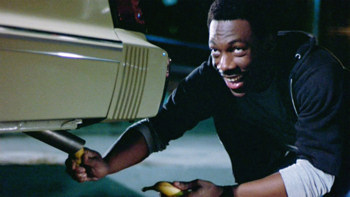
banana_tailpipe_1785

Well Black Philadelphians, I am emphatically warning you that Governor Corbett and the Department of Education are dangling bananas in close proximity to your tailpipe.  Here, I will do my very best to keep you from being caught off-guard like Sergeant Taggart and Lieutenant Bogomil in Beverly Hills Cop. Those guys didn’t see Eddie (Detective Axel Foley) sneak behind their car and placed bananas in their tailpipe to choke the engine and prevent them from following him.  I, however, see Governor Corbett and his band of DOE bureaucrats kneeling, bananas in hand, behind tens of thousands of cars in Philadelphia, Chester, Reading, Pittsburg, Lancaster and other urban areas across the state.

Don’t fall for the banana in the tailpipe!!

All you have to do is take your eyes off Jay Z and Beyonce for a moment and pay attention. For just a few moments let’s ignore the trails and tribulations of Benzino, Stevie J and Joseline.  Put down the remote, you can see Olivia Pope on DVR some other time.  I wanna show you something.

Here it is… Here comes the Bull Shit… this is the banana they are placing in your tailpipe… It can be seen on the PA DOE website:

“The Commonwealth’s graduation requirements will help guarantee that a Pennsylvania diploma reflects the skills and knowledge graduating students need to be successful in college and the workplace. These requirements will allow districts to ensure students are meeting state standards.”

At first glance, this appears to be well intentioned statement.  One might even think they want to help Pennsylvania’s public school students. After all, the requirements “help guarantee” that PA diplomas mean something. Moreover, the implementation of these requirements seems to be a benevolent act. It “allows” districts to meet state standards. What can be wrong with that? It sounds good… really good.

Ok… Let’s go… However, when you try to start your car, it putters, backfires violently and stalls leaving you stranded because you fell for the banana in the tailpipe.

Let’s look closely at the “new” PA High School Graduation Requirements for a Student Graduating in (or after) 2017…

Of particular importance is the following requirement:

“Students WILL be required to demonstrate proficiency in each of the content areas listed below by passing Keystone Exam, an Advanced Placement (AP) Exam, an International Baccalaureate (IB) Exam, or a local exam in the related content area. If necessary, your LEA must provide supplemental instruction until proficiency is demonstrated or criteria are met for project-based assessment participation.”

The chart below spells out the required exams over the years spanning 2017-2020. For present purposes, I will limit the discussion to the Algebra 1 and the literature requirement. Beginning in 2017, PA HS students will have to demonstrate “proficiency” in those two subjects as well as biology. In 2019 English Composition exams become mandatory. The following year Civic & Government will be added. In order to graduate, students will have to demonstrate proficiency in these areas. According to Webster, proficiency is defined as a high degree of competence or skill: expertise. Of course, we all WANT Philadelphia’s high school graduate to exhibit a high degree of competence in these academic subjects.

PSSA test schedule-page-0

The problem is the long-standing and persistent fact that the overwhelming majority of Blacks in Philadelphia’s dysfunctional public schools have absolutely no shot at meeting these requirements.  Historically, one of the most effective ways of discriminating against Black Americans has been mandating tests that white Americans knew they could not pass.

Some Jim Crow laws, like Pennsylvania’s onerous graduation requirements, did not specify race.  Nonetheless, they were written and applied in ways that very effectively discriminated against Blacks.  For example, many racist states, counties and cities used so-called “literacy tests” administered with informal loopholes and trick questions to bar nearly all blacks from exercising their right to vote.  The appeal of this tactic is easy to understand from a white supremacist perspective.  Consider for a moment that more than 130,000 Blacks were register to vote in Louisiana in 1896. Eight years later in 1904, after the implementation of  literacy tests only 1,342 Blacks remained on the voter rolls.  Nearly 99% of Blacks were ineligible to vote because they “failed” the so-called literacy tests.

Jim Crow is reemerging.  Black public school students will have an extremely difficult time graduating under these requirements.  Most won’t make it.  More importantly, Governor Corbett, the Secretary of Education and everyone in the Department of Education know this is the case.  For Black students, graduating from Philadelphia public high schools, beginning in 2017 will be damn near as hard as it was for Blacks to vote in the deep South in 1904.  Truth be told, only a small percentage of Philadelphia’s Black students can meet the”new” graduation requirements.

Manufacturing a generation of “non-graduates” is the true goal of the PA DOE’s policy shift.

Every year, the DOE administers standardized tests. According to the DOE these tests “measure how well students have achieved in reading, mathematics, science and writing according to Pennsylvania’s world-class academic standards. By using these standards, educators, parents and administrators can evaluate their students’ strengths and weaknesses to increase students’ achievement scores.”

While we have considered the dictionary definition of “proficiency,” we need a clear understanding of what the the PA DOE means by “proficient.” Remember, in order to graduate from PA high schools, students MUST demonstrate proficiency on the state tests.

Pennsylvania’s Department of Education has identified four levels of performance:

The Advanced Level reflects superior academic performance. Advanced work indicates an in-depth understanding and exemplary display of the skills included in the Assessment Anchors.

The Proficient Level reflects satisfactory academic performance. Proficient work indicates a solid understanding and adequate display of the skills included in the Assessment Anchors.

The Basic Level reflects marginal academic performance. Basic work indicates a partial understanding and limited display of the skills included in the Assessment Anchors. This work is approaching but not reaching satisfactory performance. There is a need for additional instructional opportunities and/or increased student academic commitment to achieve the Proficient Level.

The Below Basic Level reflects inadequate academic performance. Below Basic work indicates little understanding and minimal display of the skills included in the Assessment Anchors. There is a major need for additional instructional opportunities and/or increased student academic commitment to achieve the Proficient Level.

By combining the percentages of Black students scoring Advanced and Proficient, we can get a clear picture of how many students would have graduated in recent years if the 2017 standards were already in place. Put another way, the most recent test results serve as a very good indicator of what is likely to happen in 2017 and beyond. Let’s be clear… Governor Corbett and the supporters of the new graduation requirements already know what percentage of Black students are “proficient” in academic subject areas.

Let’s take a look at the Math scores. At the top, Philadelphia’s public schools are very impressive. At Masterman HS, 97.9% of the Black students are proficient in math. Black Central HS students also performed very well with 93.8% of the students demonstrating proficiency. However, is must be noted that these schools have always been the highest performing and toughest to gain admission to in the School District of Philadelphia.

PSSA - Math-page-0

In reading, Black Central students were the top performers with 97.2% of the students demonstrating proficiency. Masterman was next, coming in at 96.7%. They were followed by Black Girard Academic Music Program and Carver Engineering & Science students at 95.3% and 90.2% respectively.  Clearly, Black students at these exclusive “magnet” schools are doing well.

Student performance levels are very important to PA superintendents and principals in the district. That is how the “effectiveness” of administrators is measured. There are consequences when students don’t perform well.

So, exactly what happens, under the “new” graduation requirements, when students cannot pass or demonstrate proficiency? According to the DOE, “Waivers to Commonwealth graduation requirements will be granted by the Secretary of Education on a case-by-case basis with determinations communicated to the LEA no later than 10 days prior to graduation.” This means that some bureaucrat in Harrisburg will determine if non-proficient students can graduate 2 weeks before the graduation date.

People…. The car is sputtering badly at this point… you are barely able to get the engine to turn over much less accelerate into traffic…. The banana is in the tailpipe….

Let’s consider a few real world cases. At Sayre HS in West Philadelphia, only 4.8% of the Black students demonstrated proficiency in Math. That means 95.2% “failed” or were non-proficient. Over 100 Black students took the exam, so that means the DOE would have to consider 97 or 98 waivers on a “case-by-case basis” from Sayre alone. That’s assuming the highly competent and thorough SDP administrators submit these waiver requests to the DOE in a timely manner.

At John Bartram HS, only 8% of the 187 Blacks tested at proficient levels. That means the DOE would have to consider another 172 waivers on a “case-by-case basis.” Only 9.2% of Strawberry Mansion’s students were proficient, this school would generate over 60 waiver requests. Universal Audenreid students came in at 9.7%, out of 124 Black students, 112 would need waivers from the DOE to graduate. Over 190 Overbrook HS students would need waivers to graduate. Is the picture becoming clearer?

You’re beginning to realize your car simply won’t run… The banana is in the tailpipe. You ain’t goin nowhere… Axle Foley is laughing at you as he drives away.

Now, here’s where they say fuck you Black Philadelphia.

According to the PA DOE, “Chief School Administrators requesting waivers for more than 10% of a graduating class must also submit for the Secretary’s approval a written improvement plan enhancing instruction, curriculum, and supplemental services in alignment to the Keystone Exams.” In Math, only Masterman and Central would NOT have to submit “improvement plans.” The vertical vertical black line represents the 90% proficient threshold.

PSSA - Reading-page-0
Virtually every principal might as well start writing the improvement plan right now. The data for reading is not much better. Only four schools would NOT have to write plans for “enhancing instruction, curriculum, and supplemental services.”

Here’s the question: Who is going to pay for enhancing instruction, curriculum, and supplemental services? Look at the charts. According to DOE criteria, all but 2 to maybe 4 Philadelphia public high schools require these interventions. Where will the funding come from?  This is yet another UNFUNDED mandate thrust upon districts already being choked financially.

Let’s keep it 100, as the kids say. Philadelphia is the midst of an unprecedented series of budget cuts. In 2013, the Philadelphia school system laid off 3,783 employees, including 676 teachers and 283 counselors. Along with teachers and counselors, those losing their jobs included 127 assistant principals and 1,202 aides who monitor the cafeteria and playgrounds. Most recently, The SDP raided the The existing Philadelphia Federation of Teachers Health and Welfare Fund, which has about $40 million built up in it. There ain’t enough cigarette smokers in Philadelphia to finance the massive levels of intervention that will be required under the graduation requirements pushed through by Governor Corbett’s DOE.

Fuck you Black Philadelphia…

We must stop pretending. Only about 28% of Philadelphia’s Black males were graduating in four years anyway. These new graduation requirements will make it much, much tougher to maintain that abysmal graduation rate. It will surely drop significantly.  Governor Corbett knows this. Remember, he’s the one that put the banana is your tailpipe.

The forecast is crystal clear. Uneducated and undereducated young Black men and women will inevitably dibble and dabble in black market economic pursuits. Even those that remain committed and engaged in the educational process for 13 years (K-12) will emerge with Certificates of Attendance, not diplomas. How will employers, college admissions offices, trade schools and trade unions value those Certificates? They will certainly be worth significantly less than traditional diplomas.

Black Boy

Corbett and his cronies are literally betting that young Black males will resort to criminal activity to survive.

He foresees a need for additional prison beds in and around Philadelphia. Pennsylvania is spending $400 million to construct two new prisons at the SCI-Graterford site in Montgomery County after slashing nearly $1 billion in public education funding. The funds are in addition to the $1.8 billion corrections budget signed by Republican Governor Tom Corbett, an increase of $208,000 from last year (capital projects are counted separately).

Corbett is making room for 1,000 new prisoners at Graterford. This $400 million is an investment in “public housing” for the undereducated Black males currently muddling through Philadelphia’s woefully inadequate public schools. The two newly constructed prisons will replace the current Graterford, which now houses just more than 3,000 inmates. The new Phoenix prisons will be 2,000 inmates each.  Corbett’s Department of Corrections will transition the current inmate population to the new prison, which will leave us with an additional approximately 1,000 inmate beds.

Those beds will inevitably be filled by those who fell for the old banana in the tailpipe trick.
NJ Playaz, Team Final and WE R1: AAU Done Right

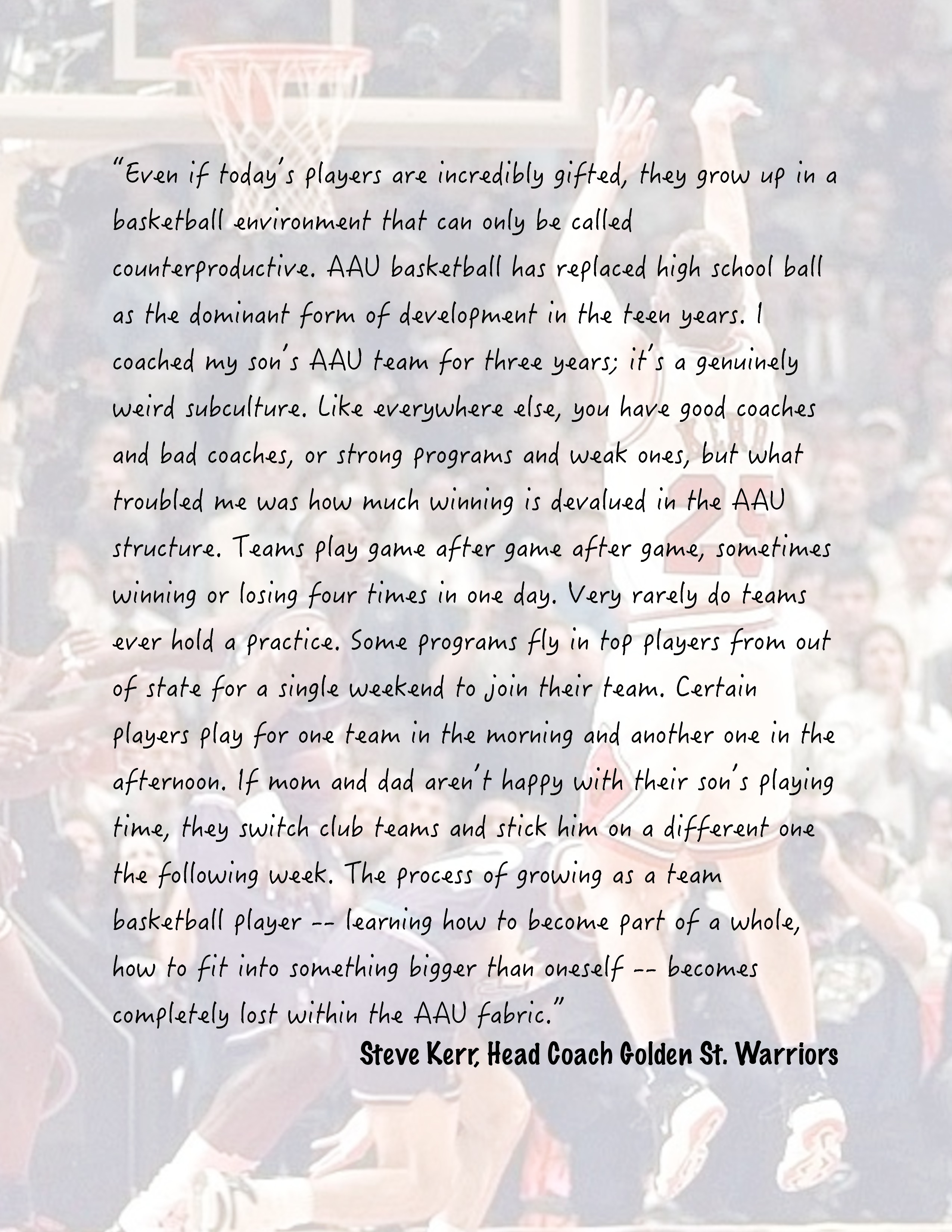
Steve Kerr-page-0

Is Steve Kerr correct?  Has the process of becoming a better team basketball player “become completely lost” within the now dominant world of AAU basketball?  Kerr’s sentiments have been echoed by many within the basketball hierarchy.  Detroit Piston’s Head Coach, Stan Van Gundy says, “[AAU] is a bad system for developing players… They aren’t learning to handle the ball, they aren’t learning to make plays against pressure. The emphasis with our high-school players is to get exposure and play as many games as you can and show everybody how great you are.”

The deeply held pessimism is enough to make one wonder if there are any redeeming aspects of AAU/grassroots basketball.  Nonetheless, any knowledgeable basketball person will tell you AAU/grassroots circuits (NIKE, Under Armour and Adidas) have superseded high school in importance for aspiring collegiate and professional players.  Hence, parents face a quandary, do they forgo the most significant platform in terms of exposure and high level competition because of the concerns expressed by coaches like Kerr and Van Gundy?  Or, do they try to identify AAU programs doing the things the “right” way?  I’m going to assume that virtually every parent will choose the latter course of action.

This begs the question:  What does AAU/grassroots basketball look like when it’s done right? Of course, first and foremost the program must be competitive.  Of course, a good AAU program has to win tournaments.  Kerr complains that winning is devalued.  He significantly overstates his case.  Winning matters and it matter a lot.  No one wants to play for a program that get’s smoked game after game. Nobody wants to be on the wrong end of 20, 30 even 40 point blow outs in front of ACC, Big East, Big 10, SEC and A10 coaches. Good AAU programs win games. Some of the very best AAU programs are in the mid-Atlantic region. NJ Playaz, Team Final and WE R1 are doing AAU/Grassroots basketball the right way. They win and their players consistently go on to play at next level.

These are grassroots organizations with well-established support structures and developmental programs that have improved the quality play among their participants. It should be noted that high quality programs enhance the athletic, educational, and social development of the student-athletes. It can’t be all about winning AAU games and tournaments. But, make no mistake these programs win a lot of AAU games and tournaments.

Playaz Peach Jam2014 NIKE Peach Jam Champions, NJ Playaz

In 2014, Team Final, led by Rob Brown, was the regular season champion of the NIKE EYBL circuit. Their 14-2 record was the finest in what is widely considered the most competitive grassroots league. Jimmy Salmon’s NJ Playaz (pictured above), led by All-American Isaiah Briscoe (Roselle Catholic HS) won the prestigious Peach Jam title. The Peach Jam Tournament provides a culmination for teams playing on the NIKE sponsored the travel team circuit and allows 40 teams to compete for an ultimate goal each summer. It is the premier tournament of the summer. The Final Four of the Peach Jam wan nationally televised by ESPNU (see below).

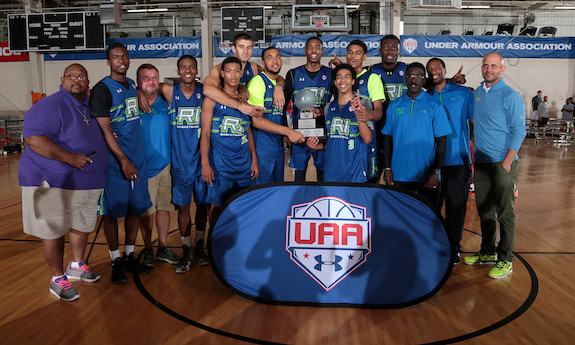
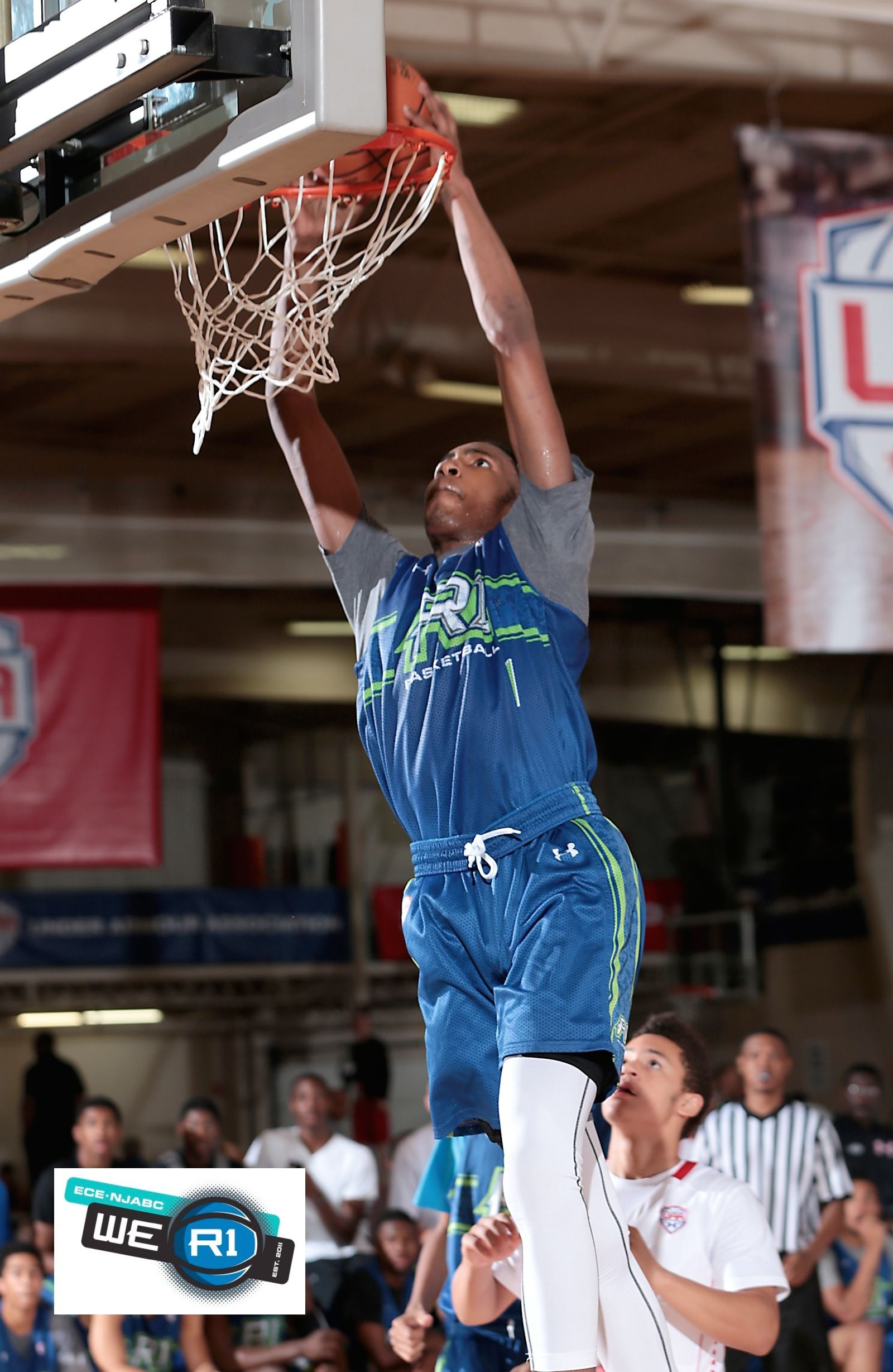
Peach Jam ESPNUAnother nationally recognized AAU program has emerged out of Middletown, Delaware. Under the direction of Terrell Myers, WE R1 took home both the regular season and UAA Tournament championships in 2014.  Led by Derrick Jones and Malik Ellison We R1 defeated highly regarded Sports U to capture the Under Armour Association title (pictured below).  WE R1, like NJ Playaz and Team Finals, is generally considered one of the most competitive grassroots programs in the nation. All three are consensus top 25 teams, with NJ Playaz and WE R1 coming in 1, 2 in most national rankings.

2014 Under Armour Association Finals2014 Under Armour Association Champions, WE R1

So, they win big games and bring home hardware from the biggest tournaments.  What else makes these programs special?  Some obvious questions immediately come to mind: Do their players get recruited? Do they get scholarships? The track record of Jimmy Salmon and the NJ Playaz in this area is beyond reproach. Tim Thomas (Villanova), Wayne Ellington (North Carolina), Gerald Henderson (Duke), Eddie Griffin (Seton Hall), Marcus Toney-El (Seton Hall), Vince Carter (North Carolina), Kenneth Faried (Morehead St.), Dahntay Jones (Duke), Sean Singletary (Virginia), Earl Clark (Louisville), Jeremiah King (Drexel) and Kyle Anderson (UCLA). Of course J.R. Smith and Kobe Bryant would have been included had they elected to play collegiately instead of jumping straight to the NBA. Another Playaz alum is NY Giants ALL-PRO wide receiver Victor Cruz.

Kyle AndersonKyle Anderson, NJ Playaz

Team Final alumni roster includes NBA lottery picks Tyreke Evans (Memphis), Mike Gilchrist (Kentucky) and Dion Waiters (Syracuse). This year alone, seven Team Final players have committed to NCAA Division 1 programs. This list includes Malachi Richardson (Syracuse), Donte DiVincenzo (Villanova), TreVaughn Wilkerson (Hartford), Trey Lowe (Temple), LaMarr “Fresh” Kimble (St. Joseph’s), Ahmad Gilbert (Geaorge Mason) and Levan Alston, Jr. (Temple). Khaif Wyatt (Temple) and JaQuan Newton (Miami) are also recent high profile Team Final Alums.

dion waiters

Dion Waiters, Team Final

We R1 alums include Dexter Strickland (North Carolina), Ben Bentil (Providence), Markus Kennedy (SMU), Jaylen Bond (Temple), Jared Mann (Stanford), Charles Cooke (Dayton), Khalid Lewis-El (LaSalle), Isaiah Washington (Penn St), Austin Tilghman (Monmouth). This year’s UAA Championship team featured Tim Delany (Villanova-commit) and Derrick Jones (ESPN #22, 2015). Also in the program is Sedee Keita (ESPN #34, 2016).

Ben BentilBen Bentil, WE R1

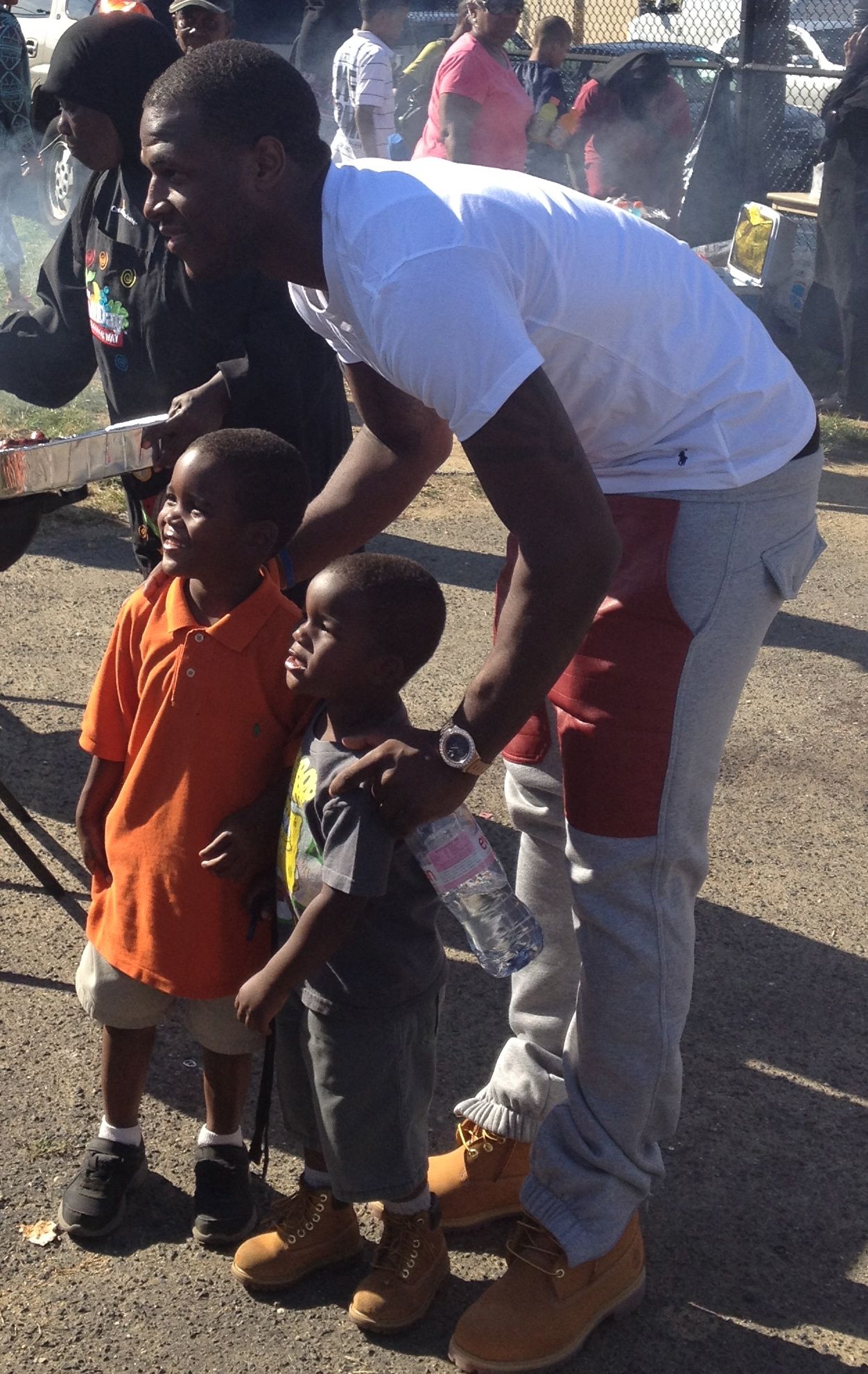
By any reasonable measure, these programs produce kids that get recruited at the highest levels.  But, what else should you look for in a “good” AAU program?  Well, a good AAU/grassroots program build social cohesion and and increase social capital among young people and adults in their respective communities. The younger kids in the program and the larger community should benefit from the success of the older kids.  By the time the players participate on the 16u and 17u teams, they are generally very well known and look up to by younger players in the program and the surrounding community. Pay attention to the twitter and instagram accounts of the players in the program.  Read what they write.  Look at the images they project.  Is this how you want your child to portray himself publicly?  Watch how the student-athletes interact with younger kids and other members of the increasing AAU fan base. For programs like NJ Playaz, Team Final and WE R1, basketball is used as a practical tool to engage young people in their communities through volunteering, resulting in higher levels of leadership, community engagement and altruism among young people.

Dion book bag 2Dion Waiters, Team Final, interacting with youth during Book Bag Giveaway

Another indicator of a good program is the intensity of the relationships between the players and level of respect players (and former players) have for the coaches.  The relationships between AAU teammates are just as strong, perhaps even stronger, than those among high school teammates. Young people regularly spend 7,8 or 9 hours in vans traveling out of state to play in tournaments. They eat and sleep together on the road. In each of the highlighted programs, positive peer relationships are encouraged through coaching. If you spend anytime watching the teams practice and play it becomes apparent that social inclusion is very important to the coaches.  Talk to the kids that aren’t the stars on the team.  How do they feel about the program?  Of course, the guys getting all the attention and limelight are likely to be happy.  Are the non-starters benefiting as well?  Do they speak highly of the coaches and their teammates?

Social inclusion also relates to offering equal opportunities to educational programs regardless of ethnicity or basketball ability. There is a great deal of attention paid to ensuring Division 2, Division 3 and NAIA level players are academically eligible.  Rob Brown, Jimmy Salmon and Terrell Myers are consistently monitoring report cards, arranging SAT tutors and tracking GPAs.  Each treats the low D1, D2 and NAIA recruits the same way they treat the ESPN top 50 kids.  When evaluating programs, find out how the last man on the bench is treated.  That is a true indicator of the quality of the program.

Sedee

Sedee Keita, WE R1, ESPN #34 (2016)

Lastly, find out if their players exhibit a pattern a negative acting out behaviors.  Do they get suspended from high school or college?  Are there allegations or accusations of sexual misconduct or assault? Have their alums been arrested while in college?  Given the recent explosion in the number of criminal incidents involving high profile athletes, it is important to know the people you trust with your children.  There can be little doubt that NJ Playaz, Team Final and WE R1  have a positive impact on character-building in their participating players. The thugh element is virtually non-existent in these programs.  These young men go off to college and the overwhelming majority are highly successful on the court and they graduate.

This can be largely attributed to the respective roles Jimmy Salmon, Rob Brown and Terrell Myers  play within their respective organizations.  Plainly stated, they have high expectations and as a result have a positive influence on the degree of ‘character-building’ within their programs.  Research suggests that participation in organized athletics such as AAU basketball can be used as a means to reduce delinquent behavior. But it’s important to understand that playing basketball alone does not directly impact on negative behavior. Accordingly, good AAU programs combine basketball activities with academic, leadership and job-skills development and training to address risk factors in children and youth.

If you want to see AAU done right visit any one of these programs.

← Back

Thank you for your response. ✨

Ask AAU and HS Coaches the Hard Questions!!

Young fella:
It’s hard… I know… believe me, I know. You are just trying to find your way. I’ve been there. I’ve done that. I flunked one year in school at 13. I was arrested at 16. I was a teenage father at 17. I lived in subsidized housing. I was raised by a single mother. In my early 20s, I smoked blunt after blunt after blunt… I played high school ball. I played college ball. My homies moved weight. I have been profiled by police several times. I have been strip searched for no reason. My car has been searched on the side of the road. My close friends have done bids in the penitentiary. By 23, the University of Michigan, the University of Delaware, The Ohio State University and the University of California were offering to pay me to attend their graduate programs.  As I approach 50, I have gained some perspective that may be of use to you as you begin your journey.  But, you gotta pay attention and listen closely…

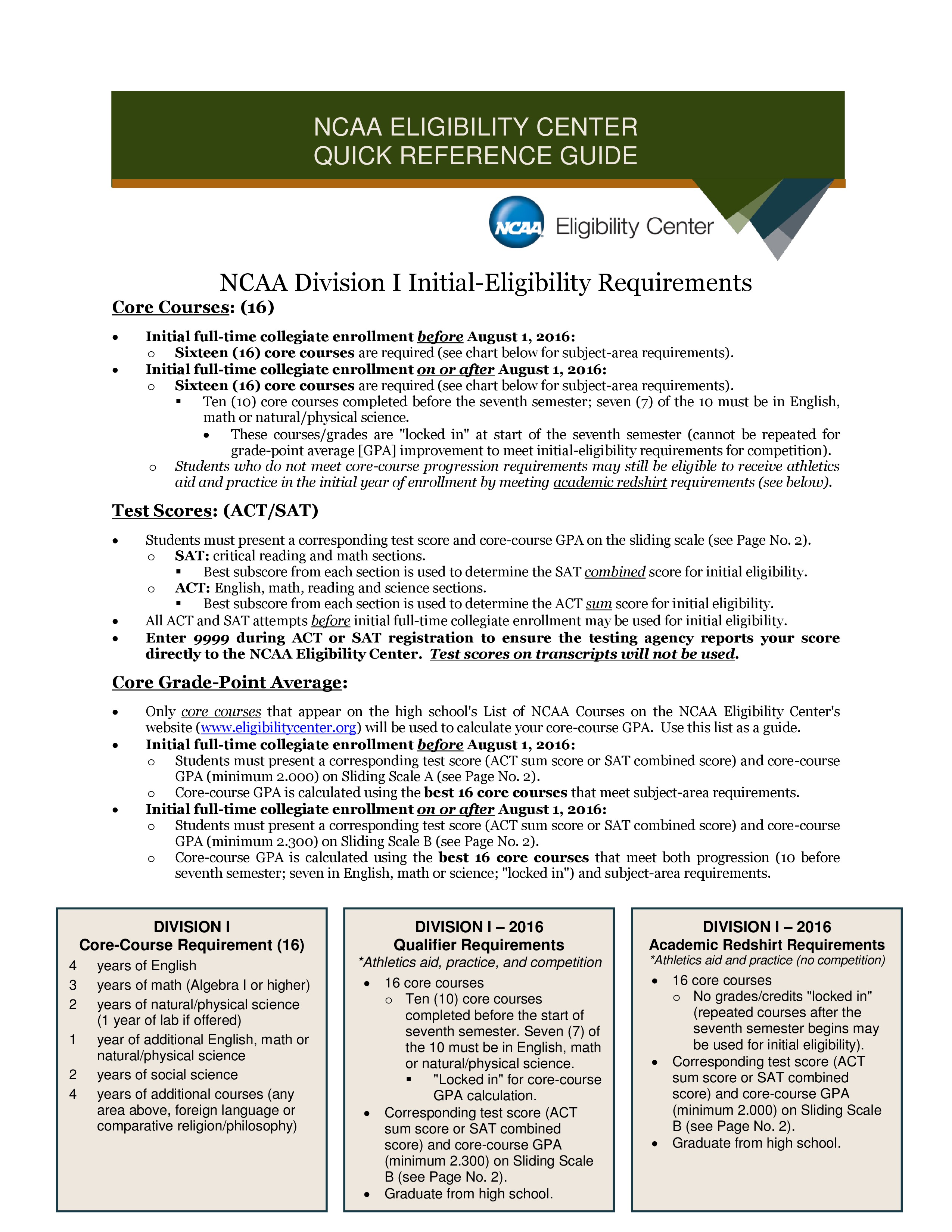
Philly Pride Triple Threat LogoMore than anything else… More than exposure… More than playing time… More than trips to Vegas… More than fly gear… you need to surround your self with people that are knowledgeable about the ever changing NCAA eligibility process.  Make sure you participate in AAU and high school programs that genuinely care about college preparation.  Good programs have early-alert systems that flag student-athletes with spotty attendance, low test PSAT, SAT and ACT scores, too few core courses and low GPA’s.  Great programs will reward you for meeting academic goals and implement  consequences when you come up short.  Young fella, that’s the ONLY way to avoid being one of the thousands of young Black men who will inevitably fail to meet NCAA eligibility requirements in 2016.  Time is short, you have to grow up quickly.

As you embark on your journey, you will find yourself struggling with the conflicting ways the larger society views Black males. The relationship between America and Black males is really complex and can really be confusing for young men such as yourself. On one hand, for the better part of 400 years, Black males have been viewed as a menacing threat to all that is good about American society. Deeply ingrained white supremacist and racist traditions led to the exclusion of Black males from many major collegiate athletic programs up to the late 1960s and early 1970s.  To this day, young Black men can be literally shot in the face or choked to death in the middle of American streets while armed with only Black skin, loose cigarettes, iced tea and a bag of skittles. On the other hand, Black male athletes and hip hop performance artists are revered and rewarded with multimillion dollar contracts and enormous endorsement deals. Under Armour and Nike just emerged from an unprecedented battle over who gets to pay Kevin Durant $300 million over the next decade.  Of course, you want access to the latter, but everyday you have to navigate the reality of former. It ain’t gonna be an easy journey young fella…

Odds-of-Making-the-NBAIn the immortal words of Run-DMC, “It’s Tricky”…. But, for now, you just wanna play ball… You just wanna go to college, preferably D1. You know the odds are more than stacked against you. You have heard it all before. You fully understand that only 0.03% of high school players make it to the NBA. You realize that there are about 546,000 high school players and every year only about 48 college players are drafted into the league. But, shit… you could be one of the 48. I get that… I really do… As you see it, all you need is one coach in the right program, in the right conference to give you a chance. If they let you on that stage, you know you’re gonna shine. In your mind, you are better than many of the guys playing college ball right now! Given a fair chance, you will have the NBA contract and the massive endorsement deal. Maybe… Maybe you will young fella, but then, again, maybe you won’t. Be ready either way!

Mark MaconMark Macon, Temple/NBA

It’s possible… I’ve seen a lot of Philly high school and college players make to the NBA. Maurice Martin (St. Joseph’s), Lionel Simmons (LaSalle), Doug Overton (LaSalle), Randy Woods (LaSalle), Bo Kimble (Dobbins), Tim Perry (Temple), Mark Macon (Temple), Aaron McKie (Temple), Eddie Jones (Temple), Jameer Nelson (St. Joseph’s), Delonte West (St. Joseph’s), Kerry Kittles (Villanova), Rasheed Wallace (Gratz), Marcus & Markeiff Morris (Prep Charter) and Dion Waiters (Syracuse) were all 1st round picks.

I must also tell you, I’ve also seen guys who were good enough suffer injuries and illnesses that curtailed their NBA dreams. Rap Curry (St. Joseph’s), Bernard Blunt (St. Joseph’s), Bernard Jones (St. Joseph’s), Donnie Carr (LaSalle), Jason Frazier (Villanova) and Granger Hall (Temple) were fantastic collegiate players denied an opportunity in the NBA because of health issues. You have to simultaneously prepare to play at the highest level and get ready for the day the ball stops bouncing. It could stop bouncing at any time. First and foremost, we have to get you through high school and off to college.

donnie carrDonnie Carr, LaSalle University

Young fella… The first thing you have to do is become aware of and avoid the traps that have been set for you. Your future, your freedom and in some cases your life are at-risk every time venture outside your home. Every year, somewhere between 8,000 and 9,000 African Americans are murdered annually in the United States. The overwhelming majority of these victims are young males. You should know that 93% of these murders are in fact perpetrated by other blacks.  Black people account for about half of all homicide victims in the US almost exclusively at the hands of other African-Americans. Every year Black men kill more Black men than the total number of U.S. service men and women that been killed in Iraq and Afghanistan combined over the course of decade-long wars fought in those nations.

I know… I know… You know your way around the “hood.” You know the gun-toters. You know the killers. They respect your game. You don’t have nothing to do with the neighborhood “beefs.” You ain’t really worried about dying in the streets at the hands of other Black men. But, you should be. Be careful. Be respectful. I can’t expect you to avoid all interaction with real “thugs.” Some of them are your uncles, cousins, neighbors, friends. In many cases, they love you and you love them. Nonetheless, you have to exercise extreme caution when interacting with them. Don’t take no rides. Don’t hold no packs. Don’t stash no burners in your crib. Be smart. You have other more important things to worry about.

6446-000031Young fella… there is a drug arrest every 19 seconds in the U.S. In 2009 alone, there were more than 1.6 million drug arrests and 82 percent of those were for possession alone. Despite the unquestioned fact that white boys use drugs just as much, if not more, than your homies, they are focusing their policing efforts on our community. As Blacks, we are only 13 percent of the U.S. population and we proportionately account for 13 percent of the nation’s drug users. Yet, Blacks represent 34 percent of those arrested for drug offenses and 45 percent of those held in state prisons for drug offenses. We are the enemy in the “War on Drugs.”

According to the U.S. Bureau of Justice, in 2008, there were over 846,000 black men in prison, making up 40.2 percent of all inmates in the system. The brilliant Michelle Alexander notes that “More African American men are in prison or jail, on probation or parole than were enslaved in 1850, before the Civil War began.” We are drastically overrepresented in the courtrooms, jails and prisons. We are about six times more likely to spend time in prison or jail than whites. According to recent research, we receive up to 60% longer federal prison sentences than whites who commit similar offenses, and 20% longer prison sentences than whites who commit the same offenses.  It’s so easy to get tripped up.

Keep these statistics in mind while you listen to multimillionaire hip hop artists promoting violence, misogyny, drug abuse and crass materialism. Jay Z, Young Jeezy, 50 Cent, Lil’ Wayne and all the rest have bloody hands. They are purposely filling your head destructive messages, while accepting payments for lyrics that extol alcohol and drug use. A recent study by Dartmouth Medical School, analyzed 793 songs from Billboard charts starting in 2005 and found that 160 songs (about 21%) referred explicitly to alcohol.  The study found that the majority of songs that referenced alcohol were rap, followed by R&B/hip-hop and country.  Approximately 42 percent of the lyrics referred to alcohol in a positive way and mentioned specific alcohol brands.  The brands in most cases are associated with advertising that depicts a luxury lifestyle of drug use, partying, sex, and wealth.

Another study by the University of Pittsburgh School of Medicine found that music listened to by teenagers aged 15 to 18 affects long-term attitudes and behaviors.  That study looked at 279 top Billboard songs and found that 33 percent included explicit substance abuse references.  Be strong young fella, they are after you.  The majority of these songs linked substance abuse with positive sexual, financial and emotional rewards.  There are very consistent messages within corporate-sponsored hip-hop that promote the murder of young black men, sexual irresponsibility, excessive consumerism, drug/alcohol abuse and other forms of illegal behavior.  The plan is to convert you into a blunt smoking, drug addled, liquor drinking corporate consumer for life.

Wiz KhalifaIn 2002, Busta Rhymes and P. Diddy released “Pass the Courvoisier.”  That song led to a 19 percent increase in sales for Allied Domecq, maker of Courvoisier. Young Jeezy has an endorsement deal with Belvedere Vodka. A number of hip hop artists are creating their own alcohol labels.  Pitbull, whose real name is Armando Christian Perez, is part owner of the Voli Vodka brand.  Other rap artists who are part owners of liquor brands include Jay-Z, Snoop Dogg and Ludacris.

LudaThe myth is bullshit, Young fella… They tell you, “Jay Z sold drugs, he came up… 50 Cent sold drugs, he came up.” That’s the narrative being repeatedly fed to you and your homies through the media and the hip hop lyrics. Meanwhile, one of every three black American males born today can expect to go to prison in his lifetime compared to one out of every seventeen white males. Most will go to prison for the same “hustlin” behaviors celebrated in hip hop. I need you be discerning. I need you to see what they are doing. For every Kanye, there are 100,000 Nates, Bruces and Jamals on probation, parole or in prison.

The aim, the goal must ALWAYS be to hone and leverage your athletic ability and gain access to higher education. Then use education to improve your life and the lives of your family members. Once this goal is achieved, you have won. A professional basketball contract is the gravy.  The college degree and the knowledge gained along the way constitute the nourishing meal.

Playaz logoToward that end, you have to exercise solid judgement in selecting AAU and High School programs. Don’t sell yourself for a mere pittance. When the AAU guys come around offering a couple dollars, a new cell phone bill and 5 new pairs of KD’s, ask then the tough questions: How many of the guys in your program did NOT meet NCAA eligibility requirements? How many of your guys in the past 5 years had to go JUCO? Exactly, what does your program do to make sure guys are eligible? Does your program have homework assistance and/or SAT/Prep? Do you provide practice SAT exams to see where I stand?

We R 1 logoReally good AAU programs won’t have a problem answering these questions. Really good program administrators understand what you are up against. They do everything they can to get you in college. Some of the best programs I have encountered are NJ Playaz, Philly Pride/Triple Threat, WE R 1, Baltimore’s Finest and Mississippi Basketball Association. These programs focus on academics as well basketball preparation.

Mississippi Basketball AssociationMany of these same questions must be directed to high school coaches. This is especially true for kids attending urban public schools. In urban districts across the country, budget cuts have eliminated guidance counselor and assistant principal positions. You must ask the coach: What is the “eligibility plan” for me? Exactly what courses will I take that will lead to you being eligible? Can I see the list of NCAA approved courses for your school? What is the average SAT score at your school? What scores did your players get over the past few years? Does your school offer summer school courses? What is the grading scale at your school? How many of your players have gone onto play Division 1, Division 2 and NAIA?

As young Black “baller” you may find yourself struggling to attain self-conscious manhood while avoiding traps permeating the landscapes you traverse everyday. As you inch closer to becoming an elite basketball player, the “love-hate” relationship America has with Black males will become more and more apparent. Your challenge is to both keep it “real” and represent your family and your “hood” while simultaneously accessing institutions of high education and playing at the highest collegiate level. Shit ain’t easy. But, it can done, but, you must start right now by asking the right questions.

Sincerely,

Delgreco K. Wilson


Black Athletes, Race and the Rise of NCAA Eligibility Requirements

Imagine this scenario, a scientist develops a gas that kills mosquitoes but can cause some people to go blind.  Let’s say, the gas only blinds white people with blonde hair and blue eyes.  A few people with white people with brown or black hair might get sick but they don’t go blind.  Some with brown or green eyes may get a headache, but they don’t lose their vision.  Blacks, Asians and Latinos are unaffected by the gas.  At the request of the Mayors, the scientist decides to release the gas in New York, Boston and Philadelphia.  All of the mosquitoes are killed but over 200,000 white people with blonde hair and blue eyes lose their ability to see.

Did the scientist discriminate against people with white blonde hair and blue eyes?  Furthermore, suppose the scientist says, “I’m not targeting any specific group, I’m just killing mosquitoes.”  Investigators would ask, “Did you know the gas would cause people with blonde hair and blue eyes to go blind?”  The scientist answers, “yes, but I didn’t target them specifically… I just released the gas to kill mosquitoes.”  How would you view the scientist? Is he a racist? Would it matter that he says he didn’t “target” people with blonde hair and blue eyes?  Whatever his intentions, white people with blonde hair and blue eyes were disproportionately harmed by the intervention.

duke-team-1966-67Duke Men’s Basketball Team, 1966-67

From 1905 through the early 1970’s, major NCAA college basketball and football programs fielded teams that were predominantly white.  In the south, major college athletics was exclusively the preserve of white males for these seven decades.  During this entire 70 year period, there were no substantial “academic reforms” initiated by the NCAA.   In 1959, the NCAA determined that 12 credits per semester defined normal progress.  In 1965, a 1.6 minimum GPA was established for continuing eligibility.  In 1973, the 1.6 rule was replaced with a simpler requirement of a 2.0 high school GPA for initial eligibility, and restoring institutional authority over determining normal progress.

Please note, when the players were overwhelmingly white, academic standards were either non-existent or incredibly low.

1966AlabamaCrimsonTideAlabama Crimson Tide Football Team, 1966

Throughout the 1970’s major college revenue sports underwent a “tanning”  process as Blacks became a majority of the football and basketball athletes.  By the the early 1980’s, Blacks represented the lion’s share of scholarship athletes in revenue sports.  NCAA Eligibility requirements soon emerged as a means of excluding many Black student-athletes from competing at the NCAA Division 1 level.  Like the scientist in the earlier hypothetical, the NCAA says it did not “intend” to disproportionately impact Blacks.  It just happened.

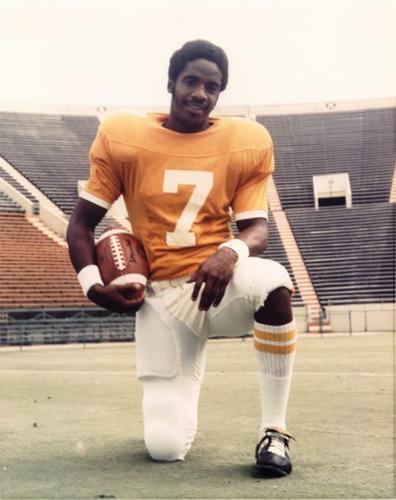
Condride HallowayCondredge Holloway, Tennessee Volunteers, 1st Black QB (1972) in the SEC

With abandonment of rigid Apartheid-like segregation in the South, the 1970s witnessed a rapid influx of Black student-athletes in major college football and basketball. College coaches across the country were, finally, able to recruit the best student-athletes. This resulted in a dramatic increase in the number of Black student-athletes in major college programs. In about 10 years, Blacks went from being formally excluded to a majority of the players.  The rapid increase in Black student-athlete representation was accompanied by calls for academic reform.  Some felt the reforms were intended to halt and even reverse the gains made by Black athletes.

Charlie ScottCharlie Scott, the first Black scholarship athlete at UNC

Over the years,  a few outspoken critics forcefully asserted that academic reforms were racially motivated. In January of 1989, Temple Coach John Chaney declared, “The NCAA is a racist organization of the highest order… On this day, it instituted a new punishment on black kids who have already been punished because they are poor. Any time the NCAA, which is 90 percent white, considers the youngsters in Division I basketball and football, it discriminates, because 89 percent of the kids are black… I wonder what message they are sending. It’s another hardship for black kids made by white folk.”  Coach Chaney wasn’t alone in voicing displeasure.

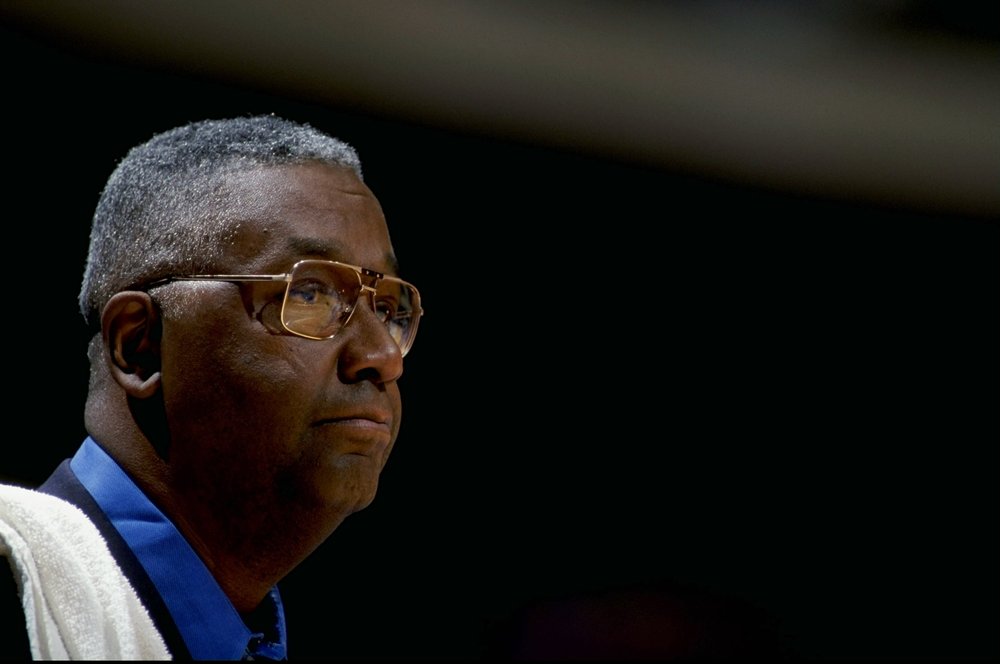
Also in January of 1989, Georgetown Coach John Thompson walked off the in protest before the start of a game against Boston College. At the time Thompson said, “I’ve done this because, out of frustration, you’re limited in your options of what you can do in response to something I felt was very wrong…. This is my way of bringing attention to a rule a lot of people were not aware of – one which will affect a great many individuals. I did it to bring attention to the issue in hopes of getting [NCAA members] to take another look at what they’ve done, and if they feel it unjust, change the rule.”

John ThompsonJohn Thompson, Jr., Former Georgetown Head Coach

The NCAA position regarding academic reforms has been consistent throughout the years. The NCAA officials said the legislation gave no consideration to racial implications, although it has been estimated that approximately 90 percent of the 600 students a year who will be affected are black.  Paradoxically, the NCAA is saying we know the reforms disproportionately impact Blacks but we gave no consideration to race.

Beginning in the early 1980s, the NCAA implemented significant changes in the freshman eligibility rules. The NCAA developed and implemented Proposition 48 at its’ 1983 convention. The racially disparate impact of the reform is beyond dispute. The rule change had a harsh impact on Blacks, especially those from low-income households.  Formulated in 1983 and fully implemented in 1986, Prop 48 rule stipulated, entering freshmen would be eligible for scholarships only if they had achieved a grade point average of at least 2.0 in 11 core college preparatory courses and, when it came to the two standard college entrance examinations, attained a minimum score of 700 on the Scholastic Aptitude Test (SAT) or 15 on the American College Testing Program’s exam.

Given the historical context of Apartheid-like segregation and the systematic exclusion of Blacks, many viewed the NCAA academic reforms as attempt to assuage the fears of racist University administrators and their supporters. These critics were especially concerned about the lack of African-American participation on the committee that developed the original Proposition 48 document. A reform measure that disproportionately impacted Blacks was developed, designed and implemented by an all-white committee.  It’s easy to understand why some feel that academic reforms are intended limited and even reduce the presence of Black student-athletes while simultaneously preserving the spirit and perception of racial inclusion.

Critics allege that Prop 48 and the subsequent reforms represent an attempt to devise a regulatory structure that would allow for some minority participation but facilitate continuation of the long standing tradition of predominantly white participation.

The racially disparate impact of the reforms are obvious. In one study, Richard Lapchick of the Center for the Study of Sport in Society, found that if Prop 48 had been in place in 1981, 69% of all males entering college on athletic scholarships would have been ineligible. More than two-thirds of the freshman male Black student-athletes would have been denied an opportunity to go to college on an athletic scholarship. Moreover, 54% of those student-athletes eventually graduated. That graduation rate was comparable to the graduation rate for all students which stood at 57%.

C48F2298Richard Lapchick, Center or the Study of Sport in Society

The loophole in the 1983 rule allowed “partial qualifiers,” students with a 2.0 high school GPA who didn’t make the requisite standardized test score, to attend college on athletic scholarships for one year. Although partial qualifiers lost one year of athletic eligibility and were not permitted to compete in their first year, they had a chance to gain eligibility by posting a 2.0 GPA during that year.

In 1990, the NCAA adopted Proposition 42, under which student-athletes failing to score at least 700 on the SAT or an equivalent score on the ACT and a 2.0 GPA were ineligible for any type of financial aid. Partial qualifiers were eligible for need-based, non-athletic financial aid.  Prop 42 was written and sponsored by the Southeastern Conference (SEC).  The SEC was the last major conference to allow Black participation.  The SEC voted to phase it in unilaterally even if the NCAA did not adopt the measure.

In 1995, the NCAA’s eligibility requirements became more stringent. The NCAA increased the number of required course from 11 to 13 and voted to implement a sliding scale in addition to retaining the SAT and ACT as a key component of the eligibility standards. Beginning August 1996, students with a 2.0 in 13 core course had to score at least 900 on the SAT. For each ten-point drop in SAT scores, student-athletes had to have a corresponding .025 increase in grade point average. Thus a student with a 2.5 GPA could score 700 and still be eligible.

In 2003, the NCAA enacted tougher standards for initial eligibility beginning with students first enrolling in the fall of 2008. The number of required core course went from 13 to 14.

In 2012, the NCAA approved another series of increasingly tougher reforms. Beginning is 2016, student-athletes would have to complete 16 core courses. Of those 16 core courses, 10 would have to be completed before the beginning of the senior year and grades from those core courses are “locked in” for computing a GPA once the senior year begins. In other words, there are no more emergency summer sessions in the senior year to rectify failing grades.

Mark EmmertNCAA President Mark Emmert

Additionally, a student-athlete must have a minimum GPA of 2.3 in those 16 core courses (up from 2.0) with an accompanying sliding scale SAT/ACT score. As originally conceived, a student-athlete with a 2.3 GPA would have to score 1080 on the SAT or an equivalent score on the ACT. Currently, a student-athlete with a 2.3 GPA has to score 900 on the SAT. Beginning in 2016, a student-athlete with a minimum GPA of 2.0 is considered an “academic redshirt.” He or she may practice with but not compete for his/her team for the first semester. Under present rules, a student-athlete with a 2.0 GPA could score a 1010 and be eligible for a scholarship and participation. Additionally, beginning this year, junior college transfers will be required to have a 2.5 GPA (up from 2.0) in their transferable credits.

At a subsequent meeting, the NCAA Division I Board of Directors maintained its support for higher grades and a core course progression. However, the NCAA adopted legislation that would keep for the foreseeable future the test score/grade-point average sliding scale at the current level for student-athlete access to financial aid, practice and competition in the first year.

The Board acknowledged that requiring prospects to meet a more stringent sliding scale starting in 2016 would negatively impacted low-income minority youth.  They publicly noted that there would have been a significant decrease in the number of eligible student-athletes from America’s inner cities.  The 1080 SAT requirement with a 2.3 GPA could have effectively eliminated tens of thousands of Black student-athletes.  For example 39 of Philadelphia’s 58 (67.2%) public High Schools have average SAT scores below 800.  The likelihood of student-athletes from these types of schools scoring 1080 or higher is virtually nil.

In effect too much of the football and basketball athletic talent pool would be off limits.  Those consequences led the Board to its decision to retain the current sliding scale standard.

For nearly seventy years, from 1905 -1970, the NCAA consisted of conferences that explicitly practiced racial exclusion.  “Whites only” was the guiding feature of the Atlantic Coast Conference, Southeastern Conference and the old Southwestern Conference. During this era there was almost no attention paid to academics by the NCAA.  By the early 1980’s Blacks became a majority of football and basketball student-athletes.  Since then, the NCAA has implemented five successive “academic reforms.”  Each reform package has been more restrictive than prior measures.  The scientists remain busy as ever in the lab.  Be on the lookout for blonde haired, blue eyed people walking into walls.

← Back

Thank you for your response. ✨

No Excuses!! Black Athletes Have To Use Better Judgement

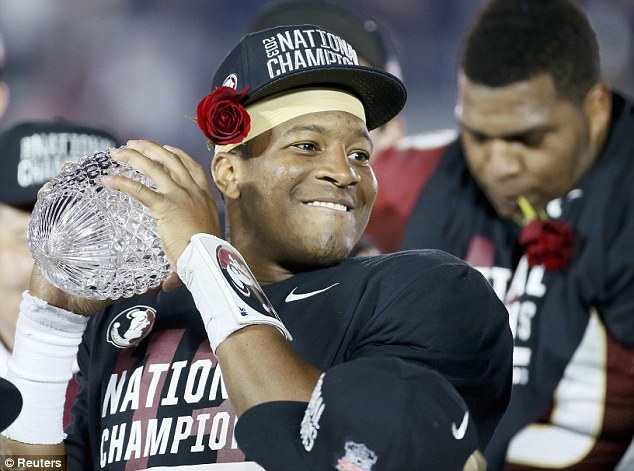
Jaimeis Winton, the Heisman Trophy Award winning quarterback of the National Champion Florida State Seminoles was recently (09/17/14) suspended. Not for his alleged involvement in a sexual assault last year. Not for his subsequent nationally televised theft of crab legs from a local market. This time, he is being disciplined for repeatedly yelling “Fuck Her Right In The Pussy” while standing on a table in the student union.

Jameis WinstonJameis Winston, Florida State University

Interim Florida St. president Garnett Stokes and athletics director Stan Wilcox said in a statement. “Student-athletes are expected to act in a way that reflects dignity and respect for others… As a result of his comments yesterday, which were offensive and vulgar, [he] will undergo internal discipline and will be withheld from competition for the first half of the Clemson game.” Internal discipline….Ya think? The consequence should be more than half a game… This latest Winston episode highlights a far-reaching and, seemingly, expanding problem among Black male athletes.

Remember, this isn’t just an average everyday run of the mill college athlete. Winston is a tremendously gifted quarterback with all of the requisite football skills. He has great size, a very strong arm, and an incredible will to win. Based on his athletic ability and football skills, he should be in line for an NFL contract on par with the 4 year $22.025 million deal Cam Newton received and the 4 year $22.1 million package awarded to Andrew Luck. Except, there a major problem. For some reason, Winston seems incapable of exercising sound judgement for a sustained period of time. Quite frankly, he appears to be socially stupid.

He is not alone. This era has, unfortunately, witnessed an onslaught of tremendously gifted young Black men acting like they have absolutely no “home training.”  They bring loaded guns into locker rooms.  They beat 4 year old boys with “switches” and hit ’em on the scrotum.  They punch their women upside the head.  They assault fans in the stands.  They force themselves upon females.  They do all sorts of real stupid shit!  I know Big Momma and Pop Pop taught them better.

Clearly, the time has come for an honest and frank discussion about this serious and pervasive problem among contemporary Black male athletes. Far too many exhibit a persistent refusal to comply with rules or expectations in the home, school or community. I’m talking about multimillion dollar professionals, JUCO bench warmers and everything in between.

adrian-petersonAdrian Peterson, Minnesota Vikings

Dominating current headlines are stories centering on cruel or violent behaviors toward children and women by NFL stars Adrian Peterson, Ray Rice and Greg Hardy. The list NBA stars that have failed to fully consider the consequences of their actions and take inappropriate risks is also very long. A few of the more prominent names are Michael Beasley, Chris Washburn, Roy Tarpley, Richard Dumas, Gilbert Arenas, Delonte West, Javaris Crittendon and Ron Artest. Additionally, over the past few years, scores of young Black collegiate athletes have also been involved in array of gun charges. sexual assaults, burglaries, thefts and physical assaults that have led to disciplinary sanctions.

While there can be no denying America’s long standing uneasiness with Black masculinity, it is obvious that these young men have no idea how fortunate they are to play collegiate and/or professional sports. They take their positions as scholarship and/or professional athletes for granted.  Of course the media sensationalizes the incidents.  That’s a given.  My concern is that many Black athletes appear to have very little or no awareness of the sacrifices made by their predecessors that paved the way for them to be on the main stage.  Adopting their lingo, it seems they just don’t “give a fuck.”  This essay is intended to help some Mommas, Daddies, Uncles, Aunties, Grandmothers, Grandfathers and “Oldheads” understand just how far we have come.   If a few young Black male athletes take heed, that’s a real bonus.

No real understanding of the problematic nature of contemporary behavior is possible without an analysis of Black America’s tremendous struggle for mere participation in American collegiate athletics.  Put simply, we’ve come too far to act a fool now.  As it was with virtually everything else, in most states, Blacks were forbidden by law from participating in college sports.

The establishment of educational institutions serving African-Americans in the South following the the Civil War (1861-1865) was a tremendous accomplishment. Unfortunately, the nascent African-American college experiment coincided with the emergence of intercollegiate athletics and the rise of Jim Crow. Jim Crow law were Apartheid-like racial segregation laws enacted between 1876 and 1965 in the United States, primarily at the state and local level.

Four years after the end of the Civil War, Rutgers University and Princeton, played the first game of intercollegiate football on Nov. 6, 1869. Over the next three decades, a few northeastern colleges like Princeton, Columbia, Yale, Tufts, Harvard and Rutgers would challenge one another in “football” games.

By the early part of the 20th Century, major college sports were emerging. College football, in particular, was transitioning from an extracurricular activity to a highly commercialized and profitable sport. By this time there were around 250 or so college football teams. During this era, the unregulated sport was exceedingly violent. During the 1904 season, 18 players died from injuries on the field. “Every day one hears of broken heads, fractured skulls, broken necks, wrenched legs, disclosed shoulders, broken noses, and many other accidents,” the New York Times wrote after the 1893 season. Nonetheless, college football experienced exponential growth in popularity.

Black BoyBlack Boy in Jim Crow South

From the outset, Black Americans were systematically excluded from participation in collegiate sports. Simultaneous to the rise of college athletics was the disfranchisement of the African-American in the South. The last thirty years of the 19th century witnessed the ascendancy of American Apartheid in the former Confederacy. Brutally enforced racial Apartheid was the emerging norm. Laws were rapidly passed that forbade the intermarriage of the races in every Southern state in United States. African-Americans and Whites were formally and legally separated in virtually every aspect of public life. State legislative bodies banned African-Americans from White hotels, restaurants, theaters, and barbershops. As of 1885, most Southern states required that African-American and European American children be educated in separate schools. In 1896, with the sanctioning of the US Supreme Court, African-Americans were formally relegated to an second class citizenship.

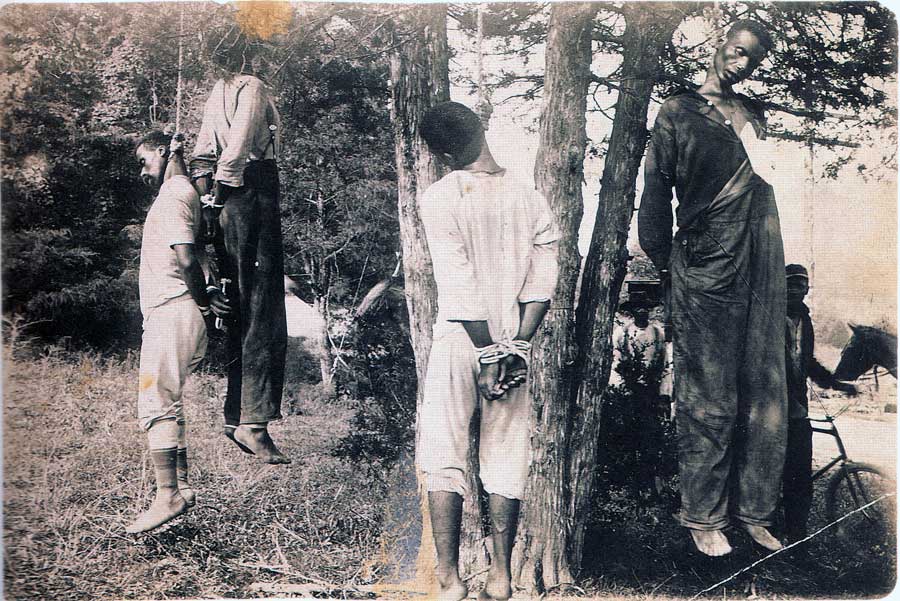
By 1900, Jim Crow segregation was firmly entrenched throughout the American South. Apartheid-like separation of the races was rigidly enforced in public parks, buildings, recreational spaces, hospitals, prisons and even cemeteries. Of course, college athletics was not exempt from this dynamic. Like the rest of Southern society, Southern universities were segregated along stringent racial lines. This segregation was enforced through all available legal means and the extralegal practice of lynching. During the period spanning 1884 to 1900, there were more that 2,500 lynchings. The last decade of the 19th century saw an average of 187 lynchings per year in the United States. Needless to say, there would be no integrated college football games in the American South during the Jim Crow era.

lynchingsLynching of Four Black Men in Jim Crow America

The advent of “separate but equal” accommodations following Plessy v. Ferguson combined with sustained a terrorist campaign orchestrated by domestic terrorist groups like the Ku Klux Klan to produce a social climate of fear and intimidation across much of the American South.

In other parts of the country, there would be isolated attempts at limited integration in some college football programs. Among the early African-American collegiate players were George Jewett (Michigan), George Flippin (Nebraska), Matthew Bullock (Dartmouth), Fritz Pollard (Brown), Paul Robeson (Rutgers), Duke Slater (Iowa), Joe Lillard (Oregon), Bobby Marshall (Minnesota), Wilmeth Sidat-Singh (Syracuse), Brice Taylor (Southern California), Jerome “Brud” Holland (Cornell), Marion Motley (Nevada) and Levi Jackson (Yale). While they were allowed to compete on the gridiron, these early players were subjected to extensive physical abuse at the hands of teammates and opponents. Their on field performances were not recognized as there were no African-American first-team All-Americans during the period between 1918 and 1937.

Duke SlaterDuke Slater, Iowa University

One has to wonder what these pioneers would think of the antics of the elite Black athletes dominating today’s headlines. Unquestionably, Black players of the modern era owe a tremendous debt to the steadfast and brave student-athletes that endured brutally racist conditions while breaking down barriers. I guess the question becomes: Are things like honesty, compliance with rules, sensitivity to the feelings and rights of others and control over impulses too much to ask?  Should the Black community expect Black athletes to comport themselves in dignified manner?  Is it fair to expect the athletes to model positive behaviors for younger impressionable kids? After all, the opportunities they are blessed to have did not come easily.

Whites vehemently fought Black participation at every turn.  As the years passed by, the popularity of college football grew exponentially. Eventually, the pressure to field the best possible teams, win games and attract a large fan base would strain the ability of Jim Crow adherents to maintain their racist Apartheid-like tradition of excluding African-Americans from inter-collegiate athletics in the American South. Winning football games became increasingly important. Moreover, money began to talk.  University Presidents, Athletic Directors and coaches recognized that game attendance correlated positively with the quality of play.

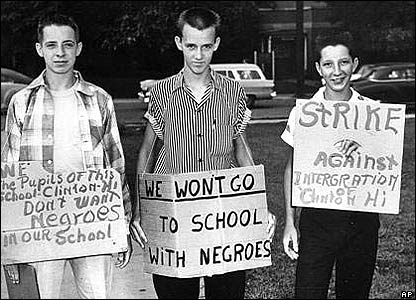
Nonetheless, it would be a long hard struggle for African-American inclusion. Plainly stated, Southern Universities did not accept African-Americans as students. Building upon the foundation laid by Plessy v. Ferguson, for the first two-thirds of the twentieth century, Southern states operated dual – separate and unequal – systems of higher education.

segregationWhite Males Opposing Integrated Schools

With zero (0) Blacks in the universities, there were zero (0) Blacks on their athletic teams. Nonetheless, it is important to note that African-Americans were present within several athletic departments. Most southern football programs had beloved, non-threatening black figures who served as the male counterpart to the “Mammy.” These Black men served as janitors, equipment managers, waterboys, masseurs, trainers, etc. for southern college football programs.

In accordance with America’s patently racist traditions dating back to the colonial era, Southern White colleges refused to suit up African-American players. Moreover, throughout the 1920s and 1930s they demanded that integrated teams bench African-Americans during games held outside of the former Confederacy. During this period, it was commonplace for northern coaches and university administrators to acquiesce to the demands of rigid southern segregationists. As time passed, the hardline segregationist position would be compromised in some parts of the south. The rapidity and depth of compromise varied considerably across regions of the Jim Crow south.

Over time, the financial incentives were too strong to resist and southern segregationist bowl committees relaxed their apartheid-like ban on African-American participation in Bowl games. There was just too much money to be made with Black players participating.  There was recognition of the fact that revenues could be increased through integrated intersectional bowl games. Between 1947 and 1956, they would allow Northern teams with Black players to play in the segregated South.

This adaptation was driven solely financial gain. If these changes had been fueled by racial enlightenment there would have been a gradual inclusion of Blacks in regional south versus south regular season games. There was none. The games and the teams remained rigidly segregated during this period. However, northern universities during the post-war era began integrating in large numbers.

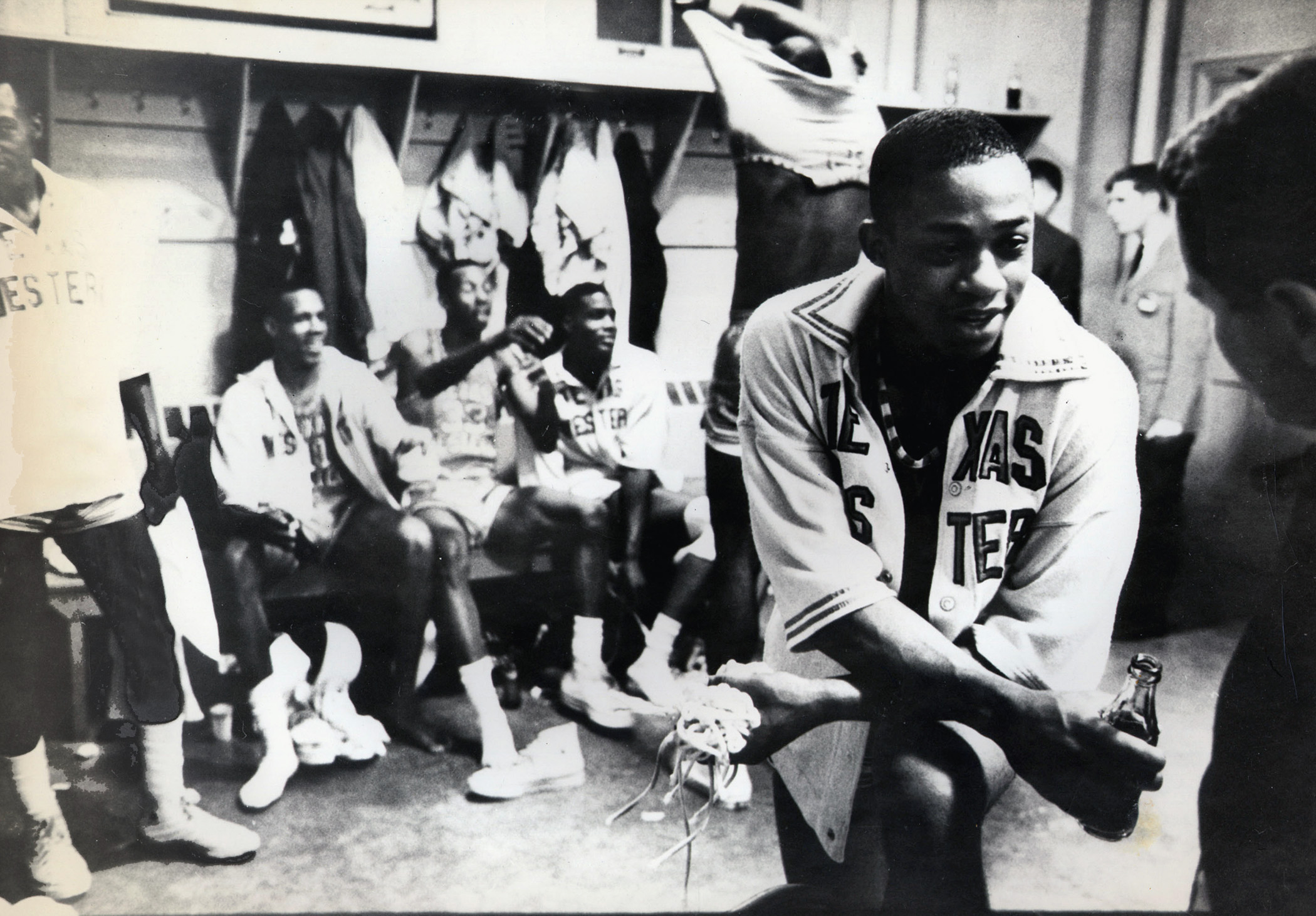
The Texas Western College basketball team is widely credited with fueling the movement to desegregate college athletics in the south. In 1966, Texas Western faced perennial national championship contender and number-one ranked Kentucky for the NCAA title. For the first time, there were five White starters playing against five Black starters for the championship. Texas Western’s victory clearly demonstrated that southern schools would have to integrate to compete with non-segregated teams. It is worth noting that while Texas Western began integrating southern college basketball in 1956, they refused to integrate the dormitories and the Black players were required to live off campus.

Texas WesternTexas Western University, 1966 NCAA Men’s Basketball Champions immediately after defeating Kentucky

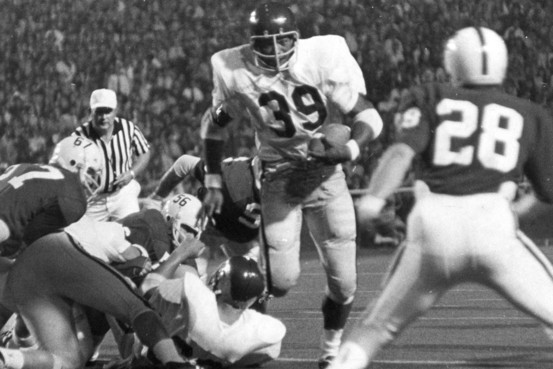
The most significant football game during the long slow march toward desegregation of college athletics in the south occurred when the University of Southern California visited the still segregated University of Alabama in 1970. Led by an all-black backfield of quarterback Jimmy Jones, running back Clarence Davis, and fullback Sam “Bam” Cunningham, USC trounced Alabama 42-21. Alabama assistant coach Jerry Claiborne succinctly noted, “Sam Cunningham did more to integrate Alabama in 60 minutes that night than Martin Luther King had accomplished in 20 years.”

Sam CunninghamSam Cunningham, USC, running over, through and around Alabama defenders

It is worth noting that during this period of “Athletic Apartheid” spanning 1906 through the 1970s there was very little research regarding student-athlete academic performance. During the 70 pus years, when the student-athletes were predominantly white, there were no significant NCAA sponsored academic reforms. At the institutional and Conference level, there was some minor analysis of the 1.6 minimum grade point average rule. However, the NCAA during this period of extensive racial exclusion did not use research in any systematic way to formulate policy or establish eligibility requirements.

Since the early 1980’s, when Blacks males became a majority of scholarship athletes in the revenue producing sports – football and basketball – there has been a series of increasingly stringent Academic reforms.  This timing of these reforms has led some to question the actual motives of the NCAA.  Hall of Fame Basketball Coach John Chaney fought the reform measures throughout his illustrious career.  In January of 1989, Coach Chaney declared, “The NCAA is a racist organization of the highest order… On this day, it instituted a new punishment on black kids who have already been punished because they are poor. Any time the NCAA, which is 90 percent white, considers the youngsters in Division I basketball and football, it discriminates, because 89 percent of the kids are black… I wonder what message they are sending. It’s another hardship for black kids made by white folk.”
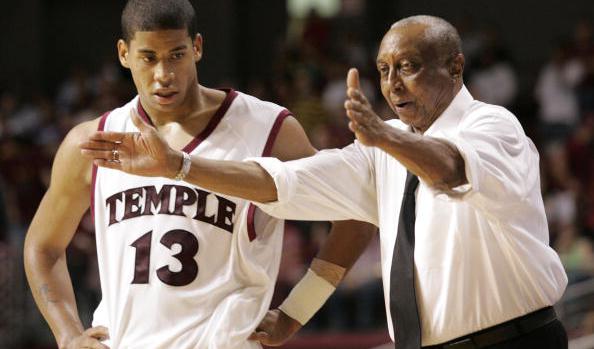
NCAA Men's Basketball - Temple vs Army - November 15, 2005

John Chaney and Mark Tyndale, Temple University

The self-inflicted wounds of contemporary Black athletes make no sense when viewed in historical context.  Too many were forced to play on the “chitlin’ circuit”…. Too many were denied opportunities their abilities warranted… Too many never got a fair shot… Too many watched inferior white players win awards and receive accolades… No excuses!! Black male athletes have to use better judgement…


← Back

Thank you for your response. ✨

Yo man… y’all really NEED AAU guys: An Open Letter to College Coaches

Coach… Coach…. I hear it all the time. “Why do I have to call his “guy”? Why does he listen to him? I’m paying his bills… I’m the one that gave him a scholarship… It’s because of me that he’s on national TV 25 times a year…” A lot of college coaches hate AAU/grassroots guys. It’s no secret. Y’all despise the close relationships players have with AAU/grassroots coaches. In your eyes, they are trying to “come up” off the kids. Y’all resent the powerful influence that that AAU coaches have on the recruiting process. Y’all wish you didn’t have to deal with these street savvy dudes.  It really bothers you that they can tell players to leave school early.

Nonetheless, the fact remains that in many, if not most, instances a player’s truest allegiance, his strongest alliance is with his AAU coach. This really gets under your skin and that of a lot of other college coaches. You want waaaaay more control over the players.  I get that.

Philly Pride Triple Threat Poster-page-0Rysheed Jordan, Philly Pride & Triple Threat

No disrespect Coach, but you’re DEAD WRONG on this one! You just don’t get it…. AAU/grassroots guys are not “THE” problem, they are not even “a” problem. In low income neighborhoods throughout America’s inner-cities, these guys are making positive life altering contributions to the lives of young Black men in desperate need of guidance and direction.  Yeah… yeah… I know Curtis Malone was just convicted for second time on drug-related offenses and sentenced to 100 months in federal prison last May.  So what Coach?  That’s just one man in one program.  Truth be told, despite Malone’s transgressions, he helped many who players from the “hood” who would have fallen through the cracks if not for his assistance.

Yo man… y’all really need those AAU/grassroots dudes.  Without them, a lot of these kids would have absolutely no shot at making it to college.

With all due respect coach, you don’t understand the crucial role AAU/grassroots coaches actually play in helping players deal with growing up in places like Philadelphia, Paterson, Newark, Brooklyn, Chicago, Baltimore, Washington, DC and Houston. Young Black boys are immersed in woefully under-performing, dysfunctional and underfunded public schools during the day. After school, their home lives feature poverty, hunger, substandard housing and in some extreme cases, homelessness. On a daily basis, they confront persistent frustration associated with parental abandonment and/or incarceration.  AAU/grassroots coaches use basketball as a means of helping these boys remain engaged in high school and accessing higher educational opportunities.  If a select few can make money playing basketball it’s a blessing.

A lot of effort is required to produce a college ready young Black man in contemporary American inner cities.  Shit doesn’t just happen.  Coach, by the time you show up looking for tough “Philly” guard or a “super athletic” wing, literally thousands of hours have been invested by AAU/grassroots coaches into developing a young man prepared to deal with all aspects of collegiate life.

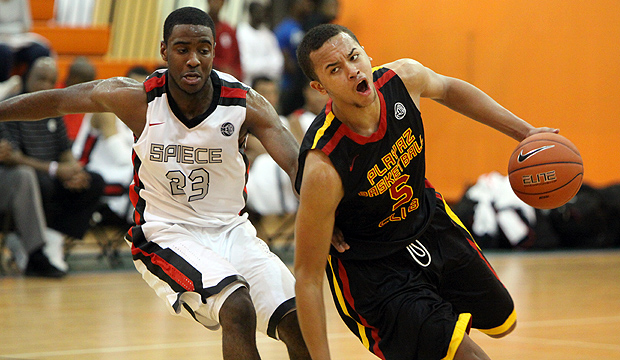
Playaz Poster-page-0Isaiah Brisoce, Playaz Basketball Club

AAU/grassroots coaches, especially in low-income urban areas, are filling a void. In many cases, they are fathering the fatherless. Without these guys, many of the young men you are trying to recruit wouldn’t even finish high school. They would be lost in the streets, like many of those who came before them.  The 80’s wasn’t that long ago.  Try to remember Coach.  The parents of current recruits came of age during the War on Drugs (1980-present) and they begat descendants who live, survive and play ball today in poverty stricken, hard scrabble urban centers. Some of the boys you’re recruiting are “crack babies.”  Most of them are products of what polite society refers to as alternative marital and familial forms.

Many came into being through “promiscuous” sexual relationships or long ago severed “common-law” marriages. Some are the “illegitimate” children of fathers with other families and quite a few have been “abandoned” by the biological fathers.  Fortunately, AAU/grasroots coaches step in, step up, embrace and try to help raise these young men. The players intrinsically understand and appreciate the role these men play in their life, even if you don’t or won’t.

JaQuan Newton-page-0JaQuan Newton, Team Final

My main objective here is to help you understand that relationship. I really want you to realize the AAU/grassroots coach is NOT the bad guy.

Let’s put this situation in a historical perspective. Think about how the parents, especially the fathers, grew up.  Beginning in 1980, under President Ronald Reagan, the situation for the urban poor began to worsen dramatically.  In the 1980s, while the number of arrests for all crimes had risen by 28%, the number of arrests for drug offenses rose 126%. While Nancy Reagan told Americans to “just say no”, her husband’s “War on Drugs” evolved into a War on Black males. According to the the US Department of Justice, from 1990 through 2000, “the increasing number of drug offenses accounted for 27% of the total growth among black inmates, 7% of the total growth among Hispanic inmates, and 15% of the growth among white inmates.”

The “war” resulted in an unprecedented amount of casualties in urban Black communities. Coach, think about it…. these are the same communities producing many of the elite basketball players today. In 1994, the New England Journal of Medicine noted that the “War on Drugs” resulted in the incarceration of one million Americans each year. The overwhelming majority of these prisoners were Black males. In 2008, the Washington Post reported that of 1.5 million Americans arrested each year for drug offenses, half a million would be incarcerated. In addition, one in five black Americans would spend time behind bars due to drug laws.  These are the fathers, the uncles, the cousins and the older brothers.

Mississippi Basketball Association Poster-page-0Mississippi Basketball Association, Jackson, Mississippi

With so many Black men in prison, on probation or on parole, who is gonna raise the boys? Who Coach?  Who’s gonna step up?  Well, in too many instances, no one is raising the boys.  To a large extent, that explains why less than half of the Black boys in America’s major cities graduate from high school. In Philly and NYC only 28% graduate from public high school in 4 years. Of the more than 50% that don’t graduate, more than a third are in jail or prison. Only 26% of Black male HS drop outs are gainfully employed. It’s real out here coach. We ain’t got time to be pointing fingers because you don’t like the way guys handle their business.  AAU/grassroots coaches are a literally saving lives. Most importantly, they do it because others won’t or can’t.

Coach, you do understand that being incarcerated wasn’t the only consequence of the War on Drugs.  Time after time, federal and state policies imposed collateral consequences on those convicted of drug offenses. So even when their fathers, grandfathers, uncles, cousins and big brothers are released from prison they are still very much limited by their drug-related convictions. To this day, they are subjected to restrictions and conditions that are not applicable to those convicted of other types of crime. As result of the War on Drugs, millions of Black men face restrictions in obtaining various professional licenses, ineligibility for public funds including welfare benefits and student loans, loss of voting rights, ineligibility for jury duty, and deportation for immigrants. How are they supposed to rebuild their lives?  How are they supposed to take care of their families?  It’s real out here coach.

I respectfully submit, that it just ain’t fair.  The deck was stack against their fathers.  In 1986, the U.S. Congress passed laws that created a 100 to 1 sentencing disparity for the possession or trafficking of crack cocaine when compared to penalties for trafficking of powder cocaine. This law was blatantly discriminatory against minorities, mostly blacks, who were more likely to use crack than powder cocaine. As a result, persons convicted in federal court of possession of 5 grams of crack cocaine received a mandatory of 5 years in federal prison. On the other hand, possession of 500 grams of powder cocaine carries the same sentence. Do you know how many of the family members of the players you recruit got caught up in this mess?  A whole helluva a LOT…

AAU/grassroots coaches are fighting and struggling to keep these young men from following the crime riddled path of their oldheads. But Coach, you’ve gotta understand that this battle is not easily won. Crime statistics show that—in the United States in 1999—compared to non-minorities, African Americans were far more likely to be arrested for drug crimes, and received much stiffer penalties and sentences. Statistics from 1998 show that there were wide racial disparities in arrests, prosecutions, sentencing and deaths. African-American drug users made up for 35% of drug arrests, 55% of convictions, and 74% of people sent to prison for drug possession crimes. Nationwide African-Americans were sent to state prisons for drug offenses 13 times more often than other races, even though they only supposedly comprised 13% of regular drug users.

Now coach… you are recruiting the sons, grandsons, nephews, cousins, Godsons, young brothers and youngbuls of Black men that came of age during this era. Of course, to some degree the trails and tribulations of the elders have shaped the behaviors and outlooks of the progeny? If we compare the young Black males of the 1980’s and the contemporary young Black men you are recruiting, we find alarming similarities. Indeed, in many ways things are worse.  Basketball is all too often the saving grace.

We R 1 Poster-page-0

Derrick Jones, WE R1

Coach, in many cases, the AAU/grassroots coaches are the only thing standing between the players and the participation in illegal street crime. That’s why so many AAU/grassroots coaches keep the kids extra close to them. That’s why they allow them stay in their homes. That’s why they informally “adopt” them. That’s why their wives put up with 6’8” 235 lb dinner guests almost every night. The families of the AAU/grassroots coaches know how precarious the situation is for many poor inner city males.

AAU/grassroots coaches understand the odds.  Most of the time, they are from the “hood.”  In many cases, their linguistic skills aren’t polished and refined.  Don’t mistake that for ignorance.  These guys are very adept at using basketball to beat the staggering odds. Quite frankly Coach, rather than complaining about the AAU/grassroots guys, you should be grateful that their kids that are recruitable athletes. The peers of the recruits not in the AAU program would never gain admission to your school.  You know and I know most Black males in urban school districts don’t graduate in four years. We also know the overwhelming majority of young Black men have absolutely no shot at meeting NCAA eligibility standards.

So, let’s keep it 100, as the kids say, coach… Most players in urban areas need an AAU/grassroots coach to help him understand what’s expected of him and keep him on track. You might say: Why not the guidance counselor or the assistant principal? After I finish chuckling…. I would note that, in many cases, they are gone. Their jobs have been eliminated.  We must face the truth Coach, as a society, we have more or less given up on funding urban education. In 2013, the Philadelphia school system laid off 3,783 employees, including 676 teachers and 283 counselors. Along with teachers and counselors, those losing their jobs included 127 assistant principals and 1,202 aides who monitor the cafeteria and playgrounds.

So you see, in many ways urban black male athletes attending public schools are set up for failure. AAU/grassroots coaches enable kids to have shot at college. They are the ones that find tutors for the SAT. They are the ones checking the grades. If they weren’t there the pool of qualified recruits would be much, much smaller.

In 2016, the NCAA will establish a 2.3 gpa and a 900 SAT score as a minimum requirement for freshman eligibility. As you can see on the chart below, 39 of 58 (67.2%) of Philadelphia’s public schools have average SAT scores below 800. Only 9 of 58 (15.5%) have average scores above 900. All nine of those schools are special-admit magnet schools. There aren’t too many elite athletes at those schools. Young Black boys attending neighborhood schools are pretty much screwed. The system is structurally determined to result in ineligible Black male athletes.  They will have to score 200-250 points above the average score for their respective schools to meet minimum NCAA standards. Coach, you are gonna need the AAU/grassroots coach more than ever.

Philly Public School SAT scores

They have been doing it for years.  I have a lot of faith in their ability to continue getting guys through the NCAA eligibility center labyrinth.  AAU/grassroots coaches help impressionable, very “rough around the edges” young men deal with life situations face by the urban poor. They offer a guiding hand as the young men as they deal with the daily experience of inexorable pressure, unsolvable problems and overwhelming frustrations. If they give a kid a ride to your campus, you should find a way to help out his program. Buy a couple directories at his tournament. If he brings kids to your campus at your request, break him off a “lil sumthin.”  Gas and tolls add up.

Coach… you have stop complaining that AAU guys are “in it for the money.” At the elite program level, there is some money to be made. Some guys do alright. The tournaments themselves bring in some revenue.

EYBL LOGO

Let’s look at 2 typical “Big AAU” events. The first will cost, say, $550 for a team to register with play in the 14-under, 15-under, 16-under and 17-under divisions. The second will cost $650 and will be open to teams that play 15U-17U. Major events average between 40 and 60 teams per age division. “Big AAU” events also charge between $175-$300 for coaches packets that provide information on the players to college recruiters.  Event organizers can generate significant revenue. Joy of the Game’s Chicago summer classic charges $495 for boys teams from 15U-17U. Boys from 9U-14U pay $350. Adidas Super 64 in Las Vegas charges $700 per team.

Some program charge fees to participate. AAU basketball does not come cheap. Depending on the team, families can expect to pay $400 to $4,000 per summer to play, including uniforms. In many cases, that does not include transportation to and from practice or games, hotel rooms, food, gas or admission for those not playing. Most programs offer financial assistance for players who need it, but normally it only covers the cost to join the team, not the peripherals.

But, Coach you know a LOT of the programs in the “hood” get by on the “muscle.” They can’t possible get $4,000 from a Mom on public assistance, living in Section 8 housing. Ain’t gonna happen, no way no how. These guys will have 50/50 raffles and a “fish fry” to raise enough money to travel hundreds of miles in cramped vans so you can see his kids play.

Coach… y’all really need to stop calling AAU/grassroots coaches “greedy” and money-hungry. Too many of you complain that AAU/grassroots guys are in it for the money.  They rightfully resent that accusation.  Stop… Just stop! The AAU guys know that Coach K made $9,682,032 last year. They know that’s $806,836 per month. It’s not a secret that Rick Pitino made $5,758,338 last year. Calipari came in at $5,511,381 and Bill Self earned $4,960,763. Overall, they know that 32 college coaches made more than a million dollars. They know about the private jets, the 3 company cars and the country club memberships. They really don’t understand the allegation that they are “pimping” players.

under-armour logoIn most AAU urban programs, coaches feed players. Coaches clothe players. Coaches even pay medical expenses for players with no insurance. Coaches pay for SAT test Prep.  Coaches pay for educational testing.  I know some of the best programs have sponsorship deals with Nike, Under Armour and Adidas. Others rely on Aunt Sadies’s fried whiting, collard greens and candied yams moving every other Friday night.

Coach, in many instances Daddy is locked up. Even if he’s not locked up, he’s not involved. Momma doesn’t understand the process. She’s just grateful that the AAU coach is involved with her son. She’s seen her nephews, cousins and the neighbor’s boys hustling, playing with guns, getting locked, dropping out of school, making babies and being unemployed. She’s worried about the guys on the street and she’s worried about the boys in blue.  Momma saw what happened to Trayvon Martin, Mike Brown, Oscar Grant, Eric Garner, Amadou Diallo and score of other young men armed with their Black skin.

Through basketball, she hopes her son can maintain a level of focus and complete high school. The AAU coaches reinforce the importance of attending and completing school.  He’s an asset.   Through basketball, she’s hoping that her son can access higher education. She knows she can’t pay your school $40,000 -$60,000 per year for her son to attend. The AAU coach has been there. He’s helped her when her son started talking back. He’s kept him off the street. She knows he’s safe with the AAU coach.

exclusive_run_covers_guide

She’s grateful for the 3,4 or 5 pair of sneakers per year. Coach, I know you can’t relate, but $125-$175 is a LOT of money to some people. Before her son began playing AAU/grassroots basketball, he never left his hometown except for an occasional long drive down south for a family reunion or funeral. Momma appreciates the opportunities for he son to visit Las Vegas, California, Chicago, Houston, Miami, Atlanta and Charlotte. His friends “around the way” don’t get those opportunities. The boy knows he can’t count on his father. His Momma and her Momma have told him for 17-18 years, “that man ain’t sh*t.”  But, her son is special. The AAU/grassroots coaches made that happen.  Straight up Coach… y’all NEED those AAU guys…..

← Back

Thank you for your response. ✨


One Family at a Time: Increasing Minority Catholic/Private Enrollment In Philly

We are witnessing a profound paradigm shift in the manner in which urban K-12 educational services are delivered.  Urban public schools have seemingly abandoned hope.  Right before our eyes, the traditional urban public school systems of our youth die a tortuous, slow and excruciatingly painful death. Constant pressure is being applied with great force to the “throat” of urban public school systems. This asphyxiation of public education in places like Philadelphia, presents a tremendous opportunity for Catholic, Private and other tuition-based schools to dramatically increase their enrollment figures.

FIFF - Negative Poster 2-page-0

We are in the midst of a period of “public education austerity,” which has been gaining traction for several years. Deep and sustained administrator, teacher and guidance counselor layoffs accompanied by widespread school closings and service cuts are clear symptoms of this particular disease. These massive human resource reductions and school shutterings have been instituted with alarming consistency in low-income urban areas across the nation. They are part and parcel of the trend toward a “Portfolio” management model in urban education.

Chicago, New Orleans, New York City, Camden and Philadelphia are among the large urban districts that are shifting from a centralized bureaucracy that directly manages traditional neighborhood based schools toward the Portfolio model in which District Administrators enter into contracts with a few public schools, privately managed schools, and charter schools. Last year alone, Philadelphia closed 29 schools. Chicago closed 49, New York 26 and Washington, DC 15. Other urban areas transitioning to this Portfolio Management approach are Baltimore, Cleveland, Los Angeles, Oakland, and Washington.

FIFF - Negative Poster 3-page-0

A key feature of this strategy appears to be economic strangulation of the remnants of traditional neighborhood schools. Given the fiscal constraints facing administrators of traditional urban schools, continued abysmal academic performance is inevitable. Of course, this will lead to more and more school closings. National education management organizations (EMOs) and large corporate charter operators will continue to gain a larger share of the urban public education market. Or, so they think.

Portfolio models have emerged in wide range of strategic environments, but they have an important limitation. In each of the aforementioned cities, the “shot callers” – politicians, board members, superintendents, etc. – have made their move.  For example, the School District of Philadelphia has shown its’ hand.  Now other “players” have an opportunity to react and respond accordingly.  In “real life” all of the players in the “urban education market” players don’t choose their strategies simultaneously.  Instead, the game transpires over time, with players making “moves” to which other players react with their own “moves.” Here I explore the likely “moves” of the tuition-based schools, represented by the Archdiocese of Philadelphia and urban low to moderate income parents of school age children.

It is important to note that the School District of Philadelphia’s educational “shot-callers” may not have fully considered the extent to which the timing of strategic decisions is important.  Despite years of sad stability, the urban educational service delivery “market” is potentially a dynamic and constantly changing strategic environment.  The shot-caller pay lip service to this fact.  Proponents of the Portfolio model argue that it allows districts a degree of flexibility unavailable under traditional service delivery models. What they fail to appreciate is the extent to which their actions could lead to a mass exodus of students from the public school system altogether.

For years, urban public school board members, superintendents and administrators operated as a de facto monopoly. The actual consumer of public schools — parents and children — exercise very influence as the schools have become more and more centralized and bureaucratic. Over the past 60 years or so, the number of school districts declined from 130,000 to 16,000. The system is top-heavy.  Classroom teachers once represented 96 percent of the total instructional staff. Today they are about 86 percent.  Federal and state resources have superseded local government as the leading source of school funds. The local percentage dropped from 83 percent to 43 percent. While population has almost doubled, the cost per student multiplied more than five-fold, even after allowing for inflation.  By any reasonable measure, the quality of urban education has declined precipitously. Urban public school systems are now run by professional bureaucrats. Monopoly and uniformity have replaced competition and diversity. Over the past five or six years, these bureaucrats began shifting to a ‘Portfolio’ management model in cities across America. In doing so, they are opening the door for high-quality alternatives like Catholic, Christian and Independent tuition-based schools to siphon off students in large numbers.

FIFF - Negative Poster 1-page-0

Their misguided premise seems to be that urban public students won’t pursue tuition-based alternatives. From the perspective of the shot-callers, urban public students are captives.  They will accept whatever experiment or reform package comes down the pike.  I fundamentally disagree! Here, I explore a more dynamic representation of the urban educational setting in Philadelphia. Unlike, political leaders and school board members operating from a monopolistic perspective, assuming a stagnant and captive urban student body, I acknowledge the presence and importance of other players in the urban educational “game.”

A more extensive and informative analysis necessarily includes a more complete set of players.  Urban school districts aren’t acting in a vacuum. For present purposes, I consider three (3) sets of players: 1) The School District of Philadelphia, 2) The Archdiocese of Philadelphia and, 3) urban parents of Philadelphia’s public school students. Perhaps, most importantly, there is no assumption that urban districts can close schools, cut services, lay off teachers and other staff members with impunity. Rather, I look at their recent moves when and spell out what their choices entail. I explore what the other know when they move. Finally, I examine each set of players‘ payoffs as a function of the choices that are made.

In the Philadelphia Urban Education Entry Model illustrated below, the School District of Philadelphia (SDP) is an incumbent monopolist. As of December 2013, the SDP consisted of 214 schools. This figure includes Promise Academies and excludes Early Childhood, Alternative Education Programs, and Charter Schools. The SDP enrolls over 131,000 students in these 214 schools. Another 6,982 are enrolled in Pre-K programs, 3,558 are in Alternative Education programs and 229 are in Virtual Academies.

Philadelphia Urban Education Market Model-page-0

The School District of Philadelphia is also responsible for establishing and maintaining high standards for its charter schools, including ongoing monitoring of charter performance against clear standards and implementing consequences for not meeting standards. As such, the SDP currently “oversees” 86 charter schools with a total enrollment exceeding 60,000.  While charter schools have a degree of administrative autonomy, they are ultimately accountable to the School District of Philadelphia.  Indeed, six (6) charter schools are currently in the midst the Nonrenewal/Revocation Process in which the District’s School Reform Commission is attempting to permanently close the schools. For strategic purposes, I consider them part of the District.

With regard to urban education, especially of low to moderate income minority students, in Philadelphia, the SDP is a virtual monopoly. The Archdiocese of Philadelphia, has smaller but relatively stable presence in Philadelphia’s urban education market.  With the abysmal academic performance of SDP schools, the Archdiocese has an opportunity to aggressively enter the urban educational market. Plainly stated, they can make a push for Black and Latino students that are currently underserved by dysfunctional public schools. The strategic situation is represented the above diagram.

If the Archdiocese decides to “stay out” of the urban student enrollment market, the district would not lose students and the payoff for the SDP is 2. Under that scenario, the Archdiocese would not gain any additional students and their payoff would be 0. But, we can immediately eliminate this payoff option.

The Archdiocese has decided to “jump in” the the urban enrollment market. Indeed, their commitment to attracting minority students is very real. Toward that end, the nonprofit foundation that manages Catholic high schools in the Archdiocese of Philadelphia is offering $1,000 grants to encourage students to transfer to the schools.

FIFF - $1000 Transfer Advantage Poster-page-0

Christopher Mominey, chief operating officer of the Faith in the Future Foundation and the archdiocese’s secretary for Catholic education, said the new “transfer advantage” grants were part of the effort to boost enrollment at the 17 high schools.  He said the foundation wanted to attract students who were not enrolled at Catholic high schools but were interested in learning more about them. Within Philadelphia’s city limits, these students are predominantly Black, Latino and Asian. The Archdiocese is currently planning mount an aggressive targeted marketing campaign to engage minority families. This effort will be spearheaded by Nick Regina, Deputy Secretary for Enrollment Management.

With the Archdiocese aggressively competing for urban students, the SDP, theoretically, will have to choose how to compete: either aggressively (fight to keep their students), or by ceding enrollment share (accommodate). The strategic situation faced by the SDP is represented by in the diagram by the choices “fight” or “accommodate.” Again, we can immediately eliminate one of the scenarios. The district, quite frankly, is not in any position to fight.

FIFF - Black Family Poster-page-0(1)

Even if they wanted to market themselves, it would be a very, very tough sell.  Of the 214 schools in the School District of Philadelphia, 182 (85%) are listed as “low-achieving” for the 2014-2015 school year. Put another way, nearly 9 out of every 10 Philadelphia public school ranks in the bottom 15% of Pennsylvania schools. Moreover, it’s virtually impossible to find a traditional neighborhood school that is not low-achieving. The performance levels are so poor that the Pennsylvania Department of Education has determined that students residing within the boundaries of a low-achieving school are eligible to apply for scholarships to attend another public or nonpublic school. In effect, the state of Pennsylvania is telling parents to seek better educational settings.

Hence, if they expended any of their scarce resources on a marketing/recruitment effort, they would necessarily take away from their ability to deliver educational programming. As such, the student experience within the district could only become worse. Thus, the decision to “fight” result is payoff of -1 for the SDP. At the same time, the Archdiocese will gain an increased enrollment share. The ADP payoff is 1.

Thus, the far more likely scenario is one of accommodation. One could almost see this coming. Three years ago, the SRC joined the city, state, District, and two of Pennsylvania’s largest charter umbrella organizations in joining the Philadelphia Great Schools Compact.  The group was given a $100,000 planning grant by the Bill & Melinda Gates Foundation. The stated aim of the compact is replacing or transforming 50,000 seats in low-performing schools with better options, without regard to whether the schools involved are operated by the District or a charter organization. The Great Schools Compact is the engine driving the push toward a “Portfolio Management” model in Philadelphia. Why would they oppose an increased number of students enrolling in tuition-based schools?

FIFF - Little Girl Poster-page-0

Clearly, Catholic schools are a “better option.” By any reasonable measure Catholic schools outperform public and charter schools in Philadelphia. Over 98% of the elementary schools in the Archdiocese have been accredited by the Middle States Association, and the remaining 2% have completed the process and are awaiting their status. More than 4,000 students participate in Elementary Honors Math Programs in 78 Archdiocesan schools. These students are prepared to participate in advanced-placement mathematics courses at the secondary level. World Language instruction is offered in 102 elementary schools. Fine Arts programs are in existence in every Archdiocesan school. Students from Archdiocesan schools have taken top honors in the Future Cities competition as well as in county and regional science competitions.

The question becomes: How does the Archdiocese identify and connect with urban parents desiring access to high-quality, safe educational settings on a regular and consistent basis?  How do they overcome the seemingly “irrational” tendency of parents to enroll their children in low-achieving and highly dysfunctional public schools? The fact is far too urban many parents exhibit educational decision-making that can, perhaps, be best described as irrational or behavior without clear educational goals in mind.

First and foremost, Catholic School enrollment management and admissions professionals must understand that marketing/recruitment approaches that have worked with their traditional populations are limited by time and culture. The Archdiocese has begun to make significant inroads in that area.  Schools like West Catholic HS, Roman Catholic HS and Bishop McDevitt have significant minority student populations.  The staff at these schools have developed recruitment strategies that have been well-received by minority parents.  However, many low to moderate income parents continue to exhibit educational decision-making that is very distinct and subculture-bound.

FIFF Catholic Education Poster 2-page-0

To be effective, Archdiocese representatives must better understand that enrollment decisions which “on their face” appear irrational may indeed be sensible.  This is an important and difficult task to accomplish.  It’s difficult because in many instances educational decision-making takes forms that typical private school parents would consider irrational.  Nonetheless, these behaviors are sensible because they are well adapted to the “real world” situations faced by low to moderate income urban families every day. By “well adapted” I mean enrolling kids in neighborhood public schools satisfies the legal requirement that children attend school without the occurrence of destructive personal stress.

In all American urban centers, to a greater or lesser extent there exists a subculture of the poor. People on the lower end of the economic spectrum view things differently than those on the middle and upper ends. It’s exceedingly hard out here for many, if not most, urban families. In real terms, the nation’s 2012 household median income of $51,017 stood at the lowest level since 1995. Median income peaked in 1999, at $56,000. In 2007, the national median household income stood at $55,627. But it has fallen every year since. When inflation is removed from the equation, median income fell 5.5% from 2005 to 2012. Most Philadelphians are much worse off than the average American. Philadelphia’s median household income was $34,207 in 2011, according to a census study. With half of Philly’s households below that figure, it’s not difficult to identify people struggling to make ends meet and keep a roof over their head.

Enrollment decisions for these folk conform to the notion that actions are taken to avoid pain, not to maximize educational benefits: to cope with pain, or minimize it, or to minimize its very perception. This behavior is not likely immediately recognizable to Catholic School administrators as “sensible” action. I suspect that much, if not most, urban parental behavior broadly considered is designed to minimize pain.

Dealing with daily inexorable pressure and overwhelming frustrations, many low to moderate income parents desire a predictable life. They don’t need to enroll their children in a private or parochial school only to discover that they will be unable to meet tuition payments. They want to reduce the precariousness of life. They want to know that their children will be able to attend a school and they will therefore comply with truancy laws. Many have a hard time understanding apparently irrational resistance to well-meaning attempts to improve access to quality schools. For those unfamiliar with life in the “hood” the educational choices of many urban parents is not immediately recognizable as sensible.

How can we help parents better understand the range of available options? It needs to be understood that educational decision-making intended to minimize pain is widespread in urban centers because it has deep roots in the basic, inescapable need to avoid tension and stress in a world quite correctly perceived to be hostile and unpredictable. Urban minority parents literally have to worry the thug element and the police harming their children. Will their boys be safe from police or harassment or worse traveling everyday through predominantly white neighborhoods.  Unless Catholic educators/recruiters take this fact into account they will continue trying to engage urban families with strategies that are totally irrelevant to their day-to-day existence. There is a need for a new debate, a new discussion with vastly different parameters.

In recent years, debate surrounding urban educational issues has tended to be narrowly circumscribed.  Print and TV media outlets and pundits have focused on a very narrow range of issues. They tend to frame the argument in the following manner: Should public school districts and their supporters focus attention on how to provide quality schooling with, admittedly, dwindling and insufficient resources? Or, alternatively, should school districts and their supporters continue waging (losing) a struggle to gain additional public funding?

The Archdiocese of Philadelphia is adopting a very different approach to the problem of urban education. They can begin from a point which assumes that parents, guardians, grandparents and other educational placement “decision-makers” are potential consumers. That is to say, their behaviors could be influenced, subject to information and opportunity costs. The Archdiocese is assuming that, once fully informed, individual urban parents will want safe high-quality educational settings for their children. Like everyone else, Black, Latino and Asian parents will want to access the “best” schools, once they understand that it is truly achievable.

FIFF - Catholic Education Poster-page-0

They know that many urban parents, however, possess a very limited understanding of the Parochial school application and financial aid process. As a result, their ability to determine their “best interests” and make informed educational decisions is constrained both by perceived limited financial situations and limited understanding of the processes. This is not accidental. Urban school districts, charter school operators and the media have managed to successfully frame the discussion in such a manner that Catholic, Private and Independent school options are, generally speaking, excluded from consideration as viable options for low to middle-income urban families.

The Archdiocese recognizes that most urban parents don’t know much about how Catholic schools work. These parents don’t understand that with available financial aid, they could access quality elementary schools $250, $300 or $350 per month depending on their respective financial situation. They recognize that within urban minority communities, there is significant variation in the extent to which attention is focused on educational issues,  People have different spans of attention and parents have different levels of education. In short, they know parents need help determining what is the “best” educational setting for their children. Many, in not most, parents and students have no idea how bad their current situation actually is.

The best way to accomplish this task is to meet with these families one at a time. If the Archdiocese sticks to this approach, I’m convinced Catholic schools in Philly will “blow up.”

Psssssst… Let me Holla at ya for a minute: An Open Letter to HS Ballers

Young fella, I’ve been watching…. I’ve seen you fly all over the country playing in Adidas, Under Armour and Nike events. I’ve seen you attending “workouts.” I’ve seen the Chosen League highlights on youtube. The videos of you dribbling two balls through the cones, I’ve seen that. You running on the track with the parachute attached to your hip, I’ve seen that too. The killer crossover set to Meek Mills and the dunk backed up by Rick Ross, I’ve seen that too. Like I said, I’ve been watching. I watch because I LOVE you!

Because I LOVE you, I have to tell you the truth. You ain’t supposed to make it!

Let me say it again, I don’t want there to be any confusion. You ain’t supposed to make it.

Scoop

Scoop Jardine, Syracuse University

You see, these are confusing times.  A lot of Philly ballers have made it.  Please understand that I have had this same conversation with the overwhelming majority of area Division I players over the past 15 years or so.  I know exactly how they managed to meet NCAA eligibility requirements.  Scoop Jardine and Rick Jackson are graduates of Syracuse University.  I sat them down as 11th graders and we had this conversation.  Samme Givens and Chaz Crawford graduated from Drexel, but first we had to develop a plan to meet eligibility criteria.  Before Marcus and Markeiff Morris were able to accept scholarships from Kansas, they had to get through the Clearinghouse.  This is the same conversation I had with Dion Waiters, below (Syracuse), Rysheed Jordan (St. John’s), John Davis (Towson), “Biggie” Minnis (Rhode Island), Ja’Quan Newton (Miami), Anthony Durham (Rider), Carrington Ward (North Texas) and many others.

waiters

Dion Waiters, Syracuse University/Cleveland Cavs

Society at large and the American sports media are sending you mixed messages. On the one hand, corporate America (Nike, Under Armour and Adidas) makes it possible for you to fly to Atlanta, Vegas, Los Angeles, Indiana, Ohio, Miami and many other cities to play basketball in front of hundreds of college coaches. You play game after game all summer against some of the best players in the land.

At these events, you have been able to fully display your considerable athletic skills. The jumper is wet! The handle is tight! The vision is outstanding! All the skill development and strength training has finally come together.  You know it, your AAU coaches know it, your “handler” knows it and the college coaches know it, you are a BALLER!

On the other hand there’s what you don’t know and what they won’t tell you is: You ain’t supposed to make it!

I know that you are focused and working relentlessly toward earning an NCAA Division 1 scholarship. Now, what you need to know is that the odds are stacked heavily against you even graduating from high school.  In 2010, a major study found that Philadelphia, along with New York was the worst performing district in the nation with regard to Black male graduation rates. The five worst performing districts with large Black male student enrollment (exceeding 40,000) were New York City, N.Y. (28%); Philadelphia, Pa. (28%); Detroit, Mich. (27%); Broward County, Fla. (39%); Dade County, Fla. (27%).

2013 NBA Players Association Top 100 CampJaQuan Newton, Miami University

Think about that for a minute. Out of every 100 NYC, Philly and Detroit kids you that played with and against in those “Invitational”, “Elite” and “Exposure” camps only 28 will graduate high school in 4 years. That means 72 out of every 100 won’t earn a high school diploma on schedule.

I have to be honest with you young fella, I see Philadelphia’s 28% graduation rate declining significantly over the next few years. Let’s keep it real. Philadelphia is the midst of an unprecedented series of budget cuts. In 2013, the Philadelphia school system laid off 3,783 employees, including 676 teachers and 283 counselors. Along with teachers and counselors, those losing their jobs included 127 assistant principals and 1,202 aides who monitor the cafeteria and playgrounds.

CarringtonCarrington Ward, North Texas

In 2014, it was announced that high school students who live within two miles of school will not receive transportation support (an increase from 1.5 miles), impacting approximately 7,500 students at district, charter, and non-public schools. There will also be reduced services in alternative education programs, which will result in fewer higher-quality options for approximately 300 students. There will be less frequent cleaning of schools, fewer cleaning supplies, and delayed repairs at schools. The district will not fill 34 school police officer vacancies, reducing the number of officers available to support school climate and safety.

In the past year, the state of Pennsylvania (which controls Philadelphia’s public schools) and the city of Philadelphia have closed 23 schools, laid off teachers, guidance counselors, principals and school aides. They have decided to eliminate transportation support and 300 alternative education slots for your peers trying to earn credits toward graduation. They have openly declared they will provide you with dirtier and less safer educational settings this year.

Young fella, you ain’t supposed to make it!

It is important that you understand, they do have plans for your future. I don’t want you to think that they are not preparing to “serve” you. While your schools will be dirty and unsafe because of budgetary concerns, there’s a gleaming new state of the art $400 million prison under construction just outside of the city.

graterfordSCI Graterford

While only 28% of Black males graduate from Philadelphia’s high school on time, Pennsylvania Correctional (Prison) system is operating at approximately 105% percent capacity. This new prison will sit proximate to SCI Graterford. A few years ago, Mayor Michael Nutter noted, “Of the 2010 homicides, 86.9 percent were African-American males. African-American males were 65.5 percent of the admissions into the Philadelphia Prison System in 2010. About one-third of all PA DOC prisoners committed their crimes in Philadelphia County. Graterford is the nearest prison to Philadelphia. A lot of Philly offenders serve time there.

Young fella, they know you ain’t supposed to make it….

Nonetheless, you can do it. You can go to college. You can earn a scholarship. But there are some things you need to know. Who’s gonna give you this information? They are cutting assistant principals and guidance counselors to hire more prison guards. So, I’m gonna try to give you some useful information on this website.

TraciTraci Carter, Life Center Academy, 2015

Class of 2015 (Seniors)
You are the last class that has a wide range of options available to meet NCAA eligibility guidelines. Even without full-time guidance counselors in many schools, there are some moves you can make to increase your chances of being NCAA eligible. For example, if you have a few Ds on your transcript from 9th, 10th or 11th grade you should retake those classes. Take them online or in the evening, but retake them! If your school won’t allow you to retake the classes because you already “passed” and earned the credit, pay to take the classes at another school.  It is important to make sure the other school’s courses are listed and accepted by the NCAA Eligibility Center. By increasing your GPA, you place much less pressure on your SAT/ACT score.

If you are a high major recruit, NCAA DI coaches began calling July 1st after your Junior year. Coaches can make unlimited phone calls/texts during the contact period. This means a coach can call/text you if he wants you. The rules still allow a coach to speak with a recruit anytime you make the phone call.

Young fella, if you are not talking to DI coaches on the phone by this point in your senior year it is time to consider DII, DIII or NAIA schools.

If DI schools wanted you, you would know.  They would have reached out to your AAU coach, your HS coach, your “guy” or your parents by now.  They are not under any restrictions.  Off-Campus contact is allowed.  Coaches are allowed to begin visiting off of their campus. Have they come to your school? Have they come to your home?

Coaches can bring you in on Official Visits starting the first day of classes. On Official Visits coaches pay to bring you in on a visit, host you on campus and pay for meals and game tickets.  Remember, you only get 5 official visits.  Be prudent in how you use them.  You should have already been making Unofficial Visits to D1 campuses if you plan to play at that level.

Class of 2016 (Juniors)
Everything is different for you. You have have meet far more stringent requirements. College bound student athletes first entering an NCAA Division I college or university on or after August 1, 2016 will need to meet new academic rules in order to receive athletics aid (scholarship), practice or compete during their first year.

You will still have to complete 16 Core Courses. However, ten (10) of the 16 core courses must be complete before the seventh semester (senior year) of high school. That is a new rule. You need to look at your transcript right now. Make sure you will have 10 cores before your senior year. Also, you must make sure seven (7) of the 10 core courses are in English, Math, or Science. These are requirements and if they are not met you will not qualify under new NCAA rules.

Also, the new minimum Core-Course GPA is 2.300. It is no longer 2.000. This is a significant increase. Many, if not most, student-athletes I have encountered over the past 15 years would not have met a 2.300 GPA requirement.

Moreover, and most importantly after this (your Junior) year, your grades are “locked in.” Unlike current seniors, you will not be able to retake classes in which you received Ds during your senior year. Every year, thousands of high school seniors retake classes to improve their core course GPAs. The NCAA is eliminating this option beginning with your class.

If you are an NCAA DI level recruit, You will begin receiving recruiting materials starting September 1st. Coaches will begin sending you letters or emailing you. The rules do not prevent you from emailing coaches, something you should have been doing since your sophomore year at least.

Basketball coaches can have off-campus contact at the start of classes your Junior year. Official Visits are allowed at the start of the school year. For women, they can begin making visits the Thursday after the NCAA Women’s Final Four.

Class of 2017 and 2018 (Freshmen and Sophomores)
If you plan on playing at the NCAA DI level, watch your grades! Do NOT earn Ds. They are unacceptable. Those Ds will make you NCAA ineligible.  Men’s Basketball coaches can begin calling, sending letters to and emailing recruits June 15th after your sophomore year.

Quick_Reference_Sheet-page-0 Above please find the new 2016 NCAA guidelines. Below please find the new 2016 NCAA Sliding Scale.  Young fella, it won’t be easy.  It will take a LOT of planning and dedication to hitting the books.  But, you can make it.

Quick_Reference_Sheet-page-1You certainly cannot say “ain’t nobody give you a heads up”!

← Back

Thank you for your response. ✨


College Coaches Reinforcing Positive School Behaviors

The high school dropout problem is a national crisis. Approximately one-third of all high school students leave the public school system before graduating. The problem is especially pronounced among students of color in America’s major cities. For example, in Philadelphia, twenty-two (22) District high schools lost 50 or more of their students from the Class of 2012 cohort, 2,200 dropouts in all. This represents a significant shrinkage of one graduating class. Unfortunately, it’s even worse across the Delaware River. According to the recent data only 42% of Camden High students and and 46% of Woodrow Wilson students graduate from high school. Low-income, urban, predominantly Black and Latino public and charter school students are struggling mightily in the classroom. Black males, in particular are drowning in Philadelphia’s public schools.

boystackbooksIn 2010, a major study found that Philadelphia, along with New York was the worst performing district in the nation with regard to Black male graduation rates. The five worst performing districts with large Black male student enrollment (exceeding 40,000) were New York City, N.Y. (28%); Philadelphia, Pa. (28%); Detroit, Mich. (27%); Broward County, Fla. (39%); Dade County, Fla. (27%).

Educators, researchers, and policymakers continue to work to identify effective dropout prevention approaches. One important element of such prevention efforts is the identification of students at highest risk for dropping out and then the targeting of resources to keep them in school. Locally, we seem determined to do the exact opposite of what works.  In Philadelphia, there is massive contraction of resources. The city is the midst of an unprecedented series of budget cuts. In 2013, the Philadelphia school system laid off 3,783 employees, including 676 teachers and 283 counselors. Along with teachers and counselors, those losing their jobs included 127 assistant principals and 1,202 aides who monitor the cafeteria and playgrounds.

In 2014, it was announced that high school students who live within two miles of school will not receive transportation support (an increase from 1.5 miles), impacting approximately 7,500 students at district, charter, and non-public schools. There will also be reduced services in alternative education programs, which will result in fewer higher-quality options for approximately 300 students. There will be less frequent cleaning of schools, fewer cleaning supplies, and delayed repairs at schools. The district will not fill 34 school police officer vacancies, reducing the number of officers available to support school climate and safety.

drop outThere is very little, if any, good news coming from the state, the city or the district regarding public education. Clearly, innovative interventions will have to emerge from Philadelphia’s civil society.  Government, at all levels appears to be fresh out of new ideas.  Civil society is the sum total of non-governmental organizations and institutions that manifest interests and will of citizens.  Civil society includes the family and the private sphere, often referred to as the “third sector” of society, it is distinct from government and business.

With an abundance of major college basketball programs, the Greater Philadelphia region is unique.  College coaches are potentially a very important part of Philadelphia’s civil society.  The ASSIST Project is partnering with college coaches and athletic departments to provide middle school administrators with tools and incentives they can use to help manage student behaviors within their respective schools.  Public and charter 8th grade students with excellent academic records or significantly improved behaviors will receive tickets collegiate sporting events for them and their parents.

St. Joseph’s Head Coach Phil Martelli (below, far right) notes, “One of the most gratifying aspect of my job is watching my players graduate after four years.  It never gets old. I am eager to help in any way I can.”  Martelli has a player from Philadelphia’s public league on his current roster and two commitments from Catholic League players.  “Philadelphia is my primary area of focus, I played HS ball in Philly, I coached HS ball in Philly.  I’ll help Philly kids in any way I can.”

photo-29We know which kids need reinforcement.  Research has shown that an early warning system using indicators based on readily accessible data (grades, attendance, standardized test scores, suspensions, etc) can predict whether the students are on the right path toward eventual graduation. The ASSIST Project will provide school administrators with incentives they can offer to those on the right path. We will also reward students that show marked improvement in behavior and attendance.

Research is also clear that ninth grade is a “make or break” year. More students fail ninth grade than any other grade in high school, and a disproportionate number of students who are held back in ninth grade subsequently drop out. Recent research in large urban school districts, including Chicago and Philadelphia, provides information about powerful indicators that can predict, by the end of the first year of high school, or even during the first semester, whether students will complete high school. For this reason, we are focusing on getting eighth graders ready for high school.

Delaware Head Coach Monté Ross (below) notes, “My wife is an educator. I am a product of Philadelphia’s public school system. We will do anything we can to help kids understand the importance of education.  I look forward to hosting middle school kids that are working hard and doing the right things in school.”

MonteThe ASSIST Project is partnering with basketball coaches at Temple, Drexel, Villanova, St. Joseph’s, Pennsylvania, LaSalle, Penn State, Rutgers, Delaware and Lincoln Universities. We want middle school Principals, Assistant Principals and Guidance Counselors to know that they are not alone. Top academic performers and students exhibiting most improved behaviors, as identified by the school leadership teams will be eligible for tickets to college athletic events. The kids will be allowed to bring their parents and they will meet the players and coaches.  At a time when the resources available to educators dealing with the most needy students are dwindling, the ASSIST Project and area coaches are trying to step up and be a positive influence on school performance and behavior.

We know which kids need reinforcement.  The ASSIST Project is placing emphasis on the creation of early warning systems. We are partnering with college athletic programs to follow through with strategic allocation of rewards and positive reinforcement based on empirical data to help school leadership teams meet their academic and behavioral goals.  By helping school leadership teams develop a school-level early warning and reward system, we hope to contribute to a consistency in vision, goals, and resources that are targeted toward monitoring students through to high school graduation.

Fran Dunphy (below) says, “I’ve spent most my professional life in Philadelphia.  As a coach, I’ve been to most of the local high schools.  Every day I drive through North Philadelphia to get to Temple.  I want to expose positive young people to our campus.  Temple is a special place and we look forward to hosting young students and their families.”

Dunphy

LaSalle Head Coach John Giannini (below) says he will treat the middle school kids no differently than he treats top recruits.  “We will give the kids and their parents seats right behind our bench.  They will have an opportunity to interact with our coaches and players.  This is an important initiative.  I have tremendous respect for public educators and I look forward to giving positive kids, the LaSalle experience.  We are an urban university and I want to have my program engaged in our community as much as possible.”  Giannini’s program has graduated students from Strawberry Mansion and John Bartram high schools.

John GianniniJames “Bruiser” Flint (below) grew up in Southwest Philadelphia.  He spent his formative basketball years immersed in the culture of the Sonny Hill Community Involvement League where his father coached for years.  According to Flint, “Sometimes I worry about the educational situation faced by many of the young people in Philadelphia.  I was fortunate enough to go to Episcopal Academy and St. Joe’s.  One thing I know for sure is that my education prepared me for life as a professional.  If there’s anything I can do to help school teachers and administrators in any small way I can, I’m going to do it.  My office is a few blocks away from the Mantua section of the city and about a mile from my childhood home.  I want good kids to come and see how we do things at Drexel.”

bruiser-flint“I recruit Philly kids.  I love Philly kids,” says Kevin Baggett (below).  Over the past few years, Baggett has graduated public league players from Bartram and Paul Robeson.  He has also coached Catholic League players from Bonner, Roman Catholic, Neumann and LaSalle College high schools.  His roster has featured players from Abington and Cheltenham in the Philly suburbs.  According to Baggett, “Philly kids have a level of toughness that helps a program reach its’ goals.  In college basketball, things don’t always go as planned.  It has been my experience that Philly kids fight rather than give up.  I really respect the job that teachers and principals are doing with limited resources.  We look forward to exposing more Philly kids to the Rider way of doing things.”

BaggettThe first institution of higher learning for African-Americans, Lincoln University has been educating Philadelphians since 1854.  At any given time in its history about half of Lincoln’s student body hailed from Philadelphia and its’ surrounding suburbs.  Lincoln’s Basketball coach John Hill says, “We would be honored to have the top middle school kids come see us play.  Lincoln is unique in a lot of ways.  The players, the fans, the people working will all look like the public school kids.  Lincoln is the oldest historically Black college in America.  We play a very high level of basketball in the CIAA Conference.  I welcome an opportunity to share the Lincoln story with any kid from Philadelphia.”

John HillPhiladelphia public and charter school administrators can nominate 8th grade students via an email to delgrecowilson@outlook.com.  Representatives of the ASSIST Project will visit guidance counselors and principals at every public and charter middle school in September.  The goal is to “catch” our kids doing the right thing and reinforce positive behaviors.  We want public school employees to know that they are not in this thing alone.  For additional information about the ASSIST Project, visit ASSIST Project website.

RysheedRysheed Jordan, VAUX HS/St. John University, PG

Young, Gifted and Black: Tony Chennault “Filmmaker”

The situation for young Black males in Philadelphia is bleak. The data is beyond alarming. There are, literally, thousands of “lost” Black Philly boys and young men in Pennsylvania’s prisons. Every day local print and television media outlets provide us with “boxscores” and highlights of the carnage that young Black men inflict upon one another in the City of Brotherly Love. For many, it must seem like there’s no way out.

Killadelphia

Philadelphia’s homicide rate is consistently among the worst in the nation. Unfortunately, “lost” young Black males between the ages of 17 to 25 are the overwhelming majority of the victims and perpetrators. A few years ago, Mayor Michael Nutter noted, “Of the 2010 homicides, 86.9 percent were African-American males. African-American males were 65.5 percent of the admissions into the Philadelphia Prison System in 2010. These statistics demonstrate there is a real crisis among Black males. If you don’t have an education, if you drop out, you’re already a step behind everyone else. If you drop out from high school your options are already limited and if you’re a Black male and turn to a life of crime, life is already against you.”

One particular Black male homicide occurred on May 31, 2012. On this day, Michael Jay was shot in the back and head. He was immediately rushed to Albert Einstein Medical Center in North Philadelphia, where he was pronounced dead at 2:47 p.m. the next day. For most Philadelphians, this represented just another senseless killing in a city that has become all too familiar with the lives of Black males ending in a hail of bullets. But for one young man, this killing inspired him to find a way to make a difference.

Tony Chennault Neumann

Tony Chennault, a tough hard-nosed Philly guard, was in the midst of transitioning back to Philadelphia to help care for his ailing mother when his brother Michael was gunned down. After two successful seasons in the Atlantic Coast Conference (ACC) at Wake Forest University, Chennault had decided to transfer home and play his final two years of college hoops for Jay Wright at Villanova. Basketball-wise, this was not an easy decision.  As a sophomore at Wake Forest, Chennault started in all 31 games at point guard and played 30.2 minutes a game, averaging 9 points with 3.0 assists. Despite his early success in what many consider the finest conference in college basketball, Chennault felt a profound need to be close to his mother.  Somethings are more important than sports.

A little more than year after his brother’s murder, Chennault’s mother passed away.  Through all of this adversity, with the support of his Villanova coaches and teammates, Chennault managed to maintain focus on his obligations on and off the court. Despite transferring from Wake Forest to Villanova, despite the loss of a sibling and his mother, Chennault played an important role on a Big East regular season Championship team and, more importantly, graduated in May with a Bachelor’s degree in Communications.

Chennault credits his ability to persevere to lessons he learned at Neumann-Goretti High School under the tutelage of Coach Carl Arrigale. He says, “At Neumann, I learned the importance of faith and loyalty… People just don’t understand the relationship I have with Coach Carl. He calls and texts me every day. He really has an open door policy with current and former Neumann players. Our relationship helped me be strong when times were tough.”

While many of his peers are traveling the globe in pursuit of elusive hoop dreams, Chennault is putting his communications degree to good use. He co-founded 267 Productions with friends, and fellow Villanova alums, Alex Ruane, Rob Jennings and Tom Smith. On Friday, August 22, Chennault will debut the latest release from 267 Productions, OLDHEAD, at his alma mater Nenmann-Goretti High School at 7:00 pm.

The term “Oldhead” refers to older male members of urban Black communities who provide guidance to younger generations, especially Black males. The film is set in Philadelphia, the protagonist Sean must decide between staying loyal to his friend Kareem, or following the insightful words of oldhead Bumpy.

Oldhead

Chennault draws upon his life experiences to tell stories that center on the struggle to succeed against seemingly overwhelming odds. A wise and mature young man, he emphasizes the fact that “people from all backgrounds and races struggle, not just Black people.” While Chennault and his partners aim to make films that are financially successful, that is not the sole means by which they measure their impact.

Chennault says he wants young people to understand that “they have to make the best of the hand you were dealt in life.” He understands that there are barriers and obstacles that young people, especially poor urban kids, have to overcome. However, his message is very simple. Keep pushing, keep studying and make the most out of your situation.

As for the future, Chennault says eventually he would like to venture to New York and Los Angeles. But for now, he is focused on establishing and solidifying Philadelphia as a place where high quality films are made.  It is vitally important that we “catch” young Black males doing the right thing!  As a society, we are bombarded with images of young Black males engaging in destructive and criminal behaviors.  The proliferation of negative imagery is so pervasive that many have developed a numbness to the plight of young Black males.

Here we have a graduate of a Philadelphia Catholic High School.  He is a celebrated athlete, a Catholic League, PIAA State and Big East Champion.  He is an outstanding scholar and a recent Villanova graduate.  He is the co-founder of film company. He is storyteller and a filmmaker.  He is a role model.  He is young, gifted and Black. He is Tony Chennault.

NPXTONY22C620