Player: Jalil Bethea | Position: Shooting Guard | Height/Weight: 6’5″, 190 lbs
Current Program: Alabama Crimson Tide (SEC) | Class: Sophomore
High School: Archbishop Wood Catholic, Philadelphia Catholic League (PCL)
Prior Program: Miami (FL) Hurricanes (ACC)
Draft Projection (2026): Potential Second-Round Pick
I. EXECUTIVE SUMMARY & STRATEGIC TRANSFER GRADE
Jalil Bethea’s move from Miami to Alabama represents a high-stakes portfolio reallocation aimed at recovering value after a freshman season that failed to meet his five-star promise. The decision to join a high-octane, NBA-feeder program like Alabama under Coach Nate Oats was analytically sound, targeting the speculative assets of professional development, competitive visibility, and system fit. However, the 2025-26 season has revealed a significant miscalculation in the assessment of “immediate returns,” particularly regarding guaranteed on-court opportunity. Bethea has transitioned from a 16-game starter at Miami to a deep reserve at Alabama, seeing his role and production diminish dramatically. While the long-term developmental bet on Alabama’s infrastructure remains plausible, the short-term cost to his draft stock and rhythm is substantial. Therefore, his strategic transfer decision earns a C+ grade: a conceptually logical move undercut by flawed execution and unforeseen constraints, leaving his professional pathway more uncertain than anticipated.
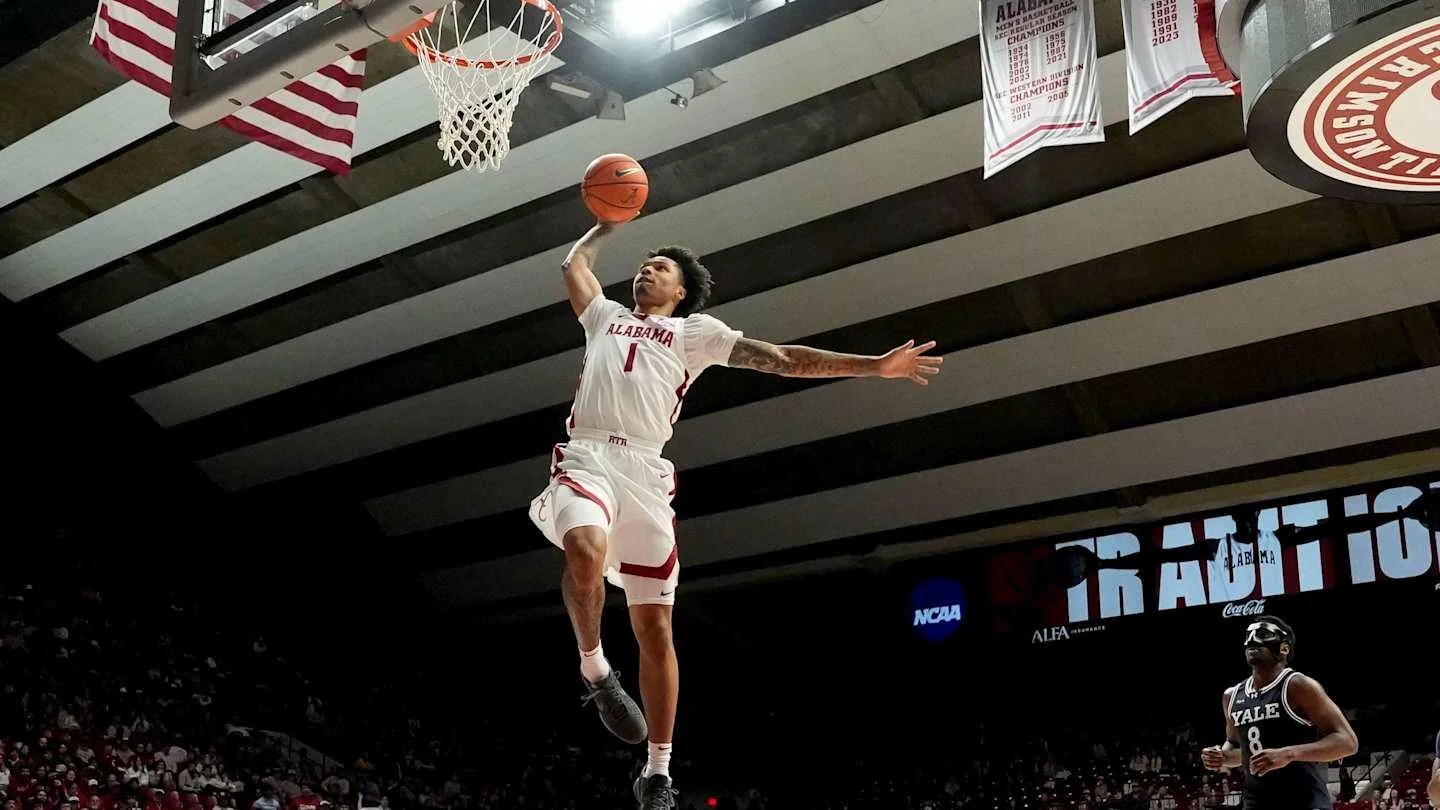
II. PORTFOLIO ANALYSIS: THE ALABAMA TRANSFER DECISION
Bethea’s portal entry was a forced recalibration after a freshman year at Miami (7.1 PPG, 32.6% 3PT) that failed to solidify his status as a one-and-done prospect. His choice of Alabama was a bet on specific appreciating assets.
- Targeted Speculative Assets:
- Developmental Infrastructure & System Fit: This was the core bet. Alabama’s NBA-style, pace-and-space offense under Nate Oats, which prioritizes three-point volume and transition play, appeared tailor-made for Bethea’s reputation as a movement shooter and explosive athlete. The program’s recent success with guard development (e.g., Brandon Miller, Josh Primo) offered a credible professional pathway.
- Competitive Success & Exposure: Moving to the SEC and a perennial NCAA Tournament contender offered a higher platform for March visibility, a critical factor for draft stock.
- Brand Growth: Association with a top-10 national program enhances marketability, potentially offsetting any relative NIL disparity from leaving Miami.
- Compromised Immediate Returns:
- Projected On-Court Opportunity: This is where the portfolio has most underperformed. Bethea’s role has not materialized as likely projected. He is averaging only 10.1 minutes per game off the bench for Alabama, a stark decrease from his 19.0 minutes at Miami. In recent games, his playing time has often been in the single digits.
- Statistical Contribution: His per-game averages at Alabama (5.4 PPG, 2.2 REB) are below his Miami output, and his shooting efficiency (40.0% FG, 34.3% 3PT) has not made the significant leap required.
- Structural Constraints Encountered: Bethea entered a saturated market for touches at Alabama. The Crimson Tide’s offense runs through established, high-usage stars like Mark Sears (21.6 PPG), creating a hierarchy difficult for a new transfer to crack. The information asymmetry of the portal—where a player cannot fully gauge future roster composition and internal competition—has proven to be a decisive factor limiting his agency.
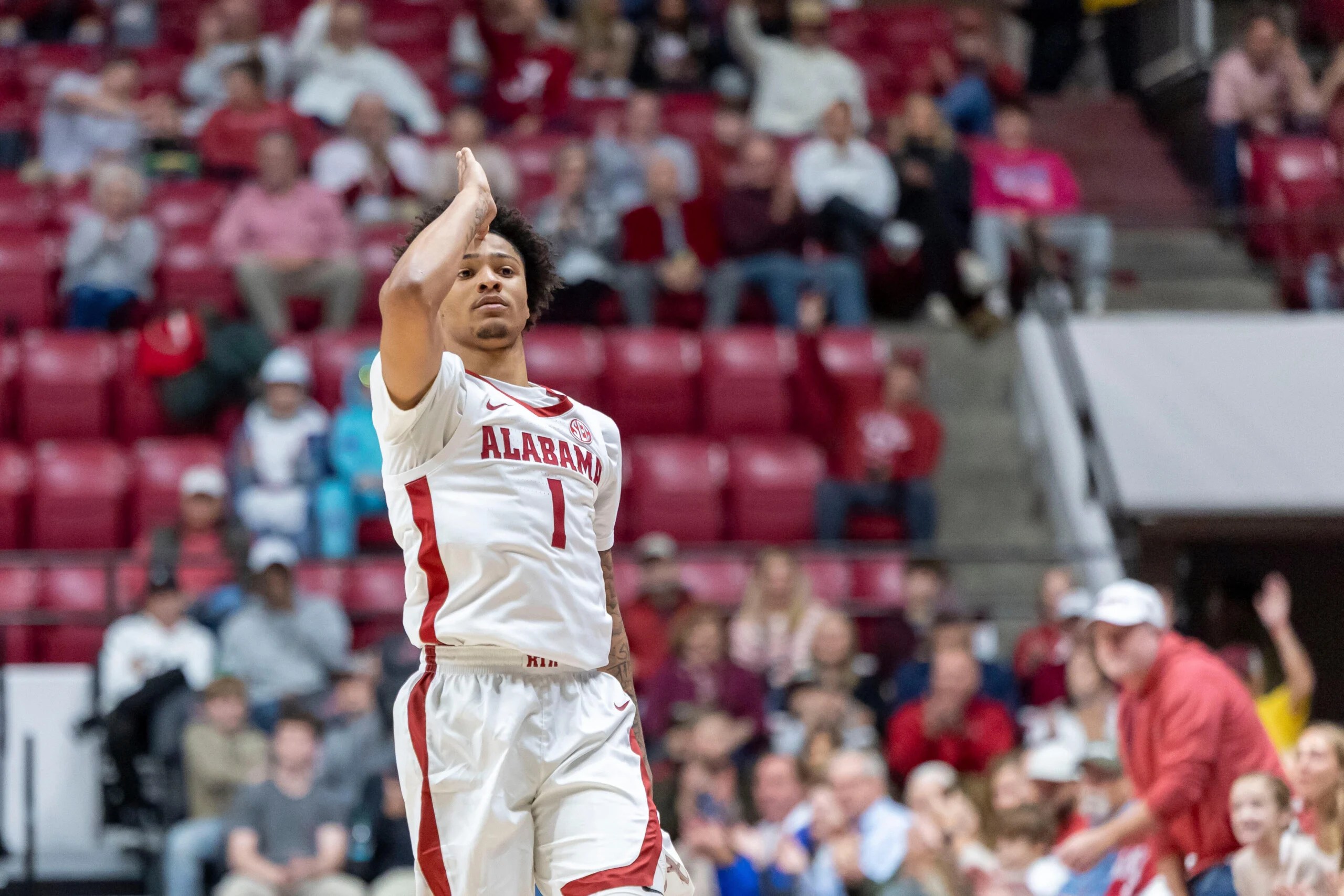
III. ON-COURT PERFORMANCE & SKILL ASSESSMENT
Bethea’s season is a tale of two data sets: encouraging per-minute efficiency obscured by a lack of consistent opportunity.
Statistical Profile & Context:
- Per-Game (Alabama): 5.4 PPG, 2.2 RPG, 0.8 APG, 40.0% FG, 34.3% 3PT, 82.6% FT in 10.1 MPG.
- Per-36 Minute Projection: 18.9 PPG, 7.8 RPG, 2.8 APG. This highlights his latent scoring potential but also underscores the central dilemma: he has been unable to earn the minutes to actualize it.
- Efficiency Metrics: A solid 56.9% True Shooting percentage and 124.5 Offensive Rating indicate he produces effectively when on the floor, but a high 22.8% Usage Rate shows he needs the ball in his hands to be impactful.
Qualitative Skill Breakdown:
| Trait | Grade | Analysis & Evidence |
| Shooting & Scoring Instincts | B+ | Remains his premier skill. NBA-level range with a quick, fluid release. Capable of explosive scoring bursts (21 pts vs UTSA, 15 vs Yale). However, consistency from deep remains elusive (34.3% 3PT), partly due to erratic minutes. |
| Athleticism & Finishing | A- | An explosive leaper with “big time above the rim ability”. Can finish with power or finesse in traffic. This trait is underutilized in his limited role. |
| Ball-Handling & Creation | B- | Has a quick first step and can create separation for his shot. Can be a ball-dominant, score-first guard; playmaking for others (0.8 APG) is a clear weakness and limits his ability to impact games without scoring. |
| Defensive Engagement | C- | The most consistent critique from scouts. Possesses the physical tools (size, athleticism) but shows inconsistent focus and effort. Averaging only 0.2 steals per game, he does not use his athleticism to be a disruptive force. |
| Decision-Making & Resilience | C+ | Can force shots and struggle to impact the game when his shot isn’t falling. The emotional toll of a reduced role is visible in fluctuating performances, raising questions about adaptability and mental toughness in adversity. |
IV. PROFESSIONAL PROJECTION & PATHWAY ANALYSIS
Bethea’s draft stock has cooled from its five-star, potential lottery-pick origins. He is now viewed as a potential second-round pick in the 2026 draft, a projection that hinges almost entirely on speculative upside rather than proven production.
- Archetype: He profiles as a microwave scoring guard—a player who can enter a game and instantly provide offensive sparks. His ceiling at the next level is a dynamic bench scorer, but his floor is a player whose limited defensive focus and playmaking make him a situational specialist.
- Critical Development Needs: To secure and improve his draft position, Bethea must demonstrate tangible growth in two areas scouts consistently flag:
- Consistent Defensive Effort: Translating athletic tools into tangible defensive stops and disruption.
- Playmaking & Game Feel: Developing a more nuanced understanding of how to create for teammates and impact winning beyond scoring.
- The Alabama Paradox: The very program chosen for development has, thus far, been unable to provide him the consistent in-game reps required to showcase and refine these skills. His development is occurring largely in practice, which is insufficient for NBA evaluators who need to see game-speed application.

V. CONCLUSION & STRATEGIC RECOMMENDATIONS
Bethea stands at a career inflection point. The logic behind the Alabama transfer—betting on a superior developmental system—is not yet invalidated, but the timeline for return has lengthened dangerously.
Final Assessment:
Bethea retains the raw talent of a high-major contributor and future professional. His shooting touch, athletic pop, and scoring instincts are undeniable. However, his freshman stagnation at Miami has been followed by a sophomore season of disconcerting marginalization at Alabama. The “portfolio” is underperforming, with the asset of immediate opportunity having depreciated significantly.
Recommendations:
- For the Remainder of 2025-26: Bethea must maximize every minute, however sparse, by showcasing an unmatched competitive fire—particularly on defense. Earning coach’s trust through effort is the only path to increased role.
- Offseason Decision Point: Following this season, a clear-eyed assessment is required. If a pathway to a starting or major sixth-man role at Alabama in 2026-27 is not concrete, he must seriously consider re-entering the transfer portal. His next move would need to prioritize a guaranteed, featured role at a strong mid-major or lower-tier high-major program where he can be “the man,” rebuild his value, and prove he can lead a team to success.
- Long-Term Focus: Regardless of venue, the developmental checklist is non-negotiable: commit to being a defensive presence, add strength to finish through contact, and work diligently to become a more willing and capable passer.
Scout’s Bottom Line: Jalil Bethea’s story is a cautionary tale of the modern era’s complexities. A player’s agency in choosing a program is real, but it is powerfully mediated by structural factors like roster depth and coaching preference. Bethea bet on the right system but misjudged the situation. His undeniable talent is currently trapped in a role that does not serve his development or draft prospects. The coming months will determine if he can break free and reclaim the trajectory expected of a player with his pedigree.
 The Black Cager