PHILADELPHIA — In the cloistered world of college basketball, the term “blue blood” is more than a compliment. It is a patent of nobility, earned not by a single triumph but by a sustained reign. It signifies a dynasty with championships, constant national relevance and a gravitational pull that shapes the sport’s ecosystem.
For nearly two decades under Jay Wright, the Villanova Wildcats did not just earn an invitation to that elite fraternity; they commandeered a seat at the head table. Wright transformed a proud program with a Cinderella past into a contemporary superpower, aligning its orbit with titans like Duke, Kansas and North Carolina. But the unforgiving test of a blue blood is not achievement under a singular visionary. It is institutional permanence.
The three seasons since Wright’s abrupt retirement in April 2022 have served as that crucible. And the evidence is stark. Without its foundational architect, Villanova has experienced a swift and decisive regression, revealing that its blue-blood stature was a magnificent, coach-dependent edifice, not yet embedded in the program’s bedrock. The Wildcats, for now, have relinquished their hard-won place among the sport’s true aristocracy.
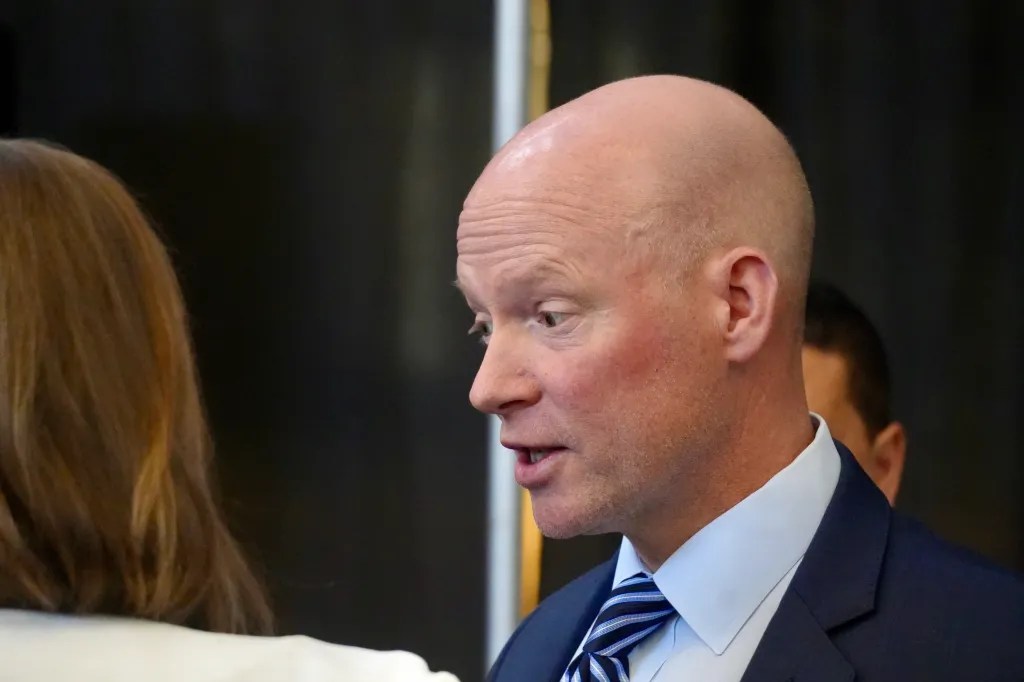
The task of restoration now falls to Kevin Willard, a proven program-builder tasked with a dual mandate: to win immediately in the hyper-competitive Big East and to forge a sustainable culture for the chaotic new age of college athletics. His early returns — a 10-2 start in his first season — are promising. But his true test is whether he can architect a new, resilient version of the Villanova brotherhood.
The Architectural Miracle and Its Swift Demise
Jay Wright’s 21-year tenure was an exercise in systematic elevation. His record — 520 wins, two national championships, four Final Fours — provides the statistical backbone. Yet his genius was in building a modern dynasty that projected power consistently and nationally, the essential hallmark of a blue blood. From 2014 through 2022, Villanova was a constant atop the sport. The 2022 Final Four crystallized this arrival: Villanova joined Duke, North Carolina and Kansas in New Orleans, and the collective logos sparked a mainstream debate about its blue-blood status.
Yet, analysts distinguish between “traditional blue bloods” — whose success spans multiple coaching regimes — and “new bloods.” Villanova’s modern empire was overwhelmingly concentrated in the Wright era. The departure of such a transformative figure is the ultimate stress test.
The tenure of Kyle Neptune, Wright’s chosen successor, provided a clear, and negative, verdict. The decline was measurable across every key metric: Villanova failed to win an NCAA tournament game in the post-Wright era and missed the tournament entirely for three consecutive seasons. Its stranglehold on the Big East vanished. The formidable recruiting pipeline Wright built slowed to a trickle. In March 2025, after a 19-14 season, Neptune was fired.
The simultaneous rise of Big East rival UConn underscores Villanova’s fall. After a brief transition following their own legendary coach, UConn won a National Championship with Kevin Ollie at the helm and UConn won two more national titles under Dan Hurley. This multigenerational, multi-coach success is the definitive argument for blue-blood status. Villanova, in the same period, went from sharing a Final Four stage with blue bloods to watching its conference rival cement the very status it let slip.
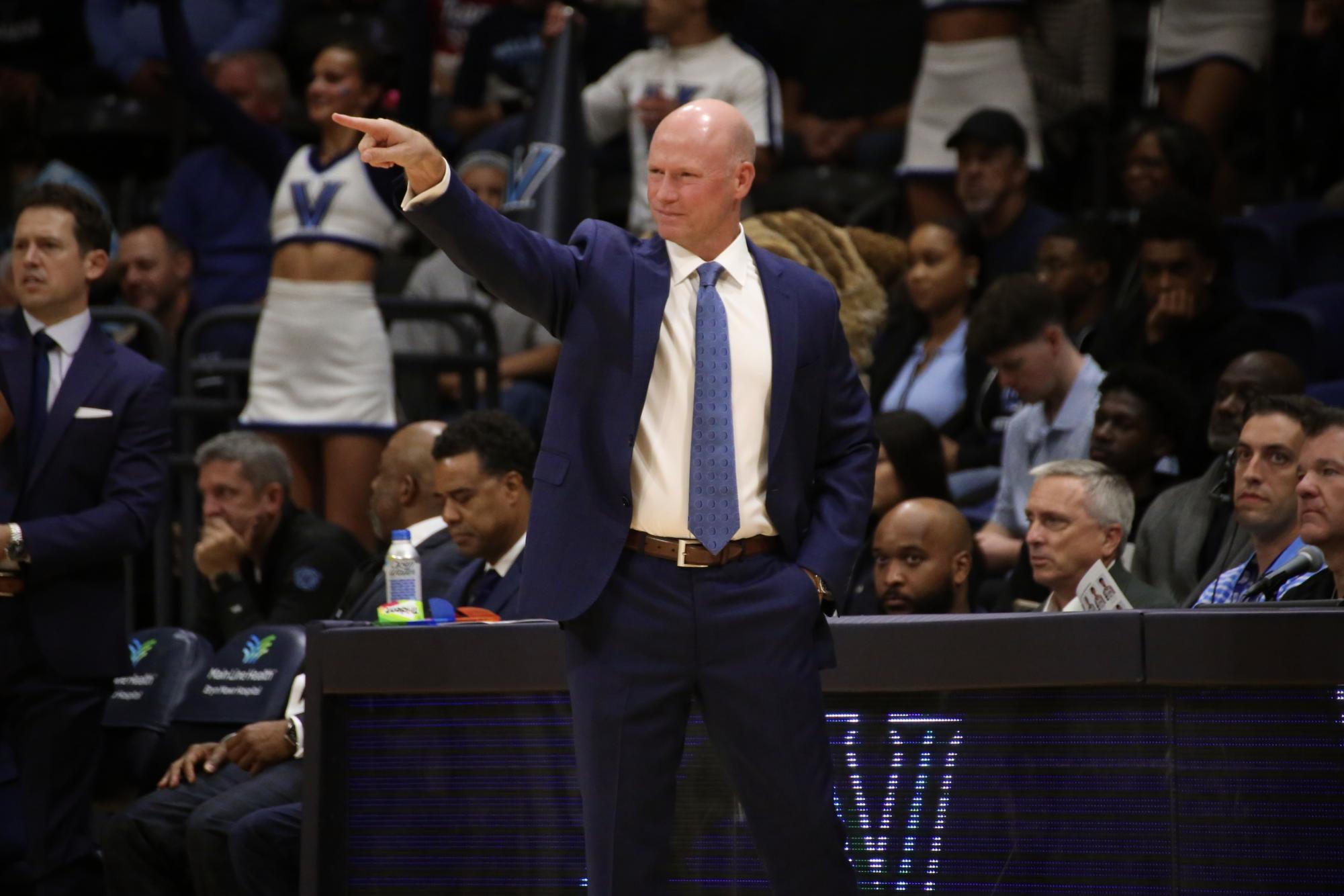
The Willard Blueprint: Proven Success in a New Era
Into this void stepped Kevin Willard. Hired in March 2025, he arrived with a mandate for immediate and lasting restoration. Villanova’s leadership was unequivocal about why he was their choice.
“Coach Willard demonstrated that he has the vision and experience to guide Villanova Basketball in the changing world of college athletics,” said Villanova University President Rev. Peter M. Donohue.
This new world is defined by the transfer portal and, critically, the landmark House v. NCAA settlement, which legalized direct revenue sharing between universities and student-athletes. Willard’s record suggests he is built for this challenge.
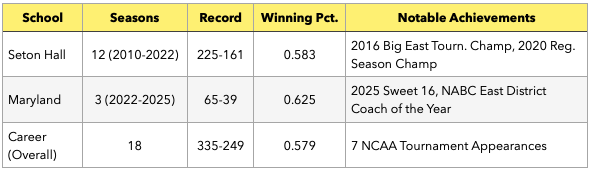
His résumé is a blueprint for building competitive programs against elite competition. At Seton Hall, he inherited a struggling program and, through meticulous building, transformed it into a Big East power. He departed as the second-winningest coach in school history with a conference tournament title and a regular-season crown. He then proved his model worked outside the Big East, leading Maryland to a 27-win season and a Sweet 16 appearance in 2025.
With a career winning percentage of .579 across nearly 600 games at the Division I level, Willard is a proven commodity. His early work at Villanova has been impressive: the Wildcats sprinted to a 10-2 start in his first season, showing renewed defensive grit and offensive balance.
Table: Kevin Willard’s Head Coaching Record Before Villanova
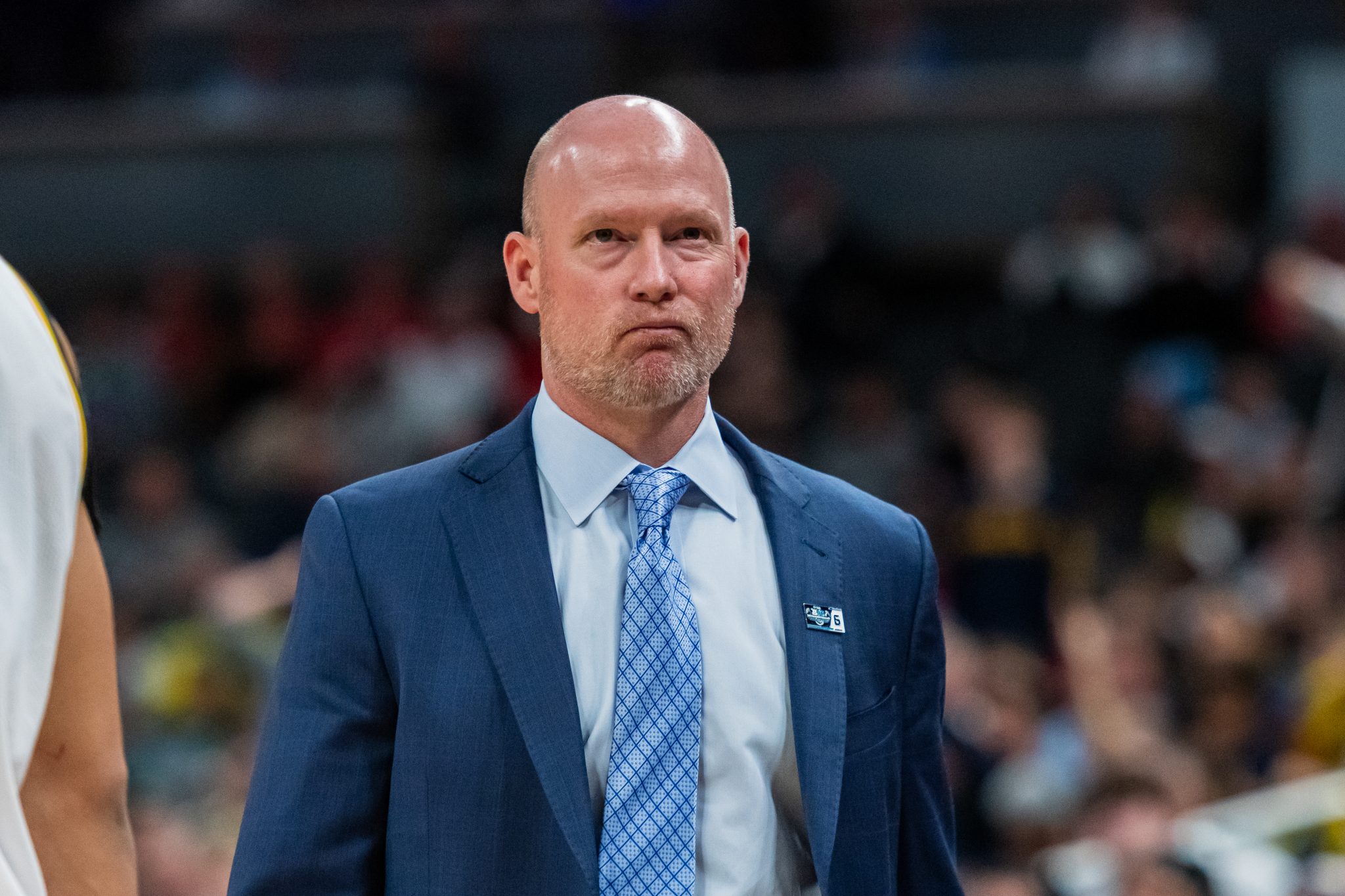
Rebuilding the Brotherhood in the Age of Free Agency
Today’s elite coach must be more than a tactician; he must be a chief executive, a cultural steward and a relationship-builder in an environment of empowered free agency. Willard’s philosophy appears tailored for this reality.
At his introductory press conference, he pledged to embrace the existing culture while adapting it, stating, “Villanova Basketball has a deep tradition of excellence and a culture that is second to none in college basketball”. His approach to roster construction balances the immediate need for talent with long-term cultural stability.
“We want to focus on high school kids and develop them,” Willard has emphasized, a nod to the “Villanova Way” of building through player development. This is evident in his first roster, which blends promising high school recruits like top-100 guard Acaden Lewis with strategic transfers from his former programs.
This human-centric approach is Willard’s hallmark. His career is marked by stories of deep, individualized mentorship. Two of his players hold the record for games played at their respective schools and serve as perfect bookends to his philosophy. Michael Nzei, a forward from Nigeria who played for Willard at Seton Hall, was the epitome of the scholar-athlete. Academically brilliant, he was named the Big East Scholar-Athlete of the Year in 2019. While Nzei spoke openly of professional basketball dreams, Willard saw the fuller picture. In a private moment, the coach expressed a knowing confidence that Nzei’s destiny was not on the court but on Wall Street. Willard’s role was not to dissuade him from his athletic goals, but to provide the platform and support for him to excel in both arenas, understanding that true coaching means preparing a player for the 40 years after basketball, not just the four years within it.
Donta Scott’s journey was different. A talented forward from the Philadelphia Public League who played for Willard at Maryland, Scott arrived with significant academic challenges. As he detailed in his book “Wired Differently”, Scott he was a student who learned differently, with gaps and unmet needs. For Scott, the path to success required intense, personalized academic intervention and support. Willard and his staff provided exactly that, creating a structure that allowed Scott to thrive academically and athletically. The result was not only a successful collegiate basketball career but the ultimate prize: a bachelor’s degree from the University of Maryland.
At Seton Hall, he guided Michael Nzei from Nigeria to become the Big East Scholar-Athlete of the Year, seeing in him a future beyond the court. At Maryland, he provided intensive academic support for Philadelphia native Donta Scott, helping him earn his degree. In an era where players can transfer at will, this ability to forge genuine trust ranks among a coach’s most critical skills. In a transaction-focused, transfer portal/NIL era, Willard is committed to helping players attain and maintain a levels of academic performance and vocational aspirations that are commensurate with their intellectual ability and personal ambition.
Villanova’s Structural Advantages: A Foundation for Return
While its blue-blood status may have dimmed, Villanova under Willard operates from a position of significant institutional strength. The program’s potential resurgence is built on four key pillars:
Table: Villanova’s Competitive Advantages in the New Era
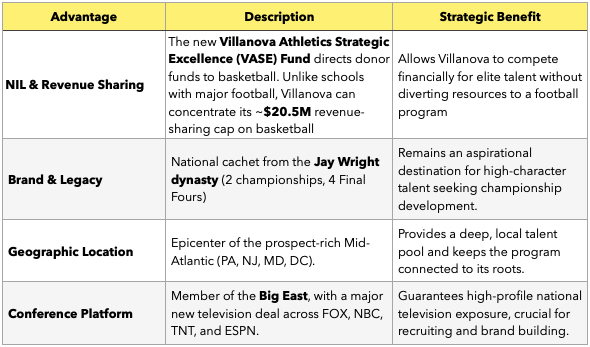
Eric Roedl, Villanova’s Vice President and Director of Athletics, has outlined an aggressive strategy to leverage these assets. “We’re going to be proactive and bold with how we try to position our programs to be successful,” Roedl stated, emphasizing the opportunity to focus resources on basketball.
The Path Forward
The chants in the stands at the Finneran Pavilion have regained a note of optimistic fervor. The early success of Willard’s first season is a necessary first step, but it is only a step. The true measure of his project will not be this season’s win total, but whether he can reignite the self-sustaining engine that defines the sport’s elite.
For any other Big 5 program, an NCAA tournament bid might be a celebration. For Villanova University, it is a non-negotiable baseline—the bare minimum required to uphold a decades-long contract with excellence. The standard on the Main Line is not merely to participate, but to contend for national titles, a reality cemented by championships in 1985, 2016, and 2018. In the modern landscape, where the Big East reliably secures four to five bids, Villanova’s brand, resources, and history demand it be a perennial lock, not a hopeful bubble team. To miss the tournament is not a minor setback; it is an institutional failure, a stark deviation from the very identity of a blue blood program that operates in a basketball-centric conference and commands national respect. The expectation isn’t arrogance; it is the logical conclusion of the program it built.
Within that framework, the tournament itself is merely the entry fee to the arena where true judgment begins. A Sweet 16 appearance is acceptable; an Elite Eight run is good. The Final Four is outstanding. And cutting down the nets is the ultimate, achievable goal. This is the clear and established hierarchy at Villanova, a program whose modern golden age under Jay Wright proved that sustained elite status, not occasional flashes, is the mandate. To lower the bar now, to treat a tournament bid as an aspirational goal, would be to surrender the program’s hard-won stature. In the ruthless calculus of college basketball’s upper echelon, making the field is the price of admission. For Villanova, anything less is an invoice left tragically unpaid.
Willard can get it done. He must prove he can consistently recruit at a blue-blood level, not just in the transfer portal but with the high-school prospects who become program legends. He must navigate the new financial landscape, ensuring Villanova’s NIL apparatus is robust enough to retain homegrown stars. And he must, above all, reforge the brotherhood — that intangible culture of collective sacrifice and trust — in an era that incentivizes individualism.
Jay Wright’s Villanova was a masterpiece. Kevin Willard’s task is not to create a replica, but to design a new, equally formidable structure on the same foundational principles, one capable of withstanding the storms of modern college athletics. The throne sits waiting. Willard is now the architect charged with building a kingdom that can endure long after its king has departed.
 The Black Cager