PHILADELPHIA, PA – For the legendary Big 5, success is no longer measured in championships, but in survival.

The stained-glass windows of the Palestra, college basketball’s most venerable cathedral, have looked down on decades of Philadelphia basketball lore. They’ve witnessed the intensity of John Chaney stalking the sidelines, the perfection of Saint Joseph’s 2003-04 regular season, and the raw passion of one of sport’s most unique rivalries. For generations, the Philadelphia Big 5 operated within a coherent, predictable universe where tradition mattered, coaches built programs over years, and players became four-year legends on Hawk Hill and North Broad Street.
That world is gone.
The past five years have witnessed what philosopher Thomas Kuhn termed a “paradigm shift”—a revolutionary, non-cumulative break from the old order. The emergence of Name, Image, and Likeness (NIL) compensation and unlimited transfers with immediate eligibility has not merely reformed college basketball; it has created an entirely new ecosystem. The NCAA’s old model of amateurism lies in ruins, dismantled by Justice Brett Kavanaugh’s blistering concurrence in NCAA v. Alston, which declared, “The NCAA is not above the law”.
The question now haunting Philadelphia’s basketball temples is no longer which team will win the city championship, but what constitutes success when the rules of competition have been fundamentally rewritten.
The Shattered Paradigm: Free Agency and Finances
The old paradigm of college athletics was built on stability—the “amateur ideal” where athletes were “student-athletes,” transfers were heavily restricted, and the NCAA maintained absolute control. This framework provided a predictable environment where programs could build through patient development of high school recruits and coaches could construct cultures that lasted decades.

The new paradigm operates with entirely different principles:
- Year-Round Free Agency: The transfer portal has created a marketplace of immediate eligibility, where rosters turn over annually
- Financial Competition: NIL collectives now determine recruiting outcomes as much as coaching reputations or facilities
Transactional Relationships: Concepts like “loyalty” and “program building” have been redefined in a world where players must be re-recruited each offseason
This violent rupture has created what Kuhn would call “incommensurable” worlds—the old and new systems are so fundamentally different that stakeholders literally “see different things when they look at the same object” . An “offer” from a school once meant an athletic scholarship; today, it represents a complex package of scholarship, NIL money, and branding opportunities.
Philadelphia’s Pain: Three Years in the Wilderness
The human cost of this revolution is nowhere more evident than in the Big 5’s unprecedented three-year NCAA tournament drought. For the first time in the rivalry’s storied history, no Philadelphia team has danced in March for three consecutive seasons—a stark indication of how dramatically the competitive landscape has shifted.

The following table illustrates the challenging preseason outlook for the Big 5 programs according to recent analyses:

The bleak projections reflect the harsh new reality: in a landscape dominated by programs that can leverage financial resources and transfer portal appeal, most of Philadelphia’s teams are fighting with one hand tied behind their backs.
Villanova’s Blueprint: Competing in the Power 6
Villanova stands alone as the only Big 5 program with reasonable aspirations of national relevance. The Wildcats benefit from competing in what analysts now call the “Power 6”—the six basketball conferences that consistently outperform others in NCAA tournament seeding and wins. The Big East has earned at least five NCAA tournament bids in three of the past five seasons, providing Villanova with multiple pathways to the Dance.
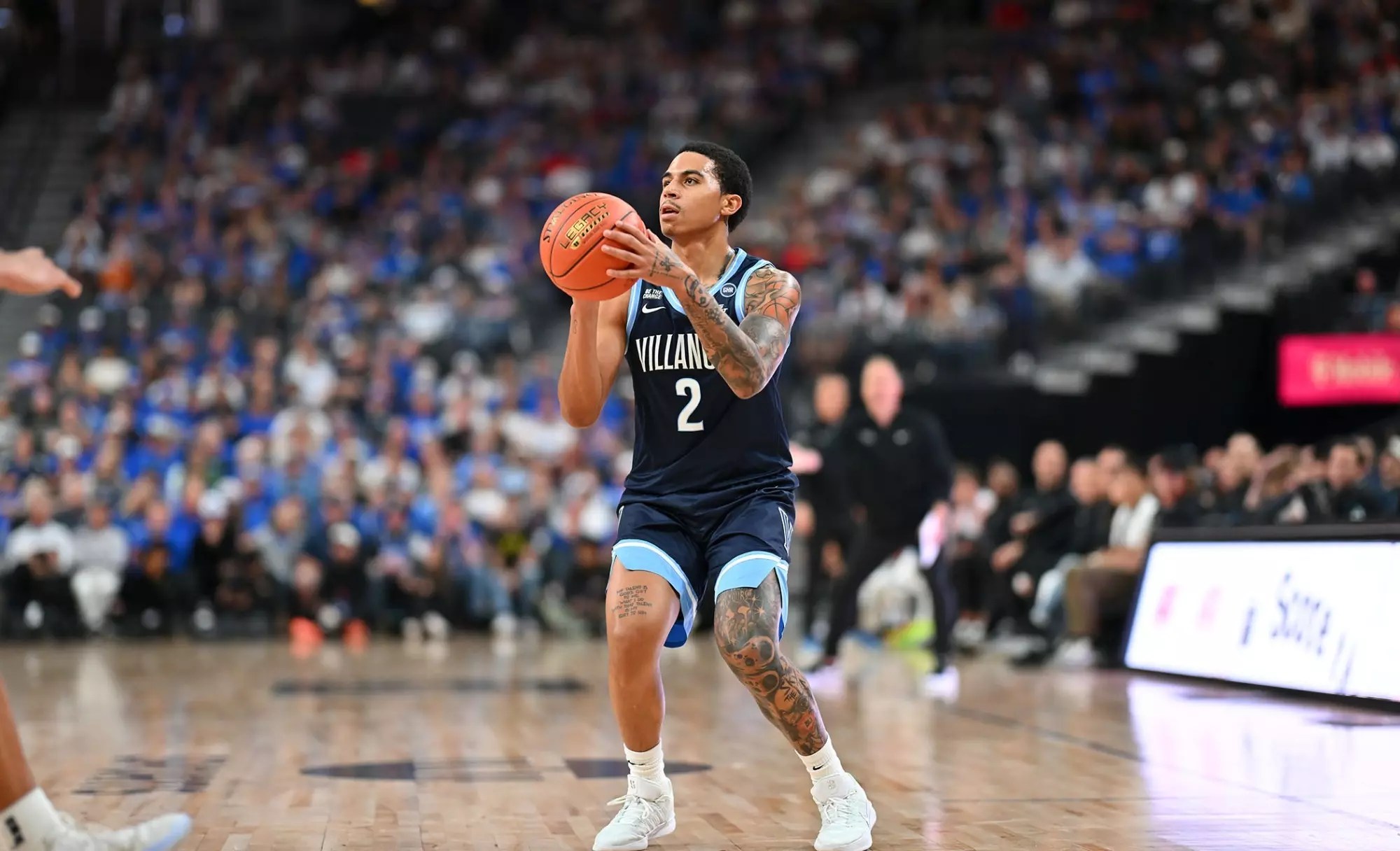
Under first-year coach Kevin Willard, the Wildcats are attempting to leverage their substantial resources—including a robust NIL collective and national brand recognition—to compete in the new paradigm. The program has become a destination for transfers like Bryce Lindsay (James Madison) and Tyler Perkins (Penn), players who can provide immediate production.
Yet even Villanova faces headwinds. The team was picked 7th in the 11-team Big East preseason poll. As one analysis noted, the Wildcats are “relying on players who are stepping up in class, such as Lindsay… or first-year players who have talent but not experience”. In the new paradigm, success requires not just recruiting talent, but constantly rebuilding rosters in an increasingly transactional environment.
Temple’s Storied History Meets Hard New Reality
For Temple, the paradigm shift has been particularly brutal. This is a program with 33 NCAA tournament appearances, 5 Elite Eights, and 2 Final Fours—a legacy built over decades by coaching legends like Chaney, who took the Owls to 17 tournaments in 18 seasons.

That historical success now means little in the new ecosystem. Temple has made just two NCAA appearances in the past 12 seasons, and this year was picked 9th in the 13-team American Athletic Conference. The AAC typically receives only 1-2 NCAA tournament bids per season, creating a brutal competitive environment where even strong conference records may not be enough for at-large consideration.
Coach Adam Fisher acknowledges the rebuilding challenge, noting that last season “things could go wrong… they did” with injuries, suspensions, and departures. In the new paradigm, “rebuilding” no longer means developing freshmen over four years, but aggressively working the transfer portal to replace departing talent—a challenge for programs without the NIL war chests of Power 6 competitors.
Saint Joseph’s: The Middle-Class Squeeze
Saint Joseph’s exemplifies the “middle-class” programs caught between historical success and current realities. The Hawks have 21 NCAA tournament appearances, an Elite Eight, and a Final Four in their history, with legends like Jack Ramsay and Phil Martelli accounting for two-thirds of those tournament trips.

Yet the program has zero NCAA appearances in the past decade, and despite winning 22 games and a second straight Big 5 title last season, home losses to teams like Central Connecticut and Princeton crushed at-large hopes. This season, the Hawks were picked 7th in the 14-team Atlantic 10, another conference that typically receives only 1-2 NCAA bids annually.
The September resignation of Billy Lange created additional instability, though successor Steve Donahue has talent to work with, including La Salle transfer and reigning A-10 Rookie of the Year Deuce Jones. Donahue believes this is “the most athletic team he’s ever coached”, but in the new paradigm, athleticism alone cannot overcome the structural disadvantages facing mid-major programs.
Penn’s Ivy League Transformation
The Quakers represent one of the most fascinating case studies in adaptation. Despite being picked 7th in the 8-team Ivy League, some analysts believe Penn has the best chance among the city’s programs (outside of Villanova) to make noise this season.

The reason? First-year coach Fran McCaffery—the winningest coach in Iowa history—and his ability to leverage the transfer portal, landing former five-star recruit T.J. Power from Virginia. The Quakers also return standout Ethan Roberts (16.8 points per game).
McCaffery’s hiring signals that even Ivy League programs, with their strict academic requirements and no athletic scholarships, must compete aggressively in the new marketplace. As one analysis noted, “If Roberts plays well and Power is healthy and Penn quickly adapts to McCaffery’s style, the Quakers could sneak into the No. 4 spot in the league” and then “anything is possible” in the Ivy League tournament.
La Salle and Drexel: The New Reality’s Hard Edge
For La Salle and Drexel, the new paradigm has created near-insurmountable barriers to national relevance.

La Salle, with its 12 NCAA tournaments, 2 Final Fours, and a National Championship, has played in just one NCAA tournament over the past 34 years. First-year coach Darris Nichols has brought “youthful enthusiasm and renewed energy” to the program, but the Explorers were picked 13th in the 14-team A-10. As one analysis bluntly stated: “It is a really long way to go from being picked one spot from the bottom of the A-10 to winning the conference title”.
Drexel faces similar challenges in the CAA, a one-bid league where the Dragons were projected 10th of 13 teams. The transfer portal has been particularly unkind to Drexel, with standouts like Yame Butler (Butler), Kobe Magee (Florida State), and Cole Hargrove (Providence) all departing for bigger programs—and presumably, bigger paydays. This talent drain from mid-majors to power conferences represents one of the most significant consequences of the new paradigm.
Redefining Success in the Athlete Empowerment Era
In this new world, the criteria for a “good season” must be recalibrated for all but the elite programs:
- For Villanova: Success means NCAA tournament appearances and Sweet 16 runs—maintaining status as a national program capable of competing with college basketball’s financial elite
- For Temple: Given conference constraints, an NCAA tournament appearance represents a major achievement, requiring either a conference tournament championship or a spectacular regular season
- For Saint Joseph’s: Realistic success means NIT victories and consistent competitiveness in the A-10, with NCAA appearances representing extraordinary rather than expected outcomes
- For Penn: An NIT appearance would signal remarkable progress, particularly given their preseason projection, and would validate their aggressive adaptation to the new landscape
- For La Salle and Drexel: Simply reaching the NIT would represent significant achievement, indicating program momentum in an era where mid-majors struggle to retain talent
The tectonic plates of college sports have shifted, and Philadelphia basketball sits directly on the fault line. The Palestra still stands, but the games played within its hallowed halls are governed by new rules— both written and unwritten. The paradigm has shifted, and in this new world, survival itself constitutes a form of victory.
 The Black Cager
How can you write this article without mentioning Villanova ‘s 3 national championships ??