The Evolution of Black American Political Thought: Why Is It Important?

by Delgreco K. Wilson, M.A.

Understanding the evolution of Black political thought in America is crucial for Black youth for several compelling reasons. It provides historical context, fosters critical thinking, nurtures a sense of identity and empowerment, and equips them to navigate and challenge contemporary social and political issues. The current right wing assault on critical race theory (CRT), often misrepresented and maligned, poses a significant threat to the dissemination of this important historical information.
Historical Context and Awareness

Recognizing Struggles and Achievements:
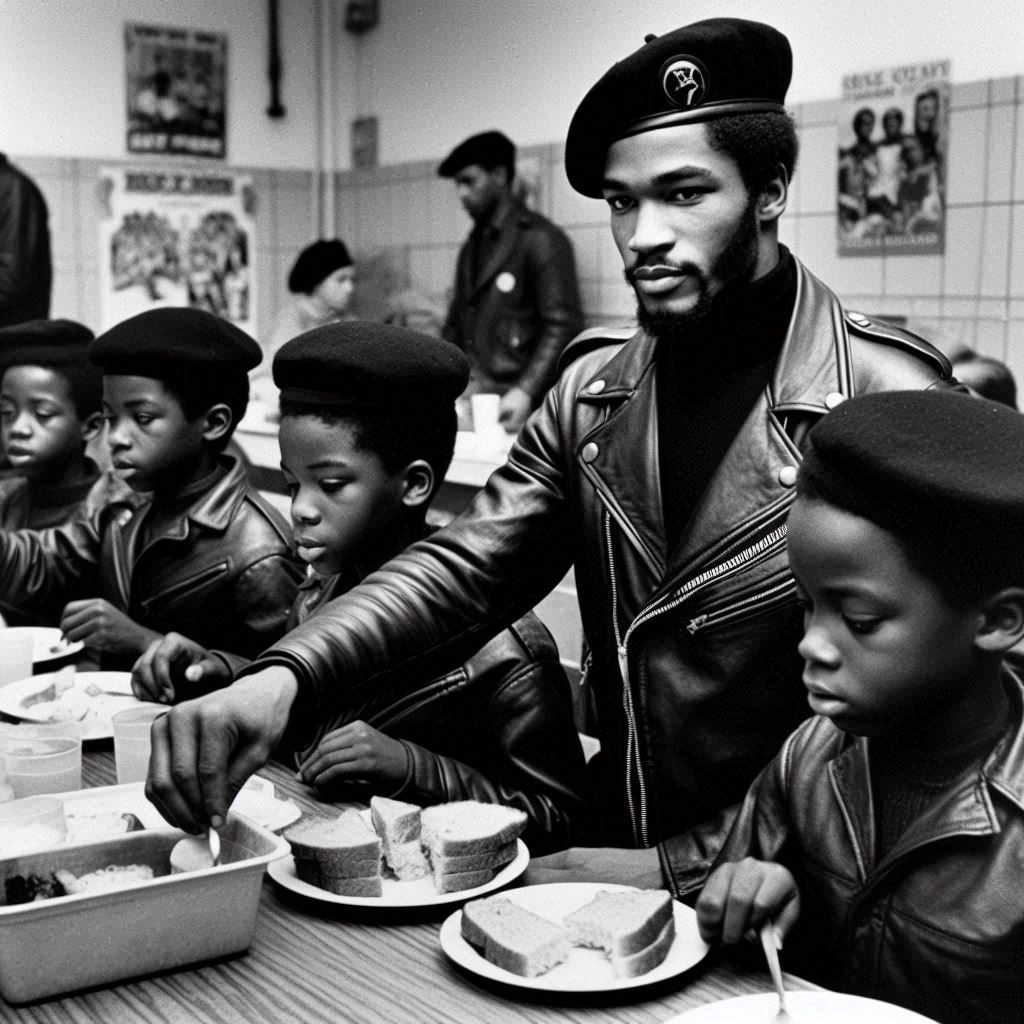
Knowledge of the evolution of Black political thought allows Black youth to understand the historical struggles and achievements of African Americans. This includes the fight against slavery, segregation, and systemic racism, as well as the contributions of Black leaders, activists, and intellectuals. This historical awareness is vital for comprehending the context of present-day social and political dynamics.

Understanding Diverse Perspectives:
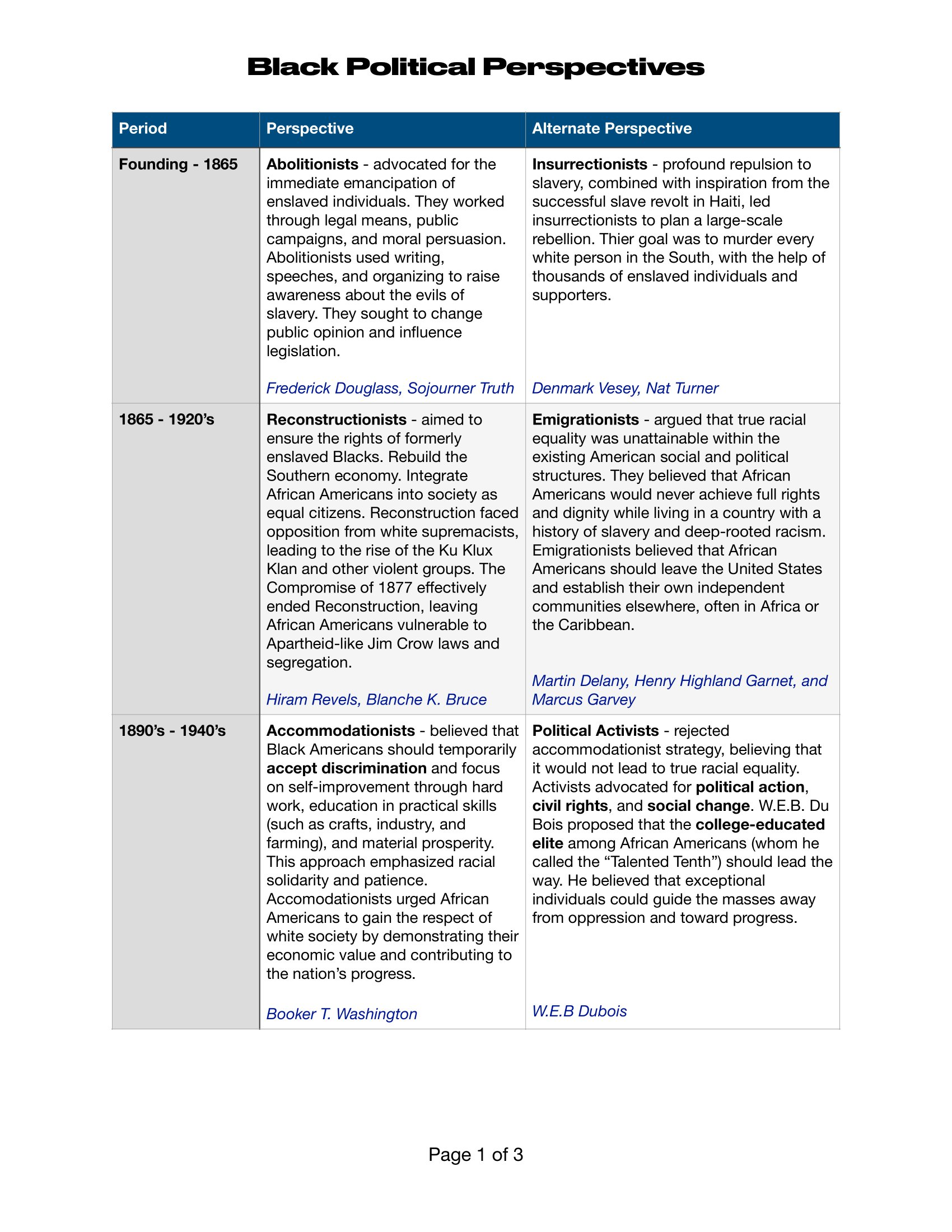
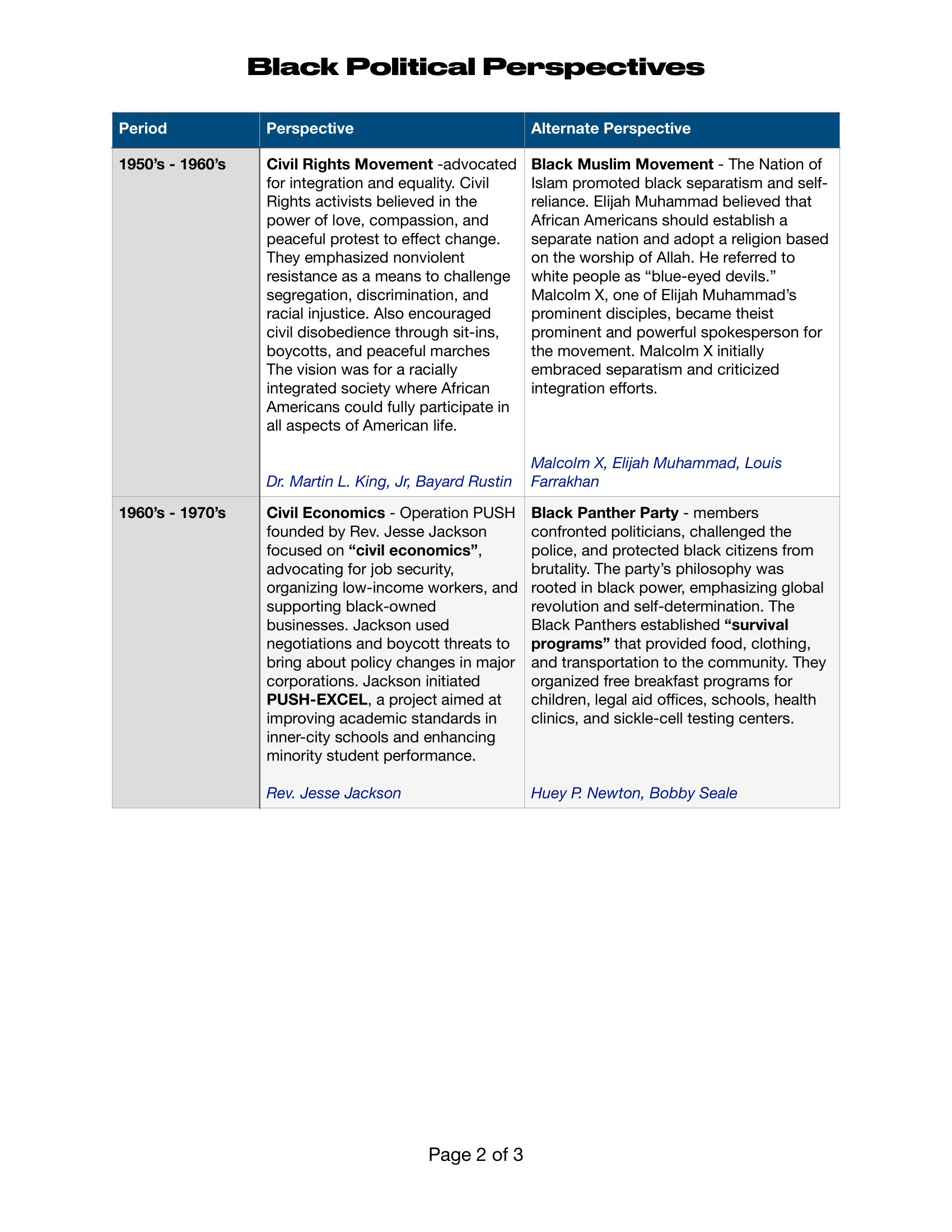
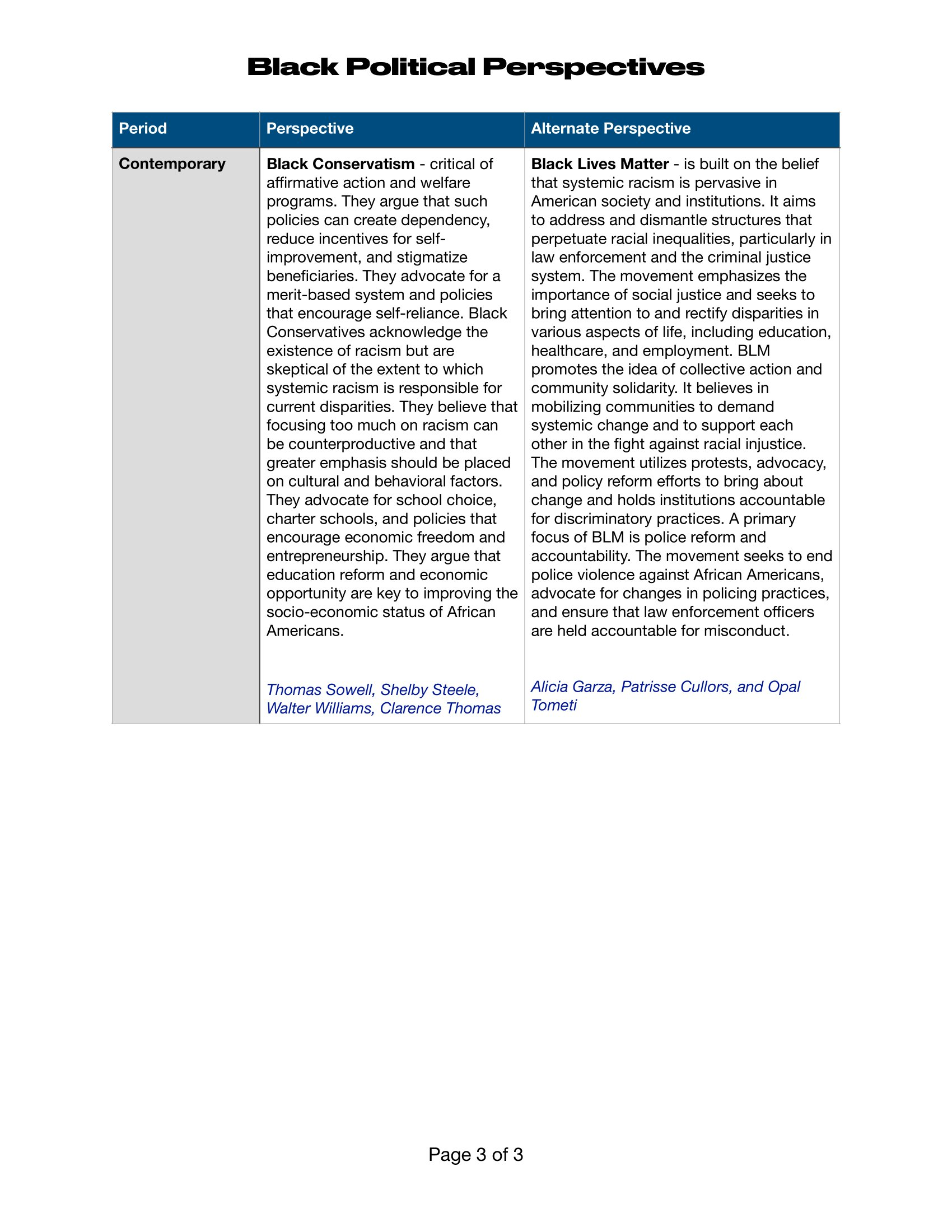
The landscape of Black political thought is diverse, encompassing various ideologies from Black Conservatism to Black Nationalism, from Civil Rights to Black Power movements and from Abolitionist movements to Insurrectionist movements. Familiarity with these different perspectives helps Black youth appreciate the unique complexity and richness of their heritage and the multiple pathways through which their ancestors sought justice and equality.
Fostering Critical Thinking

Analyzing Contrasting Views:
Engaging with the ideas of thinkers like Nat Turner, Frederick Douglass, W.E.B. DuBois, Booker T. Washington, Thomas Sowell, Shelby Steele, and Walter Williams, alongside those of Black Lives Matter and other contemporary movements, encourages critical thinking. Black youth can learn to analyze, compare, and contrast different viewpoints, fostering a deeper understanding of political and social issues.

Developing Informed Opinions:
By studying the evolution of Black political thought, Black youth are better equipped to form their own informed opinions about current issues. This includes understanding the historical roots of systemic racism, the debates surrounding economic policies, and the various approaches to achieving social justice.
Identity and Empowerment

Building a Sense of Identity:
Knowledge of their history and the intellectual legacy of their forebears helps Black youth build a strong sense of identity and pride. It affirms their place in the American narrative and highlights the resilience and contributions of their community.

Empowerment Through Knowledge:
Understanding the struggles and achievements of past generations can be empowering. It provides Black youth with role models and a sense of continuity, motivating them to engage in activism, leadership, and efforts to bring about positive change in their communities.
Navigating Contemporary Issues

Addressing Systemic Challenges:
The historical and theoretical frameworks provided by Black political thought are essential tools for understanding and addressing contemporary issues such as police brutality, economic inequality, and educational disparities. These frameworks offer insights into the root causes of these problems and potential strategies for overcoming them.

Resisting Misrepresentation:
The current assault on CRT often involves misrepresenting it as an anti-American ideology. In reality, CRT and the broader study of Black political thought provide critical analyses of American history and society, essential for a comprehensive education. By understanding these ideas, Black youth can better resist and challenge attempts to restrict or distort their history and the ongoing struggle for justice.

Countering the Assault on Critical Race Theory

The Importance of Accurate Historical Education:
The misrepresentation of CRT as a divisive or harmful ideology is a red herring that distracts from its true purpose: to critically examine and understand the role of race and racism in shaping American society. Restricting the teaching of CRT and related historical content deprives Black youth of crucial knowledge and undermines efforts to create an informed and equitable society.

Advocating for Comprehensive Curriculum:
Ensuring that Black youth have access to a comprehensive and accurate curriculum that includes the evolution of Black political thought is essential. This not only fosters a more inclusive education system but also prepares all students to engage thoughtfully and empathetically with issues of race and social justice.

In conclusion, more than ever before, it is vital for Black youth to know and understand the evolution of Black political thought in America. This knowledge enriches their historical awareness, fosters critical thinking, nurtures their sense of identity, empowers them to address contemporary challenges, and equips them to counter efforts to misrepresent and restrict their history. Ensuring access to this important information is a crucial step towards a more just and informed society

    The Transfer Portal’s Impact on High School Basketball Scholarships: Why Play in the Black Cager Pre-Live Summer Classic?

    By Delgreco K. Wilson

    PHILADELPHIA, PA – May 14, 2024 – The world of college basketball scholarships has undergone a seismic shift in recent years, and the epicenter of this transformation lies in the transfer portal. Once a mere footnote in the recruiting process, the transfer portal has now become a game-changer, reshaping the landscape for both high school prospects and college coaches.

    The Transfer Portal: A New Frontier

    Imagine a bustling marketplace where athletes can freely explore their options, unshackled by the traditional constraints of commitment. That’s the transfer portal—a digital agora where players can test the waters, seek greener pastures, and redefine their collegiate destinies. No longer bound by the rigid boundaries of their initial commitment, student-athletes can now move with unprecedented fluidity.

    The Recruiting Dance: A New Choreography

    For college coaches, the transfer portal has rewritten the recruiting playbook. Gone are the days when coaches could meticulously court high school phenoms, nurturing them from raw talent to polished stars. Instead, they find themselves wading through a sea of experienced players who have already tasted the college game. These transfer prospects arrive battle-tested, their skills honed in the crucible of actual competition.

    The Second (and Third) Act

    In this new era, players transferring for the second or even third time are no longer outliers—they’re the norm. The transfer portal grants immediate eligibility, allowing these seasoned athletes to step onto the court without missing a beat. Their maturity, physicality, and court awareness make them coveted assets for college programs hungry for instant impact.

    The High School Dilemma

    But what of the high school prospects—the fresh-faced dreamers who once held the keys to college basketball scholarships? Their path has grown rockier. With more than 2,000 transfer prospects flooding the market, coaches now have a buffet of options. Why invest in an untested high schooler when a battle-tested transfer is readily available?

    The Numbers Don’t Lie

    Let’s crunch the numbers. In the Big Ten alone, 79 scholarship players entered the transfer portal during the recent window. These weren’t just fringe players; some were major contributors. The transfer frenzy has left high school recruits jostling for attention, their star potential overshadowed by the allure of experience.

    The Way Forward

    As we navigate this brave new world, we must strike a balance. Yes, the transfer portal offers exciting opportunities for athletes seeking fresh starts. But let’s not forget the magic of discovering raw talent—the high school kid with fire in their eyes, dreaming of cutting down nets. College coaches, take heed: The next superstar might still be shooting hoops in a high school gym.

    In the end, the transfer portal isn’t the villain—it’s the catalyst for change. As we recalibrate our expectations, let’s remember that every journey begins somewhere. Perhaps, just perhaps, the next college basketball legend is dribbling a ball on a high school court, waiting for their chance to shine.

    High School Live Periods

    In the world of college basketball recruiting, there remain High School Live Periods when coaches focus their attention on high school prospects. These critical junctures allow coaches to assess both academic qualifications and playing ability. Among these periods, two specific windows stand out: June 21-23 and June 28-30. During these six days, Division 1 college coaches engage in off-campus activities to evaluate prospective student-athletes. Importantly, no in-person, off-campus recruiting contacts occur during these evaluation periods.

    Black Cager Pre-Live Summer Classic

    The Philadelphia/Camden region boasts one of the nation’s premier live events for high school prospects: “Philly Live.” Hundreds of Division I college coaches converge on Philadelphia annually to scout local talent. For high school coaches, participation in Philly Live has become essential—a strategic move to position their players for basketball scholarships. But there’s more: the Black Cager Pre-Live Summer Classic, taking place on June 15th and 16th, offers an additional opportunity. This event allows coaches to “warm up” their teams with two highly competitive games, closely mirroring the actual live period. Coaches can analyze game footage from these matchups to prepare for the high school live period.

    While Division I coaches cannot attend the Black Cager Summer Classic, hundreds of small college coaches do. NAIA, Division II, and Division III coaches actively recruit players at Black Cager events. For high school coaches aiming to help their players secure college scholarships, participating in Black Cager tournaments is a strategic move that pays huge dividends. It’s an opportunity to showcase talent, build connections, and open doors for aspiring student-athletes. So, as the calendar turns to those crucial June days, the basketball world watches, and high school coaches seize their limited opportunities to shape the future of the game for the young men in their respective programs.

    An Open Letter from Donta Scott ’24 to the University of Maryland Community

    Dear Terrapin Family,

    As I prepare to graduate this month, I find myself reflecting on my incredible journey at the University of Maryland. It’s hard to believe that just a few years ago, I arrived in College Park as a shy young man with a learning disability. I spent much of my elementary and middle school years struggling to adjust to school. Basketball became my way up and out of Norristown, PA. Basketball led me to Coach Andre Noble and Imhotep Charter High School where I learned how to learn. Today, I stand before you as a college graduate, a published author, and the all-time leader in basketball games played in a Terrapin uniform. This transformation wouldn’t have been possible without the unwavering support of this community.

    First and foremost, I want to express my sincere gratitude to the Maryland basketball fanbase. Your prayers and encouragement during our most challenging times meant the world to me and my family. When our home was flooded out, you rallied together, raising over $60,000 to ensure that my mother and siblings could relocate. Your kindness and generosity touched our hearts, and we will forever be grateful.

    Throughout my time here, I had the privilege of playing for three different coaches: Mark Turgeon, Danny Manning, and Kevin Willard. While coaching changes can be unsettling for players, I never once considered transferring. Why? Because I knew that my place was right here in College Park. Thousands of college basketball players enter the transfer portal each year, seeking greener pastures elsewhere. But for me, there was no place I’d rather be than wearing the red, black, and gold of the Terps.

    As I step off the court and into the next chapter of my life, I carry with me the memories, friendships, and life lessons that this university has given me. My book, WIRED DIFFERENTLY: My School Journey, chronicles my K-12 educational experience as a student who learned differently. It’s a testament to the power of perseverance, resilience, and the unwavering support of a community that believed in me.

    To my teammates, coaches, professors, and fellow students: thank you for shaping me into the person I am today. I am proud to be a Terp for life, and I will continue to carry the spirit of Maryland with me wherever I go.

    Go Terps!

    Sincerely,

    Donta Scott ’24