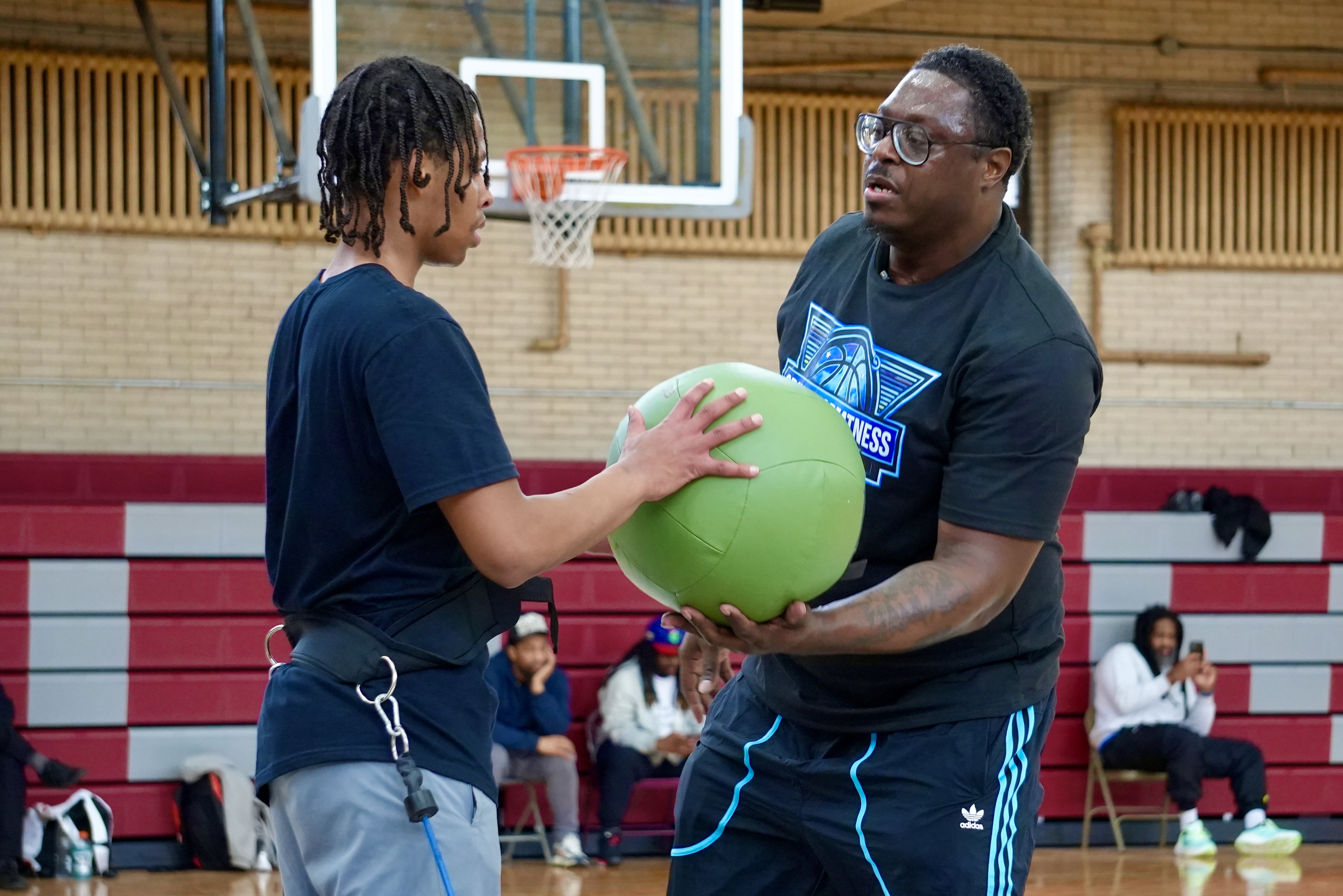
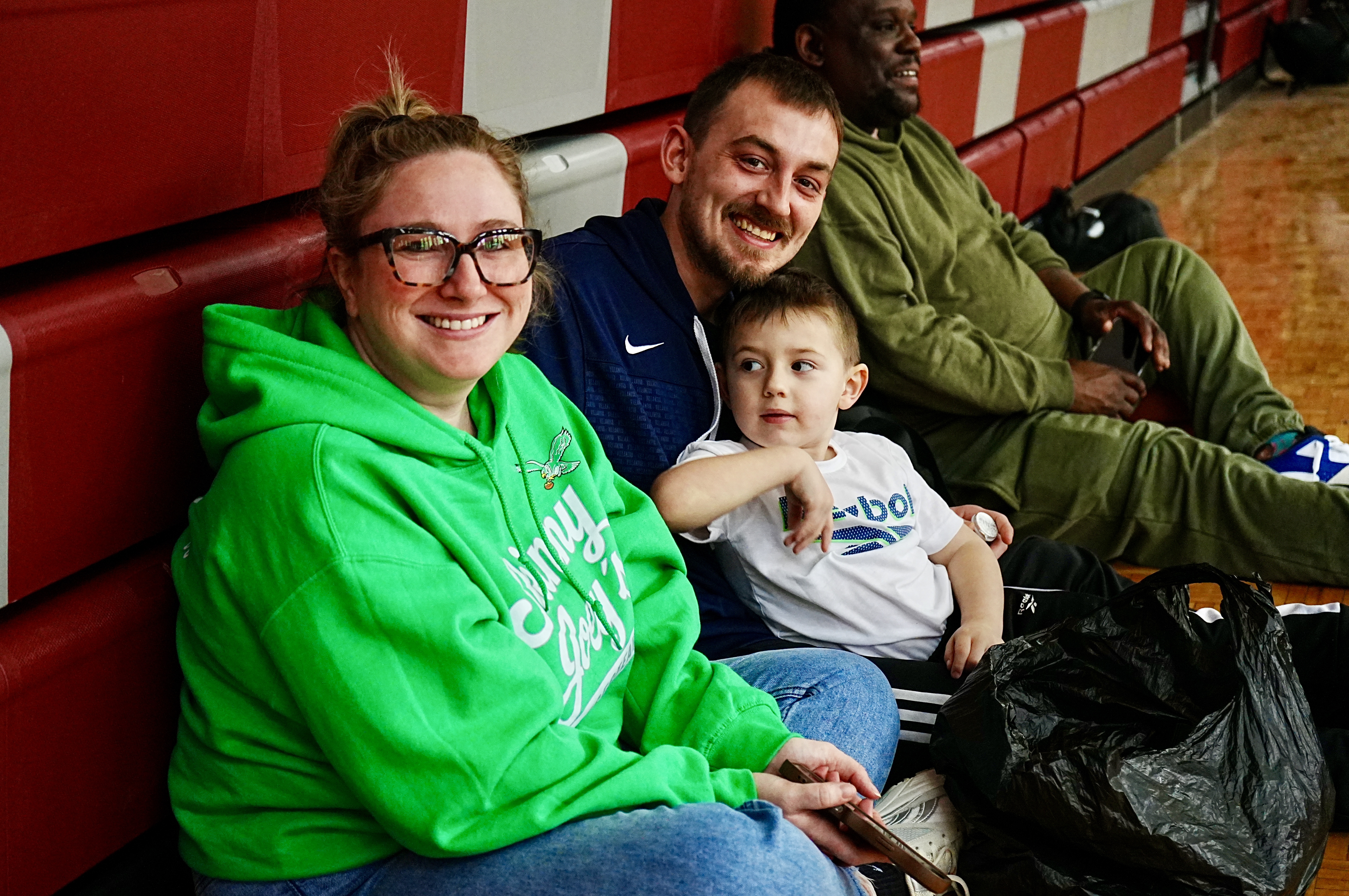
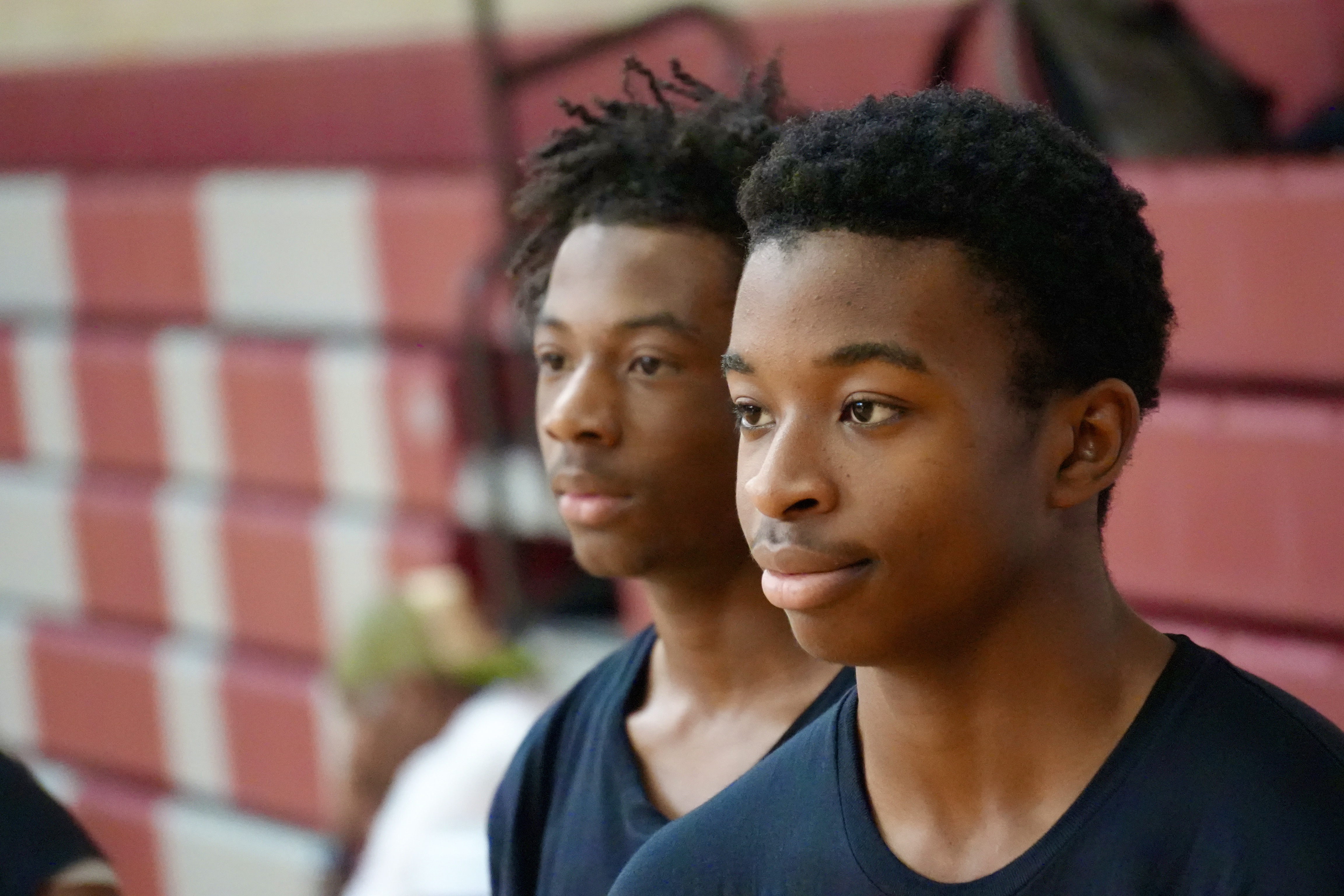
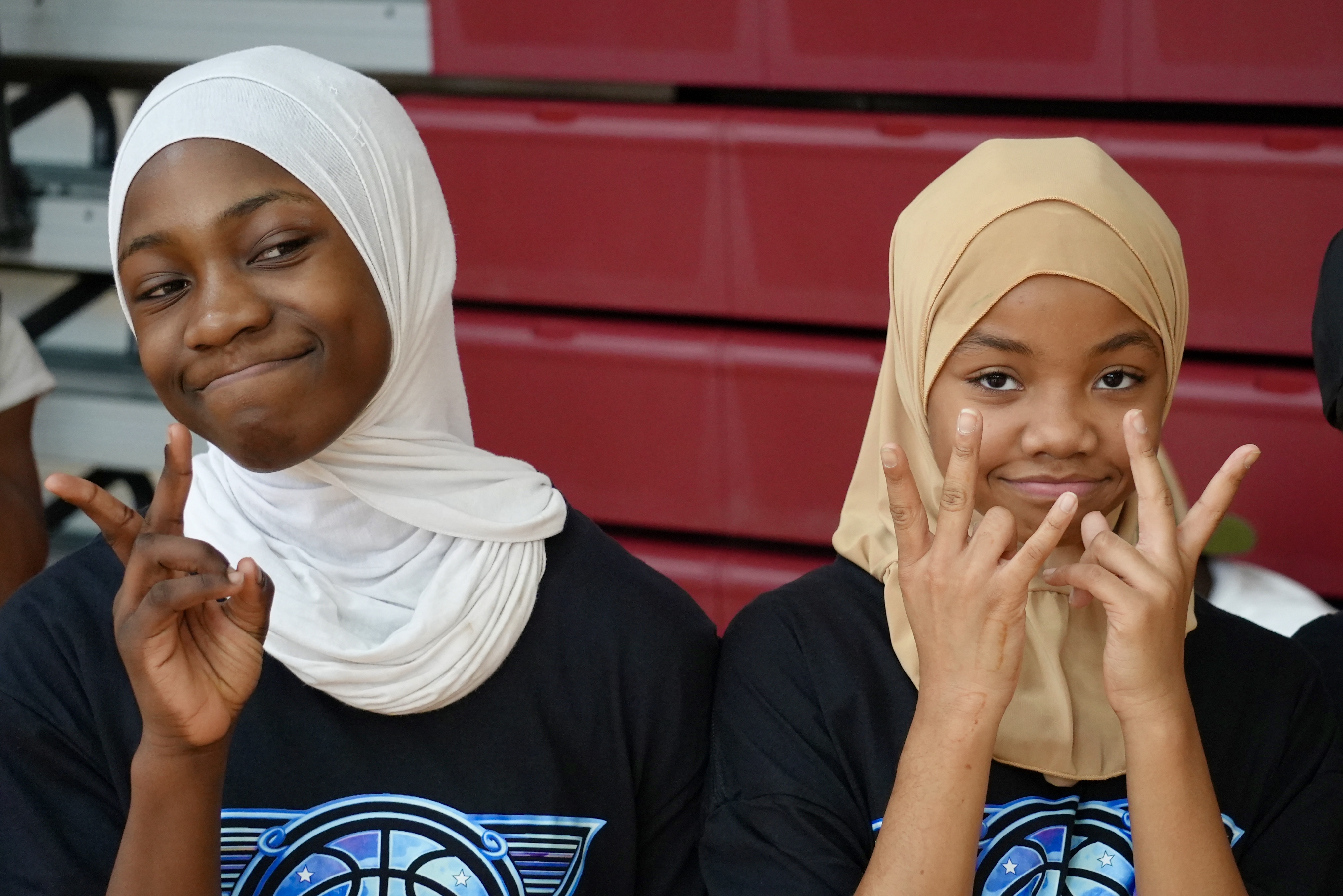
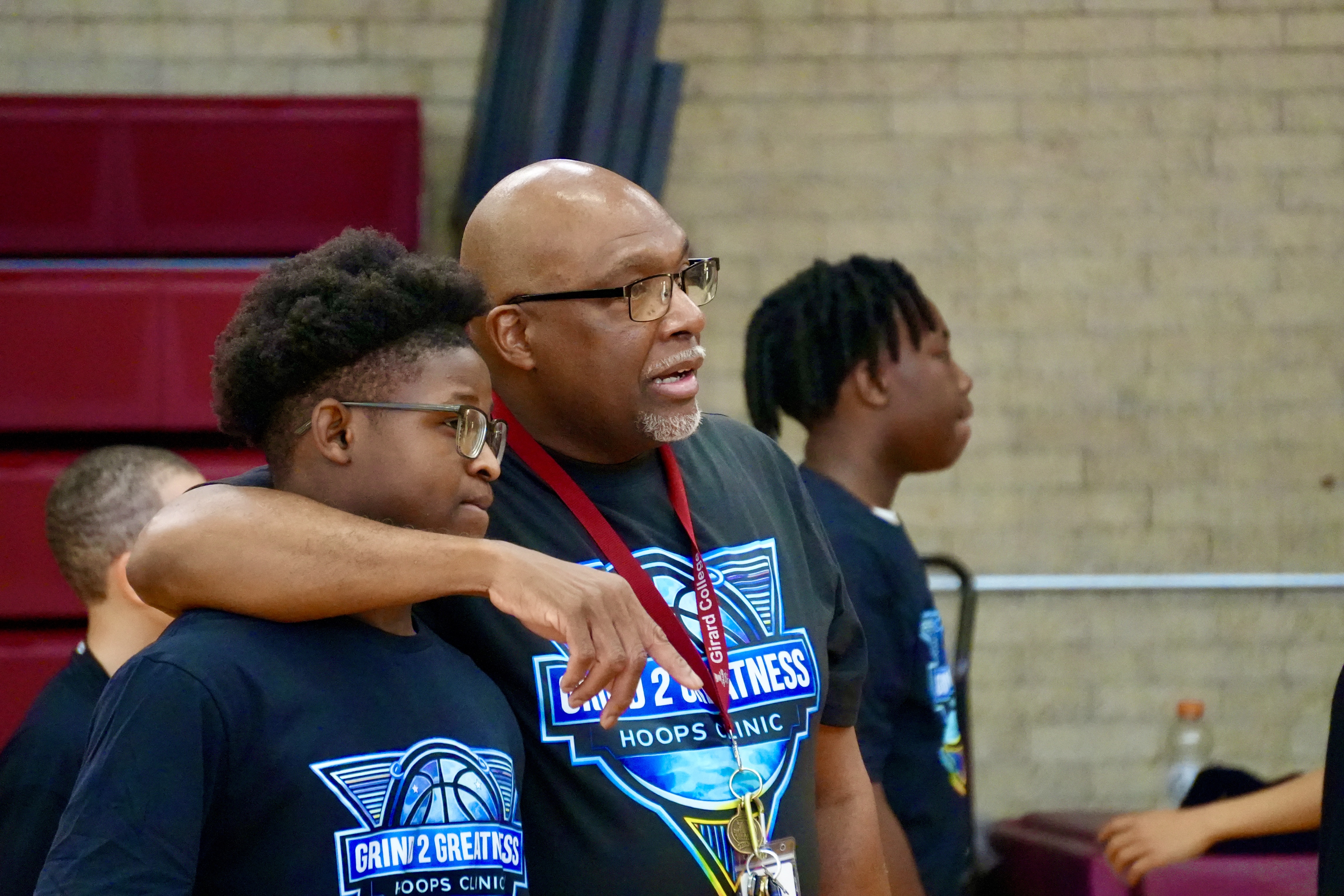
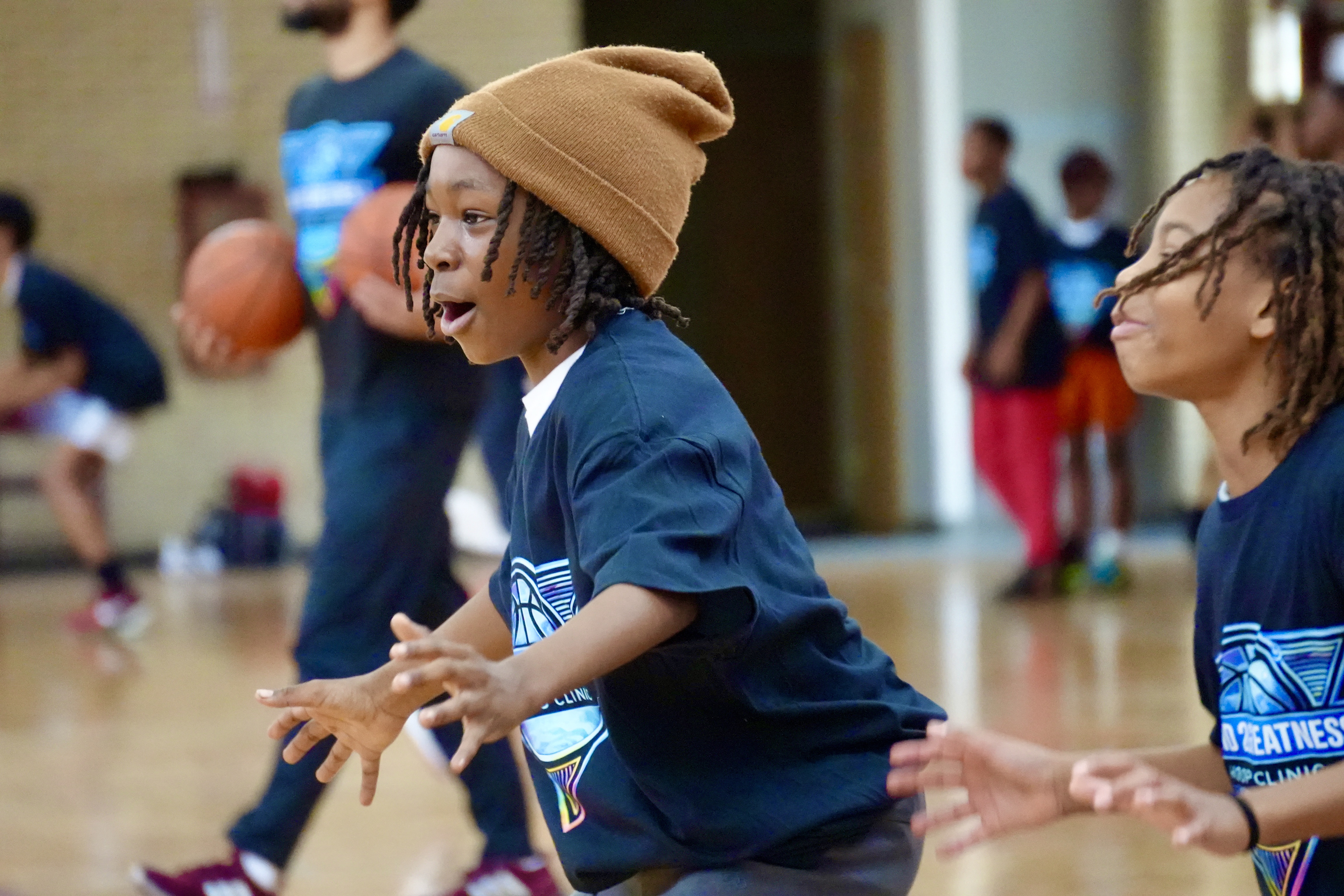
PHILADELPHIA, PA – On a sun-splashed Sunday afternoon on the scenic campus of Girard College, Jamal Nichols and his non-profit organization, GRIND 2 GREATNESS brought together more than 100 children. They gathered not for a championship game or a high-stakes tournament, but for something far simpler and increasingly rare: a free basketball clinic. They came from across Philadelphia, lacing up sneakers that had seen better days, clutching dreams that had not yet been priced out of existence.
The scene was at once ordinary and extraordinary. Ordinary because it featured the timeless elements of childhood — the squeak of rubber on hardwood, the laughter of young people at play, the patient instruction of adults who cared. Extraordinary because in 2026 America and modern day Philadelphia, such gatherings have become an endangered species.
What unfolded within the stately walls of Girard College was an act of quiet rebellion against a youth sports industrial complex that has transformed play into product, turning America’s playgrounds into profit centers and its children into consumers before they have learned to tie their own cleats.
The $40 Billion Machine
Youth sports in America is no longer merely an activity. It is an industry. With an estimated annual value of $40 billion, the ecosystem of travel teams, club leagues, private coaching, and tournament circuits now rivals the GDP of small nations . Private equity firms, family offices, and corporate investors have descended upon this once-pastoral landscape with the enthusiasm of prospectors who have struck gold.
They have built gleaming sports complexes where none existed. They have created entire leagues from scratch, marketing them not as opportunities for exercise and camaraderie but as essential waypoints on the road to college scholarships and professional careers. They have convinced millions of American families that the path to athletic fulfillment is paved with credit card swipes.
This is not our parents’ youth sports system. Gone are the days when local offshoots of Little League Baseball and Pop Warner reigned supreme, when children played multiple sports by season, when the neighborhood field or the parish gymnasium served as the natural gathering place for young athletes. In their place stands a new apparatus — sleek, expensive, and ruthlessly selective.
The average American family now spends more than $1,000 annually on a child’s primary sport, a staggering 46 percent increase since 2019 . For families with multiple children, for single-parent households, for those already struggling to meet the basic costs of urban existence, this figure might as well be a million dollars. And yet the marketing machine hums on, whispering promises of Division I scholarships and NIL deals to parents who can ill afford the lottery tickets they are purchasing .
The Vanishing Commons
The consequences of this commercial transformation are written on the landscape of America’s cities. In Philadelphia, in Baltimore, in Washington, D.C., and in Camden, New Jersey, the asphalt basketball courts that once pulsed with life have fallen silent. The pickup game — that great democratic institution where skill mattered more than surname, where the only requirement for participation was showing up — has become a relic.
It is increasingly difficult to find 10 players for a full-court run. The reasons are many, but they share a common denominator: the migration of athletic activity behind a paywall. Young people no longer simply “play.” They train. And they train not in the company of peers but in isolation, under the watchful eye of expensive private trainers in sterile, rented gymnasiums. Their opponents, all too often, are not other children learning the game together but cones and chairs arranged in geometric precision .
What is lost in this transaction extends far beyond the physical benefits of exercise. When children play together on public courts, they build what sociologists call social capital — the networks of relationships that enable communities to function and individuals to thrive. They form friendships across neighborhood boundaries. They learn to navigate conflicts without adult intervention. They develop the “weak ties” — connections to coaches, officials, and other parents — that can later provide access to jobs, opportunities, and resources .
The pickup game is, among other things, a classroom in miniature. Players learn to cooperate toward shared goals, to understand the perspectives of teammates and opponents alike, to manage the frustrations of defeat and the temptations of victory. They discover that their role, however modest, contributes to a collective outcome. They practice leadership and followership in equal measure.
These lessons do not appear in any brochure. They cannot be purchased at any price. They emerge organically from the simple act of children playing together. And they are disappearing along with the public spaces that once hosted them.
The Exclusionary Economics of Elite Play
For those who cannot afford the entry fee, the message from the youth sports establishment is unmistakable: there is no place for you here.
Children from low-income families are six times more likely to drop out of organized sports than their wealthier peers . This is not a reflection of interest or ability but of simple arithmetic. When travel team fees range from $2,000 to $10,000 annually, when tournaments require hotel stays and restaurant meals, when equipment must be purchased and replaced, participation becomes a luxury good .
The consequences cascade through communities. Schools and recreation centers that once fielded teams find their best athletes drawn away by expensive private clubs. The remaining children, those whose families cannot compete in this arms race of expenditure, are left with diminished programs or none at all. The cycle reinforces itself: as more families opt for the private route, public investment in community sports declines, making the private option seem not merely attractive but necessary.
Even the dream of athletic scholarships, so carefully cultivated by the marketing departments of travel teams and club programs, proves largely illusory. Only 8 percent of parents believe the primary goal of youth sports should be a college scholarship, and just 12 percent cite professional preparation as the objective . Yet the system operates as if every child were a prospect in waiting, pushing ever-greater expenditures on families who know, in their hearts, that the odds are remote.
What Community Sports Teach
The value of accessible youth sports cannot be reduced to the number of Division I signings or professional contracts they produce. It must be measured in less tangible but ultimately more significant currencies: the development of competence, the experience of belonging, the acquisition of life skills that transfer far beyond the playing field.
In well-structured athletic environments, children learn to deal with adversity. They experience failure in a relatively safe context — a lost game, a missed shot, a coaching critique — and discover that disappointment need not be devastating. They build resilience and perseverance, qualities that will serve them long after their athletic careers have ended .
They explore identity. For adolescents especially, sports offer a valuable arena for testing limits, discovering passions, and seeing themselves in new roles — as leaders, as strategists, as supportive teammates. The question “Who am I?” finds partial answers on courts and fields where young people can experiment with different versions of themselves.
They learn responsibility. Being part of a team teaches that actions have consequences for others. Showing up on time, giving honest effort, supporting a struggling teammate — these behaviors become habits that shape character. The lesson that one’s choices affect the group is foundational to civic life .
Crucially, these benefits are not guaranteed. They depend on environments where coaches prioritize effort and learning over winning, where skill mastery takes precedence over social comparison, where parents provide support without pressure. When those conditions are absent — when the focus narrows to outcomes alone — the experience can produce burnout, stress, and the learning of unsportsmanlike behavior.
But when they are present, when children are allowed to play without the crushing weight of adult expectations and financial investment, the results are transformative. High school athletes have 40 percent lower dropout rates and are twice as likely to graduate. Young people in organized sports are 50 percent less likely to experience depression and 25 percent less anxious. They are three times more likely to volunteer in their communities and half as likely to use drugs .
These statistics describe outcomes that money alone cannot buy. They are the products of communities that invest in their young people, of programs that prioritize inclusion over exclusion, of adults who show up not for paychecks but for purpose.
The Alternative Model: Community-Based Nonprofits
Against the tide of commercialization, a countermovement is gathering strength. Across the country, organic community-based nonprofit organizations are demonstrating that another way is possible — that youth sports can be accessible, inclusive, and developmental without being expensive.
These organizations operate on a fundamentally different logic than their commercial counterparts. Rather than treating athletic participation as a commodity to be sold to the highest bidder, they approach it as a public good — a right of childhood rather than a privilege of wealth.
They eliminate financial barriers through sliding-scale fees, free programming, and equipment libraries that provide cleats, gloves, and shin guards to families who cannot afford them . They arrange transportation for children whose parents work multiple jobs or lack vehicles. They fund their work through grants, donations, and local fundraising rather than participant fees.
They leverage existing infrastructure — public parks, school gymnasiums, church parking lots, empty lots transformed into playing fields. By partnering with parks departments and school districts, they access facilities at minimal cost, ensuring that resources go directly to children rather than facility rentals .
They cultivate organic leadership drawn from the communities they serve. Coaches are often volunteers — parents, older siblings, former players, local residents who understand the specific challenges their players face. These coaches do more than teach skills. They become mentors who help families navigate school systems, connect them to social services, provide the consistent adult presence that may be missing elsewhere .
They prioritize inclusion through no-cut policies and a focus on participation over tournament victories. Every child who wants to play has a spot. The goal is not to produce elite athletes but to use sports as a hook — a way to keep young people engaged, healthy, and connected to positive peer groups.
Organizations like Washington, D.C.’s Open Goal Project, which serves 500 children through no-fee club teams and summer camps, demonstrate the model’s viability . Programs in Atlanta and Chicago show that creative partnerships between local government, nonprofits, and corporate sponsors can unlock opportunities for entire neighborhoods . The YMCA’s recreational leagues, focused on “achievement, relationships, and belonging” rather than elite competition, continue to provide affordable options for millions of families .
These efforts are not charity in the traditional sense. They are investments in human potential, in community cohesion, in the social fabric that holds cities together. And they are desperately needed.
The GRIND 2 GREATNESS/Girard College Model: A Philadelphia Story
On March 8, 2026, that alternative vision found expression on the campus of Girard College, a landmark independent boarding school that has provided full-scholarship education to Philadelphia children from families with limited financial resources since 1848. The setting was fitting: an institution built on the principle that opportunity should not depend on circumstance, opening its doors to the wider community.
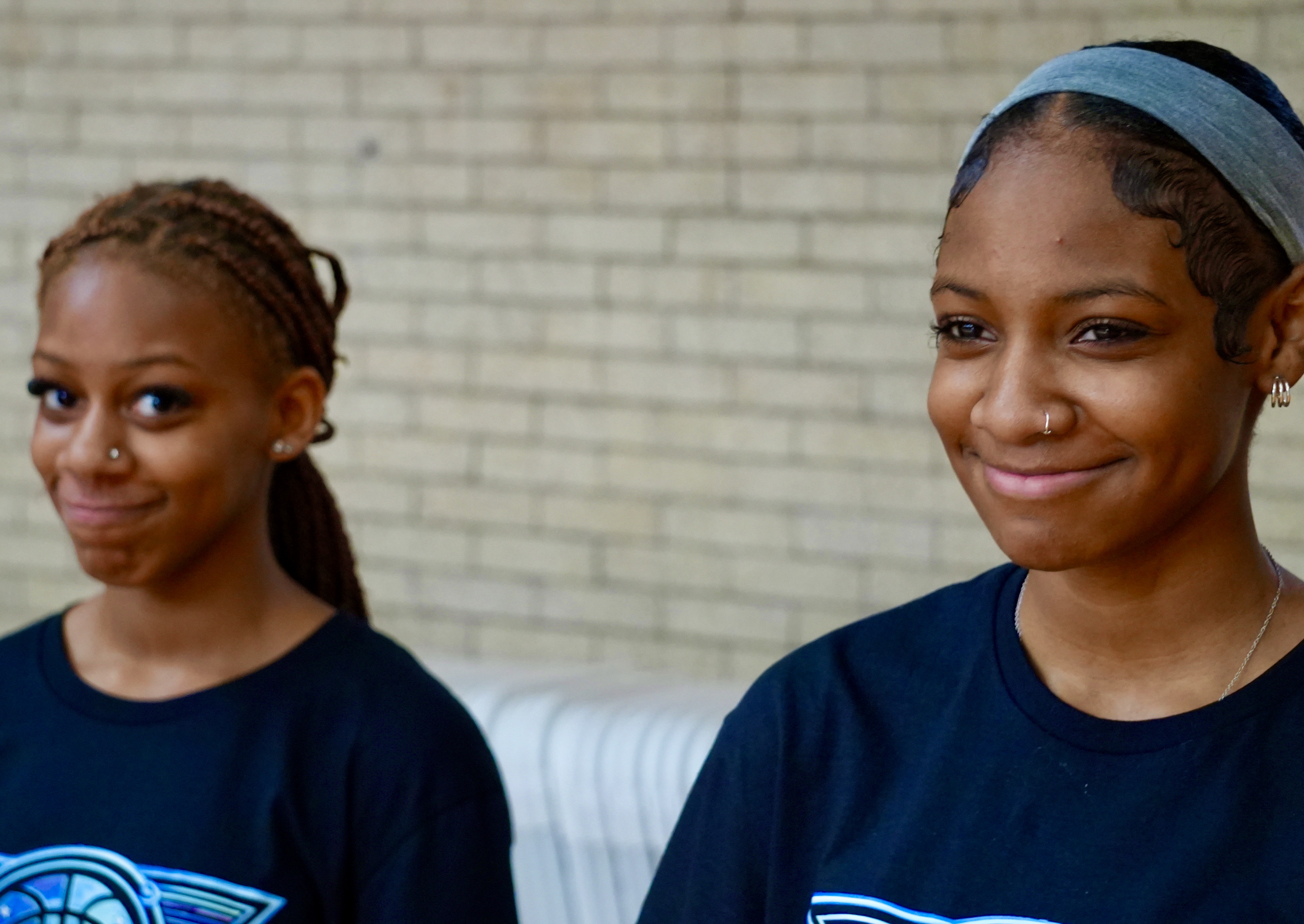
The free basketball clinic organized by Jamal Nichols’ GRIND 2 GREATNESS drew more than 100 participants. Some were talented players with aspirations of high school stardom. Most were “developing ballers” — children still learning the game, still finding their footing, still discovering whether basketball might become a passion. For them, the clinic offered something priceless: instruction from adults who had reached the highest levels of the sport and returned to share what they learned.
Nichols himself embodies the possibilities of athletic achievement and the responsibilities it entails. A Philadelphia native and 2001 graduate of Ben Franklin High School, he won the Markward Award as the Public League’s Player of the Year before embarking on a collegiate career that took him from St. Joseph’s University to Riverside (Calif.) Community College to Globe Tech in New York to DePaul University . From there, he spent more than a decade playing professionally in Europe and the Middle East.
But Nichols did not simply accumulate accolades and move on. He returned to complete his bachelor’s degree at DePaul. He is now pursuing a master’s degree while working as an educator. And through Grind 2 Greatness, he provides free and low-cost opportunities for urban youth who might otherwise be locked out of the game entirely .
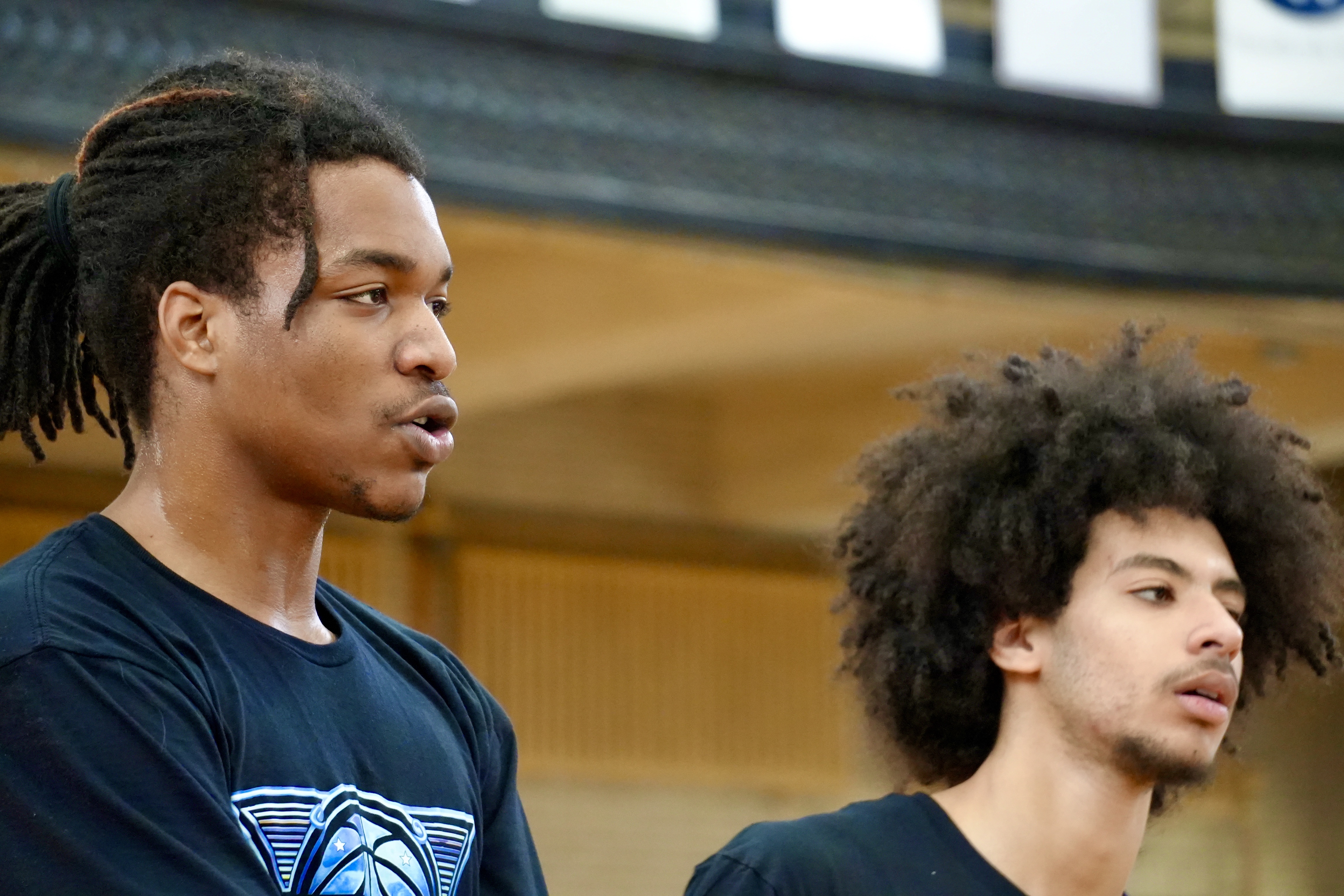
Beside him on the Girard College floor stood Mark Bass, the Cavaliers’ first-year head coach. Bass brings more than 25 years of experience to the role, including a 20-year tenure on Phil Martelli’s staff at St. Joseph’s University, where he helped develop NBA players Jameer Nelson, Delonte West, and DeAndre Bembry . A member of both the Mercer County Sports Hall of Fame and the St. Joseph’s University Basketball Hall of Fame, Bass could easily rest on his laurels or pursue more lucrative opportunities .
Instead, he chose Girard College, an institution whose mission aligns with his own commitment to using basketball as a vehicle for teaching life lessons. In his first season at the helm, Bass transformed a program that had won just five games the previous year into an 18-win team — a turnaround that surprised no one who knew his work at Trenton Catholic Preparatory Academy, where he led an undersized and undermanned squad to a state championship game appearance in his debut season .
Nichols, from Philadelphia, and Bass, from Trenton, represent something increasingly rare in youth sports: accomplished men who have reached the pinnacle of their profession and have no desire to live through or profit from the exploits of middle and high school students. They are not selling access, promising scholarships, or building personal brands. They are showing up, day after day, to work with children who need what they have to offer.
The Collaboration Imperative
The Grind 2 Greatness clinic at Girard College also illustrates another essential truth: in the struggle to preserve accessible youth sports, no institution can succeed alone. Partnerships between community organizations, educational institutions, and public agencies are not merely helpful but necessary.
Girard College deserves special recognition for opening its beautiful, safe, and secure campus to this effort. In a city where violence and insecurity too often limit children’s freedom to move and play, the school provided a sanctuary — a place where parents could entrust their children without fear, where the only concerns were basketballs and learning.
This is exactly the kind of collaboration struggling communities need. Schools with gymnasiums, parks with fields, churches with parking lots — these assets exist in every city. The question is whether they can be mobilized in service of young people, whether institutions can see beyond their immediate missions to recognize their roles in the larger ecosystem of youth development.
The answer, in too many cases, has been no. Facilities sit empty while children play in the streets. Insurance concerns trump community needs. Institutional boundaries become barriers rather than bridges. The commercial youth sports industry has exploited this fragmentation, building private facilities that fill the gap — for those who can pay.
But models like the one emerging at Girard College suggest another path. When schools open their doors, when community organizations bring their expertise and relationships, when funders support the combination, the results can be transformative. The whole becomes greater than the sum of its parts.
The Stakes
What is at stake in the struggle for accessible youth sports is nothing less than the future of American childhood. The trends are clear and deeply troubling. Seventy percent of children now quit organized sports by age 13 . Inactive youth feel negatively about themselves at nearly double the rate of active youth . One in three young people ages 10 to 17 are overweight or obese, with lifetime medical costs projected to exceed a trillion dollars .
Meanwhile, children spend an average of nearly eight hours daily on screens — two hours more for those who do not participate in extracurricular activities . Excessive screen time is linked to depression, anxiety, and reduced self-esteem. The loss of regular, in-person team activities means the loss of daily opportunities to build confidence, belonging, and real-world social connection.
These are not merely individual tragedies. They are collective failures with economic and social consequences that will reverberate for decades. The Healthy People 2030 goal of 63 percent youth sports participation would require adding about 3 million young people to the rolls of athletes — and would result in $80 billion in savings from reduced medical costs and lost productivity .
But the case for accessible youth sports cannot rest on dollars alone. It must rest on the kind of society we wish to be. Do we believe that the benefits of athletic participation should belong only to those who can afford them? Do we accept that children in low-income communities should be denied the physical, social, and emotional development that sports provide? Do we consent to a system that treats young people as consumers rather than as members of communities worthy of investment?
The answers to these questions will determine not only the fate of youth sports but the character of American childhood. In a nation increasingly divided by wealth and opportunity, the basketball court and the soccer field have historically served as rare spaces of integration — places where children from different backgrounds meet on something approaching equal terms. The erosion of those spaces threatens to accelerate the segregation of American life, confining young people to the narrow circles of their own circumstances.
A Path Forward
The commercial takeover of youth sports is not inevitable. It is the product of choices — by investors seeking returns, by parents seeking advantages, by institutions seeking revenues. And what has been chosen can be unchosen.
The path forward requires a fundamental reorientation of priorities. It requires recognizing that youth sports are not primarily a talent pipeline for college athletics or professional leagues. They are a public health intervention, a youth development strategy, a community-building tool. They belong in the same category as libraries, parks, and schools — essential public goods that require public investment.
It requires funding models that prioritize access over exclusivity. Public dollars for youth sports should flow to programs that serve all children, not those that cream the most talented or the most affluent. School districts should resist the temptation to outsource athletics to private clubs and should instead strengthen their own offerings. Parks departments should reclaim their historic role as providers of recreational opportunity.
It requires coach development that emphasizes positive youth development over tactical sophistication. The best coaches are not necessarily those with the most impressive playing resumes but those who understand child development, who can create psychologically safe environments, who prioritize effort and learning over winning . Programs that train coaches in these skills are essential.
And it requires a cultural shift — a rejection of the scarcity mindset that tells parents their children must specialize early, must play year-round, must join expensive travel teams to have any chance of success. The evidence suggests otherwise. Most elite athletes played multiple sports as children. Most college scholarships go to students who will never play professionally. The race to nowhere benefits no one except those selling the tickets.
Conclusion
On that Sunday afternoon at Girard College, none of these larger questions were visible on the surface. What was visible were children — running, jumping, laughing, learning. What was visible were coaches — patient, encouraging, present. What was visible was community — gathered not around screens or spreadsheets but around the simple act of play.
Jamal Nichols and Mark Bass, standing at the front of that gymnasium, were not thinking about $40 billion industries or private equity investments. They were thinking about the children before them — about the joy of the game, the lessons it teaches, the possibilities it opens. They were doing what concerned and accomplished adults have always done: passing along what they have learned to the next generation.
But their work exists within a context that cannot be ignored. They are swimming against a powerful current. They are preserving something precious in the face of forces that would sweep it away. They are demonstrating, by their example, that another way is possible.
The question for the rest of us is whether we will join them. Whether we will demand that our public institutions invest in youth sports as the public good they are. Whether we will support the community-based organizations that provide opportunity without exclusion. Whether we will resist the commercialization of childhood and insist that play remain play.
The children cannot wait. Every day that passes without action is another day in which the gap between those who can afford youth sports and those who cannot grows wider. Every day is another day in which the asphalt courts grow quieter, the pickup games grow rarer, the opportunities for simple play grow fewer.
But on days like March 8, 2026, at places like Girard College, hope breaks through. More than 100 children found their way to a free basketball clinic. They found coaches who cared about them. They found a community that welcomed them. They found, for a few hours on a Sunday afternoon, what childhood should be.
The work of extending that experience to every child, in every neighborhood, is the great challenge of our time. It is a challenge we can meet — if we choose to.


 The Black Cager