CHERRY HILL, NJ – For more than four decades, I have been privileged to work with young people. I have sat with them in cramped overcrowded classrooms, visited them in dark desolate detention centers, and talked with them on stoops long after the streetlights have flickered on. Through all those years, one of the most difficult things to observe remains the professional who refuses to learn.
It is a specific kind of tragedy to watch a social worker, a tutor, a counselor, or a teacher stand in front of urban Black and Brown youth armed with a college degree but devoid of understanding. In far too many instances, I’ve witnessed behaviors, habits, and customs commonly exhibited by these young people mischaracterized, misunderstood, and placed in a negative light. A boy speaking with animated inflection isn’t being “aggressive”; he is communicating in the cadence of his community. A girl guarding her emotions isn’t being “apathetic”; she is practicing survival. When the adult in charge lacks the cultural vocabulary to translate what they see, the child pays the price.

The High Cost of Not Knowing
When professionals lack cultural competence while working with urban Black and Brown youth, the consequences are not merely interpersonal—they are structural. They manifest in the erosion of trust. Young people are extraordinarily adept at detecting inauthenticity. If a mentor interprets their cultural codes—the humor, the body language, the community-informed skepticism—as defiance, the relationship is dead on arrival. The child retreats, and the adult is left wondering why they cannot “connect.”
This incompetence also leads to a misdiagnosis of potential. I have seen assertiveness labeled as aggression, and curiosity labeled as disruption. Because a professional could not see past their own cultural frame, a child was disciplined rather than developed. This feeds the dismal statistics we see in educational inequity: disproportionate suspension rates and the under-identification of gifted students in communities of color. Furthermore, offering guidance without understanding context—advising a star athlete on college recruitment without acknowledging the financial pressures of his household, for instance—renders that advice hollow. It reinforces a deficit-based stereotype that these kids “just don’t want it bad enough,” when in reality, the system failed to meet them where they are.
Perhaps the most insidious consequence is the psychological harm. When young people are repeatedly exposed to adults who devalue their culture, they begin to internalize that message. They suppress their identity to fit into institutional boxes, creating an exhausting duality that breeds resentment and disengagement. The result is institutional failure and a devastating loss of talent. Urban communities produce enormous cultural, intellectual, and athletic capital, but it goes to waste when the gatekeepers lack the tools to recognize it.
The Lens of Culture
What is culture, exactly? It is not merely ethnicity or cuisine. It is the pattern of thinking, feeling, and reacting that we absorb from the world around us. Scholars like Kluckhohn and Betancourt describe it as shared beliefs, values, and behaviors—the lens through which we interpret reality. Cultural competence, then, is the ability to interpret the stranger’s behavior the way the stranger’s compatriots would. It is the discipline of recognizing that my own way is not the only way, nor the default way.
It requires self-awareness, humility, and a suspension of judgment. It requires us to accept ambiguity and demonstrate a spirit of adventure when confronted with difference. Most importantly, it is a dynamic, never-ending process—not a box to be checked, but a muscle to be exercised.
A Lesson in Kippahs and Crossovers
I have spent much of my career lamenting the damage done when Black and Brown youth are placed in the care of the culturally incompetent. That perspective, born of pain and frustration, is precisely what prepared me for an unexpected education of my own.
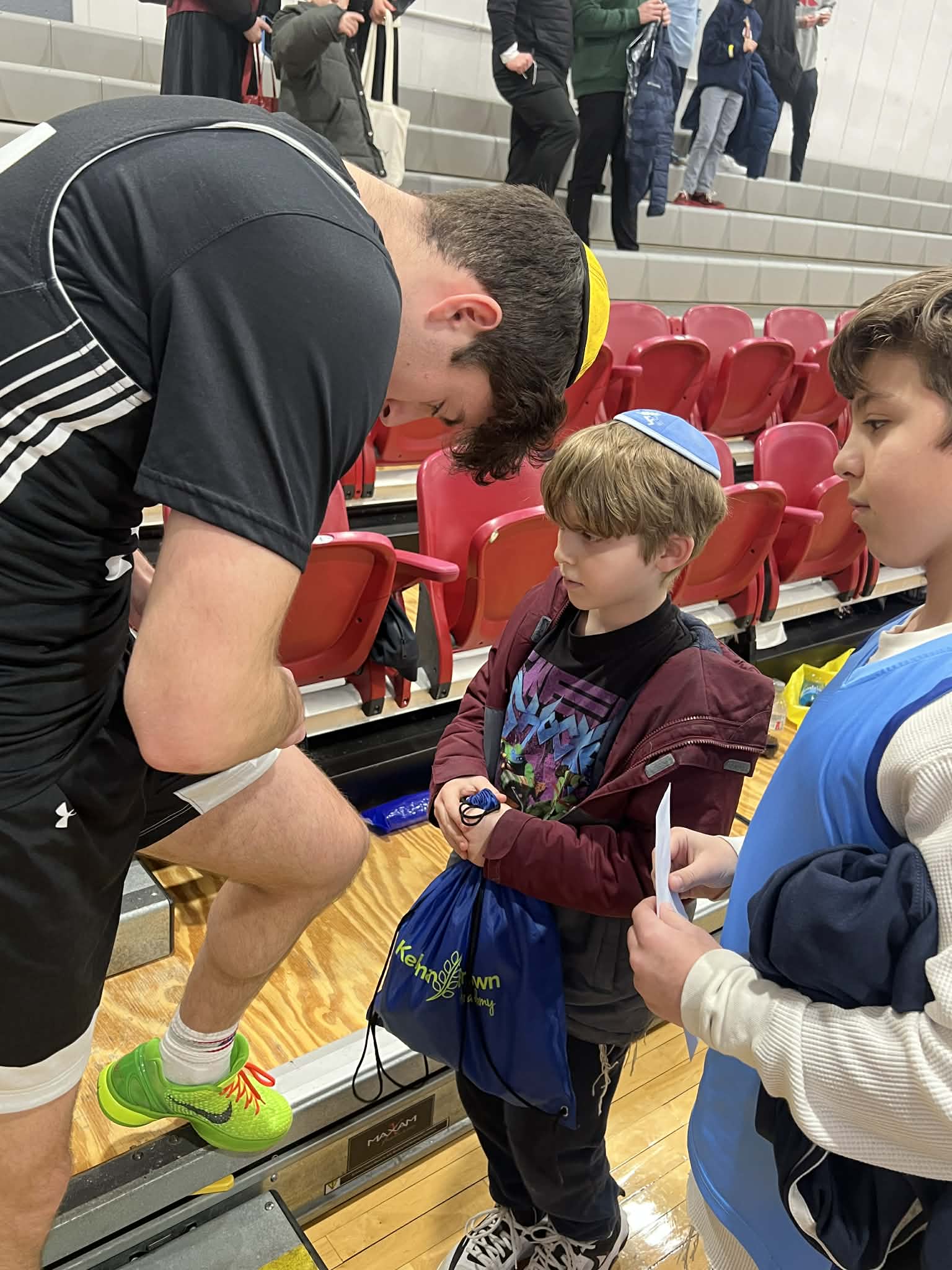
For the past year, I have had the privilege of mentoring two young Orthodox Jewish boys. When I began, my knowledge of their faith and culture hovered just above zero. I had no knowledge of Kosher foods that comply with Jewish dietary laws. I did not know the rhythm of Shabbat. I did not understand the significance of the kippah and the tzitzit. But my youngbuls and their parents, with incredible grace, welcomed me into their home. They took the time to educate me. I visited their schools. I met their friends.
The bridge between us, as it so often is, was sports. Specifically, basketball.
These boys, like me, possess an insatiable appetite for the game. We live for scholastic, collegiate, and professional hoops. I have taken them to college games at Drexel, La Salle, and Rider. I STRONGLY encouraged them to try out for their school team, and made sure they had fresh Kevin Durant (KDs) sneakers on their feet when they did. I have sat through their games—some of them very lopsided—and cheered just as loud in defeat as I would in victory. I’d be remiss if I didn’t mention that, at the age 61, I kick their ass on their court in their driveway on a regular basis. The game is our common language, a place where my world and theirs can meet on level ground.
The Road to Yeshiva University
This connection came into sharp focus recently when I learned that Yeshiva University—the flagship Jewish university—was playing in the NCAA Division III men’s basketball tournament. I watched highlights of the Maccabees, and I was transfixed. Here was a team of young Jewish men playing basketball at a very high level while wearing kippahs just like my youngbuls. I knew instantly that I wanted my young charges to see this. I wanted them to see that their identity and their athletic passion were not separate worlds, but could coexist powerfully.
But there was a complication. The game was at Montclair State University, a two hundred-mile round trip, and it was on a Friday afternoon.
Over the past year, I have gained a deep appreciation for the sanctity of Shabbat in the Jewish faith—the weekly day of rest from Friday sunset to Saturday nightfall, a time for prayer, family, and spiritual renewal, abstaining from work, driving, and electronics. I knew their mother would be reluctant to let them travel so far on a Friday afternoon.
I did my homework. I looked up the start time for Shabbat: 5:40 p.m. The game tipped off at 1:00 p.m. We could make it back. Now, I needed to convince their mother to let them leave school early and ride 100 miles to Montclair State University, site of the NCAA regional.
Getting the boys to go along was the easy part. I showed them videos of Yeshiva’s all-time leading scorer, Zevi Samet—a 6’2” guard with a tight handle, an effective crossover, and a step-back jumper that looks like it belongs in the NBA. Samet’s game features an abundance of that North Jersey/New York City swag. He is one of the most confident – borderline arrogant – and skilled guards I have seen at any level this year.
The boys bit hard. “I wanna see him play.” I knew they would. Then came the hard part.
We approached their mother. I explained the plan: pull the boys from school at 10:30 a.m. for an “educational” college visit, drive up the New Jersey Turnpike, and catch the game and immediately return home in time for the start of Shabbat. She felt the intense pressure because it was real. Three degenerate hopheads needed a fix. We had her trapped in the backcourt and she was out of timeouts. More importantly, she knew I understood what Shabbat meant in her home and to her family. She knew I would respect the boundary.
“Have them back by 5:00 p.m.,” she said.
I looked at my youngbuls, and they looked at me. “See y’all tomorrow”.
A Home Game at “The Panzer”
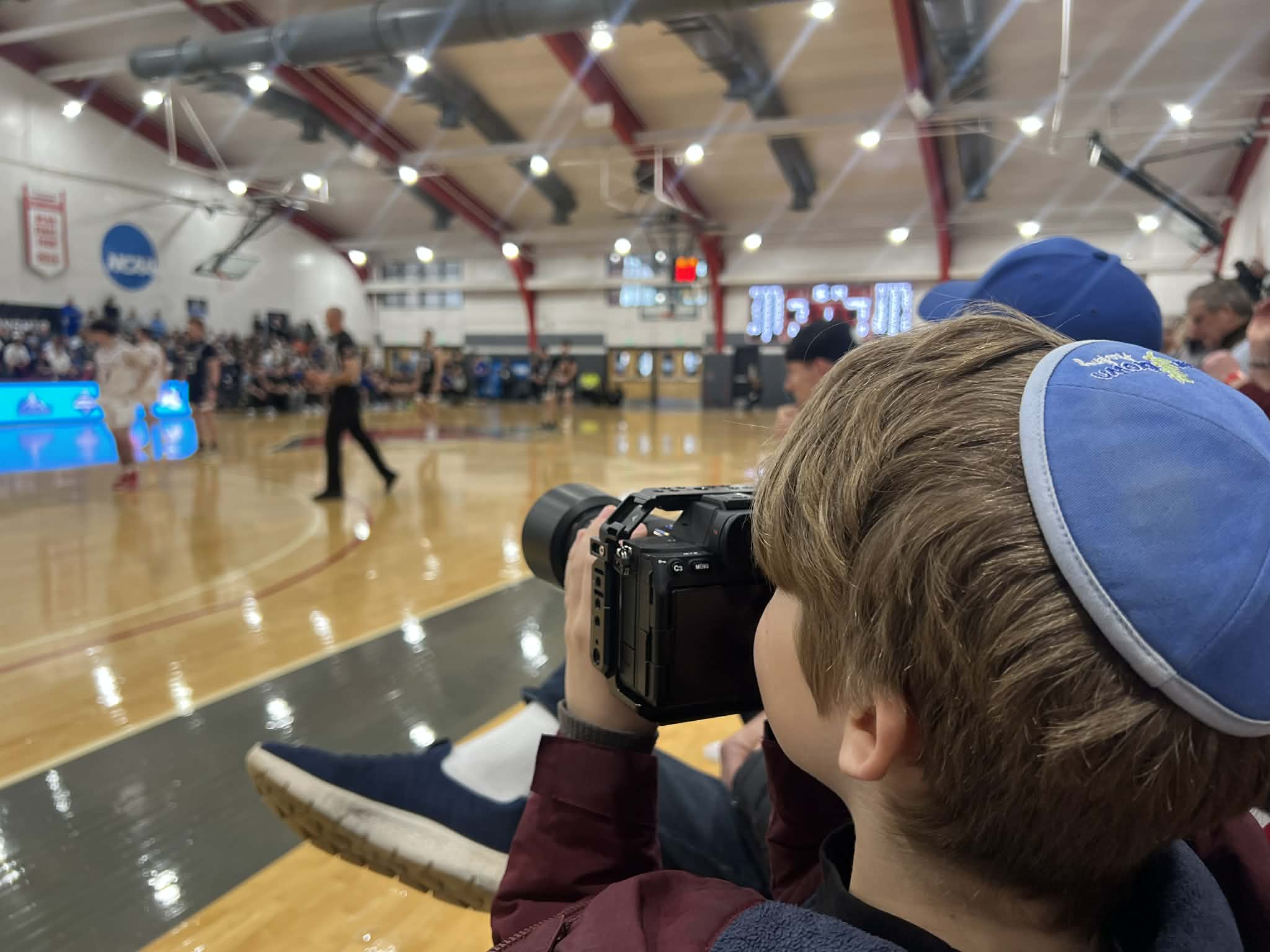
We entered the Panzer Athletic Center around 12:45 p.m., and I was immediately struck by a sight I will never forget. The Montclair State gymnasium holds about 3,000 fans. I would estimate that 2,800 of them were Jewish men and boys wearing kippahs. The energy was electric—a community gathered not just to watch a game, but to witness a piece of their identity competing on a national stage.
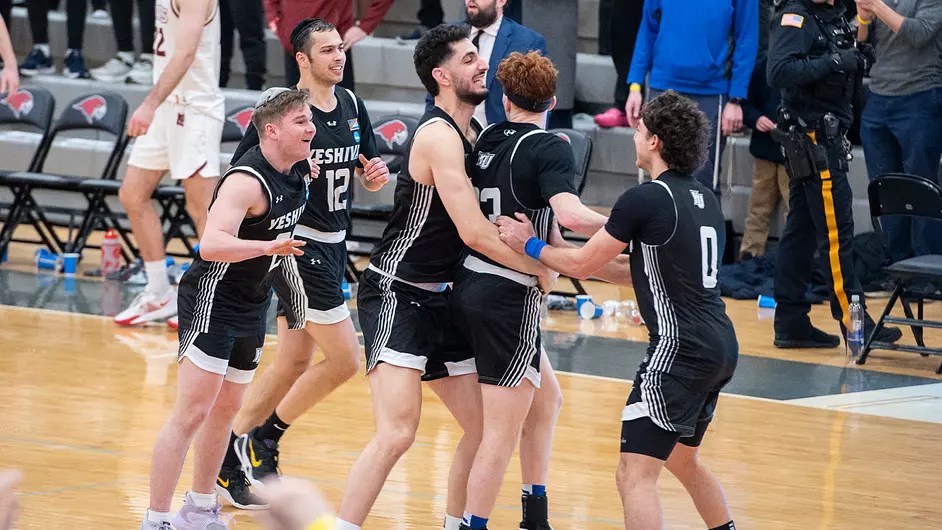
Then the game began. Yeshiva faced a well coached and determined Bates College squad in a first-round NCAA Tournament thriller. It was a seesaw battle, a contest of runs and counter-runs. Samet was everything we hoped for, pouring in 27 points and hitting seven three-pointers, surpassing 2,500 career points. With seconds left in regulation, the game was tied. After a frantic final possession, Yeshiva’s Max Zakheim was fouled with 0.2 seconds on the clock. He stepped to the line for a one-and-one. Swish. Swish. Yeshiva won, 71-69.
The overwhelmingly Orthodox Jewish crowd, most with tzitzits hanging outside their pants as a show of pride or religious adherence, erupted. And there, in the middle of it, were two young Orthodox boys, jumping up and down next to their “old head”, a 61-year-old Black Christian man, all of us connected by the sheer joy of the moment.
The Virtue of Stepping Outside Oneself
In that gym, surrounded by a culture not my own, I understood something profound. The same vigilance I demand for Black and Brown youth—the insistence that their caregivers understand their world—I was now the grateful recipient of. Those boys’ mother trusted me because I had shown that I was willing to learn. I knew when to have them home. I knew why it mattered. I knew that the game was important, but the respect for their way of life was sacred.
Cultural competence is not about political correctness. It is about effectiveness. It is about love. It is the ability to say, “I may not have grown up in your world, but I am willing to let you teach me.” It is the foundation upon which trust is built, and trust is the only currency that matters when you are trying to guide young people toward their potential.
As I drove those boys home, making it back with time to spare, we talked about Samet’s crossovers and Zakheim’s ice-cold free throws. But I was thinking about something else. I was thinking about how a shared love of a game had built a bridge between a Black Christian man from the city and two Orthodox Jewish boys from the suburbs. I was thinking about how their parents had welcomed me, educated me, and trusted me.
We often speak of the need for young people to adapt to the systems they enter. But the real work, the harder work, is for the adults in charge to do the adapting. Whether in a classroom in Camden, a detention center in Philadelphia or a basketball arena in Montclair, the principle remains the same: see the child fully, or you do not see them at all. And if you cannot see them, you cannot save them.



 The Black Cager