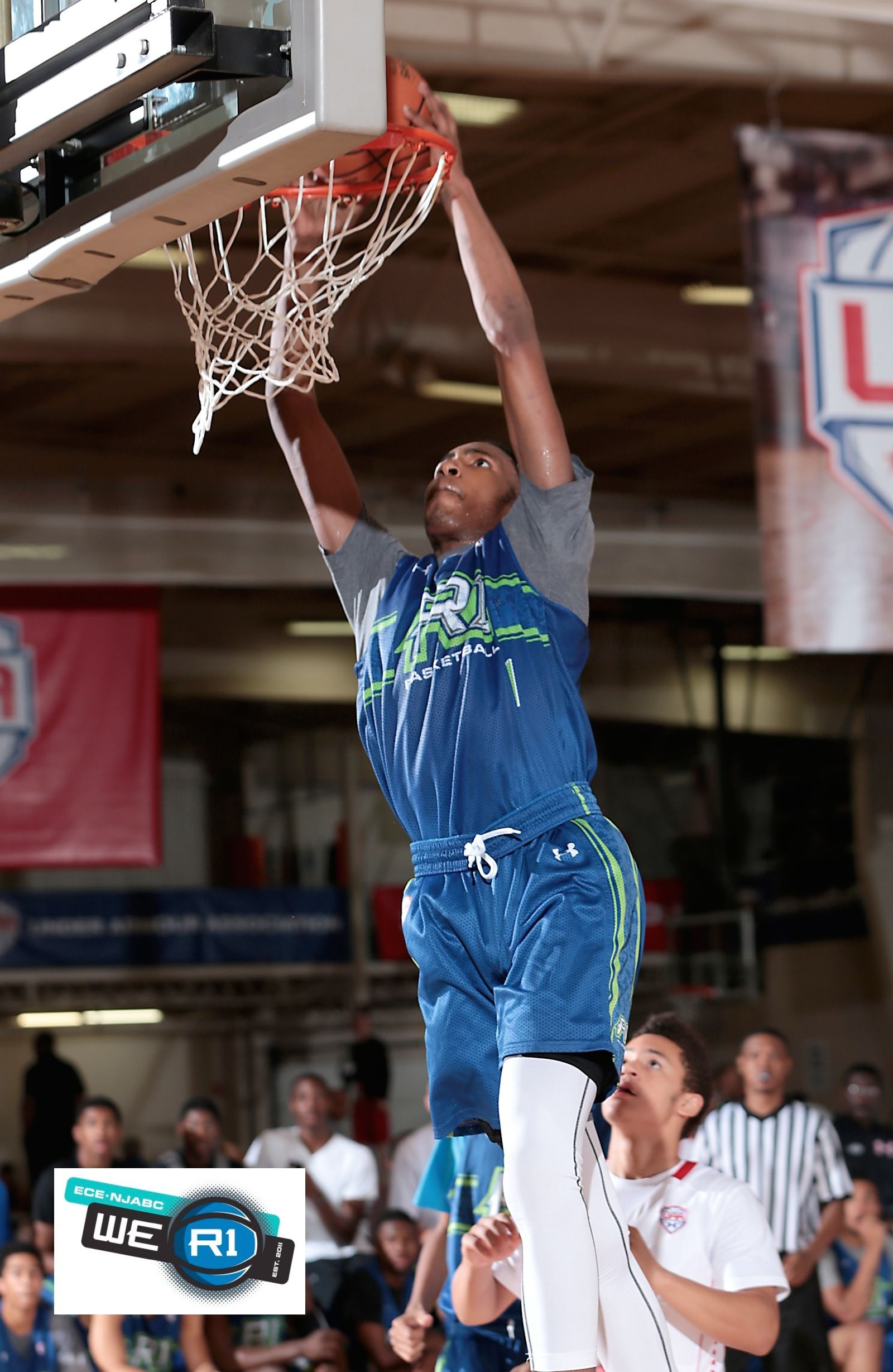
Philly’s Phinest: Brandon Austin

Brandon trophies

Brandon Austin with Three PIAA State Championship Trophies

He’s the best Philly has to offer… The talent and skill level are undeniable… He’s the man… After winning three straight state championships and being named Class AAA Player of the Year in Pennsylvania, Brandon Austin was a consensus top 50 player in the class of 2013. He had it all… The future seemed secure… He would make a splash in the Big East with Providence and then embark on a long career in the National Basketball Association.

Maybe $100,000,000 or more…

Then came the detours… First an incident at Providence… transfer to Oregon… then another incident at Oregon…

Dream deferred…

Time to pick up the pieces… Forget basketball… It was time to rebuild trust and salvage his reputation…

After considering his dwindling options, Brandon decided to place his fate in the hands of Steve DeMeo, coach at Northwest Florida State College. DeMeo recognized that despite the allegations, Brandon was never convicted of anything… After meeting with Brandon, he felt the young man deserved an opportunity to continue his education and reestablish his basketball career. He gave him a scholarship.

Brandon reported to the campus in the sleepy town of Niceville, Florida ready to demonstrate that he was not the “predator” portrayed in national media outlets. For the past year, he kept his head down, stayed humble and accumulated academic credits. DeMeo says, “Brandon has been great with us. He’s a very respectful young man. He’s done everything we have asked of him off the court and more.”

On the court, Brandon flourished… Finally able to play after a year of allegations, investigations and suspensions, he led Northwest Florida to the Florida State Junior College Championship and the National Junior College Championship. The Raiders finished with a record of 33-2 and Brandon was named Most Valuable Player of the National Playoffs.

NWF Champs

Northwest Florida State after winning Florida State JUCO Championship

While he has been cleared of all criminal charges, Brandon acknowledges that he made some questionable decisions that cost him dearly. “I have been focused on improving my decision-making. I have learned to better assess situations. In the past, I kinda went along with the crowd, no more of that for me.”

The basketball world has taken notice of the fact that he still one of the best players in the nation. Brandon is a long athletic combo guard with tremendous ball skills. He can play the 1, 2 and 3 position. He is an intelligent and smooth playmaker who never seems to get rattled or rushed into making mistakes. In his first year of competition at the collegiate level he showed great poise and maturity. In the semi-finals of the National JUCO Championship playoffs, with 0.6 seconds left, Austin stepped to the line and buried two free throws to send the second-seeded Raiders into the NJCAA Division I title game with a 105-103 overtime win over 19th-seeded Georgia Highlands. He ended the night with a game high 29 points and 13 rebounds.

Brandon_Austin_NW FS

Brandon Austin in National JUCO Playoffs

Offensively, he makes everything look easy. Austin has great imagination and creativity. He has exceptional vision and passing ability. He is an excellent decision maker and appears to have the ability to develop into an NBA point guard. His drive and kick is an effective element to his offensive arsenal. His length and long wingspan gives him the ability to disrupt passing lanes and shots, as well as giving him extra length to get to loose balls and get shots off.

Austin has good form on his shot and a quick release. He is very good at running the pick-and-roll, well ahead of most college guards. Brandon is capable of creating and hitting midrange shots with a nasty handle, using crossovers and fakes to rock defenders off balance. He has dedicated himself to improving his conditioning. He has worked on his body and is showing better upper body strength.

Most importantly, Brandon Austin is a winner. After winning 3 straight High School State Championships, he led his JUCO squad to the Florida State and the National Championships in his first year of collegiate competition.

Big 10, AAC, Big West, ACC, MEAC and SWAC teams have shown interest in Brandon. Some want to see him have another incident free year at Northwest Florida State. Others are willing to have him come on board immediately. Brandon can graduate with an Associate’s Degree this summer.

“I just wanna focus on finishing strong academically. I’ve never had any problems with my books in college. But, I have made some questionable decisions off the court and away from the classroom. My Mom, Lonnie Lowry (Team Philly), Warren Green (mentor) and my counselor Dr. Abby Baker have helped me make better decisions. I am grateful for the opportunity Coach DeMeo and Northwest Florida State gave me. When we won the Championship, I was happier for the school and my coaches than I was for myself.”

Brandon FT

Whatever path Austin chooses to follow, it seems like a safe bet that team will win a lot of games and he will stay out of trouble.

Perhaps, one of the City 6 will step up and give Mr. Austin a chance to finish his education at home… After all, he is Philly’s Phinest!

Bruiser, Dunph, Dr. G, Phil, Jay… give him a call…

What’s Up with Temple and St. Joseph’s hoops?

Right now, Philadelphia is a pro football and college basketball town. The Phillies stink, the Flyers are not a playoff team and the Sixers organization has purposely lost games for two straight seasons. Despite the insane levels of irrational exuberance displayed for the Philadelphia Eagles (NFL), college football hasn’t gained significant traction in the region. In fact, I’m pretty sure there are more Dallas Cowboy fans than college football fans in the Greater Philadelphia Region. College football is largely ignored by all but diehard Owls fans and Philadelphia-based Penn State alums.

Villanova and Delaware are not BCS programs. They do not play big-time college football. On those rare occasions, when Penn State and Notre Dame are competing for national championships larger numbers of Philadelphians pay attention to NCAA football.

For the most part, collegiate athletics in this area, consists primarily of six Philadelphia-based Division 1 basketball programs (Villanova, Temple, St. Joseph’s, Drexel, LaSalle, Penn) competing with Rider, Delaware, Delaware State and Princeton for student-athletes and attention in the Greater Philadelphia region. While interest in college football lags, Philly college hoops matter… But there is a clear pecking order.

Truth be told, Villanova basketball is on another level… They regularly play in a sold out NBA arena. They are consistently ranked among the Top 10-20 programs in the nation. Wright graduates all of his players. He is able to land virtually every local recruit he targets. None of the other area programs are comparable to Villanova. Over the past decade, the Wildcats have exhibited an incredible level of success. Wright has led Nova to NCAA appearances in 10 of the last 11 years. Villanova’s big “problem” – if one identifies it as such – is “advancing” in the NCAA tournament. Big East Championships and spots in the Big Dance are expected every year. Villanova basketball gets the most print and television media attention by a significant margin.

But the consistent winning… The high graduation rates… The firmly entrenched and highly regarded coaching staff… are all kinda boring. You know Nova’s gonna win a lot of games every year. You know they will make the NCAA tournament. In recent years, they have struggled to make out of the first weekend. That’s a good problem to have.

Villanova Champs

Less discussed and, undoubtedly, more interesting developments are unfolding within the Temple and St. Joseph’s basketball programs.  Over the past 25-30 years, these programs have each had only two head coaches. Coaching changes in City 6 basketball programs occur less frequently than Papal Inaugurations. However, dissenting voices emerged within each program’s fan base over the past couple of years. They did not receive a lot of coverage in local print and internet media.  In both cases, the self styled ‘loyal opposition’, was a consistent presence on message boards and other websites. Before he won the A10 Championship in 2014, a “Phil Must Go” website emerged and a few hundred extremely loud hawk fans were calling for Martelli’s ouster. In fact, there were very strong and sustained chants of “Fire Phil” during the home loss to Villanova. It was bad on Hawk Hill… Fast forward three months, that Hawk team won the A10 Championship.

After posting a 9-22 record in 13-14, many Temple fans questioned Dunphy’s ability to right the ship. His ability to recruit Philly and other urban areas was frequently called into question. The next year, with a strong contingent of Philly players, Temple won 26 games and reached the NIT Final Four.

So… Where do things stand now? Both programs are headed by Philly hoops lifers and future Big 5 Hall of Famers.  They clearly connect their program with Philadelphia’s strong basketball tradition. As evidenced by the incoming classes, they remain relevant in Philadelphia’s bare-knuckle college basketball recruiting scene. For one of the programs, the future direction seems clear…

Dunphy

Temple Athletic Director, Kevin Clark and President Neil D. Theobald have, apparently, committed to Dunphy (pictured above) and, his heir apparent, Aaron McKie. This makes a lot of sense.

Despite it’s national gridiron aspirations, athletically, Temple is a Philly school first and a basketball school second. Clark and Theobald can pursue BCS football aspirations and leave Temple basketball in capable Philly hands. Dunphy and his staff are proven winners and continue to demonstrate an ability to develop and maintain strong relationships with Philadelphia and Baltimore/Washington, DC based AAU/grassroots programs. These AAU/Grassroots programs are the lifeblood of college hoops.

After one losing season (13-14), Dunphy quickly regrouped and led the Owls to an appearance in the NIT Final Four.  As you can see in the chart below, Dunphy has been a very consistent winner over the course of a career spanning a quarter century. On the few occasions his teams posted losing records, Dunphy was able to quickly rebuild and compete for Conference Championships and NCAA appearances within a season or two.

Fran Dunph Record

Dunphy is a very good and highly respected basketball coach, without a doubt… In recent seasons, we’ve seen him defeat Jim Boeheim (Syracuse) and Coach K (Duke). Last December, Temple knocked off Bill Self and nationally ranked Kansas in a 77-52 blowout. That win snapped the Jayhawks’ eight-game winning streak. The last time we saw Dunphy’s team, they were ending an impressive postseason run in the National invitational Tournament. Temple fell 60-57 to the University of Miami (25-12) at Madison Square Garden in the NIT Final Four.

Dunphy has a lot of talented players. At 6’8”, freshman Obi Enechionyia displays a high ceiling and a considerable offensive skill set. Obi plays within himself, he shows great poise. His game is highly fundamental. He can go left and right and does a good job of using his athleticism on offense. Obi is a rapidly developing big forward capable of providing the Owls with consistent scoring, rebounding and shot-blocking over the next three seasons. Offensively, he’s shown flashes where he overpowers opponents and bangs on people around the rim. He also has a nice little mid-range jump shot.

Joining Obi and the upper classmen next season will be three highly regarded high school recruits. Levan “Shawn” Alston Jr. (Team Final/Haverford School), Trey Lowe (Team Final/Trenton Catholic) and Ernest Aflakpui (We R 1/Archbishop Carroll) are ranked among the best HS prospects in the nation. Dunphy says, “It’s a great grouping of guys to come in [during] one year. I think they’ll have terrific careers here. They all bring a little something different to the table.” Alston is 6’4” 175 pounds a four-star SG/PG. Lowe comes in at stands 6’5” 165 pounds. He’s a three-star WF/SG and Aflakpui is a 6’9” 230 lb three-star PF recruit. Next year, Dunph will have a core of solid veterans – Jaylen Bond, Josh Brown, Daniel Dingle, Quenton Decosey and Devin Coleman – to mix with the highly acclaimed young players. With Aaron McKie (pictured below) serving an apprenticeship under Dunphy, the Temple program is positioned well for a period of sustained success.

Aaron McKie

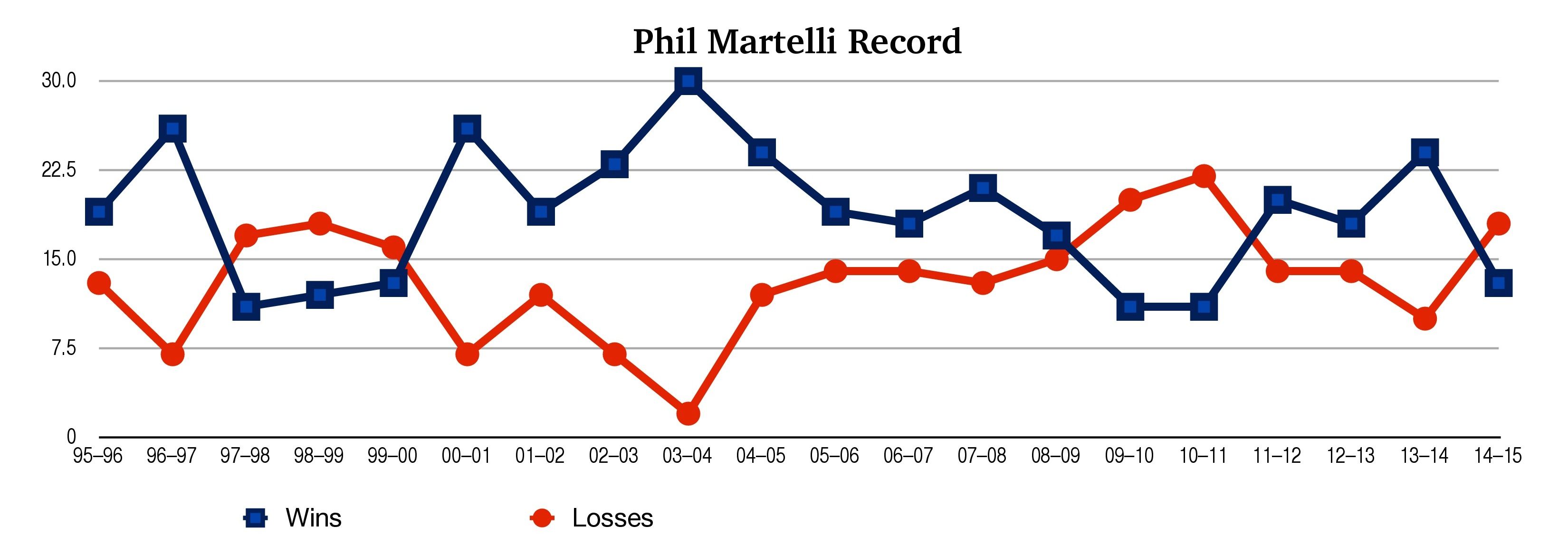
Over on City Avenue, things are little more complex and uncertain… Compared to the relatively steady ride enjoyed by Temple fans, Martelli has taken his program to higher highs experienced lower lows. Just 15 months ago, Martelli’s program sat at the top the tough Atlantic 10 Conference (pictured below). Last season, however, his squad finished 10th with an overall record of 13-18.

SJU A10 Champs

But as Martelli enters the final year of his contract, there’s reason for optimism on Hawk Hill. Phil’s got some good players again. Over the course of his career, Martelli has been able to recruit highly talented players and build winning teams around them. His most vocal critics focus on the rebuilding years between the winning seasons. Martelli won with Yah Davis and Rasheed Bey in 1997. Marvin O’Connor, Jameer Nelson and Delonte West led the Hawks from 00-01 to 03-04. Calathes and Nivens led the Hawks to the NCAA tournament in 2008.

Phil Martelli record

That year Saint Joseph’s President Timothy R. Lannon, S.J. gave “clear indication of the University’s support of men’s basketball and of Phil Martelli…. [and] extended Martelli’s tenure at Saint Joseph’s through the 2015-16 season.” After two consecutive NIT’s, in 2014, Martelli led St. Joseph’s to the Atlantic 10 Championship and an automatic bid in the NCAA tournament. That Hawk squad was led by Langston Galloway, currently starting as rookie for the New York Knicks, Ron Roberts and Halil Kanecevic.

In what some observers considered a bit of a surprise, St. Joseph’s chose not to extend Martelli’s contract after he took eventual National Champion UConn to overtime in the 2014 NCAA tournament. For those more familiar recent developments at St. Joseph’s, it would have been a surprise if St. Joseph’s did extend Phil. Saint Joseph’s like many private and Catholic Universities across the country experienced difficulty with consecutive unexpected multimillion-dollar shortfalls.  The administration responded by cutting budgets and working to increase enrollment and class sizes. The acceptance rate hovered around 80% and there was low morale among faculty and staff.

Last year, Saint Joseph’s professors censured the whole administration in September. In March, it took a no confidence vote in two senior administrators. In April, senators passed a resolution urging university to cut its ties with its current board chairman once his term expired. The business school faculty voted no confidence in the president, the Rev. C. Kevin Gillespie, and the Senate Executive Committee warned the incoming board chairman the whole Senate was prepared to do the same. There was a need for a change.

Change has been implemented…

mark reed

A couple of weeks ago, Saint Joseph’s chose Mark Reed (pictured above) as the first lay leader in the 164-year history of the school. A Philly native, Reed graduated from St. Joseph’s Preparatory School in 1992. In his most recent position, he was senior vice president and chief of staff at Fairfield University in Connecticut. Reed is replacing the embattled Rev. C. Kevin Gillespie, who is stepping down after a three-year term.

So what does this mean for St. Joseph’s basketball?

Change is likely on North Broad Street and City Avenue over the next 3 to 5 years. What will it look like? At Temple, it appears that a succession plan is in place. Aaron McKie seems poised to assume the reigns at Temple University whenever Dunphy turns in his clipboard.

How will things play out at St. Joseph’s?

To a large extent, it depends… When blessed with talented players, Phil has been known to make runs… He could have a much improved team in the final year of his contract.

Bembery Dunk

He has the most talented player, DeAndre Bembry (pictured above), in the Atlantic 10 and the Big 5. Can Phil build a winner around the uber-talented Bembry? Who, if anyone, will rise up and become a credible “Robin” to Bembry’s magnificent “Batman”? Will it be one of the new comers? Like Dunph, Phil can still land good players in the Philadelphia region. Recruits Chris Clover (Philly Pride/St. Joseph’s Prep) and LaMar Kimble (Team Final/Neumann-Goretti) are highly regarded Philly Catholic League players. Will one of the youngbucks help Bembry lift the Hawks into contention? Perhaps… But a far more likely source of the boost is the current roster.

After missing all of last season, Markell Lodge and Papa Ndao could be big contributors for Martelli next year. Lodge will bring an exceptional level of athleticism to the SJU front court. Lodge is immediately the best athlete on the team and one of the best in the Atlantic 10. His explosiveness and athleticism is comparable to that of former Hawk Ronald Roberts. Although the video below is over two years old, it allows one to see the raw athleticism Lodge brings to the table.

Additionally, Papa Ndao (pictured below) brings a sweet shooting stroke and significant experience. He has been part of the SJU program for more than four years. Ndao has demonstrated an ability to hit perimeter jumpers, even 3 pointers, when open. He is a solid rebounder and capable of defending the PF and WF positions. Papa will add a some new dimensions to Martelli’s attack next year.

papandao

Will the addition of Lodge, Ndao and the freshman be enough? Will St. Joseph’s play in a post season tournament next season? If so, would that warrant a long-term extension for Martelli? How should President Reed and his Athletic Director evaluate Phil? Those are  important questions that will be hotly debated on Hawk Hill.

Over the long and proud history of Saint Joseph’s Basketball, the Hawks have participated in 19 NCAA tournaments. Martelli (pictured below) has led six of those teams. The Hawks have made 16 NIT appearances. Martelli coached six of those teams. He’s reached the NCAA Tournament Sweet 16 twice (1997, 2004) and the Elite Eight once. He was Naismith National Coach of the Year in 2004. He became Saint Joseph’s all-time winningest coach four years ago.

martelli pic

Phil’s had a pretty good run at St. Joseph’s. He shows no sign of wanting to place his whistle in the drawer. He’s recruiting aggressively giving every indication he plans to coach St Joseph’s beyond next season. As noted earlier, Saint Joseph’s  is experiencing difficulty with budget shortfalls by cutting budgets and working to increase enrollment and class sizes.

The context of legitimate fiscal constraints creates an interesting set of “political” circumstances for President Reed to consider. As noted on the Scout message board, according to most recent IRS form 990 for fiscal year 2012, Martelli’s “reportable compensation” from St. Joseph’s exceeded $2.1 million. In light of budget shortfalls issues and subsequent faculty unrest, does Dr. Reed extend Martelli at his current terms? Does SJU ask Phil to take less compensation? Suppose the Hawks make a run and reach the postseason this season this year, does Martelli merit an extension and a bump in compensation? There are a lot of unanswered questions on Hawk Hill…

Does Dr. Reed continue the longstanding tradition of identifying the most qualified Hawk to succeed Phil? Geoff Arnold and Mark Bass are former Hawk captains and members of the Saint Joseph’s University Basketball Hall of Fame. Dave Duda has been a hard working and loyal Hawk assistant for a decade.

Among followers of Temple basketball, it is widely assumed that Aaron McKie will assume leadership once Dunphy retires. McKie is alum of both Simon Gratz and Temple University. A former 1st round draft pick McKie played in the NBA from 1994 to 2007. He joined the Philadelphia Sixers coaching staff in September 2008. He joined the Temple staff in August 2014. McKie solidifies Temple’s stature in Philly’s AAU/Grassroots community. While Temple continues to recruit at a national level, they have also placed increased importance on the Philadelphia region. The strategy has paid dividends. Temple’s incoming class has two Team Final (Rob Brown, Director) alums and one from We Are 1 (Terrell Myers, Director). These AAU programs have consistently produced Division 1 prospects over the past 5 years. This year, Temple is once again heavily recruiting current players in both AAU programs. Led by Dunphy and McKie, Temple will continue to be force in the recruitment of elite local prospects.

Saint Joseph’s, led by Martelli and Geoff Arnold (pictured below), has also made significant inroads within the local AAU community. SJU has a Team Final (Lamar Kimble) product and a Philly Pride (Chris Clover) alum in it’s incoming class. They will join public league product Jai Williams. A current Philly Pride player, Charles Brown, has exhibited a strong desire to play on Hawk Hill. By all accounts, the Hawks are a force on the local recruiting scene.

Geoff  & galloway

Will Arnold, Bass or Duda emerge as the heir apparent to Martelli? Does President Reed make a run at Jameer Nelson? Will Phil coach St. Joseph’s beyond next season? A lot of questions at SJU?

How much juice does Phil have?

Temple fans and area AAU programs know Aaron McKie will be with Temple going forward.

President Reed… What’s up with Saint Joseph’s hoops?

Welcome back to Philly!!

April 26, 2015

10:34 pm

Delgreco K. Wilson

Charles Brown & Ryan Daly: Two Elite Philly Shooters

Philadelphia is known for producing tough, highly skilled basketball players. Every year, college coaches trek to the City of Brotherly Love from all parts of the country in search of Philly ballplayers.  In recent years, Jaquan Newton made his way south to Miami, Rakeem Christmas just finished a brilliant career at Syracuse and Savon Goodman is toiling away out west at Arizona State. These players, as well as others like Jabril Trawick (Georgetown) and Maurice Watson (Creighton), embody what coaches have come to expect from Philly ballers.

Entering the collegiate ranks in the Fall of 2016, Charles Brown (Philly Pride/George Washington HS) and Ryan Daly (Jersey Shore Warriors/Archbishop Carroll HS) possess a skill that sets them apart on the Philly landscape. These guys can flat out shoot the ball.  They are both very confident shooters, especially when the game is on the line. Brown recently hit a game winning 3 in the first leg of the Under Armour Circuit in New Orleans. (congratulated by his teammates, far right).

Charles Brown pic 1-page-0

Brown can put the ball on the floor and create his own mid-range shot from anywhere on the floor and he doesn’t need much space to get his shot off. Over the past year, he has become adept at getting defenders off balance using pump fakes and he is very difficult to guard because he possesses a quick and consistent release on his shot.

At 6’6″ 180 lbs Brown (below) possesses very good size and terrific length. A young player, that never re-classified, he isn’t very physically strong. He displays good overall athleticism. Brown has decided to spend the 2015-16 school year at St. Thomas More Prep School in Connecticut. His aim is increase his strength and quickness while playing in the super competitive New England Preparatory School Athletic Council.

Charles Brown pic 2Brown has offers from Drexel, Hofstra and Robert Morris. He has also been receiving interest from high major programs like Alabama and Maryland. When asked about his recruitment, Brown expressed a desire to stay close to home. His parents have consistently attended his high school and AAU games. The Brown’s are a close knit family. He made it clear that he really likes St. Joseph’s. “Coach [Geoff] Arnold has been very honest with me from the beginning, he has provided me with information that has helped me understand my options. He has developed a relationship with my family. My parents and I are very comfortable with St. Joseph’s.”

Ryan Daly Pic1For the past two seasons, Ryan Daly has been used as a shooting specialist that wasn’t asked to do much else in the high powered Archbishop Carroll program. Paul Romanczuk has produced six Division 1 level players while Ryan has been in the program. Austin Tilghman (Monmouth), Derrick Jones (UNLV commit), Ernest Aflakpui (Temple commit), David Beatty (multiple offers), Josh Sharkey (multiple offers) and Daly will all play Division 1 basketball.

Surrounded by this vast array of talent, Daly gets the vast majority of his shots spotting up, coming off of screens, and spreading the floor in transition. He has a tremendous outside shot, making 60 3-point shots this past season. Employing textbook form with great touch, he loves to shoot the three ball. He has shown that he is able to knock it down with a hand in his face, but is simply lights out when he’s unguarded. One of the area’s best catch and shoot players. In high school competition, he has been running off of screens and floating to the open spot on the perimeter for two years.

While running for the Jersey Shore Warriors on the AAU circuit, Ryan instinctively gets open as the play develops. He is very good at coming off screens, and is becoming more effective against quicker guards who can close him out quickly and get a hand in his face. Daly is an excellent  midrange shooter and will  knock down jump shots from all over the place with consistency. He is also an outstanding rebounder from the backcourt, making effective use of his strength and determination.

Standing 6’4″ and weighing in at a solid 195, Daly is an outstanding student. He has offers from 2 Ivy League schools (Penn and Brown) as well as Hartford (America East). He has also received interest from several other schools with strong academic reputations (Lafayette, Davidson and Quinnipiac). Daly says academics and geographic location are very important to him. He wants to attend a “good college” that lies somewhere between Connecticut and Virginia/North Carolina. His mother, Tracie is the daughter of the late Jim Boyle, a legendary player and successful coach at St. Joseph’s. His father, Brian, is a former Philadelphia Catholic League Player of the Year and also a former St. Joseph’s Hawk. While he doesn’t necessarily want to be in the Philadelphia vicinity, Daly does want his family to be able to attend as many of his collegiate games as possible.
For college coaches in need of elite shooters… Brown and Daly will be ready and willing to suit up in the Fall of 2016.

A Tough PHILLY Guard: The Recruitment of Traci Carter

Traci Carter, like so many great and very good South Philadelphia ballers that came before him, studied under the master.  He was a skinny somewhat shy 7th grader when I first encountered him in 2010. There he was in the excruciatingly hot gym at the Marian Anderson Recreation center running and running while Claude Gross was fussing, cussing and, most importantly, TEACHING every moment of the practice. Gross is a Philadelphia schoolboy legend. He was the MVP in 1952 while leading Ben Franklin High School to the Public league Championship. An unflinchingly honest and acerbic man, Gross doesn’t tolerate foolishness or bad basketball. Both are likely ignite a stream of profanity that would make Richard Pryor blush.

Claude and MustfaClaude Gross ‘instructing’ South Philly’s Mustafaa Jones immediately after he hit a game winning shot to defeat St. Joseph’s

Lionel Simmons, Geoffrey Arnold, Donnie Carr, Nate Blackwell, Maurice Lucas, Dion Waiters, Biggie Minnis and Mo Howard are just a few of the players that have benefited from the uniquely delivered instruction and unconditional love offered by Gross over the past six decades. Traci is the latest fruit from the Claude Gross tree.

This particular day, I was there with another of Claude’s proteges, Rashid Bey. Rashid was winding down an illustrious playing career that included being twice named Big 5 MVP, leading St. Joseph’s to the Sweet 16 and playing in Europe for more than a decade. Always restless, Bey was in the gym everyday with Claude’s South Philly ‘Developmental’ and ‘Future’ teams in the legendary Sonny Hill League. These are kids in grades 6-8.

Watching the practice, I asked Rashid “who can play… which one has a chance?”

He immediately called Traci over and introduced us. At the time Traci might have been 5’7″ and weighed maybe 125 lbs.

Traci-Carter-vs-Westtown“This is Del… He’s my guy… you need to stay in touch with him. I think you can play college basketball and he can help you with the academic part.”

Chewing on the collar of his shirt, Traci mostly stared at the floor. We exchanged numbers and, because Claude and Rashid asked me to, I have stayed in touch with him since then. Our conversations very rarely center on basketball. Indeed, I have seen him play exactly two times in six (6) years. Once at the Reebok Invitational Tournament and again last week at Life Center Academy.

Nonetheless, I was never worried about his basketball development. He has always been in good hands, Traci is a child of South Philly. Former LaSalle great Donnie Carr has assumed primary responsibility for Traci’s athletic, social and emotional development. With Donnie, Rashid and Claude in his corner, Traci can’t go wrong. The basketball foundation was simply too strong.

My role over the years has been to badger him and monitor his academic development. A few times a month, I would check in or he would call me. Occasionally we would sit a classroom and together calculate his core GPA. I always wanted to make sure he understood exactly what he needed to accomplish. Traci would text me a picture of his grades whenever he received his report card. I steadfastly attempted to keep him on track academically. It would be challenging because he experienced quite a few bumps in the road outside the classroom. The way he has dealt with the circumstances makes him much more likely to succeed at the next level.

As a freshman at Prep Charter, in South Philly, Carter was expected to be an instant contributor and lead the school back to prominence in the Public League. Before he could play a game, he suffered a knee injury which required surgery… Out for the season…

Tracicarter romanAs a sophomore, Traci expressed a strong desire to be in more rigorous academic setting and play in a stronger basketball program. So, he ended up transferring to Roman Catholic High School. Playing his first year of scholastic basketball, he was named 3rd team All-Catholic while helping Roman Catholic reach the Catholic League semi-finals where they lost to St. Joseph’s Prep.

All was well… Until Carter violated the disciplinary code at Roman and was forced to find a new school…

Genuinely remorseful about his indiscretions, Carter and Donnie Carr reached out to Pervis Ellison, the Head Coach at Life Center Academy. Pastor Dave Boudwin and Ellison agreed to take Carter and he moved to Burlington, NJ. Teaming with Trayvon Reed (Auburn) and Malik Hines (UMass), Traci had a good junior year. His backcourt running mate was Pervis’ son Malik Ellison, another highly rated college prospect. Heading into the summer, Traci was widely considered one to the top 100 players in the country.

Malik & TraciTraci & Malik, Life Center Academy backcourt mates

And then it happened again… Another knee injury… Another surgery… Traci missed the entire summer AAU circuit… He recruiting came to a virtual standstill…

He was despondent. I went to visit him and his leg was immobilized and his spirits were down.

“Traci, you have to remain focused. You have to maintain your discipline with regards to your academic pursuits. Don’t let this injury affect your grades.”

“I got you Del.”

Slowly, but surely he regained his strength. But then his partner went down. Malik Ellison broke his leg. Traci would have to start his senior season without his main man running alongside him. Predictably, Life Center struggled immensely. Eventually, Ellison would return and once again the basketball community began to buzz.

Traci dribblingEvery day, there were different coaches in the gym… Pat Chambers (Penn State), Steve Lavin (St. John’s), Jim Christian (Boston College), Rick Pitino (Louisville), Kevin Ollie (UConn), Chris Mack (Xavier), John Giannini (LaSalle) and Fran Dunphy (Temple) are just few that made it to Burlington for glimpse of the ‘Traci Carter’ Show.

Rebecca Boudwin, an adviser to Life Center students raves about Carter. “He’s been such a wonderful addition to our learning and spiritual community. We love all of our basketball players, but Traci is special. We see how hard he works on and off the court. We’ve seen how he handled adversity. Through it all he has remained focused on his academics. We are extremely proud of Traci.”

With his grades in order and a qualifying score under belt, Carter is set to begin visiting different colleges. He says he wants to take all 5 of his official visits.

TRaci ShepTraci and Shep Garner at Penn State with Coach Chambers

Carter says, “The coaches have been so respectful to me during the recruiting process. I have grown to really like several of them. I feel like I need to go see and feel the campuses in order to make an informed decision.”

As far as official visits, he says will probably go to 5 from among The University of California, Marquette, UConn, NC State, Memphis and Xavier. Unofficially, Carter will take trips to see Penn State, Temple, LaSalle and a few others.

“I just want to find a place where I can continue to learn as a student and a basketball player. I want an opportunity to compete for playing time as a freshman and I want to graduate from college.”

Donnie Carr and the rest of South Philly have done an exemplary job guiding the young man this far, no reason to think they won’t continue making good choices.

Be on the look out for Traci Carter, he’s one tough PHILLY guard!

← Back

Thank you for your response. ✨


“You Treated Fairly?”: Open Letter to Philly’s Grassroots Hoops Community

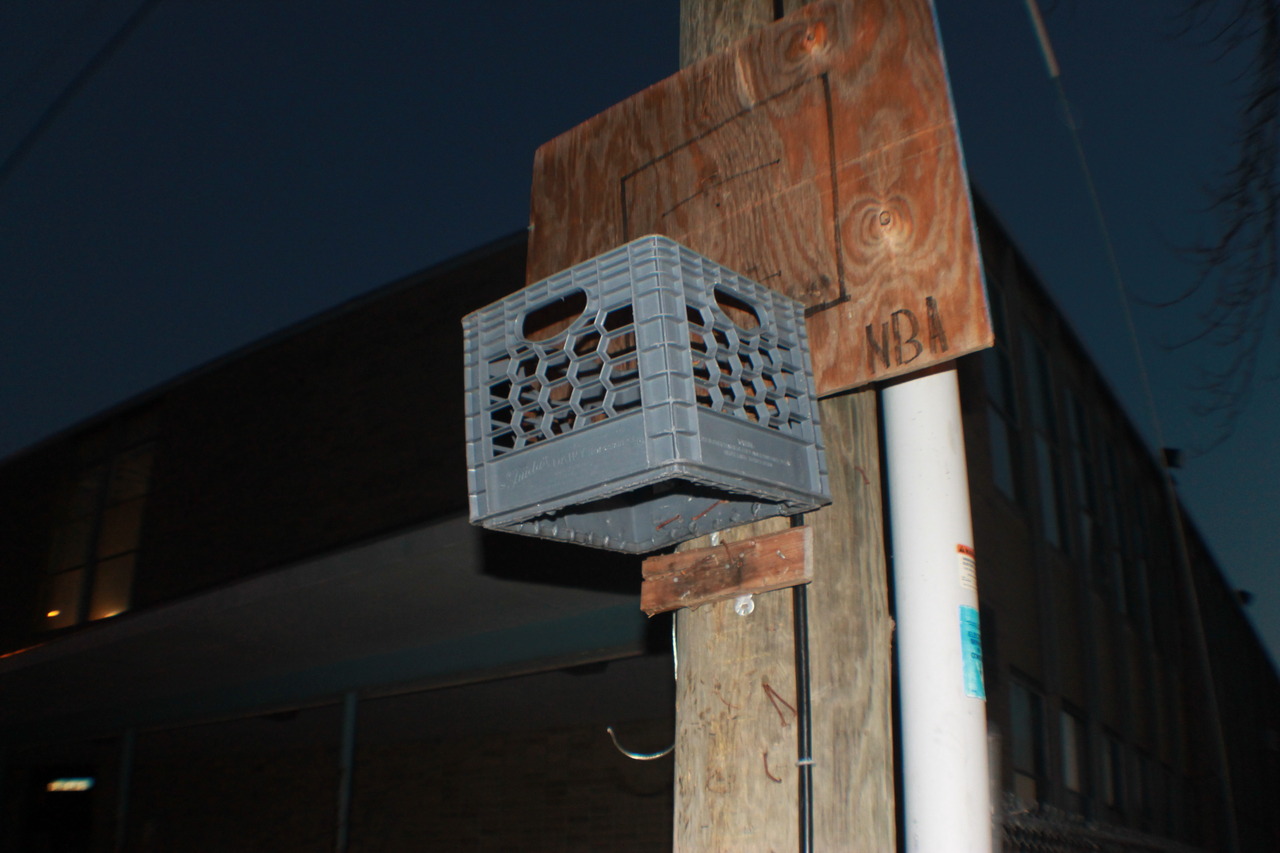
Milk crateThe 1st hoop for many, many Philly ballers!!

If you ain’t ever been to the ghetto
Don’t ever come to the ghetto
‘Cause you ain’t understand the ghetto
And stay the fuck out of the ghetto…
“Ghetto Bastard” Naughty By Nature

Basketball is THE inner city game. It is the game played in the ghetto, ‘round the way and in the ‘hood. Every year black communities and neighborhoods many consider off-limits to outsiders are invaded by representatives of multi-million dollar college athletic departments. Wave after wave of college coaches regularly venture into places most white people avoid after sundown. The trained eye can spot ’em a mile away.  You see ‘em roll up in rental cars fresh off the private jets looking lost in public housing developments.  The team logo and that of their shoe company sponsor featured prominently on a new golf shirt or sweater if it’s a lil’ chilly outside.  The over-sized Conference Championship ring is dripping with ice.

Rucker_parkAcross America in cities like Philly, Motown, NYC, Chi-town, LA, B-more, DC, ATL, and H-town representatives of America’s increasingly wealthy athletic departments come in search of beautifully sculpted Black bodies. They are looking for the young men that will lead them to the “promised land” or at least the “Sweet 16.”  This search brings to them to the projects, Section 8 homes and other low-income Black neighborhoods one after the other.  Representatives of the Math department, Chemistry department and History departments never seem to make their way down.  In much of the non-sports mainstream (mostly white) discourse, urban centers are derisively described and as isolated pockets of dysfunction, deviance and despair to be avoided and in some case obliterated, if the opportunity for gentrification presents itself.

The athletic department reps, the coaches, the recruiters are there for a very specific purpose.

These colleges and universities are vying explicitly to extract a valuable resource from these impoverished communities. They want young athletic Black bodies.  They want to co-opt the labor of our young men and use it to increase the economic status of the University President, Athletic Director and Basketball coach and other athletic department employees. They want our Black boys to serve as cheap labor in the multi-billion dollar enterprise known as collegiate athletics.  Now, it should be noted that along the way he may earn or be awarded (see recent UNC scandal) a degree in some obscure major with limited earning potential.

As bad as this situation sounds, it’s infinitely better than being one of the 72% of Black boys that fail to graduate from HS on time every year in places like Philly and NYC.  These young men are headed for a lifetime of low wage earning or they will participate in the extra-legal ‘hood economy and likely end up in prison. In the ‘hood, collegiate athletics is a possible way up and out of poverty.  But having dealt with college programs over the years, you know others benefit to a much larger extent.  The fates of the gifted low-income urban Black male athletes and wealthy white university athletic department employees are inextricably intertwined.

A situation has emerged whereby Black boys and the struggling grassroot basketball community from which they emerge are dependent upon billion dollar sneaker companies and college athletic programs with $100-$150 million dollar athletic budgets. The existing situation breeds economic success and financial security for Presidents, AD’s and coaches. In many ways, the existence and sustenance of grassroots programs is dependent on the their connection to college programs and the college program’s continued economic gain in dependent upon struggling grassroots basketball programs. Born out of this arrangement is a sort of mutual dependency.

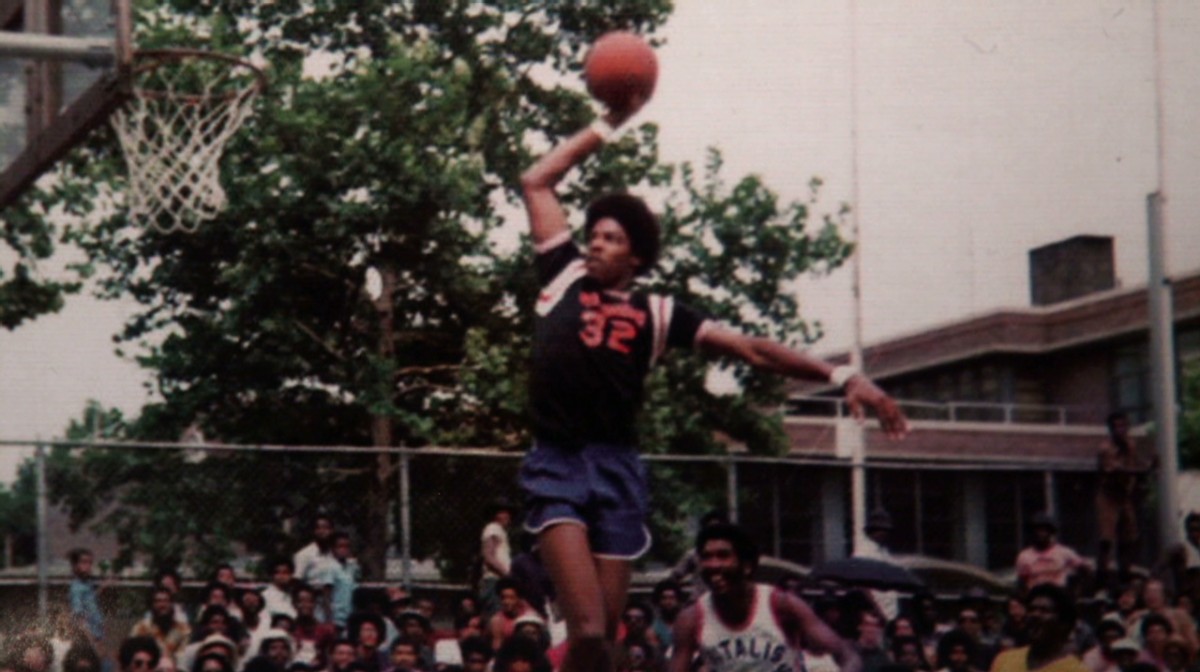
Dr JJulius “Dr. J” Erving in a Harlem, NY Playground

High skilled urban Black male basketball players sell their athletic labor in return for athletic scholarships while the college athletic programs generate millions of dollars selling their performance to alums and the general public.  Coaches are paid million in salaries, bonuses and perks.

As the heads of the AAU/grassroots “farm system,” what are you getting? Are you treated fairly? Do the coaches, boosters and fans respect you?  Over and over, I hear that you guys are “killing” amateur basketball.  It’s bullshit.  AAU/grassroots basketball long ago superseded scholastic basketball as the premier development arm for collegiate hoops.

In Philadelphia, basketball is king among amateur sports. College basketball occupies a unique space in Philadelphia’s sports milieu. There are six (6) NCAA Division 1 Basketball programs in the Philadelphia area representing some highly competitive conferences. Villanova (Big East), Temple (AAC), St. Joseph’s (A10), LaSalle (A10), Drexel (CAA) and Penn (Ivy) all play in tough leagues with nationally recognized competitors.

Anyone that watches the games will notice some common themes regarding these teams and others in their respective conferences. A significant percentage of revenue is generated by basketball programs with a high percentage of urban Black male athletes.  The boys from ’round the way are getting it in.  North Philly’s DJ Newbill is the star at Penn State.  Jabril Trawick, hailing from the Westside, is the headliner for Georgetown.  Another North Philly native, Rysheed Jordan in manning the point guard spot in Madison Square Garden for St. John’s.  Chester’s Rondae Jefferson is back for a 2nd and perhaps final season at Arizona.  Black males from ’round the way are making a lot of money for these schools.

sidewalk hoops

The over-representation, employment and production of Black males in revenue-producing sports (basketball and football) is well documented. Black males represent a mere 5.8% of the total U.S population. Black males comprised 45.8% of major college football rosters and 61% of major college basketball rosters in the 2009-2010. The numbers for the pros are even higher. Over 67% of NFL players are Black and 78% of the NBA in 2011-2012. Collegiate and professional football and basketball organizations consistently scour the ‘hood when seeking talented players.  In many cases, you stand ready and willing to serve your players up to the hunters. I want ask you some important questions.

Are your AAU/grassroots programs sufficiently benefiting? Do you feel like college programs respect the role you play? Do college coaches and fans appreciate your tireless efforts getting these guys ready for the next level?

Is it enough for these programs to just come year after year and take the most talented and highly gifted without considering the plight of those left behind?

Do the City 6 programs work with you when your kids can’t afford the $200, $300 or even $400 price of their camps? Do they give you balls? Do they donate equipment?  Do they make sure you “eat” when you bring your players to visit their campuses? Do they provide tickets to your organization so the younger kids can see the older kids play “live”?  Or, do they just come through, pick the ripest fruit and get back in the German luxury sedan?

Baltimore BoyPuttin’ in work…

Let me know… I’m really curious.  Remember, you have leverage.

If they tell you the kids have to “pay” full price, let everybody know… Tell the other AAU/grassroots coaches how you were treated…  Share information about your experiences…. In my opinion, Black boys have already paid. Let me show you how.

Young men from the ‘hood currently participating in revenue-generating sports (football and basketball) far exceed their white counterparts and other races. Keep in mind football and basketball make virtually all the money supporting all the other white dominated collegiate sports. Think about this fact, less than 1 percent of the total collegiate student-athlete population generates more than 90% of NCAA revenue during “March Madness.” Of the 1 percent, well-over half were Black young men from ’round the way.

Over the past decade (2004-2013), the NCAA men’s basketball tournament has triggered more than $6.88 billion of national TV ad spending from 269 different marketers. Ad revenue in 2013 was $1.15 billion, up 3.8 percent from the prior year.  Less than 1% of college student-athletes generate this staggering amount of revenue, the overwhelming majority are young Black men from the ‘hood.

Guys from the ‘hood played, started and produced more than their non-Black teammates. Locally, Black players scored 73.9% of Temple points last year. Blacks accounted for 83.5% at St. Joseph’s, 87.3% at Villanova, 98.3% at Drexel, 87.1% at LaSalle and 65.7% at Penn.

Wilt Claude

The 1953 Christian St YMCA, National Champions, featuring Philadelphia school boy legends Wilt Chamberlain (standing center) and Claude Gross (seated 2nd from right)

The local colleges and universities want and need Black athletic talent. Their labor is undeniably needed to sustain massive inflows of revenues in athletic departments. Make no mistake colleges, universities, Presidents, Athletic Directors and coaches are making money off the labor of young men plucked from the ‘hood.  The players get an “opportunity” to earn a college degree as long it doesn’t conflict with their athletic obligations. Alums, boosters and fans root for and are entertained by the performances of these young men.

Ask yourself: How do the university’s alums and fans really feel about the young men in the ‘hood? I know they shake your hand after your boy gets get 20 points  and grabs 10 rebounds against a rival. I know they cheer loudly and passionately for your boy when you’re seated next to them at the Wells Fargo Center, Liacouras Center, Hagan Arena and Gola Arena. But, how do they really feel about you and yours?  How do they talk amongst themselves?

Do fans of the local schools respect the communities that spawn the athletes that help them win games? How do they refer to the neighborhoods that border their respective institutions?  You have been there your entire life.  They are guests passing through while pursing a college degree.

One way you can get a feel for this is by perusing the local team message boards. It’s an absolute must for those desiring a peek behind the curtain of cordiality extended to your face during actual games and “official” visits to campus.  There behind the veil of a screen name, keyboard tough guys unleash their true feelings about the ‘hood and those who hail from there. They are talking about your Grandmom that refuses to move from the house she paid off years ago. They are talking about your cousin that is struggling to work 2 jobs to pay that Catholic school tuition. They are talking about your homie that’s remodeling the house his parents left him in their will. They talking about your Aunt with those hot ass plastic furniture covers on her “good” living room set.  They are talking about your uncle in the halfway because the police lied and fabricated evidence against him.

What are they saying? Far too often, they say “Fuck the community!” Far too frequently, they argue that they should “bulldoze your family’s homes!”

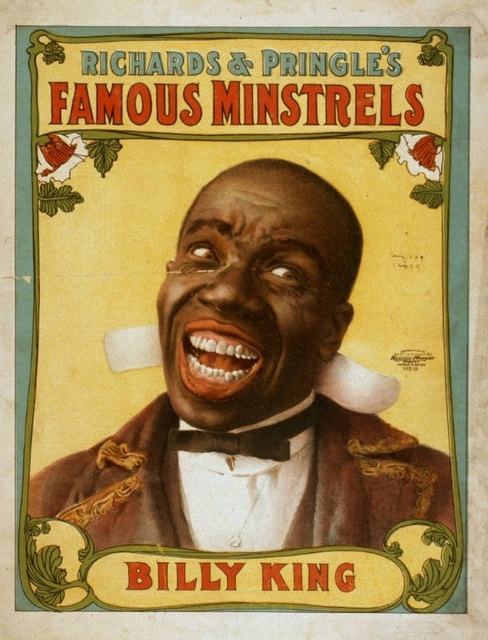
MinstrelTurn of the Century “Minstrel” Poster

Then 10 minutes later they argue that your son, grandson, godson, nephew, or youngbuck averaging 32 ppg for the public school ‘round the way should come to their school. They call President Obama and Attorney General Holder “minstrels.”  Meanwhile, the same person puts forth an argument why “Junior” should come, bust his ass and sack quarterbacks for their alma mater next year.  It’s a truly weird dynamic to observe. They make no apologies.  Indeed, the proudly claim they are speaking “truths”.  Many of them despise and hate the ‘hood, while simultaneously yearning for the big beautiful Black bodies walking down it’s narrow avenues.

I say Fuck ‘em!

I say keep track of these public discourses and hold the programs accountable.  I say ask the coaches and athletic directors to disassociate themselves from the most egregious offenders. If they choose not to, I say educate our young men from the ‘hood about the way SOME of the alums feel about them, their families and their neighborhoods.

Let’s not ignore those that wish you and yours harm.  Of course, MOST alums and fans are respectful and always decent in public and behind a screen name.  I say call on them to check the racist tendencies of the vocal minority within their family.  These boards have moderators.  If offensive language it left up, one can safely assume is is acceptable within that cyber-community of the school’s alumni.

Read for yourself. View this stuff for yourself. Make sure you let young people understand the parameters of public discourse surrounding their families and their neighborhoods.

The time has come to make sure our young people and their families are fully informed before they make the very important decision to earn money for a particular university.  If one or more of the local schools is offering your players a scholarship he will likely have other options.  If he doesn’t hit me up and I’m sure we can find a school that will pay his bills.

If you feel disrespected, if you feel unappreciated by local programs and their followers and they are offing your players scholarships you have options.  Exercise them.  Buyer beware!

It should be noted that it’s a very specific segment of the largely white male middle class fan and alumni base making the most vile statements.

Message boards are largely populated by white male alums of the schools. Recent surveys have identified the characteristics of message board posters. The data indicated that the vast majority of message-board users were male (87.8% of total, 92.2% of subscribers), White (90.8% of total, 92.4% of subscribers), and married (62.1% of total, 63.0% of subscribers); had least an undergraduate degree (76.0% of total, 79.3% of subscribers); and were current residents of the United States (97.4% of total, 98.1% of subscribers). Most respondents indicated that they were alumni of their message board’s school of focus (59.0% of total, 60.6% of subscribers). A total of 77.4% of survey participants indicated they were at least 30 years old, with subscribers tending to skew slightly older than non-subscribers. Also of note was the finding that 25.5% of all users were age 50 or older.

Let’s not send our young men where they aren’t welcomed and embraced. These are the internet addresses of message boards for the City 6 basketball programs.

St. Joseph’s Basketball – http://saintjosephs.scout.com

Temple Basketball & Football – http://temple.scout.com/

LaSalle Basketball – http://explorertown.proboards.com/

Villanova Basketball & Football – https://villanova.rivals.com/forum.asp

Drexel Basketball – http://www.caazone.com/boards/forums/drexel-dragons.7/

Penn Basketball – http://boards.basketball-u.com/showforum.php?fid/43/

Judge for yourself.

← Back

Thank you for your response. ✨


Ask AAU and HS Coaches the Hard Questions!!

Young fella:
It’s hard… I know… believe me, I know. You are just trying to find your way. I’ve been there. I’ve done that. I flunked one year in school at 13. I was arrested at 16. I was a teenage father at 17. I lived in subsidized housing. I was raised by a single mother. In my early 20s, I smoked blunt after blunt after blunt… I played high school ball. I played college ball. My homies moved weight. I have been profiled by police several times. I have been strip searched for no reason. My car has been searched on the side of the road. My close friends have done bids in the penitentiary. By 23, the University of Michigan, the University of Delaware, The Ohio State University and the University of California were offering to pay me to attend their graduate programs.  As I approach 50, I have gained some perspective that may be of use to you as you begin your journey.  But, you gotta pay attention and listen closely…

Philly Pride Triple Threat LogoMore than anything else… More than exposure… More than playing time… More than trips to Vegas… More than fly gear… you need to surround your self with people that are knowledgeable about the ever changing NCAA eligibility process.  Make sure you participate in AAU and high school programs that genuinely care about college preparation.  Good programs have early-alert systems that flag student-athletes with spotty attendance, low test PSAT, SAT and ACT scores, too few core courses and low GPA’s.  Great programs will reward you for meeting academic goals and implement  consequences when you come up short.  Young fella, that’s the ONLY way to avoid being one of the thousands of young Black men who will inevitably fail to meet NCAA eligibility requirements in 2016.  Time is short, you have to grow up quickly.

As you embark on your journey, you will find yourself struggling with the conflicting ways the larger society views Black males. The relationship between America and Black males is really complex and can really be confusing for young men such as yourself. On one hand, for the better part of 400 years, Black males have been viewed as a menacing threat to all that is good about American society. Deeply ingrained white supremacist and racist traditions led to the exclusion of Black males from many major collegiate athletic programs up to the late 1960s and early 1970s.  To this day, young Black men can be literally shot in the face or choked to death in the middle of American streets while armed with only Black skin, loose cigarettes, iced tea and a bag of skittles. On the other hand, Black male athletes and hip hop performance artists are revered and rewarded with multimillion dollar contracts and enormous endorsement deals. Under Armour and Nike just emerged from an unprecedented battle over who gets to pay Kevin Durant $300 million over the next decade.  Of course, you want access to the latter, but everyday you have to navigate the reality of former. It ain’t gonna be an easy journey young fella…

Odds-of-Making-the-NBAIn the immortal words of Run-DMC, “It’s Tricky”…. But, for now, you just wanna play ball… You just wanna go to college, preferably D1. You know the odds are more than stacked against you. You have heard it all before. You fully understand that only 0.03% of high school players make it to the NBA. You realize that there are about 546,000 high school players and every year only about 48 college players are drafted into the league. But, shit… you could be one of the 48. I get that… I really do… As you see it, all you need is one coach in the right program, in the right conference to give you a chance. If they let you on that stage, you know you’re gonna shine. In your mind, you are better than many of the guys playing college ball right now! Given a fair chance, you will have the NBA contract and the massive endorsement deal. Maybe… Maybe you will young fella, but then, again, maybe you won’t. Be ready either way!

Mark MaconMark Macon, Temple/NBA

It’s possible… I’ve seen a lot of Philly high school and college players make to the NBA. Maurice Martin (St. Joseph’s), Lionel Simmons (LaSalle), Doug Overton (LaSalle), Randy Woods (LaSalle), Bo Kimble (Dobbins), Tim Perry (Temple), Mark Macon (Temple), Aaron McKie (Temple), Eddie Jones (Temple), Jameer Nelson (St. Joseph’s), Delonte West (St. Joseph’s), Kerry Kittles (Villanova), Rasheed Wallace (Gratz), Marcus & Markeiff Morris (Prep Charter) and Dion Waiters (Syracuse) were all 1st round picks.

I must also tell you, I’ve also seen guys who were good enough suffer injuries and illnesses that curtailed their NBA dreams. Rap Curry (St. Joseph’s), Bernard Blunt (St. Joseph’s), Bernard Jones (St. Joseph’s), Donnie Carr (LaSalle), Jason Frazier (Villanova) and Granger Hall (Temple) were fantastic collegiate players denied an opportunity in the NBA because of health issues. You have to simultaneously prepare to play at the highest level and get ready for the day the ball stops bouncing. It could stop bouncing at any time. First and foremost, we have to get you through high school and off to college.

donnie carrDonnie Carr, LaSalle University

Young fella… The first thing you have to do is become aware of and avoid the traps that have been set for you. Your future, your freedom and in some cases your life are at-risk every time venture outside your home. Every year, somewhere between 8,000 and 9,000 African Americans are murdered annually in the United States. The overwhelming majority of these victims are young males. You should know that 93% of these murders are in fact perpetrated by other blacks.  Black people account for about half of all homicide victims in the US almost exclusively at the hands of other African-Americans. Every year Black men kill more Black men than the total number of U.S. service men and women that been killed in Iraq and Afghanistan combined over the course of decade-long wars fought in those nations.

I know… I know… You know your way around the “hood.” You know the gun-toters. You know the killers. They respect your game. You don’t have nothing to do with the neighborhood “beefs.” You ain’t really worried about dying in the streets at the hands of other Black men. But, you should be. Be careful. Be respectful. I can’t expect you to avoid all interaction with real “thugs.” Some of them are your uncles, cousins, neighbors, friends. In many cases, they love you and you love them. Nonetheless, you have to exercise extreme caution when interacting with them. Don’t take no rides. Don’t hold no packs. Don’t stash no burners in your crib. Be smart. You have other more important things to worry about.

6446-000031Young fella… there is a drug arrest every 19 seconds in the U.S. In 2009 alone, there were more than 1.6 million drug arrests and 82 percent of those were for possession alone. Despite the unquestioned fact that white boys use drugs just as much, if not more, than your homies, they are focusing their policing efforts on our community. As Blacks, we are only 13 percent of the U.S. population and we proportionately account for 13 percent of the nation’s drug users. Yet, Blacks represent 34 percent of those arrested for drug offenses and 45 percent of those held in state prisons for drug offenses. We are the enemy in the “War on Drugs.”

According to the U.S. Bureau of Justice, in 2008, there were over 846,000 black men in prison, making up 40.2 percent of all inmates in the system. The brilliant Michelle Alexander notes that “More African American men are in prison or jail, on probation or parole than were enslaved in 1850, before the Civil War began.” We are drastically overrepresented in the courtrooms, jails and prisons. We are about six times more likely to spend time in prison or jail than whites. According to recent research, we receive up to 60% longer federal prison sentences than whites who commit similar offenses, and 20% longer prison sentences than whites who commit the same offenses.  It’s so easy to get tripped up.

Keep these statistics in mind while you listen to multimillionaire hip hop artists promoting violence, misogyny, drug abuse and crass materialism. Jay Z, Young Jeezy, 50 Cent, Lil’ Wayne and all the rest have bloody hands. They are purposely filling your head destructive messages, while accepting payments for lyrics that extol alcohol and drug use. A recent study by Dartmouth Medical School, analyzed 793 songs from Billboard charts starting in 2005 and found that 160 songs (about 21%) referred explicitly to alcohol.  The study found that the majority of songs that referenced alcohol were rap, followed by R&B/hip-hop and country.  Approximately 42 percent of the lyrics referred to alcohol in a positive way and mentioned specific alcohol brands.  The brands in most cases are associated with advertising that depicts a luxury lifestyle of drug use, partying, sex, and wealth.

Another study by the University of Pittsburgh School of Medicine found that music listened to by teenagers aged 15 to 18 affects long-term attitudes and behaviors.  That study looked at 279 top Billboard songs and found that 33 percent included explicit substance abuse references.  Be strong young fella, they are after you.  The majority of these songs linked substance abuse with positive sexual, financial and emotional rewards.  There are very consistent messages within corporate-sponsored hip-hop that promote the murder of young black men, sexual irresponsibility, excessive consumerism, drug/alcohol abuse and other forms of illegal behavior.  The plan is to convert you into a blunt smoking, drug addled, liquor drinking corporate consumer for life.

Wiz KhalifaIn 2002, Busta Rhymes and P. Diddy released “Pass the Courvoisier.”  That song led to a 19 percent increase in sales for Allied Domecq, maker of Courvoisier. Young Jeezy has an endorsement deal with Belvedere Vodka. A number of hip hop artists are creating their own alcohol labels.  Pitbull, whose real name is Armando Christian Perez, is part owner of the Voli Vodka brand.  Other rap artists who are part owners of liquor brands include Jay-Z, Snoop Dogg and Ludacris.

LudaThe myth is bullshit, Young fella… They tell you, “Jay Z sold drugs, he came up… 50 Cent sold drugs, he came up.” That’s the narrative being repeatedly fed to you and your homies through the media and the hip hop lyrics. Meanwhile, one of every three black American males born today can expect to go to prison in his lifetime compared to one out of every seventeen white males. Most will go to prison for the same “hustlin” behaviors celebrated in hip hop. I need you be discerning. I need you to see what they are doing. For every Kanye, there are 100,000 Nates, Bruces and Jamals on probation, parole or in prison.

The aim, the goal must ALWAYS be to hone and leverage your athletic ability and gain access to higher education. Then use education to improve your life and the lives of your family members. Once this goal is achieved, you have won. A professional basketball contract is the gravy.  The college degree and the knowledge gained along the way constitute the nourishing meal.

Playaz logoToward that end, you have to exercise solid judgement in selecting AAU and High School programs. Don’t sell yourself for a mere pittance. When the AAU guys come around offering a couple dollars, a new cell phone bill and 5 new pairs of KD’s, ask then the tough questions: How many of the guys in your program did NOT meet NCAA eligibility requirements? How many of your guys in the past 5 years had to go JUCO? Exactly, what does your program do to make sure guys are eligible? Does your program have homework assistance and/or SAT/Prep? Do you provide practice SAT exams to see where I stand?

We R 1 logoReally good AAU programs won’t have a problem answering these questions. Really good program administrators understand what you are up against. They do everything they can to get you in college. Some of the best programs I have encountered are NJ Playaz, Philly Pride/Triple Threat, WE R 1, Baltimore’s Finest and Mississippi Basketball Association. These programs focus on academics as well basketball preparation.

Mississippi Basketball AssociationMany of these same questions must be directed to high school coaches. This is especially true for kids attending urban public schools. In urban districts across the country, budget cuts have eliminated guidance counselor and assistant principal positions. You must ask the coach: What is the “eligibility plan” for me? Exactly what courses will I take that will lead to you being eligible? Can I see the list of NCAA approved courses for your school? What is the average SAT score at your school? What scores did your players get over the past few years? Does your school offer summer school courses? What is the grading scale at your school? How many of your players have gone onto play Division 1, Division 2 and NAIA?

As young Black “baller” you may find yourself struggling to attain self-conscious manhood while avoiding traps permeating the landscapes you traverse everyday. As you inch closer to becoming an elite basketball player, the “love-hate” relationship America has with Black males will become more and more apparent. Your challenge is to both keep it “real” and represent your family and your “hood” while simultaneously accessing institutions of high education and playing at the highest collegiate level. Shit ain’t easy. But, it can done, but, you must start right now by asking the right questions.

Sincerely,

Delgreco K. Wilson


Yo man… y’all really NEED AAU guys: An Open Letter to College Coaches

Coach… Coach…. I hear it all the time. “Why do I have to call his “guy”? Why does he listen to him? I’m paying his bills… I’m the one that gave him a scholarship… It’s because of me that he’s on national TV 25 times a year…” A lot of college coaches hate AAU/grassroots guys. It’s no secret. Y’all despise the close relationships players have with AAU/grassroots coaches. In your eyes, they are trying to “come up” off the kids. Y’all resent the powerful influence that that AAU coaches have on the recruiting process. Y’all wish you didn’t have to deal with these street savvy dudes.  It really bothers you that they can tell players to leave school early.

Nonetheless, the fact remains that in many, if not most, instances a player’s truest allegiance, his strongest alliance is with his AAU coach. This really gets under your skin and that of a lot of other college coaches. You want waaaaay more control over the players.  I get that.

Philly Pride Triple Threat Poster-page-0Rysheed Jordan, Philly Pride & Triple Threat

No disrespect Coach, but you’re DEAD WRONG on this one! You just don’t get it…. AAU/grassroots guys are not “THE” problem, they are not even “a” problem. In low income neighborhoods throughout America’s inner-cities, these guys are making positive life altering contributions to the lives of young Black men in desperate need of guidance and direction.  Yeah… yeah… I know Curtis Malone was just convicted for second time on drug-related offenses and sentenced to 100 months in federal prison last May.  So what Coach?  That’s just one man in one program.  Truth be told, despite Malone’s transgressions, he helped many who players from the “hood” who would have fallen through the cracks if not for his assistance.

Yo man… y’all really need those AAU/grassroots dudes.  Without them, a lot of these kids would have absolutely no shot at making it to college.

With all due respect coach, you don’t understand the crucial role AAU/grassroots coaches actually play in helping players deal with growing up in places like Philadelphia, Paterson, Newark, Brooklyn, Chicago, Baltimore, Washington, DC and Houston. Young Black boys are immersed in woefully under-performing, dysfunctional and underfunded public schools during the day. After school, their home lives feature poverty, hunger, substandard housing and in some extreme cases, homelessness. On a daily basis, they confront persistent frustration associated with parental abandonment and/or incarceration.  AAU/grassroots coaches use basketball as a means of helping these boys remain engaged in high school and accessing higher educational opportunities.  If a select few can make money playing basketball it’s a blessing.

A lot of effort is required to produce a college ready young Black man in contemporary American inner cities.  Shit doesn’t just happen.  Coach, by the time you show up looking for tough “Philly” guard or a “super athletic” wing, literally thousands of hours have been invested by AAU/grassroots coaches into developing a young man prepared to deal with all aspects of collegiate life.

Playaz Poster-page-0Isaiah Brisoce, Playaz Basketball Club

AAU/grassroots coaches, especially in low-income urban areas, are filling a void. In many cases, they are fathering the fatherless. Without these guys, many of the young men you are trying to recruit wouldn’t even finish high school. They would be lost in the streets, like many of those who came before them.  The 80’s wasn’t that long ago.  Try to remember Coach.  The parents of current recruits came of age during the War on Drugs (1980-present) and they begat descendants who live, survive and play ball today in poverty stricken, hard scrabble urban centers. Some of the boys you’re recruiting are “crack babies.”  Most of them are products of what polite society refers to as alternative marital and familial forms.

Many came into being through “promiscuous” sexual relationships or long ago severed “common-law” marriages. Some are the “illegitimate” children of fathers with other families and quite a few have been “abandoned” by the biological fathers.  Fortunately, AAU/grasroots coaches step in, step up, embrace and try to help raise these young men. The players intrinsically understand and appreciate the role these men play in their life, even if you don’t or won’t.

JaQuan Newton-page-0JaQuan Newton, Team Final

My main objective here is to help you understand that relationship. I really want you to realize the AAU/grassroots coach is NOT the bad guy.

Let’s put this situation in a historical perspective. Think about how the parents, especially the fathers, grew up.  Beginning in 1980, under President Ronald Reagan, the situation for the urban poor began to worsen dramatically.  In the 1980s, while the number of arrests for all crimes had risen by 28%, the number of arrests for drug offenses rose 126%. While Nancy Reagan told Americans to “just say no”, her husband’s “War on Drugs” evolved into a War on Black males. According to the the US Department of Justice, from 1990 through 2000, “the increasing number of drug offenses accounted for 27% of the total growth among black inmates, 7% of the total growth among Hispanic inmates, and 15% of the growth among white inmates.”

The “war” resulted in an unprecedented amount of casualties in urban Black communities. Coach, think about it…. these are the same communities producing many of the elite basketball players today. In 1994, the New England Journal of Medicine noted that the “War on Drugs” resulted in the incarceration of one million Americans each year. The overwhelming majority of these prisoners were Black males. In 2008, the Washington Post reported that of 1.5 million Americans arrested each year for drug offenses, half a million would be incarcerated. In addition, one in five black Americans would spend time behind bars due to drug laws.  These are the fathers, the uncles, the cousins and the older brothers.

Mississippi Basketball Association Poster-page-0Mississippi Basketball Association, Jackson, Mississippi

With so many Black men in prison, on probation or on parole, who is gonna raise the boys? Who Coach?  Who’s gonna step up?  Well, in too many instances, no one is raising the boys.  To a large extent, that explains why less than half of the Black boys in America’s major cities graduate from high school. In Philly and NYC only 28% graduate from public high school in 4 years. Of the more than 50% that don’t graduate, more than a third are in jail or prison. Only 26% of Black male HS drop outs are gainfully employed. It’s real out here coach. We ain’t got time to be pointing fingers because you don’t like the way guys handle their business.  AAU/grassroots coaches are a literally saving lives. Most importantly, they do it because others won’t or can’t.

Coach, you do understand that being incarcerated wasn’t the only consequence of the War on Drugs.  Time after time, federal and state policies imposed collateral consequences on those convicted of drug offenses. So even when their fathers, grandfathers, uncles, cousins and big brothers are released from prison they are still very much limited by their drug-related convictions. To this day, they are subjected to restrictions and conditions that are not applicable to those convicted of other types of crime. As result of the War on Drugs, millions of Black men face restrictions in obtaining various professional licenses, ineligibility for public funds including welfare benefits and student loans, loss of voting rights, ineligibility for jury duty, and deportation for immigrants. How are they supposed to rebuild their lives?  How are they supposed to take care of their families?  It’s real out here coach.

I respectfully submit, that it just ain’t fair.  The deck was stack against their fathers.  In 1986, the U.S. Congress passed laws that created a 100 to 1 sentencing disparity for the possession or trafficking of crack cocaine when compared to penalties for trafficking of powder cocaine. This law was blatantly discriminatory against minorities, mostly blacks, who were more likely to use crack than powder cocaine. As a result, persons convicted in federal court of possession of 5 grams of crack cocaine received a mandatory of 5 years in federal prison. On the other hand, possession of 500 grams of powder cocaine carries the same sentence. Do you know how many of the family members of the players you recruit got caught up in this mess?  A whole helluva a LOT…

AAU/grassroots coaches are fighting and struggling to keep these young men from following the crime riddled path of their oldheads. But Coach, you’ve gotta understand that this battle is not easily won. Crime statistics show that—in the United States in 1999—compared to non-minorities, African Americans were far more likely to be arrested for drug crimes, and received much stiffer penalties and sentences. Statistics from 1998 show that there were wide racial disparities in arrests, prosecutions, sentencing and deaths. African-American drug users made up for 35% of drug arrests, 55% of convictions, and 74% of people sent to prison for drug possession crimes. Nationwide African-Americans were sent to state prisons for drug offenses 13 times more often than other races, even though they only supposedly comprised 13% of regular drug users.

Now coach… you are recruiting the sons, grandsons, nephews, cousins, Godsons, young brothers and youngbuls of Black men that came of age during this era. Of course, to some degree the trails and tribulations of the elders have shaped the behaviors and outlooks of the progeny? If we compare the young Black males of the 1980’s and the contemporary young Black men you are recruiting, we find alarming similarities. Indeed, in many ways things are worse.  Basketball is all too often the saving grace.

We R 1 Poster-page-0

Derrick Jones, WE R1

Coach, in many cases, the AAU/grassroots coaches are the only thing standing between the players and the participation in illegal street crime. That’s why so many AAU/grassroots coaches keep the kids extra close to them. That’s why they allow them stay in their homes. That’s why they informally “adopt” them. That’s why their wives put up with 6’8” 235 lb dinner guests almost every night. The families of the AAU/grassroots coaches know how precarious the situation is for many poor inner city males.

AAU/grassroots coaches understand the odds.  Most of the time, they are from the “hood.”  In many cases, their linguistic skills aren’t polished and refined.  Don’t mistake that for ignorance.  These guys are very adept at using basketball to beat the staggering odds. Quite frankly Coach, rather than complaining about the AAU/grassroots guys, you should be grateful that their kids that are recruitable athletes. The peers of the recruits not in the AAU program would never gain admission to your school.  You know and I know most Black males in urban school districts don’t graduate in four years. We also know the overwhelming majority of young Black men have absolutely no shot at meeting NCAA eligibility standards.

So, let’s keep it 100, as the kids say, coach… Most players in urban areas need an AAU/grassroots coach to help him understand what’s expected of him and keep him on track. You might say: Why not the guidance counselor or the assistant principal? After I finish chuckling…. I would note that, in many cases, they are gone. Their jobs have been eliminated.  We must face the truth Coach, as a society, we have more or less given up on funding urban education. In 2013, the Philadelphia school system laid off 3,783 employees, including 676 teachers and 283 counselors. Along with teachers and counselors, those losing their jobs included 127 assistant principals and 1,202 aides who monitor the cafeteria and playgrounds.

So you see, in many ways urban black male athletes attending public schools are set up for failure. AAU/grassroots coaches enable kids to have shot at college. They are the ones that find tutors for the SAT. They are the ones checking the grades. If they weren’t there the pool of qualified recruits would be much, much smaller.

In 2016, the NCAA will establish a 2.3 gpa and a 900 SAT score as a minimum requirement for freshman eligibility. As you can see on the chart below, 39 of 58 (67.2%) of Philadelphia’s public schools have average SAT scores below 800. Only 9 of 58 (15.5%) have average scores above 900. All nine of those schools are special-admit magnet schools. There aren’t too many elite athletes at those schools. Young Black boys attending neighborhood schools are pretty much screwed. The system is structurally determined to result in ineligible Black male athletes.  They will have to score 200-250 points above the average score for their respective schools to meet minimum NCAA standards. Coach, you are gonna need the AAU/grassroots coach more than ever.

Philly Public School SAT scores

They have been doing it for years.  I have a lot of faith in their ability to continue getting guys through the NCAA eligibility center labyrinth.  AAU/grassroots coaches help impressionable, very “rough around the edges” young men deal with life situations face by the urban poor. They offer a guiding hand as the young men as they deal with the daily experience of inexorable pressure, unsolvable problems and overwhelming frustrations. If they give a kid a ride to your campus, you should find a way to help out his program. Buy a couple directories at his tournament. If he brings kids to your campus at your request, break him off a “lil sumthin.”  Gas and tolls add up.

Coach… you have stop complaining that AAU guys are “in it for the money.” At the elite program level, there is some money to be made. Some guys do alright. The tournaments themselves bring in some revenue.

EYBL LOGO

Let’s look at 2 typical “Big AAU” events. The first will cost, say, $550 for a team to register with play in the 14-under, 15-under, 16-under and 17-under divisions. The second will cost $650 and will be open to teams that play 15U-17U. Major events average between 40 and 60 teams per age division. “Big AAU” events also charge between $175-$300 for coaches packets that provide information on the players to college recruiters.  Event organizers can generate significant revenue. Joy of the Game’s Chicago summer classic charges $495 for boys teams from 15U-17U. Boys from 9U-14U pay $350. Adidas Super 64 in Las Vegas charges $700 per team.

Some program charge fees to participate. AAU basketball does not come cheap. Depending on the team, families can expect to pay $400 to $4,000 per summer to play, including uniforms. In many cases, that does not include transportation to and from practice or games, hotel rooms, food, gas or admission for those not playing. Most programs offer financial assistance for players who need it, but normally it only covers the cost to join the team, not the peripherals.

But, Coach you know a LOT of the programs in the “hood” get by on the “muscle.” They can’t possible get $4,000 from a Mom on public assistance, living in Section 8 housing. Ain’t gonna happen, no way no how. These guys will have 50/50 raffles and a “fish fry” to raise enough money to travel hundreds of miles in cramped vans so you can see his kids play.

Coach… y’all really need to stop calling AAU/grassroots coaches “greedy” and money-hungry. Too many of you complain that AAU/grassroots guys are in it for the money.  They rightfully resent that accusation.  Stop… Just stop! The AAU guys know that Coach K made $9,682,032 last year. They know that’s $806,836 per month. It’s not a secret that Rick Pitino made $5,758,338 last year. Calipari came in at $5,511,381 and Bill Self earned $4,960,763. Overall, they know that 32 college coaches made more than a million dollars. They know about the private jets, the 3 company cars and the country club memberships. They really don’t understand the allegation that they are “pimping” players.
under-armour logoIn most AAU urban programs, coaches feed players. Coaches clothe players. Coaches even pay medical expenses for players with no insurance. Coaches pay for SAT test Prep.  Coaches pay for educational testing.  I know some of the best programs have sponsorship deals with Nike, Under Armour and Adidas. Others rely on Aunt Sadies’s fried whiting, collard greens and candied yams moving every other Friday night.

Coach, in many instances Daddy is locked up. Even if he’s not locked up, he’s not involved. Momma doesn’t understand the process. She’s just grateful that the AAU coach is involved with her son. She’s seen her nephews, cousins and the neighbor’s boys hustling, playing with guns, getting locked, dropping out of school, making babies and being unemployed. She’s worried about the guys on the street and she’s worried about the boys in blue.  Momma saw what happened to Trayvon Martin, Mike Brown, Oscar Grant, Eric Garner, Amadou Diallo and score of other young men armed with their Black skin.

Through basketball, she hopes her son can maintain a level of focus and complete high school. The AAU coaches reinforce the importance of attending and completing school.  He’s an asset.   Through basketball, she’s hoping that her son can access higher education. She knows she can’t pay your school $40,000 -$60,000 per year for her son to attend. The AAU coach has been there. He’s helped her when her son started talking back. He’s kept him off the street. She knows he’s safe with the AAU coach.

exclusive_run_covers_guide

She’s grateful for the 3,4 or 5 pair of sneakers per year. Coach, I know you can’t relate, but $125-$175 is a LOT of money to some people. Before her son began playing AAU/grassroots basketball, he never left his hometown except for an occasional long drive down south for a family reunion or funeral. Momma appreciates the opportunities for he son to visit Las Vegas, California, Chicago, Houston, Miami, Atlanta and Charlotte. His friends “around the way” don’t get those opportunities. The boy knows he can’t count on his father. His Momma and her Momma have told him for 17-18 years, “that man ain’t sh*t.”  But, her son is special. The AAU/grassroots coaches made that happen.  Straight up Coach… y’all NEED those AAU guys…..

← Back

Thank you for your response. ✨