A Real NCAA Rule Change Casualty

Today, I received a text message from a good friend of mine. He’s highly regarded high school basketball coach. Over the years, he has sent numerous players to some of the best college basketball programs in the nation. He’s known as a stern taskmaster that does things the right way. He’s asked the Black Cager to address his parents and players in the past. We’ve always been happy to oblige.

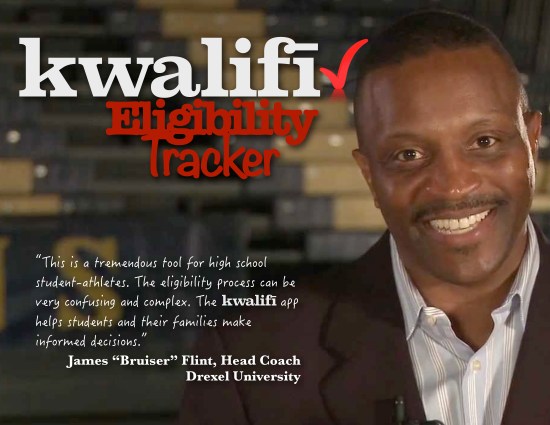
kwalifi Poster - Bruiser Flint-page-0

Today, he needed help. He needed me to talk to a parent. He asked if I could spell it out for Mom.

Her son, “Javonte” (not his real name) is a “Dead Man Ballin”!!

At 6’8″ 240 lbs, he is a beautiful physical specimen.  He is a high level athlete with a smoothness to his game.  On the court, Javonte has a chance to be very special.  He just turned 17 and is already playing at a very high level for high school. Possessing text book form with feathery touch and excellent release, Javonte grew up around the game. His older brothers were All-State players. As a result, he shows a feel for the game that cannot be learned on the fly. With a strong handle, he is adept at creating shots for himself and can spot up or pull up off the dribble. He is very good at creating offense for his teammates.  Javonte has a tremendous basketball body with a big frame, wide shoulders, enormous hands and long arms.

Big East, Big 10, ACC, Atlantic 10 and SEC coaches have been drooling at the thought of Javonte joining their program. They have been constantly hitting him up on twitter, instagram and snapchat.

None of them have seen his transcript…

Bad Transcripts-page-0

Mom refused to take the coach’s advice. When he transferred in prior to the start of his 11th grade year, the coach told Mom, “Your son has dug a big hole for himself… it’s gonna be tough.”

He had spent his freshman and sophomore years at a Catholic High School. During that period he had taken and completed 12 core courses. His grades were 6 D’s and 6 C’s. He had a 1.5 core GPA.

Coach, very much aware of the 2016 rule changes, stressed the importance of getting straight A’s going forward. Coach hoped the kid would at least get mostly A’s with a few B’s. Kid proceeded to fail English and get a D in Algebra as a Junior.

Coach pleaded with Mom and the kid to go to summer school before 11th and again before 12th grade. Coach explained over and over again that he needed to get those D’s off his report card.

“D’s are GPA killers!”

He would say over and over, to no avail. Mom and her boyfriend wanted the boy to play on the Nike EYBL circuit and summer school would get in the way…

On the first day of school in September, when the homeroom bell rang, the NCAA had him in their sights….

Sniper lens pic-page-0

When the teacher, taking attendance for the first time, called his name…

“Javonte, Javonte?”

The finger was on the trigger… Once he raised his hand and responded…

“Here….”

He was done… Dead Man Ballin’…

His senior year had officially commenced. With that, the poor grades on the transcript depicted above were “locked in”.

He cannot retake or replace any of those grades in an attempt to raise his core GPA to the new 2.3 minimum.

His refusal t0 follow the directions of his coach cost the family anywhere from $200,000 to $300,000 in scholarship funds.

Scholarship Values-page-0

Like a cop after an accident in the middle of the night… Like a military chaplain after a young man steps on a land mine…

It was my responsibility to let his mother know that her son is a Dead Man Ballin’…

Before he plays a single game in his senior year, he is ineligible for a Division 1 athletic scholarship…

This fucked up situation is playing out in High Schools and homes in Black communities across the country… Unnecessarily so!!

Kwalifi logo

Dealing with Barriers to NCAA Eligibility: The kwalifī Strategy?

I’m NOT sayin’ it’s a racist organization, but….

Historically speaking, from 1906 through the early 1970‘s the National Collegiate Athletic Association (NCAA) sanctioned and supported Apartheid-like Jim Crow segregation among it’s member institutions. For the better part of seven decades, the NCAA perpetuated a system which, more or less, formally excluded people of color from widespread participation. A few exceptional Black athletes like, Paul Robeson (Rutgers), Jackie Robinson (UCLA) and Jesse Owens (Ohio State) slipped through the segregationist cracks in the northern and western parts of the country. In the South, however, big-time college athletics was the exclusive purview of white people.

kwalifi poster - basketball black & white-page-0

Following a massive and sustained struggle for respect, dignity and basic Human Rights during the 1950’s and 1960’s, overt and blatant segregation waned considerably. By 1971, Blacks, heretofore excluded from collegiate athletics at Kentucky, North Carolina, Alabama, Florida, Texas, Mississippi, South Carolina, Clemson, North Carolina State, Louisiana State and other powerhouse football and basketball programs, became all the rage. Between 1970 and the early 1980’s Black student-athletes became a dominant force in mainstream collegiate athletics. Simultaneously, Historically Black Colleges and Universities (HBCUs) suffered as they steadily lost the most talented Black athletes to wealthier predominantly white institutions.

What was the response of the NCAA to this rapid “tanning” of the high profile revenue generating sports? For some white University Presidents, Athletic Directors and University Donors it must have seemed like an invasion…

Something had to be done… But what?

They couldn’t just contract with Donald Trump to build a “HUGE” wall around football and basketball locker rooms… Nonetheless, they needed a means of stemming the rising tide of Black bodies flooding Basketball and Football programs across the nation…

The problem was that formal segregation was no longer acceptable in America circa 1982-83. It was no longer politically viable to resurrect and reinstall “White Only” signs that had been removed 15 years earlier… A more nuanced and subtle means of denying access was needed. They devised on strategy centered on the development and implementation of “initial freshman eligibility rules.”

I’m NOT sayin’ it’s a racist organization, but….

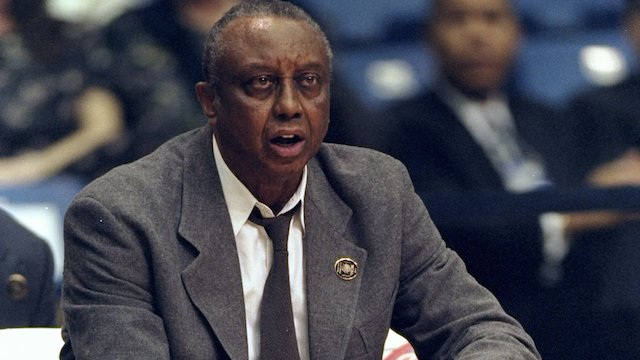
These eligibility rules were, and remain to this day, discriminatory against Blacks. John Chaney and John Thompson, II throughout much of the 1980’s and early 1990’s, passionately campaigned against what they referred to as  intentionally “racist” eligibility rules. Following eligibility reforms in 1989, Chaney, Temple University’s Hall of Fame Head Coach, unequivocally stated, “The NCAA is a racist organization of the highest order… On this day, it instituted a new punishment on black kids who have already been punished because they are poor. Any time the NCAA, which is 90 percent white, considers the youngsters in Division I basketball and football, it discriminates, because 89 percent of the kids are black. I wonder what message they are sending. It’s another hardship for black kids made by white folk.”

John Chaney

In response to the same reforms, Georgetown University’s John Thompson, II noted, ”I think it’s sort of ironic when they began to integrate the South athletes were the ones used to pave the way, and they were used under the pious assertion that ‘we’re helping these poor kids… Now, apparently someone has said, ‘Enough,’ so they don’t need the kids anymore. They’re using the same rationale they used to get them in to begin to keep them out. I guess it’s a situation where we’re like shoes and clothes. We’re not in style anymore.”

John Thompson

John Thompson, II

These legendary Black coaches used their positions of prominence to consistently and fervently denounce the NCAA’s racist actions. Since then, every four or five years, the NCAA has implemented increasingly stringent initial eligibility standards. Each set of reforms disproportionately impacting Black student-athletes in a negative manner. The most recent 2016 reforms have, once again, led contemporary prominent Black coaches to openly question the disparate racial impact.

I’m NOT sayin’ it’s a racist organization, but….

The National Association for Coaching Equity and Development (NACED), a group led by Texas Tech coach Tubby Smith, Georgetown coach John Thompson III (son of John Thompson, II) and former Georgia Tech coach Paul Hewitt, recently issued a statement to The Associated Press observing that the standards disproportionately target minority and less affluent students in “an unintended consequence beyond acceptability.”

Whereas Chaney and Thompson, II contended that the NCAA acted with malice and fully intended to harm Blacks, the contemporary Black coaches recognize the same harmful impact but chose to consider it “an unintended consequence.” The raw, unfettered and direct accusations of racist behavior on the part of the NCAA put forth by Chaney and Thompson, II stand in stark relief to mild objections of “unintended consequences” emanating from Tubbs, Hewitt and Thompson, III.

John Thompson, III

Nonetheless, today’s coaches are voicing objection… “That dream could be taken away after six semesters in high school,” John Thompson III said. “So for someone that’s a late bloomer, someone that the light bulb doesn’t go on until later, now it’s too late. And just the disproportionate number of minorities that’s going to affect, the number of people in general that’s going to affect, is not good.”

The 2016 rule changes, coupled with a 2007 rule that allows for only one course from prep school to be applied to an athlete’s transcript, will have a major impact on the number of Black athletes that will be eligible to compete as freshman, especially in the NCAA’s two biggest moneymakers: football and men’s basketball.

A recent NCAA report found that 43 percent of men’s college basketball players, 35 percent of football players and 15 percent of Division I athletes overall who were competing as freshmen in 2009-10 would not have qualified under the new standards. Whether it’s intentional as argued by Chaney and Thompson 25 years ago or “unintentional” as posited by Tubby, Thompson, III and Hewitt, the end result is clear.

A disproportionate number of Black males are going to be excluded from collegiate competition.

I’m NOT sayin’ it’s a racist organization, but….

If I wanted to identify a scheme that would disproportionately harm Black student-athletes I would set the minimum SAT score, with a minimum GPA, at 900. As you can see on the above chart, there is a persistent “performance gap” between racial/ethnic groups on the SAT exam. Asians excel, whites do well and ONLY Blacks have average SAT scores below the 900 cutoff point.

In the “real world,” the “average” white student with a 2.3 GPA will be eligible and the “average” Black student with a 2.3 GPA will be ineligible.

This a perfect scheme… if the aim is to limit opportunities for Blacks while appearing race-neutral.

I’m NOT sayin’ it’s a racist organization, but….

How can Blacks counter this scheme that will, undoubtedly, have racist and discriminatory impact?

While it is certainly interesting to note the evolution of the responses from Black coaches, it really does not matter if the NCAA is intentionally or unintentionally trying to decrease opportunities for Blacks? We must deal with the simple fact that they are decreasing opportunities for Blacks.

The inevitable outcome will be fewer eligible Black student-athletes.

So… What are our strategic options? What should Blacks do about it?

The Black Cager has been discussing this very question with prominent and influential members of the Black youth basketball, AAU/Grassroots and educational communities. Although a lot of different ideas emerged during these conversations, there was a recurring theme in all the discussion.

“We have to EDUCATE the young student-athletes.” Over and over, it was concluded that the best thing we could do was to provide student-athletes and their parents with easy to understand and accessible information regarding the rule changes.

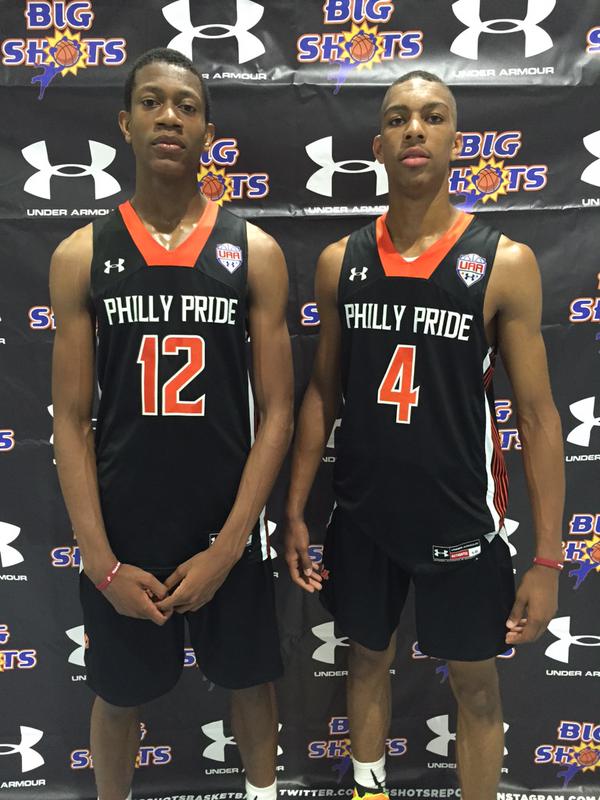
Kamal Yard, Philly Pride/Triple Threat

The Black Cager has had strategic discussions with Kamal Yard, Eric Worley, Rodney Veney and Amauro Austin (Philly Pride/Triple Threat AAU/grassroots organization). They immediately embraced and acted upon the strategy. Rob Brown and Aaron Burt (Team Final) agree that educating families and student-athletes is the most useful tactic at this point. Lonnie Lowry (Team Philly) continues to be a staunch supporter of educational efforts by the Black Cager. Terrell Myers (WeRone Hoops) has also embraced the educational outreach strategy.

Terrell Myers and Sedee Keita

Others have embraced and incorporated the educational outreach strategy as well. Littel Vaughn Charles Monroe consistently make sure they incorporate NCAA eligibility education in every event/league they organize. Philly’s High School Coaches have been very proactive with regard to getting information out to the families. John Mosco (Archbishop Wood), Paul Ramczuk (Archbishop Carroll), Rob Moore (Constitution), Andre Noble (Imhotep), Jazz Williams (West Catholic), Kenyatta Bey (Audenreid), Larry Yarbray (Chester), Pervis Ellison (Life Center Academy), Carl Arrigale (Neumann-Goretti), Chris Clahar (Parkway, CC) and Clyde Jones (Penn Wood) have demonstrated a strong commitment to working with families to increase opportunities for their players to access high learning institutions.

The Black Cager has consulted with Paul Gripper (Team Phenom), Vincent Robinson (The Robinson School) and Sam Rines (Rise Academy) on numerous individual cases. These guys fight the fight and walk the walk with their players. They win some, they lose some… But they always try to arm the players/families with accurate information as early as possible. Lou Daniels, Betty Givens, Mo Howard and Claude Gross are always available to provide counsel and guidance. They treat every kid as if he/she were their own.

But…

Even with all of these efforts we are just scratching the surface of an enormous problem affecting tens of thousands student-athletes of color. This is a national, perhaps even international, issue.  Many African, Latin American and European student-athletes have also been experiencing great difficulty meeting eligibility requirements.

kwalifi - screen shots -page-0

All agree that we need interventions capable reaching tens of thousands of families. Hence, after consulting with all of the above members of the youth basketball community, we have developed the kwalifi smartphone app. kwalifī is a simple and powerful app for tracking progress toward meeting NCAA Division I, Division II and NAIA scholarship eligibility requirements. It allows parents, students and coaches to take ownership of the eligibility process. Core course grades, sliding scales, core course GPA calculations are made easy to understand. No more depending on counselors. It is simple, easy to understand and very useful! Specific steps are outlined to help student-athletes meet NCAA and NAIA requirements.

Bay and Josh

Josh Selby and Bay Frazier

Moreover, with the assistance of people like Rodney Veney, we have discussed ways to ensure that every Black kid has access to the kwaifi app with Bay Frazier (Carmelo Anthony’s Manager), Rich Paul (LeBron James’ agent), Curtis Symonds (retired BET Executive) and Kevin Chiles (Publisher, Don Diva Magazine). As we develop marketing distribution strategies, The Black Cager welcomes input from all concerned parents. players, coaches and others committed to improving the educational opportunities for Black student-athletes. This is merely one step in a struggle to ensure our young people continue to have access to educational opportunities commensurate with their academic and athletic abilities.

Rich Paul

Rich Paul, Klutch Sports Group

We have to EDUCATE the young student-athletes… If you have any thoughts, ideas or suggestions as to how we can do a better job of pursuing this strategy please shoot us an email at blackcager@gmail.com. If you know of youth organizations or schools that will benefit from the kwalifi app, let me know!

Delgreco K. Wilson
The Black Cager

Kwalifi logo


Philadelphia Youth Basketball: Social, Educational and Emotional Development

On October 8, 2015, Philadelphia Youth Basketball, Inc. started a new dialogue…

A wide range of basketball stakeholders were present. Claude Gross represented the Sonny Hill League. Don DiJulia, Saint Joseph’s University’s Athletic Director was reunited with his Sweet 16 backcourt of Rashid Bey and Terrell Myers. Fran Dunphy and Steve Donahue, respectively, represented their Temple University and Pennsylvania University basketball programs. Kamal Yard (Philly Pride), Myers (WeROne), Eric Worley (Philly Triple Threat) and Bey (Team Final) represented three of the more prominent and influential AAU/Grassroots programs in the region. Justin Scott, Arcadia University and Rudy Wise II, Rosemont, held it down for the small colleges. Camden was represented by Tyrone Pitts and Larry Yarbray was flying the Chester High flag.

Pitts, Bey, Dunph, Claude, Scott

Tryone Pitts (Penn), Rashid Bey (SJU), Fran Dunphy (Temple), Claude Gross (Sonny Hill League), Dr. Scott Brooks (Missouri)

What was most interesting about this gathering was the fact that the game of basketball was never mentioned over the course of more than 2 hours. The discussion focused squarely on how the Philly basketball community can develop, harness and leverage social capital that can be utilized to further the social, educational and emotional development of young people or “our guys” as Dr. Scott Brooks described them.

Held in the Graduate School of Education at the University of Pennsylvania, the “Roundtable Discussion” was led by Dr. Brooks, Professor of Sociology at the University of Missouri. Dr. Howard C. Stevenson, Constance Clayton Professor of Urban Education at the University of Pennsylvania and Stephanie A. Tryce, J.D., Assistant Professor of Sports Marketing were also in attendance.

Kenny Holdsman and Eric Worley outlined their vision and plans to build a state of the art, basketball-based youth development center in the heart of North Philadelphia. Holdsman passionately posited that when you create opportunities for young people to develop their potential as students, athletes, and responsible engaged citizens, the individual and the community will thrive. Basketball, for Holdsman and Worley, is more than a game. Their efforts are undergirded by extensive research demonstrating that sports foster growth and development physically, academically, and socially.

Kwalifi Poster - Rens-page-0

Towards that end, Holdsman noted that they have begun building a professional organization and initiated fundraising efforts to construct a $25 million state-of-the-art, basketball-based youth development center in the heart of North Philadelphia. This 120,000 square foot facility will have 8 indoor and 8 outdoor courts including a 2,000 seat indoor competition court. It will also feature an education wing with a library, classrooms, computer lab, and a community engagement center.

Take the PYB Tour!

Worley explained that they simply could not wait for construction to be concluded to begin serving Philadelphia’s young people. As a result, in a couple of weeks they are initiating the PYB School Partnership Pilot Program. Through this pilot program, PYB will provide programming in eight-week intervals (fall, winter & spring) for middle-school aged students at four school partners located in the North, Northwest, and Southwest regions of the city. Programming will be held at the location of the four school partners twice a week during after-school hours and every Saturday at Temple University and/or another Philadelphia area college or university. The program will focus on academic support, homework help, study skills, time management, tutoring, high school selection, leadership, character development, health and nutrition, family engagement, and basketball skill-building and competition. All participants will receive basketball uniforms.

Dunph and Claude

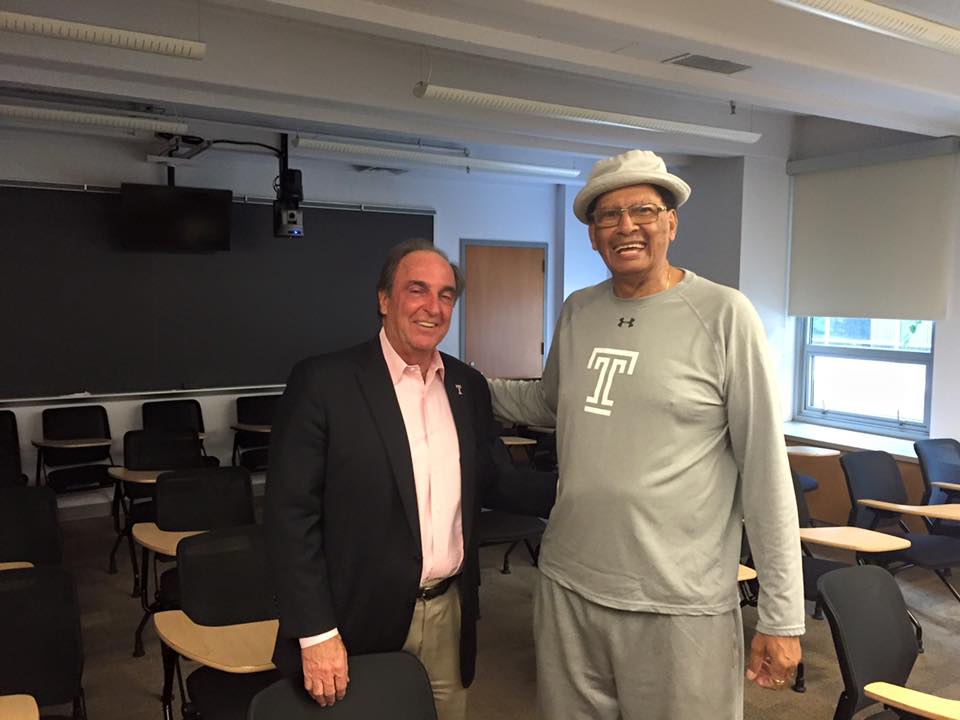
Fran Dunphy & Claude Gross

Claude Gross shared stories from his experiences over the past 55 years with the Charles Baker and Sonny Hill Leagues. Gross explained that the Hill league was never about producing NBA basketball players. Rather it was always about producing middle class young men that could provide for themselves and their families and become positive contributing members of society.

Finally, there was a magisterial presentation by Dr. Brooks, a protege of Philly Schoolboy legend Claude Gross. While pursuing a Ph.D. in sociology at the University, Brooks spent four years coaching under Gross in the Sonny Hill League basketball. The result of his research was an extremely insightful and nuanced book, Black Men Can’t Shoot (University of Chicago Press). For those interested in gaining a better understanding of the multi-layered intersections of urban education and scholastic sports, it is a must read.

Black Men Can't Shoot

In his presentation, Dr. Brooks deftly described what he saw, heard, and felt working with the young black men in the Hill league. His discussion of the manner in which the Claude Gross, Fred Douglass, Vince Miller, John Hardnett, Tee Shields and others utilized their social networks and expended their social capital was both informative and captivating.

Stephen Pina, a sports attorney with ASM Sports exclaimed, “that was the best talk I’ve heard… Dr. Scott is able to convey his academic work in a very ‘REAL’ manner.” Kamal Yard said, “He articulated everything I have been saying and thinking for the past 10 years.” Rashid Bey reported, “I thought about that presentation all night.”

Perry, Terrell, Rashid

Perry Clark, South Carolina Assistant Coach, Terrell Myers and Rashid Bey

There will be subsequent “Roundtable Discussions” sponsored by Philadelphia Youth Basketball, Inc. and Black Cager Urban Sports Media. Updates will will be available on this website.

The Declining Significance of Sonny Hill and the Resulting Loss of Social Capital

sonny-hill

Sonny Hill at the Naismith Basketball Hall of Fame

Founded in 1968, the Sonny Hill Community Involvement Basketball League uses basketball as a foundation for teaching life skills. For thirty years or so, the Sonny Hill league reigned as the undisputed best summer high school basketball league in America. The Holcombe Rucker League in Harlem is also highly regarded. But, the talent in Hill League was unsurpassed. Gene Banks (Duke), Lewis Lloyd (Drake), Clarence Tillman (Kentucky/Rutgers), Mo Howard (Maryland), Pooh Richardson (UCLA), Nate Blackwell (Temple), Dallas Comegys (DePaul), Lionel Simmons (LaSalle), Kobe Bryant (NBA), Rasheed Wallace (North Carolina), Rip Hamilton (Connecticut) and Alvin Williams (Villanova) are just a few of the great scholastic players that laced ‘em up in the Hill League.

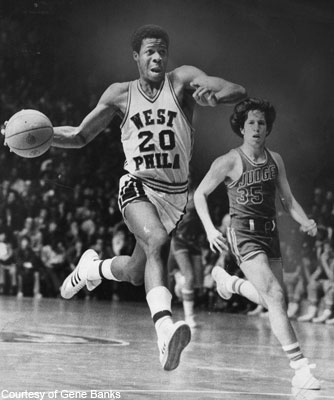
gene-banks-duke500w

Gene Banks

The concentration of talent was incredible. You could walk in McGonigle Hall on Temple University’s campus and catch the incredibly strong Rico Washington (Weber State) battling the powerful low-post force, Brian Shorter (Pitt) on the blocks. If you were more attracted to guard play, the wizardry of Michael Anderson (Drexel) was on full display as he went against consummate Philly point guard Howie Evans (Temple), the blindingly quick Bruiser Flint (Drexel) or the explosive Steve Black (LaSalle). Summer basketball in Philadelphia was truly something to behold.

The Sonny Hill League was an outgrowth of the Charles Baker League. In 1960, Mr. Hill founded the Baker League as place for professional basketball players to work on their craft during the off-season. The four-team league that began playing outdoors on the concrete court of of North Philadelphia eventually grew to attract some of the biggest names in basketball. Over the years, Wilt Chamberlain, Guy Rodgers, Hal Greer, Billy Cunningham, Bill Bradley, Earl Monroe, Darryl Dawkins, Joe Bryant and World B. Free were regulars in the Baker League.

Wilt

Wilt Chamberlain

It’s all gone!

The Baker League no longer exists and the Sonny Hill League is a just shell of what once existed.

Recently, I received a phone call early one morning from St. Joseph’s coach Phil Martelli. He asked, “Del what happened to the Hill League… I’m reading the box score from a college league playoff game and I only recognize one name – Biggie Minnis.” The Hill league no longer attracts the best high school and college players in the area. There can be no denying the fact… The Hill League has fallen off… That conversation with Martelli stuck with me for a few days. I brought the topic up with Bruiser Flint, Ashley Howard and Geoffrey Arnold. They coach at Drexel, Villanova and St. Joseph’s respectively. I asked each the same thing Martelli asked me: What happened to the Hill League?

The focus of the conversations was on  two distinct questions: 1) Why did the Hill League become insignificant? And, 2) What have we lost as a result?

There is a consensus that the rise of AAU and shoe company teams contributed mightily to the demise of the Hill League. However, the more interesting question becomes: Could the outcome have been any different?

Brian Shorter

Brian Shorter

Mr. Hill’s tenacity and drive enabled him to form and maintain a youth sports league that is nearing it’s 50th year of existence. Perhaps, these same traits rendered him a unable to adapt and become more flexible when the AAU movement crept into Philadelphia. Rather than accommodate the schedules of the biggest AAU tournaments, Mr. Hill forced players to choose. Over time, the lure of jet travel across the country, stays in fine hotels and playing in front of 200-300 college coaches was too much for Philly’s best ballers to resist. Gradually, more and more began to play exclusively for prominent local AAU programs like Team Philly (Adidas), Team Final (Nike), WeRone (Under Armour) and Philly Pride (Under Armour).

The kids, however, being from Philadelphia needed an outlet to settle their neighbor “Ball-Beefs.” Rahim Thompson’s popular Chosen League has emerged to satisfy that thirst for local school yard competition in the summer. Thompson, ingeniously, decided to work around the schedules of the biggest AAU tournaments which take place during NCAA live periods. In this way, he has been able to have the very best scholastic players in Philadelphia participate in his league. The Chosen League has surpassed the Hill League as the place to see the best local players during the summer months.

chosen league

Philly Schoolboy Legend Rysheed Jordan in the Chosen League

What have we lost? The best answer I could come with is: We have lost a great deal of “Social Captial”.

For Mr. Hill and his colleagues Claude Gross, Tee Shields, Fred Douglas, Vince Miller and James Flint the Sonny Hill League was about far more than just basketball. The Sonny Hill League Community Involvement League is an organization that not only includes roughly four dozen youth basketball teams, but also features career-counseling and tutoring programs.

It’s been that way since the beginning… “During that summer of ’68, gang warfare was a big problem all over the country,” Hill said. “Kids were dying. Neighborhoods were being torn up. So I decided to put my name on a league that would get some of kids who would be in gangs to focus their efforts on basketball… I talked to people all over the city. We got truces established. If a kid was found crossing a rival gang’s turf and he said he was going to play in the Sonny Hill League that got him a pass. At first it was a diversion for those kids. Now over the years we’ve grown into a program that gets kids off the streets, gets them learning and gets them a chance to lead productive lives.”

That’s Social Capital!!

lionel-simmons

Lionel Simmons

The basic premise of social capital is that social networks have value. Social capital refers to the collective value of all “social networks” [who people know] and the inclinations that arise from these networks to do things for each other [“norms of reciprocity”]. Through the Sonny Hill League, Philadelphia’s Basketball community was awash in social capital. Shit… were were wealthy in that regard.

Social capital emphasizes a wide variety of quite specific benefits that flow from the trust, reciprocity, information, and cooperation associated with social networks. Social capital creates value for the people who are connected and, at least sometimes, for bystanders as well. Think of all the trust people had in John Hardnett, Claude Gross and Tee Shields. Think of all the information the administrators of the Sonny Hill League possessed and shared with participants and bystanders.

The Sonny Hill League fostered and facilitated information flows (e.g. learning about scholarships, learning about coaches looking for players, exchanging information about players with college coaches, etc.). This was social capital.

The Sonny Hill League established norms of reciprocity (mutual aid). Alums to this very day do for one another. For example, I have called on Lionel Simmons to help kids pay for SAT prep materials and tutoring. The Sonny Hill League network connected folks who were in similar in-groups. The League facilitated connection among individuals.

Rasheed

Rasheed Wallace

The Sonny Hill League facilitated a broader “Philadelphia” identity and solidarity among Philly ballers. The Sonny Hill League helped translate an “I” mentality into a “we” mentality.

When the group of men keep an eye on one another’s players in the streets, that’s social capital in action. When a tightly knit community of youth coaches recommend players from other teams for scholarships, that’s social capital in action. Passing the hat to get up money to get a kid down south for school was social capital in action. Social capital can be found in friendship networks, neighborhoods, churches, schools, bridge clubs, civic associations, and even bars.

The Sonny Hill league has declined in significance. Philly’s basketball community is poorer as a result. We have lost a great deal of social capital.

The elite shoe company sponsored AAU programs will take care of the best 50-60 players… The Sonny Hill League would take care of 800.

The MYTH of the “Bad” AAU guys

I HATE AAU basketball!
I hate it!!
I hate it!!
I hate it!!
Because it’s just a lot of coaches exploiting kids to try to get a payoff one day.
Robert Horry

Robert Horry is wrong…

On far too many occasions prominent basketball athletes and coaches have come out and bashed AAU basketball.  The criticisms are knee-jerk and reveal a lack of intimate knowledge about what good AAU programs actually do for young people. They have a bad experience or see some bad things occur within one program and condemn the AAU/grassroots circuit based on very limited interaction. It’s just not a fair assessment.

Over the past six months, I have had the pleasure of working with several young men and women as they sought to meet the increasingly stringent NCAA eligibility guidelines. In each case, these young people were referred to the Assist Project by their AAU coaches or program director.

deja imhotep

Deja Reynolds holding the Championship trophy with her Imhotep teammates

Here a brief list of just a few of the young people that came through this year:

Deja Reynolds (Girls), Philly Triple Threat/Imhotep High School – Temple
Kimar Williams, Team Philly/Constitution High School – Florida International
Samir Doughty, Team Philly/Math, Civics & Sciences High School – VCU
Derrick Jones, WeRone Hoops/Archbishop Carroll High School – UNLV
Mike Watkins, Team Philly/Math, Civics & Sciences High School – Penn State
Horace Spencer, NJ Gym Rats/Findlay Prep High School (NV) – Auburn
Eric Cobb, Heart & Hustle/ St. Francis HS (MD) – South Carolina
Malik Ellison, WeRone/Life Center Academy (NJ) – St; John’s
Traci Carter, WeRone/Life Center Academy (NJ) – Marquette
Charles Brown Philly Pride/George Washington High School – St. Joseph’s

CarterCarr

Traci Carter and LaSalle Basketball legend Donnie Carr

In each case, a representative of the AAU program identified an issue that could cause eligibility issues and sought out assistance in addressing the problem. Some kids needed to take additional core course. Some needed to replace poor grades in previous core courses. Some needed tutoring for the SAT/ACT exam. Some just needed encouragement. What they all received was a very clear explanation of their academic situation.

Once they understood what they needed to accomplish to meet NCAA eligibility standards, a plan was put in place. The AAU guys made sure the kids had the SAT/ACT study books. The AAU guys transported the kids to tutoring sessions. The AAU guys stayed in contact with the parents to make sure the kids stayed on track.

Watkins and Newbill

Mike Watkins and Penn State great D Jay Newbill

Rick Barrett and Horace Spencer made sure little Horace knew what he needed to do when he was in the 11th grade. They brought the young man in and we reviewed his academic record together. Eric Worley asked me to reach out to Deja Reynolds. Once Philly Triple Threat made the referral, Kamillah Durham made sure her daughter made it to at least 10 tutoring sessions. Eric always checked in and checked up in her progress. Lonnie Lowry and Kamal Yard cast aside their competitive energies and both grabbed Samir Doughty by his collar and made sure he did what he needed to do. Terrell Myers literally harassed Derrick Jones about his course work and SAT scores. Donnie Carr did the same for Traci Carr.

Yesterday, Philly Pride/Triple Threat arranged an academic “team meeting” attended by a highly regarded school psychologist, two Triple Threat coaches, a player, his parents and myself. The aim was to review the rising 9th grade player’s academic record and explain the NCAA requirements to the player and his family. As we approach the first year with new NCAA standards in place, this is exactly what AAU programs need to be doing.

Let me repeat that… this is exactly what AAU programs need to be doing!

Derrick

UNLV freshman and WeRone/Archbishop Carrol product Derrick Jones

I was touched… When I received the call to arrange the meeting, I realized that my message has been getting through. Despite the negative chatter circulating about the role played by AAU programs, I am here to tell you… I have seen these guys save kids… I have seen these guys inform and empower parents… I’ve seen these guys support parents intimidated by the recruiting process… I’m telling you… these guys do a good job and you can catch their players on TV this fall as they suit up in the Big East, C-USA, AAC, A10, Big10 and SEC conferences.

Rick Barrett – NJ Gym Rats

Kamal Yard – Philly Pride

Eric Worley – Philly Triple Threat

Lonnie Lowry – Team Philly

Terrell Myers – WeRone Hoops

Rob Brown – Team Final

Rod Harrison – Baltimore’s Finest

Bay Frazier – Team Melo

Omhar Carter – Mississippi Basketball Association

Even at the middle school level, guys like Marvin Stinson (Bottom Ballers), Howard Hudson (Philly Triple Threat) and Paul Gripper (Team Phenom) have established rigorous academic standards for participation in the respective programs.

Are there problems in some AAU programs? Of course… just like there are problems in some businesses, congressional offices, college athletic departments and every other type of organization.

Bottom Line… If your AAU coach or program director hasn’t asked you for report cards or transcripts… You need to find another program. The end game is to prepare student-athletes for life after high school. You can’t do that if you don’t even know how he’s performing in school. If you need a referral to a quality AAU program just reach out an ask… I’ll give you at least 3 recommendations.

Youngfellas.. If you are the best player in the gym? Leave….

… and go find a gym where guys will push you and make you a better player. Charles Brown, Jr., A Saint Joseph’s University 2016 commit took this advice to heart and tracked down Jameer Nelson and Emmanuel Mudiay of the Denver Nuggets. He spent some time working out with the NBA players. Most importantly, he listened as they talked about different aspects of conditioning and mental preparation necessary to play at the highest level.

CHarles Brown Jameer Nelson

Charles Brown (Philly Pride/St. Joseph’s University) and Big 5 Hall of Famer, Jameer Nelson (Denver Nuggets)

Over this past Spring/Summer Brown exploded on the national scene with a series of phenomenal shooting performances for Philly Pride AAU on the Under Armour Circuit. As a result, he was heavily recruited by Big 10, SEC, Big East and Big 12 programs. A true Philadelphia and a man of his word, Brown never wavered from his verbal commitment to St. Joseph’s. “It was nice to see people recognizing that i could play at the highest level, but I made the decision to become a Hawk a while back. There’s nothing that could change my mind. My mother, my father and the rest of my family already feel like we are part of St. Joseph’s University. Coach Arnold and Coach Martelli have made us feel welcome. I can’t wait to play on Hawk Hill.”

Brown got a chance to gauge himself against the very best today.  Emmanuel Mudiay was a lottery pick of the Denver Nuggets in the recent 2015 draft. He is expected to immediately contribute as Denver makes a push for the playoffs in the super competitive Western Conference. “Emmanuel is super athletic and highly skilled”, said Brown. “It’s really a pleasure to just watch him go about his business.”

CHarles Brown Mudiay

Charles Brown and Emmanuel Mudiay (Denver Nuggets)

Brown reports to St. Thomas More Preparatory School next week. He will be playing in the New England Prep School League for the 2015-2016 season.

Working Together for HS Student-Athletes: Scholastic Sports Think Tank

A recent analysis of data over the past two years revealed some very interesting findings. Of all of the freshman that accepted scholarships to play basketball in the Atlantic 10 (A10) Conference over the past two years – 2013 and 2014 – 52% would NOT have been eligible if the 2016 NCAA eligibility guidelines were already in place.

Through analysis of SAT test score data and discussions with concerned HS Principals, HS coaches, AAU coaches, parents and student-athletes it was determined that Black student-athletes in the mid-Atlantic Region (NY, NJ, PA, DE & MD) were particularly at-risk of not meeting the new guidelines. Another area that may experience significant problems is Jackson, Mississippi.

We have decided to form the Scholastic Sports Think Tank (SSTT) to:

1) Disseminate information and increase knowledge of NCAA, NAIA and JUCO initial eligibility guidelines: The NCAA will implement several significant and increasingly stringent freshman eligibility guidelines. These guidelines will take effect on August 1, 2016.

2) Increase understanding and provide access to innovative interventions designed to help student-athletes meet the new eligibility requirements: Through accessing innovative interventions, we aim to help student-athletes access the tools necessary to meet eligibility requirements. We aim to get student-athletes to think outside the box for solutions.

Scholastic Sports Think Tank - About Us-page-0

For many of our youth, athletics is the means to accessing higher education. SSTT will work to help our youth understand what they need to accomplish in order to be eligible for athletic scholarships.

Look for announcements for FREE full-length practice SAT exams and transcript reviews.

DeAndre Hunter, Charles Brown & Sean Colson: It’s that Philly Pride!

Philly is a hoops mecca… For some, Philly is THE hoops mecca… The case for the top spot is strong. A brief perusal of the record books reveals the impact Philly ballers have had on the game. Wilt Chamberlain and Tom Gola led the charge for Philly in the 50’s. Earl “The Pearl” Monroe scorched college basketball in the 60’s. Gene Banks, Lewis Lloyd and Mike Brooks carried the city in the 70’s. Rico Washington, Pooh Richardson and Lionel Simmons held it down in in the 80’s. Rasheed Wallace, Marvin O’Connor and Eddie Griffin represented in the 90’s. After the turn of the century, Maureece Rice, Wayne Ellington, Maalik Wayns and Kyle Lowry emerged.

Wilt-Chamberlain

Wilt Chamberlain

In the contemporary era, grassroots/AAU hoops has superseded high school basketball in importance. Hoop heads interested in understanding the development of elite scholastic players have to pay attention to “Summer Ball.” In the not too distant past, the Sonny Hill League was a the focal point of summer hoops in the city… No more… No more…

earl monroe

Earl “The Pearl” Monroe

If you want to know what’s going on with elite scholastic hoops, you have to follow AAU/grassroots hoops. Perhaps, the biggest story of this summer has been the rapid ascent of two Philly Pride (Under Armour Association) players, Charles Brown, Jr. and DeAndre Hunter.

At the conclusion of his high school career at George Washington HS, Brown had zero (0) Division 1 scholarship offers. In fact, he had verbally committed to Division 2 West Chester University. After the first two Under Armour sessions, he had over 15 D1 scholarship offers from schools such as VCU, Rhode Island Quinnipiac, George Mason, Drexel and James Madison. He was drawing interest from high major programs like Oklahoma State, Arizona State, Wisconsin, Maryland and Alabama.

gene_banks

Gene Banks

Brown committed to St. Joseph’s University. He cites his relationship with Assistant Coach Geoff Arnold as the primary factor determining his choice. According to Brown, “Coach Arnold told me when he first saw me that I was a division 1 basketball player and that meant a lot to me at the time.” His father Charles, Sr. played on the great Overbrook teams of the late 70’s with Tony Costner, Ricky Tucker and Steve Black. So, the family has always been familiar with the St. Joseph’s program and the campus.

But… How does a kid go from zero (0) offers to over fifteen (15) in just a 4-6 week span? AAU/grassroots basketball… that’s how…

The Black Cager talked to Charles’ Philly Pride teammate and his Coach Sean Colson to gain some insight into this particular program….

Marvin O'Connor

Marvin O’Connor

Black Cager: DeAndre… So far this summer you guys have had a really good run. About a month ago you knocked off highly regarded WE R 1 and about two weeks ago you defeated Team Final. I want get your thoughts about the AAU season thus far and see how you feel about those two wins in particular.

DeAndre Hunter: I feel like we’ve been playing really good. Beating those two teams, that are supposedly better than us, shows that we are just as good or even better than most of the teams in the country.

Black Cager: I agree… I agree with that and I would also add that when you take a look at what the local Under Armour teams have been able to accomplish it’s very impressive. Trevon Duval, Quade Green, Sedee Keita and Nysier Brooks who recently committed to Cincinnati (Big East) play for WE R 1. Then you also have you and Charles Brown who recently committed to St. Joseph’s (A10) playing for Philly Pride. One could argue that the Under Armour circuit, at least in our region, is equal to or ahead of the Nike and Adidas circuits. How do you feel about playing on the Under Armour circuit?

DeAndre Hunter: I feel like the Under Armour circuit is just as competitive as any other circuit. I understand the Nike people feel like their circuit is better because they have most talented or most ranked players. But, I really feel like the Under Armour circuit is just as competitive as any other brand.

Black Cager: About your college recruiting… How are your grades? I know you attend a highly competitive academic high school, Friends Central. How are making out academically? Are you on track?

DeAndre Hunter: Yeah… I’m good. On my last report card, I had one C. The rest of my grades were Bs and up so I’m in good shape.

Black Cager: That’s really good… Have you formulated any idea where you would like to play college basketball? Do you want to stay in Philly? Do you want to go far away? Does the geographic region matter at all? Are your trying avoid the cold? Do you want go where it’s warm year-round? Do you have a strategy or are you just taking things as they come?

DeAndre Hunter: I’m just taking it as it comes. It doesn’t matter if I stay local or go somewhere far away. I just want find a program where I’m comfortable and I can play right away.

Black Cager: Where do you see yourself playing at the college level, 2, 3 or even the 4?

DeAndre Hunter: Probably the 3 position… I gotta get bigger and strong though.

Black Cager: Now… I’m gonna really put you on the spot.. Who do you think are the best non-college or pro basketball players in the Greater Philadelphia region? I’ve had an on-going discussion with some of my friends in the local basketball community and the same names always come up are Tony Carr (Team Final/Roman Catholic HS), Quade Green (WE R 1/Neumann Goretti HS), Lamar Stevens (Team Final/Roman Catholic HS) and you. Although, recently a lot of people have started to include Charles Brown in that upper echelon of local talent. Who would say are the best 2 or 3 players in the area right now?

DeAndre Hunter: The three best players… Myself, Charlie Brown, Tony Carr…

Black Cager: That’s it?

DeAndre Hunter: Best players? In my class, yes… Me, Charlie and Tone Carr..

deandre and charles

DeAndre Hunter & Charles Brown

Black Cager: I like that… I really appreciate the honest response… One last question, as you sort through this college selection process, are you dealing with this yourself? Are you bouncing things off Kamal, your HS coach, your Mom? If a college coach was reading this interview and he wanted to get your attention, what would be best way for him to go about it?

DeAndre Hunter: He should call me, my brother, Kamal or my AAU coach (Sean Colson).

Black Cager: DeAndre… I really appreciate this and I look forward to following you guys in Atlanta as you pursue the UUA National Championship.

Sean Colson is a Philly baller. He played at the University of Rhode Island and Charlotte University. He also played in the NBA with the Atlanta Hawks and the Houston Rockets. A basketball lifer, Colson also played in the USBL, CBA and overseas in Italy, France, Turkey, Poland, Ukraine, Latvia, Lebanon, Kuwait and Venezuela. In short… he has been there, done that…

For the past three years he has shared his considerable basketball knowledge and expertise with Philly kids as a coach with the Philly Pride AAU/grassroots program and Martin L. King HS in Philadelphia’s Public League. He also conducts the highly regarded “Sean Colson Workouts.”

The Black Cager spoke with Colson about Brown, Hunter and Philly Pride…

sean colson

Sean Colson

Black Cager: What’s up Sean? I just talked to DeAndre… I talked to Charles Brown a few days ago… I’m gonna put you on the spot… I know about a month ago, you guys knocked off WE R 1 and couple of weeks ago you beat Team Final. In the Philly grassroots basketball, those are some big games and they were some big wins. What does that say about Philly Pride as an AAU/grassroots program right now?

Sean Colson: Well… for the last three years, not just this year I’ve been with this team… I coached them as 15u, 16u and now 17u and we’ve gotten better every year. So, we are just trying to build our program and make competitive on the national level. We are not really comparing ourselves to nobody else, we’re just trying to beat everybody we play… Everybody… WE R 1 and Team Final are really good programs… But we not trying be the best program in this area, we want to be the best in the country. We are trying to put our guys in position to get a lot of scholarships. We want to help them get to the right schools. We want people to know that when you play for Philly Pride you get better. In other programs, some guys get scholarships, but they don’t necessarily get better. We want to be known as a program where when you come here… Your game gets better and you get better as a young person.

Black Cager: I can appreciate that… Speaking of getting better, I would say that over the past 2 months people knew about DeAndre but lately he’s been getting a lot of national recognition. And, then you have Charles Brown… About 3 months ago people viewed him as a Division 2 player. Then there was a period where he was one of the hottest kids in the country. His recruitment went from 0 offers to over 15 scholarships in a matter of weeks. What does that say about his development and why was he able to demonstrate so much more skill playing for you guys than he did playing for his high school team?

Sean Colson: Sometimes I feel like people try to make that comparison… But, I feel like the George Washington coaches did right by Charles. I just feel like Charles has gotten better… I don’t feel like it’s fair to say the George Washington guys didn’t know how to use him or use his talents. I just think they got eliminated early. In fact, in February we (Martin L. King HS) took them out of the playoffs. Right after the season, Charles and his Dad came to work with me. That was in February. He’s been in here every day, just working. His father was very direct, he said look I think my son can get better and I think you are the guy to do it. I know you work with DeAndre, I know you work with a lot of people… But, can you just please take my son and do what you can with him. Charles has the right mindset… I mean he just came in here and worked… His skills have really developed because he’s been working. Looking back, some of the blame has to be placed on Charles. Maybe he wasn’t working as hard while he was in high school. Now, he’s really working hard. Yes, I demand it, but he’s really working hard. Getting to play everyday against DeAndre and some of the college guys has helped him. A lot of times it’s just me him, his Dad and DeAndre just working, working, working… I mean I was a pretty good player… I played in the NBA and I was a good player and I feel like my skills and just the knowledge of the game has rubbed off on Charlie. All of that has really helped his game take flight right now.

Black Cager: He’s gonna take a year and try to get his body together at St. Thomas More Prep School (Connecticut). What do you foresee for Charles playing in the Big 5 for St. Joseph’s?

Sean Colson: I think he’s gonna have an excellent career. Charlie… is.. honestly, he kinda like a steal to be honest with you. Because, he’s really developing. He has the frame of a pro 2 guard. Everyone doesn’t have the skills, but he definitely has the frame. He’s 6’6”, athletic, long arms, really can shoot the ball and plays defense. Even that part of his game, I don;t think he did a great job at Washington on defense. They played zone a lot the time. When he played man-to-man I don’t think he really cared. But, when he came here, I’m on him every single day about defense in the workouts, practices and games. Charlie has really taken pride in being a stopper. He wants to be a stopper. I don;t think he thought like that in high school. That’s an area where I will take some credit because we’ve really worked on that part of his game. But, I don;t want to discredit George Washington and their coaches because I don’t think it the case that they didn’t do enough. It’s just that me Charlie click… Just like me and DeAndre, we click… A lot of guys, they will listen to me where they might not listen to other people or take their advice. They know the things I’ve accomplished as a player and coach. They respect the players I’ve trained like Amile Jefferson and Khalif Wyatt. They see that if you train with me you get better. That’s an important part of it, we have good chemistry.

Black Cager: I think trust is an important part of the equation and that’s what you are conveying. Speaking of DeAndre, I’ve gotten to see him play quite few times this summer. It’s really hard for me to look at his game and say that another kid in this area is better. But he doesn’t get that recognition. A big part of it is that is probably because he plays in the Friends League. Where do you see him in comparison to the other top players in South Jersey, Philly, Delaware? And. what do you see for him at the next level?

Sean Colson: People play different positions and thing like that… But, I’ll say this… People say someone is the best… It’s a few really good players out there… There’s Tony Carr, Quade Green and some other good players here in our area like Lamar Stevens. But, I wouldn’t take nobody over DeAndre… me, personally… All those guys have come to my workouts, except Lamar. I know everyone… I love everybody… I want every one of them to do well. But, me personally I wouldn’t take anyone in this city over DeAndre Hunter. That’s just how I feel. And, I feel like he’s only getting better. I’ve had him with me for the last 3 1/2 years and he’s getting better every day. He picks everything up and wants to get better. That has actually rubbed off on Charles as well. He sees that every day. You know Charlie asked himself: What’s the reason DeAndre has gotten that much better over these past 3-4 years? He comes here and he says if that’s the guy that has helped DeAndre get that much better, I wanna get like that and even better. That has helped Charlie as well. The trust factor…

Black Cager: I followed your career… Me and you we communicate on social media a lil’ bit… I pay attention… I saw you finishing up you own academic course load. I know you are doing an outstanding job at the high school level. I know you are of the few guys that excel on both the HS level and on the AAU/grassroot circuit. What’s the future look like for Sean Colson? Would like like to get on an NBA coaching staff? Would you like to coach in college? What are you trying to do with this thing going forward?

Sean Colson: For me… I wanna build Martin L. King up. We’re good right now. In my three years, we’ve won Public League Championships, we’ve been to the State Championship game. These are things that have never been done at King, especially on a AAAA level at this school. So, we’re just trying to get guys to get to college. We want guys to get D1 or D2 scholarships. For me, that’s the joy that I have. I love to see everybody getting better. Through the Sean Colson workouts, I get to work with kids that go to all the different schools. Even though they are in different HS programs they still come to me to get better. I’ll take whatever is in store for me. I would like to be a college coach. Maybe I’ll be an NBA assistant or scout. I really like working kids out. I was just at the John Lucas camp working guys out and training some really good players there. Next week I’ll be at the Under Armour All-American camp. I love working people out, developing talent and getting guys better. That’s kinda what I am known for. But… I feel like I’m a strong X and O guy as well. I really like coaching. For me, I’ll take whatever falls in my lap. I’m just working. If it’s an NBA assistant job that would be great. If it’s joining a college staff that would be great. If it’s taking Sean Colson workouts to the next level where it’s national like John Lucas, that would be great. Luckily, I feel like I’m doing well and I have a few options. I’m not just a one trick pony. Whatever I think is best for Sean Colson and my family that’s what I’m gonna pursue. But right now, I feel like I’m getting a lot of blessings and I’m just happy everything is working out.

Black Cager: I just want say that Philadelphia’s basketball community is much better off having you as involved as you have been over the last three years. I have a lot of respect for what you have been able to accomplish. It’s tough at a school like King. The other schools have a lot of things they can use to attract the kids like outstanding academic reputations, locations like Roman Catholic is in Center City and Haverford is up on the Main Line. You are grinding it out right here… around the way in a public school facility. For that I give you a lot of credit. As well as all the work you Kamal Yard, Rodney Veney and Amauro Austin put in with this grassroots thing. Big respect man… we’re looking forward to seeing how Philly Pride does in the nationals. You ready to go on record? Y’all gonna take this thing from WE R 1 or what?

Sean Colson: Well… It’s not just about WE R 1… I know they are in 1st place and we are in 2nd place but they are a lot of good teams in the Under Armour Association. We’re trying to go down there and do well. But first, we have couple other things going on… Like I said we have the Under Armour camp. DeAndre’s in it… Charlie might be in it… Then we have Elevate Hoops at Philly U which is gonna be a big event. Then we go to Atlanta and then to Las Vegas… We’re just taking one step at a time… We gonna try to represent Philly like we always do and try to win it for sure.

Black Cager: Appreciate the time and we look forward to following Philly Pride.

Dead Men Ballin’: Class of 2016

”I think it’s sort of ironic when they began to integrate the South athletes were the ones used to pave the way, and they were used under the pious assertion that ‘we’re helping these poor kids… Now, apparently someone has said, ‘Enough,’ so they don’t need the kids anymore. They’re using the same rationale they used to get them in to begin to keep them out. I guess it’s a situation where we’re like shoes and clothes. We’re not in style anymore.”
John Thompson, Former Georgetown Coach, 1989

“Let the white man say it: There’s no question in my mind that [the NCAA] is racially motivated, subconsciously or consciously, only because this is the only sport, and these the only people that have such stringent rules put on them. No other sport and no other group of individuals have ever been under the microscope like these people.”
Sonny Vaccaro, Nike, 2002

“The NCAA is a racist organization of the highest order… On this day, it instituted a new punishment on black kids who have already been punished because they are poor. Any time the NCAA, which is 90 percent white, considers the youngsters in Division I basketball and football, it discriminates, because 89 percent of the kids are black. I wonder what message they are sending. It’s another hardship for black kids made by white folk.”
John Chaney, Former Temple Coach, 1989

“That dream could be taken away after six semesters in high school… So for someone that’s a late bloomer, someone that the light bulb doesn’t go on until later, now it’s too late. And just the disproportionate number of minorities that’s going to affect, the number of people in general that’s going to affect, is not good.”
John Thompson, III, Georgetown Coach 2015

“This is not about reducing standards. This is about, this isn’t fair. Why are you telling a kid after his junior year of high school that you are less desirable to get a college scholarship? Or, if the light comes on late, why can’t I go to prep school?”
Paul Hewitt, Former George Mason Coach 2015

Shit ‘bout to get very real… It’s gonna be a bloodbath…

On the first day of school in September, thousands of talented and ambitious Black scholastic student-athletes across America will become ineligible for athletic scholarships to attend NCAA Division 1 colleges and universities.

On that first day of school, the moment the bell rings for homeroom on the initial day of their senior year, they will officially be done… toast…

Dead Men Ballin!!

We’ve been here before… The relationship between Blacks and the NCAA has been adversarial and contentious for more than a century. History never repeats itself exactly, so it would foolish to view the period of Black inclusion from the late 1960s to the present strictly through the prism of the past. Nevertheless, no real understanding of the shit the NCAA is currently pulling is possible without an appreciation of the long-standing struggle that followed the dismantling of rigidly racist/white-supremacist structures that prevailed from 1906 to around 1970.

In a manner very similar to South Africa, the United States developed from it’s inception a unique racist white-supremacist socio-economic structure and political apparatus. As a matter of fact, the NCAA was established on March 31, 1906, exactly ten years after American Apartheid was formally sanctioned with the landmark Plessy v. Ferguson ruling by the US Supreme Court. In the Plessy case State laws requiring racial segregation in public facilities were ruled constitutional under the doctrine of “separate but equal”. Jim Crow Apartheid reigned supreme within much of the United States and in NCAA for the better part of seven decades.

duke-team-1966-67

All-White Duke Men’s Basketball Team, 1967

Following the Civil Rights era, the 1970s witnessed the rapid influx of Black male student-athletes in colleges and universities across the country. By the early 1980s, Black males were a majority in football and basketball. After a decade of unfettered Black participation in America’s great collegiate sports programs like Alabama football and North Carolina basketball, the NCAA decided to pump the brakes.

They ran, and continue to run, a play that has proven very successful time after time. The basic scheme was outlined by the legendary Republican political campaign consultant, Lee Atwater, in a 1981 interview. Atwater, architect of President Reagan’s electoral landslides, explained how Republicans win the vote of racists without sounding racist themselves:

You start out in 1954 by saying, “Nigger, nigger, nigger.” By 1968 you can’t say “nigger”—that hurts you, backfires. So you say stuff like, uh, forced busing, states’ rights, and all that stuff, and you’re getting so abstract. Now, you’re talking about cutting taxes, and all these things you’re talking about are totally economic things and a byproduct of them is, blacks get hurt worse than whites.… “We want to cut this,” is much more abstract than even the busing thing, uh, and a hell of a lot more abstract than “Nigger, nigger.”

Within the context of a historically racist/white supremacist American culture, this was a brilliant and highly effective strategy. Evil? Yes… But highly effective… It’s still being run by politicians emphasizing things like Voter ID laws and crime… The Atwater strategy is an American as apple pie.

Boogie_Man_Promotional_Poster

Poster for Boogie Man, a documentary focused on Lee Atwater’s Role in GOP politics

So much so, the NCAA took it an ran their version of the play.

By the 1980’s the NCAA couldn’t say “Nigger, nigger, nigger”… So they started talking about academic standards, initial eligibility rules, SAT requirements, core course requirements and all that stuff. All the things they talked about were totally “academic” and a byproduct of them was, Blacks get hurt worse than whites… “We want to establish eligibility standards,” is a hell of a lot more abstract than “Nigger, nigger.”

George Raveling, John Chaney, John Thompson and Nolan Richardson immediately caught on to the Atwater strategy. They used their platforms as highly respected college basketball coaches to call out the racist consequences of the initiatives. Chaney breathed fire… he referred to the NCAA as “that RACIST organization” in response to the rule changes. John Thompson actually walked off the court before a game with Boston College in 1989 in protest of what he considered racist NCAA rule changes.

CHANEY ALLEN ROBINSON

Hall of Fame Temple Coach, John Chaney

Jim O’Brien the opposing coach that night said, ”He’s making a statement that a lot of other coaches feel very strongly about.. ‘He is one person who is in a position to make a little noise about this. We’re talking about one of the most highly visible coaches in the country: the Olympic coach, coaching a team that’s in the top five, one of the best programs in the country. So when he does a lot of people sit up and take notice.”

Thompson and Chaney had the unwavering support of their bosses. ”John Thompson is hired as an educator, first and foremost,” said Frank Rienzo, Georgetown’s athletic director. ”One of his responsibilities is to coach, in this particular instance, the education that he is giving to the students who are entrusted to him has to do with things that are much more important than basketball, it has to do with social justice. ‘This Is a Bad Rule.’”

John Thompson

Hall of Fame Georgetown Coach, John Thompson

Fast forward a quarter century… A new organization of minority coaches last week sharply criticized NCAA eligibility standards set to take effect next year for incoming freshmen, saying they will deny too many athletes the opportunity to to go to college.
The National Association for Coaching Equity and Development, a group led by Texas Tech coach Tubby Smith, Georgetown coach John Thompson III, Texas coach Shaka Smart and former Georgia Tech coach Paul Hewitt, issued a statement to The Associated Press said the standards disproportionately target minority and less affluent students in “an unintended consequence beyond acceptability.” They are less straightforward and raw than their predecessors, but their aim is exactly the same: Calling attention to the racist consequences of NCAA eligibility rule changes.

Shaka_Smart

Texas Men’s Basketball coach, Shaka Smart

Let me take a few minutes and explain why these coaches are voicing such serious concerns. Why are so many in the Class of 2016, Dead Men Ballin….

Let me show you how the latest manifestation of the Atwater strategy is playing out within the NCAA…

If You Enroll AFTER August 1, 2016, to be eligible to practice, compete and receive athletics scholarships in your first full-time year at a Division I school, you must graduate high school and meet ALL the following requirements:

1. Complete 16 NCAA core courses:
• Four years of English;
• Three years of math (Algebra 1 or higher);
• Two years of natural/physical science (including one year of lab science if your high school offers it);
• Two years of social science;
• One additional year of English, math or natural/physical science; and
• Four additional years of English, math, natural/physical science, social science, foreign language, comparative religion or philosophy.

These requirements have been in place for several years. High school coaches, AAU program directors and guidance counselors have a solid understanding of these requirements.

2. Complete 10 core courses, including seven in English, math or natural/physical science, before the start of your seventh semester. Once you begin your seventh semester, you may not repeat or replace any of those 10 courses for GPA improvement.

Here comes the bullshit… This is where things get very tricky… The “new rules” say “Once you begin your seventh semester” (senior year) you “may not repeat or replace” core grades from freshman through junior years.

Simply stated… First day of senior year you could be done!! Dead Man Ballin’….

The NCAA reviews tens of thousands of transcripts annually through it’s Eligibility Center.

The NCAA knows full well that many Black boys struggle in 9th grade. In cities like Philadelphia and New York the graduation rate for Black males has been as low as 28% in recent years. Most struggle with the transition to high school. They fuck up in 9th grade when they are 14 or 15 years old. However, many realize that their athletic abilities can lift them out of dire situations by the time they are 17 or 18. Many have matured late and began to take education seriously as a junior or senior in high school. Many of the finest football and basketball student-athletes in the country have had to replace or repeat courses they failed or received Ds in as seniors or in Prep School. The NCAA is eliminating this opportunity.

Nigger, nigger, nigger…

3. Earn at least a 2.3 GPA in your core courses.

Last year, the average graduation rate for black players on the 68 men’s teams in the Division 1 tournament was a record 65 percent. To understand what a leap that is, that percentage represents a sharp rise up from 51 percent in 2008 and 35 percent in 2003. Black males are doing better than ever. Indeed, they are doing better than US college students overall. The 2012 graduation rate for all first-time, full-time undergraduate students who began their pursuit of a bachelor’s degree at a 4-year degree-granting institution in fall 2006 was 59 percent. All of these Black male student-athletes that are graduating entered NCAA institutions with a 2.0 minimum requirement in place. Why raise the minimum to 2.3?

Nigger, nigger, nigger…

4. Earn an SAT combined score or ACT sum score that matches your core-course GPA on the Division I sliding scale for students enrolling on or after August 1, 2016.

If student-athlete has a 2.3 GPA he will have to score 900 on the combined Math/Verbal portions of the SAT to meet NCAA eligibility requirements. What are the chances that threshold can be met? As you can see, 39 of 58 (67.2%) Philadelphia public schools have average M/V SAT Scores below 800. Ten Schools (17.2%) have scores between 800 and 899. So… 85% of Philadelphia’s public high schools have average M/V SAT scores below 900. But… an athlete with a 2.3 GPA (C average) is gonna break 900?

Philly Public School SAT Scores

The Charter Schools are not doing much better… As you can see, Philadelphia’s charter schools are struggling to produce adequate SAT scores. Only 1 charter school has an average score that meet NCAA minimum of 900 for a student with a 2.3 GPA. Some charter schools with nationally recognized athletic programs have scores well-below the NCAA minimum score.

Philly Charter Schools SAT scores

Nigger, nigger, nigger…

Programs like Drexel, Villanova and LaSalle have graduated every 4 year player that has come through the program. Why tinker with success?

The Atwater strategy is in full effect… He told us the play they like to run… Will the class of 2016 make the necessary adjustments?

Or, are they Dead Men Ballin?

Philly’s AAU/Grassroots Voice: An Interview with Kamal Yard

“Teams play game after game after game, sometimes winning or losing four times in one day. Very rarely do teams ever hold a practice. Some programs fly in top players from out of state for a single weekend to join their team. Certain players play for one team in the morning and another one in the afternoon. If mom and dad aren’t happy with their son’s playing time, they switch club teams and stick him on a different one the following week. The process of growing as a team basketball player — learning how to become part of a whole, how to fit into something bigger than oneself — becomes completely lost within the AAU fabric.”
Steve Kerr
Head Coach, 2015 Western Conference Champion Golden St. Warriors

“AAU basketball.. Horrible, terrible AAU basketball. It’s stupid. It doesn’t teach our kids how to play the game at all so you wind up having players that are big and they bring it up and they do all this fancy crap and they don’t know how to post. They don’t know the fundamentals of the game. It’s stupid.”
Kobe Bryant
5 Time NBA Champion
17 time NBA All-Star

“If you’re playing defense in AAU, you don’t need to be playing… I’ve honestly never seen anyone play defense in AAU.”
Michael Beasley
NCAA All-American 2007-08
2nd pick in 2008 NBA Draft

“AAU is the worst thing that ever happened to basketball…”
Charles Barkley
1992-93 NBA MVP
11 time NBA All-Star

“It’s a bad system for developing players… They aren’t learning to handle the ball, they aren’t learning to make plays against pressure. The emphasis with our high-school players is to get exposure and play as many games as you can and show everybody how great you are. If I can win the 11-and-12 year old league and tell all my friends about it, that is a whole lot more important than if my kids actually get any better or learn anything about the game.”
Stan Van Gundy
Head Coach, Detroit Pistons

The consensus is clear… The experts, the people whose opinions are valued most by fans and observers of collegiate and professional basketball, have emphatically declared that AAU basketball ain’t worth shit… Is that a fair assessment? One rarely has an opportunity to hear the other side. What do AAU guys think about the role they play?

The Black Cager sat down with Philadelphia’s most renowned AAU/Grassroots basketball figure for an in depth discussion. Kamal Yard is the director of Philly Pride a grassroots basketball program sponsored by Under Armour. He is also a marketing consultant with Under Armour charged with developing strategies to increase brand awareness in the Greater Philadelphia region.
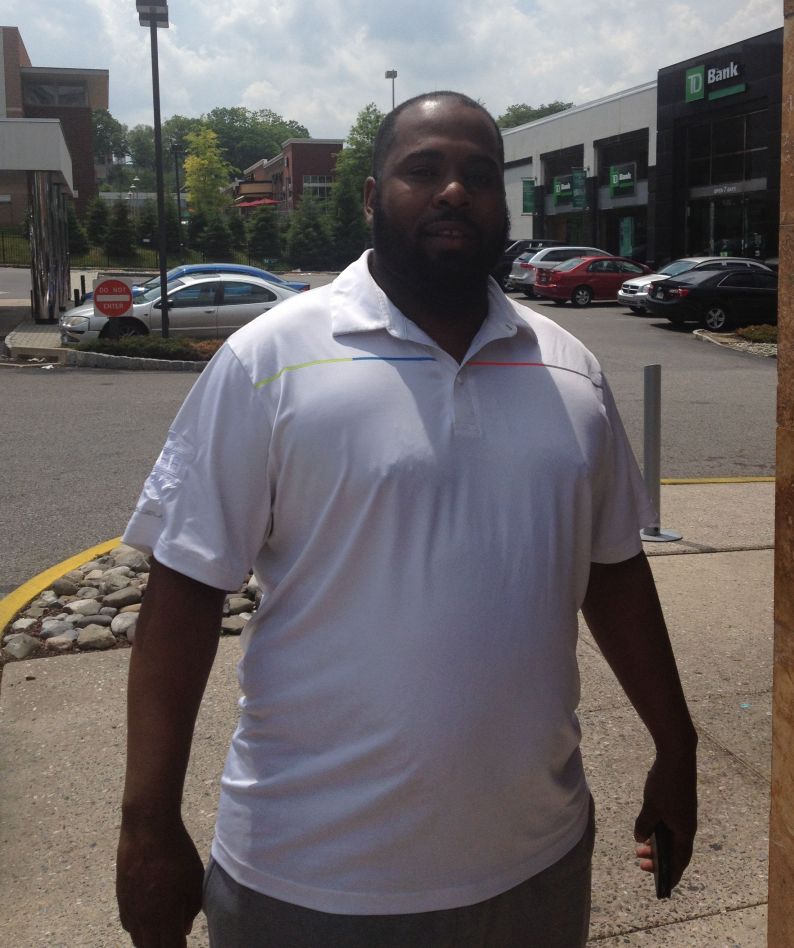
Kamal Yard

Kamal Yard, Philly Pride Basketball

Black Cager: How long have you been involved in AAU/Grassroots basketball and how did you first get involved?

Kamal Yard: It’s funny man… For me, it started with my early years at the John Chaney/Sonny Hill basketball camp in the mid 1980’s. The camps were held at Cheyney University and on the Ambler campus of Temple University. During the camps, they had something called “lecture time.” During and lecture time, Mr. Hill and Coach Chaney would always talk about the importance of giving back. That was their main thing “giving back.” And, then you look at the camaraderie of the Chaney/Hill camp and the Sonny Hill League it was all about service. So that kinda like planted a seed in me that never left. Since then, I always wanted to establish a program that provided young kids in Philadelphia with structured, supervised and well organized opportunities to play basketball.

SonnyHill

The legendary Sonny Hill

Black Cager: Most people are unfamiliar with the nuances and subtleties of AAU/Grassroots basketball in the Philadelphia area. Team Final, WE R 1, Team Philly and Philly Pride are the elite boys programs. Your partner program Philly Triple Threat, led by Eric Worley does a phenomenal job on the girls side. Team Final and WE R 1 are known as programs that feature elite Division 1 players, however, Philly Pride has developed a niche whereby you serve student-athletes that tend to come from less than ideal family, educational and social situations. How has that come about?

Kamal Yard: Honestly… I get motivated when people tell me a kid can’t make or won’t make it. When people say a kid is a “problem” or a “head case” I actually become more attracted to the kid. I’m from 25th and Diamond and I wanna help the kids that the other programs don’t want to deal with. Now, we’ve had some kids that were can’t miss in terms of their family and educational backgrounds. Garrett Williamson (St. Joseph’s), Ryan Brooks (Temple) and Darryl Reynolds (Villanova) all came from Lower Merion High School. These were kids that would have graduated from college without basketball, their families situations were straight. But for the most part, we tend to have kids from the “hood.” That’s just a commitment on my part. I’m the guy that will give kids a 2nd, 3rd, 4th, 5th and 6th chance. Every situation is different, every case varies.

Black Cager: That’s a very interesting point. I can think of situations where the cases vary within single families. Let’s examine the White family. Older brother Desean, spent a season and a half at Providence, he transferred in the middle of the 2005-06 season to La Salle. After sitting out a year, he was dismissed from the team and never played a game for the Explorers. White then moved on to Delaware but was again dismissed from the team after being ruled academically ineligible. White ended up playing his final two years at Northwood, an NAIA school in Florida, where he was coached by former Villanova legend Rollie Massimino. There, he was a two-time NAIA First Team All-American. His younger brother, Devon had a much different experience.

Kamal Yard: Devon is a success story. Devon is a straight up success story. Absolutely! Look man, I don’t think of these kids as failures because sometimes they go and they try the school thing and it doesn’t work out. Most of the times it works out for the kids, but sometimes it doesn’t. What do you do? Do you throw him to the wolves because it doesn’t work out or do you try to pick him up? In my mind Desean and Devon are successes. Devon graduated from LaSalle and he even went on to pursue a Master’s degree at Niagara. He’s playing professionally overseas and taking care of himself and his family. That’s what this thing is all about.

devon white

Devon White, LaSalle University

Black Cager: When did you make the transition to a sponsored program and travel team? How did that come about?

Kamal Yard: First, when my cousin Cuttino Mobley was drafted into the NBA in 1998, he was with Nike so we were sponsored through a Nike “community deal.” How it worked was like this, we got the same amount of product that all the other Nike sponsored teams received. This arrangement was part of Cuttino’s contract with Nike. He simply diverted some of the compensation to our program through a “community deal” arrangement. We received sneakers, bags, T-shirts and uniforms. We had that arrangement for the duration of his career. That arrangement was good, it was really good for us. Then we switched over to Under Armour after he retired in 2010.  I also became a consultant for Under Armour. In 2011, our program became officially sponsored by Under Armour… I just took that and ran with it. We currently have 370 kids in our program from 3rd grade through 11th grade, girls and boys.

Black Cager: Before I became acquainted with you, my perception of Under Armour was that it was a football, work out gear focused company. I didn’t really view them as a force to be reckoned with in the basketball marketplace. I did not associate Under Armour with basketball.

Kamal Yard: Nobody did… So, the first thing I did when I started working with them was to make sure all the top kids in the rec centers became familiar with the brand. I put up banners in rec centers, sponsored leagues and gave away shoes to all the little kids. I made sure all the top kids had it on in North Philly, Southwest Philly, South Philly, West Philly. Then I went out and signed up some of the best high schools. I signed Imhotep to a contract with Under Armour. Then I went after Roman Catholic and Chester High and signed them to their contract. At that time MCS was emerging and Vaux had Rysheed Jordan so I signed them. That was an important step. You have to remember at that time Rysheed, Aquille Carr and the Harrison twins were among the most highly visible high school players in the country. By having the top guys in Philly, Baltimore and Houston they really helped drive brand awareness in the inner cities. Under Armour really didn’t have a lot of pros at the time. We had Kemba Walker and Derrick Williams, other than that we didn’t have anyone in the league. The young guys kinda fueled the shit for Under Armour. They kinda served the same role as professional endorsers. Aquille was hot as fish grease down there in Baltimore. They called him the “crime stopper.” He had like 50,000 twitter followers. Rysheed had 30,000 twitter followers and the Harrison twins had a huge following. It really helped that we had Rysheed in Philly and he was a pretty popular player. And, then you have the success of the high schools we sponsored. Rysheed and Vaux won a state championship. It just helped catapult it and now it’s all over Philly.

Rysheed Vaux

Rysheed Jordan, Vaux High School

Black Cager: That’s really interesting… What would you say to someone that looks at that strategy and feels that you are just branding them and trying to turn them into future Under Armour consumers?

Kamal Yard: The reality of the situation is that in places like Baltimore, Philadelphia and Houston the publicly funded opportunities are gradually disappearing. The taxpayers are walking away… When we were kids you could play in the league at the rec center, you could play in free summer leagues, you could play junior high basketball, you could play junior varsity basketball. All of these publicly funded opportunities are disappearing. I feel a duty to leverage my relationship with corporations like Under Armour to provide opportunities for kids to play, participate and be within structured and supervised organizations. As far as the players, I’m with my guys for life. For me it’s about the high I get when I pick up a poor inner-city kid and take him off to college in front of his young siblings and little kids in the neighborhood. For me seeing the looks on those kids faces builds my confidence and my self-esteem. Right then, right there, I feel like I have a million dollars in my pocket. Think about the Whites. Everything didn’t pan out for Desean, but Devon watched his mistakes. Devon did everything he was supposed to in school, never had any issues with anybody. That’s how that shit go. We’re not trying to brand kids. I guess that comes with the territory. But, I’m doing this to save lives. I’m trying to go to graduations. My man Scootie Randall ‘bout to get married.

Scootie Randall

Scootie Randall, Temple University

Black Cager: Run off some of the names of players that came through your program that went on to play in college.

Kamal Yard: Scootie Randall (Temple), Ramone Moore (Temple) Rahlir Jefferson (Temple), Garrett Williamson (St. Joseph’s), Tyrone Garland (LaSalle), Jesse Morgan (Temple)… I don’t normally include guys like Darryl Reynolds (Villanova), Miles Overton (Drexel) and Ryan Brooks (Temple) because they would have made it college without our program and without basketball. They just came from really stable educationally focused families, but they were an important part of our teams. They would have been good no matter what. I always like to cite guys like Jeremiah “Lump” Worthem (Indian Hills Junior College), Quadir Welton (St. Peter’s) and Malike Starkes (Cecil Community College). Those are the guys I go after, because I feel like I can fix all of ‘em. You can’t tell me I can’t. We also had guys like Vinnie Simpson (Hampton), he was tough. I think I got over 100 guys that received Division 1 scholarships. I would bet that I have the most in this area by far. For a while I was getting 8, 9 or 10 a year. On Scootie’s team we had Larry Lougherty (Penn), Russell Johnson (Robert Morris), big Dev White (LaSalle) and Charles White that went to Hartford University. Charles is from the projects, he got his degree and he just got a big job with the Philadelphia Housing Authority.

Black Cager: How do you respond to the criticism that AAU programs don’t work on skill development and focus almost exclusively on playing games?

Kamal Yard: Honestly, the top tier programs… They got those kids in the gym. I know we do. We do mandatory stuff every Tuesday, Thursday and Friday. But 5 days a week you can catch Sean Colson in the gym doing skill development for our program. We have 5 different coaches like that. Colson is coaching my 17u team and a Philly Public League product from FLC. He played at Charlotte University and in the NBA. With Colson, it’s really all about the “giveback” we talked about earlier. He’s an AAU coach and he’s also a high school coach. He understands the commitment, he understands the need to give back to the kids and sharing what he has learned. His whole thing is really making kids better. That’s all he talks about. If he could be in a gym 7 days a week making guys better that’s what he would be doing. I’m happy that he’s with us. I’m happy we got him. If you look at everything we do it’s really all about service to our kids, service to our community and service to our staff. I had to convince him to take the Martin L. King job. The principal at King came from Vaux and he told me he needed a coach. I told him I know just the guy and told Colson to take the job. We went back and forth for about 6 weeks because he still had offers to play overseas. Ultimately, I was able to convince him that this was a perfect opportunity to give back. For us, we take care of all of our people. You can’t be asking people to do all this volunteer shit and then not have a plan for them. I want all my coaches to be ambitious. They have to want to move on and be a college coach or high school coach. We want to see them progress. We take care of our guys.

colson

Sean Colson, Philly Pride and Martin L. King, Jr. head coach

Black Cager: I think the recruitment of one of your current players, Charles Brown, gives a clear indication of how AAU/grassroots basketball is more important that high school basketball.

Kamal Yard: It is… it’s not the AAU guys fault… It’s just changing times… The college coaches, especially the coaches from the bigger conference tell me they don’t wanna see a kid like Charles Brown playing in a high school game against guys that aren’t even Division 3 prospects. A lot of this ties in with the way scholastic hoops has become saturated. The explosive growth in the number of charter schools means there a lot more teams, but there hasn’t been an increase in the number of players. These teams have to field teams. It’s watered down the basketball… What, if you are a D1 coach… are you gonna come see Charles Brown play against Palumbo or Esperanza? You are not coming to see that stuff.. If you wanna get a good gauge on his ability you wanna see him against Division 1 prospects. If you come to an Under Armour session, there are 40 17u teams and about 40 16u teams. With one plane ride you can see at least 100 Division 1 prospects.

Charles Brown pic 2

Charles Brown, St. Joseph’s University commit

Black Cager: In Philadelphia, there’s a concentration of talent at say 6,7 or 8 high schools. These programs are so stacked up that some really talented players don’t an opportunity to play. Guys like Brown, DJ Newbill (Penn State)  and Jarrod Denard (Claflin) leave one high school because they don’t get any playing time and emerge as All-State players at another school.

Kamal Yard: Take a program like Imhotep. Brother Andre Noble is doing an excellent job. Brother Andre is just like us.. He is all about giving back and lifting up the kids. Once you’ve been around him you gain an appreciation for all the things he does to take care of his kids. Now… Brother Andre looks at and feels that he has one of the best programs here. He has the best structure. So.. he’s going in… he’s getting the best talent. His program is just like DeMatha. DeMatha has kids that don’t play. They have kids that don’t qualify. Here in Philly, Roman Catholic has kids that don’t play a lot and transfer. People just aren’t used to seeing public schools doing it. Calculate the number of kids that have left different Catholic League schools over the past 5 years.

Andre

Brother Andre Noble, Imhotep Head Coach

Black Cager: Let’s talk about Philly college hoops… Which programs make the most sense for Philly kids? If I sent you my son and he was a D1 player which school would you suggest?

Kamal Yard: Imma keep it real with you… I’m a pro-Philly guy. If I was King for a day, if I could make rules I would make a rule where all of the top guys have to stay in Philly. I think that would reverberate throughout the Philly basketball community. Everyone would be better off. More assistant coaches would get head jobs. There would be higher salaries for the coaches and better attendance at the games. The talent level is so high here that if Philly kids were able to really infiltrate the City 6 programs shit would be bananas!

Black Cager: Do you think we are moving toward that? Kids are starting to stay home after watching many of those that left transfer back to City 6 schools. It seems the younger guys are learning from the experiences of the guys that came before them.

Kamal Yard: I think throughout the history of college basketball in Philadelphia, the better prospects, the better players always left. Wilt Chamberlain (Kansas), Andre McCarter (UCLA), Gene Banks (Duke), Dallas Comegys (DePaul), Pooh Richardson (UCLA) and Rasheed Wallace (North Carolina) all left. You have some that stayed like Michael Brooks (LaSalle), Cliff Anderson (St. Joseph’s) and Lionel Simmons (LaSalle). But for the most part, the better guys have always left. I think one of the main reasons kids leave is because it’s so rough around this city… The parents really influence that… They wanna get their kids away from the violence and mayhem they have seen all their lives. A lot of times the coaches get real petty and blame it on the kid, but in reality it’s the parents. If I’m raising a kid here for 18 years and I’m going to funerals all the time, first thing I’m thinking is my son is getting the heck outta here. If you go see the campus at the University of Virginia or you go out UCLA that’s the first thing you are thinking. I’m getting my kid as far away as possible from Philly. Take a kid like Savon Goodman (Arizona St.) at the end of the day he could have stayed here. But he had a pretty rough upbringing and when it came down to it his people were like you getting outta here. Same thing with Rakeem Christmas who grew up in Southwest Philly, his Aunt Amira was like you are going away. I do think it goes in cycles. At different times a lot of kids go away and at other times a lot of kids stay home. For me, I remember going to Big 5 games and I remember the intensity and the level of competitiveness Randy Woods (LaSalle), Aaron McKie (Temple), Bernard Blunt (St. Joseph’s) and all those guys played with. I think a lot of that was because those guys really knew each other. I think you are going to see more of that. All it takes is for some of these local kids to blow up and make to the NBA. I’m good with all the coaches.. I think all of ‘em do a good job. One thing about all the coaches, they are real Philly guys. I’ll never forget about ten years ago we were in a war down in West Virginia. Phil Martelli was so caught up in watching the game that he started yelling at the refs on our behalf. He got really loud and might have said some strong words. The refs threw him out the game… He actually got kicked out the game. The refs told him to get out and he said F you! He wasn’t faking it… I honestly can say, the area coaches are Philly guys to the core.

wilt-chamberlain

Wilt Chamberlain, Kansas University

Black Cager: If you were an AD or if an AD asked you and he needed a coach which current Philadelphia assistants would you recommend?

Kamal Yard: Right now, Geoff Arnold and Ashley Howard are everyone’s favorites. I think Geoff in terms of the type of person he is has everybody pulling him. Geoff is special. You know there are some guys that Geoff helped get into coaching that are now head coaches and Geoff has no bitterness towards anybody. So, selfishly speaking I would like to see Geoff get his shot. But I think Ash might be next up because he’s at Nova and he’s done an unbelievable job everywhere he’s been. When you talk about Geoff and Ash, I believe you are talking about 2 of the best assistant coaches in the country. I really do. They can really recruit. Look at the class St. Joseph’s just got. St. Joe’s doesn’t get those guys if Geoff’s not there. Look at the players Villanova’s gotten since Ash has been there. It ain’t no secret that when Ash was at Drexel they were able to win 28-29 games. Damian Lee was his parting gift to Drexel. He goes to Xavier and they get Semaj Christon. He goes to Nova and the DC pipeline really starts to open up. So at the end of the day, I think either one of those guys will be phenomenal coaches and they will recruit the hell out of Philly.

Geoff  & galloway

Geoff Arnold, St. Joseph’s Assistant Coach and his nephew New York Knick’s guard, Langston Galloway

Black Cager: A program like Rider, led by Kevin Baggett gets a lot of Philly kids. What would it take for a program like Delaware to really make inroads in Philly? Outside of Temple, they have the best facilities in the area.

Kamal Yard: I think that visibility is really important. I know Monté is from here, but I can’t tell you the last time I’ve seen him. When was the last time he was in a barbershop in Southwest? When is the last time he was in a barbershop in West Philly? You know what I mean… I know as coach, a lot of times you can’t go to games like that but I think visibility is really important. If they could have some games where they play at Temple, at LaSalle or at St. Joseph’s every other year that would increase their visibility. But all it really takes is for them to get one that has a solid career and graduates. They can go from there. Delaware is a sleeping giant.
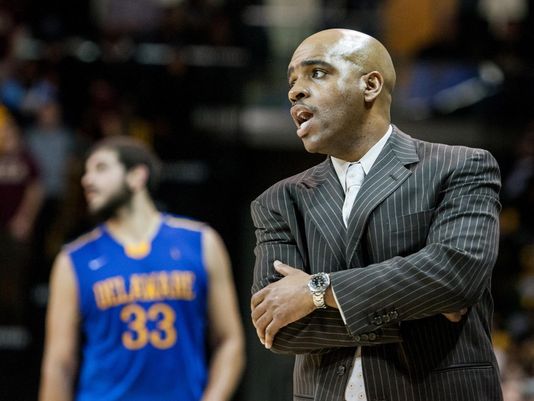
Monte

Monté Ross, University of Delaware Head Coach

Black Cager: Penn has had 2 Black coaches, Princeton has had 2 Black coaches, Bruiser’s been at Drexel for 15 years. Coach Chaney was at Temple for 25 years. Rider has a Black coach. Delaware has had 2 Black coaches. Maryland has had a Black coach. Georgetown and St. John’s have had two Black coaches. Rutgers and Seton Hall have had Black coaches. The Philadelphia Catholic universities, LaSalle, St. Joseph’s and Villanova have never had Black coaches. Why are some schools more successful in attracting and hiring Black coaches and does it matter to guys like you that are advising elite prospects?

Kamal Yard: I think each situation is different. However, if it is overly and abundantly clear that a school doesn’t have Blacks in senior positions then that should be a problem. Because when I’m trying to tell a kid to go to a particular school or advise him on his decision one of the things I tell him is that  you have to open your eyes up and open your ears up. Who’s gonna be role models for the kid? Hypothetically, say they go to the University of Virginia and Craig Littlepage is the AD. That’s telling you that job is an attainable goal for you. You are seeing more African-American ADs. Temple has one. There’s a little progress being made and I think it comes from us complaining. But it’s still not enough. Blacks make up 70-80 percent of the players. It’s not just a problem at the college level. Look at the high school level. Catholic schools in Philly may have had, maybe 4-5 Black coaches in the history of the Philadelphia Catholic League. Two of them were from West Catholic. That is an issue. Where is our network? Shit is important.

craig-littlepage

Craig Littlepage, University of Virginia Athletic Director

Black Cager: Thirty years ago, John Thompson, John Chaney and Nolan Richardson spoke out against what they perceived as attempts to limit or reduce the Black presence through increasingly restrictive academic requirements based on standardized test scores. Who is gonna speak out today? Where are our Chaneys, Thompsons and Richardsons?

Kamal Yard: We don’t have any… We are in an era where there is an overall lack of support for those fighting these measures. At one time, we had some power. When Thompson, Chaney and Richardson were in there battling they were very secure in their jobs. Now guys have to worry about job security. There is no security now. I think we need to start real small and build the opposition to some of the things the NCAA is implementing. I want to bring guys together… I think dialogue like this is real important.

Black Cager: Thanks for taking the time to give us your thoughts on these important issues. The Black Cager is very pleased to provide you with a platform to counter the very negative narrative usually associated with AAU/grassroots basketball. We wish you the very best in July. Philly Pride is the 3rd seed in the Under Armour Association and will be expected to vie for the national championship this summer. Let’s hope Phil doesn’t get kicked out of the gym rooting for you guys.

May 28, 2015

2:00 pm