A Real NCAA Rule Change Casualty

Today, I received a text message from a good friend of mine. He’s highly regarded high school basketball coach. Over the years, he has sent numerous players to some of the best college basketball programs in the nation. He’s known as a stern taskmaster that does things the right way. He’s asked the Black Cager to address his parents and players in the past. We’ve always been happy to oblige.

kwalifi Poster - Bruiser Flint-page-0

Today, he needed help. He needed me to talk to a parent. He asked if I could spell it out for Mom.

Her son, “Javonte” (not his real name) is a “Dead Man Ballin”!!

At 6’8″ 240 lbs, he is a beautiful physical specimen.  He is a high level athlete with a smoothness to his game.  On the court, Javonte has a chance to be very special.  He just turned 17 and is already playing at a very high level for high school. Possessing text book form with feathery touch and excellent release, Javonte grew up around the game. His older brothers were All-State players. As a result, he shows a feel for the game that cannot be learned on the fly. With a strong handle, he is adept at creating shots for himself and can spot up or pull up off the dribble. He is very good at creating offense for his teammates.  Javonte has a tremendous basketball body with a big frame, wide shoulders, enormous hands and long arms.

Big East, Big 10, ACC, Atlantic 10 and SEC coaches have been drooling at the thought of Javonte joining their program. They have been constantly hitting him up on twitter, instagram and snapchat.

None of them have seen his transcript…

Bad Transcripts-page-0

Mom refused to take the coach’s advice. When he transferred in prior to the start of his 11th grade year, the coach told Mom, “Your son has dug a big hole for himself… it’s gonna be tough.”

He had spent his freshman and sophomore years at a Catholic High School. During that period he had taken and completed 12 core courses. His grades were 6 D’s and 6 C’s. He had a 1.5 core GPA.

Coach, very much aware of the 2016 rule changes, stressed the importance of getting straight A’s going forward. Coach hoped the kid would at least get mostly A’s with a few B’s. Kid proceeded to fail English and get a D in Algebra as a Junior.

Coach pleaded with Mom and the kid to go to summer school before 11th and again before 12th grade. Coach explained over and over again that he needed to get those D’s off his report card.

“D’s are GPA killers!”

He would say over and over, to no avail. Mom and her boyfriend wanted the boy to play on the Nike EYBL circuit and summer school would get in the way…

On the first day of school in September, when the homeroom bell rang, the NCAA had him in their sights….

Sniper lens pic-page-0

When the teacher, taking attendance for the first time, called his name…

“Javonte, Javonte?”

The finger was on the trigger… Once he raised his hand and responded…

“Here….”

He was done… Dead Man Ballin’…

His senior year had officially commenced. With that, the poor grades on the transcript depicted above were “locked in”.

He cannot retake or replace any of those grades in an attempt to raise his core GPA to the new 2.3 minimum.

His refusal t0 follow the directions of his coach cost the family anywhere from $200,000 to $300,000 in scholarship funds.

Scholarship Values-page-0

Like a cop after an accident in the middle of the night… Like a military chaplain after a young man steps on a land mine…

It was my responsibility to let his mother know that her son is a Dead Man Ballin’…

Before he plays a single game in his senior year, he is ineligible for a Division 1 athletic scholarship…

This fucked up situation is playing out in High Schools and homes in Black communities across the country… Unnecessarily so!!

Kwalifi logo

The Re-Emergence of Black Consciousness Within the Sports Community

Kwalifi - Black Boys Prison Poster-page-0

The term ‘Black Consciousness’ stems from the great Black sociologist W.E.B. Dubois’ development of the concept of the ‘double consciousness.’ Seeking to make sense of the Black American experience a century ago, DuBois coined the term in an Atlantic Monthly article titled “Strivings of the Negro People.” It was later republished and slightly edited under the title “Of Our Spiritual Strivings” in his famous book, The Souls of Black Folk. Du Bois describes double consciousness as follows:

It is a peculiar sensation, this double-consciousness, this sense of always looking at one’s self through the eyes of others, of measuring one’s soul by the tape of a world that looks on in amused contempt and pity. One ever feels his two-ness,—an American, a Negro; two souls, two thoughts, two unreconciled strivings; two warring ideals in one dark body, whose dogged strength alone keeps it from being torn asunder.

The history of the American Negro is the history of this strife — this longing to attain self-conscious manhood, to merge his double self into a better and truer self. In this merging he wishes neither of the older selves to be lost. He does not wish to Africanize America, for America has too much to teach the world and Africa. He wouldn’t bleach his Negro blood in a flood of white Americanism, for he knows that Negro blood has a message for the world. He simply wishes to make it possible for a man to be both a Negro and an American without being cursed and spit upon by his fellows, without having the doors of opportunity closed roughly in his face.”

Black consciousness among athletes reached it’s zenith in the 1960s.  Perhaps, the most glaring example of Black social consciousness during that era took place on June 4, 1967 at 105-15 Euclid Avenue in Cleveland, Ohio. On this glorious day, Jim Brown (Cleveland Browns), Bill Russell (Boston Celtics), Kareem Abdul-Jabbar (UCLA), John Wooten (Cleveland Browns), Jim Shorter (Washington Redskins), Willie Davis (Green Bay Packers), Curtis McClinton (Kansas City Chiefs), Sid Williams (Cleveland Browns) and Bobby Mitchell (Washington Redskins) met with Muhammad Ali and then held a news conference in support of his refusal to be drafted into the U.S. Army in 1967.

african-american-athletes-at-news-conference-af400c2cb31b07a9

Prominent Black Athletes Supporting Muhammad Ali, June 4, 1967

Twenty years later, John Chaney and John Thompson boldly and brazenly exhibited their Black consciousness by condemning the NCAA’s naked attempt to “close the doors of opportunity to poor Black student-athletes.

“The NCAA is a racist organization of the highest order,” said John Chaney on January 12, 1989. “On this day, it instituted a new punishment on black kids who have already been punished because they are poor. Any time the NCAA, which is 90 percent white, considers the youngsters in Division I basketball and football, it discriminates, because 89 percent of the kids are black. I wonder what message they are sending. It’s another hardship for black kids made by white folk.”

CHANEY ALLEN ROBINSON

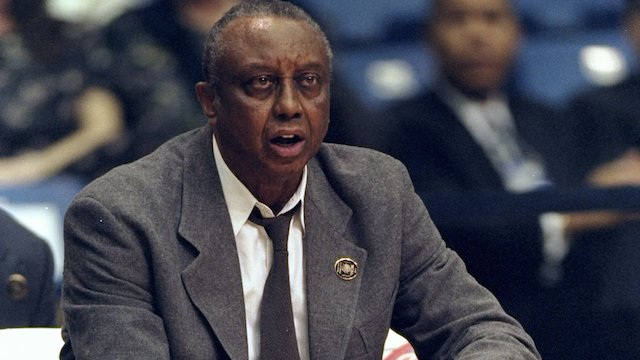
Hall of Fame Coach, John Chaney

A couple of days after John Chaney excoriated the NCAA, John Thompson, then coach at Georgetown, walked off the court before a Big East Game against Boston College. Thompson said that he would not coach in an N.C.A.A. sanctioned game ”until I am satisfied that something has been done to provide these student-athletes with appropriate opportunity and hope for access to college.”

There can be no doubt that Chaney and Thompson were conscious. They obviously felt their two-ness. They are both American  and Black. In their public pronouncements one can almost literally see their “two souls, two thoughts, two unreconciled strivings; two warring ideals in one dark body, whose dogged strength alone keeps it from being torn asunder.”

These days we are bombarded with stories of urban Black student-athletes and student-athletes from Africa being declared ineligible by the NCAA. They window is closing… Just as Chaney and Thompson noted nearly 30 years ago, the NCAA has “instituted a new punishment on black kids who have already been punished because they are poor.”

Fortunately, there has emerged a level of consciousness among some prominent Black members of the basketball community. Accompanying this increased consciousness, has been some innovative and exciting efforts to lift up young Black students and student-athletes. Athletes are helping younger Blacks understand what they have to accomplish and they are working to provide the necessary tools.

The greatest example of contemporary Black consciousness among athletes has to be LeBron James giving kids from Akron — ones with challenging backgrounds like his — the chance to go to college for free. Jame has partnered with the University of Akron to provide a guaranteed four-year scholarship to the school for students in James’ I Promise program who qualify. The scholarship will cover tuition and the university’s general service fee — currently $9,500 per year.

The developers of the kwalifī smartphone app are trying to empower and increase the level of consciousness among high school student-athletes and their families. They want to put famileis in position to take advantage of scholarship opportunities. The kwalifī smartphone app makes it easy to track individual progress toward meeting NCAA and NAIA eligibility requirements.

kwalifi - Dion Waiters Poster-page-0

The kwalifi app has been embraced by some of the most prominent and influential members of the Black basketball community. In cities like Newark, NJ, Philadelphia, PA, Baltimore, MD, Washington, DC and Houston, TX socially conscious Black men are working to increase awareness of NCAA rule changes. Conscious Blacks in the basketball community are working to increase the level of awareness among those coming after them.

Seton Hall great Marcus Toney-El (NJ Playaz), Vincent Robinson (Robinson School) and Roland Whitley (NC State) are leading the charge in Northern New Jersey. Kamal Yard (Philly Pride), Rodney Veney (Philly Pride), Amauro Austin (Philly Pride), Eric Worley (Philly Triple Threat), Charles Monroe (All-City Classic) Paul Gripper (Team Phenom), Steve Pina (ASM Sports) Lonnie Lowry (Team Philly), Terrell Myers (WeRone Hoops) and Aaron Burt (Team Final) are educating Philadelphia area student-athletes and parents about the new rules. In Baltimore, Nick Myles (St. Frances) and Rod Harrison (Mount Zion Prep) are trying hep Black kids access college scholarship opportunities.

kwalifi - Klutch Sports Group pics-page-0

Rich Paul, Klutch Sports Group – LeBron James’ Agent

Curtis Symonds has embraced the kwalifi movement after a spectacular career as a Senior Executive with ESPN and BET. He is working to increase awareness of the rule changes in Northern Virginia, Washington, DC and Prince George’s County, MD. Former McDonald’s All-American Jawann McClellan is working with Houston families.

There is widespread consensus that the recent rule changes will have disparate negative impact on poor Black and African student-athletes. The is also widespread commitment to helping families take control of their eligibility process. The kwalifi app is a tool that empowers individual student-athletes.

kwalifi - Frazier Management pics-page-1

Josh Selby and Bay Frazier, Frazier Sports Management – Carmelo Anthony’s Business Manager

Social consciousness is re-emerging amongst Black athletes. The kwalifī app is THE tool for conscious student-athletes and their families.

Kwalifi logo

www,kwalifi.com

kwalifī Smartphone App: Take Control of NCAA Eligibility Process

‘kwalifī EligibilityTracker’ available on the Apple App Store and the Android Market

An app that allows high school student-athletes to track progress toward meeting NCAA and NAIA eligibility requirements, now available for IOS and Android devices

PHILADELPHIA – November 16, 2015 – Available today, the app kwalifī allows college-bound high school student-athletes to instantly understand where they stand regarding NCAA and NAIA scholarship eligibility requirements. Increasingly stringent NCAA academic requirements have resulted in hundreds of elite student-athletes being deemed ‘ineligible’ across the country. Low-income minority student-athletes and African student-athletes have been disproportionately impacted by changes in eligibility standards. Our goal is to help parents and student-athletes take control of the scholarship eligibility process.

kwalifi - screen shots -page-0

Utilizing a simple and intuitive interface, parents, coaches and/or student-athletes enter identifyng information, core course grades and SAT/ACT scores. kwalifī instantly computes the student-athletes progress toward meeting NCAA and NAIA eligibility requirements. Interpretation of the NCAA sliding scale and accurate core course GPA calculations are crucial for ensuring eligibility. No more depending on overwhelmed guidance counselors. Simple, easy to understand and very useful! Specific steps are outlined to help student-athletes meet NCAA and NAIA requirements.

kwalifī Eligibility Tracker is now available for $9.99 in the US and is priced accordingly in other regions. The app is available world-wide, in several languages on the Apple AppStore and the Android Market. Perfect timing for the app, as the NCAA applies a new set of eligibility requirements for 2016 high school graduating class.

Please visit http://www.kwalifi.com for more information including a demo and screenshots of the app.

The kwalifī EligibilityTracker was developed by Black Cager Web Development, LLC a Black-owned web and mobile development company based in Camden, New Jersey.

###

If you would like further information on kwalifī EligibilityTracker, or you would like to schedule an interview, please contact:

Delgreco Wilson, Managing Partner, Black Cager Web Development, LLC
Phone: (267) 251-1355
EMail: delgrecowilson@kwalifi.com
Twitter: @DelgrecoWilson

Dealing with Barriers to NCAA Eligibility: The kwalifī Strategy?

I’m NOT sayin’ it’s a racist organization, but….

Historically speaking, from 1906 through the early 1970‘s the National Collegiate Athletic Association (NCAA) sanctioned and supported Apartheid-like Jim Crow segregation among it’s member institutions. For the better part of seven decades, the NCAA perpetuated a system which, more or less, formally excluded people of color from widespread participation. A few exceptional Black athletes like, Paul Robeson (Rutgers), Jackie Robinson (UCLA) and Jesse Owens (Ohio State) slipped through the segregationist cracks in the northern and western parts of the country. In the South, however, big-time college athletics was the exclusive purview of white people.
kwalifi poster - basketball black & white-page-0

Following a massive and sustained struggle for respect, dignity and basic Human Rights during the 1950’s and 1960’s, overt and blatant segregation waned considerably. By 1971, Blacks, heretofore excluded from collegiate athletics at Kentucky, North Carolina, Alabama, Florida, Texas, Mississippi, South Carolina, Clemson, North Carolina State, Louisiana State and other powerhouse football and basketball programs, became all the rage. Between 1970 and the early 1980’s Black student-athletes became a dominant force in mainstream collegiate athletics. Simultaneously, Historically Black Colleges and Universities (HBCUs) suffered as they steadily lost the most talented Black athletes to wealthier predominantly white institutions.

What was the response of the NCAA to this rapid “tanning” of the high profile revenue generating sports? For some white University Presidents, Athletic Directors and University Donors it must have seemed like an invasion…

Something had to be done… But what?

They couldn’t just contract with Donald Trump to build a “HUGE” wall around football and basketball locker rooms… Nonetheless, they needed a means of stemming the rising tide of Black bodies flooding Basketball and Football programs across the nation…

The problem was that formal segregation was no longer acceptable in America circa 1982-83. It was no longer politically viable to resurrect and reinstall “White Only” signs that had been removed 15 years earlier… A more nuanced and subtle means of denying access was needed. They devised on strategy centered on the development and implementation of “initial freshman eligibility rules.”

I’m NOT sayin’ it’s a racist organization, but….

These eligibility rules were, and remain to this day, discriminatory against Blacks. John Chaney and John Thompson, II throughout much of the 1980’s and early 1990’s, passionately campaigned against what they referred to as  intentionally “racist” eligibility rules. Following eligibility reforms in 1989, Chaney, Temple University’s Hall of Fame Head Coach, unequivocally stated, “The NCAA is a racist organization of the highest order… On this day, it instituted a new punishment on black kids who have already been punished because they are poor. Any time the NCAA, which is 90 percent white, considers the youngsters in Division I basketball and football, it discriminates, because 89 percent of the kids are black. I wonder what message they are sending. It’s another hardship for black kids made by white folk.”

John Chaney

In response to the same reforms, Georgetown University’s John Thompson, II noted, ”I think it’s sort of ironic when they began to integrate the South athletes were the ones used to pave the way, and they were used under the pious assertion that ‘we’re helping these poor kids… Now, apparently someone has said, ‘Enough,’ so they don’t need the kids anymore. They’re using the same rationale they used to get them in to begin to keep them out. I guess it’s a situation where we’re like shoes and clothes. We’re not in style anymore.”

John Thompson

John Thompson, II

These legendary Black coaches used their positions of prominence to consistently and fervently denounce the NCAA’s racist actions. Since then, every four or five years, the NCAA has implemented increasingly stringent initial eligibility standards. Each set of reforms disproportionately impacting Black student-athletes in a negative manner. The most recent 2016 reforms have, once again, led contemporary prominent Black coaches to openly question the disparate racial impact.

I’m NOT sayin’ it’s a racist organization, but….

The National Association for Coaching Equity and Development (NACED), a group led by Texas Tech coach Tubby Smith, Georgetown coach John Thompson III (son of John Thompson, II) and former Georgia Tech coach Paul Hewitt, recently issued a statement to The Associated Press observing that the standards disproportionately target minority and less affluent students in “an unintended consequence beyond acceptability.”

Whereas Chaney and Thompson, II contended that the NCAA acted with malice and fully intended to harm Blacks, the contemporary Black coaches recognize the same harmful impact but chose to consider it “an unintended consequence.” The raw, unfettered and direct accusations of racist behavior on the part of the NCAA put forth by Chaney and Thompson, II stand in stark relief to mild objections of “unintended consequences” emanating from Tubbs, Hewitt and Thompson, III.
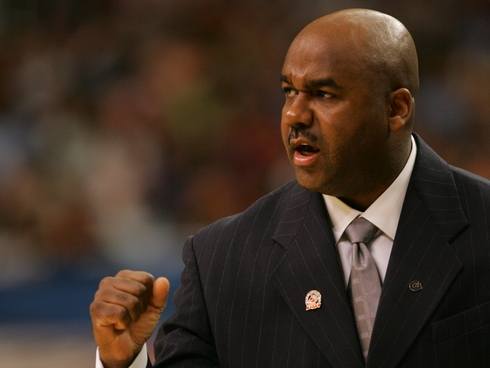
John Thompson, III

Nonetheless, today’s coaches are voicing objection… “That dream could be taken away after six semesters in high school,” John Thompson III said. “So for someone that’s a late bloomer, someone that the light bulb doesn’t go on until later, now it’s too late. And just the disproportionate number of minorities that’s going to affect, the number of people in general that’s going to affect, is not good.”

The 2016 rule changes, coupled with a 2007 rule that allows for only one course from prep school to be applied to an athlete’s transcript, will have a major impact on the number of Black athletes that will be eligible to compete as freshman, especially in the NCAA’s two biggest moneymakers: football and men’s basketball.

A recent NCAA report found that 43 percent of men’s college basketball players, 35 percent of football players and 15 percent of Division I athletes overall who were competing as freshmen in 2009-10 would not have qualified under the new standards. Whether it’s intentional as argued by Chaney and Thompson 25 years ago or “unintentional” as posited by Tubby, Thompson, III and Hewitt, the end result is clear.

A disproportionate number of Black males are going to be excluded from collegiate competition.

I’m NOT sayin’ it’s a racist organization, but….

If I wanted to identify a scheme that would disproportionately harm Black student-athletes I would set the minimum SAT score, with a minimum GPA, at 900. As you can see on the above chart, there is a persistent “performance gap” between racial/ethnic groups on the SAT exam. Asians excel, whites do well and ONLY Blacks have average SAT scores below the 900 cutoff point.

In the “real world,” the “average” white student with a 2.3 GPA will be eligible and the “average” Black student with a 2.3 GPA will be ineligible.

This a perfect scheme… if the aim is to limit opportunities for Blacks while appearing race-neutral.

I’m NOT sayin’ it’s a racist organization, but….

How can Blacks counter this scheme that will, undoubtedly, have racist and discriminatory impact?

While it is certainly interesting to note the evolution of the responses from Black coaches, it really does not matter if the NCAA is intentionally or unintentionally trying to decrease opportunities for Blacks? We must deal with the simple fact that they are decreasing opportunities for Blacks.

The inevitable outcome will be fewer eligible Black student-athletes.

So… What are our strategic options? What should Blacks do about it?

The Black Cager has been discussing this very question with prominent and influential members of the Black youth basketball, AAU/Grassroots and educational communities. Although a lot of different ideas emerged during these conversations, there was a recurring theme in all the discussion.

“We have to EDUCATE the young student-athletes.” Over and over, it was concluded that the best thing we could do was to provide student-athletes and their parents with easy to understand and accessible information regarding the rule changes.

Kamal Yard, Philly Pride/Triple Threat

The Black Cager has had strategic discussions with Kamal Yard, Eric Worley, Rodney Veney and Amauro Austin (Philly Pride/Triple Threat AAU/grassroots organization). They immediately embraced and acted upon the strategy. Rob Brown and Aaron Burt (Team Final) agree that educating families and student-athletes is the most useful tactic at this point. Lonnie Lowry (Team Philly) continues to be a staunch supporter of educational efforts by the Black Cager. Terrell Myers (WeRone Hoops) has also embraced the educational outreach strategy.

Terrell Myers and Sedee Keita

Others have embraced and incorporated the educational outreach strategy as well. Littel Vaughn Charles Monroe consistently make sure they incorporate NCAA eligibility education in every event/league they organize. Philly’s High School Coaches have been very proactive with regard to getting information out to the families. John Mosco (Archbishop Wood), Paul Ramczuk (Archbishop Carroll), Rob Moore (Constitution), Andre Noble (Imhotep), Jazz Williams (West Catholic), Kenyatta Bey (Audenreid), Larry Yarbray (Chester), Pervis Ellison (Life Center Academy), Carl Arrigale (Neumann-Goretti), Chris Clahar (Parkway, CC) and Clyde Jones (Penn Wood) have demonstrated a strong commitment to working with families to increase opportunities for their players to access high learning institutions.

The Black Cager has consulted with Paul Gripper (Team Phenom), Vincent Robinson (The Robinson School) and Sam Rines (Rise Academy) on numerous individual cases. These guys fight the fight and walk the walk with their players. They win some, they lose some… But they always try to arm the players/families with accurate information as early as possible. Lou Daniels, Betty Givens, Mo Howard and Claude Gross are always available to provide counsel and guidance. They treat every kid as if he/she were their own.

But…

Even with all of these efforts we are just scratching the surface of an enormous problem affecting tens of thousands student-athletes of color. This is a national, perhaps even international, issue.  Many African, Latin American and European student-athletes have also been experiencing great difficulty meeting eligibility requirements.

kwalifi - screen shots -page-0

All agree that we need interventions capable reaching tens of thousands of families. Hence, after consulting with all of the above members of the youth basketball community, we have developed the kwalifi smartphone app. kwalifī is a simple and powerful app for tracking progress toward meeting NCAA Division I, Division II and NAIA scholarship eligibility requirements. It allows parents, students and coaches to take ownership of the eligibility process. Core course grades, sliding scales, core course GPA calculations are made easy to understand. No more depending on counselors. It is simple, easy to understand and very useful! Specific steps are outlined to help student-athletes meet NCAA and NAIA requirements.

Bay and Josh

Josh Selby and Bay Frazier

Moreover, with the assistance of people like Rodney Veney, we have discussed ways to ensure that every Black kid has access to the kwaifi app with Bay Frazier (Carmelo Anthony’s Manager), Rich Paul (LeBron James’ agent), Curtis Symonds (retired BET Executive) and Kevin Chiles (Publisher, Don Diva Magazine). As we develop marketing distribution strategies, The Black Cager welcomes input from all concerned parents. players, coaches and others committed to improving the educational opportunities for Black student-athletes. This is merely one step in a struggle to ensure our young people continue to have access to educational opportunities commensurate with their academic and athletic abilities.

Rich Paul

Rich Paul, Klutch Sports Group

We have to EDUCATE the young student-athletes… If you have any thoughts, ideas or suggestions as to how we can do a better job of pursuing this strategy please shoot us an email at blackcager@gmail.com. If you know of youth organizations or schools that will benefit from the kwalifi app, let me know!

Delgreco K. Wilson
The Black Cager

Kwalifi logo


Philadelphia Youth Basketball: Social, Educational and Emotional Development

On October 8, 2015, Philadelphia Youth Basketball, Inc. started a new dialogue…

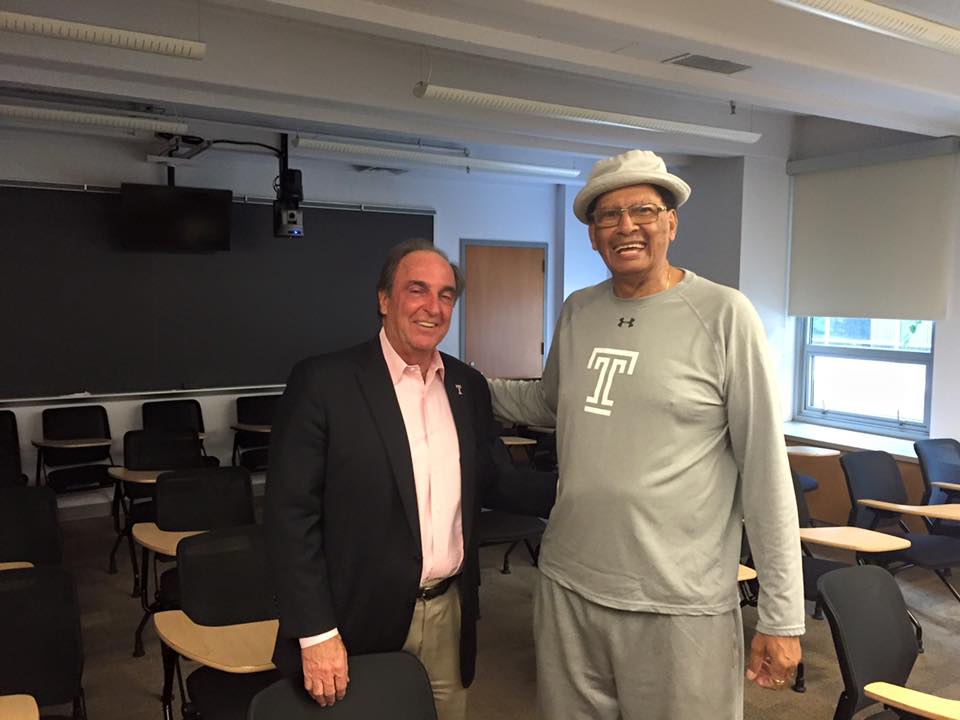
A wide range of basketball stakeholders were present. Claude Gross represented the Sonny Hill League. Don DiJulia, Saint Joseph’s University’s Athletic Director was reunited with his Sweet 16 backcourt of Rashid Bey and Terrell Myers. Fran Dunphy and Steve Donahue, respectively, represented their Temple University and Pennsylvania University basketball programs. Kamal Yard (Philly Pride), Myers (WeROne), Eric Worley (Philly Triple Threat) and Bey (Team Final) represented three of the more prominent and influential AAU/Grassroots programs in the region. Justin Scott, Arcadia University and Rudy Wise II, Rosemont, held it down for the small colleges. Camden was represented by Tyrone Pitts and Larry Yarbray was flying the Chester High flag.

Pitts, Bey, Dunph, Claude, Scott

Tryone Pitts (Penn), Rashid Bey (SJU), Fran Dunphy (Temple), Claude Gross (Sonny Hill League), Dr. Scott Brooks (Missouri)

What was most interesting about this gathering was the fact that the game of basketball was never mentioned over the course of more than 2 hours. The discussion focused squarely on how the Philly basketball community can develop, harness and leverage social capital that can be utilized to further the social, educational and emotional development of young people or “our guys” as Dr. Scott Brooks described them.

Held in the Graduate School of Education at the University of Pennsylvania, the “Roundtable Discussion” was led by Dr. Brooks, Professor of Sociology at the University of Missouri. Dr. Howard C. Stevenson, Constance Clayton Professor of Urban Education at the University of Pennsylvania and Stephanie A. Tryce, J.D., Assistant Professor of Sports Marketing were also in attendance.

Kenny Holdsman and Eric Worley outlined their vision and plans to build a state of the art, basketball-based youth development center in the heart of North Philadelphia. Holdsman passionately posited that when you create opportunities for young people to develop their potential as students, athletes, and responsible engaged citizens, the individual and the community will thrive. Basketball, for Holdsman and Worley, is more than a game. Their efforts are undergirded by extensive research demonstrating that sports foster growth and development physically, academically, and socially.

Kwalifi Poster - Rens-page-0

Towards that end, Holdsman noted that they have begun building a professional organization and initiated fundraising efforts to construct a $25 million state-of-the-art, basketball-based youth development center in the heart of North Philadelphia. This 120,000 square foot facility will have 8 indoor and 8 outdoor courts including a 2,000 seat indoor competition court. It will also feature an education wing with a library, classrooms, computer lab, and a community engagement center.

Take the PYB Tour!

Worley explained that they simply could not wait for construction to be concluded to begin serving Philadelphia’s young people. As a result, in a couple of weeks they are initiating the PYB School Partnership Pilot Program. Through this pilot program, PYB will provide programming in eight-week intervals (fall, winter & spring) for middle-school aged students at four school partners located in the North, Northwest, and Southwest regions of the city. Programming will be held at the location of the four school partners twice a week during after-school hours and every Saturday at Temple University and/or another Philadelphia area college or university. The program will focus on academic support, homework help, study skills, time management, tutoring, high school selection, leadership, character development, health and nutrition, family engagement, and basketball skill-building and competition. All participants will receive basketball uniforms.

Dunph and Claude

Fran Dunphy & Claude Gross

Claude Gross shared stories from his experiences over the past 55 years with the Charles Baker and Sonny Hill Leagues. Gross explained that the Hill league was never about producing NBA basketball players. Rather it was always about producing middle class young men that could provide for themselves and their families and become positive contributing members of society.

Finally, there was a magisterial presentation by Dr. Brooks, a protege of Philly Schoolboy legend Claude Gross. While pursuing a Ph.D. in sociology at the University, Brooks spent four years coaching under Gross in the Sonny Hill League basketball. The result of his research was an extremely insightful and nuanced book, Black Men Can’t Shoot (University of Chicago Press). For those interested in gaining a better understanding of the multi-layered intersections of urban education and scholastic sports, it is a must read.

Black Men Can't Shoot

In his presentation, Dr. Brooks deftly described what he saw, heard, and felt working with the young black men in the Hill league. His discussion of the manner in which the Claude Gross, Fred Douglass, Vince Miller, John Hardnett, Tee Shields and others utilized their social networks and expended their social capital was both informative and captivating.

Stephen Pina, a sports attorney with ASM Sports exclaimed, “that was the best talk I’ve heard… Dr. Scott is able to convey his academic work in a very ‘REAL’ manner.” Kamal Yard said, “He articulated everything I have been saying and thinking for the past 10 years.” Rashid Bey reported, “I thought about that presentation all night.”

Perry, Terrell, Rashid

Perry Clark, South Carolina Assistant Coach, Terrell Myers and Rashid Bey

There will be subsequent “Roundtable Discussions” sponsored by Philadelphia Youth Basketball, Inc. and Black Cager Urban Sports Media. Updates will will be available on this website.

Why?? Stevie Jordan’s Decision

We are in the midst of basketball paradigm shift. There has been fundamental changes in the approaches to and underlying assumptions of elite scholastic basketball. Most significantly, grassroots/AAU basketball has superseded high school hoops in importance. Scholarships are earned in the summer. High school merely provides college coaches an opportunity to follow-up with the kids they have seen on the grassroots/AAU circuit in the summer.

Kwalifi Poster - Josh Gibson-page-0

At the very highest level of competition, the prep school or academy model has gained a foothold. Increasingly, the very best players leave home to train and play with other elite players on a daily basis. Going into this season, the top 5 high school teams in the nation are all prep/academy squads. Oak Hill Academy (VA), Montverde Academy (FL), Huntington Prep (WV), Findlay Prep (NV) and Chaminade Prep (MO) are the consensus top programs this year.

Some kids from the Greater Philadelphia region have decided to seek higher levels of competition and go this route. Sedee Keita is at Putnam Science Academy (CT), David Beatty is St. Benedict’s Prep (NJ) and Horace Spencer graduated from Findlay Prep last year. About a month ago, Trevon Duval decided to transfer to Advanced Prep International (TX).

Now, imagine you were an elite scholastic player presented with a similar opportunity. Let’s say you were named the State Class AA Player of the Year as a junior. Let’s say you led a school that had never won a postseason basketball game in 51 seasons, to six playoff wins in a three-week span. Let’s say you pumped in 21 points to lead your team to a state championship. Let’s say you were named 1st team All-State.

Conwell Egan State Champions2

Conwell-Egan Pennsylvania Class AA State Champions, 2015

Suppose your grades and academic standing were beyond reproach? Suppose you already committed to a winning Division 1 college program?

If you were presented with an opportunity to train and practice every day against, arguably, the top player at your position on a daily basis, what would you do? What if two of your other potential teammates were top 10 players in their respective classes?
Would you take advantage of this opportunity to hone your skills and enter college ready to compete right away?

Stevie Jordan

Stevie Jordan, Advanced Prep International

Conwell-Egan’s Stevie Jordan faced this situation…

This is Jordan’s statement regarding his choice:

First of all I want to thank God as well as of those that contributed to my success over the past three years at Conwell-Egan Catholic High School. From family, friends, coaches, teammates, teachers, staff, press and those that I have met along the way, I am thankful for the impact you have made in my life. I am grateful for my teammates and the opportunity to play with each and every one of you. Together, we made history as State Champions. I have been working and training for a chance to play consistently with and versus the best players in the country. 

I have always appreciated the challenges in life, knowing that would make me the best possible.  My family and coaches have trained me to seek and embrace these challenges.  Therefore the only decision consistent with my goals is to attend Advance Prep international (API).  My heart is heavy for leaving, but my mind is strong. The choice to leave CEC was not an easy one. Nonetheless, it is my hope, that you understand my decision and continue to support me in my endeavors. I look forward to the 2016-2017 school year where I have committed to Rider University and seeing you in the stands cheering the team on as we make headway on the collegiate level.

All the best
Stevie Jordan, II

Special thanks to my Coach Frank Sciolla not only a great Coach but awesome mentor-appreciate you Coach SKI thanks for believing in me and “twatching”, the entire coaching staff, Janet Dollard-(CEC President), Bill Burns (Coach), Marion Manns (School Principal) and Alumni.  Cant forget my Bro, Lapri- Thank you for being alongside of me for this bumpy but historical and memorable road. I love you Bro – Keep Grinding!!

kwalifi poster - basketball black & white-page-0

Youngfella… The Black Cager wishes you the very best this year and we look forward to seeing you lace ‘em up at Rider University next year.

It’s All GOOD at Archbishop Wood! John Mosco Interview

As we are quickly approaching the start of another exciting scholastic basketball season in Philadelphia, people across the country are focusing on perennial powers Roman Catholic and Neumann-Goretti. Those two along with Archbishop Caroll have fielded nationally ranked boys basketball teams over the past few years. When you consider that Conwell-Egan also won a PIAA state championship last year, it becomes apparent that the Philadelphia Catholic League (PCL) is the most competitive high school basketball league in the state and arguably one of the premier leagues in the nation.  Schools like West Catholic Prep and Bonner are trying mightily to crack the upper echelon. Here I present an interview with John Mosco, Head Coach at Archbishop Wood.

Mosco has been a prominent figure in Philly schoolboy hoops for nearly 2 decades. He served an apprenticeship under Carl Arriagle in the legendary Neumann-Goretti program. Two years ago, Mosco was handed the reigns at Wood. Widely recognized as one of the “good guys” in the Philly hoops community, he has been working diligently to build a respectable program. His team plays hard and they play unselfishly. He has developed some of the best young players in the Philadelphia region. This could be the year Wood breaks through and challenges the Big 3 for PCL Catholic League supremacy.

John Mosco

John Mosco, Head Coach, Archbishop Wood Boys Basketball

Black Cager: I think the Philadelphia Catholic League (PCL) is arguably the best scholastic High School basketball league in the country when you look at it top to bottom. I’m not talking about leagues that have 5th year guys or the New England Prep School League. I’m talking about pure high school basketball. What are your feelings about the ability of the PCL to compete on a national level?

John Mosco: I think night in, night out with quality of the coaches in the PCL, the way they prepare their teams, it’s the hardest league to play in. You see what teams like Roman, Neumann-Goretti and Carroll did last year on the national scene. Especially with Carroll losing Ernest to injury and they were still able to win big games at the City of Palms. Neumann-Goretti was supposed be in a down year and they won a State Championship and could have won a Catholic League Championship. Roman Catholic pretty much ran the table only having 2 losses, both in the league. They beat everyone outside the league. My first year here everybody thought I was crazy when we scheduled DeMatha and other high powered programs. But I want my players to have those experiences. They can play against the best players and tell their family members and friends they play against the best. Every night you have to bring it because you could lose just as easily as you could win.

Black Cager: I had the good fortune of attending one of your games last year. You were at Roman Catholic and we all know that’s a tough, tough place to play. The gym is not regulation size. Your boys came in there in front of a standing on each other crowd and managed to pull that game out. You have a very young team. What did that mean for the program? And, how will that help you get your guys to understand that you can compete and win against the very best teams in the city?

John Mosco: That game meant a lot to me. For two years, we were talking about having a signature win. We felt that that was our signature win. We were able to walk in there and win. Keep in mind they hadn’t lost there in seven (7) years. Juanya Green hit a buzzer beater to beat them, but I think that was at least 7 years ago. Since then, then haven’t lost in that building. I’ve been on the wrong end os some severe beating there at Neumann. I remember Donnie Carr crushing out team before the Neumann-Roman game was moved every year. To be able to compete against Roman and beat Roman was great accomplishment for our program. Roman is a program that we look up to with their accomplishments. They are the big dogs on the street. We’re trying to instill in our kids a belief that they can just go out and compete with anyone. It’s just high school basketball. The game is 32 minutes and if you play your hardest you are going to come out on top.

Black Cager: As I watched that game, one kid in particular really kind of stood out. I heard a few people standing next to me say, “you know he’s only a freshman.” Once that really settled in and I’m watching the game, I was amazed at the way the kid was able to compete, especially on the boards. Now when it’s all said and done he will be a Division 1 wing, but for you last year he was a force on the boards. Tell me a little bit about Tyree Pickron and some of your other young kids and what we can expect to see from them going forward.

Tyree Pickron

Tyree Pickron, Archbishop Wood Sophomore

John Mosco: Tyree is a special kid. He trusted me enough to come all the way out to Wood. He lives about 3 or 4 blocks from Roman Catholic and he takes a 55 minute commute by bus everyday. He really fit in here academically. That’s what I’m more proud of. You talk to the teachers and the administration and they love him because he does all the right things in the building. We preach that to him first and foremost. We told him listen your gonna play, but your gonna be out of position. We have a lot of guards and your gonna have to play the 4. He ended up being our second leading rebounder and started every game as a freshman. I gave him an opportunity to play and he really took advantage of it. In that game he had 14 points and 14 rebounds. He hit several big buckets as Roman was making a run to come back. He was really poised. He hit jump shot after jump shot. He has a lot to work on, but I think every sophomore in the country does. He’s in the gym. He takes the criticism. He listens to the seniors. He doesn’t try to do more than he has to. But, he also knows when its time for him to take over and he did it in that game. Overall, I think he needs to work on his ball-handling. I also think the jump from freshman to sophomore is huge because you go from being the low man on the scouting report to 1st or 2nd. He’s going to have to adjust to being guarded by the best defender. He might not have 20 points every night, but he has to keep grinding. I think he will.

Black Cager: I also happened to see you guys playing against Reading in the Villanova team camp this summer. During that game, I could see that he clearly relished the opportunity to match up with Lonnie Walker. How do you think Pickron matches up with the kids that tend to get more national recognition because of the name on the front of their jerseys? Kids that play for Roman and Neumann or kids that come out of places like Chester or Reading get a lot of publicity. People are expecting them, they are waiting to see them come along. With what you are building here Pickron and some of your other players are going to have to fight for recognition as elite level players. But, early on they appear that they will be just as good.

John Mosco: Yeah… they do… I think my guys have a chance to be recognized on the national stage. It’s all about getting better. If he helps get us to the Palestra, he’s gonna get al lot of that credit along with Tommy Funk (West Point commit) and Colin Gillespie. The further we go and if we are able to win the Catholic league Championship that will bring recognition to the school like our football program. By the time Tyree graduates from here I think he will have all of that recognition. He plays hard, he’s not worried about who he’s playing for in the summer. I think people are gonna be surprised when he goes to Hoop Group or some other camp and plays very well. We talk about that here. Summer is the time for players to shine as individuals. Summer League Championships don’t get you invited to state championships. Tyree needs to work on handling the ball. I want him to do that in the summer leagues. Tommy Funk needs to work on his jump shot, I want him to take more shots in the summer leagues.

Tommy Funk

Tommy Funk, Archbishop Wood Senior (Army Commit)

Black Cager: I think you are unique in your ability to integrate waht you do with what the AAU/Grassroots programs do in the summer. I’ve seen you at AAU practices and your very familiar with the AAU programs. Clearly, going forward for any HS program to be successful they have to adapt to what goes on in summer basketball. Philly has some really hyper-competitive summer basketball programs. How do you go about maintaining relationships, staying above the fray and not have the different programs hating on each other.

John Mosco: I think it’s about communication. You have to communicate with them. Give them your schedule… where you are going for team camp and they give you their schedule outlining where they will play during elite season. July is a busy month. I tell my kids I need them for one event… The Hoop Group team camp. If they can’t make it, I’m not going to hold it against them as long as I know they are playing at a tournament with Team Philly, Team Final or the Jersey Shore Warriors. It just provides a chance for a younger kid to play. What I don’t like is when the kids don;t communicate with both the program or the HS team and we don’t know each other’s schedule. In March I reach out to the AAU programs and get their schedules so I’ll know where guys are going. We lift two days a week and they have to go to that. They can go to AAU practice… It’s about getting better. You have to have an open door policy.

Black Cager: You know I’ve been involved in this thing for about 20 years and NCAA eligibility has always been a moving target. In 2016, it’s going to change again in a very big way. What are some of the steps that you guys are taking to make sure your kids are ok. I know your upper classmen are pretty bright kids and that’s not an issue. But what would you say to any 8th grader or any kid entering high school in terms of what they can do to make sure they are on the right track?

John Mosco: I think it starts before they get to HS. We talk to kids that registered at Wood for HS before they get here. We let them know what they have to do with their grades and progress reports to stay eligible and meet college expectations. I am very lucky here at Wood, we have a great counseling team and they are on top of everything. We have a strong football program and they understand what each kid has to do to be eligible to play Division 1 and Division 2 college sports. They are tracking their grades, they understand what a core course is, they understand the core GPA. We don’t have to explain it to them, they are explaining it to us. They are on top of the new formula. The head counselor is Ms. O’Grady. Her son played basketball here, was drafted by the Cincinnati Reds and played baseball at Rutgers. She understands what it means to be a student-athlete. It’s not just pushing kids through to get a 70. It’s pushing them to get a B or an A.

Black Cager: I think Wood, now that you mention it is really unique. The girls basketball team, if not the best, is one of the 2 or 3 best programs in the state of Pennsylvania. The football program, the baseball program and the golf program are all super-competitive. You are bring boys basketball along. I don’t see why you can’t be one of the best programs in the Catholic League which puts you among the very best in the state. Is that your expectation this year?

kwalifi Poster - Bruiser Flint-page-0

John Mosco: Yeah… my expectation every year, even last last, is to win the PCL title. That’s our first goal, to win the PCL. I tell these kids there is not a better experience than playing in the PCL semifinals and final at the Palestra. There are 9,500 people cheering for you or against you. You see last year 3 PCL boys teams won state championship and the PCL also won a girls championship. Constitution, also from District 12 won the other boys championship. I think the state is not really fond of District 12 winning all these titles.

Black Cager: I think clearly the PIAA, is considering different ways to make Philly teams play each other before the Championship games. They are thinking about going back to the East vs West format.

John Mosco: I think the state should continue to place teams where they belong and let the best teams play for the title. Roman vs King and Neumann vs Carrol were the best teams in those classifications and they deserved to play for the championship.

Black Cager: I think the state views the boys tournament as a money maker. The Philly teams have only been playing for state championships for about a decade or so. Our schools do not travel as well as some of the schools that have been playing for state championships for 50-60 years.

John Mosco: That’s why the state loves Chester. I give them all the credit. When they play for the championship, the whole city comes out to support them. It’s tough because we are representing one city. If MLK goes or if Roman goes the city is not going to follow them and go to the game. Even if Wood goes, all of Warminster is not going to travel to the game. So it’s different for city teams. That’s why I put a lot more stock into winning the Catholic League.

Black Cager: In general, let’s talk about Philadelphia basketball at the amateur level. The sense I get it that we are struggling. It’s no secret that some of our very, very best players have had a hard time adjusting to college life. The expectations thrust upon are young people when they enter college life have proven to be challenging for some. You see a lot of transfers back home. You see kids quitting school. You see kids having to go to junior college. I can easily name 10-12 kids off the top of my heads that struggled with the transition. What are some of the things we can do to help the kids be more successful?

John Mosco: I don’t think it’s just Philly… I think it’s the way things are structured… With the live periods in place, the coaches don’t to watch these kids enough and they are taking chances on kids and that’s why there are over 600 transfers every year. Coaches don;t want to wait for a kid to kid better and the kids don’t want to wait. The kids think they should be able to just go to college and play right away. People want to drive a Cadillac, no one wants to drive a Honda. They are all going higher than they should go. They don’t go to the schools that really want them. I think the Philly schools see the Philly kids so much they tend to over-evaluate them. They see them so much they start to focus on their flaws more than coaches from out of state see their flaws. Kids are being talked to by their AAU coaches and their parents, they want to play right away. It’s not just in the city. Even up here I’m fighting with kids from the suburbs that are listening to AAU guys and parents. Everybody has the same problems, they are just in different locations. Everybody’s goal is to be a Division 1 player. Not listening to to right people hurts some kids. There are some guys out there that don’t have the kid’s best interest in mind.

Black Cager: I agree 100%.

Kwalifi Poster - Rens-page-0

John Mosco: I tell my kids all the time. I go to work every day. I work for PECO. I don’t put food on my table with this basketball thing. When they get to the next level, the coaches are relying on 18-19 year old kids to put food on their table. It’s a business. If that kid doesn’t want to listen, or has a bad semester they are all over him. They may not be willing to work through the issues. As it progresses it gets worse because they are under so much pressure to win. If they are not winning, then they go get the transfers. Now you have the 5th year kid that’s a transfer and he’s much older and stronger than the freshmen. As a result, some coaches don’t even want to look at seniors coming out of high school. They want superstars. They don’t want kids that are gonna work to get better. I talked to a lot Division 2 schools and they don’t even want to recruit, they just wait for the Division 1 transfers. It’s tough, you’re either D1 or D3.

Black Cager: I really appreciate this interview. As a final question: What do you have to say to Chris McNesby, Carl Arrigale and Paul Romanczuk? Are you coming for them?

John Mosco: Carl is like my brother… we talk every day. He’s knows what I’m doing and I know what he’s doing? We been coming for those guys the last two years. It’s a hard thing to crack. Those are the premier programs in the PCL. In our league everybody knows who you are and they know what you are bringing night after night. Last year, every game was the NCAA championship for the teams they played against. But we got few surprises and we’ll be ready for them. I want thank you for taking the time to come and visit us.

Why Did He Commit to Them? Toward A Better Understanding of the College “Decision” Process

What the fuck? Why?

Why did he commit there? Why didn’t he choose us? Why didn’t he come to our school?

Our academics are better! We win more! We produce more pros! Shit makes no sense…

Many resort to knee-jerk accusations that the kid was “bought off” to explain the decision… They had to cheat… Why else would he choose them over us?

Every year around this time, passionate alums and casual observers rack their brains trying to make sense of decisions made by 18 and 19 year old elite Black male student-athletes. Indeed, an entire multi-million dollar industry has emerged dedicated solely to tracking the college selection processes of elite predominantly Black male student-athletes. Scout and Rivals are two of the biggest media enterprises dedicated to in-depth coverage this annual race to sign the very best scholastic ballers. Rivals was purchased for $100 million by Yahoo in 2007. Scout generates over $100 million in annual revenues.

Malik NLI

Malik Ellison committing to St. Johns

Despite intensive media coverage, very little thought is given to the actual decision-making process itself.  Core questions at the center of the ‘mainstream’ dialogue are fairly easy to delineate: Where will Black male athletes sell their athletic labor in return for an athletic scholarship? Which predominantly White NCAA Division I institution will profit generously in return?

The Black Cager is dedicated to going a little deeper than that. I want to foster understanding. So… How can we begin to make sense of these “decisions” made by thousands of young Black men entering collegiate athletics every year?

I want to provide a basic framework for understanding the all too often overlooked decision-making process. While the analytical focus is on urban Black male basketball players, the framework can be applied across racial and ethnic backgrounds as well as geographic settings. Many white ballers from the cornfields of the mid-west face the same circumstances.

My basic hypothesis is that predominantly white college sports fans, alums, writers and even coaches assess the decision-making process from a purely “rational” point of view. In doing so, they consistently fail to understand and appreciate the limits or “bounds” the student-athlete operates under. As a result, the observers are usually confused and unable to comprehend why decisions are made. This confusion leads many to make unfounded and unwarranted accusations about the character and integrity of the process, the student-athletes and their families.

What are the limits and constraints? What are the “bounds” imposed upon student-athletes making college decisions? Elite Black male student-athletes facing college decisions have to work under three unavoidable constraints.

  1. They only have access to limited, often unreliable, information regarding possible alternatives and their consequences,
  2. The human mind has only limited capacity to evaluate and process the information that is available. And,
  3.  only a limited amount of time is available to make a decision.

Therefore even student-athletes intent on making rational choices are bound to make satisficing (rather than maximizing or optimizing) decisions in complex recruiting situations. This vital fact is overlooked by disappointed and frustrated supporters of programs that lose recruiting battles. Moreover, it is not addressed by ‘mainstream’ sportswriters and analysts trying to explain outcomes to their targeted audiences.

All they know is, to them, shit don’t make no sense… As a result, message boards are flooded with nasty, vile and even racist attacks on young men that chose a program other than theirs.

Mookie NLI

Tamyra ‘Mookie’ Laws committing to Holy Family University

Fans fail to understand that these limits (bounds) on rationality make it nearly impossible for student-athletes and their families to consider every contingency, necessitating reliance on advisers, ‘handlers’ or even agents operating behind the scenes.

Black male student-athletes, like everyone else, are to some extent rational beings in that they will try to logically understand things and make sensible choices. This is rightfully assumed by most observers. Collegiate sports fans, alums and college coaches assume that student-athletes have preferences among the colleges offering scholarships that allow them to state which option they prefer.

From a purely rational perspective, these preferences are assumed to be complete (the student-athlete can always say which of two college programs they consider preferable or that neither is preferred to the other) and transitive (if college A is preferred over college B and college B is preferred over college C, then A is preferred over C).

However, observers make the mistake of assuming student-athletes take account of ALL available information like academic reputations, graduation rates and probabilities of events like winning conference championships, appearing in the NCAA tournament and being drafted by an NBA team. It is further assumed that a student-athlete weighs the potential costs and benefits in determining preferences, and acts consistently in choosing the self-determined best choice of action.

That’s how most causal observers think the process works. But…. That’s not how it actually goes down…

For elite Black male student-athletes the college recruitment process is extremely daunting and complex, and they do not have the capacity to understand everything. As noted earlier, they only have access to limited, often unreliable, information regarding possible alternatives and their consequences. Yes… college coaches are able to make an unlimited amount of phone calls and text messages to recruits. Of course, they do everything they can to get their message across to the young men.

For many student-athletes this quickly results in hundreds of calls and/or text messages per day. As a result, coaches begin to sound like Charlie Brown’s teacher, “whaaan, whann, whann, whann, whann…”


Coaches understand this, even if fans don’t, so they rely on the development of intermediaries like AAU/grassroots coaches, HS coaches, family members, friends, girlfriends, etc. to deliver messages to student-athletes. Unfortunately, in many instances, the “interests” of the intermediaries supersede the interests of the student-athletes. “If he comes with us, we’ll take care of you or your AAU/HS program” is the message the intermediaries hear. In this way, information reaching the student-athlete becomes limited and unreliable regarding possible alternatives and their consequences.

At this point, the possibility of a truly ‘rational’ outcome has been compromised. The student-athlete is receiving skewed information.

Rakeem Graduate

Rakeem Christmas Graduated from Syracuse University in 3 years

Further complicating the process is the fact that the human mind has only limited capacity to evaluate and process the information that is available. This is especially so for urban Black male student-athletes. The athletes and their family members very often do not possess the intellectual tools required to adequately understand the process as it unfolds.

It’s really bad… Really, really bad…

On August 24, 2015, the Philadelphia Inquirer reported that “nearly half of all adults in [Philadelphia] – more than half a million men and women – lack the basic skills necessary to qualify for postsecondary training or hold jobs that permit them to support a family. Many function below eighth-grade levels.”

How are parents and grandparents that can’t read supposed to sort through the labyrinth of NCAA regulations and appropriately weigh the options available to them? They can’t….

The student-athletes themselves may be in an even worse position. A recent study by the Schott Foundation for Public Education found that the four-year HS graduation rate for Black males in many of America’s urban areas was profoundly abysmal. Detroit, MI (23%) has the lowest Black male graduation rate in the country (in Detroit only 13% of White males graduate from high school within a four year period), followed by Philadelphia, PA (26%), Clark County, NV (27%), Pinellas County, FL (28%), Cleveland, OH (28%), New York, NY (28%), Chatham County, GA (28%), Richmond County, GA (29%), Duvall County, FL (29%), and Norfolk, VA (31%). For the 26% that remain engaged in school, in 2014, 42 percent of students met the reading standards bar set by the state on the Pennsylvania System of School Assessment, down from 42.3 percent. In math, 45.2 percent met standards, down from 46.9 percent.

Plainly stated, many student-athletes and their families lack the educational foundation necessary to adequately process, evaluate and process information available on the various collegiate programs offering athletic scholarships.
bembry-dunk-twitter 
DeAndre Bembry dunking on VCU
Then on top of that, there is limited time to make a decision. The NCAA manages the daily operations of a National Letter of Intent (NLI) program that includes 650 Division I and Division II participating institutions. Through the establishment of signing periods, the NLI program imposes deadlines on student-athletes and their families. And, there’s always the possibility that another player may take the desired scholarship.
Most elite Black male scholastic student-athlete are confronted with limitations imposed by poor educational backgrounds, a lack of understanding NCAA regulations and other factors. Given this set of circumstances, there is no way student-athletes can have a complete understanding of the recruiting process before having to make a decision.
Within this context, truly ‘rational’ decisions become impossible… What emerges are decisions that are ‘good enough’…
Information, more or less, tends to change people’s decision. Every student-athlete is limited by the decisional limitations outlined above. The better the athletic prowess, the more complex the issues become, thereby increasing the cognitive load. And where there is cognitive overload, student-athletes rely upon coping mechanisms to arrive at a decision.
They settle for a school that is ‘good enough’ as opposed to finding the ‘best school’. Black male student-athletes end up choosing a school that meets most of their goals instead of going for the optimal solution.


This is where college fans and alums become confused. They wonder: Why did he choose a school that hasn’t been to the tournament in 10 years? Why did he choose a program that doesn’t have as many NBA players as ours?

In choosing college destinations, in can be argued that there are no optimal decisions, but choices that are in some sense locally optimal at best. The implications of these decisions are based on bounded rationality, which is senseless to observers applying rational logic, but completely sensible for the student-athlete making the decision.

Elite Black male student-athletes do exactly what makes the most sense to them, in the context of the moment, with their current understanding. If you are a white college educated-male with college educated parents that were in a position to pay for your education you likely have no frame of reference for understanding this process.

It ain’t personal… Cut the kids a break…

The Declining Significance of Sonny Hill and the Resulting Loss of Social Capital

sonny-hill

Sonny Hill at the Naismith Basketball Hall of Fame

Founded in 1968, the Sonny Hill Community Involvement Basketball League uses basketball as a foundation for teaching life skills. For thirty years or so, the Sonny Hill league reigned as the undisputed best summer high school basketball league in America. The Holcombe Rucker League in Harlem is also highly regarded. But, the talent in Hill League was unsurpassed. Gene Banks (Duke), Lewis Lloyd (Drake), Clarence Tillman (Kentucky/Rutgers), Mo Howard (Maryland), Pooh Richardson (UCLA), Nate Blackwell (Temple), Dallas Comegys (DePaul), Lionel Simmons (LaSalle), Kobe Bryant (NBA), Rasheed Wallace (North Carolina), Rip Hamilton (Connecticut) and Alvin Williams (Villanova) are just a few of the great scholastic players that laced ‘em up in the Hill League.

gene-banks-duke500w

Gene Banks

The concentration of talent was incredible. You could walk in McGonigle Hall on Temple University’s campus and catch the incredibly strong Rico Washington (Weber State) battling the powerful low-post force, Brian Shorter (Pitt) on the blocks. If you were more attracted to guard play, the wizardry of Michael Anderson (Drexel) was on full display as he went against consummate Philly point guard Howie Evans (Temple), the blindingly quick Bruiser Flint (Drexel) or the explosive Steve Black (LaSalle). Summer basketball in Philadelphia was truly something to behold.

The Sonny Hill League was an outgrowth of the Charles Baker League. In 1960, Mr. Hill founded the Baker League as place for professional basketball players to work on their craft during the off-season. The four-team league that began playing outdoors on the concrete court of of North Philadelphia eventually grew to attract some of the biggest names in basketball. Over the years, Wilt Chamberlain, Guy Rodgers, Hal Greer, Billy Cunningham, Bill Bradley, Earl Monroe, Darryl Dawkins, Joe Bryant and World B. Free were regulars in the Baker League.

Wilt

Wilt Chamberlain

It’s all gone!

The Baker League no longer exists and the Sonny Hill League is a just shell of what once existed.

Recently, I received a phone call early one morning from St. Joseph’s coach Phil Martelli. He asked, “Del what happened to the Hill League… I’m reading the box score from a college league playoff game and I only recognize one name – Biggie Minnis.” The Hill league no longer attracts the best high school and college players in the area. There can be no denying the fact… The Hill League has fallen off… That conversation with Martelli stuck with me for a few days. I brought the topic up with Bruiser Flint, Ashley Howard and Geoffrey Arnold. They coach at Drexel, Villanova and St. Joseph’s respectively. I asked each the same thing Martelli asked me: What happened to the Hill League?

The focus of the conversations was on  two distinct questions: 1) Why did the Hill League become insignificant? And, 2) What have we lost as a result?

There is a consensus that the rise of AAU and shoe company teams contributed mightily to the demise of the Hill League. However, the more interesting question becomes: Could the outcome have been any different?

Brian Shorter

Brian Shorter

Mr. Hill’s tenacity and drive enabled him to form and maintain a youth sports league that is nearing it’s 50th year of existence. Perhaps, these same traits rendered him a unable to adapt and become more flexible when the AAU movement crept into Philadelphia. Rather than accommodate the schedules of the biggest AAU tournaments, Mr. Hill forced players to choose. Over time, the lure of jet travel across the country, stays in fine hotels and playing in front of 200-300 college coaches was too much for Philly’s best ballers to resist. Gradually, more and more began to play exclusively for prominent local AAU programs like Team Philly (Adidas), Team Final (Nike), WeRone (Under Armour) and Philly Pride (Under Armour).

The kids, however, being from Philadelphia needed an outlet to settle their neighbor “Ball-Beefs.” Rahim Thompson’s popular Chosen League has emerged to satisfy that thirst for local school yard competition in the summer. Thompson, ingeniously, decided to work around the schedules of the biggest AAU tournaments which take place during NCAA live periods. In this way, he has been able to have the very best scholastic players in Philadelphia participate in his league. The Chosen League has surpassed the Hill League as the place to see the best local players during the summer months.

chosen league

Philly Schoolboy Legend Rysheed Jordan in the Chosen League

What have we lost? The best answer I could come with is: We have lost a great deal of “Social Captial”.

For Mr. Hill and his colleagues Claude Gross, Tee Shields, Fred Douglas, Vince Miller and James Flint the Sonny Hill League was about far more than just basketball. The Sonny Hill League Community Involvement League is an organization that not only includes roughly four dozen youth basketball teams, but also features career-counseling and tutoring programs.

It’s been that way since the beginning… “During that summer of ’68, gang warfare was a big problem all over the country,” Hill said. “Kids were dying. Neighborhoods were being torn up. So I decided to put my name on a league that would get some of kids who would be in gangs to focus their efforts on basketball… I talked to people all over the city. We got truces established. If a kid was found crossing a rival gang’s turf and he said he was going to play in the Sonny Hill League that got him a pass. At first it was a diversion for those kids. Now over the years we’ve grown into a program that gets kids off the streets, gets them learning and gets them a chance to lead productive lives.”

That’s Social Capital!!

lionel-simmons

Lionel Simmons

The basic premise of social capital is that social networks have value. Social capital refers to the collective value of all “social networks” [who people know] and the inclinations that arise from these networks to do things for each other [“norms of reciprocity”]. Through the Sonny Hill League, Philadelphia’s Basketball community was awash in social capital. Shit… were were wealthy in that regard.

Social capital emphasizes a wide variety of quite specific benefits that flow from the trust, reciprocity, information, and cooperation associated with social networks. Social capital creates value for the people who are connected and, at least sometimes, for bystanders as well. Think of all the trust people had in John Hardnett, Claude Gross and Tee Shields. Think of all the information the administrators of the Sonny Hill League possessed and shared with participants and bystanders.

The Sonny Hill League fostered and facilitated information flows (e.g. learning about scholarships, learning about coaches looking for players, exchanging information about players with college coaches, etc.). This was social capital.

The Sonny Hill League established norms of reciprocity (mutual aid). Alums to this very day do for one another. For example, I have called on Lionel Simmons to help kids pay for SAT prep materials and tutoring. The Sonny Hill League network connected folks who were in similar in-groups. The League facilitated connection among individuals.

Rasheed

Rasheed Wallace

The Sonny Hill League facilitated a broader “Philadelphia” identity and solidarity among Philly ballers. The Sonny Hill League helped translate an “I” mentality into a “we” mentality.

When the group of men keep an eye on one another’s players in the streets, that’s social capital in action. When a tightly knit community of youth coaches recommend players from other teams for scholarships, that’s social capital in action. Passing the hat to get up money to get a kid down south for school was social capital in action. Social capital can be found in friendship networks, neighborhoods, churches, schools, bridge clubs, civic associations, and even bars.

The Sonny Hill league has declined in significance. Philly’s basketball community is poorer as a result. We have lost a great deal of social capital.

The elite shoe company sponsored AAU programs will take care of the best 50-60 players… The Sonny Hill League would take care of 800.

The MYTH of the “Bad” AAU guys

I HATE AAU basketball!
I hate it!!
I hate it!!
I hate it!!
Because it’s just a lot of coaches exploiting kids to try to get a payoff one day.
Robert Horry

Robert Horry is wrong…

On far too many occasions prominent basketball athletes and coaches have come out and bashed AAU basketball.  The criticisms are knee-jerk and reveal a lack of intimate knowledge about what good AAU programs actually do for young people. They have a bad experience or see some bad things occur within one program and condemn the AAU/grassroots circuit based on very limited interaction. It’s just not a fair assessment.

Over the past six months, I have had the pleasure of working with several young men and women as they sought to meet the increasingly stringent NCAA eligibility guidelines. In each case, these young people were referred to the Assist Project by their AAU coaches or program director.

deja imhotep

Deja Reynolds holding the Championship trophy with her Imhotep teammates

Here a brief list of just a few of the young people that came through this year:

Deja Reynolds (Girls), Philly Triple Threat/Imhotep High School – Temple
Kimar Williams, Team Philly/Constitution High School – Florida International
Samir Doughty, Team Philly/Math, Civics & Sciences High School – VCU
Derrick Jones, WeRone Hoops/Archbishop Carroll High School – UNLV
Mike Watkins, Team Philly/Math, Civics & Sciences High School – Penn State
Horace Spencer, NJ Gym Rats/Findlay Prep High School (NV) – Auburn
Eric Cobb, Heart & Hustle/ St. Francis HS (MD) – South Carolina
Malik Ellison, WeRone/Life Center Academy (NJ) – St; John’s
Traci Carter, WeRone/Life Center Academy (NJ) – Marquette
Charles Brown Philly Pride/George Washington High School – St. Joseph’s

CarterCarr

Traci Carter and LaSalle Basketball legend Donnie Carr

In each case, a representative of the AAU program identified an issue that could cause eligibility issues and sought out assistance in addressing the problem. Some kids needed to take additional core course. Some needed to replace poor grades in previous core courses. Some needed tutoring for the SAT/ACT exam. Some just needed encouragement. What they all received was a very clear explanation of their academic situation.

Once they understood what they needed to accomplish to meet NCAA eligibility standards, a plan was put in place. The AAU guys made sure the kids had the SAT/ACT study books. The AAU guys transported the kids to tutoring sessions. The AAU guys stayed in contact with the parents to make sure the kids stayed on track.

Watkins and Newbill

Mike Watkins and Penn State great D Jay Newbill

Rick Barrett and Horace Spencer made sure little Horace knew what he needed to do when he was in the 11th grade. They brought the young man in and we reviewed his academic record together. Eric Worley asked me to reach out to Deja Reynolds. Once Philly Triple Threat made the referral, Kamillah Durham made sure her daughter made it to at least 10 tutoring sessions. Eric always checked in and checked up in her progress. Lonnie Lowry and Kamal Yard cast aside their competitive energies and both grabbed Samir Doughty by his collar and made sure he did what he needed to do. Terrell Myers literally harassed Derrick Jones about his course work and SAT scores. Donnie Carr did the same for Traci Carr.

Yesterday, Philly Pride/Triple Threat arranged an academic “team meeting” attended by a highly regarded school psychologist, two Triple Threat coaches, a player, his parents and myself. The aim was to review the rising 9th grade player’s academic record and explain the NCAA requirements to the player and his family. As we approach the first year with new NCAA standards in place, this is exactly what AAU programs need to be doing.

Let me repeat that… this is exactly what AAU programs need to be doing!

Derrick

UNLV freshman and WeRone/Archbishop Carrol product Derrick Jones

I was touched… When I received the call to arrange the meeting, I realized that my message has been getting through. Despite the negative chatter circulating about the role played by AAU programs, I am here to tell you… I have seen these guys save kids… I have seen these guys inform and empower parents… I’ve seen these guys support parents intimidated by the recruiting process… I’m telling you… these guys do a good job and you can catch their players on TV this fall as they suit up in the Big East, C-USA, AAC, A10, Big10 and SEC conferences.

Rick Barrett – NJ Gym Rats

Kamal Yard – Philly Pride

Eric Worley – Philly Triple Threat

Lonnie Lowry – Team Philly

Terrell Myers – WeRone Hoops

Rob Brown – Team Final

Rod Harrison – Baltimore’s Finest

Bay Frazier – Team Melo

Omhar Carter – Mississippi Basketball Association

Even at the middle school level, guys like Marvin Stinson (Bottom Ballers), Howard Hudson (Philly Triple Threat) and Paul Gripper (Team Phenom) have established rigorous academic standards for participation in the respective programs.

Are there problems in some AAU programs? Of course… just like there are problems in some businesses, congressional offices, college athletic departments and every other type of organization.

Bottom Line… If your AAU coach or program director hasn’t asked you for report cards or transcripts… You need to find another program. The end game is to prepare student-athletes for life after high school. You can’t do that if you don’t even know how he’s performing in school. If you need a referral to a quality AAU program just reach out an ask… I’ll give you at least 3 recommendations.