PHILADELPHIA, PA – Philly youth and high school is dominated by conventional wisdom, high-profile high school transfers and shoe-sponsored travel teams often dictate the trajectory of a young player’s career. However, two guys from South Philly, Aasim “Flash” Burton and his mentor, Shon Minnis, have crafted a path that seems to echo Robert Frost’s timeless reflection in his 1916 poem The Road Not Taken. Every decision made by Burton and guided by Minnis over the past five years could be characterized as a deliberate divergence from the norms of Philly basketball’s unforgiving system. Each choice was calculated, often scrutinized, and yet, in the end, remarkably effective.
The First Fork in the Road
Burton’s journey, one marked by thoughtful strategy rather than flashy optics, began when he was a very talented eighth grader with undeniable talent and a world of options. His decision to attend Math, Civics, and Sciences (MCS) Charter High School—a school with a respectable basketball pedigree but outside the traditional powerhouse orbit of Imhotep Charter or the Catholic League giants Roman Catholic and Neumann-Goretti—was met with skepticism.
Why you sending him there?
Why not join a program guaranteed to compete for championships in the fabled Palestra? Why not be part of one of the machines that churn out Division I prospects year after year? The answer, as Minnis would later explain, was rooted in a long-term vision. At MCS, Burton would play meaningful minutes early in his career, honing his skills against strong competition without being buried on a deep bench. The short-term objective was to actually PLAY meaningful games and develop a nuanced feel for the intricacies of the game and not become another workout warrior. Minnis understands that chairs and cones don’t play defense. For two years, Burton thrived at MCS, developing into a multi-dimensional player who could not just contribute but lead.
Another Road Less Traveled
As he entered his junior year, Burton and Minnis decided to pivot. This time, they sought the rigor of the Philadelphia Catholic League, but once again, their choice raised eyebrows. Instead of transferring to Roman Catholic, Neumann-Goretti, or another storied program like Archbishop Wood, Burton enrolled at Cardinal O’Hara—a program more often seen as an underdog than a contender.
This move seemed, to some, like a misstep. Minnis was told by prominent members of the local basketball aristocracy that he was “fucking up” Burton’s opportunity to land a division 1 scholarship. The naysayers LOUDLY noted that O’Hara lacked the glitz and glamour of Imhotep or the Catholic League’s traditional powers, but Minnis saw opportunity where others saw mediocrity. At O’Hara, Burton would have the chance to shoulder the load, to truly grow into his role as a point guard and leader. It was a choice emblematic of Minnis’s philosophy: prioritize substance over style, development over hype.

A Different Kind of Summer
Then came the summers, where the stakes in grassroots basketball are, arguably, higher than during the high school season. Kids play in front of hundreds of college coaches and scouts at a time instead of the 2 or 3 that might attend a good scholastic game. In Philly and other basketball hotbeds like Baltimore, Washington, D.C. and New York/North Jersey, most elite prospects gravitate toward Nike’s EYBL, Adidas’s 3SSB, or Under Armour’s UAA Circuit. Burton had already scratched his shoe company itch the previous year by dabbling with Team Final, a Nike EYBL powerhouse, enjoying the spoils of elite competition and coveted swag. He had a closet full of flip flops, headbands, shorts and, of course, the shoes. But when faced with the choice of returning to Team Final or joining another shoe-sponsored team, Burton, with Minnis’s counsel, opted for East Coast Power, an independent club based in King of Prussia.
They took the road less traveled…
This decision, like the others, was rooted in pragmatism. Playing for East Coast Power meant guaranteed playing time, a chance to truly command the floor as a point guard, and focused, personalized attention from coaches who prioritized his development for the next level. It also meant stepping away from the spotlight that many young players covet. But as Minnis often reminded Burton, the goal wasn’t to chase fleeting validation but to build an impactful and sustainable college career.
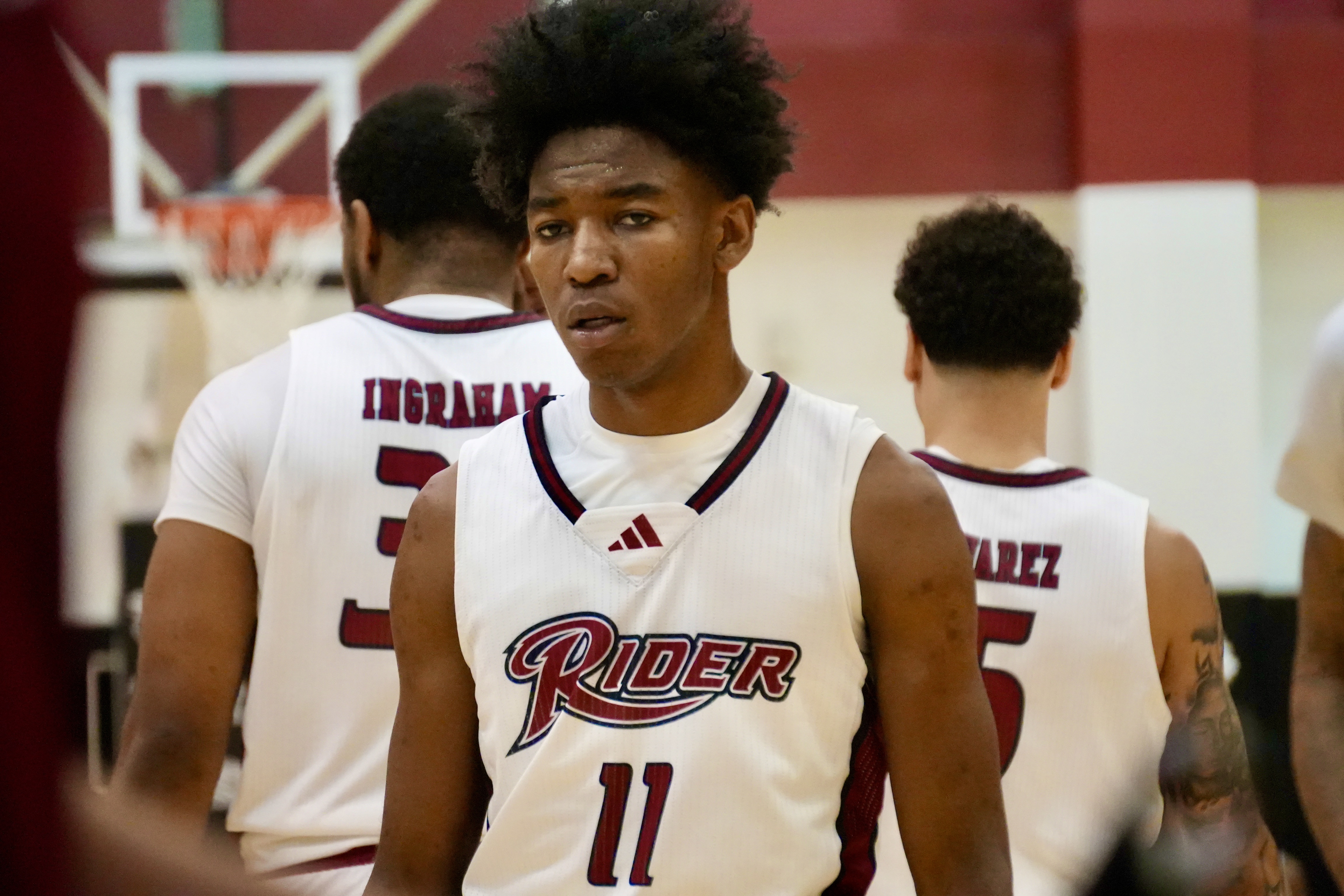
By the end of summer and just before the onset of his senior year, Burton’s unconventional choices were beginning to pay off. He had developed into a polished floor general, capable of running an offense and playing with poise under pressure. The work done by East Coast Power’s staff, coupled with Burton’s own maturity and growth, attracted interest from a host of mid-major programs. And when Rider University came calling, Burton and Minnis knew it was the right fit.
The Commitment
Burton’s decision to commit to Rider before his senior season was yet another departure from the norm. Many players in his position, with multiple mid-major offers, might have held out, hoping for offers from schools in higher-profile conferences like the Atlantic 10, the American Athletic or even the Big East. But Burton trusted his instincts and leaned into a philosophy that Minnis instilled in him and served him well: choose the place that truly wants—and needs—you.
These South Philly Muthafuckas truly blocked out all the noise…
Rider offered Burton not just a scholarship but a clear vision for his role within the program. Head Coach Kevin Baggett made it clear that Burton wasn’t just a recruit; he was a cornerstone for the team’s future. Burton appreciated the brutal honesty of Rider Assistant Coaches Geoff Arnold and Dino Presley. These guys are incapable of sugarcoating anything related to basketball. Minnis, ever the realist, tempered expectations but remained confident. Before the start of Burton’s freshman campaign, Minnis predicted, “He’s not gonna be ready to start the first game,” Minnis said, “but he’ll be starting by the time they begin playing league games.”

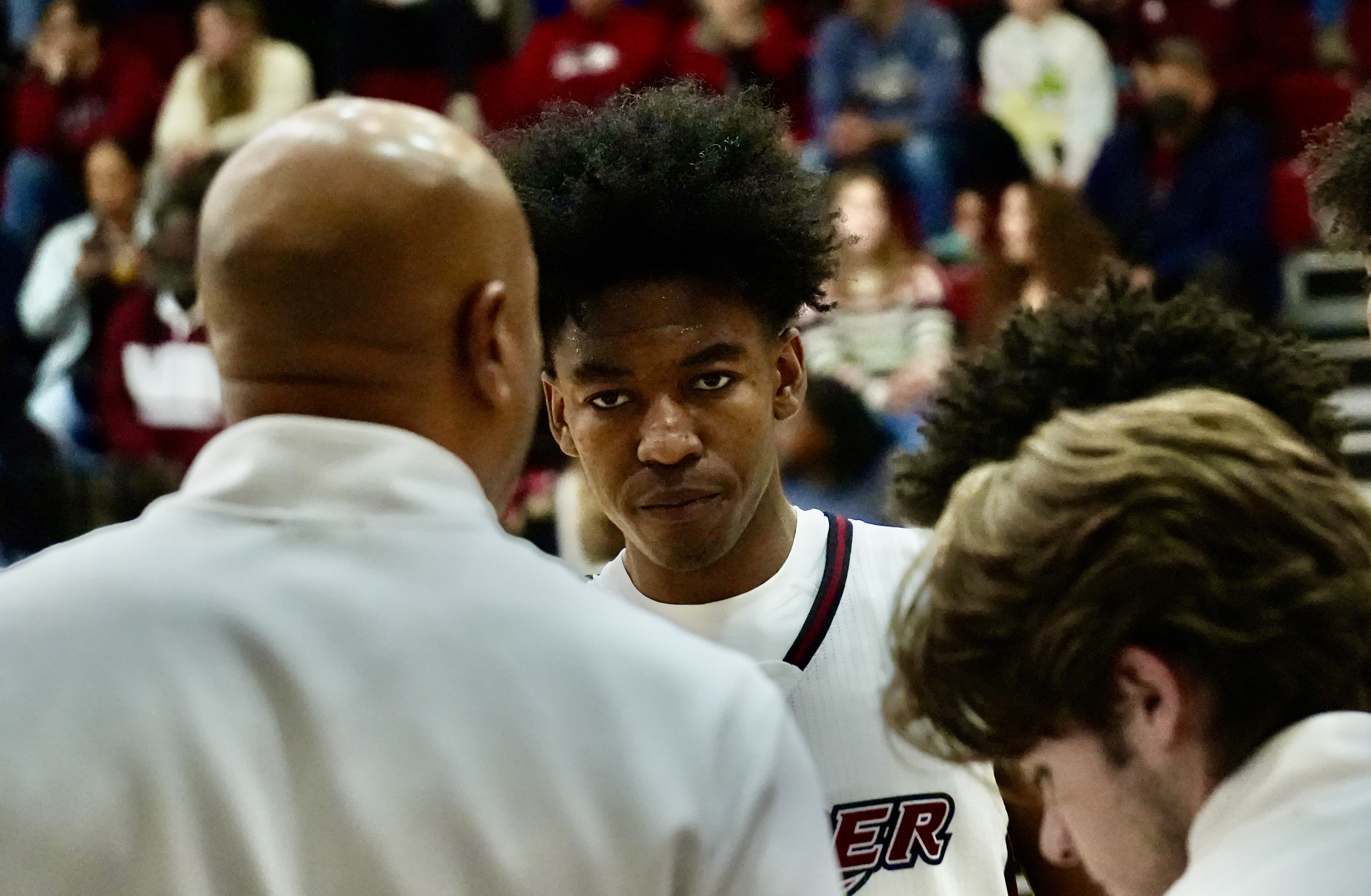
Tonight… True to Minnis’s prediction, Burton made his first collegiate start in just his 10th college, and 2nd MAAC league, game. The man knows his protege… His performance thus far suggests he will be a fixture in Rider’s lineup for years to come—a testament to the power of patient, deliberate choices in a world often obsessed with instant gratification.
The relationship between Burton and Minnis has been central to this journey. Minnis, a self-described “basketball lifer” with a quiet wisdom honed through decades in the game, has been the steady hand guiding Burton through a labyrinth of pressures and expectations. Minnis’s experiences navigating the high school and college recruiting processes for his own son, Biggie Minnis (Texas Tech, Rhode Island and Wright State), and stepson, Jamir Hanner (Marshall and Buffalo), gave him the perspective needed to help Burton avoid common pitfalls.
At every juncture, the two have chosen what Frost might call “the road less traveled.” And as Frost so poignantly concluded, “that has made all the difference.” For Burton, the difference isn’t just about where he is today but the foundation he has built for the future—a foundation rooted in authenticity, hard work, and a refusal to conform for conformity’s sake.
In an era where basketball decisions are often dictated by trends and peer pressure, Flash Burton and Shon Minnis have shown that there is another way. Their story is not just a basketball story; it’s a story of trust, vision, and the courage to forge one’s own path. And in doing so, they remind us that the road less traveled, though fraught with challenges, often leads to the most rewarding destinations.
Some real South Philly Shit… #Respeck
 The Black Cager