PHILADELPHIA, PA: The journey from high school basketball to high major college hoops is a steep climb fraught with challenges that fans, particularly those entrenched in the local Philadelphia and Camden basketball communities, often fail to understand. The expectations placed on young players—mere teenagers stepping onto the brightest of stages—are not only unreasonable but often cruelly uninformed.
Plainly stated, niggas have no fuckin idea what they are talkin’ bout…
Freshmen entering high major programs are thrust into hypercompetitive environments where success is measured against near-impossible standards. They compete with older, stronger, and more experienced upperclassmen who have little incentive to step aside for an 18-year-old prodigy. The results, while often admirable in context, are ruthlessly critiqued.
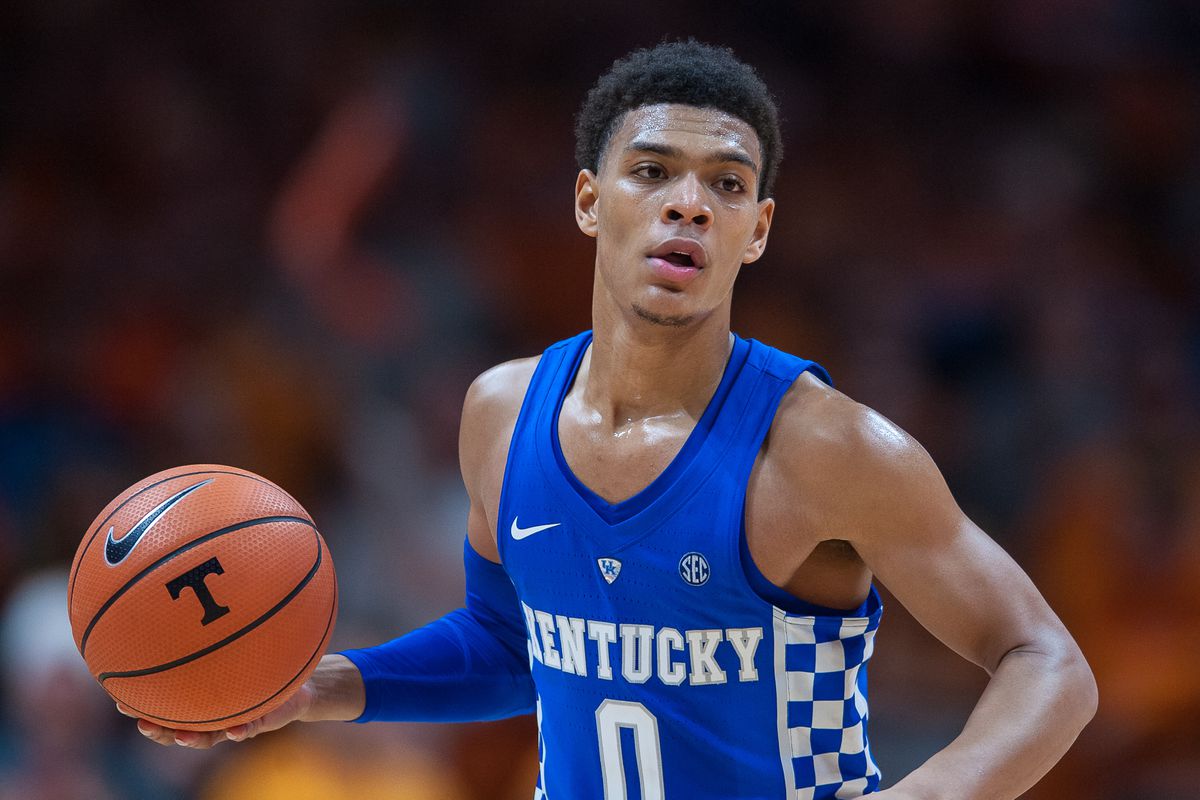
Quade Green’s freshman season at Kentucky in 2017-2018 is a case study in this phenomenon. A five-star recruit and McDonald’s All-American, Green arrived in Lexington with immense fanfare. Kentucky, coached by the legendary John Calipari, was a perennial powerhouse, and Green joined a roster featuring seven future NBA players. As a freshman, Green averaged 9.3 points, 2.7 assists, and shot a respectable 37.6% from beyond the arc—all while competing in the cutthroat SEC conference. By any reasonable measure, this was highly successful freshman campaign in the mighty SEC conference. Kentucky went 26-11 that year and finished the year ranked 18th in the nation in the final Associated Press poll. Yet, in his hometown of Philadelphia, his performance was derided by armchair critics who declared his choice to attend Kentucky a mistake.
These critiques, fueled by local pride and a lack of understanding about the difficulty of transitioning to college basketball, are misguided. A player like Green, who carved out a significant role on one of the nation’s top teams as a freshman, was achieving success against the odds. But those odds are rarely considered by fans who see only carefully curated highlight reels and box scores.

Plainly stated, niggas have no fuckin idea what they are talkin’ bout…
The story is repeating itself with Jalil Bethea, a heralded Philadelphia recruit now at Miami. Through four games, Bethea has shown flashes of brilliance, averaging 7.8 points in just 12.3 minutes per game. Yet the grumblings have already started. Some question why a player of his talent isn’t starting or dominating. What they fail to grasp is the reality of high major basketball: Bethea is competing with veterans like Nijel Pack (14.7 points, 6.7 assists), a fifth-year senior, and Jalen Blackmon (14.0 points, 1.7 steals), another seasoned guard. These are players with years of college experience who know the system and the physical and mental demands of the game.

In this context, the transition from high school to college basketball is more than a step up—it is a leap. Freshmen, even the most talented, are adjusting to faster-paced games, more complex schemes, and physically mature opponents. High school dominance against inferior competition like “Collingdale Catholic” or “Roast Pork Charter,” simply does not translate directly to the high major college level.
Additionally, high major basketball rosters are stocked with talent. Freshmen are not handed minutes; they earn them. Coaches at programs like Kentucky, Miami, and Duke are tasked not with developing individual players in isolation but with building cohesive units that can contend for national championships. This often means limiting the roles of freshmen while leaning on upperclassmen who can deliver consistent results.

The problem lies partly in how young players are marketed. Highlight tapes, social media buzz, and grassroots hype build unrealistic expectations. A player dropping 40 points in a high school game might dazzle fans, but the competition level is rarely considered. This leads to a false narrative that high school stars can seamlessly dominate at the collegiate level. When they don’t, fans often blame the player, the coach, or even the program, without acknowledging the broader context.
The consequences of these unreasonable expectations can be damaging. The pressure to live up to hype can erode a player’s confidence. The constant scrutiny can impact mental health, and the pervasive narrative that a player “chose the wrong school” can sow doubt and create tension within a team.
Muthafuckas need to shut the fuck up and let it play out…
High major basketball is not a fairytale; it’s a crucible. Upperclassmen who have spent years developing their skills and bodies do not defer to 18-year-olds, no matter how talented. Coaches prioritize winning over everything else, which often means favoring experience over potential.
For players like Green and Bethea, the freshman year is rarely about stardom—it’s about survival and growth. By the time these players become sophomores or juniors, they often evolve into key contributors, but that progression is ignored by fans who judge them prematurely.
If we are to fairly evaluate young players, we must adjust our expectations. Freshmen should not be seen as saviors but as students of the game, learning and adapting to an environment more challenging than most fans can imagine. Instead of demanding instant results, we should celebrate their resilience, their flashes of potential, and their determination to succeed in the face of daunting odds.
Quade Green’s journey shows that even a “successful” freshman season is not immune to misplaced criticism. Jalil Bethea’s story is still unfolding, but one hopes that he, like Green, has the fortitude to rise above the noise. Fans and critics alike must recognize the difficulty of the transition and the strength it takes to endure. Only then can we truly appreciate the young athletes who dare to take on the challenge of high major college basketball.
 The Black Cager