Exactly 20 years ago, Bruiser Flint was in his first year as Head Coach of the Drexel Dragons. Drexel had just made the jump from America East Conference (AEC) to the more competitive Colonial Athletic Conference (CAA). Flint’s first Drexel squad was led by Robert Battle and Tim Whitworth. Both from Philadelphia, Battle was a chiseled 6’8”, 230 low post defender extraordinarie. Whitworth was a smooth sharpshooting wing. Flint also brought some intriguing freshmen guards in with him. Jeremiah King from Paterson, NJ and Danny Hinds from Allentown were highly regarded Flint recruits and Phil Goss from Maryland decided to stick with Drexel even after Steve Seymour was let go and Flint was brought on board.
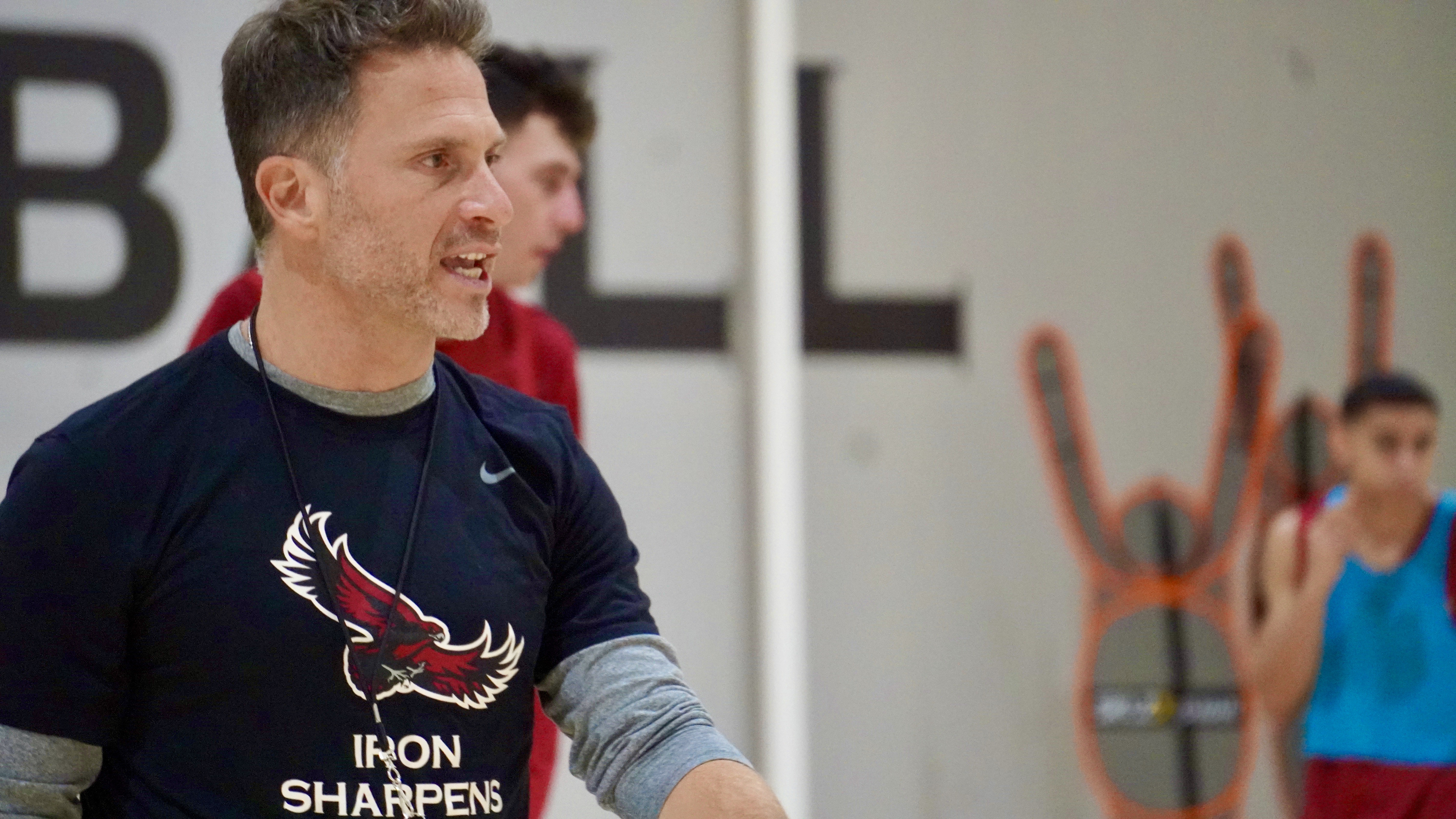
Billy Lange, St. Joseph’s Head Coach
The Dragons got off to a rocky start Flint’s first year. They were 2-5 heading into a game against St. Joseph’s on December 10, 2001. The Hawks were in the midst of one of the greatest runs in school history. The previous year, led by Jameer Nelson, a freshman POINT GOD from Chester and, Marvin O’Connor, a high scoring wing from South Philly that played his HS ball at Gratz, the Hawks established themselves as a force on the national basketball scene.
The Hawks were 5-1 heading into the matchup with the Dragons. Hawk Head Coach, Phil Martelli and Flint were good friends. They had gone head to head for the previous decade while Flint was a top assistant and subsequently, Head Coach at UMass. The two decided to keep the friendly, but oh so intense, rivalry going once Flint returned to Philadelphia.
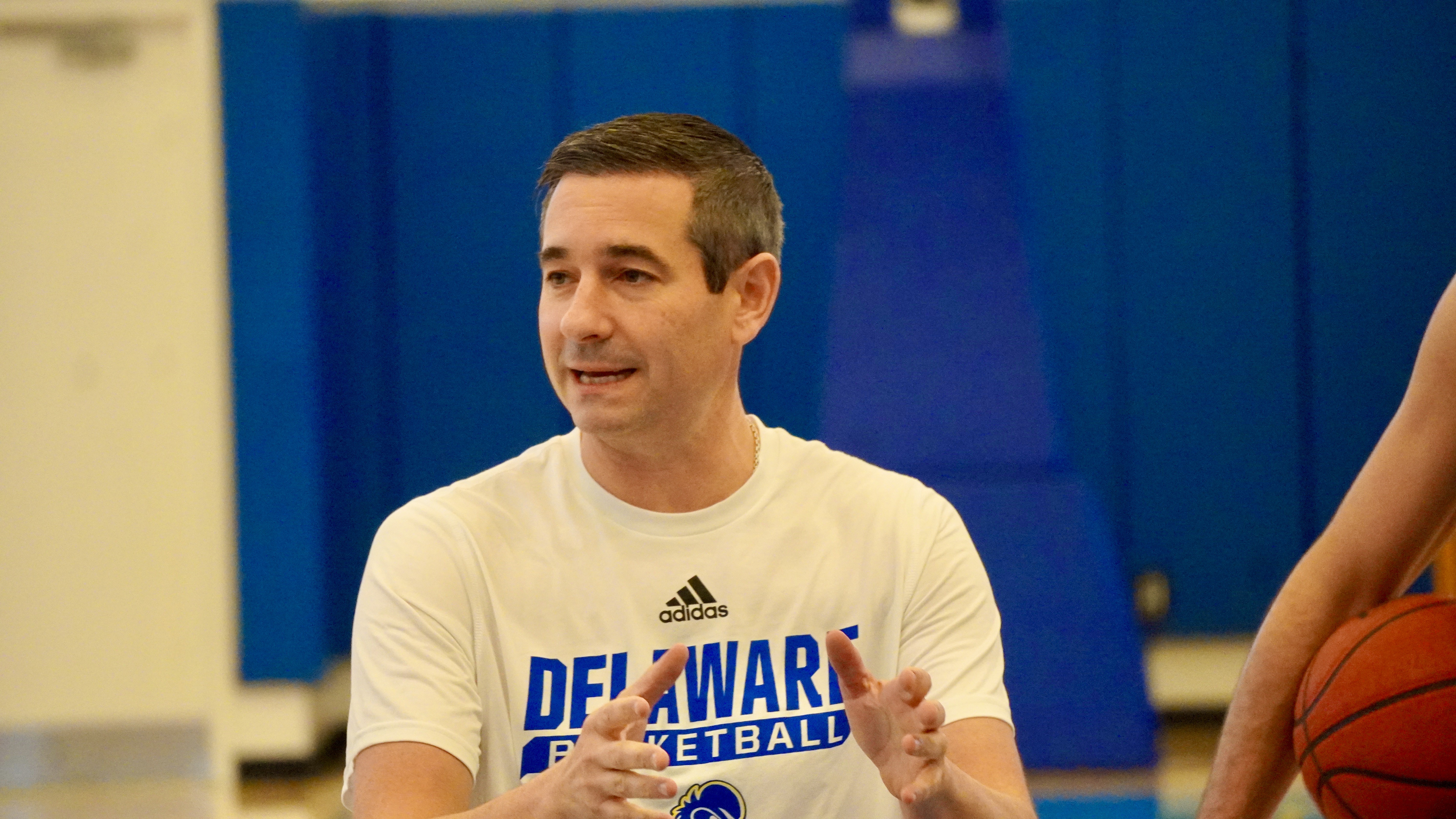
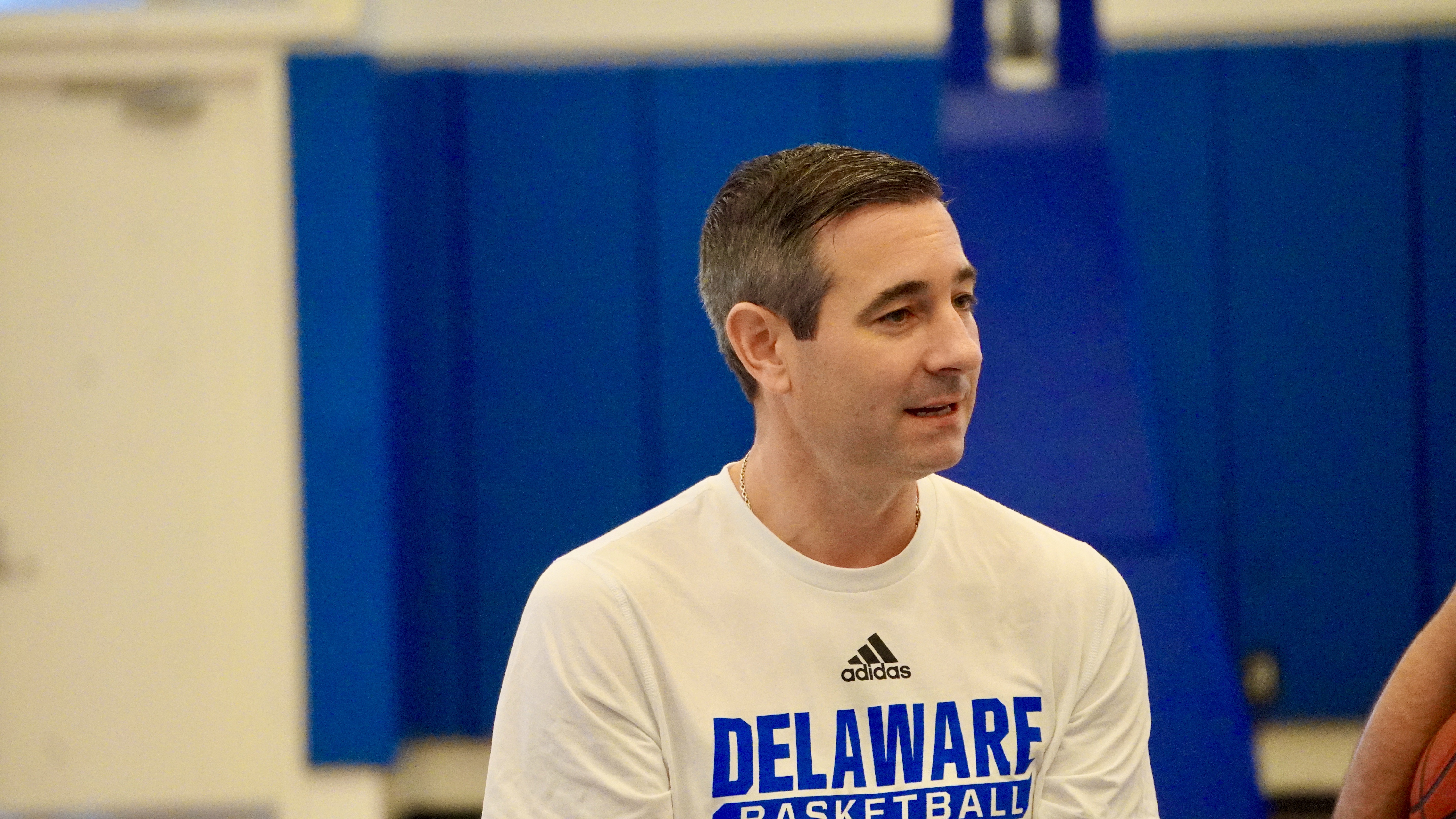
Martin Ingelsby, Delaware Head Coach
That Hawks squad was very talented. O’Connor, Nelson, Na’im Crenshaw, Bill Phillips, Delonte West, Tyrone Barley, Mike Farrelly and Phil Martelli, Jr. were all my youngins. So was Jamal Nichols who was redshirting that year. I spent a lot of time around those kids.
In an attempt to inject a little levity into a fiercely competitive situation, I was talking a tremendous amount of shit, as usual… I told Crenshaw, O’Connor and the St. Joseph’s assistants that Drexel was going to come into Hagan and beat the Hawks. I will never forget the response from the St. Joseph’s assistant Monte Ross.
Speaking very slowly and self-assuredly, Ross explained, “Del… there are levels to to this shit and Drexel is not on our level.”
He was right… St. Joseph’s proceeded to spank Drexel 85-54 at Hagan Arena. A middle of the pack CAA team was no match for a solid A10 squad.
They were, indeed, on different levels… That was then, this is now…
Zack Spiker, Drexel Head Coach
Fast forward 20 years, last night I attended a game between CAA preseason favorite Delaware and A10 contender La Salle. While at that game, my friend Howard Hudson had the Drexel vs St. Joseph’s game playing on his phone. We watched the clash of the local CAA/A10 teams in real time.
Plainly stated, there is no longer a measurable gap between the CAA and A10 programs in the Great Philadelphia area. Zack Spiker’s Dragons have defeated Billy Lange’s Hawks two years in row and they also played in the NCAA tournament last year. Since moving on from long-time Head Coach, Phil Martelli, St. Joseph’s is 13-42 (.236) overall and 5-25 (.167) in the A10. They are also struggling over at 20th and Olney. Over the course of the last 10 games La Salle has played, they are 2-8. Over that period, the Explorers have lost to Fordham, St. Joseph’s twice, Sacred Heart and Delaware.
What gives? What da fuck is going on?
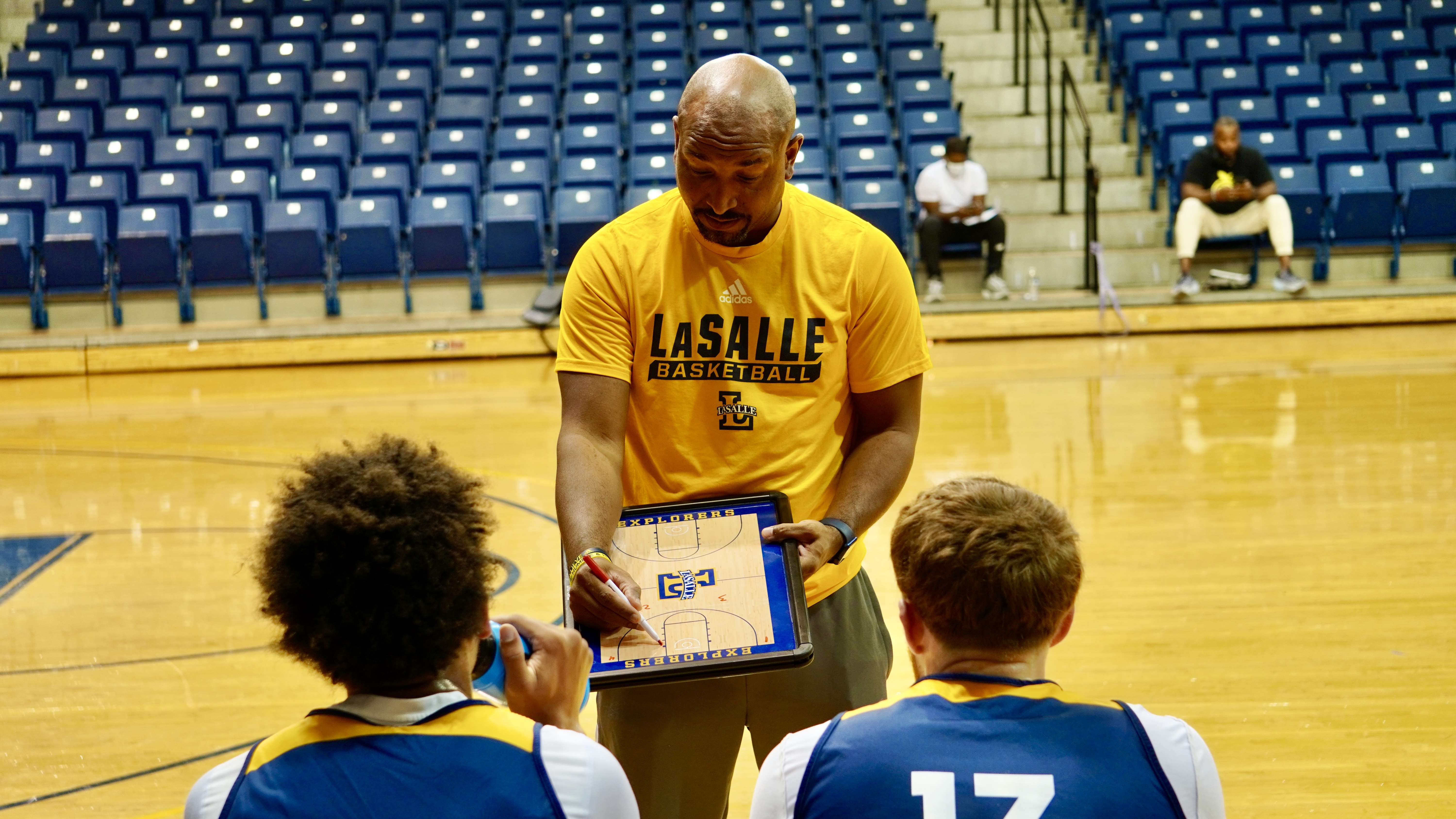
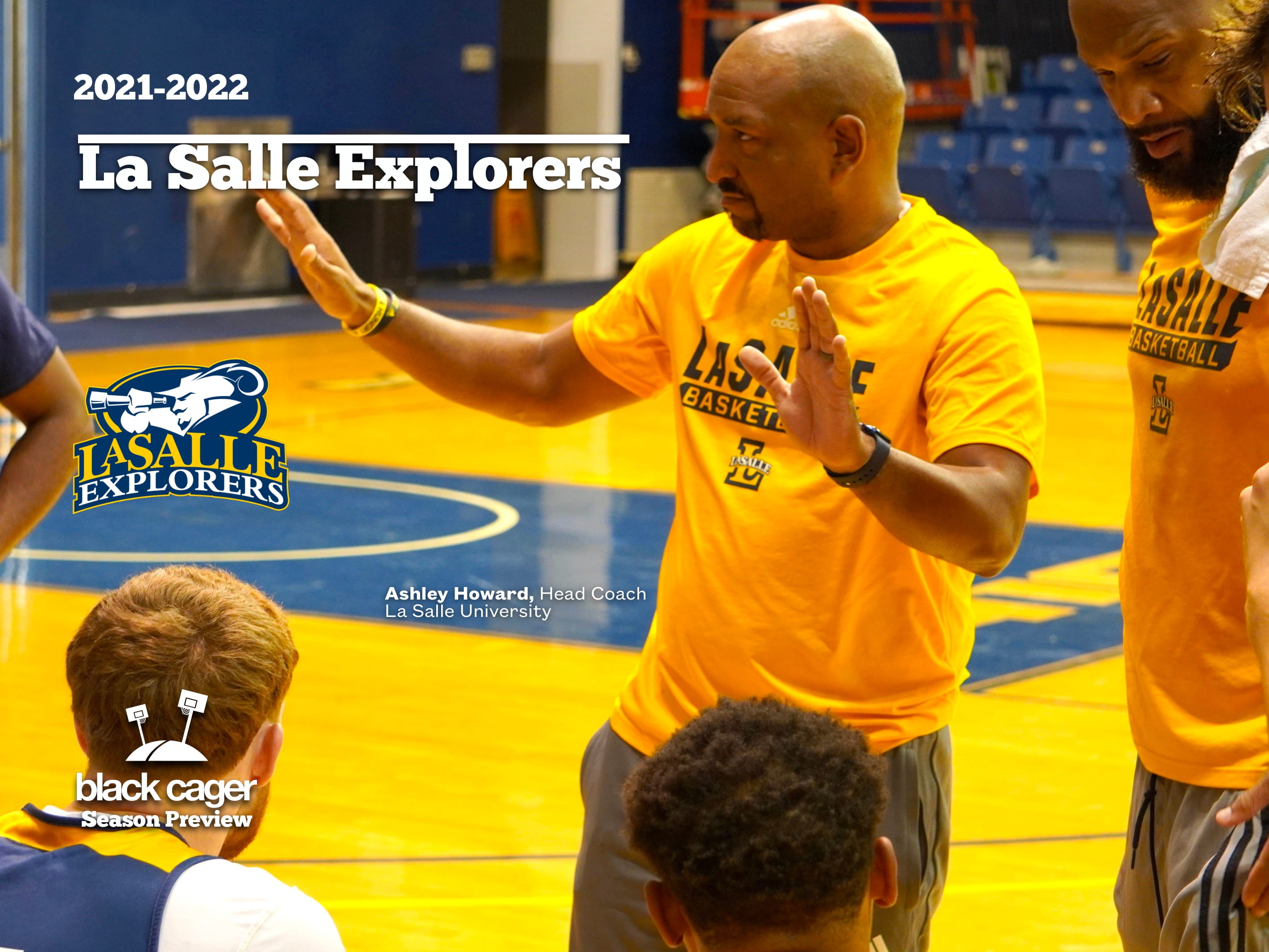
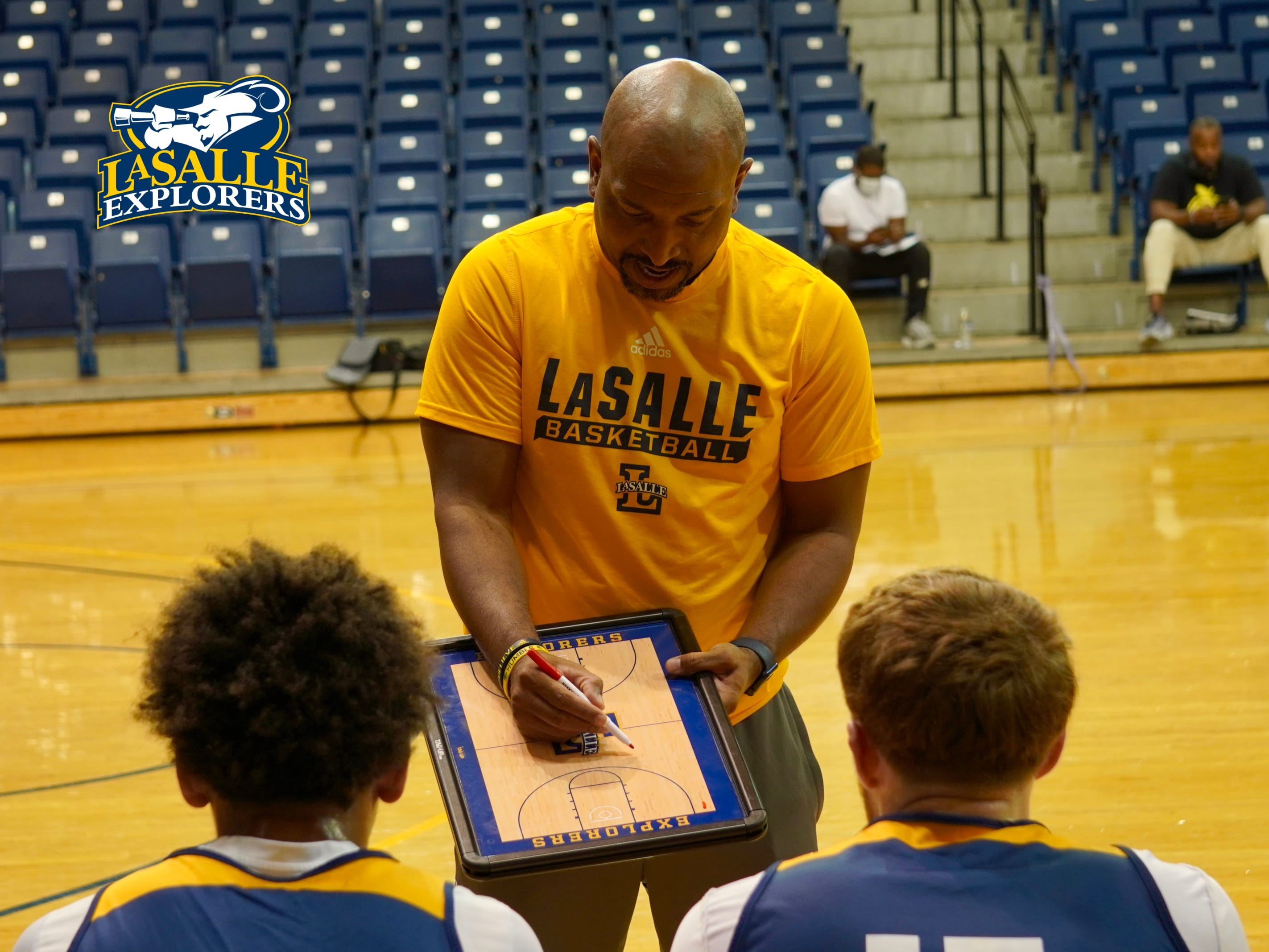
Ashley Howard, La Salle Head Coach
The explanatory variable usually cited when explaining sustained periods of mediocracy in college basketball is head coaching job performance. The big seat inevitably starts warming up. At both St. Joseph’s and La Salle, that horse has already escaped the confines of the barn. Many alums and season ticket holders of the local A10 programs have given up on Lange and Howard. Unfortunately, the nascent calls for replacing the head coaches will occupy the attention and energies of die-hard supporters while obfuscating deeper more problematic issues impacting the ability of these programs to compete at a high level.
In a piece written in March of 2020, titled “The Big 10’s (Successful) Attack on Philly Mid-Majors!”, I argued:
The alums, season ticket holders and athletic directors of the Philly mid-majors remain entrenched in the outdated paradigm. They have yet to fully comprehend the extent of the paradigm shift. Hence, they are striving maintain a “mid-major” status when the existence of the category itself is tenuous at best.
Collectively, they have pinned their hopes on a “Messiah Model” of intervention.
From their perspective of the “Messiah Model”, status as competitive mid-major program hinges on finding the right head coach. Operating within this model, the competitive struggles of the Philly mid-major programs on the court and on the recruiting trails are attributable to the “poor performance” of head coaches. Hence, Billy Lange replaces Phil Martelli… Ashley Howard replaces John Gianinni, Aaron McKie replaces Fran Dunphy and Zach Spiker replaces Bruiser Flint…
Just gotta get the right guy in there and we’ll be alright… So they think…
In this way, the Philly basketball community has developed a collective messiah complex. There has emerged a state of mind in which the alums, fans and athletic directors hold a belief that the “new coaches” – Lange, Howard, McKie and Spiker – are destined to become a program savior today or in the near future.
There is widespread failure to recognize the “new normal” in college basketball. College basketball fans in Philly, for the most part, haven’t accepted the fact that things are very different now. These days, there are the High Major (Power 5) programs and the there’s everyone else. The Big East teams and programs like Memphis, Gonzaga and Wichita State that pay coaches $3 million+ per year are included in the high major category. The mid-major category is rapidly shrinking.
The gap that Coach Ross referred to twenty years ago will soon disappear altogether. Pay attention to the boxscores, Wagner defeated VCU… Lipscomb whooped Dayton… We shouldn’t be surprised…
All across the country, shrewd coaches are trying to find 2 or 3 hungry 22-24 year old transfers and/or graduate students with some eligibility left. They can come in and play right away… The hope is that you can assemble a crew with something to prove that is willing to put the blunts down and focus on winning for 5 months. If so, you can make a run.
Today, Drexel and Delaware are better basketball programs than La Salle and St. Joseph’s. Them levels that used to exist don’t really mean shit these days.
Philly Guard – /Filē gärd/ – Noun A young man or woman from the Greater Philadelphia Region that plays a backcourt position in the game of basketball. Typically focused on the defensive end of the game and takes extreme pride in playing a physical and tough brand of basketball.
In recent years grassroots and scholastic basketball fans have been blessed to witness the development of some exceptional Philly Guards. Over the past decade, some really tough customers have come through the 215. Ja’Quan Newton (Neumann-Goretti/Miami), Samir Doughty (MCS/VCU/ Auburn), Shizz Alston (Haverford School/Temple), Tony Carr (Roman Catholic/Penn St), Quade Green (Neumann-Goretti/Kentucky/Washington), Stevie Jordan (Conwell-Egan/Rider), Ryan Daly (Carroll/Delaware/St. Joseph’s), Josh Sharkey (Carroll/Samford), Zane Martin (Neumann-Goretti/Towson/New Mexico/Towson), Sam Sessoms (Shipley/Binghamton/Penn State) and Fatts Russell (Imhotep/Rhode Island/Maryland) are some of the more prominent names that are usually mentioned when discussing top Philly Guards.
Somehow, someway… perhaps, the most Philly of all the recent guards tends to get overlooked.
Not today…
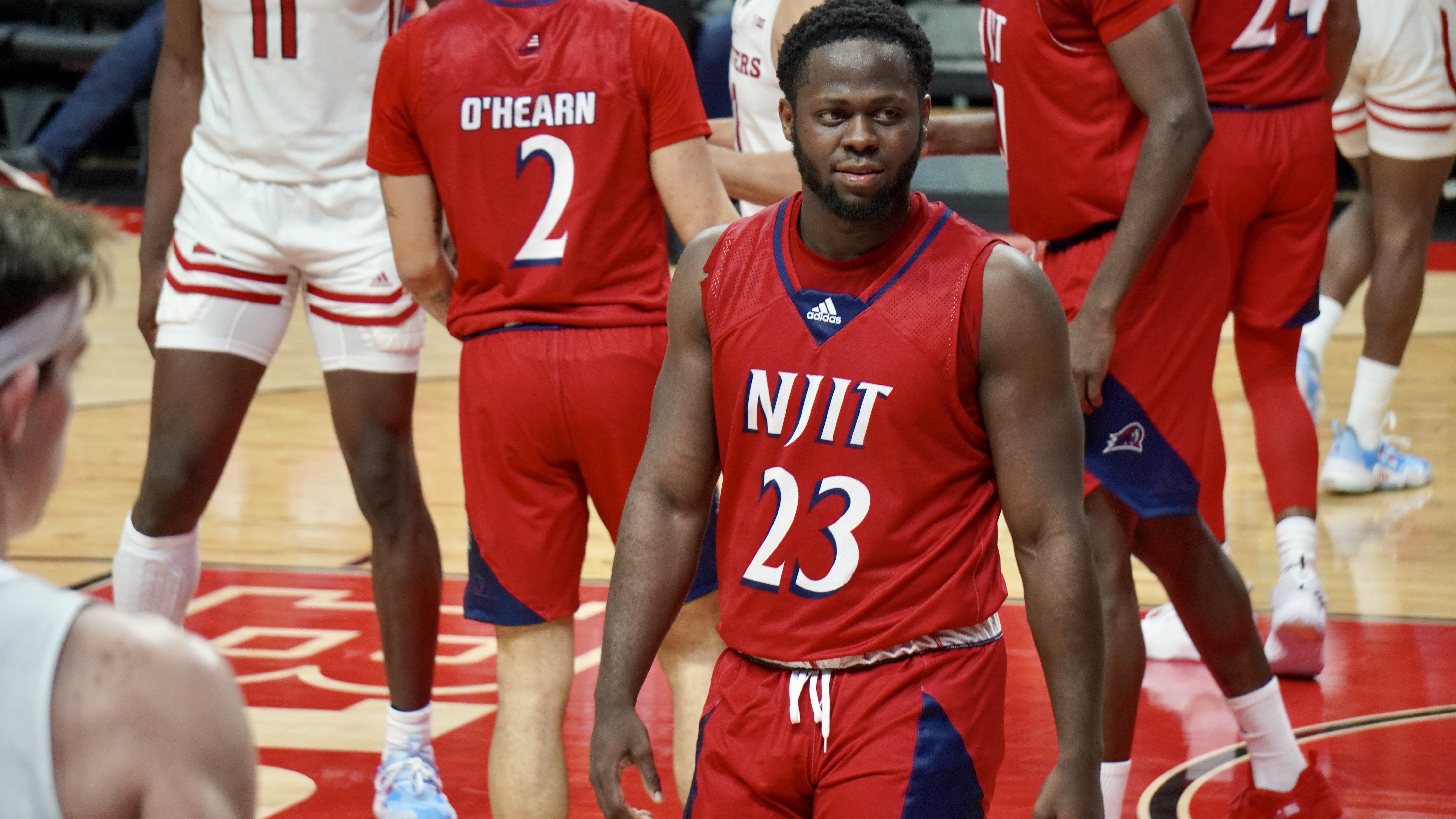
Antwaun “Booty” Butler
Antwaun “Booty” Butler is a quintessential Philly Guard. Standing just over 6 feet and built like and NFL strong safety, Butler is a measured and cerebral lead guard. He can get just about anywhere on the floor whenever he wants. His rebounding ability is an unusual attribute for a 6-0 guard. Butler takes pride in his performance on the defensive end of the court. He displays an ability to lock in and effective defend the top guards. While powerfully built, Butler has quick hands and feet and can be disruptive on the defensive end.
Butler has a well deserved reputation as a winner. As an underclassman, he was a captain at Del-Val Charter School and led his team to both a city championship and public league championship. In doing so, he handed National powerhouse Imhotep Charter their lone loss to a Public League opponent over a four year period. Butler was named All-City three times.
Del-Val closed following Butler’s junior year and he followed his coach Jason Harrigan to Cardinal O’Hara HS. Butler lead Cardinal O’Hara to the Philadelphia Catholic League quarterfinals as a senior. He played two seasons at Austin Peay, starting 37 games over his freshman and sophomore season. The winning continued as Butler helped lead the Governors to 22 wins in 2018-19 and 21 victories in 2019-20.
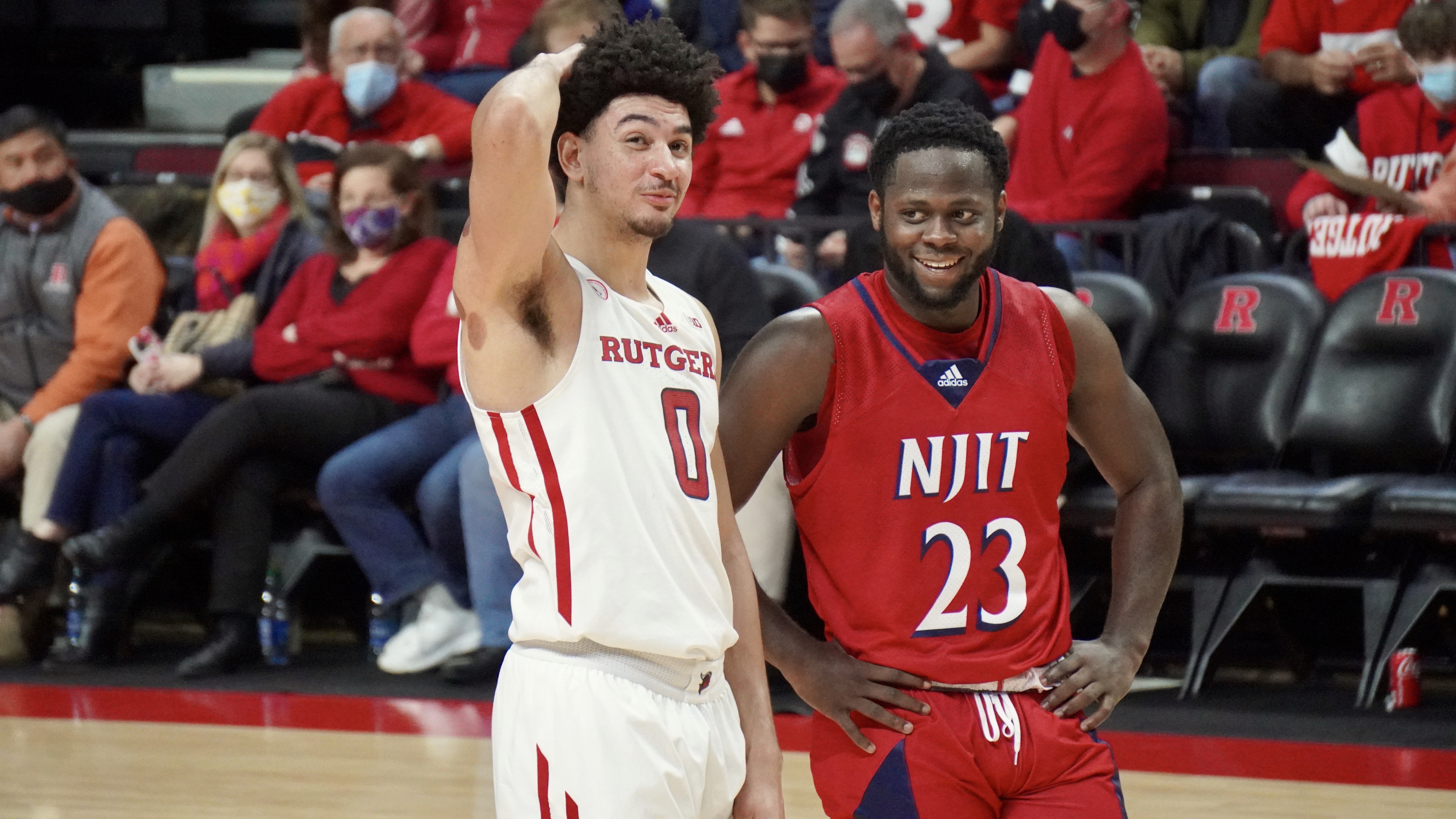
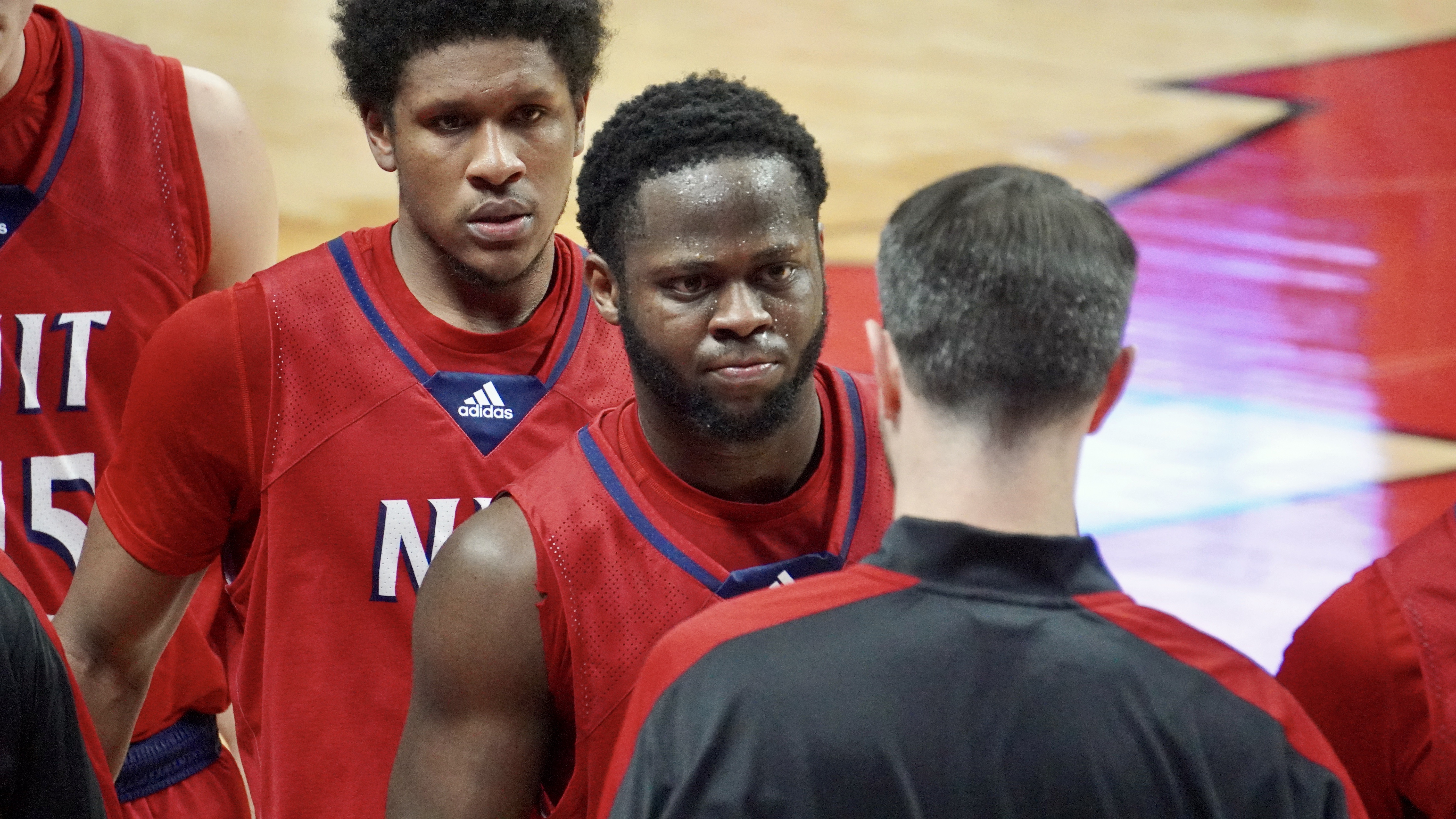
In his second season at NJIT, Butler led his squad into Jersey Mike’s Arena on the campus of Rutgers University to face the Scarlet Knights. This represents a perfect opportunity to catch a glimpse of a mature Butler against a highly regarded Big 10 opponent. How would Butler do against Geo Baker, Ron Harper and Paul Mulcahy? The knock against Butler has always been his shooting, especially his 3-ball… Has it improved?
At the 19:14 mark of the 1st half, less than a minute into the game, Butler splashes a 3-pointer from the top of the key. He displays a confident smirk… He knows he can make this shot… At the 16:44 mark he escapes his man and makes a layup. With Butler in control of the flow of the game, NJIT takes a 33-32 lead into the locker room at halftime.
NJIT surrendered the lead early in the second half. Then at the 15:33 mark of the second half, Butler made another 3-point shot to bring them within 1, 41-42. As the second half wore on, the size, athleticism and depth of the Scarlet Knights proved too much for NJIT. Rutgers would outscore NJIT 43-28 in the second half on the way to a 75-61 win before an enthusiastic sold-out crowd.
Butler didn’t get the win tonight. But he turned in a very Philly stat line… While playing 30 minutes, Butler shot 5-9 FG and 3-6 3FG finishing with 13 points, 3 rebounds, 2 assists and ZERO (0) turnovers. He battled all night with Rutgers star guard Geo Baker.
If you get a chance, make your way to an NJIT game. They have a real Philly Guard running point. You won’t be disappointed.
Camden, NJ, November 16, 2021: For a long time, the Atlantic 10 (A10) has been viewed as something akin a 6th high major basketball conference… A sort of “high” mid-major league that was a few notches above true mid-major leagues. This perception has been reinforced by the ability, in most years, of the A10 to get multiple at-large bids to the NCAA tournament. Dayton, VCU, Rhode Island and St. Bonaventure have been holding the A10 down at the national level. The Philly schools have not.
Andrew Carr, Delaware Forward and Kevin Anderson, Delaware Point Guard
Locally, the prestige of the A10 has been waning. The departure of the Temple Owls, eight years ago, was a significant blow that had to be absorbed. More recently and more importantly, La Salle and St. Joseph’s have not fielded very competitive teams.
The local CAA programs, on the other hand have done well. Zach Spiker’s Drexel Dragons won the CAA Championship last season and played in the NCAA tournament. This marked the Dragons first time in the dance in 25 years. Martin Ingelsby’s Delaware Blue Hens are the consensus pre-season favorite to win the CAA this year and make a return to the NCAA Tournament.
Martin Ingelsby, Delaware Head Coach
This is a perfect time for the Philly area CAA/A10 showdown.
Ashley Howard takes his Explorers into the Bob Carpenter Center for a 7:00 pm tip off Wednesday. At exactly the same time, Spiker’s Dragons will travel a couple of miles from 34th and Market to 54th and City Line to face Billy Lange’s Hawks. These CAA/A10 matchups are especially important this season. The CAA programs are no longer feeling the “little Bro” roles they have been relegated to for decades.
Ejike Obinna, St. Joseph’s Power Forward
The A10 schools are looking to reinforce the notion that their programs are on a “higher level” than the CAA upstarts. I’m not so sure that is the case. Delaware and Drexel can definitely play with La Salle and St. Joseph’s.
These exciting matchups will let us know if the gap between the programs still exists. Or, if as I suspect, these guys are on an equal and level playing field.
I’m 56… That’s old enough to remember when the Big 5 mattered. I miss those days. I long for their return.
The Big 5 should still be a big “thing” in Philadelphia.
Right now, it’s Villanova and the other four programs. I don’t like that… I really don’t… Temple, La Salle, St. Joseph’s and Penn need to do a lot better in every aspect.
We need the Big 5… In a city experiencing record levels of gun violence and murder, traditions like the Big 5 are important because they impact our lives in such a positive way. Properly marketed, the Big 5 could reach thousands of Philadelphia youth. Through the Big 5, youth can learn about the historical and cultural significance basketball in the City of Philadelphia.
Big 5 Streamers on the floor after 1st basket
Through Big 5 partnerships with the Philadelphia Black Basketball Hall of Fame, the proposed Philadelphia Basketball Hall of Fame, the Public League and the Catholic League the rituals, stories, beliefs, customs and routines that form the fabric of the Philadelphia basketball community can be shared and passed on. These basketball rituals, stories, are unique to Philadelphia. The interactions and rituals, both big and small create lasting memories. In today’s chaotic and rudderless society, such traditions become more important than the physical gifts that we give and receive.
Most importantly, the Big 5 is some really Philly shit.
There’s nothing like it anywhere else. Not in New York, not in Chicago, not in Los Angeles, not anywhere else. Only Philly has such a unique association of college basketball programs. Please note that the Big 5 is not a league or a conference, it’s a group of D1 programs who compete for a Philadelphia City D1 championship. From it’s founding in 1955 through the turn of the century, the Big 5 was a very big deal, especially among high school basketball players in the Greater Philadelphia region. Most area kids don’t realize or appreciate the fact that Big 5 schools represent some of most successful programs in the history of college basketball. Indeed, four of the five teams—Temple (5th), Penn (20th), Villanova (21st), and Saint Joseph’s (40th)—rank among the top 50 for all-time Division I basketball victories.
The kids don’t know any of this… The traditions and history of the Big 5 have not been effectively passed down to young hoopheads. The kids are in their phones. The Big 5 is not in their phones. The Big 5 is dead among the kids. This represents a lost opportunity for the Penn, Temple, La Salle and St. Joseph’s.
I remember Mike Brooks… I remember John Pinone… I remember Bryan Warrick… I remember Stevie Black… I remember Tony Price and Booney Salters…
The streamers after the first basket… The Palestra crowd split right down the middle…
The soft pretzels… The hot dogs… The popcorn…
I remember…
Extremely sore asses from those HARD benches…
That was then… The Big 5 mattered…
Today, the Big 5 has lost it’s luster. It’s hard to make the case that the Big 5 remains relevant in the minds of young Philly ballers. For them, there is no Big 5… There’s Villanova and the other 4 programs.
I don’t like that… It’s infinitely better for everyone involved when there is more parity among the programs.
The gap between Nova and the other programs is simply too large and has been sustained for far too long.
Penn, Temple, La Salle and St. Joe’s have to step up, get better and help make the Big 5 matter again. Each has experienced a coaching change in the last 5 years or so.
So… How’s that process going? Are they making headway? Some are doing better than others.
Penn Quakers
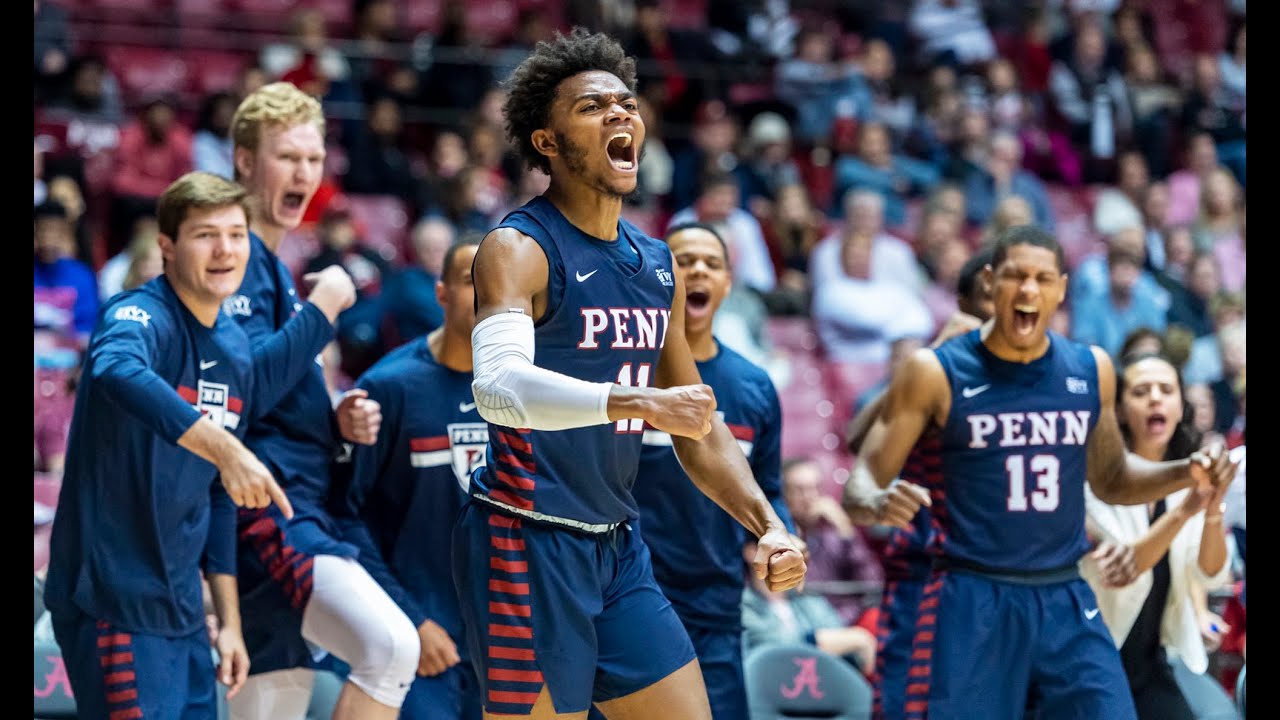
Penn basketball appears to be well on its way… Steve Donahue’s Quakers are the only Big 5 team to defeat Villanova since 2013. Penn actually won the Big 5. Since taking over, Donahue has compiled an overall record of 84-66, while going 38-32 in the Ivy League.
It must be noted that the Quakers made the 2018 NCAA Tournament after winning the 2018 Ivy league Tournament. As a 16th seed, they played the number 1 seed Kansas. Donahue’s Philly tough Quakers jumped out to a 21–11 lead with 8:01 left in the 1st half. Things were looking good… real good.
Right then and there, Penn was Penn again. The Big 5 champs were in the national mix. They had won the Ivy and they were up 10 on Kansas deep in the first half as a 16-seed.
Good Shit Coach Donahue!
Steve Donahue, Penn Head Coach
For that brief moment, the Big 5 mattered again. It wasn’t just Nova.
Shit… for a brief second or two, I thought about Tony Price leading Penn through the NCAA Tournament to face Magic Johnson and Michigan State in the 1979 Final Four.
However, there would be no Final Four and no fairy-tale ending this time… The mighty Jayhawks went on a 22–5 run to take a 33–26 lead into half-time. The Quakers would never lead again and were outscored 43–34 in the 2nd half, resulting in a 76-60 Kansas victory. But Penn was there… they were in the mix.
Lucas Monroe, Captain 2021-22 Penn Quakers
What should be expected of the Penn program?What’s a fair ask? The Quakers should compete for Ivy League championships every year and play in the post-season about 50% of the time. It is reasonable to expect the Quakers to make the NCAA tournament at least once every 3 or 4 years on average. In years, when the Ivy League title escapes them, the Quakers should play in the NIT.
For the most part, Coach Donahue and the Quakers are holding up their end of the Big 5 bargain. They are consistently challenging for supremacy in the Ivy League. Additionally, the Quakers have recruited local players extremely well. Sophomore guard, Lucas Monroe from Abington HS has been named team captain. Another talented local Quaker is Ed Holland, Jr. from Friends Central. The University of Pennsylvania has a very good basketball program in place.
Temple Owls
Aaron McKie, Temple Head Coach
Aaron McKie actually played in the Big 5 when the Big 5 truly mattered. A member of the Philadelphia Black Basketball HOF, the former Gratz standout was one of the greatest players in Temple Basketball history. McKie is in his third season as the head coach at his alma mater. Since assuming the helm, McKie has compiled an overall record of 20-29 (.408), while going 10-22 (.312) in the AAC. Temple finished the 2019-20 campaign with a 14-17 (6-12 in AAC) record with the season coming to a sudden halt due to the Covid-19 pandemic. The Owls struggled during the 2020-21 campaign, finishing with an 5-11 record, 4-10 in conference play.
Now in his third season as Head Coach, McKie has a roster full of kids he identified and recruited. A distinct team identity is beginning to emerge. McKie’s Owls play very hard defensively all game. The guards and wings are expected to apply constant on ball pressure. With mobile and athletic bigs in place, Temple rebounds and makes a consistent effort to protect the rim well. Jake Forrester, Sage Tolbert and Nick Jourdain are all in the 6’8” – 6’9” range. Each is a quick leaper, willing and ready to meet opponents at the rim. Offensively, there continue to be extended periods where the Owls struggle to make shots. Khalif Battle, the focal point of the Owl’s offensive attack is capable of making shots in bunches and has scored at a decent clip thus far. Hopefully, Battle will remain as productive once conference games begin. Freshman Zack Hicks has fought his way into the rotation and appears to be a dependable 6’9” marksman.
Zack Hicks, Temple Freshman
What should be expected of the Temple program? What’s a fair ask? The Owls should compete for AAC championships every year and play in the NCAA Tournament 3 out of every 4 years. The Owls should play in the NIT in any year they do not make the NCAA tournament. Temple should aspire to play in the post-season every year.
Temple is, arguably, a top 25 basketball program. Fifteen years ago, this assertion would have been taken as a given. Temple was Temple. Post-season appearances were a given. Fans and alums became restless and complained when the Owls ONLY made the NIT.
Right now… Temple ain’t that Temple… They are working their way back… Nonetheless, the McKie foundation has been laid. The men’s basketball program is Temple Tuff. The aforementioned bigs do not back down. Freshman guard Jahlil White has all the tools to be an elite wing defender. Jeremiah Williams and Tai Strickland try to get after opposing guards. Eventually, we will see what freshman guard Hysier Miller brings to the table.
For Temple alums and fans, the time has come for McKie and Temple to post a winning record and compete for a spot in the NCAA tournament.
La Salle Explorers
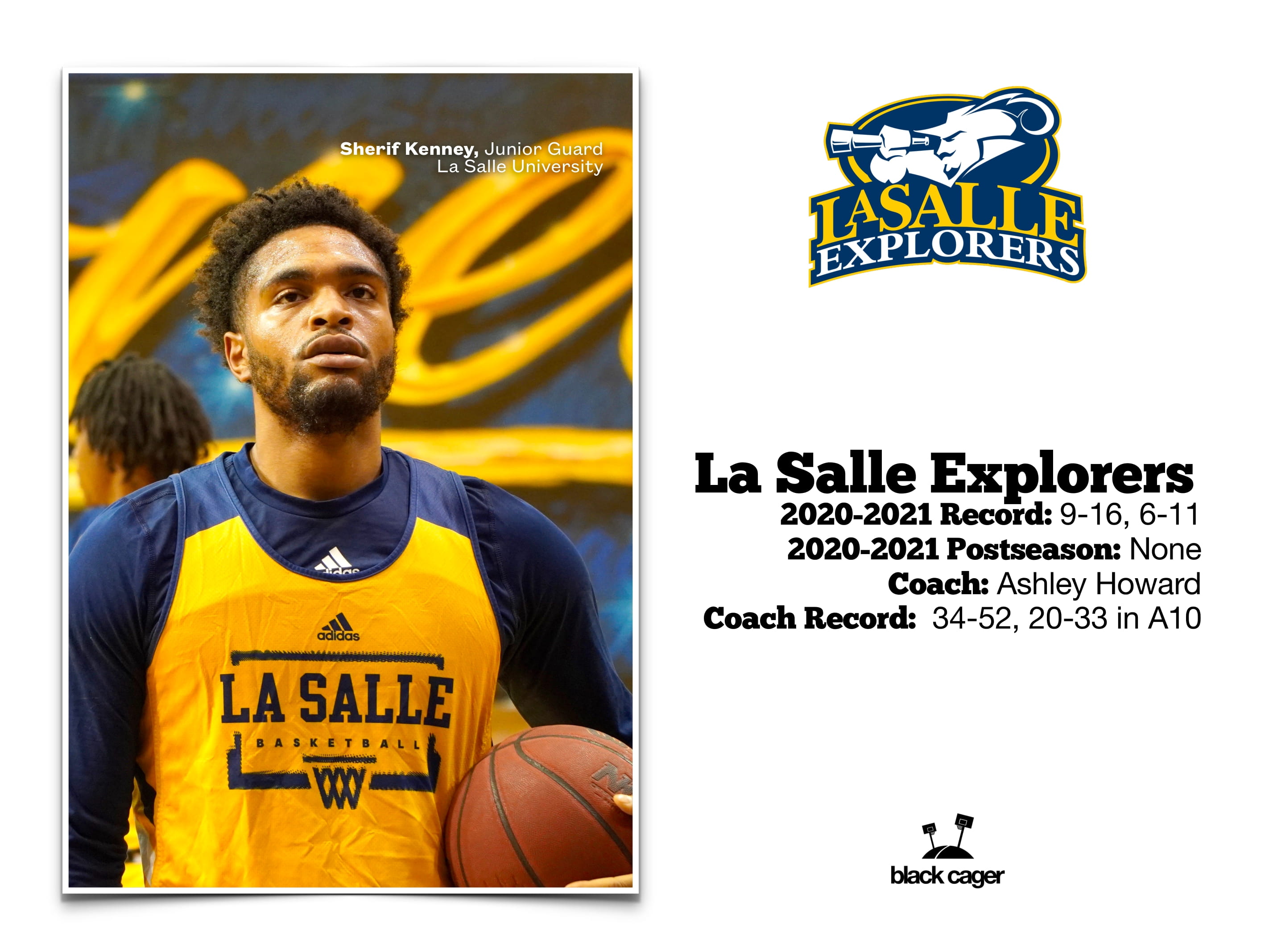
Ashley Howard is in his fourth year as Head Coach of the proud La Salle men’s basketball program. Since taking control, Howard has an overall record of 35-53 (.391), while going 20-33 (.377) in the Atlantic 10. After going 10-21, (8-10 in A10) in his first year, the Explorers improved to 15-15 in the 2019-2020 season. Last year, they regressed and went 9-16 overall and 6-11 in the A10.
Ashley Howard, La Salle Head Coach
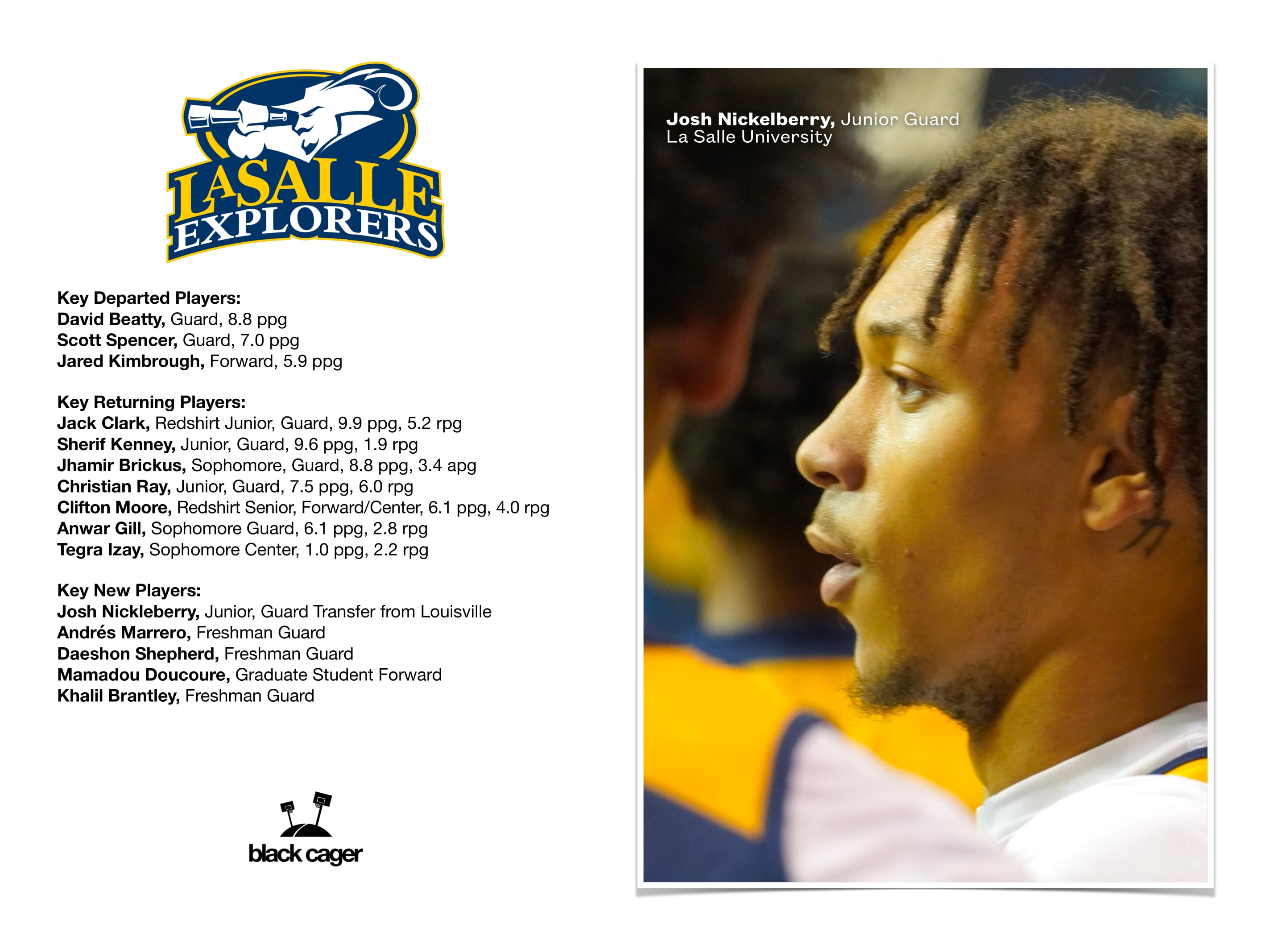
Howard has landed to some really good recruits. Jhamir “Jig” Brickus is one of the top young point guards in the A10. Last year he became the 10th Explorer to earn A-10 All-Rookie Team status. Brickus played in all 25 games, starting 22 while leading the team in assists (85), steals (45), and minutes played (27.3 per game). Brickus came to La Salle following a legendary scholastic career at Coatesville High School where he amassed 2,531 career points.
Louisville transfer Josh Nickelberry finished his high school career with 2,904 points, making him the second-leading all-time scorer in the history of North Carolina high school basketball. He averaged 26.9 points, 4.9 rebounds and 2.6 assists per game as a senior, leading his team to a 20-14 record and a runner-up position in the 1A NCISAA North Carolina state championship. Last season, Sherif Kenney was first player in La Salle history to be named A-10 Sixth Man of Year. Kenney saw action in 24 games, with 10 starts. He was second on the team in scoring (9.6 ppg), assists (41), and steals (25). A capable offensive player, he had 11 games in which he reached double figures.
Sherif Kenney, La Salle Guard
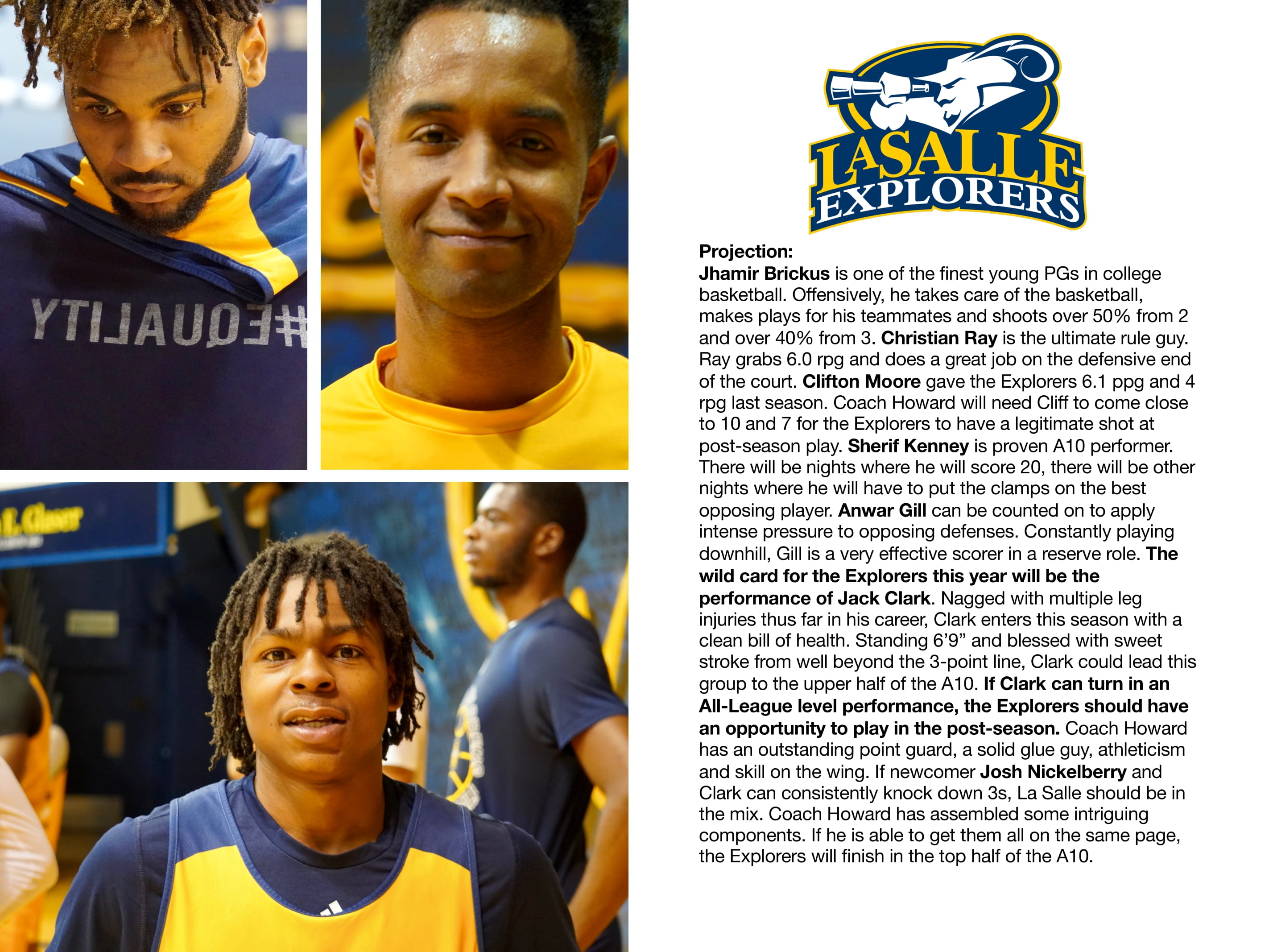
Big 10 transfers Clifton Moore (Indiana) and Mamadou Doucoure (Rutgers) hold the middle for Howard and the Explorers. Christian Ray is a reliable glue guy. The key to La Salle making a jump to the top half of the A10 will be the play of Jack Clark. A 6’9” wing, Clark possesses a sweet shooting stroke extending well beyond the college 3-point line. His length gives him an advantage and allows him to shoot over most wing defenders. He is also much quicker than most college bigs. Clark has suffered multiple serious lower body injuries, but he appears to be full strength as we start the 2021-22 campaign.
What should be expected of the La Salle program? The Explorers should expect to finish in the top 4 of the A10 every year. They should play in the NCAA tournament 1 out of every 4 or 5 years. Howard’s predecessor, John Giannini led the Explorers to one NCAA and one NIT appearance in 14 years. If Jack Clark performs at an All-A10 level, La Salle will be competitive during the A10 regulars season and a tough out in the A10 tournament. A strong showing and a post-season appearance would be timely as some in the La Salle fanbase are getting restless.
St. Joseph’s Hawks
Billy Lange is beginning his 3rd season as the head coach at St. Joseph’s. Since leaving the Philadelphia 76ers to run the Hawk program, Lange has an overall record of 13-41 (.241), while going 5-25 (.167) in the Atlantic 10. From 2004 through 2011, Lange was Head coach of Navy mens basketball. His overall record at Navy was 93-114 (.449) and 42-56 (.429) in the Patriot League. Lange’s overall Division 1 coaching record is 106-155 (.406).
Billy Lange, St. Joseph’s Head Coach
President Reed and Athletic Director Jill Bodensteiner determined the time had come to sever ties with long-time coach Phil Martelli. The ensuing breakup led to a mass exodus of players and a couple significant de-commitments. As a result, Lange walked into a battle with very few talented troops. He had to take his lumps while attempting to rebuild a roster decimated during the regime change. Working with limited tools, Lange installed an NBA influenced/derived/inspired offense that featured an inordinate amount of 3-point field goal attempts.
In Lange’s first year, 49.7% of St. Joseph’s field goal attempts were 3-pointers. In Lange’s 2nd year, he was nothing if not consistent in his approach. Again, 49.2% of Hawk field goal attempts were 3-pointers. When the Hawk players were hot, they were fun to watch and the strategy resulted in wins. Especially when Ryan Daly heated up… On Daly’s best days the Hawks were entertaining and very competitive.
However, after winning four of the last 5 games he played in a Hawk uniform, Daly is now in the NBA G-League. What approach will Lange take with this roster? How will these Hawks play? After 2 games, there’s a noticeable difference… I don’t know if it’s just an aberration or something the Hawks will sustain, but they are playing differently out of the gate. In these 2 early contests, a mere 39.5% of Hawk field goal attempts have been 3-pointers. That is way down from the past two years.
St. Joseph’s Senior Forward, Taylor Funk
Moreover, the guys that can shoot have actually been doing the shooting for St. Joseph’s. No longer engaged in sumo wrestling matches under the boards, Taylor Funk is 14-22 FG and 10-18 3FG. Cam Brown is 4-10 3FG and Jack Forrest is 2-5 3FG. Each of these guys have proven they can knock down 3-pointers at a respectable rate. Lange’s Hawks appear to be more selective beyond the arc this year.
However, the stats that jump out two games in are Ejike Obinna’s 11-20 FG, 21 rebs and 12 FTA. Obinna provides an athletic and active presence in the post for St. Joseph’s. Looks like Lange is gonna trade a few 3-point attempts for some old fashioned high percentage low post jump hooks and ally oops.
What should be expected of the St. Joseph’s program? What is a fair ask? The Hawks should play in the NCAA at least 1 out of every 4 years. The Hawks should play in the post-season 2 out of every 4 years. The Hawks should compete to be in the top 4 in the A10 every year. If Funk and Obinna remain healthy, they should be able combine with Jordan Hall to keep the Hawks in contention most nights this year.
Whether or not the Hawks can finish in the top half of the league will depend on how quickly the two rookie starters Kacper Klaczek and Erik Reynolds II can adjust to college basketball. Lange has a deep and experienced bench led by Cam Brown and Dahmir Bishop. If Lange can steer this bunch to a .500 record, all will be well on Hawk Hill.
It’s November and every college basketball program has high hopes. Penn, Temple, St. Joseph’s and La Salle expect to compete for spots near the top of the conference or win conference championships. Each has legitimate aspirations within their respective leagues.
Unfortunately, they can’t fuck with Nova. You know it… I know it… They know it… It’s not good for the Big 5. It’s not good for Philadelphia.
Older players are definitely in style right now… So much so, that high school prospects with legitimate D1 offers should seriously consider taking them before older college or JUCO transfers snatch ’em up… Freshmen currently on college rosters need to work hard in practice, lift weights, study diligently and wait for some of the older players to graduate and move on.
Scarcity is impacting college athletics in a big way. It has affected how college coaches allocate precious scholarship resources, recruit prospects and determine playing time. There are only 13 scholarships per team. There are only 40 minutes in each game, with five positions there are a total of 200 minutes available per game. These basic resource limits have not changed. What has changed is the make-up of the pool of qualified persons seeking those scholarships and minutes or playing time. Rule changes and special pandemic-related circumstances that would have been unfathomable just 3 or 4 years ago have fundamentally altered the college basketball landscape. The concept of scarcity is very useful as one attempts to understand how these changes have impacted college basketball recruitment.
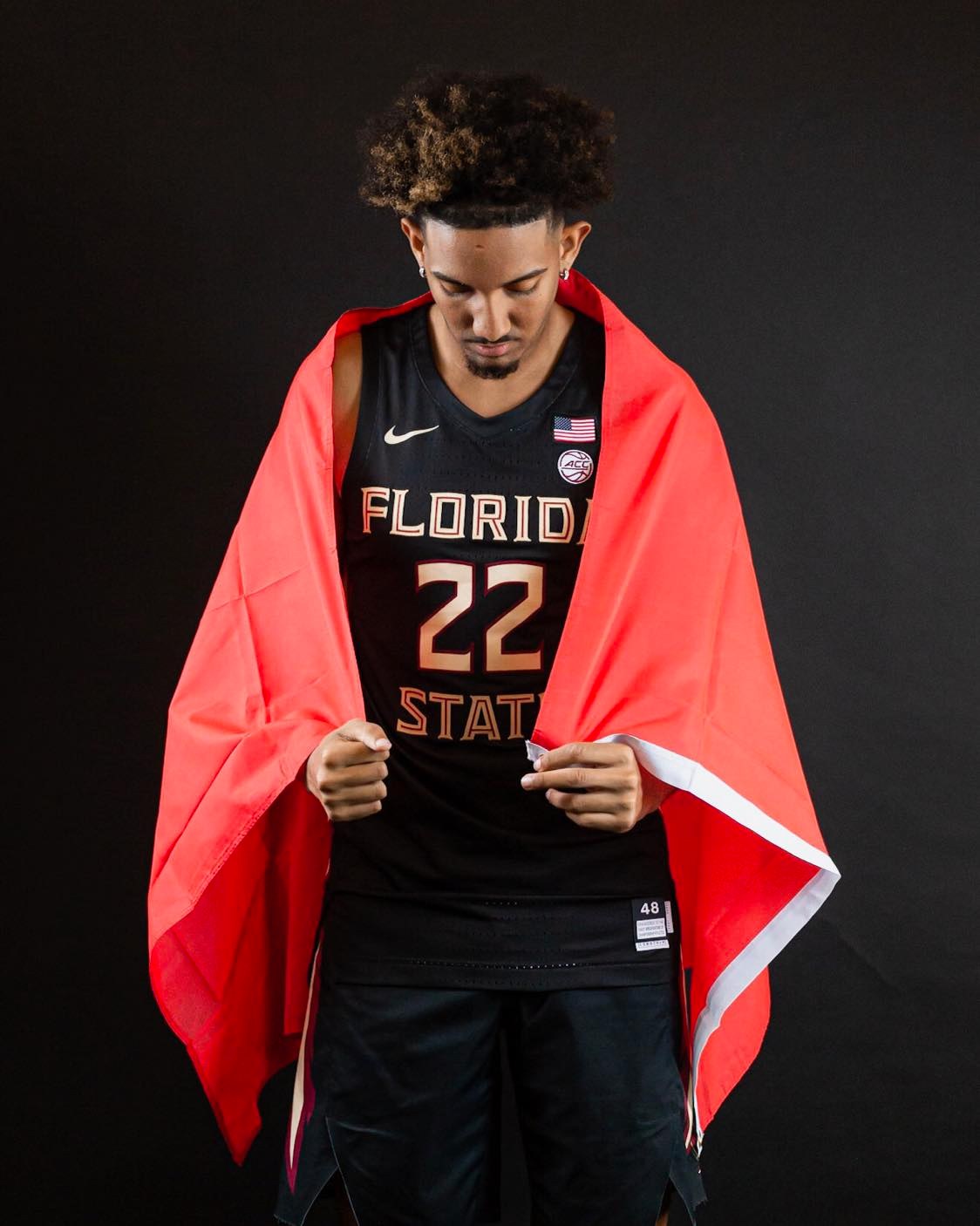
Jeremiah Bembry (Florida State commit) and Kobe Magee (Drexel commit)
Generally speaking, scarcity refers to the limited availability of resources that are typically available for use. The specific resources I am currently focused on are Division 1 men’s basketball scholarships and minutes of playing time for college freshmen. Due to NCAA rule changes and the COVID-19 pandemic, there currently exists a paucity of these resources available to 18-19 year old prospects. This paucity stands in stark relief to the theoretically infinite demand for these resources among parents and high school basketball players.
Everybody wants a D1 scholarship and all kids want to play in college games.
The conditions of scarcity have significantly intensified over the past 12-18 months. The decision by the NCAA to allow what is tantamount to pure “free agency” in college basketball with immediate eligibility has resulted in a tremendous uptick in the number of players in the transfer portal. There were over 1,500 players in the college basketball transfer portal last year, more than twice the number of players the previous season.
Let’s think this through…
The total number of scholarships has not changed. Division 1 Basketball teams can only give 13 full-ride scholarships. In total, there are 5,522 men’s basketball athletes in the division, but only 4,589 have full scholarships. Thirty-three percent of the scholarship basketball players were in the portal last year. These players are experienced at the college level. On average, they are more mature and physically stronger than HS players. Keep in mind, the NCAA has made transfers immediately available. Plainly stated, they are more desirable than high school prospects for many college coaches.
Ty Bevins, ’24 Gwynn Park HS (Georgetown and George Mason offers)
Several coaches have openly stated, “I’m not recruiting high school kids… I strictly looking for transfers.”
Then there is the FREE year the NCAA awarded to participating student-athletes last year. Remember, last year doesn’t count against eligibility.
As a result, Eric Dixon, who took a redshirt as a true freshman and played last year, is at 20 years of age the starting center for Villanova with 4 years of eligibility left. Seth Lundy (Penn State), Donta Scott (Maryland) and Isaiah Wong (Miami) each have 3 years of eligibility left.
If you were a college coach would you prefer to allocate a scholarship to those 20 year olds with 3 or 4 years of eligibility or an untested HS prospect?
Scarcity is also impacting freshman playing time. A few local freshman appear to have broken through and established themselves as rotation players. Of course, Jalen Duren (Montverde) is off to a magnificent beginning as a starting forward for Penny Hardaway’s Memphis program. Taquan Woodley (Camden) is the first big off the bench for Frank Martin and the South Carolina Gamecocks. Stevie Mitchell (Wilson) is a key component in Shaka Smart’s first lineup. Zach Hicks (Camden Catholic) has emerged as a dependable sniper for Aaron Mckie and the Temple Owls. Julian Reese (St. Frances) backs up the PF and C positions for Mark Turgeon and Maryland. Finally, Rahdir Hicks (Malvern Prep) appears to have solidified the backup PG spot at Towson.
Bernie Blunt, Quinnipiac Freshman PG (c), Bernard Blunt (l) and Sam Rines (r)
Far more rookies are struggling to find their way onto the court. Justice Williams (Montverde/LSU), Hysier Miller (Neumann-Goretti/Temple), Marcus Randolph (Wood/Richmond), Daeshon Shepherd (Wood/La Salle) and Christian Tomasco (Ryan/Hofstra) have not played in a game. Rahsool Diggins (Wood/UConn), Wooga Poplar (MCS/Miami), Jordan Longino (Germantown Academy/Villanova), Lynn Greer (IMG/Dayton), Bernie Blunt (Rocktop/Quinnipiac) and Jaylen Stinson (Wood/JMU) have played sparse and relatively meaningless minutes.
The current freshmen have run into a logjam while attempting get playing time.
There are a bunch of older, stronger, experienced and more mature players holding these youngins at bay. The abundance of transfers and 5th/6th year players on college rosters has resulted in a gap between available minutes of playing time and the theoretical needs freshman have for these resources.
Hakim Hart, Maryland Junior Guard
What should the freshman do? Should they fight or flee? Of course each case is unique, but it will be very interesting to watch how this plays out.
Will we witness more fight responses? When they fight, players commit to improving their skills and conditioning to compete for increased playing time. Players choosing to fight work on weaknesses and deficiencies while building upon strengths. Basically, they dedicate themselves to forcing the coach to play them. Eric Dixon (Villanova), Hakim Hart (Maryland) and AJ Hoggard (Michigan State) are outstanding examples of fighters. Each is now a crucial part of the team after struggling early on. The fight-flight response is a natural reaction to perceived threats or danger. After years of performing at a very high level in grassroots and scholastic basketball, college freshmen are often faced with their first real challenge within a team. No longer the “man” on a grassroots or scholastic squad, a freshman is likely to be the 8th, 9th or 10th man on a college team or worse.
Statistics tell us that approximately one-third will flee. It’s an understandable reaction. Due to the recent rule changes, the flight response can be enacted quickly. All it takes is a text or call to the head coach or athletic director. Some area kids have transferred after just one semester. It seems that some act quickly in an attempt to protect their reputation and ranking. Flight, under such circumstances, is a survival tactic.
Hopefully, most of the young men will choose to put their flag in the ground and rumble for playing time. Every day these freshman have an opportunity challenge the upperclassmen in practice. Make them work… This will help their team get better in the short run and it will help them be prepared when their opportunity inevitably comes around.
Forty-six years ago, in November 1975, 350,000 Moroccans advanced several kilometers into what was then the province of Spanish Sahara. This Green March was a strategic mass demonstration coordinated by the Moroccan government to force former Colonial ruler Spain to hand over the disputed territory to Morocco. Ultimately, Morocco gained control over most of the former Spanish Sahara, which it continues to hold.
I attended a ceremony commemorating the Green March on Sunday, November 7, 2021. Lasting a little over 4 hours, the ceremony was held at United Islamic Center (Ulu Cami Ana Sayfa Mosque) at 408 Knickerbocker Avenue in Paterson. The event was festive, jovial and highly informative. For those few hours, I was immersed into Morrocan culture. Arabic was the only language spoken throughout the ceremony. I could not understand a single word. Fortunately, I had my Moroccan youngin with me.
Marco Morcos (l), Alaa Eddine Boutayeb (c) and Mr. Abdelkader El Jamoussi (r)
Unable to understand a single word spoken, I was, nonetheless, able to fully able to comprehend the level of support that the Consulate General gives with selflessness and diligence to all members of the Moroccan community in the United States of America. Mr. Abdelkader El Jamoussi, The Consul General of Morocco in New York ensured that Boutayeb was among proud Moroccans for his commitment announcement.
Alaa Eddine Boutayeb is a bright and thoughtful young Moroccan man. He speaks four languages fluently. I leaned on him heavily throughout the day. He helped me understand the importance of the Green March. He told me what I was eating. I didn’t need him to translate the warmth displayed for their American guest. I truly had a wonderful time even though I could not understand a single word. [Note to self: You need to learn another language or two.]
Now… I was there for a very specific reason… My youngin was there to make a huge announcement.
Boutayeb committed to play basketball at Florida State University. It should be noted that, in addition to intelligence, he stands over 7’2” and possesses a feathery soft jump shot extending well beyond the college 3 point line. Youngfella is an accomplished international basketball player. He is a traditional highly skilled European big.
Alaa Eddine Boutayeb, Florida State commit
At Florida State, Boutayeb will get a lot of offensive possessions as a spot up shooter and post up option. With his European background, he will also be effective in pick and rolls and isolations. However, he shines as a jump shooter. He has a great stroke that is almost impossible for most players to block due to his length and high release point. Boutayeb can knock down the three at a good clip and hit fade-aways from 15-18 feet. Good ball handler for his size. Capable of driving off the dribble with left hand. Can take the ball all the way to the rim or dominate the midrange game. Good in the post as well. Uses a nice combination of fakes and solid footwork to get open looks underneath. He is good passer for his height. Boutayeb is a very well rounded offensive player.
Boutayeb had planned on playing prep basketball this year with Marco Morcos and the newly formed Dreamchasers Preparatory Academy. But, as I noted earlier, Alaa Eddine is a very bright and thoughtful young man. Morcos was able to connect him with Florida State. While he played with Dreamchasers Prep in a couple fall events, he wisely decided to shut it down once he made his college selection. Boutayeb considered a lot of high major programs. He really took his time and weighed his options before identifying and committing to the basketball program, arguably, best suited to help him develop.
Alaa Eddine Boutayeb, Florida State commit
Florida State Head Coach, Leonard Hamilton has extensive experience coaching and developing towering young basketball players from Africa and Eastern Europe… Undeniably, more than anyone at the college level. That experience weighed heavily in Alaa Eddine’s decision-making process. He knows that Coach Hamilton makes effective use of skilled 7-footers.
Over the past decade Florida State has boasted nine basketball giants. Six of the seven-footers were from abroad: Nigeria, the Slovak Republic, Chad, Poland, Senegal, and Serbia. The other two bigs hailed from Pennsylvania, Florida and Illinois.
This year FSU has 7’4” Naheem McLeod a junior from Philadelphia, 7-2 Tanor Ngom a senior from Dakar Senegal, and 7’0” Quincy Ballard a sophomore from Syracuse. It is conceivable that Boutayeb could see time at the stretch 4 position alongside McLeod or one of the other centers.
The Dean of Black Coaches, Leonard Hamilton, really impressed the young African during the recruiting process and especially on his official visit. This is not suprising, considering the fact that Hamilton has been at this for 33 years. His teams have qualified for 12 NCAA Tournaments and 11 NITs, highlighted by appearances in the NCAA Tournament’s Elite Eight (2018) and Sweet 16 (2011, 2019, 2021) with Florida State, as well as a Sweet 16 appearance with Miami (2000).
My young Moroccan friend has decided to play for Hamilton and Florida State. Told you… That boy is smart!
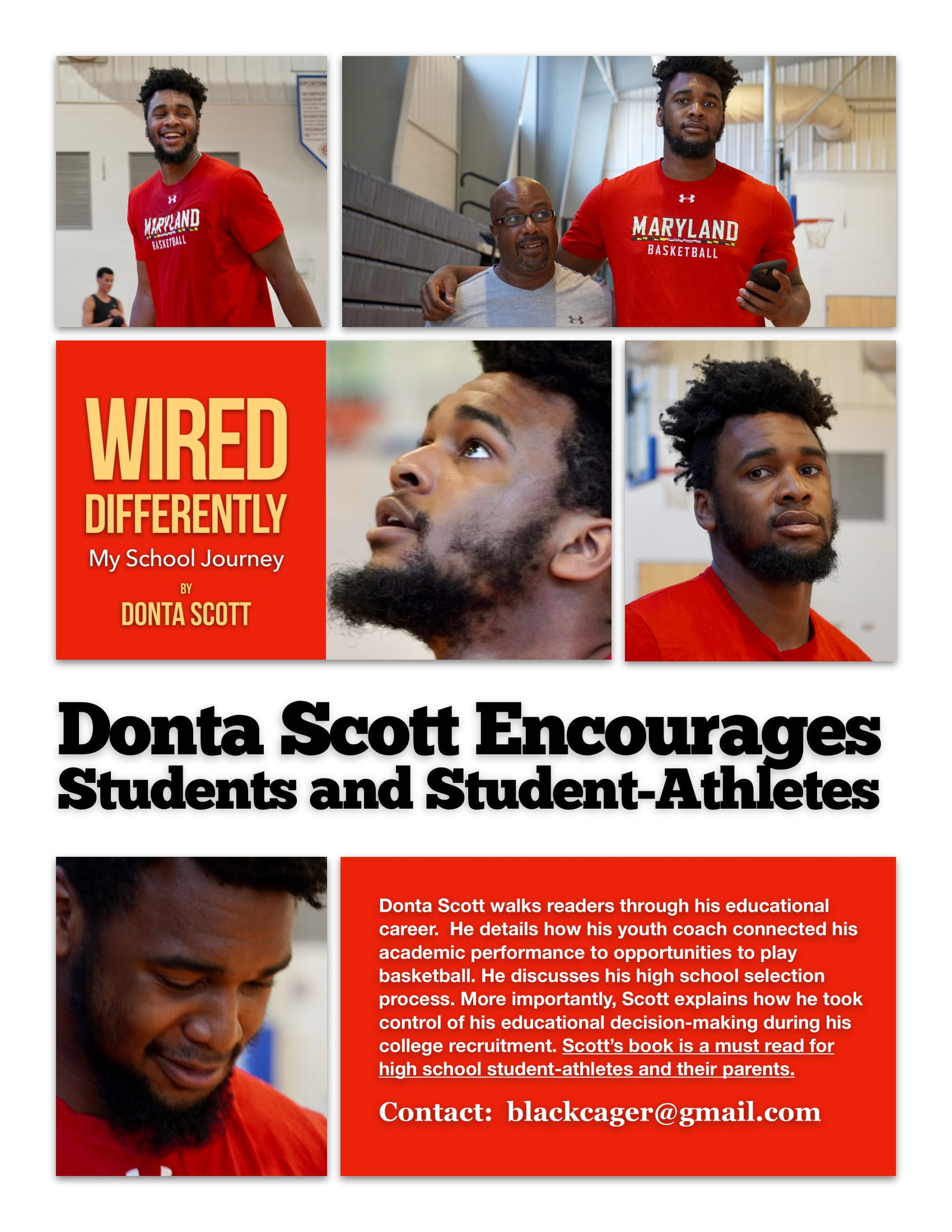
How can struggling students attain and maintain a solid level of academic performance? WIRED DIFFERENTLY: My School Journey is a valuable resource that “helps parents and students understand and support their children’s learning issues and behaviors by providing concrete strategies to help children reach their full potential,” according to Dr. Abby Baker a renowned Philadelphia-based psychologist and assessment expert. According to the National Assessment of Educational Progress (NAEP), a sector of the U.S. Department of Education, 84 percent of Black students lack proficiency in mathematics and 85 percent of Black students lack proficiency in reading skills. How do we begin to improve the academic performance of these youth?
This book helps students, parents and professionals work together to overcome the stigma associated with “Learning Differently.” University of Maryland star basketball player Donta Scott draws upon his personal experiences to cover special education related topics. He provides clear, sound and practical advice for parents seeking guidance.
Most importantly, Scott emphasizes the importance of fighting for educational help. He provides a personal roadmap for young Black boys and other youth trying to achieve a healthy balance between accomplishing academic goals and meeting social and emotional needs.
“I’ve been doing this so long, there have been so many great stories,” said Maryland head coach Mark Turgeon. “But this is one of the all-time great stories. Where he is now, and hopefully where he can end up.”
Camden, NJ – October 28, 2021 – Over the past 30 years or so, I’ve worked closely with hundreds of young people. Although I’ve worked with several young women and a few white kids as well, the vast majority of the youth were Black males aged 14-21. Here, the focus is young urban Black males. More specifically, young Black males in behavioral programs and/or special education programs. For these youth, school represents a place where they are highly frustrated and repeatedly failing. In far too many instances, it’s just not working. The youth do not know how to learn. Typically, they have poor organization and study skills. They repeatedly fail to complete school work and homework on time. On many occassions, there is a positive family history of members having academic problems, failures, or disinterest.
You can see the problems early. Throughout middle school, many of these young Black males display defiant behavior towards adults and act as if parents, teachers, and other authority figures are the enemy. It’s not uncommon to see 12-14 year olds consistently arguing with adults. Defying and refusing to comply with requests and rules even when they are reasonable, almost seems like the new norm. Many of these youth struggle with the transition to indepndent adulthood and competitive employment.
But there are exceptions… A good number of these struggling young Black students become student-athletes and seriously change their approach to school. There are countless positive outcomes each year.
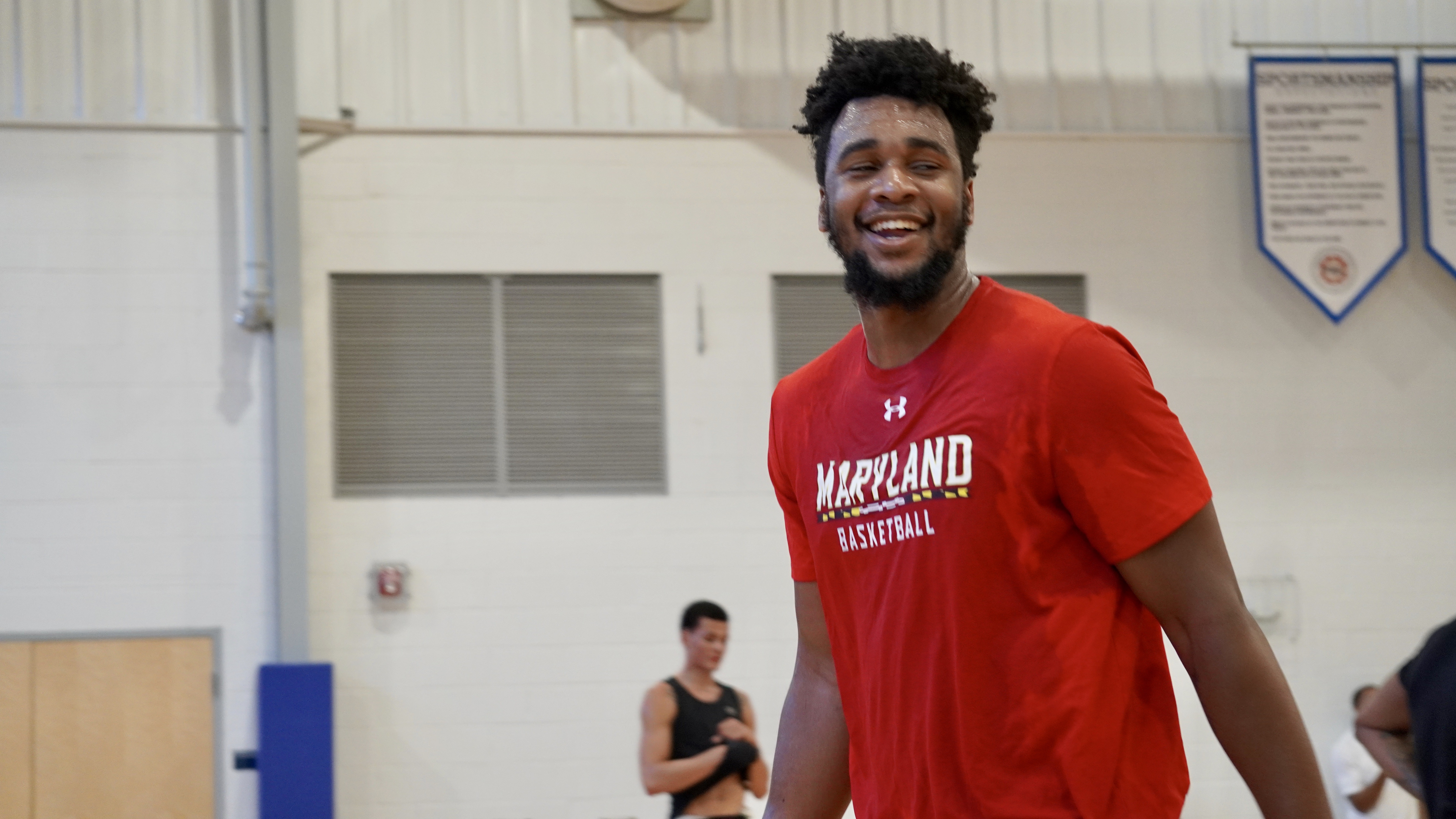
Maryland Junior Forward Donta Scott
Overall, it’s a mixed bag. Among the struggling middle and high school students I’ve worked with are the following: a Shop Rite employee that just did 7.5 years in a state penitentiary, a Kintock Halfway house resident trying to transition back into the community after a 6 year bid, a Pharmaceutical Sales Manager, an NBA Assistant Coach, a streets department manager, 5 current NBA players and a boatload of current college student-athletes.
Why such variation? Why have some engaged in criminal activities? Why have some become constructive members of society?
I don’t know… Those are really complex questions social scientists continue to grapple with.
I do know that positive and sustained engagement with schools and educational service providers is crucial factor. The ones that remain engaged with schools and continue to trade school or college fair much better than those that disengage from and ultimately drop out of school. How do you keep these boys engaged in school?
Sports can play an extremely important role in keeping Black males engaged in school. Indeed, great youth coaches understand the role they play in socializing youth through sport. Organized and appropriately managed youth sports play a crucial role in social development for participating youth. For many Black boys, sports is where they learn to actively interact with others, synthesize information, and make decisions for themselves.
Of course, athletic competition, applies stress, anxiety, and social pressure on young athletes. But, this is good stress and anxiety.
Through competitive sports, youth can build and develop character, confidence, and ultimately self-worth. Sports provide opportunities to explore and develop young athletes. Young athletes can identify themselves apart from playing sports through connecting with others and building new relationships. The challenge is to use sports to help youth become better students.
Exactly, how does a youth coach help young boys become better students? How does a youth coach help young boys attain and maintain a level of academic performance that is commensurate with their intellectual ability? How does a youth coach help young boys complete school and homework assignments on a regular basis? How does a youth coach help young boys eliminate patterns of acting out, disruptive, or negative attention seeking behaviors when confronted with frustration in learning?
University of Maryland basketball star, Donta Scott was what is commonly referred to as a “bad” kid in elementary and middle school. As a young boy, he exhibited persistent refusal to comply with school rules and expectations. Today he is the highly respected leader of a nationally ranked Terrapin basketball team. One of the toughest players in college basketball, Scott shares his thoughts on his own educational journey.
Students and student-athletes in behavioral and special education programs, often feel a stigma that interferes with arranging for psycho-educational testing to evaluate the possibility that these youth have learning disabilities and determine whether they are eligible to receive special education services.
Scott walks readers through his own educational career. He details how his youth coach connected his academic performance to opportunities to play basketball. He discusses his high school selection process. More importantly, Scott explains how he took control of his educational decision-making during his college recruitment.
Scott offers students, parents and youth coaches clear examples and practical advice. Anyone that is responsible for or working with young boys exhibiting behavioral issues in school should read this book. Special education students and their parents must familiarize themselves with Scott’s story.
Abington, PA: October 27, 2021 – These are the four “R’s” on which the Reading High Boys Basketball team has been built over the last 10 years by Head Coach and School Director, Rick Perez. Perez, a two-time 6A Coach of the Year honoree, has won 223 games, against 69 losses, as a head coach by “not focusing on winning, but love”.
Rick Perez
In these tough, dangerous and uncertain times this may sound corny or cliche. However, just one conversation with the confident, humble Perez will assure you that he is genuine and far from typical. It is not often that you will hear a coach talk about Maslow’s “Hierarchy of Needs” before mentioning anything about the high post or low post. His understanding of the need to address the enormity of the challenges his players face outside the lines is what allows them to thrive within them. There is surety and humility in his voice as he recounts how he built the once downtrodden public high school program into a state powerhouse. “I’m not concerned with control. I’m concerned with relationships.” Control is a factor for those who have little faith in those they seek to trust them. This is a spiritual antonym for a team that follows the Bible verse “We live by faith, not sight” (2 Corinthian 5:7) as a team mantra.
If you take the time to really consider where Perez has developed the program it becomes crystal clear that it’s more than impressive. It’s incredible. Reading is not like other places. It’s a struggle city. The loss of big businesses like Lucent Technologies and others have left the communities in Reading, which in the last 10 years has seen the poverty level rise to as high as 41.3 percent, in a depression. These people may not have much but they have each other. They are prideful and passionate and that comes across in how they support the Red Knights. The gym is like their home and those who succumb to the team are often serenaded with a popular refrain: “Grab your hat and your coat and leave.”
Ruben Rodriguez
If you simply look at them you may underestimate them. They are not laden with players with Blue Blood pedigree or exciting ESPN top 100 prospects. Perez says with a chuckle “we win with street guys. They are gritty and willing to do whatever it takes to win.” Last season Reading finished a nearly perfect 26-2. The coach says this was possible because they “don’t seek perfection”. They seek “growth”. That growth can be seen even within the season where they only suffered two losses because those losses were suffered at the hands of bitter crosstown rivals Wilson High School. An uneven 13 point road loss gave way to a hard fought two point win at home a couple weeks later only to have their resiliency tested once again after a two point loss to the Bulldogs at neutral sight 10 days later. Redemption was only a little over two weeks away when the Red Knights defeated Wilson by 8 to advance in the playoffs.
The dichotomies do not end with the game results or team ideals. Somehow a team that embodies the life and personality of Perez is not about him. It is first and foremost about the young student-athletes that drive and provide the life blood of the program. Through basketball Perez wants to save as many young men as possible but he acknowledges that everyone can’t go. “Loyalty is the key. We are selective about who stays on the team.” He leads the program with his heart as much as he does his brains and he is capable of fiery emotional outbursts and moments of quiet tenderness. He is “realness” personified, showing strength and a fighting spirit that moves him to go to combat for his players on any stage. Whether he is protecting a player from neighborhood thugs lurking “to jump” him or the school board seeking to take away valuable opportunities to play the game they hold dear. His willingness to “die on his sword” for them is conveyed in many ways and reaches his players with precision.
Joey Chapman
Perez, 39, is unwavering in his commitment to his school and program. His players bring that same commitment, on and off the court. It was this relentless commitment to winning and never say die attitude that saved Perez’s coaching career four years into it. He had tendered his resignation before the season, betting it all on his ability to lead the Red Knights to a county championship. Down 9 with 3½ minutes left in the championship game it looked as if the gambit would be his undoing. However, as if they knew what was on the line, led by incredible sophomore Lonnie Walker IV, the team responded snatching victory from the jaws of defeat in an 8 point win.
This year the team will rely on “collaborative leadership” from their projected starters: Ruben Rodriguez, a 6’2” 1st team All-State guard who can score (2023), Daniel Alcantara, a 6’5” forward (2022); the mild-mannered and observant 5’11” Myles Grey, the fiery and “fearless” 6’1” Joey Chapman and swiss army knife and consummate glue guy Xavier Davis, a 6’2” senior forward. The team will also depend on plenty of help off the bench from Aris Rodriguez, a 6’4” junior guard, Amier Burdine, a 6’1” forward (2023), Justin Walker, a 6’1” guard (2022), Deshawn Wilson, a 5’11” senior guard and the lone freshman in the group, Malik Osumanu, a 6’3” forward.
Rodriguez, a combo guard who has caught the eye of Wake Forest and holds offers from Jacksonville and St. Peter’s, will provide scoring punch, especially at the end of games. Alcantara, another Jacksonville recruit, will battle in the paint while Chapman makes his presence felt all over the court, especially on the defensive end. Davis, who “knows the pulse of every player on the team” will add a sense of synergy as Miles brings a quiet confidence.
For sure they will be a group to watch and enjoy as they play with their hearts on their shooting sleeves, leaving it all out there representing the community and city they love.















 The Black Cager