Caitlin Clark and The Re-Emergence of the “Great White Hope”

The concept of the “Great White Hope” emerged in the early 20th century against the backdrop of pervasive racism and white supremacy in the United States. This term, deeply rooted in the Apartheid-like dynamics of the era, was first coined in 1911 when Jack Johnson, the first Black heavyweight champion, seemed unbeatable by any white boxer. The term encapsulated the desperation and determination of white America to see a white champion reclaim the title from Johnson, symbolizing a broader desire to restore racial hierarchies disrupted by Johnson’s dominance.

A century later, we are witnessing he re-emergence of the concept as the flames of American racism/white supremacy are raging once again. WNBA rookie sensation Caitlin Clark is carrying the desperation and determination of white America to see a white, heterosexual woman basketball player from the Midwest anointed as the very best the sport has to offer. The immense popularity of Clark among white fans is indicative of her exceptional shooting ability and a yearning to restore white athletic hegemony disrupted by the dismantling of Jim Crow/Apartheid over the past half century.

Historical Context of Racism and White Supremacy
In the early 1900s, the United States was steeped in racial discrimination and segregation, epitomized by the Jim Crow/Apartheid laws that rigidly enforced racial segregation in the throughout much of the United States. Jim Crow/Apartheid emerged in response to social, political, economic and educational gains Blacks made during the Reconstruction Era immediately following the Civil War. These laws, upheld by the infamous Plessy v. Ferguson Supreme Court decision in 1896, institutionalized the doctrine of “separate but equal,” which, in practice, meant systemic disenfranchisement and oppression of African Americans. In this climate, sports were not exempt from the pervasive racial attitudes of the time. Boxing, like many other sports, was segregated, with Black athletes often denied opportunities to compete against their white counterparts.

In 2007, Don Imus called the Rutgers Womens Basketball team “nappy-headed hoes” on air.

In the early 2000s, we are in the midst of an intense white backlash. Also known as white rage, this is the negative response from some white individuals to the racial progress and advancements made by Black and other minority groups, particularly in terms of rights, economic opportunities, and cultural or political influence. This phenomenon is often tied to the politics of white grievance, where the progress of minority groups is perceived as a threat to the historical power and privilege held by white individuals under slavery/Jim Crow/Apartheid social orders. Emerging most prominently following the Civil Rights Movement, white backlash manifests as a reaction against the strides made by previously oppressed groups, including their pursuit of equality and self-determination. Additionally, it encompasses a particularly visceral negative reaction from some white Americans when confronted with examinations of their own white privilege, further highlighting the resistance to acknowledging and addressing systemic racial inequalities.

Jack Johnson, first black world heavyweight boxing champion (1908–1915).

Jack Johnson’s Reign and the Search for the “Great White Hope”
Jack Johnson’s rise to the heavyweight championship in 1908 was a significant challenge to the racial status quo. Johnson’s prowess in the ring and his flamboyant lifestyle, including his relationships with white women, provoked outrage among white Americans. His dominance in a sport long seen as a bastion of white masculinity was perceived as a direct threat to white supremacy. As Johnson successfully defended his title against a series of white challengers, the anxiety and desperation among white boxing fans grew.

Jim Jeffries (l) and Jack Johnson (r)

The term “Great White Hope” was coined in this context, reflecting the hopes pinned on a white boxer who could dethrone Johnson and restore the racial order. The most famous of these challengers was James J. Jeffries, a former heavyweight champion coaxed out of retirement in 1910 to fight Johnson. Promoted as the “Hope of the White Race,” Jeffries was defeated by Johnson in a match that further inflamed racial tensions and led to race riots across the United States.

Caitlin Clark, the new “Great White Hope”
The dominance of Dawn Staley’s predominantly Black South Carolina Gamecocks along with the emergence of Angel Reese as a brash, confident cultural icon among Black women and girls poses a significant challenge to those seeking to re-establish a white supremacist status quo. Reese’s production on the court, immense popularity in the worlds of fashion and hip hip culture provoke intense rage among right wing sports commentators. The dominance of Staley and Reese has been perceived as a threat to white supremacy. As Staley and Reese continued to win at the collegiate level and exemplify “Black Girl Magic,” perturbation and despondency among white basketball fans grew.

Enter Caitlin Clark, a white, heterosexual woman from the midwest playing for a very good predominantly white Iowa team… In college, she looked fearless on the floor and played under control. Against college players, Clark was able to get virtually any shot she wanted. Teams were completely focused on her defensively, rotating different players at her, so she was always under pressure and still found a way to hit difficult shots every game. She moved well without the ball, had great footwork when coming off screens and was always ready to shoot. The hope was that Clark and Iowa could somehow dethrone Staley’s Gamecocks.

Naaaaaah…

But, a the professional level, Clark has emerged as contemporary”Great White Hope.” This cultural revival of the term has extended its definition beyond boxing to women’s basketball. For millions of white American sports fans, Clark represents a highly skilled heterosexual white female challenger in a sport dominated by non-whites.

Broader Implications and Modern Usage
The enduring legacy and applicability of the “Great White Hope” concept speaks to the persistent undercurrents of racial bias in sports and society. Even as overt racism has become less socially acceptable, the term’s occasional modern usage reveals lingering prejudices and the pressure placed on white athletes in sports dominated by Black athletes. It also highlights the complex interplay between race, sports, and societal expectations.

Near the end of the championship game in 2023, Angel Reese waved her hand in front of her face, stared at Iowa guard Caitlin Clark and pointed toward her ring finger. One week earlier, after nailing a three at the end of the game against Louisville to cap off a 41 point, 12 assist and 10 rebound triple-double, Clark gave Hailey Van Lith her “you can’t see me” gesture.

Two All-Americans… Same gesture… On week apart.

One week apart, two All-American players in the heat of fierce competition celebrated by talkin’ shit. That’s what ballers do… They talk shit!

But… Reese is Black and Clark is white.

Hence, Clark was celebrated and praised. She’s fierce… She’s an intense competitor…

One week later, when Reese mimicked Clark and let the Iowa star know “you can’t see me,” it sparked outrage in sports around the world.  And the 20-year-old young Black woman who led her school to its first-ever championship was called classless, ghetto, and a thug by some of the most prominent white men in sports media.

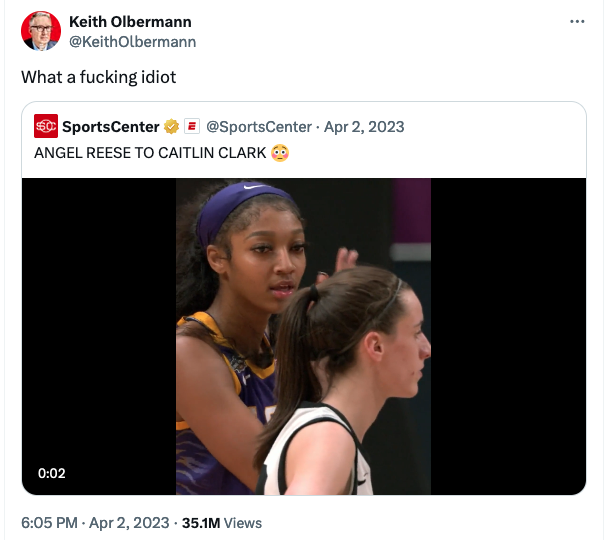
In a post that has reached over 79 million viewers, Barstool Sports Dave Portnoy call young Ms. Reese a “Classless piece of shit.” Keith Olberman, formerly of ESPN and NBC labeled a Reese “a fucking idiot.” Olbermann’s post has been viewed over 35 million times.
In contemporary times, the conversation around race and sports has evolved, but the echoes of the “Great White Hope” mentality can still be observed. The term serves as a reminder of a period when sports were not just about athletic prowess but also about racial pride and prejudice. Understanding this historical context is crucial in recognizing how far society has come and how much further it needs to go in achieving true racial equality in all spheres of life, including sports.

When asked about the “you can’t see me” gesture after the game, Reese defended her response and stated, “All year, I was critiqued for who I was. I don’t fit the narrative. I don’t fit the box that ya’ll want me to be in. I’m too ‘hood. I’m too ghetto. Ya’ll told me that all year.,” Then in reference to Clark, she added, “When other people do it, ya’ll don’t say nothing. So, this is for the girls that look like me. For those that want to speak up for what they believe in. It’s unapologetically you.”

No lies detected…

Conclusion
The concept of the “Great White Hope” emerged from a specific historical context marked by intense racism and the desire to maintain white supremacy. Jack Johnson’s success as a Black heavyweight champion challenged these societal norms, prompting the search for a white boxer who could restore the perceived racial order. Today, Caitlin Clark has been charged with the immense task of restoring some sort of racial order to the world of women’s basketball. While the term has evolved and broadened in its application, its origins and continued relevance underscore the deep-seated racial dynamics that have historically shaped, and continue to influence, the world of sports.

St. Frances Academy’s Tyler Jackson: PLEASE Believe Da “HYPE”!

Tyler “Hype” Jackson is a Baltimore phenom and the number 1 point guard prospect in the class of 2025. Hailing from St. Frances Academy, he is garnering attention as one of the best guards in the nation, and for good reason. Playing alongside two high major wings Jahnathan LaMothe (Maryland) and Carlton Carrington (Pitt) last season, Jackson was often the finest player on the floor as a sophomore.

Tyler Jackson, ’25

More importantly, Jackson’s demeanor and behavior are truly commendable, especially considering his status as a top 10 prospect in his class. It is evident that his family, particularly his mother Ro’Shelle and Aunt Kimberly, have instilled in him values of respect, humility, and dignity. Their influence on him is clearly reflected in the way he carries himself both on and off the court.

The absence of arrogance and entitlement in a young athlete of his caliber is a refreshing departure from the stereotype often associated with elite urban athletes. Jackson’s embodiment of a throwback scholar-athlete highlights his dedication not only to his athletic pursuits but also to his academic endeavors.

His ability to remain unfailingly polite and respectful while being in the limelight is a testament to his character and the strong foundation laid by his family. Such qualities not only make him a standout athlete but also a positive role model for aspiring young athletes.

In a sports world where some individuals may succumb to the pressures of fame and success, Jackson stands as a shining example of how one can achieve greatness while maintaining humility and a strong sense of responsibility. His approach to life and sports serves as an inspiration to others, emphasizing the importance of integrity, hard work, and maintaining a sense of perspective regardless of one’s achievements.

Jackson’s unique combination and maturity and breathtaking basketball skills have made him a highly desired prospect. Not yet an 11th grader, he has offers from Kentucky, LSU, Alabama and Mississippi State in the SEC. Big 10 offers have come in from Maryland, Illinois, Rutgers and Penn State. His ACC offers include Pittsburgh, Virginia Tech, Georgia Tech and Syracuse. DePaul and Seton Hall have come calling from the Big East. The Big 12 is represented by Kansas and Houston. These are just some of the scholarship offers Jackson is sorting through.

On the court, he has proven himself a worthy successor to the legendary Panther point guard Adrian “Ace” Baldwin (VCU/Penn State). Jackson is already displaying impressive physical attributes and highly advanced basketball skills. Standing at around 6’3″ with a wingspan measuring 6’6.5″, he possesses a great combination of size and length for a point guard. His athleticism is exceptional, with remarkable speed and quickness that sets him apart from his peers. Fiercely competitive, he plays his best in big games with everything on the line. He willed his Team Thrill 16U squad to the UAA Championship a few weeks ago.

Jackson consistently gets buckets in bunches. In one weekend on he EYBL this summer, he averaged over 30 ppg against elite competition. Plainly stated, his scoring ability is nothing short of extraordinary. With an explosive first step, he can blow past defenders from a standstill position or off the dribble. His ability to change speeds effortlessly makes him very elusive and extremely difficult to guard man to man. In transition, he is an absolute blur with the ball, racing past opponents to finish above the rim regularly. Jackson will bang it on bigger men. Moreover, his tight handle and variety of dribble moves allow him to break down defenders and get to the rim at will.

While his 3-point jumper is still a work in progress, Jackson is already a highly proficient mid-range shooter off the dribble. His mechanics are sound, and he gets good elevation, allowing him to release the ball high, which bodes well for future development. With continued practice and refinement, his 3-point shooting range and consistency will improve over time.

As a point guard, Jackson has outstanding potential as a playmaker. He possesses excellent court vision and an ability to see over the top of defenses due to his height. He keeps his head up in transition, leading to accurate passes to teammates on the move. He is already possesses an elite understanding of how to attack in the pick-and-roll and in isolation situations. He consistently creates solid scoring opportunities for himself and his teammates.

Defensively, Jackson is already displaying a high level of potential. His lateral quickness, length, and instincts make him a disruptive force on the defensive end. He is quick to anticipate passing lanes and uses his active hands to force turnovers. Moreover, his ability to pressure full court and stay engaged off the ball showcases his commitment to making an impact on both ends of the floor.

While Tyler Jackson is already an exceptional young talent, there are areas he can further develop. Playing in the nationally renowned St. Frances Academy program, for Coach Nick Myles, the sky is the limit when it comes to his development over next 24 months. Improving his shooting consistency, especially from beyond the arc, will make him an even more lethal offensive threat. Additionally, continued growth as a decision-maker and honing his defensive techniques will elevate his game to new heights.

Overall, Tyler Jackson is a “SupaHighMajah” point guard prospect. With his size, athleticism, scoring ability, and playmaking skills, he has the potential to become one of the most exciting and dominant point guards of his generation. As he continues to refine his game and mature physically, expect to see him make waves on the national stage for the next two years at St. Frances and and contribute immediately in college and beyond.

The Rise of Angel Reese: A Tipping Point in Women’s Basketball

Baltimore, MD – July 19, 2023 – In recent years, women’s college basketball has witnessed a remarkable transformation, thanks in large part to rise of Dawn Staley’s Gamecock program and the incredible talents of LSU’s Angel Reese and Iowa’s Caitlin Clark. These two young superstars, in particular, are reshaping the landscape of women’s college basketball and sparking unprecedented levels of general sports fan interest. Drawing parallels to the impact of Magic Johnson and Larry Bird on men’s basketball 44 years ago, Reese and Clark’s influence has marked a potential tipping point in the rise of women’s college basketball as a major sport in America. Their electrifying rivalry has captured the nation’s attention, culminating in a record-breaking title game viewership of 9.9 million, further emphasizing the transformative power they hold. They have, perhaps permanently, moved the needle.

Reese and Clark’s rise to prominence has brought much-needed attention and excitement to women’s college basketball. Their impressive skills, charisma, and competitive spirit have inspired a new generation of players and fans. By elevating the level of play and showcasing their abilities, they have shattered previous viewership records, making a bold statement that women’s basketball is a force to be reckoned with in the sports world.

The increased interest in Reese and Clark has not only led to more viewership but has also brought about enhanced media coverage. The decision to air the title game on ABC rather than ESPN signifies a growing recognition of the potential value and appeal of women’s basketball. Viewership for the LSU/Iowa championship game increased 103% over the 2022 title game. The Reese and Clark rivalry ratings topped several football games, any MLS game ever and every Stanley Cup game since 1973. Expanded media coverage means more exposure for the athletes, teams, and the sport as a whole, which can lead to greater support from sponsors and investors.

One of the key drivers of Reese and Clark’s impact is their compelling rivalry on the court. As they say in boxing, styles make fights. Just as Magic Johnson and Larry Bird’s clashes captivated audiences decades ago, the Reese/Clark rivalry is doing the same for women’s basketball. Reese is a tireless rebounder and post-player with exceptional ball skills. Her ability to anticipate where caroms will land is reminiscent of a prime Moses Malone or Dennis Rodman. She is an uber elite rebounder who can handle and pass with the very best wings in the nation.

Caitlin Clark, on the other hand, gets buckets at a prodigious rate. Along with Steph Curry and Damian Lillard, she possesses otherworldly shooting range. It’s pretty much a fact that Clark is one of the greatest shooter to ever play college basketball, male or female. With a lighting quick release she can shoot over the entire defense with ease. Contested 30 footers are like layups for her. Clark’s heat check is something else. A tremendously crafty offensive player, Clark can break down her defenders in a multitude of ways. She’s really one of the most entertaining players to watch if you’re not a huge basketball fan. With their contrasting styles, Reese/Clark duels have become must-watch events, attracting casual sports fans and igniting a sense of pride and loyalty among their respective fan bases.

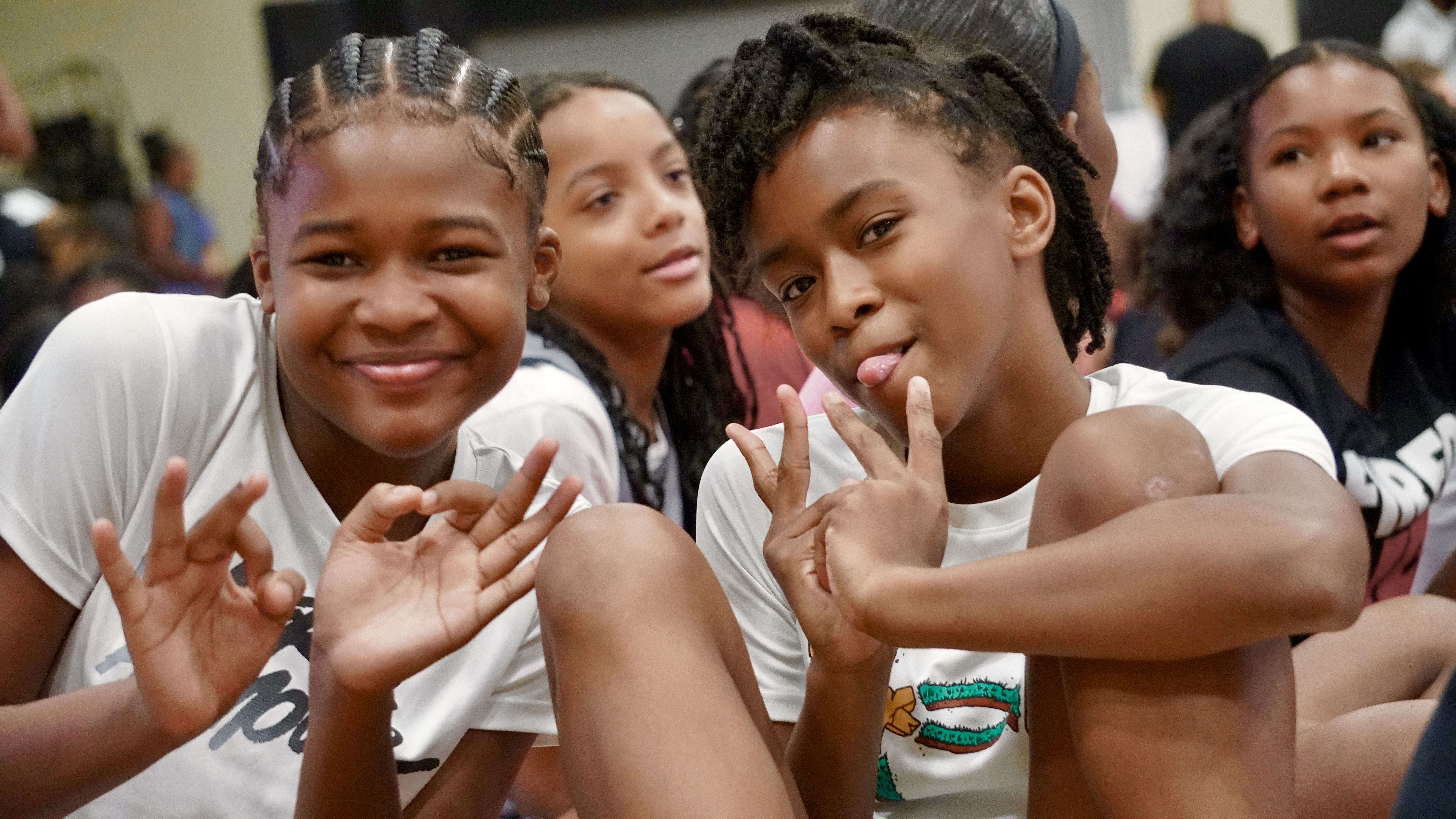
Angel McCoughtry, Angel Reese and several campers

Reese and WBA legend Angel McCoughtry’s clinic for young girls at St. Frances Academy exemplifies the potential of their influence. Seeing Reese in person left a lasting impression on the girls, reminiscent of the way Allen Iverson inspired young boys in Philadelphia two decades ago. The visibility of Reese and McCoughtry as successful athletes is crucial in breaking down barriers and encouraging more girls to pursue basketball and sports in general. Their journey to success becomes an empowering narrative that resonates with young athletes who aspire to follow in their footsteps.The surge in interest in women’s basketball is part of a broader movement towards promoting gender equality in sports. Greater attention paid to women’s basketball shines a light on the significant disparities that still exist between men’s and women’s sports, from pay gaps to media coverage. Reese and McCoughtry’s success serves as a rallying cry for equal recognition and opportunities for female athletes, challenging stereotypes and outdated beliefs.

Nytearia Burrell

One of her former coaches at St. Frances Academy, Nytearia Burrell, understands that it is important for star alums, like Reese, to continue giving back to her Baltimore community for several reasons. Burrell was the driving force behind the clinic. As a successful athlete and a prominent figure, Angel Reese serves as a powerful role model for young Black girls in Baltimore. Her achievements show them that with hard work, dedication, and perseverance, they can overcome obstacles and pursue their dreams. Also, representation is crucial, especially for underrepresented communities like the Black community. Seeing someone from their own community achieve greatness in their chosen field can instill a sense of pride and belief in their own potential. Moreover, her success challenges stereotypes about what is possible for young Black girls in Baltimore. By showcasing her skills, discipline, and achievements, she helps dispel limiting beliefs and inspires others to defy societal expectations. Finally, Reese’s involvement in the community can motivate young girls to excel both academically and athletically. She can emphasize the importance of education and how it can open doors to opportunities, even beyond sports.

Angel McCoughtry (l) and Angel Reese (r)

The impact of Angel Reese and Caitlin Clark on women’s basketball cannot be overstated. Their talent, rivalry, and charismatic presence have attracted unprecedented levels of fan interest, culminating in record-breaking viewership numbers for the title game. Their impact reaches far beyond the court, inspiring young girls and advocating for gender equality in sports. By continuing to support and celebrate women’s basketball, we can foster an environment where talented athletes like Reese and Clark can thrive and bring about lasting change in the sports world. The rise of women’s college basketball as a major sport in America is underway, and Reese and Clark’s legacy will undoubtedly be etched in the sport’s history.

Coronavirus “Refugees”: HS Student-Athletes

Elections have consequences…

In 2016, America reacted to the close of the first presidential administration led by a Black man by placing a reality TV star, Donald Trump, in the White House. By any reasonable measure, the host of “The Apprentice” has failed to adequately deal with the public health crisis caused by coronavirus pandemic that overwhelmed the mid-Atlantic region in the first half of 2020 and continues to advance through the South and mid-West with relentless verve.

Coronavirus is kicking our American asses! It reminds me of the Dream Team’s blowout of Somalia. Just like the African nation on the court, the USA led by “Coach” Trump is offering very little resistance.

Coronavirus has grabbed America by the pussy…

This situation could conceivably create pockets of athletic “refugees.” Recently, Maryland joined six other states with the District of Columbia, to move its fall season to the New Year. Unless, all 50 states and Washington, D.C. follow suit, scholarship level HS student-athletes have a tough choice to make.

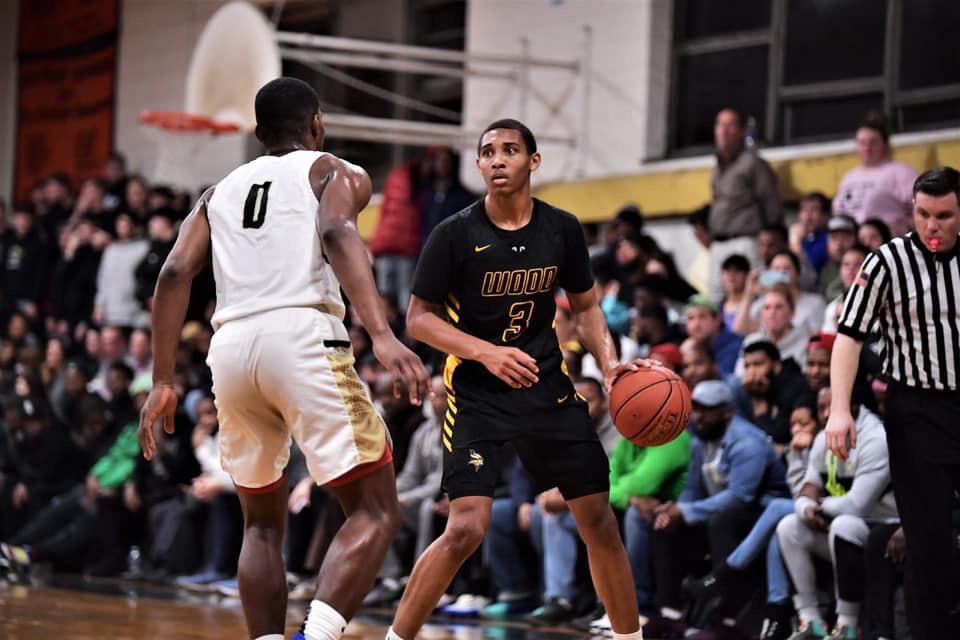
Courtesy Woodrow Wilson High School Basketball, Washington, D.C.

If a football or basketball player in Maryland or Washington, D.C. has received “interest” from NCAA Division 1 or Division 2 programs but no offers, they feel immense pressure to perform in scholastic contests to prove themselves worthy of a scholarship. If they have offers from low major D1 programs or D2 programs, they feel pressure to prove themselves worthy of mid to high major offers.

The horrendous handling of the coronavirus pandemic by the Trump administration resulted has resulted in tremendous uncertainty in all facets of American life, including scholastic sports.

On February 26, President Trump boasted that the coronavirus was about to disappear altogether from the United States. “You have 15 people, and the 15 within a couple of days is going to be down to close to zero.”

As of August 15, there have been 4,793,950 confirmed cases and 157,416 deaths.

People are justifiably shook… State governors and state sanctioning bodies have been forced to develop strategies and policies to deal with a NATIONAL crisis. They are performing admirably in their attempts to fill the void resulting from the breathtaking absence of Presidential leadership as the United States limps through the largest public health crisis in a century.

However, it should be noted that the absence of federal leadership has resulted in 50 different intervention strategies. The variation among the responses is significant. Some states have postponed Fall and Winter sports until 2021. Others are committed to fielding teams and having them play as if the coronavirus crisis has subsided.

District of Columbia — Per July 16 announcement, the District of Columbia State Athletic Association has postponed interscholastic activities until January 2021. Under this plan, winter season practices would begin Dec. 14 with games coming Jan. 4. Postponed fall sports would begin practicing Feb. 1 with games getting underway Feb. 22.

Maryland — The Maryland Public Secondary Schools Athletic Association (MPSSAA) announced Aug. 3 that football along with all its fall and winter sports will be moved to a hybrid two-semester plan starting in 2021. The exact plan for how it will fit into the two semesters is still being worked on, but Maryland joined six other states with the District of Columbia, to move its fall season to the New Year. According to a MPSSAA news release, the new plan will be made available in the next couple of weeks.

Now… the parents of D.C. or Maryland student-athletes face a choice. Let’s assume their child has been contacted by college coaches interested in following him/her and perhaps offering an athletic scholarship. Thanks to the inept response of the occupant at 1600 Black Lives Matter Blvd., spring and summer organized sports activities have been abrogated.

No basketball playoffs… No grassroots/AAU events… No 7 on 7 football… No combines…

The NCAA implemented a “dead period” in March. It looks as if it will extend through the fall… No face to face recruiting… No live evaluation of players…

Athletic scholarships are worth anywhere from $200,000 to $320,000 depending on the school. That’s a nice chunk of change… These kids have invested years of training, practice and conditioning for this moment and it’s suddenly taken away.

What if the pandemic deepens? The schedule set for January 2021 may not come to fruition. What if they just cancel sports altogether?

Do D.C. and Maryland parents send their kids to play in Pennsylvania where games are scheduled to take place? Even if there are no fans, the video can be shared with college coaches looking to fill out rosters.

If Drexel told the kid they want to evaluate him in high school games, does he move to another state to make it happen. Drexel costs north of $80,000 per year. A Maryland kid could come play in the Philadelphia Catholic League or Division A of the Public League and prove himself worthy of the $320K schollie… Or, he could wait, hope and take the chance that the pandemic will subside and their current schools will have sports in the spring.

While driving on I-95 last weekend, I saw a “caravan” of a couple hundred fit, lean and athletic 17-18 year olds walking on the side of the road. They were headed north towards Philadelphia.

Elections have consequences… The next one is November 3, 2020.

The HS Hoops Experience: Philly vs Baltimore

There is a huge demand for high quality basketball… Hoopheads want to watch talented players in tightly contested games… On one hand, elite high school programs throughout the mid-Atlantic region are delivering… On the other hand, College programs? Not so much…

In recent weeks, Black Cager Sports has covered some of the finest scholastic basketball America has to offer. We were courtside for Camden vs Roman Catholic, Neumann-Goretti vs Roman Catholic, Reading vs Wilson West Lawn, Archbishop Wood vs Roman Catholic, Neumann-Goretti vs Archbishop Wood, Camden vs Roselle Catholic and Poly (MD) vs St. Frances (MD).

84330614_534278360767325_7314484937522937856_n

Rahsool Diggins defended by Hysier Miller. Photo Credit: Mark Jordan, Raw Sports

These were wonderful games featuring highly ranked players. Nearly every contest featured a few HIGH major Division 1 prospects and, in some cases, as many as 10 or 11 low to mid-major D1 prospects were on the floor at the same time.

The strong thirst for high level basketball is evidenced by the insatiable demand for tickets to these games. There was, literally speaking, not any empty seat available for any of these contests. The Camden/Roman game, Reading/Wilson game and Philadelphia Catholic League games were sold out within hours of the tickets being made available.

83647763_2560738914144921_6216822383362179072_n

Hakim Bryd defended by Jaylen Stinson. Photo Credit: Mark Jordan, Raw Sports

The fact that tickets were NOT available only served as a slight deterrent to dedicated and determined Philadelphia area hoopheads. It merely added an element of creativity to the mission… They showed up anyway looking for a side door, a window, a heating duct… Any possible means of ingress. When all else fails, some deploy a high powered ‘blitz’ that hasn’t been seen round these parts since the departure of legendary Eagles coach Buddy Ryan.

Shit is that serious… Tickets to elite HS school basketball tickets move like Popeye’s chicken sandwiches when they first return to the menu.

I absolutely love packed gyms, highly ranked teams, intense rivalries and good players. This is basketball as it was meant to be played. The high schools have it in abundance.

83175967_644341249646635_4062007273432547328_n

Anthony Hoggard seated courtside for Camden vs Roselle Catholic at Neumann University

Philadelphia area colleges, for the most part, are not delivering a product of similar quality. The Big 5 has become almost an afterthought to all but the most dedicated alums. There is one exception of course, Villanova exists on a separate planet. The Wildcats have watched their blood change from red to blue over the last ten years or so. Thier ascent has been accompanied by an ever expanding cadre of front runners joinging the Main Line movement.

The rest are struggling mightily… After a solid start, Temple is 10-9 (2-5) and sit in 10th place in American Athletic Conference. La Salle also had a decent non-conference run and came back to earth once league play began. The Explorers are also 10-9 (1-6) and currently in 13th place in the A10. Last year’s Big 5 champion Penn Quakers are floundering at 8-7 (0-2 in the Ivy League). After seven league games, St. Joseph’s finds itself 7 games out of first place in the A10. The Hawks are 4-16 (0-7) on the season.

Outside of Villanova, the college basketball landscape in Philly barren…

Predictably, fans have been avoiding the Liacouris, Gola and Hagan arenas in droves. Even the fabled Palestra is more than half empty most nights. Meanwhile, true hoopheads have been climbing on top of one another for an opportunity to watch the finest high school teams in the area. As I noted earlier, people really want to see good competitive basketball game between strong and familiar teams featuring good players.

While high school basketball is very popular throughout the mid-Atlantic region, there are some significant and noticeable regional differences worth mentioning. It’s all good, but there are some decidedly different flavors…

Here, I’ll touch on a few variations that exist between elite high school basketball in Baltimore, Maryland and Philadelphia, Pennsylvania.

83693408_571097866806447_8620157654091694080_n

Rodney Veney, Philly Pride Co-Director at Wood vs Neumann-Goretti

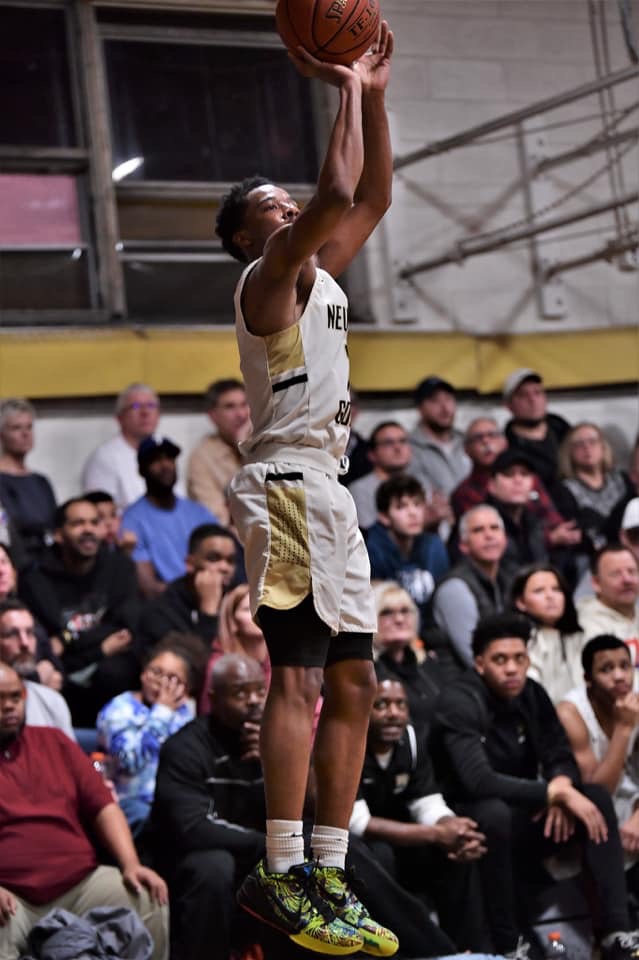
First up, the venues… In Philadelphia, games featuring 10-12 D1 prospects are often played in HS gyms with a maximum capacity of 600-800 spectators. To their credit, school administrators usually turn a blind eyes to those maximum capacity certificates hanging on the walls. As much as humanly possible, they try to accommodate the hungry and thirsty fanbase. They sell tickets til it just not possible to fit more human beings into the gyms. As a result, in most games, there is not a single free square foot of space in the gym that is NOT dedicated to the actual game.

83638633_181710966238737_3956063740343877632_n

Neumann-Goretti fans along the baseline during the Roman Catholic game

Referees are constantly tasked with gently reminding overzealous and passionate throngs to give the kids just a lil’ space so they can inbounds the ball along the baseline. Fully engaged fans can be found breathing down the necks of the players who can literally discern what fans had for lunch or whether they smoked ‘loud’ or ‘Reggie’ in the parking lot.

82428407_3111851742210911_9045766639424897024_n

Lynn Greer, III along baseline during warmups at Archbishop Wood

It’s an intense atmosphere for sure… For a lil’ over two hours on game days, Roman, Wood and Neumann-Goretti gyms are packed tighter than slave ships traversing the Atlantic in the early 1800’s. The sheer number of excited, energetic and highly emotional humans easily overwhelms the climate control systems in these decades old facilities.

They get HOT as shit. By the 4th quarter, they feel like an oven set on ”HELL!”

Loyal fans happily endure the momentary discomfort… What are they gonna do? Where are the alternatives? Are they gonna go watch college games featuring losing teams with players from countries, counties and towns they can’t pronounce?

Naaaaah… Philly hoopheads wanna see Philly Ballers!

In Baltimore, big HS games are played in Division 1 facilities. Last year, big games were played in Towson’s SECU Arena which seats 5,200. Yesterday, I attended the St. Frances v Poly game at the 4,000 seat Talmadge L. Hill Field House on the campus of Morgan State University


83440782_882869248808399_4181473017131433984_n

St. Frances Academy supporters

They have it figured out…

In Philadelphia, one constantly hears that you cannot play high school games in Division 1 facilities. In Baltimore, One can constantly attend high school games played in Division 1 facilities.

What gives? We’ll try to clear up the discrepancy and report back to you…

81601782_171445330799183_7131180268815122432_n

St Frances Coach, Nick Myles, paces the sideline in front of overflowing capacity crowd

Every single seat was filled well before tip-off at the Hill Field House yesterday. Indeed, there were still hundreds in a line to purchase tickets that wrapped around the arena 15 minutes before tip-off. Just like in Philadelphia, the authorities didn’t pay close attention to that pesky maximum capacity certificate hanging in plain view.

Get this… The price of admission was $20 for a boys and girls doubleheader. Using “old” math skills I learned in the early 1970s, 4,000 times $20 equals a gate of about $80,000. In contrast, Camden High School home games cost $3. If Camden attract 1,000 fans to Woodrow Wilson HS the game will generate $3,000.

Maybe that why high schools in Maryland are able to afford shot clocks…

That’s another major difference between the brand of basketball played in Baltimore and that played in Philadelphia.

The presence of the 30 second shot clock changes the game.

Coaches are forced to really coach down the stretch.

Good defense is immediately rewarded.

Perhaps, most importantly, players learn to play under conditions they will face for the rest of their playing careers.

Indeed, I haven’t seen a persuasive argument AGAINST shot clocks in basketball… Ever…

There’s one more difference between HS hoops in the Philly and Baltimore that’s worthy of discussion. The cultural feel varies considerably…

84174063_623531688216827_415345559683989504_n

Neumann-Goretti Senior Star PG Hakim Byrd. Photo Credit: Mark Jordan, Raw Sports

The very best Philadelphia High School games have an old-school Big 5 feel to them. The hard-core hoophead alums of Roman, Wood and Neumann-Goretti for the most part are middle-aged white males. These guys are fervent supporters of the young men  currently playing for their alma maters. It’s a wonderful thing to see diverse crowds coming together to share a scholastic basketball experience.

High quality Catholic League basketball games are, arguably, the most diverse regularly scheduled gatherings in Philadelphia.

It’s a beautiful thing and it portends well for the role that sports can have in building and maintaining a semblance of unity in a city of racially stratified neighborhoods. Catholic League basketball in Philadelphia is truly a multicultural and multiracial phenomena.

The very best high school basketball in Baltimore is much different…

83217345_851986498583904_5914267105867333632_n

A section of fans at the Poly vs St, Frances game on Saturday

Games featuring the top teams and players have a decidedly HBCU homecoming feel to them. The alums, are Black, the fans are Black, the cheerleaders are Black, the ticket takers are Black, the security guards are Black, the athletic Directors are Black, the coaches are Black, the vendors are Black… Yesterday, there were well over 4,000 people in the Hill Field House and I might have seen a total of 10-12 white people.


It’s a wonderful thing to see Black people coming together to share a scholastic basketball experience. The manner in which people greet one another… The chants… The cheers… The food at concession stands… Everything is different when it’s done by Blacks for Blacks.

83400025_543413082941716_2628732543083479040_n

Angel Reese, St Frances Academy (MD), 2020 McDonald’s All-American

Every so often, I would sneak glance at the door… I was waiting for Avon, Slim Charles, Bodie Broadus and Wee Bey... How would they get past the metal detectors? Then I remembered Wee Bey is still upstate with Chris Partlow’s homicidal ass and Bodie is dead. So, I just watched a helluva high school basketball game.

St. Frances, led by their outstanding senior point guard, Ace Baldwin (VCU commit) 13 points, 8 assists and 5 steals, defeated No. 1 and nationally ranked Poly, 57-53.  Senior forward Jamal West (South Alabama commit) contributed 15 points and 11 rebounds in the victory over Poly, which was led by Marquette commit Justin Lewis (18 points) and Brandon Murray (15 points).

83802511_170869330903023_3643699071077580800_n

St. Frances Coach Nick Myles and Team Melo Director Julian Brown in Hill Field House

As usual, the hospitality shown to Black Cager Sports was beyond reproach. Team Melo Directors Bay Frazier, Julian Brown (pictured, above right) and St. Frances Academy Head Coach, Nick Myles always make sure Black Cager Sports feels right at home in the Charm City. The Baltimore HS basketball experience is not necessarily better than that of Philadelphia, but it certainly is different, very different.

Man… If we can get these colleges back on track…