By Delgreco K. Wilson M.A.
CAMDEN, NJ – For generations, a small number of powerful institutions — three broadcast networks, a handful of towering newspapers, and later, a clutch of cable news channels — performed a quiet but indispensable service for the American establishment. They manufactured consent.
This is not the language of conspiracy theory. It is the language of political economy, as articulated most forcefully by Edward S. Herman and Noam Chomsky in their 1988 classic, Manufacturing Consent. Their “propaganda model” was never about secret cabals or mustache-twirling villains. It was about structure: five filters — ownership, advertising, sourcing, flak, and the mobilization of an enemy — through which all news must pass. These filters do not produce falsehoods so much as they produce omissions. They render certain questions unaskable, certain sources unreliable, certain victims unworthy of our tears.

For decades, this system held. But the ground is shifting. The emergence of social media has cracked the old gatekeeping architecture, and a new generation of alternative news outlets — from the Meidas Touch to The Bulwark, from Roland Martin to Don Lemon and Joy Reid — is building pathways around it. More unexpectedly, a team of roughly a dozen people in Iran, armed with generative AI and a fondness for LEGO aesthetics, has demonstrated just how thoroughly the old order has been upended.
We are witnessing, in real time, a genuine challenge to mass media dominance. And the establishment — particularly the MAGA movement that has captured the Republican Party and the executive branch — has no idea how to respond.
The Consent Factory: How Traditional Media Served Power
Let us first be clear about what the old system was and was not. It was not, as conservative critics often claim, a “liberal media” conspiracy. The bias of the traditional press was not ideological in the partisan sense. It was structural — a deep, reflexive deference to power dressed in the costume of objectivity.
Herman and Chomsky identified five filters that, working in concert, ensured that media content would serve the interests of the privileged classes:
Ownership — A handful of large corporations and wealthy individuals own the majority of American mass media outlets. These owners have business interests that extend far beyond journalism. News that fundamentally challenges those interests rarely survives the editing process — not because an editor issues a direct order, but because everyone in the building understands what is and is not acceptable.
Advertising — Media outlets do not sell news to readers; they sell audiences to advertisers. This creates a built-in pro-business tilt. Outlets that systematically alienated corporate sponsors would not last long. The result is an environment where critiques of capitalism itself are structurally excluded.
Sourcing — Journalism is expensive. The steady, cost-effective flow of information comes from government and corporate sources, which are treated as authoritative by default. Dissenting voices — labor organizers, antiwar activists, whistleblowers — lack the institutional backing that provides a “subsidy” to official sources. They are marginalized not because they are wrong, but because they are inconvenient.
Flak — Organized negative responses to media content — lawsuits, advertiser boycotts, political pressure campaigns — serve as a powerful deterrent. The mere threat of flak shapes coverage in ways that rarely need to be exercised explicitly.
The Enemy — The mobilization of a common enemy (communism, terrorism, or, today, a caricatured “woke left”) frames the world in simplistic moral terms. Dissent becomes not just disagreement but treason. Supporting a different policy becomes “siding with the enemy.”
These filters produce predictable outcomes. Victims killed by official enemies receive saturation coverage and empathetic framing. Victims of American allies or client states are ignored, dismissed, or explained away. This is not malice. It is machinery.
And this machinery has served the MAGA movement remarkably well — until recently. The conservative media ecosystem has long operated as what one analyst calls “a soundproof bubble,” where dissent is immediately framed as conspiracy and criticism from outside is dismissed as “fake news.”

Fox News, Newsmax, and a constellation of radio hosts and online influencers have built an alternative reality that shields Republican voters from information that might challenge their political commitments.
But the bubble has a vulnerability. Fox News spent years cultivating distrust of mainstream media, teaching its audience to question official narratives and seek alternative sources. That skepticism is now being directed at Fox itself. When Representative Marjorie Taylor Greene accuses the network of “brainwashing boomers to support what we voted against,” she articulates a generational fracture within MAGA media — one that pits legacy television power against a decentralized, digital-first influencer class that helped build Trumpism in the first place.
The apprentice is becoming the rival.
The Disruption: Alternative Media on Social Platforms
Into this fracture have stepped a new generation of alternative news outlets, many of them building substantial followings on social media platforms precisely because traditional distribution channels are closed to them.
The Meidas Touch network, founded by three brothers, has grown from a small anti-Trump podcast into a multiplatform media operation with millions of followers. Its content is unabashedly partisan, but its production values and distribution savvy rival those of cable news. The Bulwark, founded by never-Trump conservatives, has built a loyal audience on Substack and YouTube by offering a perspective that is largely absent from both Fox and MSNBC. Roland Martin, a veteran journalist who left mainstream media to build his own digital operation, reaches Black audiences with a depth and consistency that traditional outlets struggle to match. Don Lemon and Joy Reid, both of whom have navigated the transition from cable to digital, represent a broader shift: the realization that the future of political commentary is not on a 7 p.m. timeslot but on a notification that arrives on your phone.
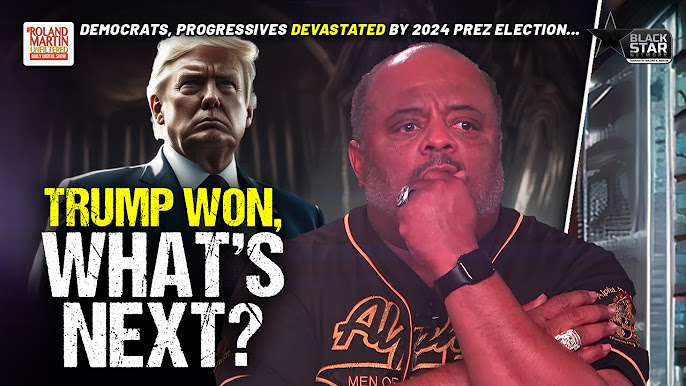
These outlets share a common strategy: meeting audiences where they already are. The Courier Newsroom model — “mastering the immediacy of social platforms while maintaining the credibility of traditional journalism” — has built a following of over five million subscribers across social platforms. This is not a sideshow. This is the main event.
The significance of this shift cannot be overstated. For decades, the gatekeepers decided what was and was not news. If you could not get on Meet the Press or Face the Nation, you did not exist in the political conversation. Today, a solo podcaster can reach more people than a network news anchor. A coordinated social media campaign can set the terms of debate before the legacy outlets have finished their morning editorial meetings.The establishment is no longer in control of the gates. And it is panicking.
The Lego Army: How Iran Outflanked American Media
The most unexpected challenge to traditional media dominance, however, has come from an unlikely source: Iran.
A group called Explosive Media (formerly Akhbar Enfejari) has been producing AI-generated Lego animations that comment on current events — and these videos have gone viral among American audiences. The content is striking: Lego Donald Trump paging through photographs of himself and Benjamin Netanyahu in the Jeffrey Epstein files. Lego graves reading “R.I.P. Donald John Trump.” Missile-struck White Houses lighting up in flames. Catchy AI-generated songs that mock American foreign policy
The videos have accumulated millions of views and enthusiastic comments from Western audiences. They have been reshared by Iranian-government accounts, promoted by Russian state media, and co-opted by anti-Trump protesters in the United States. Even after YouTube and Instagram removed Explosive Media’s accounts, the videos remained accessible on X and other platforms.
Why has this campaign been so effective?
First, it bypasses traditional gatekeepers entirely. No editor at a major network decided to air these videos. No advertising executive approved them. They spread organically, because they were compelling, shareable, and culturally fluent.
Second, it uses aesthetics to bypass defensive reactions. As one media analyst noted, “reality is cruel, so people keep their guard up; cartoons are cute, so people let their guard down.” The Lego visual language is universal, playful, and disarming. It does not feel like propaganda. It feels like entertainment — which is precisely what makes it effective propaganda.
Third, it speaks the language of the internet fluently. The White House has been waging its own meme-based battles — ASMR videos of deportations, supercuts of bombings interwoven with video-game footage. But Explosive Media’s content is more polished and, frankly, more interesting to watch. The group produces videos almost every day that explicitly comment on recent events, demonstrating an agility that traditional media cannot match.
Fourth, it connects with Western audiences emotionally. A representative of Explosive Media told The Verge: “Western audiences have, for years, been fed distorted views of our nation by mainstream media. When we release these animations, Western viewers are initially surprised that such work comes from Iran. That’s when misconceptions start to shift — and that’s exactly what we aim for.”
On TikTok, unofficial uploads of the videos have racked up thousands of comments from people saying that the animations are more informative than what is being reported by Western outlets. Let that sink in: A declared adversary of the United States is producing content that some Americans find more credible than their own news media.
What the Lego Campaign Reveals
The Iranian Lego campaign is not merely a curiosity. It is a case study in how the old media order is being dismantled — and what might replace it.
The propaganda model of Herman and Chomsky assumed a relatively stable media environment, one in which a small number of large corporations and wealthy individuals controlled the majority of mass media outlets. In that world, the five filters reliably shaped content to serve elite interests. Dissenting voices could be ignored or marginalized because they lacked the means of distribution.
That world is gone.
Today, a team of roughly ten people operating independently from Iranian state media can produce content that reaches millions of Americans and shapes the terms of debate about a major geopolitical conflict. They can do so using generative AI as a tool to present truths — or at least their version of them — in a compelling way and to break through walls of censorship.
The implications for the MAGA movement in America are profound. The same dynamics that allow Explosive Media to critique American foreign policy also allow domestic critics to challenge the Trump administration’s fundamental interests. When the Lego videos depict a missile striking the White House, they articulate a critique — violent and cartoonish though it may be — that mainstream American media often struggles to voice directly.
And crucially, the Lego campaign demonstrates that aesthetics matter. The traditional media’s commitment to “objectivity” often produces coverage that is dry, cautious, and easily ignored. The Lego videos are none of those things. They are vivid, emotional, and memorable. They do not ask for permission. They do not wait for official sources to confirm their narratives. They simply appear, spread, and shape perceptions.
A representative of Explosive Media captured this dynamic with disarming honesty: “Let’s face it — if truth isn’t flashy, it’s kinda lonely.”
A Contested Future
What we are witnessing is not merely a shift in content distribution. It is a fundamental transformation in who can produce persuasive political communication and how narratives gain traction.
Traditional mass media operated on a scarcity model: limited channels, high production costs, professional gatekeepers. This concentrated power in the hands of the few — the wealthy individuals and large corporations who owned the outlets.
The social media era operates on an abundance model: infinite channels, near-zero production costs (especially with AI), and algorithmic distribution that rewards engagement over institutional authority. This democratizes the ability to produce and disseminate political content — for better and for worse.
The question is not whether social media and AI have disrupted traditional media power. They clearly have. The question is what will replace it.
Will we see a more pluralistic, democratic information ecosystem where multiple voices compete on something approaching a level playing field? Or will we see new forms of control emerge — more sophisticated, more personalized, harder to detect? The White House’s embrace of “slopaganda” — the intersection of generative AI and propaganda — suggests that the establishment is not surrendering its capacity to shape narratives. It is simply adapting to new tools.
The Iranian Lego campaign suggests one possibility: that even non-state actors and adversarial nations can now participate in shaping American public opinion on equal footing with domestic media giants. Whether that represents progress or peril depends largely on one’s faith in the American public’s ability to navigate an increasingly chaotic information environment.
What cannot be denied is that the era of centralized media control — where a handful of corporations and wealthy individuals determined the boundaries of acceptable debate — is ending. The Lego videos are not just propaganda. They are a signal that the gates have been breached.
And no one — not the networks, not the cable channels, not the White House, and certainly not the legacy media institutions that once held a monopoly on public attention — knows quite how to close them.
 The Black Cager